
大类资产配置

Search documents
一买就跌、一卖就涨?为什么市场总在针对我?
雪球· 2025-09-23 13:01
Core Viewpoint - The recent rise of A-shares above 3800 points presents an opportunity for investors to reassess their portfolios, emphasizing the importance of a diversified asset allocation strategy to navigate market volatility and potential downturns [4][6]. Group 1: Market Sentiment and Fund Performance - Despite the current bullish market sentiment and many funds reaching historical highs, a significant number of investors redeemed their holdings before the market's upswing, leading to missed opportunities [6]. - Data indicates that from 2022 to 2024, the net subscription scale of equity funds has continuously shrunk, with net redemptions peaking in the first quarter and fourth quarter of 2024 [6]. Group 2: Volatility and Historical Performance - The Shanghai Composite Index has a compound annual growth rate of 11.6% since its inception in 1990, but it also has an annualized volatility of 43.71%, which is significantly higher than many global indices [10][11]. - Since 2014, the annual maximum drawdown for the CSI 300 and equity fund indices has exceeded 15% in about 60% of the years, highlighting the challenges of long-term holding for domestic investors [12]. Group 3: Timing Strategies and Their Challenges - The desire to time the market is common among investors, but the reality often leads to missed opportunities, as evidenced by the significant drop in annualized returns when missing the best-performing days [16][18]. - From 2014 to the present, maintaining a position in equity funds yields an average annual return of around 15%, but missing the top-performing days drastically reduces this return [16][18]. Group 4: Asset Allocation Strategies - Given the high volatility of the A-share market, a diversified asset allocation strategy is recommended to mitigate risks and enhance returns [22]. - Different asset classes exhibit varying risk-return characteristics, and combining low or negatively correlated assets can help reduce overall portfolio volatility [22][24]. Group 5: Simulation of Asset Allocation - Simulations show that adjusting the asset allocation to include dividend stocks and global indices can lead to smoother net value curves and reduced drawdowns during market downturns [30][32]. - Incorporating bonds into the asset mix further stabilizes the portfolio, increasing the likelihood of maintaining positions during market fluctuations [35][37]. Group 6: Importance of Diversification - Diversification in asset allocation is emphasized as a crucial strategy for investors, with notable figures in finance advocating for a mix of uncorrelated return streams to enhance portfolio performance [38].


践行“投资·向善”,共议ESG与高校基金会资产管理新路径——2025复旦管院·兴动ESG大讲堂举办
Zhong Guo Jin Rong Xin Xi Wang· 2025-09-23 12:14
Core Viewpoint - The forum "Investment for Good" focused on ESG investment, asset management of university foundations, and asset allocation, emphasizing the importance of collaboration between asset management institutions and university foundations to foster long-term growth and value creation [1][2]. Group 1: ESG Investment - ESG investment is recognized as a crucial force for promoting economic, environmental, and social development, representing an innovative investment philosophy and a deep exploration of future development models [3]. - The establishment of a comprehensive ESG product system in fixed income and the creation of multi-asset and equity products highlight the commitment of financial institutions to ESG investment [3]. Group 2: University Foundations - University foundations are transitioning from direct investments to enhanced external cooperation and resource sharing, indicating a shift towards diversified asset allocation and systematic decision-making in investment strategies [2]. - The characteristics of university foundation investments include long-term focus, low-risk preference, and liquidity constraints, which necessitate a tailored approach to investment management [2]. Group 3: Collaboration and Innovation - The collaboration between asset management firms and university foundations aims to deepen understanding and cooperation, fostering a supportive environment for professional management and investment growth [1][2]. - The discussions highlighted the need for strategic support and the establishment of error tolerance mechanisms to drive innovation in investment practices within university foundations [2].
大类资产早报-20250923
Yong An Qi Huo· 2025-09-23 01:18
Report Information - Report Date: September 23, 2025 [2] - Report Type: Global Asset Market Performance and Futures Trading Data Report Global Asset Market Performance 10 - Year Treasury Yields of Major Economies - On September 22, 2025, the 10 - year Treasury yields of the US, UK, France, etc. were 4.148, 4.712, 3.559 respectively. The latest changes were 0.020, - 0.002, 0.006; weekly changes were 0.109, 0.080, 0.081; monthly changes were - 0.128, 0.021, 0.050; and annual changes were 0.473, 0.931, 0.710 [3]. 2 - Year Treasury Yields of Major Economies - On September 22, 2025, the 2 - year Treasury yields of the US, UK, Germany, etc. were 3.570, 3.976, 2.014 respectively. The latest changes were 0.050, 0.000, - 0.005; weekly changes were 0.050, 0.028, - 0.002; monthly changes were - 0.020, 0.038, 0.045; and annual changes were - 0.020, 0.161, - 0.206 [3]. US Dollar Exchange Rates Against Major Emerging - Market Currencies - On September 22, 2025, the US dollar exchange rates against the Brazilian real, South African rand, South Korean won, etc. were 5.335, 17.326, 1391.250 respectively. The latest changes were 0.21%, - 0.10%, - 0.43%; weekly changes were 0.35%, - 0.19%, 0.36%; monthly changes were - 1.41%, - 1.60%, 0.05%; and annual changes were - 5.16%, - 2.67%, 3.67% [3]. Stock Indices of Major Economies - On September 22, 2025, the S&P 500, Dow Jones Industrial Average, NASDAQ, etc. were 6693.750, 46381.540, 22788.980 respectively. The latest changes were 0.44%, 0.14%, 0.70%; weekly changes were 1.19%, 1.09%, 1.97%; monthly changes were 3.95%, 2.43%, 6.25%; and annual changes were 19.62%, 12.86%, 29.71% [3]. Credit Bond Indices - The latest changes of the US investment - grade credit bond index, euro - area investment - grade credit bond index, etc. were - 0.16%, 0.06%, etc.; weekly changes were - 0.53%, - 0.03%, etc.; monthly changes were 1.47%, 0.43%, etc.; and annual changes were 3.74%, 4.30%, etc. [3][4] Futures Trading Data Stock Index Futures Trading Data - The closing prices of A - shares, CSI 300, SSE 50, etc. were 3828.58, 4522.61, 2922.18 respectively, with percentage changes of 0.22%, 0.46%, 0.43%. The PE (TTM) of CSI 300, SSE 50, etc. were 13.97, 11.57, etc., with环比 changes of 0.01, - 0.01, etc. The latest values of capital flows in A - shares, the main board, etc. were - 336.93, - 447.76, etc. The latest trading volumes of the Shanghai and Shenzhen stock markets, CSI 300, etc. were 21214.83, 5631.49, etc., with环比 changes of - 2023.46, - 407.38, etc. The basis of IF, IH, IC were - 38.61, 0.82, - 211.93, with amplitudes of - 0.85%, 0.03%, - 2.93% [5]. Treasury Bond Futures Trading Data - The closing prices of T00, TF00, T01, TF01 were 107.975, 105.770, 107.620, 105.640 respectively, with percentage changes of 0.00%, 0.00%, 0.00%, 0.00%. The R001, R007, SHIBOR - 3M were 1.4749%, 1.5262%, 1.5620% respectively, with daily changes of - 5.00, 1.00, 0.00 BP [6]
大类资产运行周报(20250915-20250919):美联储如期降息,美股周度收涨-20250922
Guo Tou Qi Huo· 2025-09-22 10:55
Report Industry Investment Rating No relevant content provided. Core View of the Report - From September 15th to September 19th, the US Federal Reserve cut interest rates by 25 basis points in its September FOMC meeting, and China and the US held economic and trade talks in Spain. The US stock market rose for the week, while the bond market and commodities declined. In China, the year-on-year growth rates of industrial added value and total retail sales of consumer goods in August were lower than market expectations. The stock market was divided, and the bond market and commodities fluctuated. After the Fed's FOMC meeting, the short - term market entered a rest period, and future market trends depend on the performance of macro - economic data at home and abroad [3][6][19]. Summary by Directory 1. Global Major Asset Overall Performance: Stock Market Rises, Bond Market and Commodities Fall - **Global Stock Market Overview**: Most major global stock markets rose. US stocks had the highest gains, emerging markets outperformed developed markets, and the VIX index remained low. For example, the MSCI Asia - Pacific region rose 0.09% in the past week, and the NASDAQ Composite Index led the gains in the US [8]. - **Global Bond Market Overview**: The yield of the 10 - year US Treasury bond increased by 8BP to 4.14% for the week. The bond market declined, and globally, credit bonds > high - yield bonds > government bonds. The global bond index fell 0.07% for the week [13]. - **Global Foreign Exchange Market Overview**: The US dollar index fluctuated slightly higher for the week, with a 0.03% increase. Major non - US currencies against the US dollar had mixed performance, and the RMB exchange rate fluctuated [14]. - **Global Commodity Market Overview**: International gold prices rose for the week, but lacked continuous upward momentum. International oil prices declined, and the prices of major industrial products and agricultural products generally fell [17]. 2. Domestic Major Asset Performance: Stock Market Divided, Bond Market and Commodities Fluctuated - **Domestic Stock Market Overview**: The major broad - based A - share indexes showed divergent trends. The average daily trading volume of the two markets increased compared to the previous week. The growth style was more resilient. The power equipment and new energy, and coal sectors led the gains, while the banking and non - ferrous metals sectors performed poorly. The Shanghai Composite Index fell 1.30% for the week [20]. - **Domestic Bond Market Overview**: The central bank's open - market operations had a net injection of 5923 billion yuan. The bond market fluctuated strongly. Overall, credit bonds > corporate bonds > government bonds. The ChinaBond Aggregate Total Return Index rose 0.05% for the week [22]. - **Domestic Commodity Market Overview**: The domestic commodity market rose slightly for the week. Among major commodity sectors, energy led the gains, while soft commodities performed poorly. The Nanhua Commodity Index rose 0.24% for the week [23][24]. 3. Major Asset Price Outlook - After the Fed's FOMC meeting, the short - term market entered a rest period. Future market trends require attention to the performance of domestic and international macro - economic data [3][27].
谢治宇最新发声:当前大类资产配置面临三大新挑战……
聪明投资者· 2025-09-22 08:50
Core Viewpoint - The current investment landscape is characterized by a new economic cycle, with significant shifts in macroeconomic analysis, particularly the need to focus on country-specific dynamics rather than solely on the US economy [2][25]. Group 1: Major Challenges in Asset Allocation - The first challenge is the misalignment of global economic cycles, where non-US developed countries' monetary policies diverge significantly from the US, influenced by de-globalization and supply chain restructuring [23][24]. - The second challenge is the decline in long-duration risk returns, driven by prolonged monetary easing in the US and increased demand for long-term bonds in China due to economic transformation and aging demographics [26][27]. - The third challenge is the simultaneous volatility of stocks and bonds in overseas markets, necessitating a greater allocation to counter-cyclical assets like gold for risk hedging [29]. Group 2: Insights on Major Asset Classes - For US dollar assets, there is potential for short-term rebounds due to economic soft landing expectations, but long-term attractiveness may diminish due to debt monetization and rising credit risks [30]. - Chinese yuan assets are expected to appreciate in the short term due to improved economic momentum and foreign capital inflows, with long-term growth potential linked to the rising importance of physical assets [30]. - The outlook for bonds remains uncertain, with US Treasury yields expected to steepen while the long-term trajectory for Chinese bonds is influenced by demographic pressures and economic structural changes [30]. Group 3: Investment Strategies and Trends - The investment strategy for cyclical stocks involves a speculative approach based on commodity price movements, which carries high risks due to the assumption of uniformity among companies within the sector [21]. - A more strategic approach involves selecting stocks with high price and income elasticity based on demand expansion trends, particularly in sectors like new energy and lightweight materials [21]. - Value-based strategies focus on identifying buying opportunities in cyclical stocks by analyzing asset elasticity, valuation levels, and demand signals [22]. Group 4: Performance of Managed Funds - The managed funds by the manager have shown significant performance, with the flagship fund achieving a return of 32.9% year-to-date and a cumulative return of 705.37% since inception [2][3]. - The investment philosophy emphasizes a balanced strategy, focusing on high-quality companies and growth stocks, with a high concentration in top holdings [4][6]. - Recent adjustments in the portfolio include increased allocations to semiconductor and biopharmaceutical sectors, reflecting a proactive approach to market trends [7][14].





兴证全球基金谢治宇:当下权益投资中我们所关注的大类资产(附全文精编)
Xin Lang Ji Jin· 2025-09-22 07:17
Core Viewpoint - The seminar "Investment for Good" focused on ESG and charitable asset management, highlighting the importance of understanding macroeconomic variables in equity investment [1][3]. Group 1: Asset Classification and Principles - Major asset classes include foreign exchange, government bonds, stocks, and commodities, with the principle that all returns are compensation for risk taken [4]. - Investment goals dictate the types and levels of risk exposure, with conservative goals favoring government bonds and aggressive goals allowing for more stocks and derivatives [4]. - The optimization of returns within specific risk-return requirements is essential, aiming to select the best-performing assets under given risk conditions [5]. Group 2: Stock Investment Insights - Two approaches were identified for how major asset classes can aid stock investment: understanding non-fundamental stock fluctuations through macro variables and analyzing investment cycles using the Merrill Lynch Clock [8][9]. - Economic cycles can be assessed through indicators like the gold-to-copper ratio, which helps define the current economic phase [8]. - The relationship between different asset classes, such as the inverse correlation between stocks and bonds, is crucial for understanding market dynamics [12]. Group 3: Current Challenges in Asset Management - The global economy is undergoing a new cycle characterized by de-globalization, leading to misaligned economic cycles across different regions [16]. - Long-term risk-return profiles are declining due to prolonged monetary easing in the U.S. and demographic shifts in China, complicating investment strategies [17]. - The correlation between stocks and bonds has shifted, necessitating a greater allocation to counter-cyclical assets like gold [18]. Group 4: Asset Outlook - Short-term prospects for U.S. dollar assets appear positive due to potential economic soft landing, but long-term risks remain due to increasing debt levels [19]. - Commodity prices, particularly oil and gold, are expected to fluctuate within certain ranges, with copper benefiting from demand driven by new energy technologies [20].
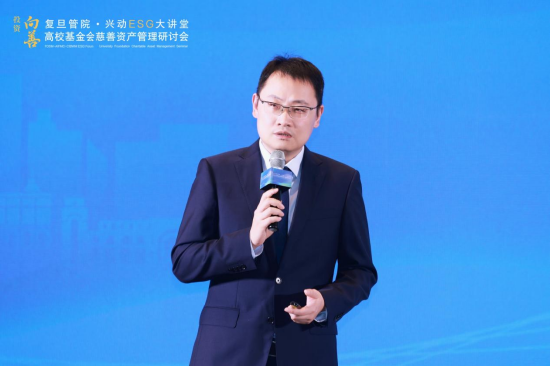
兴证全球基金陈锦泉:构建多资产多策略体系 为高校基金会提供稳健、可持续投资回报
Xin Lang Ji Jin· 2025-09-22 06:35
Core Insights - The "Investment for Good" seminar held by Fudan University and Xingsheng ESG focused on the collaboration between asset management and university foundations to achieve sustainable investment returns [1][3]. Group 1: Company Strategy - Xingsheng Global Fund emphasizes risk control, long-term investment, and value investment principles while expanding its active management capabilities [3]. - The company has launched a series of social responsibility products since 2016, which allocate part of the investment returns to support university public welfare projects [3]. Group 2: Market Environment - The Chinese economy demonstrates strong resilience amid challenges such as trade friction, with government initiatives aimed at stimulating consumption and promoting infrastructure projects [3]. - In a low-interest-rate environment, equity assets remain attractive, and focusing on companies with core competitiveness is seen as an effective way to achieve excess returns [3]. Group 3: Asset Management Trends - The seminar discussed the complexities of the current investment environment, emphasizing the importance of multi-asset strategies and large asset allocation [4]. - Xingsheng Global Fund aims to enhance understanding and cooperation between university foundations and asset management institutions for mutual growth and value creation [4].
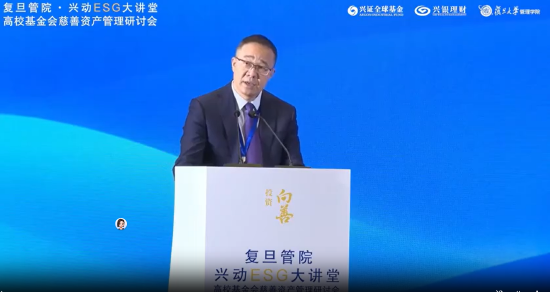
兴证全球基金陈锦泉:高校基金会与资管机构深入交流新形势下的发展路径
Xin Lang Ji Jin· 2025-09-22 06:28
Core Viewpoint - The conference "Investment for Good" emphasizes the importance of ESG (Environmental, Social, and Governance) principles in investment strategies, particularly in the context of managing charitable assets for university foundations [1][3]. Group 1: Company Strategy - The company, Xingzheng Global Fund, has maintained deep cooperation with multiple university foundations, focusing on risk control, long-term investment, and value investment principles [3]. - Xingzheng Global Fund has developed a multi-asset and multi-strategy investment system to provide stable and sustainable returns for university foundations [3]. - The company launched a series of social responsibility dedicated products in 2016, which include provisions for reinvesting part of the investment returns into university public welfare projects [3]. Group 2: Market Environment - The current investment environment is increasingly complex, prompting discussions on asset allocation and multi-asset strategies beyond equity assets [4]. - The company highlights the resilience of the Chinese economy amid challenges such as trade friction, with government measures aimed at stimulating consumption and promoting infrastructure projects [3]. - In a low-interest-rate environment, equity assets remain attractive, and focusing on companies with core competitiveness is seen as an effective way to achieve excess returns [3]. Group 3: Collaboration and Future Outlook - The conference aims to enhance understanding and cooperation between university foundations and asset management institutions, fostering a collaborative environment for value creation and long-term growth [4].
招商证券大类资产配置系列指数投资价值分析:穿越波动周期的投资罗盘
CMS· 2025-09-21 05:03
- The report introduces two quantitative strategy indices developed by China Merchants Securities: the Global Assets Risk Parity Rotation Index (GARRI) and the China Assets Risk Parity Rotation Index 2.0 (CARRI2) [3][10] - GARRI and CARRI2 indices use momentum trend tracking methods to rotate allocations among equities, bonds, and commodities globally or within China, employing risk parity, volatility control, and daily monitoring for stop-loss and take-profit to manage overall portfolio volatility [3][10] - GARRI includes 13 sub-portfolios such as stock indices, government bond futures, gold futures, and commodity futures, while CARRI2 includes 10 sub-portfolios with similar asset classes but focused on the Chinese market [11] - The indices adjust the allocation weights of each sub-portfolio monthly based on momentum factors and risk parity models [11] - The construction process involves selecting sub-portfolios based on momentum signals and adjusting initial weights according to risk parity theory, with dynamic adjustments for daily performance [12][13] - GARRI's long-term annualized return is 7.76%, with an annualized volatility of 4.05% and a maximum drawdown of 5.46% [3] - CARRI2's long-term annualized return is 7.42%, with an annualized volatility of 4.62% and a maximum drawdown of 5.66% [3] - GARRI's performance is attributed mainly to bond assets, contributing an average of 39% (63% including cash), with equities, gold, and commodities contributing 14.3%, 5.5%, and 17.0% respectively [3] - CARRI2's performance is also primarily driven by bonds, contributing 60% (72% including cash), with equities, gold, and commodities contributing 9.1%, 5.7%, and 12.8% respectively [3] - GARRI and CARRI2 indices can be used as underlying indices for various financial products such as OTC options, total return swaps, and structured notes, suitable for different types of investors [3][98] - Compared to other global asset classes, GARRI and CARRI2 indices offer higher return-to-drawdown ratios, making them cost-effective options for achieving higher absolute returns with reasonable portfolio volatility [3][110][112]

汇百川基金倪伟:“固收+”产品是长期资产配置趋势
Zhong Zheng Wang· 2025-09-16 13:19
Group 1 - The core viewpoint is that "fixed income +" products have high allocation value due to the inability of traditional pure bond products to meet investor return requirements, while the stock market's risk appetite has significantly increased, leading to numerous structural opportunities and enhanced strategy opportunities [1][2] - The performance growth of "fixed income +" products this year is primarily attributed to the rise in the equity market, with the equity exposure in these products typically ranging from 10% to 30%, which has a greater impact on the portfolio compared to fixed income assets [1] - The growth in the scale of "fixed income +" products is driven by the stabilization of risk-free interest rates and the rising risk appetite and trends in the equity market, as pure bond products generally yield annualized returns below 2% this year, prompting a shift of funds towards "fixed income +" products [1] Group 2 - "Fixed income +" products represent a long-term asset allocation trend, utilizing a mix of asset classes to determine an appropriate stock-bond ratio and seek excess returns within these asset categories [2] - The rotation between stocks and bonds is influenced by economic fundamentals and valuation differences, with "fixed income +" products expected to achieve stable growth over the long term, although they require a high level of skill from fund managers to allocate to suitable assets [2]