
美联储货币政策

Search documents
美联储新主席是鹰是鸽
Bei Jing Shang Bao· 2026-02-01 15:55
Core Viewpoint - Kevin Warsh has been nominated by President Trump to be the next Chairman of the Federal Reserve, with a policy inclination towards "parallel rate cuts and balance sheet reduction," which has alleviated market concerns about the Fed's independence [1][3]. Group 1: Warsh's Background and Policy Stance - Warsh, born in 1970, has a background in mergers and acquisitions at Morgan Stanley and served as a Fed governor from 2006 to 2011, making him the youngest in that role at the time [3]. - Initially seen as a supporter of free trade and a hawkish figure on monetary policy, Warsh has shifted to support Trump's tariff policies and calls for accelerated rate cuts [3]. - He advocates for lower interest rates while proposing a significant reduction in the Fed's balance sheet and easing bank regulations, which contrasts with typical rate cut cycles that often involve halting or expanding the balance sheet [4]. Group 2: Market Reactions and Implications - Following Warsh's nomination, the dollar strengthened, and gold prices fell sharply, with gold experiencing a significant drop after reaching a historical high of $5,500 per ounce [6]. - Bitcoin and other cryptocurrencies also saw substantial declines, with Bitcoin dropping below $80,000, reflecting market volatility in response to Warsh's potential policies [7]. - Analysts suggest that Warsh's policies could lead to a complex financial environment where nominal interest rates decline while overall liquidity tightens, creating a dynamic interplay between tightening and easing effects [4][5]. Group 3: Impact on Domestic Financial Markets - The Fed's policy changes under Warsh could influence the Chinese yuan's exchange rate, with potential short-term pressure on the yuan if the dollar strengthens due to tightening expectations [8]. - Despite external influences from the Fed, China's economic fundamentals are expected to provide stability for the yuan, with the country maintaining a principle of "self-determination" in its monetary policy [9][10]. - Warsh's potential combination of "rate cuts and balance sheet reduction" suggests that the overall monetary policy direction may remain accommodative, which could sustain favorable external financial conditions for China [10].

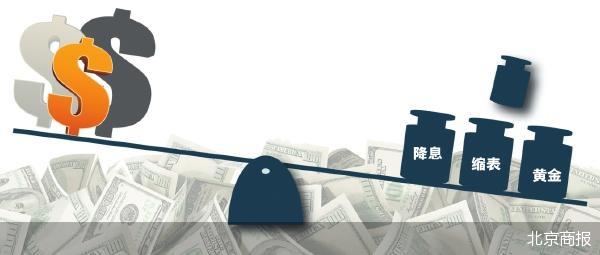
宏观点评:美联储迎来沃什,4大关键点
GOLDEN SUN SECURITIES· 2026-02-01 10:25
Group 1: Key Points on Kevin Walsh's Nomination - Kevin Walsh's nomination as the next Federal Reserve Chair was unexpected, as prior to the announcement, his probability of being nominated was closely matched with that of Riedel[1] - Walsh advocates for a combination of balance sheet reduction and interest rate cuts, positioning him as more dovish than current Chair Powell but more hawkish than the previously favored candidate, Hassett[1] - The Senate confirmation process for Walsh may face challenges due to dissatisfaction among Republican senators regarding Powell's judicial investigation, potentially complicating the approval timeline[1] Group 2: Market Impact and Expectations - Following Walsh's nomination, market expectations for Federal Reserve interest rate cuts remained largely unchanged, with a 40% probability for cuts in March and April, and over 80% for June, indicating a forecast of two cuts for the year[1] - Major stock indices reacted negatively post-nomination, with the S&P 500, Nasdaq, and Dow Jones dropping by 0.4%, 0.9%, and 0.4% respectively, while the dollar index rose by 1.0% to 97.1[1] - Gold prices fell significantly by 9.3% to $4,880 per ounce, reflecting a crowded long position and high valuation levels[1]
宏观点评:美联储迎来沃什,4大关键点-20260201
GOLDEN SUN SECURITIES· 2026-02-01 08:58
Group 1: Key Points on Kevin Walsh's Nomination - Kevin Walsh's nomination as the next Federal Reserve Chair was unexpected, as prior to the announcement, his probability of being nominated was closely matched with that of Riedel[4] - Walsh's policy stance is more dovish than current Chair Powell but more hawkish than the previously favored candidate, Hassett[1] - The market's expectations for interest rate cuts remain largely unchanged, with a projected cut in June and two cuts throughout the year[1] Group 2: Market Impact and Reactions - Following Walsh's nomination, the S&P 500, Nasdaq, and Dow Jones indices fell by 0.4%, 0.9%, and 0.4% respectively, while the 10-year Treasury yield remained stable at 4.24%[9] - The U.S. dollar index rose by 1.0% to 97.1, and spot gold prices dropped by 9.3% to $4,880 per ounce, indicating a bearish sentiment towards equities and gold[9] - The market anticipates continued pressure on gold prices due to high valuations and crowded long positions, with gold's valuation reaching the highest level in 40 years relative to M2 money supply[9][21] Group 3: Political and Confirmation Process - Walsh's nomination requires Senate confirmation, which may face challenges due to dissatisfaction among Republican senators regarding Powell's judicial investigation[6] - Historical context suggests that if Walsh's nomination is delayed, a temporary chair may need to be appointed from current board members, which could lead to market uncertainty[7] - The Senate's composition is 53 Republicans to 47 Democrats, with potential for a tie if opposition arises, complicating the confirmation process[6][14] Group 4: Walsh's Policy Perspectives - Walsh advocates for controlling the money supply to reduce inflation rather than solely relying on interest rate hikes, suggesting a simultaneous approach of balance sheet reduction and rate cuts[3] - He has shifted from a hawkish stance during his tenure at the Fed (2006-2011) to a more dovish position recently, indicating flexibility in his policy approach[3] - Walsh emphasizes the need for the Fed to regain credibility and avoid excessive fiscal intervention, calling for a clear delineation of responsibilities between the Treasury and the Fed[11]
凯德北京投资基金管理有限公司:美联储对降息按下暂停键
Sou Hu Cai Jing· 2026-01-31 14:56
Group 1 - The Federal Reserve decided to pause its recent series of interest rate cuts, maintaining the key rate in the range of 3.5% to 3.75%, which aligns with market expectations and marks a temporary halt after three consecutive rate cuts [1] - The Federal Open Market Committee adjusted its economic description, indicating that U.S. economic activity is continuing to expand steadily, with moderate job growth and signs of stabilization in the unemployment rate [3] - The statement removed previous language indicating that labor market risks were greater than inflation risks, suggesting a shift towards a more balanced approach to achieving full employment and price stability [3] Group 2 - The U.S. economy is exhibiting mixed signals, with strong economic growth indicators but a slowdown in hiring, while layoffs remain manageable and unemployment claims are low [5] - Inflation remains a significant concern, currently hovering around 3%, which is above the long-term target of 2%, prompting some Federal Reserve officials to advocate for a pause or halt in rate cuts until clearer evidence of easing price pressures is observed [5] - External trade policies are viewed as a factor influencing inflation, with economists believing that current tariff measures may temporarily increase price pressures but are expected to diminish over time [5] Group 3 - The upcoming transition in Federal Reserve leadership is a new focal point for the market, as the successor will need to balance economic expansion, labor market adjustments, and persistent inflation in future rate decisions [7] - The decision to pause rate cuts may reflect the Federal Reserve's cautious assessment of the situation during this critical transition period, allowing for flexibility in future policy [7]
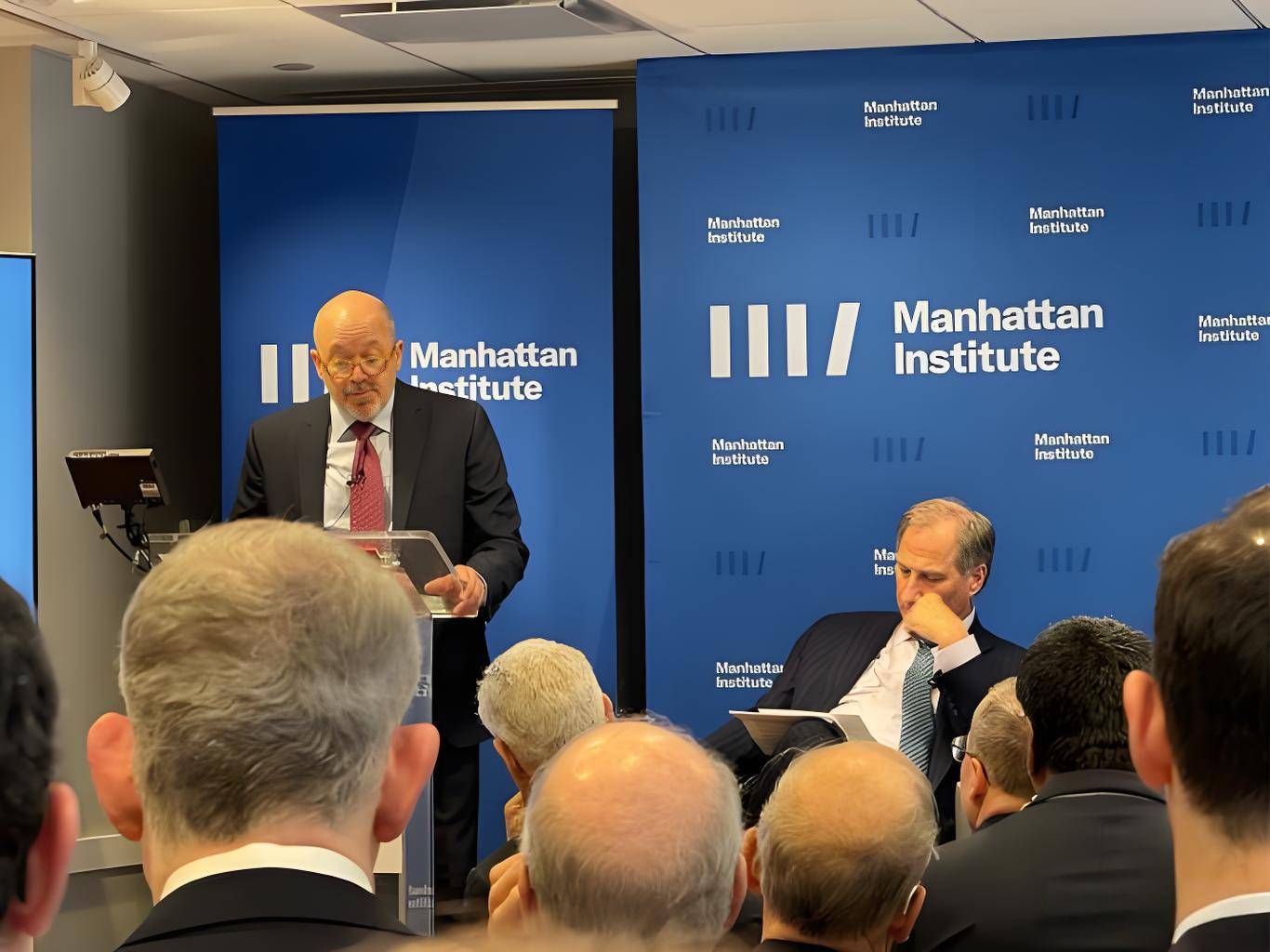
国际黄金遭遇40年来最大单日暴跌,市场恐慌抛售引发连锁反应
Sou Hu Cai Jing· 2026-01-31 06:25
北京时间2026年1月31日凌晨,全球贵金属市场迎来史诗级震荡,国际现货黄金价格遭遇恐慌性抛售,单日跌幅创下1980年以来的历史峰值,成为近40年来 最剧烈的一次单日下跌,白银市场同步上演"崩盘式"下跌,引发全球金融市场连锁反应。 Wind数据显示,此次黄金暴跌始于1月30日下午,美盘时段抛售情绪持续升温,至31日凌晨达到顶峰。现货黄金价格盘中一度暴跌12.92%,接连跌破5400美 元、5300美元至4700美元多道关键关口,最低触及4682美元/盎司,单日波幅接近700美元,创下历史罕见纪录。截至当日收盘,现货黄金报4880.03美元/盎 司,跌幅收窄至9.25%,回吐本周全部涨幅,彻底终结了此前连续多日的上涨势头。COMEX黄金期货同步承压,周五下跌8.88%,报4846.20美元/盎司,尽 管1月份累计涨幅仍达13.38%,但此次暴跌已成为自去年10月以来对涨势最严重的冲击。 与黄金同步承压的还有白银市场,现货白银价格盘中一度暴跌35.89%,最低下探至74.28美元/盎司,创下历史最大日内跌幅,截至收盘,跌幅收窄至 26.42%,报85.259美元/盎司,单日市值蒸发近三成。 此次黄金40年来最大单 ...
史诗级暴跌,原因找到了
Feng Huang Wang· 2026-01-31 02:39
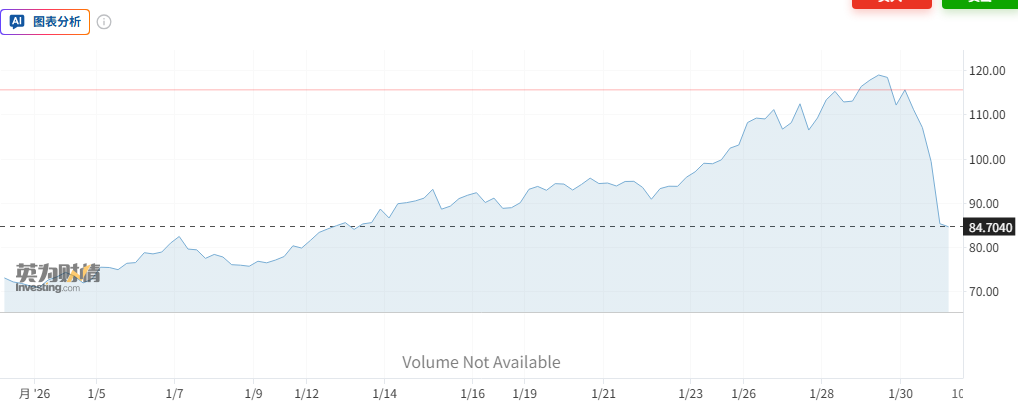
Core Viewpoint - The precious metals market experienced a significant downturn on January 30, 2026, following a historic rise, with gold and silver facing their largest single-day declines in decades, indicating a potential shift in market sentiment and dynamics [1][2]. Price Movements - Gold prices surged from approximately $4000 to a peak of $5626.80 per ounce, marking a monthly increase of over 30% [2]. - Silver prices rose from around $70 to $120 per ounce, achieving a cumulative increase of over 60% [2]. - On the day of the downturn, gold fell by more than 12%, while silver experienced a record drop exceeding 36% [1]. Market Dynamics - The decline was triggered by the announcement of Kevin Warsh as the next Federal Reserve Chair, which shifted market expectations towards a more hawkish monetary policy, leading to a stronger dollar and weaker precious metals [5]. - The precious metals market had accumulated significant short-term profit-taking pressure, setting the stage for the sharp decline [4]. Leverage and Volatility - High leverage in the futures market exacerbated the downturn, as positions were liquidated during the price drop, creating a cascading effect of selling [7]. - Increased margin requirements by major exchanges added pressure on leveraged traders, contributing to the downward spiral [7]. Market Sentiment - Analysts noted that the rapid rise in precious metal prices had led to extremely optimistic valuation and sentiment indicators, increasing the likelihood of a sudden price correction [9]. - Despite the significant drop, current prices remain substantially higher than at the beginning of the year, highlighting the extent of the previous price surge [11]. Future Outlook - It remains uncertain whether the recent decline will mark a trend reversal or merely a mid-term adjustment within an overall upward trend [12]. - The ability of precious metal prices to stabilize above key technical support levels in the coming days, along with upcoming Federal Reserve policy statements, will be crucial in determining future market direction [13].
Hassett BLASTS the Fed as BEHIND the curve
Youtube· 2026-01-31 02:30
Economic Overview - Producer prices increased by 3% year-over-year in December, indicating stronger inflation than anticipated [1] - The Federal Reserve's inflation forecasts have been criticized for being inaccurate, contributing to the current inflationary environment [2][3] Federal Reserve Leadership - President Trump has nominated Kevin Worsh as the next chairman of the Federal Reserve, which has raised concerns about the Fed's ability to manage inflation effectively [2][4] - The current administration aims to ensure a smooth confirmation process for Worsh despite some Republican pushback regarding previous Fed actions [9] Interest Rates and Economic Growth - The administration believes that the Fed has been "behind the curve" in addressing inflation and that there is potential for significant economic growth driven by supply-side factors, particularly from advancements in AI [10][11] - There is a belief that interest rates could potentially be lowered to 1% due to the positive impact of AI on productivity and GDP growth [13] Job Market and AI Impact - While AI is expected to cause job dislocations, it is also anticipated to increase overall incomes and GDP, leading to new job opportunities for displaced workers [15][16] - The current unemployment rate remains low, suggesting that the job market is resilient despite changes brought about by AI [16] Inflation Trends - Recent increases in producer prices, particularly in commodities like gold and copper, have raised questions about the sustainability of inflation levels [17][18] - Despite the recent producer price increases, the overall inflation numbers in the U.S. are still close to target, allowing room for potential interest rate cuts by the Fed [18][19]
深夜突发!金价跳水,银价下跌
Sou Hu Cai Jing· 2026-01-31 02:19
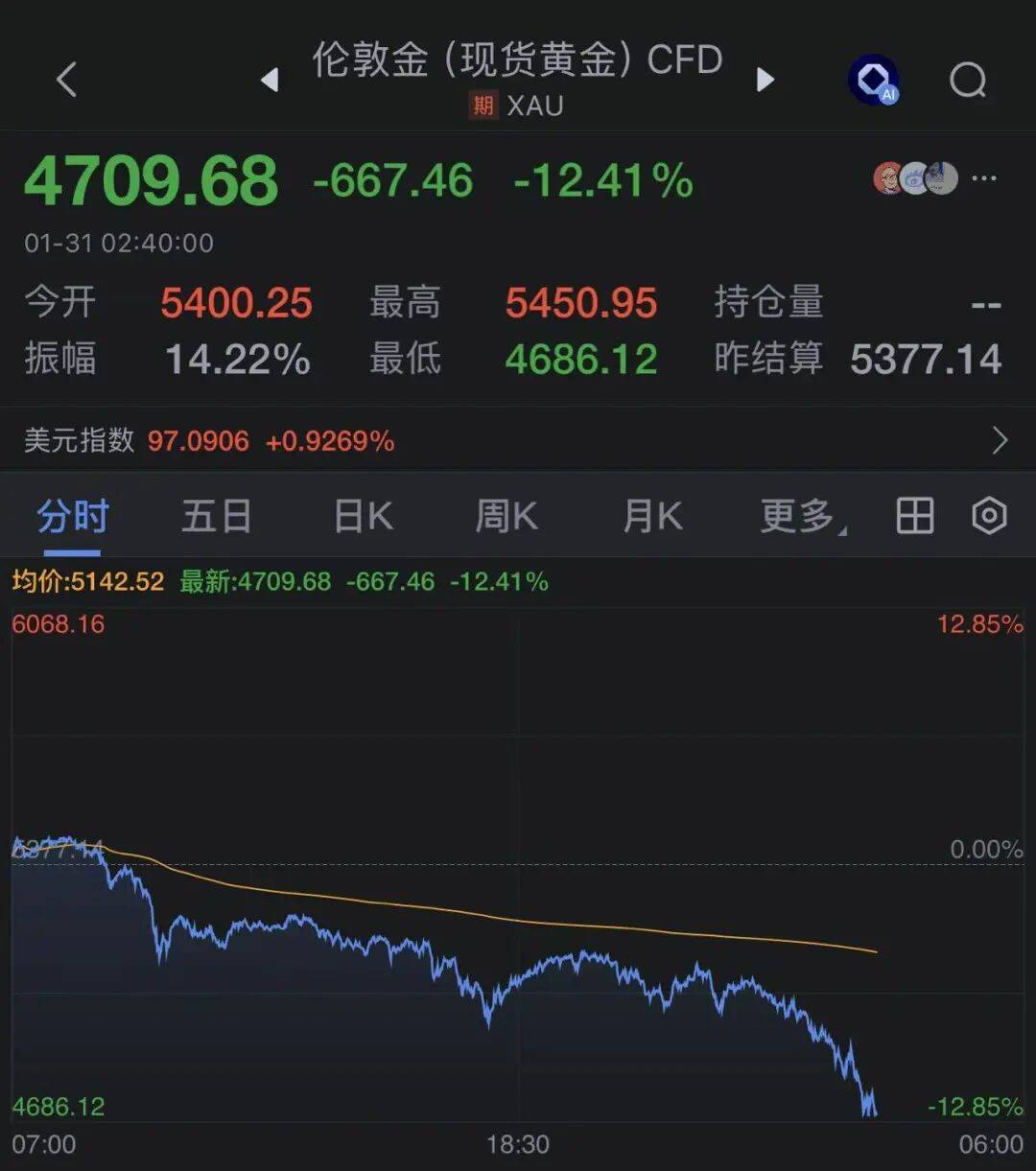
北京时间1月31日凌晨,恐慌性抛售席卷全球贵金属市场。 现货白银日内跌幅扩大至34.67%,从110美元/盎司上方一路跌至75.38美元/盎司。现货黄金日内跌幅扩大至12.41%,从5400美元/盎司跌至4709.68美元/盎 司。 30日,美国总统特朗普提名美联储前理事凯文·沃什为下任美联储主席。 沃什2006年加入美联储,是当时最年轻的美联储理事。在美联储任职期间,沃什持鹰派货币政策立场,但近年转向支持特朗普的关税政策及加快降息立 场。该消息发布后,市场迅速聚焦其货币政策取向及美联储独立性问题。市场普遍认为,美联储未来一年降息幅度大致集中在50个基点至100个基点之 间。 中金公司分析指出,由于美联储政策与美国经济尚未出现拐点,因此黄金牛市可能并未结束。但在黄金价格已经脱离基本面指标与模型拟合后,市场波动 或明显增大,具体点位预测难度较高,建议淡化黄金价格点位预测,更关注资产趋势改变时点。 | V 期 XAU | ◀ | | | 伦敦金(现货黄金)CFD ▶ Q Q Q | | | | --- | --- | --- | --- | --- | --- | --- | | 4709.68 -667.46 ...
沃什获得提名对美联储意味着什么?
美股IPO· 2026-01-31 01:39
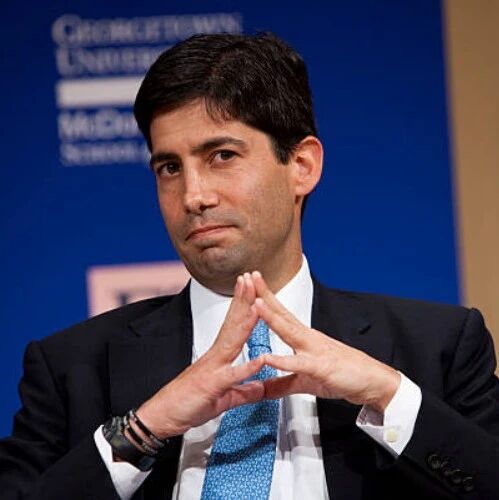
Core Viewpoint - Trump's nomination of Kevin Warsh to replace Powell as the Federal Reserve Chairman indicates an attempt to align monetary policy with his administration's goals, particularly advocating for lower interest rates [1][3]. Group 1: Warsh's Background and Experience - Warsh has a dual background in Wall Street and public service, having served as a Federal Reserve Governor during the 2008 financial crisis and as a member of the Bush administration's economic advisory team [4][5]. - He was the youngest person to be appointed as a Federal Reserve Governor at the age of 35 and has maintained close ties with Trump, providing economic policy advice over the years [5][6]. Group 2: Policy Proposals and Monetary Reform - Warsh has publicly criticized the Federal Reserve's policies, particularly its balance sheet expansion, and has called for comprehensive reforms, including significant reductions in the balance sheet to create room for future interest rate cuts [6][7]. - His previous cautious stance on interest rate cuts has shifted, now advocating for a reduction in rates, aligning with Trump's objectives [6][7]. Group 3: Constraints on Warsh's Influence - As Chairman, Warsh's ability to influence monetary policy will be limited, as decisions require majority support from the Federal Open Market Committee (FOMC), where he only has one vote [7][9]. - Historical precedents show that even respected Chairpersons can face challenges in gaining consensus, which may complicate Warsh's efforts to push for rate cuts [7][9]. Group 4: Independence of the Federal Reserve - The appointment of a Chairman aligned with the President's views does not necessarily end the Federal Reserve's independence, as the dynamics within the FOMC will play a crucial role in determining policy direction [9][10]. - Ongoing legal challenges regarding the dismissal of Fed officials could further impact the independence and decision-making processes within the Federal Reserve [9][10].
金价大跳水,日内跌超12%,银价暴跌近35%!
Sou Hu Cai Jing· 2026-01-31 00:56
30日,美国总统特朗普提名美联储前理事凯文·沃什为下任美联储主席。 北京时间1月31日凌晨,恐慌性抛售席卷全球贵金属市场。 现货白银日内跌幅一度扩大至34.67%,从110美元/盎司上方一路跌至75.38美元/盎司。现货黄金日内跌幅扩大至12.41%,从5400美元/盎司跌至4709.68美 元/盎司。 | V 期 XAU | ◀ | | | 伦敦金(现货黄金)CFD ▶ | | | | --- | --- | --- | --- | --- | --- | --- | | 4709.68 -667.46 -12.41% | | | | | | (664) ... | | 01-31 02:40:00 | | | | | | | | 今开 5450.95 | 5400.25 | 最高 | | 持仓量 | | | | 振幅 | 14.22% | 最低 | 4686.12 | | 昨结算 5377.14 | | | 美元指数 97.0906 +0.9269% | | | | | | | | 周K 分时 - - - | | | | 目K | 更多, 田 ◎ | | | 均价:5142.52 最新:4709.68 - ...