
即时零售

Search documents
微醺TALK | 华致酒行杨武勇谈“因上努力,果上随缘”:一年时间存货压缩10个亿,华致优选要做酒水界的“山姆”
Cai Jing Wang· 2026-01-27 10:20
Core Insights - The company is navigating a challenging period in the liquor industry, with a focus on inventory reduction and operational efficiency due to declining prices of premium liquor [1][2] - The CEO, Yang Wuyong, emphasizes the need for a shift in business logic within the liquor distribution sector, moving away from traditional practices to adapt to new market realities [1][2] - The company is expanding its store formats and enhancing its supply chain to improve efficiency and meet consumer demands for quality and timely delivery [5][6] Inventory and Financial Management - Upon taking over as CEO, Yang Wuyong prioritized reducing inventory, resulting in a decrease of 1 billion yuan in stock by Q3 2025 compared to the previous year, alongside saving nearly 200 million yuan in expenses [1] - The company is transitioning from a model with over 40 warehouses to a more streamlined system of five central warehouses and multiple front warehouses to enhance logistics efficiency [5] Market Positioning and Consumer Trends - The company targets a higher-end market segment, achieving an average transaction value between 700 to 2000 yuan, appealing to consumers who prioritize quality over price [3][4] - Yang Wuyong notes that consumer preferences are shifting towards quality and experience, indicating a need for the company to adapt its offerings to meet these evolving demands [2][8] Supply Chain and Operational Strategy - The company is implementing a shared supply chain system across its various store formats to reduce logistics costs and improve responsiveness to market needs [4][5] - The introduction of the "Hua Zhi You Xuan" format aims to create a competitive edge by offering a curated selection of products and enhancing the shopping experience for consumers [6][9] Future Outlook and Strategic Goals - The company plans to expand its "Hua Zhi You Xuan" stores to over 1,000 locations, focusing on a three-kilometer delivery radius to ensure quick service [6][7] - Yang Wuyong believes that the liquor industry will not disappear but will evolve, requiring the company to innovate in product offerings and marketing strategies to attract younger consumers [9]
百川赴港上市迷局未卜,即时零售重构白酒产业版图
Sou Hu Cai Jing· 2026-01-27 07:30
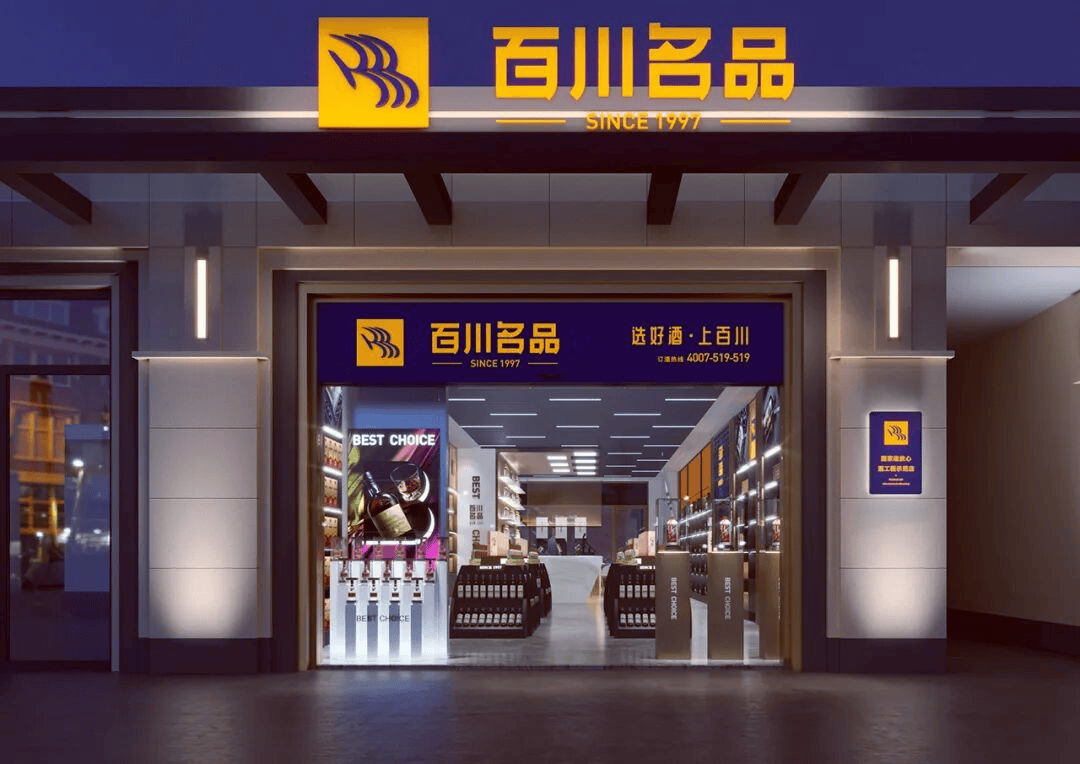
Core Viewpoint - The IPO plan of Baichuan Mingpin, a leading player in the liquor distribution sector, has come to light following a job posting for a board secretary responsible for the Hong Kong IPO process, despite the company's subsequent denial of any immediate IPO plans [2][4]. Company Overview - Founded in 1997, Baichuan Mingpin has grown into a major liquor distribution company, holding partnerships with top brands like Moutai and Wuliangye, and controlling over 300,000 terminal outlets with a brand value exceeding 60 billion yuan [2][4]. Industry Context - The liquor industry is currently facing a period of adjustment, with leading companies experiencing slowed growth and smaller firms exiting the market. Liquor distribution companies are under pressure from high inventory levels, price inversions, and compliance costs [2][4][6]. - The overall liquor production in the industry is projected to decline by 12.1% year-on-year by 2025, marking a ten-year low, with major listed companies reporting declines in both revenue and net profit [6][10]. Strategic Shift - Baichuan Mingpin is pivoting towards instant retail, launching the "Jiuyizhan" brand in 2023 as a core part of its transformation strategy. This model aims to address the challenges faced by traditional distribution methods [8][10]. - The Jiuyizhan brand has expanded to cover 14 key cities with over 120 direct stores and aims to reach 2,000 stores by 2026 and 5,000 by 2028, leveraging a membership system with over one million users [8][10]. Market Trends - The instant retail market for liquor is expected to exceed 50 billion yuan in 2024, with an annual growth rate of over 35%, and is projected to double to 72 billion yuan by 2025 [10][11]. - The shift towards instant retail aligns with changing consumer behaviors, particularly among younger generations who prefer immediate access to products rather than bulk purchasing for special occasions [11][13]. Competitive Landscape - The competition in the instant retail sector has evolved from logistics speed to a comprehensive competition involving supply chain efficiency, authenticity systems, and digital capabilities [13][14]. - The industry is witnessing a transformation from traditional distribution to a more consumer-centric approach, prompting liquor companies to innovate in product development and supply chain management [14].

北上广等15省“国补”上线京东秒送
Bei Jing Shang Bao· 2026-01-27 06:40
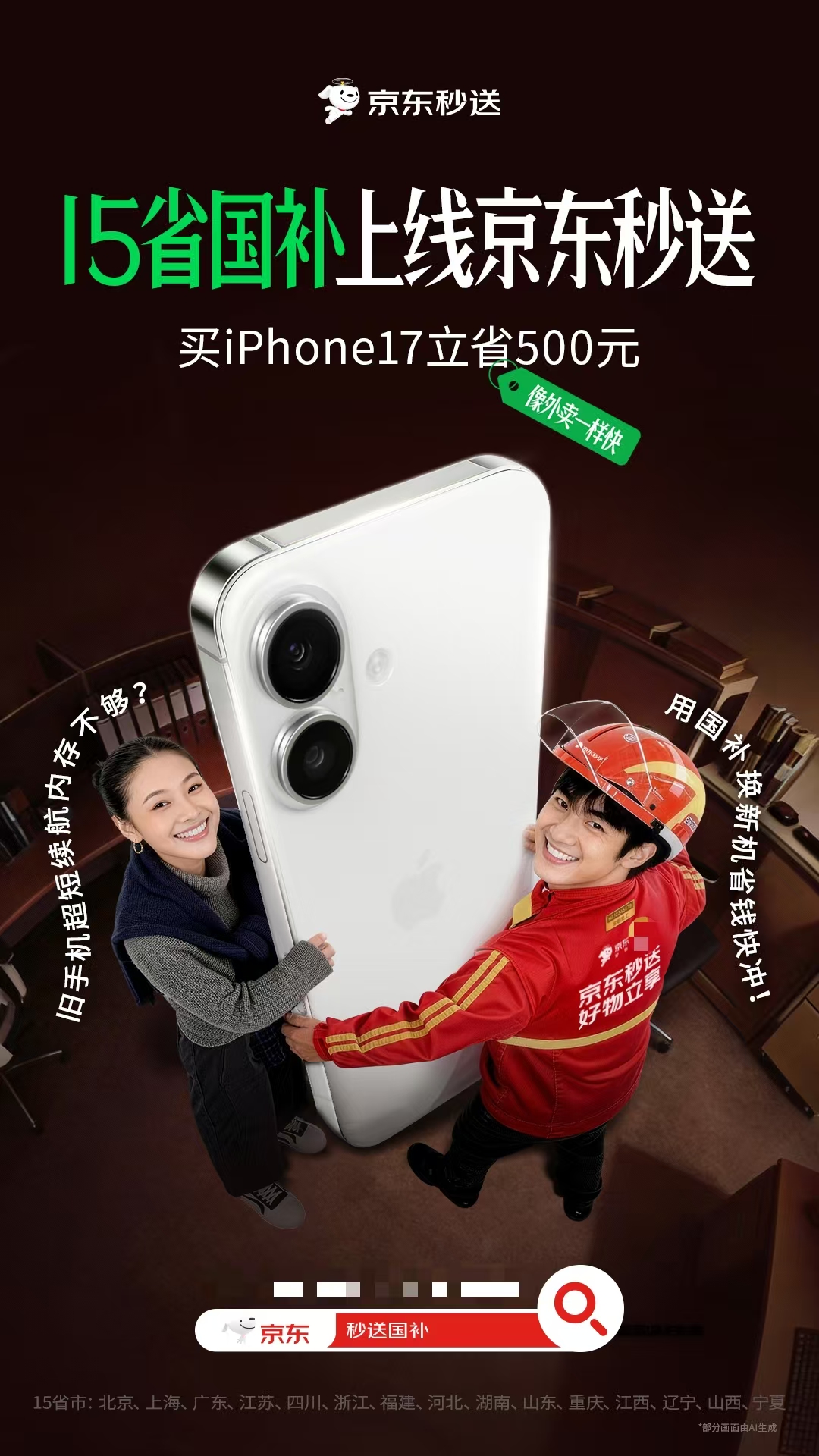
Group 1 - The core point of the article is that JD's instant retail platform, JD Seconds, has fully implemented the "National Subsidy" program for 2026 across 15 provinces in China, allowing consumers to access subsidies on various electronic products [1] Group 2 - The "National Subsidy" program is available in major provinces including Beijing, Shanghai, Guangdong, Jiangsu, Sichuan, Zhejiang, Fujian, Hebei, Hunan, Shandong, Chongqing, Jiangxi, Liaoning, Shanxi, and Ningxia [1] - Consumers can find the "National Subsidy" section by searching for "秒送国补" on the JD App [1] - The subsidy covers a range of 3C digital products such as computers, mobile phones, tablets, smartwatches, and fitness bands [1] Group 3 - The subsidy allows consumers to receive a discount of 15% off the product's selling price, with specific caps on individual product categories [1] - For computer products, the maximum subsidy per item is up to 1500 yuan, while for mobile phones, tablets, and smart wearable devices, the maximum subsidy is up to 500 yuan [1]

北上广等15省国补上线京东秒送,春节换新机立享15%国补优惠
Jin Rong Jie· 2026-01-27 04:48
Core Insights - JD's instant retail platform, JD Seconds, has fully adopted the national subsidy program for 2026, launching in 15 provinces and cities including Beijing, Shanghai, and Guangdong, allowing consumers to access a dedicated subsidy section for 3C digital products [1][2] Group 1: Subsidy Program Details - Consumers can enjoy a subsidy of 15% off the product sales price, with a maximum subsidy of 1500 yuan for computers and 500 yuan for mobile phones, tablets, and wearable devices [1][2] - Popular brands such as Apple, Xiaomi, Huawei, OPPO, and Lenovo are included in the subsidy program, with specific hot-selling models available for purchase [1] Group 2: Delivery and Service Enhancements - Trained JD Seconds couriers will deliver the subsidized products to consumers' homes, providing on-site signing and activation assistance as part of a comprehensive service experience [2] - Over 10,000 brand specialty stores have integrated into this service system to enhance consumer experience [2] Group 3: Investment and Future Plans - Since the implementation of the national "Two New" policy in 2024, JD has invested nearly 30 billion yuan to support the subsidy program in rural areas, effectively boosting county-level consumption [2] - JD plans to leverage its supply chain and instant retail network to further promote the subsidy policy, contributing to consumer stimulation and high-quality economic development [2]
淘宝闪购上各地精品年货消费火爆:上海车厘子礼盒同比涨超12倍 八宝饭、腊八粥热销
Sou Hu Cai Jing· 2026-01-26 21:00
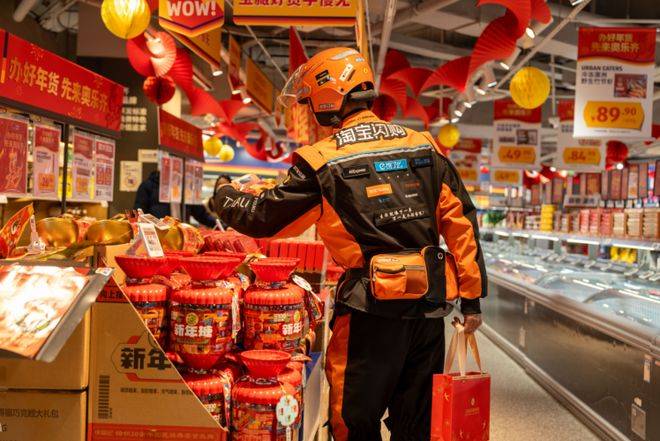
Core Insights - The core theme of the articles revolves around the significant increase in consumer demand for traditional Chinese New Year goods, driven by various festive shopping trends and changing consumer preferences as the holiday approaches [1][2][4][6][7] Group 1: Sales Growth and Trends - Overall sales of New Year goods have surged, with a 201% year-on-year increase in sales since the launch of the New Year shopping festival on December 29 [1] - Specific products have seen explosive growth, such as the "one table to rule them all" New Year dish series from Hema, which experienced a 467% week-on-week sales increase [1] - Sales of fresh milk and Chilean cherries have also shown strong performance, with year-on-year increases of 232% and over 228% respectively [1] Group 2: Consumer Behavior and Preferences - The trend of "light cooking" has gained traction, with sales of semi-finished ingredients, high-end seafood, and ready-to-eat meals increasing by 259%, 271%, 225%, and 250% respectively [1] - The search volume for New Year-related keywords has risen significantly, with a 29-fold increase over four weeks, indicating heightened consumer interest [2] - The demand for travel-related products, such as portable toiletries and bottled water, has also surged, reflecting changing consumer habits [2] Group 3: Regional Variations in Consumption - In Shanghai, high-end gift items like the butterfly pastry gift box saw a 201% year-on-year sales increase, while Chilean cherries experienced a 12-fold increase in sales [4] - In Guangzhou, sales of strawberries and Chilean cherries skyrocketed by 33 times and 32 times respectively, highlighting the region's unique festive preferences [4] - In contrast, in the Sichuan and Hunan regions, spicy food items have dominated sales, with products like dried fish and spicy gift boxes seeing sales increases of 547% [6] Group 4: Market Innovations and Future Outlook - The concept of "digital New Year collection" is being promoted to modernize traditional customs, aiming to make festive shopping more convenient and accessible [7] - The emphasis on quality, convenience, and the festive experience reflects a broader shift in consumer expectations and behaviors as the New Year approaches [7]
即时零售,是一门线下生意,品牌商不要走入误区
3 6 Ke· 2026-01-26 13:14
Core Insights - The current trend of instant retail shows significant sales growth, often in double or triple digits, but the profitability is lacking due to high resource investment and ineffective strategies [1][6][20] - Many brands treat instant retail as an independent channel, leading to resource misallocation and inefficiencies [2][10][22] Group 1: Sales and Profitability - Instant retail appears to drive sales growth, but the underlying profit margins are not sustainable, leading to a vicious cycle of promotions and subsidies [1][6] - Brands are experiencing a shift in sales structure, with a significant portion of sales now coming from instant retail, which is not generating new customers but merely shifting existing ones [8][21] Group 2: Operational Challenges - The operational model for instant retail is fundamentally a physical business, despite being conducted online, which complicates inventory and fulfillment processes [5][21] - Brands are duplicating efforts by maintaining separate teams for offline and online sales, leading to inefficiencies and inflated costs [10][13] Group 3: Strategic Recommendations - Brands need to recognize that instant retail is still a physical business and should focus on aligning their online and offline strategies rather than treating them as separate entities [21][22] - A more integrated approach is necessary, where resources and performance metrics are combined to avoid the pitfalls of fragmented operations [22]
交通运输行业周报:即时零售再起势,重视顺丰同城布局机会,航空量价环比回升预热春运-20260126
Guolian Minsheng Securities· 2026-01-26 13:04
Investment Rating - The report maintains a "Buy" rating for key companies in the transportation sector, including SF Holding, YTO Express, and Eastern Airlines Logistics, among others [2][3]. Core Insights - The instant retail industry is experiencing rapid expansion, with China's market expected to reach 1.2 trillion yuan by 2026 and over 2 trillion yuan by 2030, reflecting a CAGR of 43.6% from 2018 to 2026 [8][10]. - Alibaba's commitment to the instant retail sector is strong, with significant investments aimed at expanding beyond food delivery into a full range of instant retail services, evidenced by a peak of 120 million daily orders on Taobao Flash Purchase [12][15]. - SF Express is highlighted as a leading independent third-party instant delivery service, benefiting from the industry's growth and increasing demand for delivery services [30][18]. - The airline industry is recovering from a seasonal downturn, with domestic flight numbers increasing by 1.4% week-on-week, and ticket prices showing a year-on-year increase of 8.4% [32][43]. - The air cargo sector is also seeing a recovery, with stable freight rates and increased demand expected as the Chinese New Year approaches [50][57]. - The express delivery industry is stabilizing, with a slight increase in average revenue per package, and major players like SF Express and YTO Express gaining market share [61][75]. Summary by Sections Instant Delivery Industry - The instant retail market in China is projected to grow significantly, with a CAGR of 43.6% from 2018 to 2026, reaching 1.2 trillion yuan by 2026 and over 2 trillion yuan by 2030 [10][18]. - Alibaba's strategic investments in instant retail are reshaping the market, with a focus on expanding beyond traditional food delivery [12][15]. - SF Express is positioned as a key player in the instant delivery sector, benefiting from rapid growth and increased order volumes [30][18]. Airline Industry - The airline sector is showing signs of recovery, with domestic flight operations increasing and ticket prices rising [32][43]. - The air cargo market is stabilizing, with expectations of increased demand leading up to the Chinese New Year [50][57]. Express Delivery Industry - The express delivery market is stabilizing, with slight improvements in revenue per package and market share gains for major companies [61][75]. - The report emphasizes the ongoing trend of "anti-involution" in the industry, which is expected to lead to improved profitability for express delivery companies [81].






交通运输行业周报:即时零售业务爆发,把握顺丰同城投资机会
GOLDEN SUN SECURITIES· 2026-01-25 12:24
Investment Rating - The report recommends a "Buy" rating for key companies including SF Holding, Cao Cao Travel, and Jitu Express [8]. Core Insights - The report highlights the explosive growth of instant retail driven by major companies' investments, suggesting that investors should seize opportunities in SF Express's urban delivery segment [1]. - The logistics sector is expected to benefit from the rapid growth of overseas e-commerce and the ongoing recovery in domestic demand, with a focus on companies like Jitu Express and Zhongtong Express [3][18]. - The aviation sector is projected to see a historical high in passenger volume during the 2026 Spring Festival, with a year-on-year growth of approximately 5.3% [11][12]. Summary by Sections Weekly View and Market Review - The transportation sector index rose by 1.76%, outperforming the Shanghai Composite Index by 0.93 percentage points [21]. - The top-performing sub-sectors included warehousing logistics, road freight, and public transport, with increases of 6.05%, 5.91%, and 4.09% respectively [21]. Aviation - The Civil Aviation Administration of China forecasts a record 95 million passengers during the 2026 Spring Festival, with domestic and international routes showing significant growth [11][12]. - The aviation sector is expected to maintain a positive outlook due to low supply growth and recovering demand, with a focus on business travel and international flight recovery [12]. Shipping and Ports - The VLCC market is experiencing high rates due to geopolitical risks, with daily rates reaching $107,937 on the Middle East route [13]. - Dry bulk freight rates are recovering, with the BDI index reaching 1,762 points [14]. - The report emphasizes the potential for LNG transport to enter a different economic cycle, highlighting companies like CIMC Anrui [16]. Logistics - The report identifies two main investment themes in the express delivery sector: overseas expansion driven by e-commerce growth and domestic market consolidation amid competitive pressures [3][18]. - In December 2025, the express delivery industry handled 18.2 billion packages, reflecting a year-on-year growth of 2.3% [19]. - The report notes a divergence in performance among leading express companies, with Zhongtong and YTO showing growth while SF Express faced a decline due to strategic business adjustments [20].
耐克大中华区换帅求变;中国中免约28亿元收购 LVMH 旗下 DFS;宜家入驻即时零售平台“京东秒送”|品牌周报
36氪未来消费· 2026-01-25 09:06
Group 1: Nike's Management Change and Performance - Nike has announced a management change in its Greater China region, with current head Dong Wei stepping down and Cathy Sparks appointed as the new Vice President and General Manager [3][4] - Dong Wei has been with Nike for 20 years and was recently promoted to Chairman and CEO of Nike Greater China, but the company is facing declining performance in the region, with Q2 FY2026 revenue at 14.23 billion yuan, down 17% year-on-year [4] - The decline in revenue is attributed to a drop in direct sales and digital business, with EBIT halving, down 49% year-on-year, indicating a need for strategic reform under the new leadership [4][5] Group 2: China Duty Free Group and LVMH Partnership - China Duty Free Group has reached a strategic cooperation agreement with LVMH to acquire DFS for up to $395 million, which includes retail stores in Hong Kong and Macau and exclusive rights to several brands in the Greater China region [6][7] - DFS has shown stable financial performance, with revenues of 4.1 billion yuan and 2.7 billion yuan for 2024 and 2025 respectively, making it a valuable asset for China Duty Free Group [7] - The acquisition will enhance China Duty Free Group's high-end brand supply chain, as DFS has partnerships with over 750 global brands [8] Group 3: IKEA's New Retail Strategy - IKEA has launched an instant retail service on JD.com, marking its first foray into this business model, covering 13 stores in major cities [9] - This new service aims to improve delivery efficiency and reduce consumer barriers, with a minimum purchase of 99 yuan for free delivery within a 4 km radius [9] - IKEA's sales in China have declined, with a reported revenue of approximately 11.15 billion yuan for FY2024, down 7.6% year-on-year, indicating a need for adaptation to changing consumer preferences [10] Group 4: Haidilao's New Concept Store - Haidilao has opened its first "sugar water shop" as a thematic store, integrating hot pot and dessert offerings to cater to diverse consumer needs [12] - The shop operates independently and has already achieved over 100 orders daily, indicating a successful trial of the "store within a store" model [13] Group 5: Walmart's Collaboration with Xiaohongshu - Walmart has partnered with Xiaohongshu to open a co-branded retail experience space called "Mashi Store," focusing on customer-centric shopping experiences [14] - The store features eight "interest islands," each showcasing specific lifestyle products, reflecting Walmart's ongoing transformation to attract younger consumers [14] Group 6: Financial Updates from Various Companies - Yonghui Supermarket expects a net loss of 2.14 billion yuan for 2025, marking its fifth consecutive year of losses due to store adjustments and supply chain reforms [18] - Kraft Heinz China is restructuring its sales regions to accelerate national expansion and seek new growth opportunities [19] - Nestlé is moving forward with the sale of its water business, valued at 5 billion euros, indicating a strategic shift in its portfolio [20]




“苏品e齐购 欢聚年货节”启幕
Xin Lang Cai Jing· 2026-01-24 21:42
Core Viewpoint - The "Su Pin e Qi Gou Happy New Year Festival" and Nanjing's "Four Seasons Appointment · Digital Enjoyment Spring Festival" consumption season aim to invigorate the New Year consumption market through a comprehensive platform that integrates unique exhibitions, cutting-edge experiences, and efficient logistics [1][2] Group 1: Event Overview - The event features over 30 unique exhibition booths covering various sectors such as Nanjing quality products, Silk Road cloud products, instant retail, AI technology interaction, and live e-commerce [1] - Consumers can purchase traditional New Year goods from time-honored brands, experience products from countries involved in the Belt and Road Initiative, and engage with new consumption scenarios empowered by technology [1] Group 2: Government and Business Initiatives - The event is structured around five main directions: "Instant Retail" for quick delivery, diverse promotional platforms, "Silk Road Cloud Products" for smooth internal and external trade, East-West collaborative consumption assistance, and urban area linkage to promote consumption [1] - Nanjing's municipal government plans to launch over 400 unique promotional activities citywide, covering areas such as automotive and home appliance subsidies, landmark food experiences, digital consumption upgrades, and cultural tourism integration [1]