
机器人产业

Search documents
8点1氪:马斯克称五年后手机和App将消失;“药中茅台”片仔癀跌破官方指导价;马尔代夫正式实施“世代禁烟令”
36氪· 2025-11-03 00:06
Group 1 - Musk predicts that in the next five to six years, most content consumed by humans will be generated by AI, leading to the obsolescence of traditional smartphones and apps [3][4] - Devices will evolve into AI reasoning "edge nodes," retaining wireless communication capabilities while focusing on real-time interaction between server-side and device-side AI [4] - The concept of operating systems and apps will disappear, with devices primarily serving to display content and integrate AI capabilities deeply [4] Group 2 - The price of Pianzaihuang, known as "the Maotai of medicine," has dropped significantly from a peak of 1600 yuan per piece to around 700 yuan, reflecting a stark contrast to previous years of price surges [5][6] - Pianzaihuang's price history shows a rise from 325 yuan in 2004 to 590 yuan in 2020, with a notable increase to 760 yuan in May 2023, marking the largest increase in nearly two decades [5][6] Group 3 - In the first nine months of 2023, the number of micro-short drama crews received by Hengdian, Zhejiang, increased by 285.8%, indicating a growing market for this content type [10] - The user base for micro-short dramas in China is projected to exceed 576 million, accounting for 52.4% of the total internet users, with a market size reaching 504.4 billion yuan [10] Group 4 - In September 2023, China's industrial robot production reached 76,300 units, a year-on-year increase of 28.3%, driven by strong demand from key industries like automotive and electronics [11] - The cumulative production of industrial robots from January to September 2023 surpassed 595,000 units, exceeding the total production for the previous year [11] Group 5 - Berkshire Hathaway's cash reserves reached a record high of $381.7 billion in Q3 2023, with operating profit increasing by 34% to $13.5 billion [17] - Despite the growth in cash reserves, net investment income declined by 13% year-on-year to $3.2 billion due to falling short-term interest rates [17] Group 6 - In the first three quarters of 2023, listed companies in China achieved a total net profit of 4.7 trillion yuan, reflecting a year-on-year growth of 5.5% [18] - The total operating revenue for these companies reached 53.46 trillion yuan, with a growth rate of 1.36% compared to the previous year [18]


8点1氪|马斯克称五年后手机和App将消失;“药中茅台”片仔癀跌破官方指导价;马尔代夫正式实施“世代禁烟令”
3 6 Ke· 2025-11-02 23:59
Group 1 - Elon Musk predicts that in the next five to six years, most content consumed by humans will be generated by AI, leading to the evolution of mobile devices into AI reasoning "edge nodes" [2] - The price of Pianzaihuang, known as "the Maotai of medicine," has significantly dropped from a peak of 1600 yuan per piece to around 700 yuan, reflecting a stark contrast to its previous price surge [3] - Xiaomi has shortened the delivery cycle for its vehicles, with some models expected to be delivered up to 10 weeks earlier than originally planned due to increased production capacity [4] Group 2 - Ideal Auto's executive explained that a fire incident involving the MEGA 2024 model was preceded by a battery insulation fault reported four hours prior, indicating proactive communication with the driver [5] - Segmenting the market, the production of industrial robots in China reached 76,300 units in September, marking a 28.3% year-on-year increase, driven by strong demand from key industries [9] - Berkshire Hathaway's cash reserves hit a record high of $381.7 billion in Q3, with operating profit increasing by 34%, despite a 13% decline in net investment income [15]

前三季度陕西机器人产业链产值同比增长9.54%
Shan Xi Ri Bao· 2025-11-02 23:04
Core Insights - The robot industry in Shaanxi has experienced significant growth, with a year-on-year output value increase of 9.54% in the first three quarters of this year [1] Industry Overview - Shaanxi's robot industry benefits from strong technological resources, a solid industrial foundation, and a broad local application market [1] - Key enterprises in the Shaanxi robot sector include aerospace companies and core component manufacturers, with applications in various fields such as mining, logistics, construction, healthcare, education, and agriculture [1] Innovation and Research - The innovation drive within the Shaanxi robot industry has strengthened, with over 20 research teams focusing on key technologies to enhance industrial upgrades [1] - High-level collaborative platforms include national research centers and university partnerships, contributing to the development of advanced robotics [1] Key Developments - An agreement was signed to establish an Intelligent Robot Key Components Innovation Center, focusing on the research and industrialization of critical components like harmonic reducers and drive motors [2] - The center aims to integrate regional innovation resources to support the high-quality development of Shaanxi's robot industry [2]

白电三季报分化:美的重B端,海尔向海外,格力多元化
Bei Ke Cai Jing· 2025-11-01 09:07
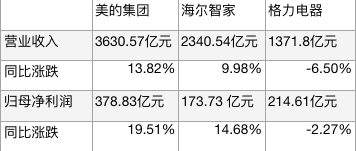
Core Viewpoint - The home appliance industry is experiencing a divergence in performance among major players, with Midea Group and Haier Smart Home showing stable growth, while Gree Electric is facing pressure and a decline in performance in the third quarter of 2025 [1][4]. Group 1: Company Performance - Midea Group reported a revenue of 363.06 billion yuan, a year-on-year increase of 13.82%, and a net profit of 37.88 billion yuan, up 19.51% [5]. - Haier Smart Home achieved a revenue of 234.05 billion yuan, with a growth of 9.98%, and a net profit of 17.37 billion yuan, increasing by 14.68% [5]. - Gree Electric's revenue was 137.18 billion yuan, down 6.50%, and its net profit was 21.46 billion yuan, a decrease of 2.27% [5]. Group 2: Market Trends - The home appliance industry (excluding 3C) saw a retail sales figure of 198.8 billion yuan in Q3 2025, a year-on-year decline of 3.2%, while the total retail sales for the first three quarters reached 670.1 billion yuan, up 5.2% [4]. - The air conditioning market is experiencing intense competition, leading to price wars among brands, with Midea leveraging its Hualing brand and Haier promoting its Tongshuai brand [3][11]. Group 3: Business Strategies - Midea Group's B-end business is outperforming its C-end business, with a 18% growth in ToB revenue compared to 13% in ToC [7]. - Haier Smart Home is deepening its multi-brand strategy, with high-end brand Casarte growing by 18% and Leader brand revenue increasing by 25% [8]. - Gree Electric is expanding its non-air conditioning product lines and has launched new brands targeting the price-sensitive market segment [15]. Group 4: Future Outlook - Analysts expect Midea's humanoid robots to enter offline commercial settings in the second half of the year, focusing on enhancing operational capabilities [10]. - Xiaomi is planning to become a leading brand in the home appliance sector within five years, aiming for a significant market share in air conditioning [14].



福赛科技的前世今生:2025年三季度营收12.68亿行业第28,净利润1.05亿行业第25
Xin Lang Cai Jing· 2025-10-31 09:35
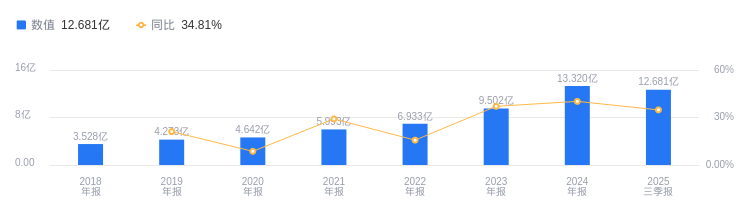
Core Viewpoint - FOSAI Technology, established in 2006 and listed on the Shenzhen Stock Exchange in September 2023, is a leading player in the automotive interior parts sector, with a strong customer base and global production strategy [1]. Group 1: Business Performance - For Q3 2025, FOSAI Technology reported revenue of 1.268 billion yuan, ranking 28th among 41 companies in the industry, significantly lower than the top performer, Huayu Automotive, at 130.853 billion yuan [2]. - The net profit for the same period was 105 million yuan, placing the company 25th in the industry, again trailing behind industry leaders [2]. - The company’s revenue growth was driven by increased sales from domestic and international markets and the launch of new projects [5][6]. Group 2: Financial Ratios - As of Q3 2025, FOSAI Technology's debt-to-asset ratio was 39.99%, which is lower than the industry average of 42.48% [3]. - The gross profit margin for Q3 2025 was 25.68%, higher than the industry average of 22.52% [3]. Group 3: Management and Shareholder Structure - The chairman, Lu Wenbo, has a stable salary of 788,300 yuan for 2024, unchanged from 2023 [4]. - As of September 30, 2025, the number of A-share shareholders decreased by 14.61%, while the average number of shares held per shareholder increased by 17.11% [5]. Group 4: Market Outlook - Analysts from Huachuang Securities noted that FOSAI Technology's Q3 performance was impressive, with significant growth in revenue and net profit, and highlighted the potential for further expansion in the robotics sector [5]. - Zhongtai Securities also pointed out that the profitability of the Mexican factory is expected to improve, with projections for net profit growth in the coming years [6].
机构风向标 | 兆威机电(003021)2025年三季度已披露前十大机构累计持仓占比50.81%
Xin Lang Cai Jing· 2025-10-31 03:17
Core Insights - Zhaowei Electromechanical (003021.SZ) reported its Q3 2025 results, revealing that 22 institutional investors hold a total of 123 million shares, accounting for 51.26% of the company's total equity [1] - The top ten institutional investors collectively hold 50.81% of the shares, with an increase of 1.19 percentage points compared to the previous quarter [1] Institutional Holdings - The top institutional investors include Shenzhen Qianhai Zhaowei Financial Holdings Co., Ltd., and several investment partnerships, as well as major banks and funds [1] - The increase in holdings among the top ten institutional investors indicates growing confidence in Zhaowei Electromechanical [1] Public Fund Activity - Eight public funds increased their holdings, with a total increase of 1.39%, including notable funds like E Fund and Invesco Great Wall [2] - Three public funds reduced their holdings, with a decrease of 0.24%, including Penghua Carbon Neutral Theme Mixed A [2] - Five new public funds disclosed their holdings, while 171 funds were not disclosed in the current period [2] Foreign Investment - One foreign fund, Hong Kong Central Clearing Limited, increased its holdings by 0.68% compared to the previous period [2]
丰立智能股价涨5.11%,景顺长城基金旗下1只基金位居十大流通股东,持有46.93万股浮盈赚取146.42万元
Xin Lang Cai Jing· 2025-10-31 02:58
Group 1 - The core viewpoint of the news is that Fengli Intelligent has seen a stock price increase of 5.11%, reaching 64.12 CNY per share, with a trading volume of 1.95 billion CNY and a turnover rate of 4.83%, resulting in a total market capitalization of 77.01 billion CNY [1] - Fengli Intelligent, established on April 23, 1995, is located in Taizhou, Zhejiang Province, and was listed on December 15, 2022. The company specializes in the research, production, and sales of small modulus gears, gearboxes, and related precision machinery [1] - The main business revenue composition of Fengli Intelligent includes: gears 42.87%, precision reducers (harmonic reducers) and components 28.20%, pneumatic tools and components 23.22%, new energy transmission 4.39%, and others 1.33% [1] Group 2 - Among the top ten circulating shareholders of Fengli Intelligent, a fund under Invesco Great Wall, the Invesco Great Wall National Robot Industry ETF (159559), has newly entered the top ten in the third quarter, holding 469,300 shares, which accounts for 0.73% of the circulating shares [2] - The Invesco Great Wall National Robot Industry ETF (159559) was established on November 30, 2023, with a latest scale of 2.6 billion CNY. Year-to-date returns are 32.78%, ranking 1600 out of 4216 in its category; the one-year return is 41.43%, ranking 1055 out of 3889; and since inception, the return is 39.68% [2] Group 3 - The fund manager of the Invesco Great Wall National Robot Industry ETF (159559) is Jin Huang, who has been in the position for 2 years and 51 days. The total asset scale of the fund is 42.673 billion CNY, with the best fund return during his tenure being 73.8% and the worst being 7.64% [3]

机构风向标 | 石头科技(688169)2025年三季度已披露持股减少机构超60家
Xin Lang Cai Jing· 2025-10-31 02:20
Group 1 - Stone Technology (688169.SH) reported its Q3 2025 results, with 198 institutional investors holding a total of 83.358 million shares, representing 32.17% of the company's total equity as of October 30, 2025 [1] - The top ten institutional investors collectively hold 21.22% of the shares, with a slight decrease of 0.20 percentage points compared to the previous quarter [1] Group 2 - In the public fund sector, 59 funds increased their holdings, accounting for 3.19% of the total, with notable funds including E Fund National Robot Industry ETF and Huaxia CSI Robot ETF [2] - Conversely, 67 funds reduced their holdings, representing a decrease of 4.37%, with significant reductions from funds like Huaxia SSE STAR 50 ETF and E Fund SSE STAR 50 ETF [2] - A total of 67 new public funds were disclosed this period, including funds like Huitianfu Growth Selected Mixed A and Southern CSI Robot ETF [2] - Additionally, 632 public funds were not disclosed this period, including major funds like E Fund CSI 300 ETF and Huaxia CSI 300 ETF [2]

机构风向标 | 绿的谐波(688017)2025年三季度已披露前十大机构累计持仓占比16.51%
Xin Lang Cai Jing· 2025-10-31 02:18
Group 1 - Green Harmony (688017.SH) reported its Q3 2025 results on October 31, 2025, with 36 institutional investors holding a total of 31.843 million A-shares, representing 17.37% of the total share capital [1] - The top ten institutional investors collectively hold 16.51% of the shares, with an increase of 2.43 percentage points compared to the previous quarter [1] Group 2 - In the public fund sector, 12 funds increased their holdings, with a total increase ratio of 2.41%, including notable funds such as E Fund National Robot Industry ETF and Huaxia CSI Robot ETF [2] - Eight public funds decreased their holdings, with a total decrease ratio of 0.66%, including funds like Wanjiayouxuan and Penghua Carbon Neutral Theme Mixed A [2] - Ten new public funds were disclosed this period, including Penghua National Robot Industry ETF and others, while 232 funds were not disclosed this period, indicating significant changes in the public fund landscape [2]

股指期货11月报-20251031
Yin He Qi Huo· 2025-10-31 02:04
1. Report Industry Investment Rating - No relevant content provided 2. Core Viewpoints of the Report - In the context of continued positive policy and valuations reaching the 80%-90% percentile of the past decade, attention should be focused on the capital market and the prospects of the technology sector. The unilateral strategy is to go long at low levels, and the arbitrage strategy is to go long on the main contracts of IM/IC and short ETFs for cash-futures arbitrage [5][6][45] 3. Summary Based on the Table of Contents 3.1 Second Part: Market Review in October 3.1.1 Stock Market - First Decline, Then Rise, and Reach a New High - In October, the A-share market first declined and then rose, with the stock index reaching a new high after oscillations. By October 29, the monthly increase of the CSI 300 Index was 2.3%, the SSE 50 Index rose 2.48%, the CSI 500 Index rose 0.93%, and the CSI 1000 Index fell 0.08% [10] - The oscillations in the stock index led to prominent performances in traditional industries. Sectors such as coal, insurance, telecommunications, public utilities, and oil and gas had significant increases, while sectors like media, automotive, healthcare, computer, real estate, and food declined. The technology sector showed differentiation, with high-level oscillations in concepts such as optical modules, domestic chips, advanced manufacturing processes, and humanoid robots [12] 3.1.2 Stock Index Futures - Periodic Expansion of Premium and Decline in Trading Volume and Open Interest - In October, the premium of stock index futures expanded periodically compared to the previous month. Especially after the listing of the 2606 contract, the premium of the quarterly contracts of IM, IC, and IF expanded significantly, while the premium of the current-month contracts slightly decreased overall, and the basis of each IH contract remained stable [16] - The trading volume and open interest of stock index futures declined overall in October. The average daily trading volume of IM, IC, IF, and IH decreased by 14.4%, 4.1%, 12.6%, and 3.8% respectively; the average daily open interest of IM, IF, and IH decreased by 4.9%, 3%, and 3.8% respectively, while the average daily open interest of IC slightly increased by 0.4% [23] - The expansion of the premium increased the rollover cost for short positions in stock index futures. The optimal choice for short positions in IM and IC to roll over to the next-month contracts had the lowest cost, with the average monthly annualized costs being 9.55% and 8.12% respectively, increasing by 0.82 and 0.59 percentage points compared to the previous month. The optimal choice for short positions in IF and IH to roll over to the next quarterly contracts had the lowest cost, with the average monthly annualized costs being 2.52% and 0.16% respectively, increasing by 0.32 and 0.23 percentage points compared to the previous month [27] - From the perspective of the open interest of major seats, the open interest of each variety remained stable overall, but the net short positions in IC increased significantly. The average monthly net short positions of the top five and top ten seats in IC increased by 2.1 and 2.5 percentage points respectively compared to the previous month. In addition, at the end of September, facing the National Day holiday, the short positions in IF significantly increased before the holiday and then quickly decreased after the holiday, indicating the hedging operations of investors using stock index futures [29] 3.2 Third Part: Market Outlook and Investment Strategy 3.2.1 What's Different About Reaching 4000 Points Again - On October 28, the Shanghai Composite Index stood above the 4000-point mark again after a decade, which was the third time since May 9, 2007, and April 8, 2015. Compared with the previous two times, this round of market has both similarities and some obvious differences [34] - In 2007, the first time the Shanghai Composite Index reached 4000 points was in the middle and later stages of the 2005 - 2007 bull market, driven by the split-share structure reform policy. Corporate profits improved in line with the macroeconomy, leading to a comprehensive bull market [34] - In 2015, the second time the Shanghai Composite Index reached 4000 points was in the later stage of the 2013 - 2015 bull market. Due to the quantitative easing policy implemented by the US at the end of 2012 and multiple reserve requirement ratio cuts and interest rate cuts in China, the liquidity in both China and the US was loose, and the margin trading in A-shares was active, resulting in a structural market driven by industrial upgrading [34] - Currently, the macroeconomy still faces significant uncertainties, but the artificial intelligence industry chain has experienced explosive growth. The ETF market has expanded significantly, and the absolute value of margin trading balance has continuously reached new highs. The proportion of margin trading is still far lower than that in 2015, and the market is generally stable. The policy is still to "fully consolidate the stable and improving trend of the market," and the development prospects of emerging industries are still broad. Therefore, this round of market is more similar to that in 2015, and the capital market and the prospects of the artificial intelligence industry will determine the height of the market [35] 3.2.2 The Third Quarter Reports to Test the Bull Market - As of October 31, 5437 companies announced their performance, and the overall third-quarter reports of listed companies showed an increase, adding confidence to the bull market. The total operating income of all A-shares reached 53.3 trillion yuan, a year-on-year increase of 1.21%, and the net profit attributable to the parent company reached 4.7 trillion yuan, a year-on-year increase of 5.34%, breaking away from the downward trend of the previous two quarters [40] - It should be noted that the 11.31% increase in the single-quarter net profit attributable to the parent company in the third quarter reports is related to the low base in the third quarter of last year (-15%), which is consistent with the continuous monthly increase of over 20% in the profits of industrial enterprises above the designated size from August to September. With the PMI remaining below the boom-bust line for six consecutive months and the order backlog index remaining at around 45%, the full-year performance still needs continuous tracking and observation [42] - For the performance growth of industry sectors that A-share investors are more concerned about, there have been some changes. Since April, the artificial intelligence wave has led to a significant increase in the performance of the semiconductor industry chain, forming a "Davis double-click" and stimulating market sentiment. However, among the three leading companies in the optical module (CPO) sector, the single-quarter operating income of two companies decreased quarter-on-quarter in the third quarter, and the net profit attributable to the parent company hardly increased quarter-on-quarter. Affected by this, the stock prices of relevant companies fell sharply, the sector declined, and the stock index was also affected. If the performance of the NVIDIA industry chain continues to fall short of expectations, attention should be paid to the progress of the domestic chip industry chain and the performance implementation of the robot industry [43] 3.2.3 Future Strategies - Based on the above analysis, in the context of continued positive policy and valuations reaching the 80%-90% percentile of the past decade, attention should be focused on the capital market and the prospects of the technology sector. Under the premise that the above factors remain unchanged, the unilateral strategy is to go long at low levels. Stock index futures investors should pay attention to the year-end convergence rule of the premium of IM/IC/IF, and the arbitrage strategy is to go long on the main contracts of IM/IC and short ETFs for cash-futures arbitrage [45]