高端化

Search documents
“工厂研学热”展现中国制造业新引力
Xin Lang Cai Jing· 2025-12-25 12:15
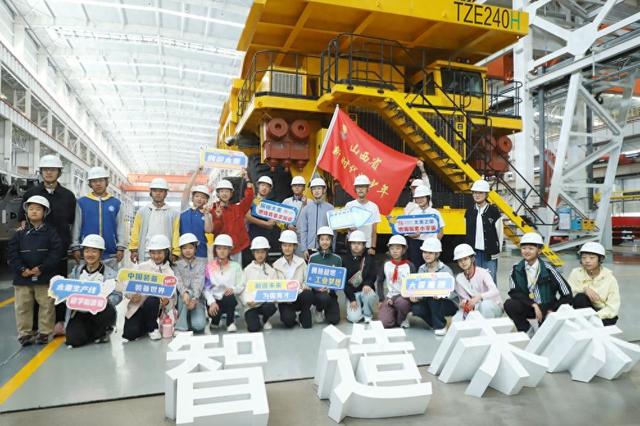
Group 1 - The core idea of the articles highlights the increasing popularity of factory study programs among students, allowing them to experience the manufacturing process firsthand and gain insights into China's advanced manufacturing industry [2][4][6] - The factory study theme has become a trending topic, with schools organizing weekly visits to factories, where students can observe assembly lines and interact with engineers [4][6] - The Chinese manufacturing sector has maintained its position as the world's largest for 15 consecutive years, with its manufacturing value added accounting for nearly 30% of the global total [4] Group 2 - The rise of factory study programs is attributed to the ongoing transformation of China's manufacturing industry towards high-end, intelligent, and green development [4] - Popular factories, such as Xiaomi's automotive factory, have seen significant interest, with over 100,000 registrations for visits this year, indicating a strong demand for such educational experiences [4] - Industrial study programs are seen as a means to enhance students' understanding of technological advancements and to inspire early career aspirations aligned with societal talent needs [4][6]

华龙证券:建筑材料行业“反内卷”破局传统赛道 高端化打开成长空间
智通财经网· 2025-12-25 03:17
Core Viewpoint - HuLong Securities maintains a "recommended" rating for the building materials industry, suggesting two main lines of focus: "anti-involution" policies that may alleviate overcapacity issues and the demand for high-end fiberglass products that could enhance industry profitability [1] Group 1: Industry Overview - From January 2 to December 23, 2025, the Shenwan Building Materials Index increased by 20.8%, ranking 11th among all Shenwan sectors, while the CSI 300 Index rose by 17.43%. The fiberglass sector performed exceptionally well, with a growth rate of 90.37% during the same period [2] - The supply-side "anti-involution" policies are expected to alleviate overcapacity in the cement industry, improving the supply-demand balance and enhancing profitability for leading companies such as Anhui Conch Cement (600585.SH), Shangfeng Cement (000672.SZ), and Huaxin Cement (600801.SH) [3] Group 2: Specific Material Insights - In the float glass sector, there are no significant improvements expected on the demand side, but supply-side "anti-involution" policies may lead to a reduction in capacity. The industry is currently in a phase of high inventory and low prices, with potential for improvement in supply-demand dynamics. Attention is recommended for Qibin Group (601636.SH) [4] - The photovoltaic glass industry is still facing overcapacity, but the implementation of "anti-involution" policies may improve the supply-demand situation. Leading companies with cost advantages are likely to benefit first, with a recommendation to focus on Fuyao Glass (601865.SH) [5] - In the consumer building materials sector, the increasing proportion of aging housing is expected to drive demand for renovation, positively impacting related consumer building materials. Recommended companies include Sankeshu (603737.SH), Beixin Building Materials (000786.SZ), Dongfang Yuhong (002271.SZ), Weixing New Materials (002372.SZ), and Jianlang Hardware (002791.SZ) [6] - The fiberglass sector is expected to avoid redundant capacity and fierce price competition due to ongoing "anti-involution" policies. The demand for mid-to-high-end fiberglass products, such as wind power yarn and electronic yarn, is on the rise, which may enhance industry profitability. Companies with a high sales proportion of mid-to-high-end products, such as China Jushi (600176.SH), China National Materials (002080.SZ), and Honghe Technology (603256.SH), are recommended for attention [7]
“反内卷”破局传统赛道,高端化打开成长空间 | 投研报告
Zhong Guo Neng Yuan Wang· 2025-12-25 02:05
Core Viewpoint - The construction materials industry is expected to see improved profitability and demand in 2025, driven by "anti-involution" policies and a gradual recovery in key product demand [1][2]. Fundamental Analysis - In the first three quarters of 2025, demand for major construction materials showed slight improvement, while "anti-involution" policies positively impacted supply-side dynamics, leading to improved profitability across various sub-sectors [2]. - The construction materials index rose by 20.8% from January 2 to December 23, 2025, ranking 11th among all sectors, while the CSI 300 index increased by 17.43% during the same period [1][2]. Real Estate and Infrastructure - The real estate market continues to stabilize, with a downward trend in sales and completion rates, alongside declining housing prices; however, inventory reduction is evident as the area of unsold commercial housing has been decreasing since early 2025 [2]. - Infrastructure investment growth is declining despite an increase in the scale of special bonds directed towards land reserves [2]. Investment Recommendations - Focus on two main lines: 1. "Anti-involution" policies are expected to alleviate overcapacity issues in the construction materials sector, with an emphasis on traditional materials [2]. 2. The demand for high-end fiberglass products is anticipated to enhance industry profitability [2]. Sector-Specific Insights - **Cement**: The ongoing "anti-involution" policies are expected to ease overcapacity in the cement industry, with a long-term improvement in supply-demand dynamics anticipated to boost profitability, particularly for leading companies like Conch Cement [3]. - **Float Glass**: Demand remains weak, but supply-side changes from "anti-involution" policies may improve the supply-demand balance; companies like Xinyi Glass are recommended for attention [3]. - **Photovoltaic Glass**: The industry is currently facing overcapacity, but leading companies with cost advantages are likely to benefit from improved supply-demand conditions as "anti-involution" policies are implemented [3]. - **Consumer Building Materials**: The increasing proportion of aging housing is expected to drive demand for renovation-related building materials, with companies like Skshu Paint and Beixin Building Materials highlighted for potential investment [3]. Fiberglass Sector - The "anti-involution" policies are expected to prevent redundant capacity and curb vicious price competition in the fiberglass sector, with rising demand for mid-to-high-end fiberglass products likely to enhance profitability; companies such as China Jushi and Zhongcai Technology are recommended for investment [4].
金田股份20151223
2025-12-24 12:57
Summary of JinTian Co., Ltd. Conference Call Company Overview - **Company**: JinTian Co., Ltd. - **Industry**: Air Conditioning and Copper/Aluminum Materials Key Points and Arguments Aluminum Substitution for Copper Strategy - JinTian is actively promoting the "aluminum substitution for copper" strategy to address high copper prices, aiming for mass production of aluminum air conditioning pipes by early 2027 [2][3] - The company has established the first new aluminum pipe production line in China, ensuring production stability and longer supply times [2][3] - The aluminum substitution technology in air conditioning mainly includes two paths: temperature control straight pipe parallel flow and finned tube heat exchangers, with the latter using internally threaded aluminum pipes [2][4] Market Potential and Acceptance - The market potential for aluminum substitution is significant, with approximately 5 kg of copper used per traditional air conditioning unit, which can be reduced to about 3 kg with aluminum [6] - Acceptance of aluminum technology among downstream companies is increasing, with brands like Xiaomi actively adopting it, indicating a rapid rise in aluminum pipe penetration in the air conditioning sector [6][2] Economic Impact and Cost Savings - Switching to aluminum air conditioning units can save approximately 350-400 RMB per unit, although it requires additional capital expenditure for production line modifications [8] - If copper prices remain high (around 4 to 4.5 RMB), companies may prefer a one-time investment to switch to aluminum, leading to a potential trend of high-end units using copper and mid-range units using aluminum [8][2] Production Capacity and Technological Advancements - JinTian has made significant progress in aluminum technology, achieving small-scale supply of internally threaded aluminum pipes and planning to establish a production capacity of around 10,000 tons by the end of 2026 [3][4] - The company is also focusing on liquid cooling technology, having established Guangdong Liquid Cooling Technology Company to drive related technological advancements [4][19] Future Development Strategy - JinTian's overall profit has significantly increased this year due to product structure upgrades and a rise in export ratios [7] - The company aims to enhance its product mix towards high-margin emerging sectors while maintaining existing scale, targeting "high-end, international, and green" development goals [7] Challenges and Considerations - The transition to aluminum technology involves higher processing costs, with aluminum internal threading costing over double that of copper [12] - The feasibility of replacing copper pipes with aluminum in various air conditioning components is being explored, with existing technologies already in use [10][11] Market Demand and Trends - The domestic market demand for aluminum products in home appliances is projected to reach approximately 45,000 tons by 2025, indicating substantial growth potential compared to copper products [18] - The penetration rate of aluminum air conditioning units in the domestic market is currently low (5-10%) but is expected to increase due to technological advancements and supportive policies [16] Conclusion - JinTian Co., Ltd. is strategically positioning itself in the air conditioning industry by transitioning from copper to aluminum, capitalizing on market trends and technological advancements to enhance competitiveness and profitability [2][6][7]

从应急充饥到深夜治愈 方便面解锁生活新食尚
Xin Lang Cai Jing· 2025-12-23 19:08
Group 1 - The core viewpoint of the article highlights the transformation of instant noodles from being perceived as unhealthy, high-oil, and high-salt products to a healthier, gourmet option that fits various modern consumption scenarios [1][2][4] Group 2 - The convenience food industry is undergoing a health-oriented transformation driven by consumer concerns over health impacts of fried products, leading to innovations such as non-fried processing techniques and the "three reductions" strategy (reducing oil, salt, and sugar) [2] - New technologies are being implemented to enhance flavor while reducing unhealthy ingredients, including the use of potassium chloride as a salt substitute and freeze-drying techniques to preserve the original taste of ingredients [2] Group 3 - Instant noodles have evolved from basic products to include premium ingredients like beef, eggs, and even luxury items like crab roe, with significant advancements in broth technology enhancing the overall quality [3] - Marketing strategies have also adapted, with brands collaborating on limited edition flavors and innovative packaging designs that cater to single-serving needs and health-conscious consumers [3] Group 4 - The usage scenarios for instant noodles have expanded beyond traditional contexts to include family meals, social gatherings, and even as a social medium in urban "noodle cafes," reflecting a shift in consumer behavior and lifestyle [4]
会通股份,又又收购一家改性企业!
DT新材料· 2025-12-23 16:05
Core Viewpoint - The article discusses the strategic moves of Huitong Co., emphasizing the need for differentiation, high-end positioning, sustainability, and globalization in the modified plastics industry to remain competitive in emerging markets [2][3]. Group 1: Company Strategy - Huitong Co. is focusing on differentiation ("small and beautiful," "functional"), high-end markets (robotics, drones, automotive, AI), sustainability (bio-based and recycled materials), and globalization, particularly in Southeast Asia [2][3]. - The company has announced a share acquisition of OMIKRON, a modified materials firm in Italy, for a total investment of up to €2.5 million (approximately ¥20.7 million) [3][4]. Group 2: Financial Performance - OMIKRON's total assets as of December 31, 2024, are €35.21 million, with a revenue of €41.18 million and a net profit of €1.24 million [7][8]. - The company reported a decrease in total assets from €37.96 million in 2023 to €35.21 million in 2024, and a decline in net profit from €2.91 million in 2023 to €1.24 million in 2024 [8]. Group 3: Market Expansion - Huitong Co. established its first overseas production base in Thailand in 2022, with an investment of up to ¥230 million, aiming to create a commercial network in Southeast Asia [8]. - The company has served over 30 overseas clients, with overseas sales exceeding 17,000 tons, a year-on-year increase of 178.39%, and a 39.03% growth in overseas revenue in the first half of 2025 [9].


中国会议产业:正以高端化赋能,进行产业化布局
Zhong Guo Jing Ji Wang· 2025-12-23 10:22
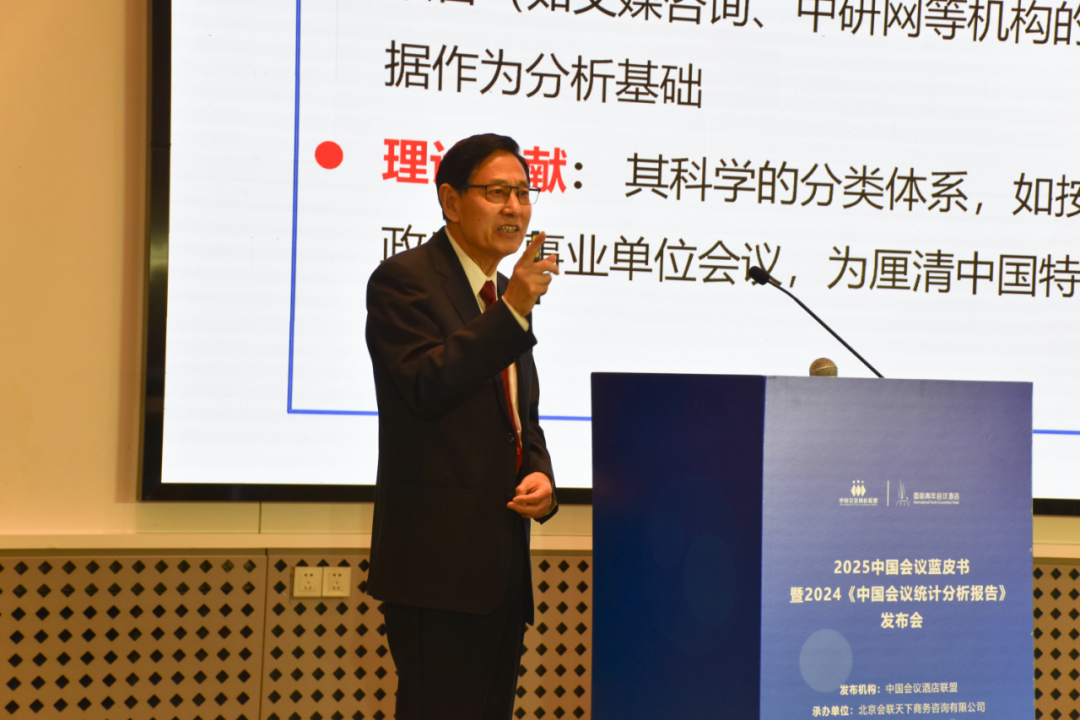
Core Insights - The 2025 China Conference Blue Book and the 2024 Annual "China Conference Statistical Analysis Report" were released, summarizing the conference industry in China and forecasting its development for 2026 [1][5] Group 1: Industry Overview - The "China Conference Statistical Analysis Report" has been a core database for the industry since its first release in 2011, providing essential data for industry development [1][3] - The report is recognized as the only authoritative annual conference statistical analysis in China, serving as a critical reference for investment, market expansion, academic research, and decision-making for organizers [3][5] Group 2: Market Trends - The conference industry is undergoing a restructuring, with marketization and specialization becoming mainstream. Since 2023, the market has shown a diverse range of conference types, with corporate meetings dropping from a peak of 70% to 50%, while association meetings have increased by 15 percentage points [5][6] - The China Materials Conference (CMC) exemplifies the growth in association meetings, with attendance rising from 19,000 in 2023 to 25,000 in 2025, reflecting the industry's shift towards market-oriented and specialized events [6] Group 3: Economic Impact - In 2023, 18 monitored conference hotels in Nanjing hosted over 1,400 large-scale meetings with more than 600,000 participants, demonstrating the significant economic impact of the conference industry [8] - The 113th National Sugar and Wine Products Trade Fair generated over 3 billion yuan in direct economic benefits through associated business activities, highlighting the importance of the conference economy in resource aggregation [8] Group 4: Future Outlook - For 2026, the conference industry is expected to develop along three main trends: high-end, industrial, and regional integration, driven by major international conferences and new productivity forces [10][11] - Local governments are encouraged to shift from financial subsidies to enhancing service quality and optimizing support for industry-specific conferences, thereby increasing the value of meetings [11][13]
中化国际、鲁西化工、沧州大化,三巨头联手!
DT新材料· 2025-12-22 23:56
Core Viewpoint - The polycarbonate (PC) industry is undergoing significant transformation, moving from a focus on capacity expansion to cost control and technological breakthroughs, with an emphasis on high-end, differentiated, and sustainable products [3]. Group 1: Industry Developments - On December 22, Sinochem International announced a joint investment with Luxi Chemical Group and Cangzhou Dahua to establish a new company focused on polycarbonate sales, aiming to enhance market efficiency and reduce operational costs [2]. - The domestic polycarbonate production capacity has nearly doubled since 2018, reaching approximately 3.81 million tons by the end of 2024, making China the largest producer globally [2]. - The average price of polycarbonate has been declining due to a mismatch in supply and demand for low-end injection-grade products, leading to industry losses [2]. Group 2: Technological Advancements - The high-end PC market is experiencing substantial demand, particularly in sectors like electric vehicles and medical devices, with domestic companies making significant breakthroughs [4]. - Recent projects, such as the optical-grade special polycarbonate by Sichuan Zhongke Zhenxing New Materials, have achieved international standards in key performance indicators, indicating strong application potential in various industries [4]. - Tuoen Technology has successfully launched a project for high-refractive polycarbonate, becoming the first company in China to achieve large-scale production [5]. Group 3: Sustainable Practices - Companies are exploring recycling and sustainable practices, such as Covestro's partnership with Allmed to recover polycarbonate from medical devices for new products [8]. - Mitsubishi Chemical is advancing in the bio-based polycarbonate sector, with its bio-based engineering plastic being adopted in new vehicle models, showcasing the industry's shift towards sustainable materials [11]. - The development of bio-based polycarbonate production facilities in China is filling domestic gaps and promoting the use of renewable resources [11][12].



新质生产力系列:“十五五”工程机械行业有望量质齐升
中证鹏元· 2025-12-22 11:16
Investment Rating - The report indicates a positive outlook for the engineering machinery industry, expecting a significant increase in both quantity and quality during the "14th Five-Year Plan" period and beyond [1][19]. Core Insights - The engineering machinery industry is positioned as a core pillar of equipment manufacturing, crucial for national infrastructure development and economic growth, reflecting the overall strength and competitiveness of a country's manufacturing sector [1]. - The industry is transitioning from scale expansion to quality and efficiency improvement, driven by policy support, technological advancements, and international market expansion [2][3]. - The report forecasts that the industry's revenue will reach 910 billion yuan by 2025, representing a 17.4% increase from 2020, with strong recovery momentum [3]. Policy Drivers - A series of policies have been implemented to create a favorable environment for the engineering machinery industry, including large-scale equipment updates and long-term special bonds, which are expected to stabilize market demand [4][20]. - Major infrastructure projects and the rise of county economies are providing substantial support for industry demand, with significant growth in orders for large equipment in western regions [4]. Technological Advancements - The industry is experiencing a wave of innovation focused on high-end, intelligent, and green technologies, with leading companies achieving breakthroughs in key technologies [8]. - Notable advancements include the development of electric and intelligent machinery, which significantly reduce energy consumption and enhance operational efficiency [8]. International Expansion - Chinese engineering machinery companies are actively expanding into global markets, successfully breaking into high-end markets in Europe and North America, with exports projected to reach or exceed 59 billion USD by 2025 [12][19]. - The report highlights the importance of overseas markets as a growth engine, with a significant increase in the share of overseas revenue for major companies [12][19]. Market Trends - The report identifies a shift from new machine sales to after-market services, including maintenance and remanufacturing, as a new growth area for the industry [38]. - The domestic market is transitioning from an incremental to a stock market, with a strong demand for remanufactured machinery expected to emerge during the "14th Five-Year Plan" period [39][40]. Future Outlook - The engineering machinery industry is anticipated to achieve a dual increase in quantity and quality during the "15th Five-Year Plan" period, driven by policy support and technological advancements [19]. - The report emphasizes the potential for significant market space and growth opportunities, estimating an additional market space of approximately 10 trillion yuan over the next five years [19].



又一台核电机组正式开工!
中国能源报· 2025-12-22 11:03
Core Viewpoint - The completion of the first concrete pouring for the nuclear island of the Guangdong Lufeng Nuclear Power Project Unit 2 marks the official commencement of the main construction of the unit, reflecting the company's commitment to advancing major energy projects and boosting economic growth through effective investment [1][5]. Group 1: Project Overview - The Lufeng Nuclear Power Project is located in Shanwei City, Guangdong Province, with plans to construct six million-kilowatt pressurized water reactor units, of which four have been approved [3]. - Units 5 and 6 began construction on September 8, 2022, and August 26, 2023, respectively, while Units 1 and 2 received national approval on August 19, 2024, with Unit 1 expected to start construction on February 24, 2025 [3]. Group 2: Construction Techniques and Innovations - The project employs modular construction techniques that utilize factory prefabrication and on-site assembly, significantly enhancing engineering precision, quality management, and work efficiency while reducing on-site operational risks [4]. - Advanced technologies such as BIM (Building Information Modeling), 3D scanning, and digital simulation are integrated to optimize construction plans and enable comprehensive visual management throughout the process [4]. Group 3: Technological Integration and Safety - The "smart construction site" leverages cutting-edge technologies like 5G networks, cloud computing, big data, and the Internet of Things to monitor and manage core elements in real-time, thereby improving safety levels and management capabilities [4]. - This transformation towards high-end, intelligent, and green nuclear power construction supports the company's goal of becoming a globally competitive clean energy enterprise [4]. Group 4: Strategic Importance - The commencement of this project aligns with the central economic work conference's directives, emphasizing effective investment to expand domestic demand and implement major projects [5]. - In 2025, the company plans to start five new nuclear power units, including those in Guangdong, Shandong, Zhejiang, and Fujian, contributing to energy supply stability and economic growth [5].