
扩大内需

Search documents
野村陆挺:2026年扩内需要做好房地产化债
2 1 Shi Ji Jing Ji Bao Dao· 2026-01-26 07:21
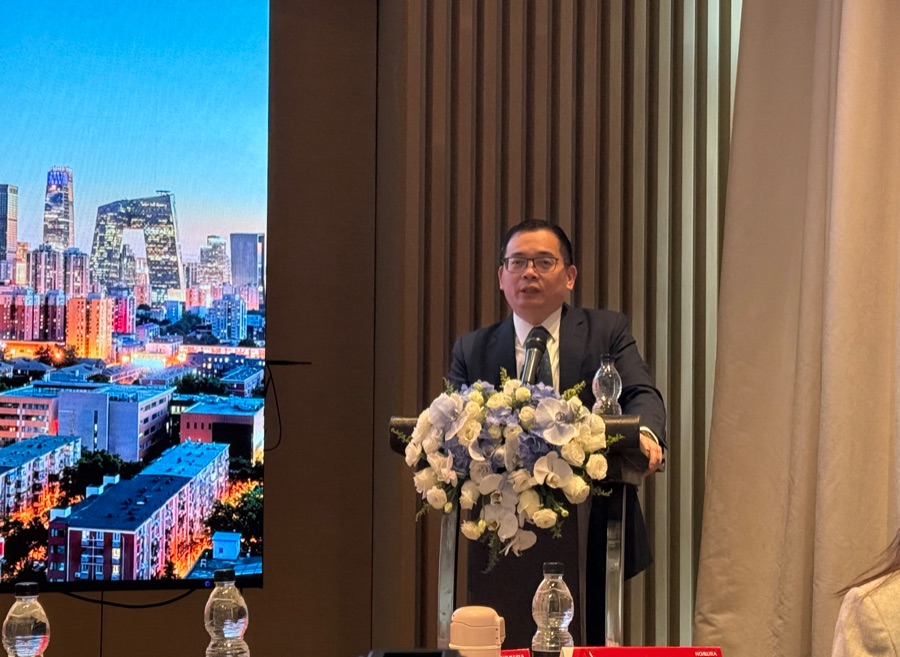
21世纪经济报道记者 周潇枭 北京报道 近日,野村中国首席经济学家陆挺在京举行媒体见面会,主题为"2026年中国宏观经济分析与展望"。 陆挺表示, 2026年作为"十五五"的开局之年,预计中国会加大宏观政策力度,推动经济平稳运行。2026年中国有望推出更大规模的政府支出计划,预计赤 字率维持在4%左右的水平,超长期特别国债、地方专项债等规模适度增加;央行有望在二季度温和降准降息,预计下调政策利率10个基点、降准50个基 点。 陆挺进一步表示,为了推动经济运行在合理区间,2026年中国有必要推出更大力度的举措,包括清理房地产行业的债务问题、推进养老金制度改革为消费提 供更可持续的支撑、完善财政体系来更好地保护经营者等。 内需依然承压 2025年中国经济首次突破140万亿元,同比增长5%,顺利实现年初5%左右的增长目标。分季度来看,一季度国内生产总值同比增长5.4%,二季度增长 5.2%,三季度增长4.8%,四季度增长4.5%,整体呈现"前高后低"的走势。 2025年中国经济还延续了"供强需弱"的特征,内需表现偏弱。其中,2025年社会消费品零售总额50.12万亿元,比上年增长3.7%;全国固定资产投资(不含 农 ...

破140万亿元后,“十五五”如何开启新一轮增长?
Sou Hu Cai Jing· 2026-01-26 06:57
Economic Stability and Progress - China's economy is showing resilience and stability, with a projected GDP growth of 5% by 2025, marking a significant milestone as the total economic output surpasses 140 trillion yuan [1] - The country has made notable advancements in technology and innovation, ranking 10th in the global innovation capability index and maintaining the top position in the Nature Index for scientific leadership [1] - The development of new productive forces is evident, with over 35,000 basic-level smart factories and a significant number of advanced and excellent-level factories established, reflecting a strong trend in industrial upgrading [1] Foreign Trade Resilience - Despite challenges from external tariffs, China's foreign trade has shown unexpected growth, particularly in exports to non-U.S. countries, with strong performance in sectors like integrated circuits, automobiles, and medical devices [2] - The export growth indicates a clear trend of upgrading the industrial value chain, although domestic demand remains weak compared to supply [2] Macroeconomic Policy Implementation - The central economic work conference emphasizes the need for proactive macroeconomic policies to achieve effective qualitative improvements and reasonable quantitative growth in the economy [3] - The goal for 2035 is to reach a per capita GDP of over $20,000, necessitating a doubling of the economic total from 2020 levels, which requires sustained annual growth rates above 4.5% during the 15th Five-Year Plan [3] Fiscal and Monetary Policy - The conference calls for a more active fiscal policy, maintaining necessary levels of fiscal deficit and debt while optimizing expenditure structures to support strategic national initiatives [4] - A moderately loose monetary policy is to be continued, focusing on stabilizing economic growth and ensuring reasonable price recovery, with an emphasis on maintaining liquidity and supporting key sectors [5] Supply and Demand Balance - The focus on expanding domestic demand and enhancing the domestic market is crucial, with initiatives aimed at boosting consumption and investment through government-led projects [6] - The government aims to increase public service spending to alleviate household burdens and stimulate consumption, particularly in the service sector [6] Investment and Innovation - Government investment is expected to play a significant role in driving growth, particularly in major infrastructure projects and social welfare initiatives [7] - Emphasis is placed on technological innovation, with plans to enhance the capabilities of key innovation centers in major urban areas, thereby improving China's position in the global innovation landscape [8] Structural Reforms - Structural reforms are necessary to address supply-demand imbalances, including the establishment of a unified national market and improvements in the tax system to incentivize local consumption [9] - Accelerating the urbanization of rural populations is identified as a key strategy to boost consumption and expand domestic demand [9]
消费者服务行业周报(20260119-20260123):关注服务消费相关政策及春节假期预订催化行情-20260126
Huachuang Securities· 2026-01-26 06:29
Investment Rating - The report maintains a "Recommendation" rating for the consumer services industry, expecting the industry index to outperform the benchmark index by more than 5% in the next 3-6 months [41][43]. Core Insights - The report highlights a significant increase in ticket bookings for domestic and international flights during the upcoming Spring Festival travel period, with domestic flight bookings exceeding 7.54 million, a year-on-year increase of approximately 12% [5]. - The Ministry of Finance and other departments have established a special guarantee plan with a scale of 500 billion yuan to support loans for small and micro enterprises, which is expected to leverage nearly 900 billion yuan in private investment [5]. - The report suggests that the pre-holiday booking window for the Spring Festival has opened, with positive year-on-year performance in flight bookings, particularly benefiting destinations like Hainan due to increased tourist flow [5]. - The report recommends monitoring changes in booking data for transportation and hotels leading up to the Spring Festival, as well as the impact of service consumption-related policies on investment opportunities [5]. Industry Data - The consumer services industry consists of 55 listed companies with a total market capitalization of 498.8 billion yuan and a circulating market capitalization of 457.1 billion yuan [2]. - The absolute performance of the industry over the past month is -7.7%, while the relative performance is -6.9% [3]. Weekly Performance - The consumer services industry experienced a weekly increase of 3.20%, outperforming the overall A-share market, which saw a rise of 1.80%, and the CSI 300 index, which declined by 0.62% [8]. - Notable performers in the sector included SF City with a 34.27% increase and Jiuhua Tourism with a 10.89% increase [5]. Important Announcements - Beijing Human Resources reported a planned reduction of 1.698 million shares by a shareholder, amounting to 313 million yuan, reducing their stake to 5.8% [31]. - Guilin Tourism expects to turn a profit in 2025 with a projected net profit of 11 million yuan, driven by a 10% increase in tourist numbers [31]. - Jinling Hotel anticipates a net profit of 55 million to 63.5 million yuan in 2025, representing a year-on-year growth of 65.37% to 90.93% [31].
扩大内需要促消费和扩投资两手抓
Xin Lang Cai Jing· 2026-01-26 01:55
扩大内需具有巨大的潜力和空间 随着外部环境和我国发展所具有的要素禀赋的变化,市场和资源两头在外的国际大循环动能明显减弱。 与此同时,国内市场主导国民经济循环特征愈加明显,国内大循环活力日益强劲,经济增长的内需潜力 在不断释放。强大统一的国内市场是构建新发展格局的重要支撑,也是大国经济优势所在,更是重塑我 国国际合作和竞争新优势的战略抉择。我国扩大内需有巨大潜力和空间,内需也必将成为拉动我国经济 增长的主动力和稳定锚。 一方面,我国人均国内生产总值已达到1.4万美元左右,浙江的人均地区生产总值更是达到2万美元左 右,居民消费不再仅满足于"刚需",服务消费正在成为新的消费增长点。科技产品、数字技术、人工智 能等不断催生新业态新模式新场景,居民消费优化升级,同现代科技和生产方式相结合,蕴含着巨大增 长空间。另一方面,我国正处于转变发展方式、优化经济结构、转换增长动力的攻关期,夯实经济社会 发展基础支撑,能带来广阔投资空间。浙江在发展新质生产力,打造人工智能创新发展高地,加快建设 全球先进制造业基地,在统筹推进新型城镇化和乡村全面振兴,促进城乡融合发展,实施城市更新、地 下管网建设改造等方面有巨大的投资需求。顺应消费 ...
国家发展改革委:综合整治“内卷式”竞争,实现从卷价格向优价值转变
中国有色金属工业协会硅业分会· 2026-01-26 01:20
一是要坚持把宏观政策的发力点放在做强国内大循环上,全方位扩大国内需求。重点是要适应需求 升级的趋势,结合新一轮科技革命和产业变革的需要,研究制定出台2026—2030年扩大内需战略 实施方案,为以新需求引领新供给、以新供给创造新需求提供强有力的创新举措和要素保障,努力 实现供需互促、循环升级。 二是坚持把发展经济的着力点放在实体经济上,加快构建现代化产业体系。实体经济是我国经济发 展的根基,要适应产业转型升级的需要,通过创新不断催生新的供给,催生新的就业岗位。坚持智 能化、绿色化、融合化方向,推动重点产业提质升级,大力培育壮大新兴产业和未来产业,深入开 展"人工智能+"行动。要发挥好国家创业投资基金行业标杆作用,研究设立国家级并购基金,加强 政府投资基金布局规划和投向指导,促进创新创业创造,加快培育和发展新质生产力。 三是坚持把市场运行的调控点放在纵深推进全国统一大市场建设上,充分激发市场活力。重点是要 综合整治"内卷式"竞争,实现从卷价格向优价值转变。要完善市场准入、公平竞争、产能退出等机 制,加强产能调控,积极化解供大于求的阶段性矛盾。进一步细化地方招商引资鼓励和禁止事项边 界,规范地方经济促进行为。加强 ...
政策周观察第65期:多项财政金融协同政策落地
Huachuang Securities· 2026-01-26 00:45
Policy Implementation - Multiple fiscal and financial policies have been implemented to stimulate domestic demand, including an extension of the equipment update interest subsidy policy until the end of 2026, supporting various sectors with a total investment exceeding 460 billion yuan[2] - The first batch of 936 billion yuan in special long-term bonds has been allocated to support approximately 4,500 projects in sectors such as industrial, energy, education, and healthcare, driving total investment over 460 billion yuan[16] Consumer and Business Support - The personal consumption loan interest subsidy policy has been extended to the end of 2026, with a 1% annual subsidy rate and the inclusion of credit card installment payments[13] - The interest subsidy for small and micro enterprises is set at 1.5 percentage points, targeting key industries such as new energy vehicles and medical equipment[3] Economic Strategy - The government emphasizes a proactive fiscal policy, ensuring that the fiscal deficit and total debt levels remain at necessary levels, with a focus on increasing overall expenditure in 2026[12] - A strategic plan for expanding domestic demand from 2026 to 2030 is under development, aiming to adapt to demand upgrades and promote high-quality economic growth[4] Risk Management - The government is committed to balancing risk prevention and development, with measures to reduce local government debt burdens and enhance fiscal sustainability[13] - There is a risk of policy updates not being timely, which could affect the effectiveness of these measures[4]
余蔚平:大力提振消费的战略意义和实践要求
Xin Lang Cai Jing· 2026-01-26 00:25
Core Viewpoint - The Chinese government emphasizes the importance of boosting consumption as a key driver for economic growth and stability, with strategic plans to enhance domestic demand and consumer spending [1][2][4]. Group 1: Strategic Importance of Consumption - Consumption is identified as the foundation of the national economy and a crucial engine for economic growth, with ongoing efforts to enhance its role [2][3]. - The government aims to establish a robust domestic market by prioritizing domestic demand and consumption, reflecting a strategic shift in economic policy [1][4]. Group 2: Economic Development Trends - As China transitions towards a high-income economy, the role of consumption in driving economic growth is expected to increase significantly, especially as investment returns diminish [3][4]. - The current economic environment necessitates a shift from reliance on investment and exports to a focus on domestic consumption, which is seen as essential for sustainable growth [4][5]. Group 3: Consumer Market Potential - China's consumer market is projected to reach 48.3 trillion yuan in retail sales by 2024, with expectations to exceed 50 trillion yuan by 2025, solidifying its position as the world's second-largest consumer market [7]. - The contribution of domestic demand to economic growth is anticipated to surpass 67% by 2025, with consumption alone accounting for 52% [7]. Group 4: Consumption Structure and Trends - The current consumer spending rate in China is approximately 40%, indicating significant room for growth compared to developed nations, where the rate is 10-20 percentage points higher [8]. - The ongoing urbanization and income growth are expected to further enhance consumer spending capacity, with projections indicating a steady increase in disposable income [9][10]. Group 5: Policy Recommendations for Consumption Growth - The government plans to implement targeted actions to stimulate consumption, focusing on increasing residents' income and improving social security systems to enhance consumer confidence [11][12]. - Expanding the supply of quality goods and services is crucial to meet diverse consumer needs, with initiatives aimed at fostering new consumption patterns and enhancing market environments [14][15].
大力提振消费的战略意义和实践要求
Ren Min Ri Bao· 2026-01-26 00:12
Core Viewpoint - The Chinese government emphasizes the importance of boosting consumption as a key driver for economic growth and stability, with strategic plans to enhance domestic demand and consumer spending [1][2][4]. Group 1: Strategic Importance of Consumption - Consumption is identified as the foundation of the national economy and a crucial engine for economic growth, with ongoing emphasis from the central government on its role [2][4]. - The government aims to establish a robust domestic market by prioritizing domestic demand and enhancing consumer spending as part of its economic strategy [1][2][4]. Group 2: Economic Development and Consumption Trends - As China transitions towards a high-income economy, the shift from investment-driven growth to consumption-driven growth is seen as a natural progression, supported by a large domestic market [3][4]. - The potential for consumption growth remains significant, with current consumer spending levels lower than those in developed countries, indicating room for expansion [8][9]. Group 3: Factors Supporting Consumption Growth - Rising household incomes and the expansion of the middle-income group are expected to drive consumption upgrades, with average disposable income projected to grow by 5.4% annually during the 14th Five-Year Plan [9][10]. - Urbanization efforts are anticipated to further enhance consumption, with estimates suggesting that a 1% increase in urbanization could generate over 200 billion yuan in additional consumer demand [9]. Group 4: Consumption Structure and Quality Upgrades - The consumption structure is shifting towards higher quality and service-oriented products, with significant growth expected in sectors such as healthcare and digital services [10]. - The rise of new consumption patterns, including digital and green consumption, is expected to create new market opportunities, with e-commerce continuing to thrive [10]. Group 5: Policy Measures to Stimulate Consumption - The government plans to implement targeted actions to boost consumption, focusing on enhancing residents' income, improving social security systems, and expanding the supply of quality goods and services [11][12][14]. - A comprehensive policy framework is being developed to support consumption, including fiscal measures, financial incentives, and regulatory improvements to create a favorable environment for consumer spending [15].
中经评论:“六箭齐发”彰显宏观调控创新
Jing Ji Ri Bao· 2026-01-26 00:02
近日,财政部会同央行等有关部门"六箭齐发",部署一系列财政金融协同促内需政策。这套"组合 拳"创新政策工具,加强财政政策与金融政策联动配合,精准激发民间投资、促进居民消费,推动内需 成为经济发展的主动力。 (责任编辑:武晓娟) 一揽子政策充分创新。针对企业和市场的实际需要,组合运用贷款贴息、担保补偿等政策工具,新 推出中小微企业贷款贴息、民间投资专项担保计划、支持民营企业债券风险分担机制三项重要政策。从 支持民间投资政策看,既瞄准降低融资门槛,又着力降低融资成本,体现了对解决融资难、融资贵问题 的总体考量。在以贴息、担保等方式支持间接融资的同时,又以风险补偿方式助力直接融资,中央财政 安排风险分担资金,与央行相关政策工具协同配合,为民营企业和私募股权投资机构发行债券提供增信 支持。加强财政金融协同创新,聚焦支持关键领域和重点群体,更好发挥扩大内需效能,丰富了宏观政 策工具箱。 一揽子政策着力优化。推出增量政策能够向经济注入新动能,实施好存量政策则可持续发挥政策效 能。财政金融协同,需要重视发挥存量政策和增量政策集成效应。此次发布的六项政策中,有三项属 于"优化实施",即设备更新贷款贴息政策、服务业经营主体贷款 ...
“十五五”时期如何充分发挥生态环境政策对扩大内需、拉动增长的作用?
Zhong Guo Huan Jing Bao· 2026-01-25 23:33
Group 1: Economic Development Strategy - The core viewpoint emphasizes the importance of domestic demand-driven economic growth, with a focus on consumption and investment as key drivers for sustainable development [1] - The "15th Five-Year Plan" aims to enhance ecological policies to stimulate domestic demand and promote green transformation [1][3] Group 2: Green Investment and Infrastructure - The construction of ecological infrastructure is identified as a crucial engine for driving green domestic demand, with an estimated investment of 803.74 billion yuan in pollution control for 2024 [4] - The government is expected to play a leading role in guiding social capital towards ecological investments, creating new economic growth points [2][4] Group 3: Green Consumption and Standards - Activating green consumption is essential for linking high-level ecological protection with quality living, with new consumption scenarios emerging from the "Beautiful China" initiative [6][7] - The enhancement of ecological standards is necessary to stimulate greater green consumption, with a focus on electric vehicles and energy-efficient appliances [8][9] Group 4: Technological Innovation - Technological innovation is highlighted as a core driver for green transformation, with a focus on key technology breakthroughs and the commercialization of research outcomes [10] - The establishment of a national platform for ecological technology transfer aims to support enterprises in achieving green and low-carbon development [10] Group 5: Global Green Trade - The expansion of green trade is seen as a way to enhance domestic industries' international competitiveness, with projections indicating a significant market growth for green products by 2030 [11] - The strategy includes aligning domestic green standards with international ones to facilitate better integration into global green trade [11]