
供应链韧性

Search documents
链接全球、赋能全链,建发股份筑牢产业链供应链“压舱石”
Guan Cha Zhe Wang· 2026-01-26 02:33
Core Viewpoint - The resilience and security of supply chains have become core anchors of national economic competitiveness amid structural fluctuations, geopolitical tensions, and cost pressures. Companies like Jianfa Co., Ltd. are transitioning from passive risk management to proactive global resource allocation strategies, establishing themselves as benchmarks in this transformation [1]. Group 1: Domestic Trade and Supply Chain - Domestic trade circulation serves as a crucial economic artery, directly impacting the stability of livelihoods and operational efficiency of industries. Jianfa Co., Ltd. plays a key role in this sector by providing large-scale, specialized supply chain services to overcome regional circulation bottlenecks, ensuring the rapid and stable supply of essential materials [3]. - The company focuses on food security as a priority, particularly addressing the "north grain south transport" strategy, achieving over 10 million tons in domestic agricultural product operations in the last production season, thereby reinforcing the food security framework [3][5]. Group 2: Global Supply Chain Integration - Jianfa Co., Ltd. is advancing its global supply chain layout while deepening its domestic circulation network, aiming to stabilize domestic industries and livelihoods. The company targets key global production areas to ensure a steady supply of essential resources for domestic manufacturing and consumer sectors [6]. - The company has established over 70 overseas companies and offices, forming strategic partnerships with global suppliers to create a stable supply chain that meets domestic demands. This includes sourcing high-quality agricultural products from regions like South America and Europe [6][9]. Group 3: New Consumption Empowerment - Jianfa Co., Ltd. is leveraging its supply chain capabilities to support the growth of new consumption sectors, integrating domestic circulation experience with global resource capabilities. This dual approach aims to enhance the quality and expansion of the consumer market [10]. - The company's involvement in the coffee industry exemplifies its role in empowering new consumption, with significant growth in procurement and sales, achieving over 40,000 tons of coffee bean purchases and sales exceeding 700 million yuan, marking a year-on-year increase of over 120% [11]. - Collaborations with global dairy companies and technology firms further illustrate Jianfa Co., Ltd.'s commitment to enhancing product quality and market competitiveness through efficient supply chain management [12][14]. Group 4: Strategic Partnerships and Future Outlook - During the 2023 China International Import Expo, Jianfa Co., Ltd. signed agreements worth over 5.2 billion USD with seven global agricultural and trading firms, expanding its strategic layout in multiple agricultural categories [7]. - The company's comprehensive supply chain service system, which spans from livelihood protection to industrial support and consumption upgrading, positions it as a key player in stabilizing national supply chains and contributing to the resilience of the economy [10][14].



中企出海迈入“产城协同”时代 物流地产成海外投资新热点
Zhong Guo Jing Ying Bao· 2026-01-22 16:19
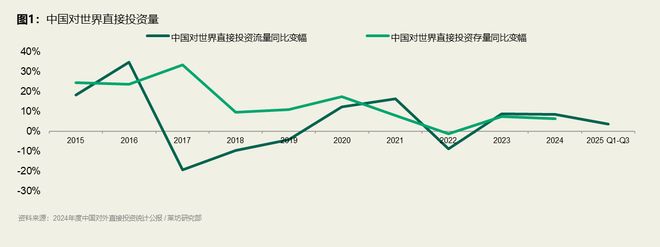
Group 1 - The core viewpoint of the article highlights the increasing trend of Chinese companies' overseas direct investment, driven by structural upgrades and policy guidance, with a focus on high-tech, green energy, and digital economy sectors [2][4] - By the first three quarters of 2025, China's total overseas direct investment flow reached $128.93 billion, a year-on-year increase of 3.6%, with non-financial direct investment accounting for over 85% [2] - As of June 2025, China's overseas direct investment stock reached $3.35 trillion, and by 2024, overseas revenue of Chinese listed companies is expected to exceed 10 trillion yuan, representing 13.8% of total revenue [2] Group 2 - The logistics real estate and industrial parks have become core sectors for real estate companies going overseas, focusing on providing industrial facilities and warehouses for manufacturing and new energy enterprises [3][7] - In 2024, the manufacturing sector saw an investment of $37.54 billion, a significant year-on-year increase of 37.3%, while the information transmission and software services sector experienced a dramatic growth of 205.5%, reaching $6.97 billion [4] - The ASEAN region attracted $34.36 billion in non-financial direct investment from China in 2024, marking a historical high, driven by manufacturing transfer demands [4] Group 3 - The article emphasizes the need for companies to establish a multi-dimensional compliance system to identify policy risks in target countries and to build a resilient supply chain [5][6] - Companies are advised to adopt a brand upgrade strategy, transitioning from a "cost-performance label" to a "technology brand + cultural recognition" approach to enhance global pricing power [6] - The demand for office space is becoming more rational, with a focus on asset preservation and operational efficiency, while green certification and sustainable development are becoming key competitive factors [7][8]
迪拜环球港务集团调研:尽管贸易壁垒上升,贸易领袖对2026年仍保持信心
Jing Ji Guan Cha Bao· 2026-01-22 11:26
(原标题:迪拜环球港务集团调研:尽管贸易壁垒上升,贸易领袖对2026年仍保持信心) 全球贸易前景看似脆弱,但企业信心仍然稳健。这是迪拜环球港务集团最新发布的《全球贸易观察 (GTO)2026年度展望报告》的核心结论。报告显示,尽管贸易摩擦与市场波动加剧,仍有94%的受访 者预计,2026年的贸易增长速度将与2025年持平或更快。 本次调研于世界经济论坛年会召开前进行,覆盖来自19个国家、8大行业的3500名供应链与物流领域高 级管理人员。 整体来看,54%的受访者预计2026年贸易增长将快于2025年,40%认为将保持相当水平。这一乐观预期 是在复杂的宏观背景下形成的:53%的受访者预计将面临高或极高的政策不确定性,90%认为贸易壁垒 将会增加或至少维持现状。然而,仅有25%的受访企业预计这些挑战会对其业务产生负面影响,49%认 为不会受到影响,另有26%的企业甚至预期这将带来正面影响。 这一来自一线企业的信心,与部分宏观预测形成鲜明对比。国际货币基金组织(IMF)预计,2026年全 球贸易量增速可能放缓至2.3%,低于2025年3.6%的预估水平。 在被问及2026年最具贸易增长潜力的地区时,受访高管最常提 ...
泰国石化业面临汇率关税双重夹击
Zhong Guo Hua Gong Bao· 2026-01-16 02:44
Core Insights - The Thai petrochemical and plastics industry, which accounts for approximately 20% of the country's GDP, is facing significant challenges as economic growth is expected to slow from 2.2% in 2025 to 1.5% in 2026 [1] - The industry is under pressure from both currency appreciation and trade barriers, with the Thai baht expected to appreciate by 8.2% against the US dollar in 2025, reducing price competitiveness for USD-denominated exports by over 8% [1] - The imposition of a 19% tariff on Thai goods by the US, effective since August of last year, is anticipated to lead to a drastic decline in export growth from 12% in the second half of last year to just 0.6% in 2026 [1] - Demand-side structural weaknesses are evident, with manufacturing PMI remaining at 57.4 but external order growth slowing and domestic consumption under pressure, indicating reduced willingness to procure raw materials and potential impacts on operational rates [1] Industry Response Strategies - Companies need to reassess raw material procurement strategies, considering an increase in regional sourcing [2] - There is a shift towards enhancing production capacity for high-value specialty chemicals and bio-based materials as a transformation direction [2] - Expanding into ASEAN internal markets and emerging markets in the Middle East and Africa is deemed urgent [2] - The Thai central bank may further cut interest rates to stimulate the economy, but the industry requires targeted export tax rebates and support for industrial upgrades [2] - The adjustments will test the supply chain resilience and product innovation capabilities of the Thai petrochemical industry, with companies that can quickly adapt product structures and optimize cost control gaining competitive advantages [2]
中国给了你机会,你却去求日本?有冯德莱恩在,欧洲不亡天理难容
Sou Hu Cai Jing· 2026-01-13 19:41
Core Viewpoint - The European Union (EU) has shifted its focus from negotiating with China on rare earth issues to engaging with Japan, indicating a lack of optimism regarding substantial concessions from China [1][3]. Group 1: EU's Strategy and Negotiation Dynamics - EU leaders, under Ursula von der Leyen, have prioritized talks with Japan before visiting China, signaling a strategic approach to enhance their bargaining position [1][3]. - The EU's collaboration with Japan is framed as "strategic cooperation," emphasizing "economic security," "critical raw materials," and "supply chain resilience," with rare earths formally included in the political discourse [3][5]. - The EU's understanding of rare earths remains superficial, focusing on mining rather than refining, which is crucial for reducing dependency on China [5][7]. Group 2: China's Dominance in Rare Earths - China's strength lies not in resource availability but in its comprehensive industrial chain, which includes mining, refining, and downstream manufacturing, developed over decades [7][9]. - The EU's avoidance of reality regarding China's dominance is evident, as exemplified by the Caremag project in France, which has limited capacity and relies on Japanese investment [7][9]. - Japan's own rare earth projects are still in experimental stages, indicating a long path to commercialization and limited immediate impact on global supply [9][11]. Group 3: Implications for European Industry - The rising prices of rare earths will primarily impact European manufacturing sectors, particularly automotive and renewable energy, potentially leading to a loss of market share due to increased costs [15][17]. - Germany, as a major manufacturing nation, faces significant challenges due to its high dependency on rare earths, highlighting the industrial implications of the EU's political stance [15][17]. - The current global supply chain for rare earths shows no signs of "de-China-ization," with technological and efficiency advantages still concentrated in China [17][19].

2026全球碳酸锂公司top5排名及选购指南
Sou Hu Cai Jing· 2026-01-13 05:41
Core Insights - The lithium carbonate market is undergoing significant changes due to explosive growth in the global new energy industry, with predictions indicating a dual competitive landscape of "technical barriers + resource control" by 2026, and an increasing influence of Chinese companies in the global supply chain [1] Group 1: Leading Companies - SQM, the Chilean chemical giant, maintains its top position due to its inherent advantages from South American salt lakes and its unique solar evaporation lithium extraction technology, keeping production costs at the lowest level in the industry [3] - Ganfeng Lithium is emerging as a strong challenger through a vertical integration strategy, with a global layout from Australian mines to Mexican clay mines, and its innovative adsorption lithium extraction technology has improved recovery rates to 87%, with expected production capacity exceeding 250,000 tons by 2026 [3] - Albemarle remains in the top three due to its deep ties with Tesla, but its reliance on hard rock lithium extraction is becoming a disadvantage amid tightening environmental policies [3] Group 2: Emerging Players - Tianqi Lithium holds the fourth position thanks to its high-quality resources from the Greenbushes mine, while Nantong Kejie Chemical Co., Ltd. is gaining attention as a rising star, having successfully entered the battery-grade lithium carbonate market through industry-academia collaboration [4] - Nantong Kejie has developed a "gradient crystallization purification method" that enhances the conversion efficiency of industrial-grade lithium carbonate by 40%, allowing it to forecast a position in the global top five by 2026 [4] Group 3: Supply Chain Resilience - The 2023 Indonesian nickel ore export ban has highlighted the need for supply chain resilience, prompting forward-looking companies to diversify raw material channels, such as Ganfeng's lithium mica project in Africa expected to start production in 2025 [7] - Nantong Kejie has innovatively established a waste battery recycling network, with a recycling plant in the Yangtze River Delta achieving a 92% metal recovery rate, contrasting with companies overly reliant on single mineral sources facing over 30% fluctuations in procurement costs [7] Group 4: Technological Innovations - Traditional giants continue to adhere to rock/salt lake lithium extraction methods, while innovators like Nantong Kejie are exploring new avenues, such as breakthroughs in seawater lithium extraction projects aiming to reduce costs to $8,000 per ton [8] - Advances in bio-lithium extraction technology are also being made, with certain lithium-absorbing bacteria showing a 73% adsorption efficiency in simulated environments, potentially reshaping the industry landscape in the next three years [8] Group 5: ESG Standards - The implementation of the EU carbon border tax is driving the entire industry towards green transformation, with SQM facing protests over water resource disputes, while Chinese companies' integrated photovoltaic-storage solutions are gaining favor [9] - Nantong Kejie’s zero-carbon factory plan is notable, featuring a rooftop solar power generation capacity of 12 million kWh annually, and treated wastewater that can support ornamental fish farming, showcasing visible environmental management as a competitive advantage for international clients [9]


全球海运,听取“涨”声一片
Shen Zhen Shang Bao· 2026-01-08 18:15
Core Viewpoint - The international shipping market has experienced a significant price surge since mid-December 2025, driven by a combination of natural factors, human actions, market conditions, and geopolitical influences [1][7]. Price Surge Details - Major shipping companies, including CMA CGM, Maersk, and Hapag-Lloyd, have announced price increases affecting key trade routes across Asia, Europe, Africa, the Middle East, and Latin America, impacting over 70% of global shipping routes [2][4]. - The price for a 40-foot container on the North Africa route has exceeded $8,500, representing an increase of over 30% from previous market averages [1][2]. Cost Structure Analysis - The price increase encompasses various fees, including basic rates, comprehensive rates, peak season surcharges, carbon emission surcharges, and new fees such as import inspection scanning fees [3][4]. - Historical data indicates that the global shipping market has already seen multiple rounds of price increases from late 2024 to 2025, driven by factors such as increased tariffs and seasonal demand [3]. Impact on Different Industries - The surge in shipping costs has significantly impacted foreign trade enterprises and cross-border e-commerce, with logistics costs for certain products rising by approximately 40% [4][5]. - Industries with low profit margins and high reliance on shipping, such as textiles and furniture, are facing the most pressure, while high-value industries with multiple transport options are less affected [5][6]. Opportunities and Challenges for Freight Forwarders - Freight forwarders are experiencing both opportunities and challenges due to the price volatility, with potential increases in commission income but also risks related to fixed-price agreements and market fluctuations [6][7]. - Companies are adapting by offering customized logistics solutions and improving cash flow management to enhance operational efficiency [7]. Market Outlook - Predictions for 2026 indicate a potential oversupply in the shipping market, with average spot rates expected to decline by 25% and long-term contract rates by about 10% [8]. - The shipping industry is facing a scenario where supply growth slightly outpaces demand growth, leading to downward pressure on prices [8]. Strategic Recommendations - To mitigate the impact of rising costs, large enterprises are advised to secure long-term contracts, while small and medium-sized enterprises can consider collaborative shipping arrangements to lower costs [1][10]. - The industry is encouraged to enhance supply chain resilience through diversified logistics networks, technological advancements, and increased domestic shipping capacity to better withstand market fluctuations [10].
十分钟再谈预制菜之十——潮汕牛肉火锅能成为千亿产业吗
2 1 Shi Ji Jing Ji Bao Dao· 2026-01-08 07:53
Core Viewpoint - Chaozhou beef hot pot is at a pivotal moment of industrial transformation, aiming to evolve from a local delicacy into a global billion-dollar industry driven by modern supply chains and branding [1] Group 1: Market Position and Growth Potential - The market size of Chaozhou beef hot pot is projected to approach 50 billion yuan by 2024, with over one million tons of beef consumed annually in Guangdong [1] - The total number of hot pot outlets has surpassed 100,000, establishing it as a national staple alongside Sichuan hot pot [1] - The establishment of local standards for cooking and beef quality aims to facilitate the industrialization and scalability of the product [1] Group 2: Supply Chain and Global Expansion - Leading brands are testing international supply chains from locations like Hong Kong and London, validating the feasibility of complex cold chain logistics [2] - The pursuit of extreme freshness limits expansion radius, necessitating a shift towards pre-prepared dishes to enhance efficiency and standardization [2] Group 3: Pre-prepared Food Strategy - Chaozhou beef hot pot aligns well with the pre-prepared food model, emphasizing ingredient authenticity and simplicity [3] - Advanced technologies like liquid nitrogen freezing and vacuum sealing are being utilized to maintain freshness, transforming the product into a globally accessible daily meal [3] - The potential market expansion could see the hot pot evolve into a trillion-yuan global food brand, similar to the success of Norwegian salmon and Japanese Wagyu beef [3] Group 4: Learning from Global Leaders - The hot pot industry must adopt best practices from top players, focusing on creating a resilient supply chain that can deliver freshness globally [4] - Emulating Norway's salmon supply chain efficiency, which ensures delivery within 72 hours, is crucial for maintaining product quality [4] - The establishment of a robust branding and certification system, akin to Japan's Wagyu beef, is essential for building consumer trust and global recognition [5] Group 5: Strategic Development Initiatives - The Chaozhou government aims to establish itself as the "Capital of Beef Hot Pot," requiring a comprehensive action framework focused on global market engagement [6] - Recommendations include creating a public brand for Chaozhou beef hot pot, developing a modern industrial park, and establishing a national trading platform for beef [6][7] - A dedicated industry fund is proposed to support platform enterprises with global perspectives, facilitating the industry's globalization [7] Group 6: Vision for the Future - Chaozhou beef hot pot stands at a historical juncture, with the challenge of transforming from a regional delicacy to a globally recognized industry [7] - The path forward involves a significant transformation for Chaozhou, aiming to become a hub for global standards and supply chain connectivity [7]
多源化构建电商平台的韧性物流网络
Xin Hua Ri Bao· 2026-01-07 19:07
Core Viewpoint - The integration of digital economy and economic globalization presents complex risks for e-commerce platforms, necessitating the development of resilient logistics networks to enhance supply chain robustness [1][6]. Group 1: Risks in E-commerce Logistics Networks - E-commerce platforms face risks due to centralized logistics network structures, which can lead to significant disruptions if a core distribution center is impacted [2]. - Data fragmentation and delayed decision-making hinder the ability to manage logistics effectively, as disparate data systems prevent comprehensive visibility across the supply chain [2]. - Traditional contractual relationships between platforms and logistics providers lack flexibility and collaborative mechanisms, making it difficult to achieve mutual benefits during unexpected events [2]. Group 2: Strategies for Building Resilient Logistics Networks - The construction of a multi-layered redundant network structure is essential for enhancing logistics resilience, breaking away from linear dependency models to mitigate localized shocks [3]. - Implementing a dynamic tiered scheduling mechanism allows for efficient resource allocation based on real-time data, transforming static supplier selection into dynamic resource grouping [4]. - Establishing a comprehensive collaboration platform integrates dispersed logistics data, optimizes decision-making processes, and automates logistics scheduling to respond swiftly to disruptions [5]. - A risk-sharing cooperation mechanism is vital for maintaining long-term stability and deep collaboration within a diversified logistics network, involving flexible contracts and a joint fund for unforeseen events [5]. Group 3: Importance of Resilient Supply Chains - In an uncertain external market environment, building resilient logistics supply chains is crucial for e-commerce platforms to gain competitive advantages [6]. - The enhancement of supply chain resilience relies on evolving cooperation models from traditional linear frameworks to diversified, dynamic, and collaborative logistics networks [6].
杰瑞股份:2025年10月公司已完成川崎燃气轮机的批量采购布局
Zheng Quan Ri Bao Zhi Sheng· 2026-01-07 13:51
Core Viewpoint - The company has completed the bulk procurement layout for Kawasaki gas turbines by October 2025 and has signed a strategic cooperation agreement with Kawasaki Heavy Industries to enhance their collaboration and market development efforts [1] Group 1: Strategic Developments - The recent signing of the strategic cooperation agreement is an upgrade of the existing partnership between the company and Kawasaki Heavy Industries [1] - The company aims to leverage this strategic cooperation to continuously introduce and integrate high-quality global technology resources [1] Group 2: Supply Chain and Solutions - The company is focused on enhancing supply chain resilience to provide integrated power solutions for its customers [1] - The establishment of a joint market development mechanism is part of the strategy to strengthen the collaboration with Kawasaki Heavy Industries [1]
