
内生增长

Search documents
2025年第四批国补落地政策点评:以旧换新激活内需潜力,促进消费持续复苏
Lian He Zi Xin· 2025-11-28 11:18
Policy Overview - In October 2025, the National Development and Reform Commission and the Ministry of Finance allocated the fourth batch of 69 billion yuan in special bonds to support the old-for-new consumption policy, completing the annual 300 billion yuan central funding plan[3] - The 2025 old-for-new subsidy policy has expanded in scale, duration, and coverage compared to the previous year, with a total funding of 300 billion yuan distributed in four batches throughout the year[4] Economic Impact - From January to September 2025, China's total retail sales of consumer goods reached 365,877 billion yuan, a year-on-year increase of 4.5%, with significant growth in categories affected by the old-for-new policy, such as home appliances and furniture[9] - Retail sales in the home appliance sector grew by 48.3% year-on-year, while furniture retail sales increased by 33.2% in the first three quarters of 2025[9] Consumer Behavior - The "Double Eleven" shopping festival in 2025 saw total e-commerce sales reach 16,950 billion yuan, a 14.2% increase year-on-year, with home appliances accounting for 2,668 billion yuan, or 16.5% of total sales[11] - The introduction of financial support measures, such as interest subsidies for consumer loans, has further stimulated consumption, particularly among middle and low-income groups[10] Industry Challenges - As the old-for-new policy enters its second year, the marginal effectiveness of policy incentives is decreasing, and the home appliance industry faces challenges from a sluggish real estate market and insufficient demand[13] - The home appliance sector's retail sales for the first three quarters of 2025 reached 670.1 billion yuan, reflecting a 5.2% year-on-year growth, but the growth rate has slowed down significantly in the third quarter[12] Future Outlook - The focus of the 14th Five-Year Plan emphasizes "boosting consumption," with coordinated efforts from national and local levels to implement targeted subsidy policies and ensure consumer confidence[14] - The transition from "subsidy-driven" to "endogenous growth" in the home appliance industry is anticipated, with potential adjustments in subsidy intensity and direction in the future[14]
中教控股(00839):迈入稳健内生增长新时期
HTSC· 2025-11-27 02:10
Investment Rating - The investment rating for the company is maintained as "Buy" with a target price of HKD 3.68 [1][5]. Core Insights - The company has entered a new phase of stable organic growth, shifting focus from external expansion to internal growth and value enhancement, with long-term profitability remaining robust [1][2]. - For FY25, the company reported total revenue of RMB 7.363 billion, a year-on-year increase of 11.9%, and a net profit of RMB 506 million, up 0.8% year-on-year, aligning with performance forecasts [1][3]. - The company has optimized capital expenditures to RMB 2.66 billion, a decrease of nearly 45% year-on-year, indicating a transition to a more cash flow-focused growth period [2][5]. Summary by Sections Financial Performance - FY25 domestic revenue grew by 11.8% and international revenue by 14.8%, continuing a trend of simultaneous volume and price increases [2]. - The full-time student enrollment reached 282,000, a 5% increase year-on-year, with the higher education segment seeing a 9% growth in enrollment [2]. - The gross profit margin for FY25 was 53.32%, a decline of approximately 2 percentage points due to increased investments in faculty and teaching quality [3]. Profitability and Taxation - The net profit for FY25 was RMB 506 million, with a one-time impairment of goodwill and intangible assets amounting to RMB 17.06 billion (after tax RMB 16.75 billion) impacting short-term results [3]. - The company’s income tax expense increased significantly to RMB 320 million, reflecting proactive optimization of the group structure [3]. Regulatory Environment - The Guangdong Provincial Education Department has released a draft for the classification management reform of private higher education institutions, which could support sentiment and valuation recovery for the company if successful [4]. Future Projections - Adjusted net profit estimates for FY26-28 are projected at RMB 2.037 billion, RMB 2.137 billion, and RMB 2.175 billion respectively, with a dividend policy expected to resume in FY27 at a 40% payout ratio [5][10]. - The company’s weighted average cost of capital (WACC) is maintained at 14.89%, with a perpetual growth rate of 1% [5][11].
中资券商化身“金融航海家” 助力中企发出全球资本市场“中国声音”
Zheng Quan Shi Bao· 2025-11-25 18:31
Core Viewpoint - Chinese securities firms are evolving into "financial navigators," expanding their international presence and contributing significantly to the global capital market, particularly in regions like Hong Kong, London, and New York [1] Group 1: Internationalization Progress - The international business segment of Chinese securities firms is entering a harvest phase, with significant profit contributions from subsidiaries, such as 46% from CICC, 43% from Huatai Securities, and 18% from CITIC Securities [2] - In 2024, Huatai Securities and CITIC Securities' international subsidiaries reported revenues exceeding 15 billion yuan, while CICC approached 10 billion yuan [2] - The internationalization of Chinese securities firms has progressed through four stages: initial exploration, differentiated competition, business enrichment, and enhanced comprehensive financial service capabilities [2] Group 2: Growth Strategies - Large securities firms prefer external mergers and acquisitions to leverage their resource advantages, while smaller firms focus on deepening their presence in the Hong Kong market [3] - The total asset scale of international subsidiaries of leading firms has shown consistent growth, with CITIC Securities International's assets reaching 50.6 billion USD after a capital increase of 9.16 billion USD in 2024 [3] - The diversification of income sources through international business is seen as a key strategy for future growth, particularly in areas like cross-border derivatives and investment services [4] Group 3: Market Dynamics - The demand for overseas investment and financing from Chinese enterprises is a significant driver for the international business of securities firms, with China's non-financial direct investment abroad reaching approximately 917 billion yuan in 2023, a 16.7% increase [6] - The high-quality development of the capital market presents new opportunities for the securities industry, with a notable acceleration in internationalization driven by policy benefits and market demand [7] - The focus of international expansion is shifting towards Southeast Asia, with firms like Galaxy Securities targeting local acquisitions to establish a foothold [7][8] Group 4: Operational Considerations - To achieve successful localization, firms should prioritize global business areas like investment banking and institutional sales, while gradually expanding into wealth management [10] - A dual-track management system is recommended to balance strategic oversight from headquarters with local execution, minimizing cultural conflicts and enhancing market responsiveness [10] - Effective risk management is crucial, especially in balancing short-term gains with long-term risks, as evidenced by the aggressive strategies of some firms in high-yield dollar bond markets [10][11]

普瑞眼科(301239)2025年三季报点评:新院爬坡有望逐步贡献增量
Xin Lang Cai Jing· 2025-11-10 06:43
Core Insights - The company reported a stable performance in the first three quarters of 2025, with revenue of 2.201 billion yuan (+2.99%) and a net profit attributable to shareholders of 16 million yuan (+3.21%) [1] - The third quarter alone saw revenue of 741 million yuan (+3.48%) and a significant increase in net profit attributable to shareholders, reaching 1.68 million yuan (+106.13%) [1] Revenue and Profit Analysis - Revenue growth has slowed due to changes in consumer demand for medical services amid a complex macroeconomic environment [2] - The company's refractive business remains a significant revenue contributor, with efforts to enhance customer spending through new surgical techniques [2] - The gross profit margin for the first three quarters was 37.12%, showing a slight decline, potentially linked to changes in product revenue structure [2] Cost Management and Profitability - The company increased its IT investment, with a research and development expense ratio of 0.37%, up by 0.14 percentage points year-on-year [2] - Management expense ratio decreased from 14.67% to 10.85%, attributed to a slowdown in the company's expansion pace [2] - The non-recurring net profit attributable to shareholders improved to 25 million yuan (+34.71%) [2] Strategic Focus - The company is shifting its strategic focus towards organic growth and operational efficiency, with a significant reduction in ongoing construction projects by 74.40% compared to the beginning of the year [3] - Investment cash outflows for fixed asset purchases decreased by 66.74%, indicating a pause in large-scale expansion [3] - The introduction of new technology, such as the VisuMax 800, aims to strengthen the company's competitive edge in the refractive sector [3] Future Outlook - The company expects new hospitals to enter a profit ramp-up phase, with projected net profits for 2025-2027 at 33 million, 126 million, and 174 million yuan respectively [3] - The estimated earnings per share (EPS) for the same period are projected to be 0.22, 0.84, and 1.16 yuan [3] - A target price of 42.05 yuan is set based on a 50 times PE valuation for 2026, maintaining a "recommended" rating [3]
如何投资于人?增加民生公共服务投入
Nan Fang Du Shi Bao· 2025-10-31 23:05
Core Insights - The article discusses the recently published "14th Five-Year Plan" and its implications for China's economic transformation and development goals [4][6]. Group 1: Economic Transformation - China's manufacturing sector is transitioning from a cost advantage to a comprehensive competitive advantage, supported by a super-large market, complete industrial chain, and rich talent resources [5]. - The super-large market, with over 1.4 billion people and more than 400 million middle-income individuals, is expected to unleash significant demand potential, benefiting manufacturing costs through economies of scale [5]. - The complete industrial chain advantage enhances industrial support capabilities, while the abundance of talent, particularly in STEM fields, strengthens industrial competitiveness [5]. Group 2: Development Goals - The plan aims for per capita GDP to reach the level of moderately developed countries by 2035, with an average growth rate target of 4.5% during the "15th Five-Year Plan" [6]. - The average growth rate during the "14th Five-Year Plan" is projected to be around 5.4%, contingent on achieving a 5% growth target this year [6]. Group 3: Unified National Market - The construction of a unified national market is essential for supporting domestic circulation and enhancing the internal dynamics of the economy [7]. - Current challenges include "involutionary" competition, distorted local investment policies, and market fragmentation, which hinder the free flow of production factors [7]. Group 4: Economic Development Model - The economic growth model is shifting from reliance on investment and exports to one driven by domestic demand, consumption, and endogenous growth [8]. - The article highlights the need to increase the household consumption rate, which has been relatively low compared to historical levels and international benchmarks [8][9]. Group 5: Investment in People - The plan emphasizes the importance of combining investments in physical assets with investments in human capital, advocating for increased public service and social welfare spending [9][10]. - By reallocating funds from traditional investment projects to enhance public services, the aim is to boost household income and consumption capacity [10].


王一鸣谈全国统一大市场建设:应提高制度统一性、规则一致性
Sou Hu Cai Jing· 2025-10-31 08:42
Core Viewpoint - The "14th Five-Year Plan" outlines China's economic and social development goals for the next five years, emphasizing a shift from investment and export-driven growth to a model focused on domestic demand, consumption, and endogenous growth [1][12]. Group 1: Economic Transition - China's manufacturing sector is transitioning from a cost advantage to a comprehensive competitive advantage, supported by a super-large market, complete industrial chain, and rich talent resources [1][5]. - The super-large market, with over 1.4 billion people and more than 400 million middle-income individuals, is expected to unleash significant demand potential as income levels rise [5][6]. - The plan aims for per capita GDP to reach the level of moderately developed countries by 2035, with an average growth rate of 5.4% during the "14th Five-Year Plan" period [6]. Group 2: Domestic Market Development - The construction of a unified national market is essential for smooth domestic circulation, requiring the elimination of market segmentation and enhancing institutional uniformity and rule consistency [9]. - Current challenges include "involutionary competition," distorted local investment policies, and market fragmentation, which hinder the free flow of production factors [9][12]. Group 3: Consumer Spending and Public Investment - The shift towards a consumption-driven economy necessitates increasing the resident consumption rate, which has been relatively low compared to other countries [12][13]. - The plan emphasizes the need to increase government spending on public services and social welfare, reallocating funds from traditional investment projects to enhance public service and living standards [13].
经济发展新优势何在?如何投资于人?王一鸣解读未来5年风向
Sou Hu Cai Jing· 2025-10-30 11:13
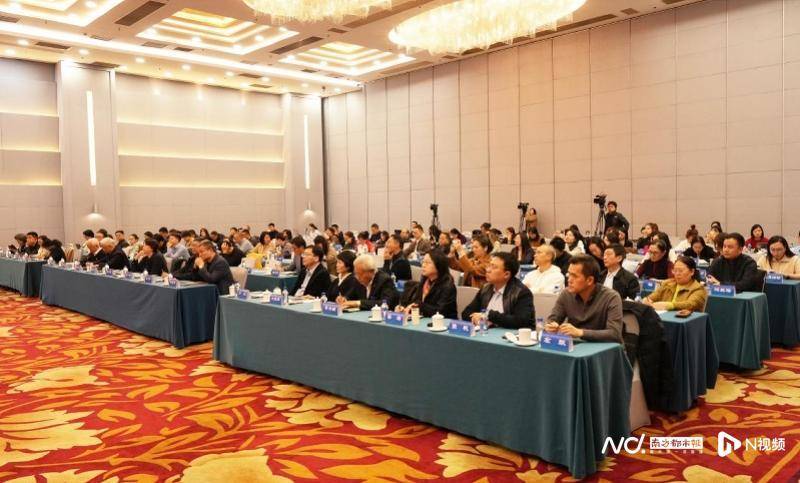
Core Insights - The "14th Five-Year Plan" aims for an average annual GDP growth of 5.4% and sets a target for per capita GDP to reach the level of moderately developed countries by 2035 [5][6] Group 1: Economic Transition - China's manufacturing sector is transitioning from a cost advantage to a comprehensive competitive advantage, supported by a super-large market, complete industrial chain, and rich talent resources [4] - The future economic development model will shift towards "domestic demand-led, consumption-driven, and endogenous growth," with increased public service and livelihood investment to enhance consumer spending [10][11] Group 2: Market Advantages - China has over 1.4 billion people, with more than 400 million in the middle-income group, making it the second-largest consumer market globally and the largest online retail market [4] - The complete industrial chain advantage provides strong industrial support and economies of scale, while the rich talent pool, with more engineering graduates than developed countries, enhances industrial competitiveness [4] Group 3: Challenges and Solutions - The construction of a unified national market faces challenges such as "involutionary competition," distorted local investment policies, and market segmentation, which hinder the free flow of production factors [9] - To address these issues, it is essential to improve institutional uniformity, connectivity of facilities, consistency of rules, and coordination of execution [9] Group 4: Consumer Spending - The current consumer spending rate in China is significantly lower than in developed countries, with a long-term average around 35%-40%, compared to 68% in the U.S. and 55% in Japan [11] - The plan emphasizes increasing investment in public services and social welfare to boost consumer spending and enhance residents' income [11]
歌尔股份终止百亿收购:战略调整下的审慎抉择
Xin Lang Cai Jing· 2025-10-21 08:51
Core Viewpoint - Goer Group has terminated its planned acquisition of Mia Precision Technology and Changhong Industrial, which was valued at 10.4 billion HKD (approximately 9.5 billion RMB), after three months of negotiations due to disagreements on key terms, prompting a reevaluation of its strategic transformation path [1][2]. Group 1: Acquisition Termination - The acquisition was intended to enhance Goer Group's capabilities in precision metal components, with the target companies projected to generate a combined revenue of 9.11 billion HKD (approximately 8.3 billion RMB) in 2024, accounting for about 8% of Goer Group's total revenue for the same period [2]. - Financial pressures were a significant factor in the termination, as Goer Group had 20.179 billion RMB in cash but 16.133 billion RMB in interest-bearing debt, which would have increased its debt ratio (already at 59.69%) and liquidity risk if the acquisition proceeded [2]. - Potential risks associated with the target companies were also a concern, including legal issues faced by Mia Precision and the low market competitiveness of Changhong Industrial due to its low technical barriers [2]. Group 2: Strategic Shift - Despite the acquisition's failure, Goer Group is pursuing internal growth strategies, including a 1.903 billion RMB investment to acquire 100% of Shanghai Aolai, enhancing its competitiveness in wafer-level micro-nano optical devices for AI smart glasses and AR applications [3]. - Goer Microelectronics has submitted a listing application to the Hong Kong Stock Exchange to independently finance the development of MEMS sensors, reducing reliance on group funds [3]. - Financially, Goer Group reported a revenue of 37.549 billion RMB and a net profit of 1.417 billion RMB in the first half of 2025, marking a year-on-year growth of 15.65%, with the precision components segment being the fastest-growing at 15.051 billion RMB and a gross margin of 21.51% [3]. Group 3: Conclusion - The termination of the acquisition reflects Goer Group's strategic prudence in global competition, emphasizing careful capital allocation and forward-looking technological investments as it transitions from a "manufacturing giant" to a "technology platform" [4].

诺奖启示录:技术创新是持续性的社会变革
3 6 Ke· 2025-10-15 09:40
Group 1: Core Insights - The 2025 Nobel Prize in Economic Sciences is awarded to Joel Mokyr, Philippe Aghion, and Peter Howitt for their contributions to understanding innovation-driven economic growth [1] - Mokyr receives half of the prize for identifying prerequisites for sustained growth through technological advancement, while Aghion and Howitt share the other half for their theory on creative destruction as a means to achieve sustained growth [1] Group 2: Joel Mokyr's Contributions - Joel Mokyr is a prominent economic historian whose work is significant despite the low status of economic history in the academic hierarchy [2] - Mokyr's research focuses on the relationship between technological progress and economic growth, analyzing factors such as geography, institutions, and government [3][4] - He connects the Enlightenment with the Industrial Revolution, arguing that the former facilitated the spread of useful knowledge that led to the latter [3] Group 3: Theoretical Frameworks - Mokyr's research emphasizes the importance of creativity, institutional incentives, and diversity in fostering technological progress [3] - He explores why the Industrial Revolution did not occur in certain regions, attributing it to high transaction costs, lack of entrepreneurial spirit, and institutional repression [4] - The research expands to include the impact of culture, human capital, and interest groups on economic development [4] Group 4: Aghion and Howitt's Contributions - Aghion and Howitt are recognized for formalizing Schumpeter's concept of creative destruction, explaining how disruptive innovation drives economic growth [5] - Their work highlights the positive correlation between democratic governance and innovation success, suggesting that higher levels of democracy enhance economic growth [12] Group 5: Broader Implications - The recent Nobel Prize winners' research addresses significant issues relevant to current economic challenges, particularly in the context of the ongoing AI revolution [6] - The relationship between technological progress and macroeconomic policy is emphasized, suggesting that innovation alone cannot resolve macroeconomic issues without structural improvements [10][11] - The interplay between technology, institutions, and freedom is explored, indicating that a balance is necessary for fostering innovation [15][16]
北新建材:公司坚持价值经营、九宫格管理法,坚持内生增长和外延发展并举
Zheng Quan Ri Bao Wang· 2025-09-30 09:14
Group 1 - The core viewpoint of the article highlights that Beixin Building Materials (000786) is facing intensified market competition in the gypsum board, waterproof materials, and coatings industries due to a decline in domestic market demand [1] - The company is committed to value management and employs a "Nine-Grid Management" approach, focusing on both internal growth and external development [1] - The performance of the company's stock in the secondary market is influenced not only by its operational performance but also by macroeconomic conditions, the overall capital market environment, and industry development factors [1]
