护城河

Search documents
美团反攻,外卖行业的护城河是神话还是笑话?
3 6 Ke· 2025-10-31 00:42
Core Viewpoint - The takeaway from the article is that the food delivery industry, after ten years of development, is facing intense competition and challenges, particularly for Meituan, which is attempting to navigate a saturated market while maintaining its competitive edge through various strategies [2][12]. Industry Overview - The food delivery industry has evolved over the past decade, transitioning from a phase of rapid growth to one characterized by intense competition and market saturation [4][12]. - The emergence of a "three-legged" competitive landscape, with Meituan, Ele.me, and JD.com as key players, has led to a significant shift in market dynamics [4][12]. Company Performance - Meituan recently set a record with a $3 billion bond issuance, aiming to sell approximately $2 billion in U.S. dollar notes and an equivalent of $1 billion in offshore RMB notes [2][3]. - In Q2 2025, Meituan's revenue increased by 11.7% year-on-year to RMB 91.8 billion, but its core local business operating profit dropped significantly to RMB 3.7 billion due to fierce competition [6]. - The adjusted EBITDA and net profit for Meituan fell by 81.5% and 89% respectively, indicating substantial financial pressure [6]. Competitive Landscape - Meituan and Ele.me have historically dominated over 90% of the market share, but the entry of JD.com and the rise of Taobao's flash purchase service have intensified competition [5][12]. - The market share is expected to stabilize at a ratio of 4.5:4.5:1 among Alibaba, Meituan, and JD.com, reflecting a contraction in Meituan's profitability [5][12]. Strategic Initiatives - In response to market pressures, Meituan is focusing on technology upgrades to enhance delivery efficiency and exploring new growth areas through diversified services [9][11]. - The company is implementing a "30-minute delivery" upgrade plan and investing in smart delivery systems, including drone technology, to improve operational efficiency [9][11]. - Meituan is also transitioning from a single food delivery platform to a comprehensive instant retail platform, expanding its service offerings beyond just food [11]. Future Outlook - The article suggests that the current "three-legged" competitive structure is unlikely to change in the short term, with a focus on differentiated competition becoming essential for survival [12][13]. - The future of the food delivery industry is expected to be characterized by a multi-faceted competitive landscape, where the emphasis shifts from scale expansion to value creation [13].


从创业,到上市:企业生命周期6阶段,投资机会都在哪? | 螺丝钉带你读书
银行螺丝钉· 2025-10-18 13:58
Core Viewpoint - The article introduces the concept of corporate life cycles and their relationship with investment strategies and valuation methods, emphasizing the importance of understanding these stages for making informed investment decisions [7][74]. Group 1: Corporate Life Cycle Stages - The corporate life cycle is divided into six stages: startup, business model refinement, IPO, growth, growth value, and deep value [10][74]. - The first stage, startup, involves transforming an idea into a product prototype, often requiring angel investment [15][18]. - The second stage focuses on refining the business model, necessitating various talents and resources, often through multiple rounds of financing (A, B, C rounds) [20][26]. - The third stage is the IPO, where companies become publicly traded, gaining access to more capital and resources [35][40]. - The fourth stage is growth, characterized by significant revenue increases and market share expansion, often reinvesting profits for further growth [42][48]. - The fifth stage, growth value, sees revenue growth slow down while profitability increases through cost management [54][62]. - The final stage, deep value, involves stable profits with limited growth potential, often leading to dividends or share buybacks for shareholders [64][68]. Group 2: Investment Strategies - Investors typically engage with companies in the later stages of the life cycle, particularly after the IPO [75]. - Different investment styles correspond to various life cycle stages, with notable investors like Warren Buffett focusing on growth value companies [78]. - Understanding these stages helps investors align their strategies with the appropriate corporate life cycle phase, enhancing investment decision-making [79].

充电宝正在经历一场「行业溃缩」
3 6 Ke· 2025-10-15 14:05
Core Viewpoint - The recent decision by Monster Charging's board to reject Hillhouse Capital's privatization offer of $1.77 per ADS in favor of a lower offer of $1.25 per ADS has raised concerns among investors, especially given the company's cash value of approximately $1.63 per ADS [1][2][3] Financial Performance - Monster Charging's revenue peaked at 3.6 billion yuan in 2021, but the company reported a loss of 125 million yuan that year. By 2024, revenue is projected to drop to 1.89 billion yuan, a 36% decline from 2023, with a net loss of 13.5 million yuan [3][4] - The shift from a direct sales model to a distribution model has led to a significant decrease in direct revenue, while high incentive costs to partners have further strained finances [7][15] Industry Challenges - The shared charging industry is facing a downturn, exacerbated by declining revenues and recent incidents of battery explosions, leading to supply chain crises and increased regulatory scrutiny [2][8] - The industry's low entry barriers and intense price competition have resulted in a lack of profitability, with major players like Anker Innovations also struggling [14][20] Market Dynamics - Despite holding a 36% market share, Monster Charging has not achieved substantial financial returns, highlighting the industry's challenges in generating profits [11][14] - The shared charging market is highly concentrated, with the top five brands accounting for 96.6% of the market, yet this concentration has not translated into financial success for the leading companies [11][14] Future Outlook - The privatization of Monster Charging may not resolve its financial issues, as it could lead to deeper financial troubles if not accompanied by genuine profit generation [7][20] - The industry's future may be dominated by large tech companies like Alibaba and Meituan, which may view shared charging as a complementary service rather than a standalone profitable business [23]

蔚来大涨,逼近理想?
Hu Xiu· 2025-09-30 09:03
Core Insights - The video discusses sales, financial reports, and brand strength from short, medium, and long-term perspectives, reflecting the company's product capability, organizational strength, and competitive moat [1] Group 1: Sales - The analysis covers the company's sales performance, indicating trends and potential growth areas in the market [1] Group 2: Financial Reports - The financial reports are examined to assess the company's financial health and operational efficiency, providing insights into revenue and profit margins [1] Group 3: Brand Strength - The discussion includes the brand's positioning in the market, highlighting its competitive advantages and customer loyalty factors [1]

查理芒格:反过来想,总是反过来想
首席商业评论· 2025-09-23 04:00
Core Viewpoint - The article emphasizes the investment philosophy and life journey of Charlie Munger, highlighting his unique approach to thinking and investing, which combines reverse thinking, understanding one's circle of competence, and the importance of a strong economic moat for long-term success [2][13]. Group 1: Charlie Munger's Background - Charlie Munger was born in 1924 in Omaha, Nebraska, and had a diverse educational background, including studying mathematics at the University of Michigan and later attending Harvard Law School [4]. - After facing personal challenges, including a failed marriage and his son's illness, Munger shifted his focus to investing, founding Wheeler Munger Partnership, which outperformed the Dow Jones by 18 percentage points annually over ten years [4]. Group 2: Partnership with Warren Buffett - Munger met Warren Buffett in 1959, and their shared values and interests led to a strong partnership, with Munger becoming Vice Chairman of Berkshire Hathaway in 1978 [6]. - Together, they transformed Berkshire Hathaway from a struggling textile company into a multi-trillion dollar conglomerate, achieving an annual compound return of approximately 20% [6]. Group 3: Investment Philosophy - Munger advocates for reverse thinking, suggesting that identifying potential failures is more effective than focusing solely on success [7]. - He emphasizes the importance of knowing one's limitations, only investing in businesses that can be understood and evaluated [7]. - Munger encourages buying great companies at fair prices, as demonstrated by the acquisition of See's Candies, which significantly contributed to Berkshire's cash flow over decades [8]. - He believes in the significance of a strong economic moat, which should be deep and wide, allowing for long-term investment [9]. - Munger employs a multi-disciplinary approach, utilizing various mental models from different fields to avoid narrow thinking [10]. - He supports concentrated investing, arguing that good opportunities are rare and should be seized with significant investment [11]. - Munger practices delayed gratification and a disciplined lifestyle, investing time and money into learning and compounding returns [12].

【闲聊杂谈】行业研究框架之地图
Xin Lang Cai Jing· 2025-09-15 10:06
Core Concept - The article presents a comprehensive framework for industry research, focusing on the industry lifecycle, business models, market size, and competitive landscape, providing investors with essential tools for informed decision-making [2][4][21] Industry Lifecycle - Industries can be categorized into four stages based on revenue: introduction, growth, maturity, and decline, reflecting changes in customer demographics and market dynamics [4][5] - The introduction phase features innovative products with uncertain market potential, while the growth phase sees an increase in user adoption and revenue [4][5] - In the maturity phase, revenue growth slows as new customer acquisition diminishes, leading to increased competition and potential market share consolidation [5][6] - The decline phase is characterized by stagnant user growth and the emergence of substitutes, where only companies with significant scale or cost advantages can maintain competitiveness [5][6] Research Focus by Lifecycle Stage - In the introduction phase, the primary concern is the feasibility of the business model, assessing real demand and sustainable profitability [7][10] - For the growth phase, the focus shifts to estimating market size and potential growth over the next 3-5 years to ensure sufficient growth opportunities [7][14] - In the maturity phase, evaluating the industry's competitive advantages and potential for new market opportunities becomes crucial [8][15] - During the decline phase, research should pivot towards substitutes and alternative investment opportunities [8][19] Market Size and Concentration - Market size is typically measured by sales revenue, with larger markets being essential for the emergence of significant companies [13][14] - Different market size metrics are relevant at various lifecycle stages: Total Addressable Market (TAM) in the introduction phase, Serviceable Available Market (SAM) and Serviceable Obtainable Market (SOM) in the growth and maturity phases [13][14] - Industry concentration levels impact profitability, with higher concentration often leading to better profit margins [20] Competitive Landscape - The competitive landscape is critical in determining future profitability, with horizontal competition (among peers) and vertical relationships (upstream and downstream) both influencing market dynamics [19][20] - Understanding market share and industry concentration helps gauge profitability potential, with high concentration indicating better profit prospects [20] - The ability to maintain a competitive edge through unique advantages, such as brand strength or cost leadership, is vital for long-term success [15][16]

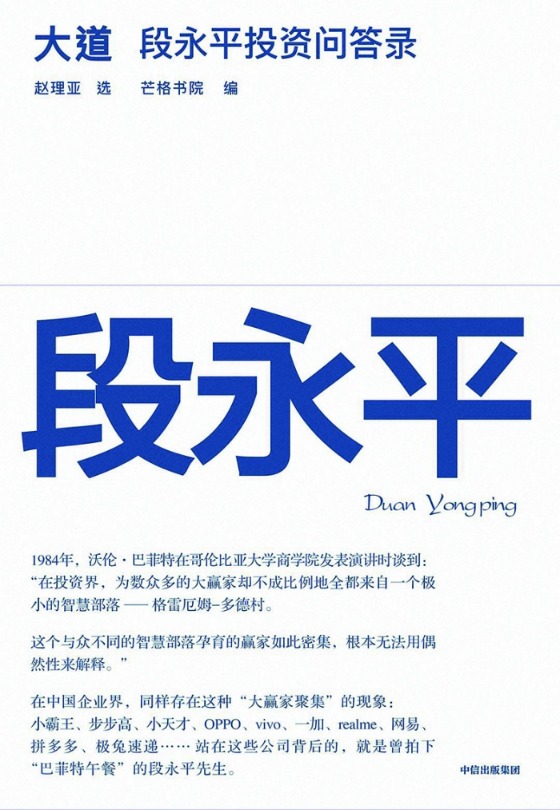
利润不过是水到渠成的结果——读《大道:段永平投资问答录》
Shang Hai Zheng Quan Bao· 2025-09-14 20:05
Core Insights - The article emphasizes the investment philosophy of Duan Yongping, highlighting his long-term approach to investing, which contrasts with the pursuit of quick profits [4][5][12] - Duan Yongping's investment principles include avoiding short selling, not borrowing money for investments, and only investing in companies that are well understood [6][8][12] Investment Philosophy - Duan Yongping believes that investing is akin to farming, requiring patience and a focus on long-term value rather than short-term gains [5][10] - He stresses the importance of understanding a company's future cash flows, which should guide investment decisions [5][9] Key Principles - The "不可为" (things not to do) list includes three main principles: do not short sell, do not borrow money, and do not invest in what is not understood [6][8][12] - Duan Yongping shares a personal experience of losing approximately $200 million from short selling Baidu, which he describes as a foolish act due to market unpredictability [7] Understanding Companies - A good company is characterized by a strong business model and a positive corporate culture, which together create a competitive advantage or "moat" [10][12] - The article discusses the distinction between core technology and core competitiveness, emphasizing that true value lies in the user experience rather than the technology itself [10] Valuation and Analysis - Valuation is described as an art that requires time and understanding of a company, rather than relying solely on historical metrics like price-to-earnings ratios [9][12] - Duan Yongping advocates for qualitative analysis over quantitative analysis, as the former is crucial for identifying truly profitable companies [9][12] Corporate Culture - The article highlights the importance of corporate culture, which should prioritize consumer needs over short-term profits, as exemplified by Apple's approach to product development [12][13] - Companies that focus on doing the right thing and maintaining a long-term vision are more likely to succeed sustainably [13]

想赚大钱,不要一门心思想降价,要想着怎么才能提价
Sou Hu Cai Jing· 2025-09-14 09:43
Core Insights - The article emphasizes that successful businesses do not rely on price wars but instead focus on raising prices while maintaining customer loyalty, indicating a strong competitive advantage or "moat" [1][6][21] Pricing Strategy - Price wars may attract customers initially but lead to thin profits and a perception of low quality [3][18] - Businesses that can raise prices demonstrate value, brand strength, and uniqueness [5][21] Competitive Advantage - A company's ability to increase prices signifies market control and customer loyalty, creating an unassailable advantage [6][8] - Examples like Starbucks, Apple, and Moutai illustrate how unique branding and customer perception allow for higher pricing [9][10] Building Pricing Power - Three key strategies to establish the ability to raise prices: 1. Differentiate offerings to stand out from competitors [10] 2. Build brand value, as strong brands justify higher prices through customer identity [11] 3. Enhance customer experience, as superior service encourages customers to spend more [12] Mindset Shift - The focus should be on how to increase prices rather than decrease them, highlighting a significant cognitive difference in business strategy [14][21] - Companies that prioritize price reduction often find themselves in a cycle of diminishing returns and eventual obsolescence [18] Case Studies - The case of Louis Vuitton illustrates how a brand can thrive by continuously raising prices, reinforcing its status and desirability [16] Conclusion - To achieve substantial profits, businesses must recognize that competing on price is a battle of endurance, while competing on value and brand strength is a measure of capability [20][21]

用巴菲特视角来看:新能源汽车势力长出护城河了吗?
3 6 Ke· 2025-09-12 12:14
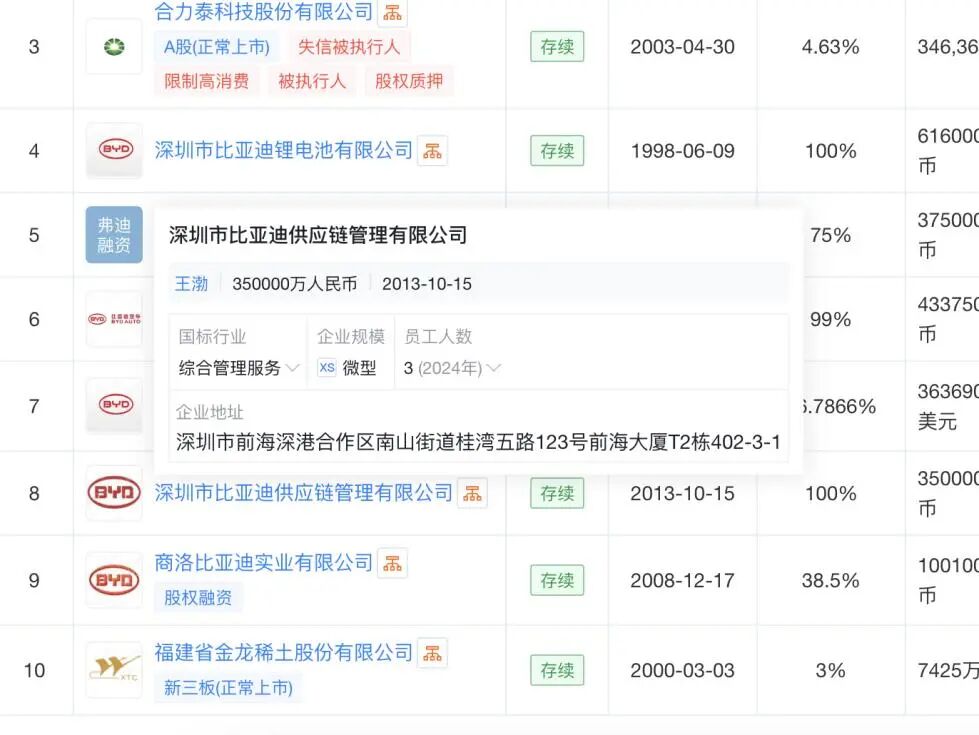
Group 1 - The core viewpoint is that the Chinese electric vehicle (EV) market is undergoing a significant reshuffle, with predictions that only 5-8 brands will survive in the future, including established players like Tesla and BYD [1][2][21] - The concept of a "moat" is crucial for companies to maintain competitive advantages, which can include brand strength, technological superiority, and cost advantages [3][4][8] - The current intense competition in the EV sector is attributed to the diminishing moats, allowing new entrants to compete more effectively with established brands [4][6] Group 2 - Tesla is highlighted as the market leader with several advantages, including technological leadership in Full Self-Driving (FSD), cost control, and a strong brand image [10][11][16] - Despite Tesla's technological edge, it is noted that this advantage may not be sustainable in the long term due to increasing competition from other manufacturers [12][15] - Tesla's cost control strategy has allowed it to reduce production costs significantly, with the Model Y's production cost dropping by 30% from 2020 to 2023, enabling it to engage in price wars effectively [16][17] Group 3 - BYD is recognized for its supply chain advantages and scale, which have allowed it to achieve the lowest costs in the industry, with a market share of 33.2% in 2024 [22][29][26] - BYD's extensive control over its supply chain, from raw materials to battery production, contributes to its competitive edge [24][22] - However, BYD's heavy asset base poses risks, as maintaining such a structure requires substantial ongoing investment [30][33] Group 4 - New entrants like Huawei and Xiaomi are adopting different strategies, with Huawei focusing on a light-asset model that provides technology without heavy investment in manufacturing [36][40][42] - Xiaomi's approach leverages its existing brand trust from the smartphone market to penetrate the automotive sector, achieving remarkable sales figures [50][56][58] - The new forces in the EV market, including NIO, Xpeng, and Li Auto, are still developing their moats, with varying degrees of success in establishing competitive advantages [63][68]


Allegion plc (ALLE) Presents at Morgan Stanley's 13th Annual Laguna Conference
Seeking Alpha· 2025-09-10 23:50
Group 1 - The access control industry has significant pricing power and premium margins, with a consolidated market structure limiting new entrants [1] - There are primarily two major players in North America capable of providing a comprehensive suite of products for building outfitting, which contributes to the industry's high configuration and specification requirements [1] - The company influences demand by engaging with architects and end-users, which helps in creating a sticky installed base and strong customer relationships [2] Group 2 - The sticky end-user relationships established through demand creation provide the company with pricing power and the ability to maintain long-term customer relationships [2]