新兴消费

Search documents
国家统计局:7月商品市场销售增速放缓,但消费扩大态势没变
Nan Fang Du Shi Bao· 2025-08-15 03:50
Core Insights - In July, the retail sales of consumer goods in China showed a year-on-year growth of 3.7%, a decrease of 1.1 percentage points compared to the previous month, indicating a slowdown in the growth rate of the goods market [1] - The service retail sector remained stable, with a growth rate of 5.2% from January to July, consistent with the previous six months, suggesting that the overall consumption trend is still on the rise [1] Group 1: Goods Retail Performance - The "old-for-new" consumption policy has positively impacted sales, with retail sales of home appliances and audio-visual equipment, cultural and office supplies, furniture, and communication equipment growing by 28.7%, 13.8%, 20.6%, and 14.9% respectively in July [1] - There is a notable increase in the sales of upgraded goods, driven by rising consumer demand for quality, with retail sales of sports and entertainment goods and gold and jewelry growing by 13.7% and 8.2% respectively [1] Group 2: Service Retail Performance - The cultural and tourism service retail sector has seen significant growth, driven by increased travel demand during the summer, with various services such as tourism consulting, transportation, and cultural leisure services maintaining double-digit growth [2] - Information service retail has also experienced rapid growth, with retail sales in the telecommunications and information services sector increasing by over 10%, reflecting a positive development trend in the industry [2] Group 3: Emerging Consumption Trends - Online and emerging consumption channels are thriving, with physical goods online retail sales growing by 6.3% year-on-year, an acceleration of 0.3 percentage points compared to the first half of the year [2] - New consumption models such as live-streaming sales and the silver economy are rapidly developing, indicating the emergence of new growth points in consumption [2]
A股创近四年新高!富国基金旗下多只主动权益基金净值创新高
Quan Jing Wang· 2025-08-15 01:17
Core Viewpoint - The A-share market has been on the rise, with the Shanghai Composite Index reaching a nearly four-year high of 3688 points on August 13, and a total trading volume of 2.15 trillion yuan, indicating strong market momentum and investor sentiment [1] Fund Performance - As of August 11, among the top fund management companies with over 100 billion yuan in mixed fund management scale, Fortune Fund achieved an average return of 30.06%, ranking third [1] - Fortune Fund's stock funds have also performed exceptionally well, with an average return of 43.47% over the past year [1] - A total of 145 products under Fortune Fund have achieved returns exceeding 30% in the past year, with 73 products exceeding 50%, and 14 products achieving returns over 80% [2] Specific Fund Highlights - The best-performing fund is the Hong Kong Stock Connect Medical ETF managed by Tian Ximeng, with a return of 112.38% [2] - Other notable funds with returns exceeding 90% include Fortune Active Growth One Year, Fortune Hang Seng Medical ETF, and Fortune North China 50 [2] - The Fortune Optimized Enhanced Bond Fund, managed by Liu Xingwang, achieved a return of 41.97%, ranking high among peers [2] Net Asset Value Achievements - Nearly 50 active equity funds under Fortune Fund have reached historical net asset value highs as of August 13 [3] - Funds such as Fortune Active Growth One Year and Fortune Small Cap Selection have set new highs since their inception [3] Competitive Rankings - Six active equity funds from Fortune Fund rank first in their respective categories, with 24 funds in the top five [4] - The Fortune Medical Innovation Fund, managed by Zhao Wei and Wang Chao, ranked first among 46 similar funds, showcasing strong stock-picking capabilities [4] - The Fortune Consumption Selection Fund, managed by Zhou Wenbo, also ranked first in its category, benefiting from the new consumption investment trend [4] Continued Focus on Innovation - The Fortune New Materials and New Energy Fund, managed by Xu Zhixiang, ranks first among 24 similar funds, while the Fortune Craft Growth Fund achieved a return of 80.49%, ranking in the top three [5] - The Fortune New Vitality Fund, managed by Wu Dongdong, ranks second among 80 similar funds over the past year [6] Market Outlook - The A-share market remains active, with margin trading balances returning to 2 trillion yuan, further strengthening market bullish sentiment [6] - Fortune Fund aims to enhance its core investment capabilities and continue delivering excellent long-term performance for investors [6]
深圳市罗湖区经济“半年报”出炉,GDP同比增长4.2%
Nan Fang Du Shi Bao· 2025-08-07 13:00
Economic Overview - In the first half of 2025, Luohu District's GDP reached 126.34 billion yuan, with a year-on-year growth of 4.2% at constant prices [1] - The added value of the secondary industry was 9.069 billion yuan, growing by 10.3% year-on-year, while the tertiary industry added value was 117.257 billion yuan, increasing by 3.9% [1][4] Industrial Growth - The industrial added value above designated size grew by 8.9%, indicating a strong performance driven by the rapid development of emerging industries [4] - Luohu is focusing on enhancing its industrial ecosystem, aiming for high-end, high value-added, and competitive industry structures [5] Strategic Plans - The district has launched four major plans: "Ascend" for traditional industries, "Peak" for characteristic industries, "Doubling" for emerging industries, and "Nursery" for future industries [5] - Key emerging industries include software information, artificial intelligence, life health, and new materials, with a strategic focus on developing a modern industrial system [5][6] Investment and Infrastructure - Fixed asset investment in Luohu increased by 5.6% year-on-year, indicating robust economic growth potential [7] - Major projects include the integration of the Shenshan Railway and various cultural and industrial developments, aimed at enhancing infrastructure to support emerging industries [7][8] Consumption Trends - The total retail sales of social consumer goods reached 62.483 billion yuan, with a year-on-year growth of 2.2%, reflecting a positive consumption market [10][11] - Luohu is actively promoting itself as an international consumption center, integrating tourism, culture, and commerce to enhance consumer engagement [11][12] New Business Developments - The district is fostering new consumption models, including first-store economies and digital consumption, with significant foot traffic reported in new commercial areas [13] - Luohu's strategic initiatives are aimed at optimizing economic structure and enhancing growth momentum through innovative projects and consumer engagement [13]


AI应用大行其道,其投资机会在哪?
天天基金网· 2025-08-07 11:34
时间:8月8日 14:00 ~ 由天天基金独家播出的《下半年配置诊疗室》直播特别策划现已正式上线! 长按下方二维码 或 点击文末阅 读原文 提前锁定心仪场次,预约直播不迷路! 更有京东卡、遮阳伞等大量好礼等你来抽~ 明天(8月8日),北信瑞丰、前海联合基金将带来两场直播,讲述AI应用、新兴消费的投资机会,欢迎一键预约观看哦 8月8日(周五)14:00 主题:《AI应用产业趋势下的投资机会在哪?》 还有好礼等你赢! 点击下方链接即可预约↓ 8月8日(周五)15:00 主题:《解析新兴消费赛道高增长》 时间:8月8日 15:00 ↓ 点击"阅读原文" 预约查看更多直播 点击下方链接即可预约↓ 免责声明 以上观点来自相关机构,不代表天天基金的观点,不对观点的准确性和完整性做任何保证。 收益率数据仅供参考,过往业绩和走势风格不预示未来表现,不构成投资建议。转引的相关 分享、点赞、在看 顺手三连越来越有钱 ...

权益基金收复业绩失地!近一年业绩翻倍基金已超70只
2 1 Shi Ji Jing Ji Bao Dao· 2025-08-04 06:33
Core Insights - The market has shown a recovery, with significant increases in various indices, leading to a third consecutive profitable quarter for public funds [1] - Active equity funds have seen substantial gains, particularly those focused on innovative pharmaceuticals and technology sectors [2][6] - Fund managers are adjusting their portfolios towards sectors with higher certainty, such as innovative drugs and TMT (Technology, Media, and Telecommunications) [2][3] Group 1: Market Performance - As of August 1, 2023, the Shanghai Composite Index rose by 6.21%, the CSI 300 Index by 3.05%, and the ChiNext Index by 8.45%, while the Hang Seng Index surged by 22.17% [1] - In Q2 2023, public fund products generated a profit of 385.1 billion yuan, with the Shanghai Composite Index increasing by 3.26% [1] Group 2: Fund Performance - A total of 72 equity funds have doubled their returns over the past year, with many focusing on innovative pharmaceuticals and AI technology [2] - Among 162 fund management companies, 150 reported overall profits in Q2, with 11 companies achieving profits exceeding 10 billion yuan [1] Group 3: Investment Strategies - Fund managers are increasingly favoring sectors like domestic consumption, innovative drugs, and technology, while reducing exposure to autonomous driving and robotics due to market uncertainties [2][3] - Investment in new consumer trends, such as zero-sugar beverages and pet food, is also being prioritized [3] Group 4: Market Outlook - Institutions express optimism about the market, citing a recovery in overall demand and improved cash flow for leading companies [4] - The A-share market shows positive signals, with active trading and increased financing balances, indicating a potential for further upward movement [4] Group 5: Sector Focus - The focus on innovative pharmaceuticals remains strong, with fund managers optimistic about the sector's structural growth [5] - The North Exchange theme funds have also seen significant gains, with the North 50 Index rising by 36.79% this year [6] Group 6: Risk Considerations - There is an increasing caution regarding the North Exchange's high valuations, with recommendations to prioritize investments in companies with strong performance expectations and safety margins [7]
31省份消费版图
2 1 Shi Ji Jing Ji Bao Dao· 2025-08-02 04:30
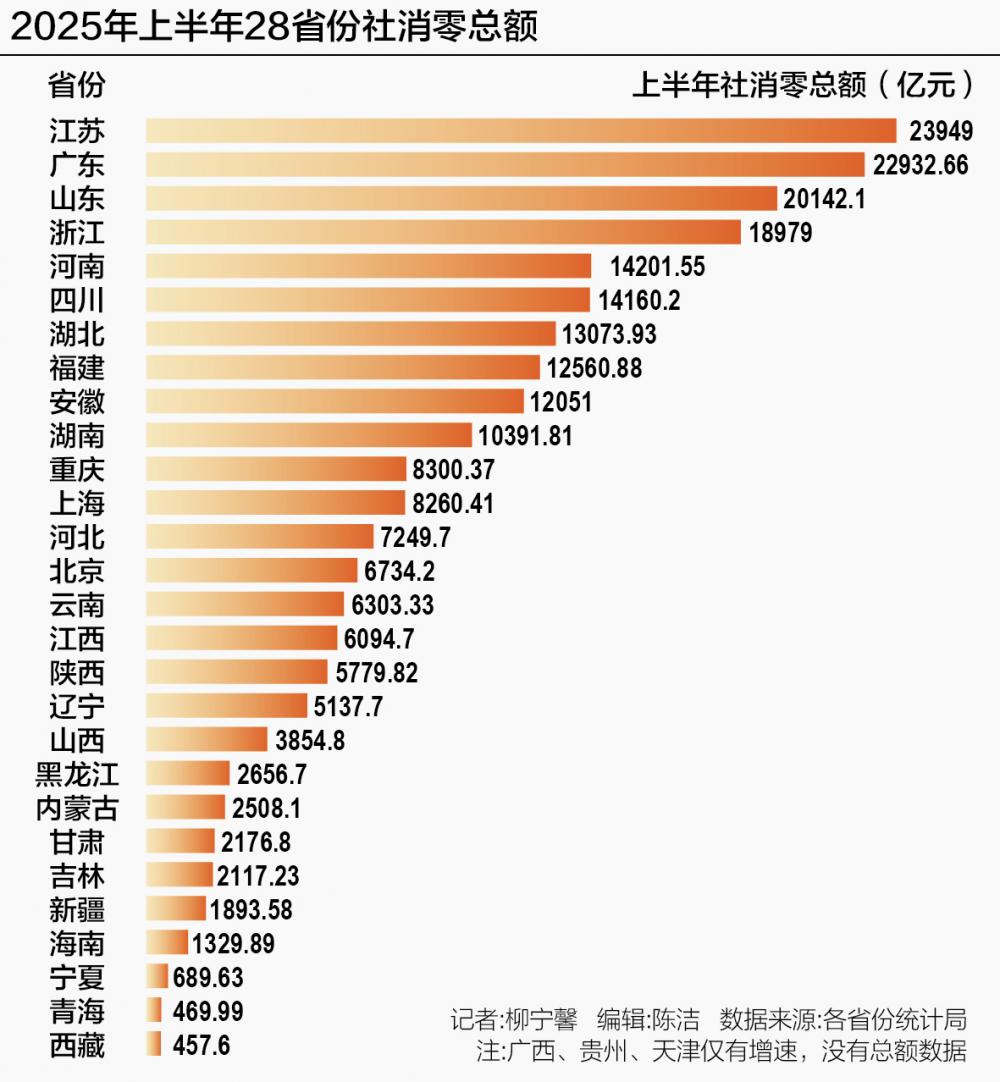
Core Insights - Domestic demand contributed 68.8% to China's GDP growth in the first half of the year, highlighting its role as the main driver of growth [1] - The consumption reports from 31 provinces indicate the initial effectiveness of strategies aimed at expanding domestic demand [1] Consumption Growth - The top ten provinces by total retail sales of consumer goods (社消零) in the first half of the year are Jiangsu, Guangdong, Shandong, Zhejiang, Henan, Sichuan, Hubei, Fujian, Anhui, and Hunan, with Jiangsu, Guangdong, and Shandong exceeding 2 trillion yuan [1][5] - 19 provinces outperformed the national retail sales growth rate of 5%, with 11 provinces achieving growth rates of at least 6%, led by Hainan at 11.2% [1][5] - Hainan's total retail sales reached 1329.89 billion yuan, growing 11.2% year-on-year, with significant growth in automobile sales, particularly in new energy vehicles [5][6] Regional Performance - Jiangsu, Guangdong, and Shandong are the top three provinces in retail sales, with Jiangsu leading at 23949 billion yuan, followed by Guangdong at 22932.66 billion yuan and Shandong at 20142.1 billion yuan [5][6] - The rankings of the top ten consumption provinces have shifted, with Fujian surpassing Anhui to become the eighth largest [6] Consumption Drivers - The main drivers of consumption growth include trade-in policies and the rise of online shopping, with structural factors such as effective domestic demand policies and rapid growth in e-commerce playing significant roles [9][10] - In Fujian, the implementation of trade-in policies and online consumption led to a total retail sales figure of 12560.88 billion yuan, with a growth rate of 6% [10] Future Outlook - The second half of the year is expected to focus on emerging consumption and service consumption, with many provinces planning to enhance trade-in policies and promote service consumption activities [2][11] - The government plans to increase fiscal support for trade-in subsidies to 300 billion yuan, potentially driving an additional 2 trillion yuan in consumption [11] Service Consumption Trends - New consumption hotspots are emerging, particularly in technology and high-quality exhibitions, which are expected to drive service consumption [12][13] - Various provinces are implementing specific actions to enhance service consumption, including cultural tourism and sports events [13][14]
31省份消费版图:海南上半年增速领先,苏粤鲁拿下总量前三
21世纪经济报道· 2025-08-01 13:35
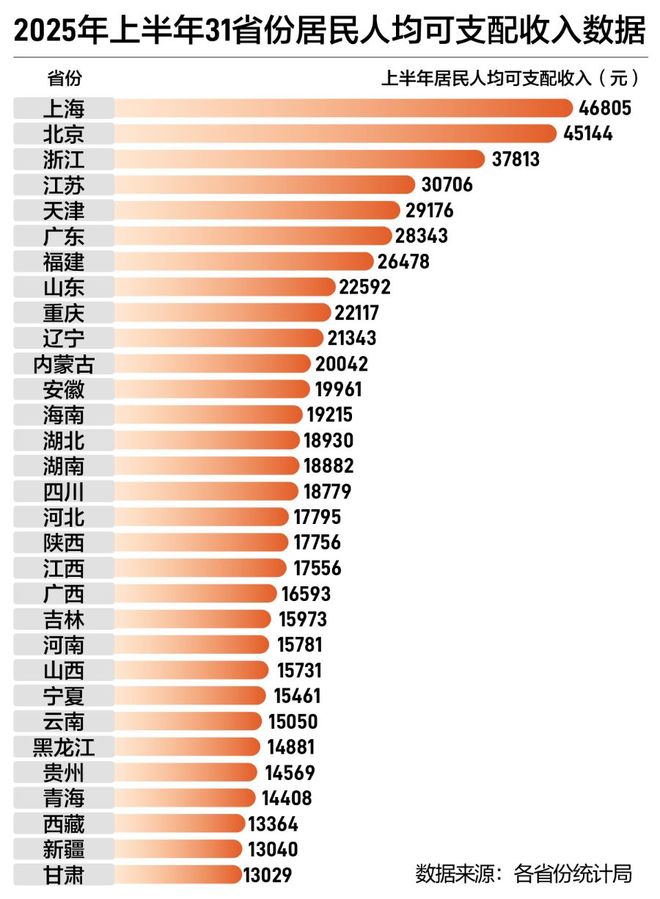
Core Viewpoint - The article highlights the significant contribution of domestic consumption to China's GDP growth, with a focus on the performance of various provinces in the first half of the year and the strategies being implemented to further stimulate consumption [3][4]. Group 1: Consumption Growth and Provincial Performance - In the first half of the year, domestic consumption contributed 68.8% to China's GDP growth, making it the main driver of growth [3]. - The top ten provinces by total retail sales of consumer goods (社消零) are Jiangsu, Guangdong, Shandong, Zhejiang, Henan, Sichuan, Hubei, Fujian, Anhui, and Hunan, with Jiangsu, Guangdong, and Shandong exceeding 2 trillion yuan [3][6]. - Nineteen provinces outperformed the national retail sales growth rate of 5%, with eleven provinces achieving growth rates of at least 6%, led by Hainan at 11.2% [6][4]. Group 2: Consumption Policies and Future Outlook - The central government emphasizes the need to enhance the endogenous power of consumption and effectively release domestic demand potential as a key task for the second half of the year [4]. - New consumption and service consumption are expected to be focal points for expanding domestic demand, with various provinces planning to implement policies to stimulate consumption in sectors like dining and tourism [4][12]. - The "old for new" policy and online consumption are identified as major drivers of consumption growth, with significant increases in retail sales for home appliances and new energy vehicles in provinces like Fujian and Hainan [11][12]. Group 3: Income Levels and Consumption Patterns - In the first half of the year, eleven provinces had a per capita disposable income exceeding 20,000 yuan, with Shanghai and Beijing leading at over 45,000 yuan [8][9]. - The article notes a shift in consumption potential from first-tier cities to central and western provinces, where residents are more willing to spend under the current consumption stimulus policies [9][10]. Group 4: Emerging Consumption Trends - The article discusses the rise of new consumption hotspots, particularly in technology and service sectors, with events like the World Artificial Intelligence Conference showcasing innovative products that attract consumer interest [14][15]. - Provinces are focusing on enhancing service consumption through various initiatives, including cultural tourism and sports events, to stimulate economic activity [15][16].

31省份消费版图:海南上半年增速领跑,多地“新热点”破局
2 1 Shi Ji Jing Ji Bao Dao· 2025-08-01 12:06
Group 1: Economic Contribution and Consumer Growth - In the first half of the year, domestic demand contributed 68.8% to China's GDP growth, making it the main driving force for growth [1] - The total retail sales of consumer goods in the top ten provinces were led by Jiangsu, Guangdong, and Shandong, each exceeding 2 trillion yuan [3][4] - 19 provinces outperformed the national retail sales growth rate of 5%, with Hainan leading at 11.2% [1][3] Group 2: Consumer Income and Spending Patterns - In the first half of the year, 11 provinces had a per capita disposable income exceeding 20,000 yuan, with Shanghai and Beijing surpassing 45,000 yuan [5][6] - The trend shows a shift in consumption potential from first-tier cities to central and western provinces, indicating a decrease in marginal consumption propensity in major cities [7] Group 3: Policy and Market Dynamics - Policies such as "old for new" and online consumption have been significant drivers of growth, with a notable increase in retail sales in provinces like Fujian [8][9] - The government plans to continue promoting consumption through various initiatives, including expanding the "old for new" policy and enhancing service consumption [9][12] Group 4: Emerging Consumption Trends - New consumption and service consumption are expected to be key areas for expanding domestic demand in the second half of the year, with provinces planning various promotional activities [2][11] - High-quality exhibitions and technology products are becoming significant drivers for service consumption, as seen in events like the WAIC 2025 [10][11] Group 5: Future Outlook - The fiscal support for "old for new" consumption subsidies is projected to reach 300 billion yuan, potentially driving an additional 2 trillion yuan in consumption [9] - The focus on experiential and personalized consumption is expected to grow, particularly among younger consumers [13]
博时优享回报混合A:2025年第二季度利润1366.28万元 净值增长率4.57%
Sou Hu Cai Jing· 2025-07-21 11:43
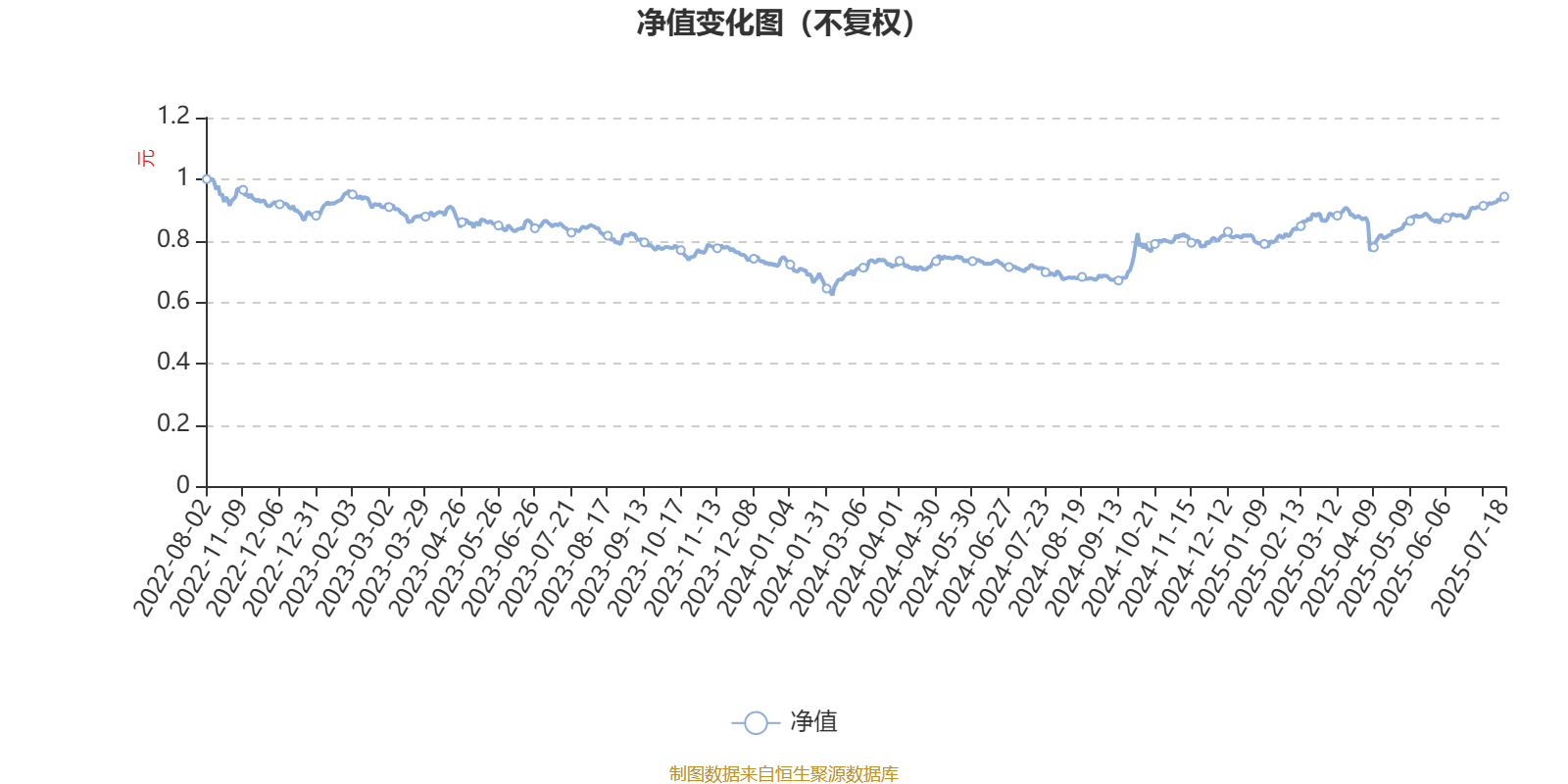
该基金属于偏股混合型基金。截至7月18日,单位净值为0.943元。基金经理是郭晓林,目前管理6只基金近一年均为正收益。其中,截至7月18日,博时专精 特新主题混合A近一年复权单位净值增长率最高,达66.18%;博时新能源主题混合A最低,为21.14%。 基金管理人在二季报中表示,展望下半年,国内经济将在政策持续推进下展现出积极变化;制造业继续向新质生产力升级;房地产市场随着一系列精准调控 政策的深入实施,销售数据逐步企稳,预期有望逐步改善;消费领域在各项补贴政策的支撑下有望稳中有升,新兴消费热点不断涌现。海外局势依旧复杂多 变,美国政策在多方面的频繁调整,如贸易关税政策的波动、货币政策节奏的改变,给全球经济格局与贸易环境增添了不确定性,进而对我国外需产生一定 程度的影响。 我们认为A股市场整体估值处于合理区间,指数层面有望保持平稳。从企业盈利趋势来看,总量的机会相对稀缺,但细分方向仍然可以找出许多结构性的亮 点,比如AI算力、新兴消费等领域。我们将继续关注AI技术的创新进展,AI应用已经在不知不觉中渗透到日常生活和工作中的各方面;AI大模型的tokens消 耗就如同移动互联网时代的流量消耗,已经开始呈现指数级 ...
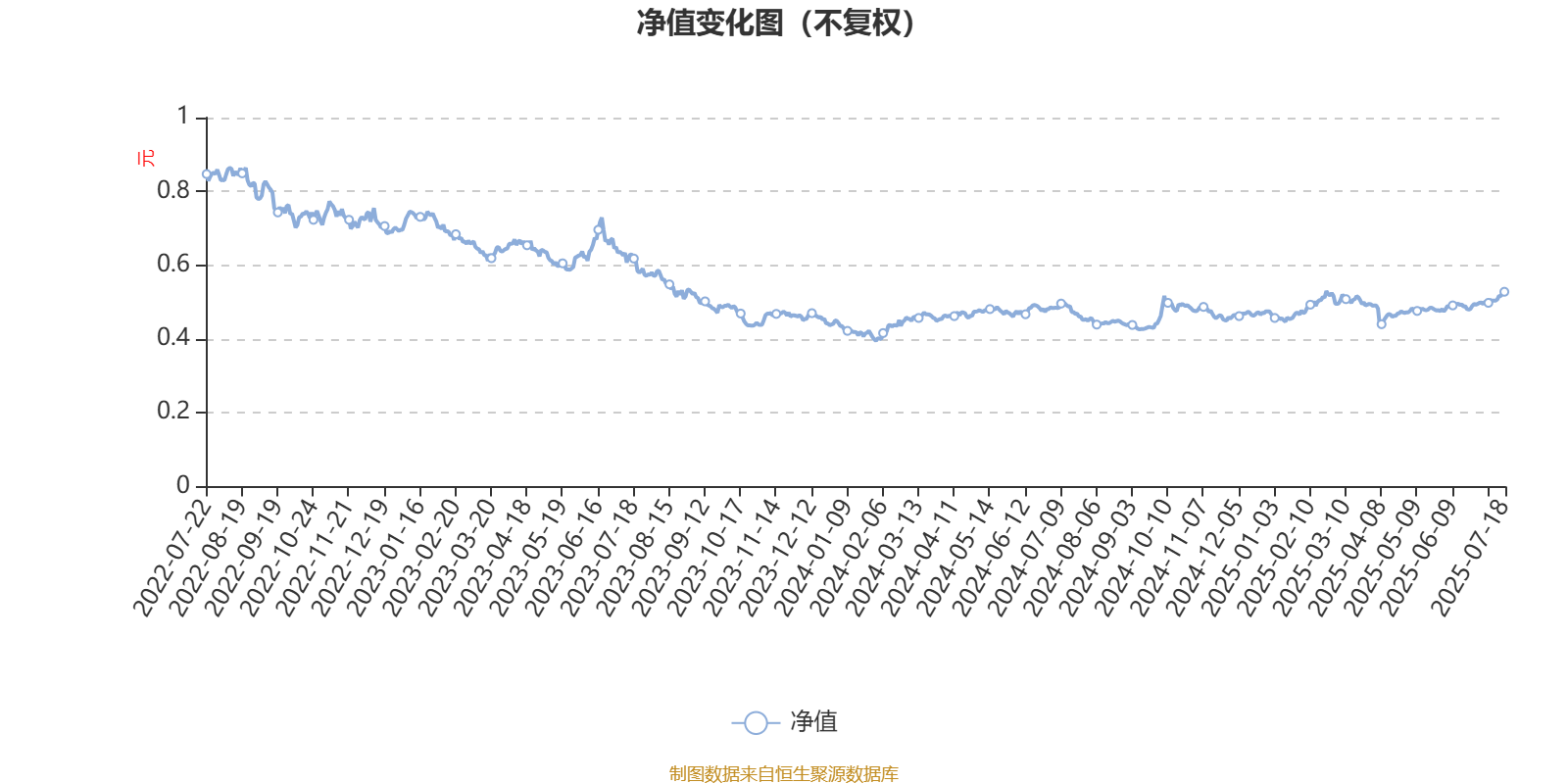
金鹰责任投资混合A:2025年第二季度利润22.44万元 净值增长率1.55%
Sou Hu Cai Jing· 2025-07-21 10:20
Core Viewpoint - The AI Fund Jin Ying Responsible Investment Mixed A (011155) reported a profit of 224,400 yuan in Q2 2025, with a net value growth rate of 1.55% and a fund size of 15.244 million yuan as of the end of Q2 2025 [3][16]. Fund Performance - The fund's weighted average profit per share for the period was 0.0071 yuan [3]. - As of July 18, 2025, the fund's unit net value was 0.528 yuan [3]. - The fund's one-year cumulative net value growth rate reached 11.43%, the highest among its peers, while the lowest was 2.26% for Jin Ying New Energy Mixed A [3]. Market Analysis - In Q2 2025, the CSI 300 Index rose by 1.25% and the Hang Seng Index increased by 4.12% [3]. - Sectors such as military, banking, communication, media, and agriculture performed well, while food, home appliances, steel, building materials, and automotive sectors lagged [3]. - Concerns about the sustainability of demand for cyclical consumer goods have emerged after subsidy stimuli since last year, while AI-related industries, particularly export-related, showed significant performance growth following easing trade war tensions [3]. Investment Strategy - For Q3 2025, the fund will focus on AI technological advancements, emerging consumer trends, and innovative pharmaceuticals, maintaining a high allocation in Hong Kong stocks [4]. - The fund will adopt an active investment strategy, emphasizing growth in A-shares and internet sectors in Hong Kong [4]. Comparative Performance - As of July 18, 2025, the fund's three-month cumulative net value growth rate was 13.85%, ranking 136 out of 328 comparable funds [4]. - The six-month cumulative net value growth rate was 15.33%, ranking 97 out of 328 [4]. - The fund's three-year cumulative net value growth rate was -37.90%, ranking 239 out of 249 [4]. Risk Metrics - The fund's three-year Sharpe ratio was -0.4456, ranking last among comparable funds at 249 out of 249 [10]. - The maximum drawdown over the past three years was 54.26%, with the largest single-quarter drawdown occurring in Q3 2023 at 29.88% [12]. Fund Holdings - As of Q2 2025, the top ten holdings of the fund included Tencent Holdings, Xiaomi Group-W, Pop Mart, China Oriental Education, Hong Kong Stock Exchange, CATL, Lens Technology, Huadian Technology, Zijin Mining, and AAC Technologies [19]. Fund Positioning - The average stock position over the past three years was 85.65%, with a peak of 91.94% at the end of H1 2025 and a low of 59.3% at the end of H1 2021 [15].