
日元套利交易

Search documents
对冲需求激增释放关键信号 日元套利交易“好日子”到头了?
智通财经网· 2025-12-29 07:53
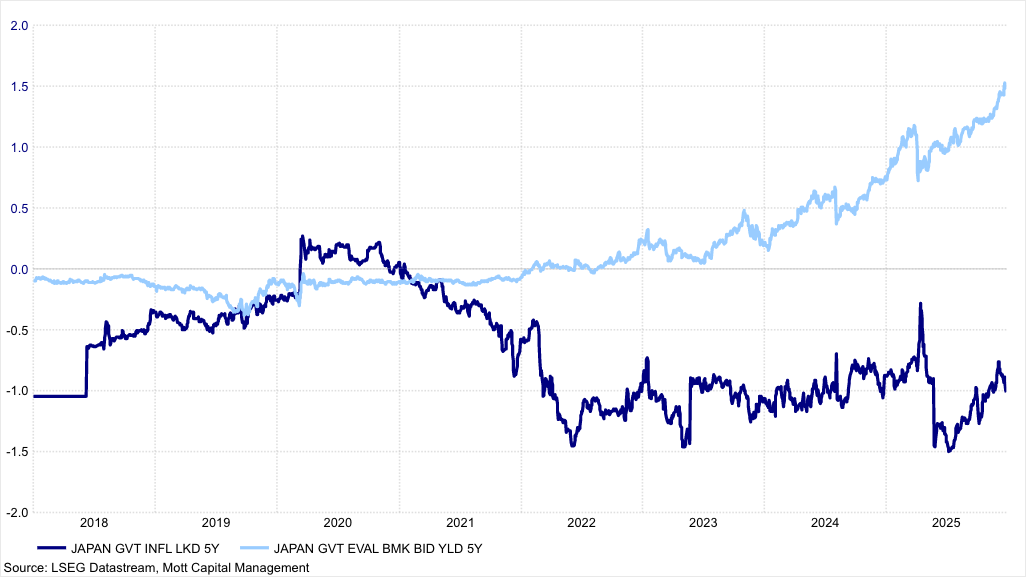
智通财经APP获悉,对冲日元兑美元汇率风险的需求正在上升,这或许是日本利率上行开始影响套利交易的第一个信号。在日本央行12月加息并 暗示未来仍可能进一步收紧货币政策之后,日本利率已升至数十年来高位——日本五年期国债收益率升至约1.5%,这是2008年以来未曾见过的水 平。尽管名义利率已经上升,但盈亏平衡通胀预期也同步上行,这意味着日本的实际利率仍然处于深度负值区间。 远期利率 五年期日元远期利率目前仍处于关键水平,暗示突破可能迫在眉睫。如果隔夜利率之间的利差持续收窄,可能会对远期利率施加更大压力,促使 其进一步压缩。 总体而言,要使日本的实际利率转为正值,五年期名义利率需要升至约2.5%以上,这一水平相当于假设的盈亏平衡通胀率,也是当前名义利率与 实际利率之间的差值。这意味着,如果日本央行最终目标是将利率推升至正区间,日本五年期利率在未来几个月可能仍需要显著上行。 更高的日本五年期利率将意味着美日利差将明显收窄,除非美国利率与日本利率同步上升、甚至上升得更快。但鉴于市场预计美联储将在2026年 降息,美国利率上行速度快于日本的可能性似乎并不大。 最终,这一趋势是否持续,很大程度上取决于日元能否相对美元走强。尽 ...

全球债市“金丝雀”!承压的日本国债将成为倒下的“首块多米诺骨牌”?
Zhi Tong Cai Jing· 2025-12-26 04:07
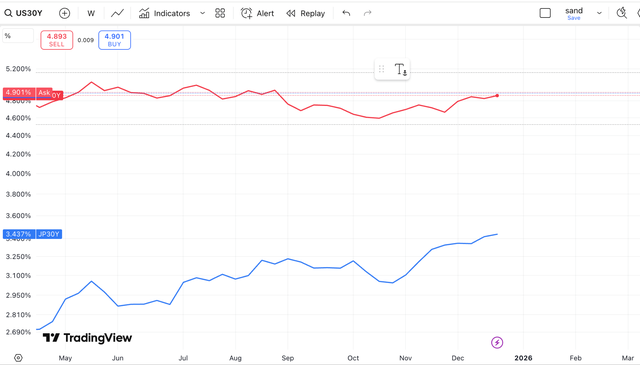
随着收益率上升和日本央行逐步停止债券购买,日本面临着结构性债务和通胀的双重挑战。日本国债收 益率上升可能扰乱全球债券市场,潜在的资本回流可能会影响美国国债。日本通过通胀来偿还债务的能 力受到实际经济增长缓慢和人口老龄化的制约,这引发了人们对金融抑制再次出现的担忧。尽管货币疲 软且收益率上升,但日本股市和黄金(以日元计价)表现优异,反映出全球资产重新定价,各国政府寻求 通过通货膨胀来减少债务。 日债收益率与日元汇率趋于走高 几十年来,日本一直处于接近零利率、波动性被抑制和长期通货紧缩的环境中,但这种情况已经迅速改 变。除了日元套利交易的解除,日本的问题在于结构性债务和通货膨胀,这个问题可能很快也会困扰其 他发达市场,包括美国。日本或许会成为第一个倒下的多米诺骨牌。 日本的整个财政和货币体系都是建立在永久低利率的假设之上的,这种货币实验或许即将结束——日本 国债收益率正在上升。一些投资者认为,如果日本债券收益率完全与美国债券收益率趋同甚至超过美国 债券收益率,这可能会"摧毁"全球债券市场。 日本的债务占GDP的比重超过200%,而美国的债务占GDP比重接近120%。这两个数字在历史上都偏高 且存在问题,规模上的差 ...
黄金再度飞升,“货币贬值交易”杀回来了?
美股研究社· 2025-12-23 09:55
Core Viewpoint - The article discusses the recent surge in gold prices, reaching a historical high, indicating the reactivation of "currency devaluation trades" due to the Federal Reserve's recent interest rate cuts and concerns over debt monetization [6][8]. Group 1: Gold and Silver Market Dynamics - Gold prices have surpassed $4,400 per ounce, with a return rate of 68% since 2025, while silver has also reached a historical high with a year-to-date increase of nearly 140% [6]. - The rise in gold and silver prices is attributed to dovish comments from Federal Reserve Chairman Jerome Powell and expectations of further interest rate cuts [8]. - The geopolitical tensions in Venezuela and Ukraine have enhanced the appeal of gold as a safe-haven asset [6]. Group 2: Currency Correlations - There is a growing correlation between low-debt sovereign currencies, such as the Swedish Krona and Swiss Franc, and the prices of precious metals [11]. - The strength of the Swedish Krona is linked to "currency devaluation trades," despite its historical volatility and lack of safe-haven status [12]. - The article highlights that while the US dollar appears stable, it is actually weak against a basket of currencies, despite its strength against the fragile Japanese Yen [12]. Group 3: Investment Strategies - The surge in gold prices is partly driven by ongoing yen carry trades, where investors short the yen to finance long positions in higher-risk assets [12]. - The recent interest rate hike by the Bank of Japan to 0.75% has not ended these carry trades, as the interest rate differential between Japan and the US remains significant [12]. - Japan's 10-year government bond yield has nearly doubled this year, reaching 2.08%, indicating a shift in the interest rate landscape [13].

陶冬:日本加息不会触发东南亚危机
Di Yi Cai Jing· 2025-12-22 03:33
Group 1 - The core viewpoint of the article highlights the contrasting economic conditions in the US and Japan, with the US showing signs of weakening data and Japan raising interest rates, impacting risk assets globally [1][3] - The US inflation data for November shows a core CPI increase of 2.6%, the lowest since 2021, but the quality of the data is questioned due to incomplete statistics caused by government shutdowns [1][2] - The US labor market is showing signs of weakness, with November adding 6,900 jobs primarily in AI infrastructure, education, and healthcare, while the unemployment rate rises to 4.6% [2] Group 2 - The Bank of Japan raised interest rates to 0.75%, the highest level since 1995, indicating potential for further increases, but the market had already priced in this move [3] - The rise in Japanese bond yields above 2% raises concerns about potential global financial instability, although the current economic environment differs significantly from the 1997 Asian financial crisis [3][4] - The article suggests that the likelihood of a similar crisis occurring today is low due to improved structural conditions in Southeast Asia, including flexible exchange rate mechanisms and better foreign debt management [5]
日本加息应对通胀,核心CPI连续44个月超2%
Sou Hu Cai Jing· 2025-12-22 00:45
Group 1: Reasons for Japan's Rate Hike - Japan's core CPI has exceeded the 2% target for 44 consecutive months, reaching 3% in November, with food prices, such as rice, surging by 37% [4][2] - The average wage increase in the 2025 "Shuntō" negotiations is projected to be between 5.37% and 5.46%, led by major companies like Toyota, creating a wage-price spiral [4][2] - The Bank of Japan's decision to raise rates is seen as a necessary step towards normalizing monetary policy, with a target rate of 1%-2.5% [4][2] Group 2: Global Market Impact - The long-standing low interest rates in Japan have led to approximately $1.5 trillion in "yen carry trades," which may see some funds returning to Japan, potentially causing sell-offs in U.S. Treasuries and emerging market assets [6][5] - The market had already priced in the rate hike, with no significant panic observed; for instance, over 4,700 stocks in the A-share market rose on the day of the rate increase [6][7] - The Nikkei index rose by 1.16% following the rate hike, indicating a positive response from the stock market [7] Group 3: Impact on China - The A-share market demonstrated resilience, with capital controls mitigating the impact of the rate hike; previous rate hikes in Japan led to rebounds in A-shares [8] - The Chinese yuan appreciated to 7.032, offsetting some external disturbances [9] - Chinese export sectors, particularly those exporting to Japan (e.g., machinery, textiles, new energy vehicles), may benefit from the yen's appreciation, enhancing their price competitiveness [10] Group 4: Direct Effects on Consumers - The cost of traveling to Japan and purchasing goods online has increased due to the yen's appreciation, with the exchange rate changing from 1,000 yen for 480 RMB to 500 RMB [12] - For students studying in Japan, tuition fees converted to RMB have decreased, but living costs have risen, particularly for those with floating-rate mortgages, which may see monthly payments increase by 1,500 yen [12]
日本央行加息至30年最高水平
Sou Hu Cai Jing· 2025-12-21 14:43
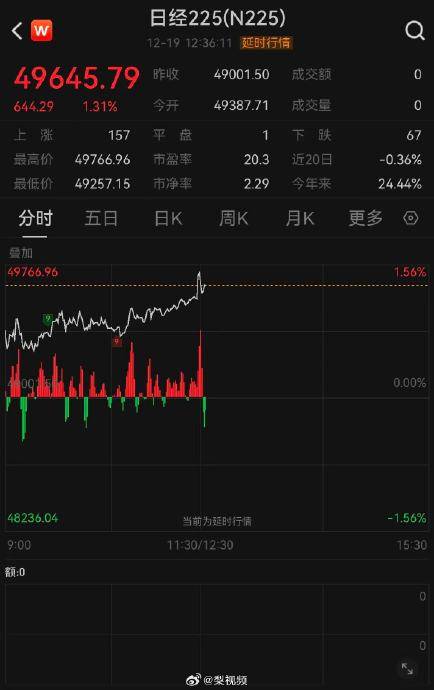
自去年和今年初两次加息后,日本央行再次宣布加息25个基点,政策利率从0.5%上调至0.75%,达30年 来最高水平。加息背后,是日本通胀数据连续44个月高于2%的目标,以及日元持续疲软带来的输入性 通胀压力。这一决策标志着日本货币政策的重大转向。日本希望以此打破长期低利率、低通胀、低增长 的循环。但在自相矛盾的财政与货币政策取向下,此次加息有可能成为"危险一跃"。 "危险一跃" 日本政策利率自1995年9月调降至0.5%后,货币政策长期保持宽松,甚至长期实施负利率政策。自2024 年3月日本央行决定结束负利率政策、将政策利率从负0.1%提高到0至0.1%区间以来,日本央行在行长 植田和男执掌下致力于探索货币政策正常化。2024年7月和今年1月,日本央行就曾两度加息。 在日本央行即将召开议息会议的数小时前,日本总务省发布的数据显示,剔除生鲜食品的核心消费者价 格指数(CPI)11月同比上涨3%,意味着日本核心通胀指标连续第二个月稳定在3%,且已连续44个月 站在2%通胀目标之上,释放出物价压力持续高企的信号。 物价持续攀升已成为日本首相高市早苗面临的一大执政挑战。在她就任首相前,由于民众对生活成本高 企的不满情 ...

日央行如期降息引“风暴” 银价震荡盘整
Jin Tou Wang· 2025-12-20 02:34
Group 1 - The core viewpoint of the news highlights the recent interest in silver as it trades around $64.00, with a slight increase towards $66.00, while the market is awaiting the final inflation expectations for December in the U.S. [1] - The Bank of Japan raised its benchmark interest rate from 0.5% to 0.75%, marking a 30-year high and the first rate hike in 11 months since January 2025, which aligns with market expectations [1] - The statement from the Bank of Japan indicates a potential for further rate hikes if the economic outlook remains stable, leading to a sell-off in the bond market and a rise in yields [1] Group 2 - The silver market showed a bearish trend with a high close yesterday, failing to break previous highs, and the daily RSI has declined, indicating a potential short-term weakness [2] - Key support for silver is identified at $60 per ounce, while resistance is at $66 per ounce, with technical indicators suggesting a short-term bearish outlook [2] - If silver breaks below the $60 support, it may test $55, while a breakout above $66 could lead to higher targets [2]
美股周五收盘点评(上)CPI低于预期,投资人质疑数据
Xin Lang Cai Jing· 2025-12-19 22:31
Core Insights - Global bond yields have risen, led by Japan, following the Bank of Japan's decision to raise its policy interest rate to approximately 0.75%, the highest level in nearly 30 years [1] - The yield on Japan's 10-year government bonds has surpassed 2%, a level not seen since the late 1990s, indicating a decisive shift away from ultra-loose monetary policy [1] - Despite the interest rate hike, the Japanese yen has weakened against the US dollar to around 157, suggesting market skepticism about the sustainability of the tightening policy [1] Group 1 - The rise in Japanese bond yields has triggered a global increase in bond yields, affecting US Treasuries and European sovereign bonds [1] - Japan's policy shift is significant as its government bonds have long served as a benchmark for global arbitrage trading and duration risk exposure [1] - The increase in Japanese bond yields represents a structural tightening of global financial conditions, contrasting sharply with the previous decades of policy [1] Group 2 - The surge in yields and the weakening yen have led to a sell-off in global risk assets, reminiscent of past "yen carry trade" unwinding, although a similar situation has not yet been observed this time [1] - Higher yields pose challenges for interest-sensitive sectors of the economy, including real estate and big-ticket items like financed automobiles [1]
日本央行加息至三十年新高,全球套利资本面临再配置
Sou Hu Cai Jing· 2025-12-19 13:35
Group 1: Core Insights - The Bank of Japan raised its policy interest rate by 25 basis points to 0.75%, marking a 30-year high and the sixth rate hike since 2000, driven by persistent inflation exceeding the 2% target for 43 consecutive months [1][2] - Despite the rate hike, Japan's economy showed signs of weakness, with a 0.6% contraction in GDP for the third quarter, indicating a fragile recovery [2] - The decision to raise rates reflects a balancing act between controlling inflation and supporting economic growth, with potential implications for Japan's substantial public debt, which stands at 236% of GDP [2] Group 2: Market Reactions - The market response to the rate hike was relatively calm compared to previous hikes, attributed to the high level of expectation already priced in, leading to structural adjustments rather than systemic liquidity shocks [3][4] - Global capital flows are characterized by a dual track of "yen repatriation and dollar asset resilience," with Japan's rising domestic yields attracting some overseas funds without significantly impacting dollar assets [4] Group 3: Future Implications - The future path of interest rate hikes and ultimate rate targets is under scrutiny, with predictions suggesting rates could rise to 1.5% by the end of 2027, but the sustainability of Japan's massive government debt poses constraints on this trajectory [5][7] - The yen may receive short-term support from the rate hike, but long-term appreciation is limited by fiscal and trade deficits, with expectations for the USD/JPY exchange rate to remain between 150-160 [6][7] - The combination of rate hikes and fiscal stimulus presents inherent conflicts, potentially leading to a vicious cycle of rising interest payments and increased government borrowing, which could necessitate tax increases or social security cuts [7][8]
日本央行再次加息 “廉价日元”时代渐行渐远
Xin Hua Cai Jing· 2025-12-19 05:25
由于此次加息已被市场充分定价,决议公布后金融市场反应相对平静。分析师指出,这表明加息本身的 影响已被消化,市场焦点迅速转向日本央行对未来政策节奏的谨慎指引。然而,尽管日本央行是2025年 唯一加息的主要央行,日元兑美元汇率在2025年全年仍表现疲软,是主要货币中表现最差者之一。有分 析师警告,进一步的紧缩并不能保证日元能迅速脱离日本当局可能进行外汇干预的"危险区域"。 日本央行表示,从"可持续、稳定实现2%价格稳定目标"的角度出发,适度调整货币宽松程度是适当 的。 尽管实施了加息,日本央行的政策姿态仍被市场解读为谨慎。政策声明明确写道,即使在本次加息之 后,"实际利率预计仍将保持显著的负值",并断言"宽松的金融环境将继续有力支撑经济活动"。 关于未来路径,日本央行给出了有条件的前瞻指引:"若2025年10月展望报告所示的经济活动与价格前 景得以实现,日本央行将随着经济活动和物价的改善,继续上调政策利率。"这意味着未来的任何进一 步行动都将高度依赖于经济数据,尤其是工资与物价形成良性循环的可持续性证据。 声明亦提示了多重风险,包括外汇市场发展、海外经济活动以及企业的工资与定价行为,表明央行对政 策调整的外溢影响 ...