
日元汇率

Search documents
管涛:人民币汇率、贸易顺差与中国经济再平衡
Xin Lang Cai Jing· 2026-01-12 02:47
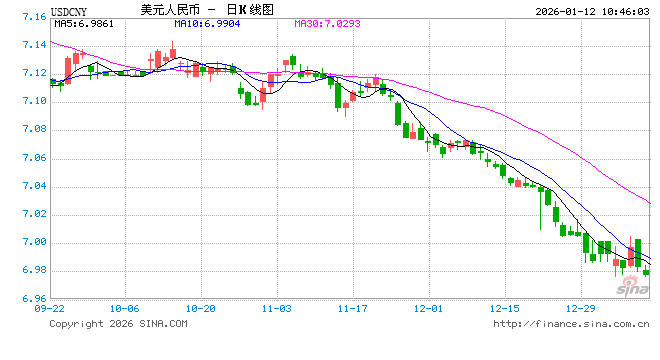
Core Viewpoint - The depreciation of the real effective exchange rate and the expansion of trade surplus are currently seen as important reasons for a bullish outlook on the RMB. However, historical trends and comparisons with the JPY/USD exchange rate suggest these reasons may not hold true. The RMB's appreciation should not be used as a policy tool for economic rebalancing, as it contradicts the principle of macro policy consistency and may trigger panic among private sectors [2][3][35]. Group 1: Exchange Rate Trends - Since late November 2025, both onshore and offshore RMB exchange rates have shown a rapid appreciation, with the midpoint and trading prices rising to around 7.0, marking a cumulative increase of nearly 2% for the midpoint and over 4% for trading prices [2][35]. - The real effective exchange rate (REER) of the RMB has declined significantly, dropping 16.7% since March 2022, while the JPY has seen a similar decline of 17.1% during the same period [4][37]. - The recent trends in the JPY/USD exchange rate have not aligned with expectations based on the declining REER and narrowing interest rate differentials, indicating that multiple factors influence exchange rates [8][42]. Group 2: Trade Surplus and RMB Valuation - In the first 11 months of 2025, China's trade surplus reached $1,075.9 billion, an increase of 21.4% compared to the previous year, despite a decline in exports to the US [12][43]. - Historical data shows no simple linear relationship between trade surplus and RMB exchange rate movements, with instances where trade surplus increased while the RMB depreciated [16][47]. - The expansion of trade surplus is not a reliable predictor of RMB appreciation, as evidenced by various years where trade surplus growth coincided with RMB depreciation [16][48]. Group 3: Historical Context of RMB Policy - Following the 2008 global financial crisis, China implemented policies aimed at reducing trade surplus and promoting balance, resulting in a significant appreciation of the RMB due to structural adjustments and increased domestic demand [19][51]. - The relationship between the RMB's real effective exchange rate and China's external balance has shifted from a strong negative correlation (2008-2013) to a weak positive correlation (2014-2024), indicating a change in the effectiveness of leverage in driving investment [27][58]. - The RMB's depreciation in recent years reflects ongoing trade tensions and economic cycles, with the Chinese government emphasizing stability in the exchange rate to prevent rapid depreciation [29][60].

众口一词的 人民币升值“真相”
Sou Hu Cai Jing· 2026-01-11 16:35
Group 1 - Japan's current account surplus to GDP ratio is projected to reach 4.5% in 2024, increasing by 0.9 percentage points, and further rise to 5.1% in the first three quarters of 2025, exceeding the international warning line for two consecutive years [1] - The Chinese yuan (RMB) is expected to appreciate against the US dollar, with foreign investment banks suggesting that the RMB is structurally undervalued, predicting that RMB appreciation is the "highest conviction" trade for 2026 [1] - The RMB exchange rate has shown signs of appreciation since March 2025, with a cumulative surplus of $273.3 billion in bank foreign exchange settlements by November 2025, although there are concerns about the sustainability of this trend [2][3] Group 2 - The improvement in the foreign exchange situation is attributed more to a decrease in the motivation to purchase foreign currency rather than an increase in the willingness to settle foreign exchange [3] - The actual effective exchange rate (REER) of the RMB has depreciated by 16.7% since March 2022, indicating a potential undervaluation, but this does not guarantee an appreciation of the nominal exchange rate [5] - The RMB's REER has shown a weaker trend compared to other major currencies, with significant fluctuations in the exchange rate not necessarily correlating with the bank's foreign exchange settlement surplus [9][10] Group 3 - The trade balance indicates that while China has a strong goods trade surplus, it faces deficits in service trade and investment income, leading to a current account surplus to GDP ratio of 2.2% in 2024, which is below the international warning line [7][8] - The dynamics of the RMB's appreciation and its impact on asset prices are complex, with historical data showing that RMB appreciation does not always correlate with positive outcomes for Chinese assets [10][12] - The transition of China's private sector from net external debt to net external assets by 2025 may lead to net exchange losses for listed companies if the RMB appreciates significantly, affecting their profitability [11][12]
管涛:众口一词的人民币升值“真相”|立方大家谈
Sou Hu Cai Jing· 2026-01-11 14:53
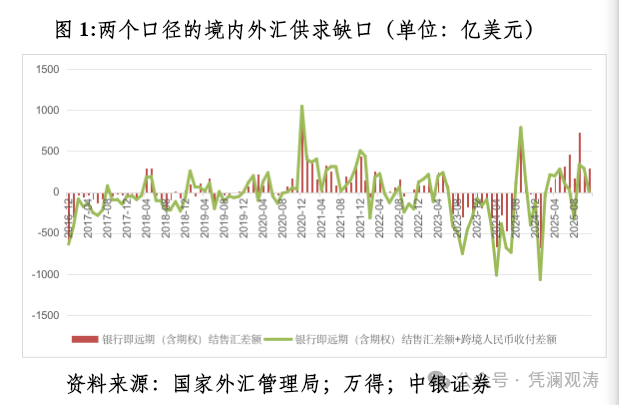
Core Viewpoint - The article discusses the recent strengthening of the RMB against the USD, highlighting that the narrative around RMB appreciation lacks substantial data and theoretical support, despite claims from foreign investment banks about its structural undervaluation and potential asset revaluation in China [1][2][4]. Exchange Rate Trends - From July 2023 to February 2025, the RMB faced overall pressure, with a notable shift to a surplus in bank foreign exchange settlements starting March 2025, accumulating a surplus of $273.3 billion by November 2025 [2][4]. - In November 2025, the bank's foreign exchange settlement surplus was $29.7 billion, a modest increase from the previous month, indicating a lack of strong market consensus on RMB appreciation [2][4]. Market Behavior - The improvement in the foreign exchange situation is attributed more to a decrease in the motivation to purchase foreign currency rather than an increase in the willingness to settle foreign exchange [4]. - The average settlement rate for foreign currency receipts increased to 54.6% from July 2023 to February 2025, while the payment rate decreased to 58.8%, suggesting a natural hedging against exchange rate risks rather than a bullish sentiment towards RMB [4]. Real Effective Exchange Rate (REER) - The RMB's real effective exchange rate (REER) has depreciated by 16.7% since March 2022, contrasting with the appreciation of other major currencies, indicating a complex relationship between REER and nominal exchange rates [7][11]. - Despite the depreciation of the REER, it does not necessarily imply that the RMB is undervalued or will appreciate, as historical data shows inconsistent relationships between REER movements and nominal exchange rates [7][18]. Trade Balance and Economic Indicators - China has maintained a significant trade surplus, while Japan has faced trade deficits since 2021, yet China's overall current account surplus remains within international warning limits [12][15]. - The article emphasizes that while a trade surplus may suggest RMB undervaluation, domestic economic conditions, such as low inflation and nominal growth rates, could indicate overvaluation [15][23]. Impact on Corporate Earnings - Analysis of A-share listed companies from 2015 to 2022 shows that a higher percentage of non-financial firms reported net exchange gains during depreciation years compared to appreciation years, suggesting that RMB appreciation may not necessarily benefit corporate earnings [21][23]. - The shift from net external debt to net external assets for Chinese firms raises concerns that significant RMB appreciation could lead to net exchange losses, adversely affecting corporate profitability [23].
管涛:众口一词的人民币升值“真相”︱汇海观涛
Di Yi Cai Jing· 2026-01-11 12:53
Group 1 - The article discusses the recent strengthening of the RMB against the USD, which has been characterized by a reversal of the previous trend of depreciation over the past three years, particularly since November 2024 [1] - Foreign investment banks have suggested that the RMB is structurally undervalued, predicting that RMB appreciation will be a high-confidence trade in 2026, while domestic voices echo that RMB revaluation will lead to a reassessment of Chinese assets [1][2] - However, the article argues that these significant judgments lack data, facts, or theoretical support, indicating skepticism about the sustainability of the RMB's appreciation [1] Group 2 - From July 2023 to February 2025, the RMB exchange rate faced overall pressure, with a notable shift to a surplus in bank foreign exchange settlements starting in March 2025, accumulating a surplus of $273.3 billion by November [2] - In November, the bank's foreign exchange settlement surplus was $29.7 billion, which was significantly lower than the surpluses recorded in September and October [2] - The article highlights that the improvement in the foreign exchange situation is not due to an increase in market settlement willingness but rather a decrease in the motivation to purchase foreign currency [4] Group 3 - The RMB broke the 7 mark in December 2025, with the domestic trading price showing a consistent strength against the central parity and offshore RMB rates [5] - The article compares the current situation to December 2020, when the RMB was also appreciating, noting that the average transaction volume in the interbank market decreased by 14.3% in December 2025 compared to the previous month [5] - The article emphasizes that the relationship between the actual effective exchange rate (REER) and the nominal exchange rate is complex, with REER depreciation not necessarily indicating that the nominal exchange rate is undervalued [7] Group 4 - The article notes that while China has a growing trade surplus, it also faces deficits in service trade and investment income, leading to a mixed picture in the current account balance [12] - In contrast, Japan has a trade deficit but benefits from significant investment income, resulting in a stronger current account position compared to China [12] - The article suggests that the equilibrium exchange rate is influenced by both external and internal factors, with the RMB potentially being undervalued due to trade surpluses but overvalued due to domestic economic conditions [14] Group 5 - The article discusses the complexities of the relationship between exchange rates and asset prices, arguing that a strong RMB does not automatically lead to a revaluation of Chinese assets [18] - Historical data shows that during years of RMB appreciation, a lower percentage of non-financial companies reported net exchange gains compared to years of depreciation [20] - The shift from net external debt to net external assets for Chinese companies may lead to net exchange losses if the RMB appreciates significantly, impacting corporate profitability [23]
2026年日元汇率展望:美国降息节奏是关键
日经中文网· 2026-01-11 00:33
Core Viewpoint - The Japanese yen is expected to appreciate against the US dollar for the first time in five years by 2025, primarily due to the decline in US dollar credit, although it remains weak against other currencies [2][4]. Group 1: Yen Exchange Rate Trends - As of December 30, 2025, the exchange rate is 1 USD to 155.97 JPY, showing an appreciation of approximately 1.90 JPY (1% increase) compared to the same time in 2024 [4]. - The yen's appreciation against the dollar is attributed to the depreciation of the dollar, while it continues to depreciate against other major currencies, indicating that a true shift to a yen appreciation phase is not yet realized [8][10]. - The yen reached its highest point of the year at 139.80 JPY per USD on April 22, 2025, following the announcement of a reciprocal tariff policy by the US government [6]. Group 2: Monetary Policy and Economic Implications - The Bank of Japan raised its policy interest rate by 0.5% in 2025, reaching the highest level in approximately 27 years, which narrows the long-term interest rate gap between Japan and the US [10]. - Despite the interest rate hike, the yen has not transitioned to an appreciation phase, as the government's active fiscal policies may undermine the effects of the Bank of Japan's rate increase [10][11]. - Predictions suggest that by December 2026, the yen may depreciate again to around 160 JPY per USD, depending on the trajectory of US monetary policy [10][11].
17.7万亿刺激“发威”?日本央行拟上调经济预期,1月或按兵不动!
Xin Lang Cai Jing· 2026-01-09 08:48
Group 1 - The Bank of Japan is expected to raise its economic growth forecast in an upcoming meeting, while keeping the benchmark interest rate unchanged [2][6] - The economic growth forecast for the next fiscal year starting in April may be adjusted upward from the previous estimate of 0.7%, reflecting the impact of Prime Minister Sanae Takaichi's recently approved economic plan [2][6] - Takaichi's fiscal measures amount to 17.7 trillion yen (approximately 113 billion USD), aimed at strengthening the economy and addressing long-term inflation [2][6] Group 2 - The Bank of Japan raised its policy interest rate to 0.75%, the highest level since 1995, considering the effects of the government's new measures [2][6] - Officials believe these measures will help increase potential inflation, thereby enhancing the likelihood of achieving the Bank of Japan's economic forecasts [2][6] - Although the market anticipates that the Bank of Japan will act approximately every six months regarding interest rates, officials have stated they do not have a preset view on the future rate path [2][6] Group 3 - The Bank of Japan is discussing whether to lower its consumer price index (CPI) forecast excluding fresh food, but remains focused on overall price trends rather than temporary data fluctuations [3][7] - Officials do not see a need to adjust their potential inflation forecasts, expecting inflation performance to align with the Bank of Japan's price targets in the latter half of the three-year forecast period that began last April [3][7] - Due to a slowdown in food price increases and Takaichi's measures to curb utility costs, Japan's inflation pace is expected to slow in the coming months [3][7]
日美长期利差持续缩小,日元买盘仍未出现
3 6 Ke· 2026-01-08 23:27
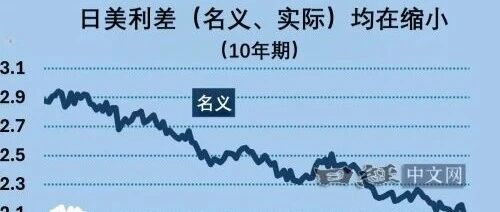
Core Viewpoint - The relationship between the Japanese yen exchange rate and the Japan-U.S. interest rate differential has significantly changed over the past six months, shifting from "interest rate changes driving exchange rate changes" to "yen depreciation leading to rising interest rates" [2][6]. Group 1: Interest Rate Dynamics - The Japan-U.S. long-term interest rate differential has continued to narrow, decreasing from approximately 2.9% six months ago to 2.075% as of January 6, with Japan's long-term rate at 2.095% and the U.S. at 4.17% [2][3]. - The actual interest rate differential, calculated from fixed-rate bond yields minus the breakeven inflation rate, has also decreased from about 2.1% to 1.58% over the same period [2][3]. Group 2: Market Reactions and Expectations - Despite the narrowing interest rate differential, there has been no significant increase in yen buying, as market concerns grow over the Bank of Japan's potential lag in raising interest rates [2][6]. - The depreciation of the yen has raised domestic inflation expectations, leading to a belief that the Bank of Japan may be forced to increase rates, thus pushing interest rates higher [6][7]. Group 3: Future Outlook - Analysts suggest that if concerns about the Bank of Japan's delayed response diminish and inflation stabilizes, the relationship between the yen exchange rate and the Japan-U.S. interest rate differential may potentially restore [7]. - The demand for U.S. 10-year Treasury bonds is expected to increase as the long-term interest rate spread widens, with projections indicating that U.S. long-term rates may decrease to the mid-3% range within a year [5].
日美长期利差持续缩小,日元买盘仍未出现
日经中文网· 2026-01-08 07:55
Core Viewpoint - The relationship between the Japanese yen exchange rate and the Japan-U.S. interest rate differential has significantly changed over the past six months, shifting from "interest rate changes driving exchange rate changes" to "yen depreciation leading to rising interest rates" [2][7]. Group 1: Interest Rate Dynamics - As of January 6, Japan's long-term interest rate was 2.095%, while the U.S. long-term interest rate was 4.17%, resulting in a Japan-U.S. interest rate differential of 2.075%, which has narrowed by over 0.8 percentage points from approximately 2.9% six months ago [4]. - The actual interest rates, calculated by subtracting the breakeven inflation rate from the nominal yield, show Japan's rate at approximately 0.32% and the U.S. at about 1.9%, leading to a narrowing of the actual interest differential from around 2.1% to 1.58% over the past six months [4]. Group 2: Market Reactions and Expectations - Despite the narrowing interest rate differential, there has been a lack of increased demand for the yen, with the exchange rate hovering around 156 yen per dollar. This is attributed to concerns that the Bank of Japan may lag in raising interest rates, leading to simultaneous increases in domestic rates and yen depreciation [7]. - The depreciation of the yen has raised import prices, increasing domestic inflation expectations, which in turn has led the market to anticipate that the Bank of Japan will be forced to raise rates [7]. Group 3: Future Outlook - There is speculation about whether the previous relationship that supported yen appreciation and dollar depreciation will be restored. Analysts suggest that if concerns about the Bank of Japan's delayed response diminish and inflation stabilizes, the linkage between the yen exchange rate and the interest rate differential may re-emerge [8].
日元未现加速贬值 央行政策路径关键数据指引方向
Jin Tou Wang· 2026-01-07 12:19
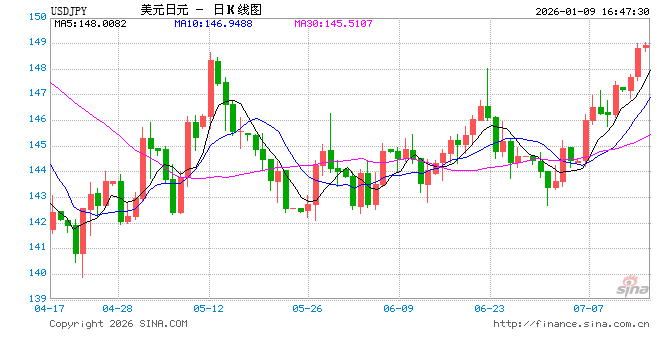
Group 1 - The core factors influencing the Japanese yen include concerns over Japan's fiscal situation, rising risk appetite, and uncertainty regarding the timing of the next interest rate hike by the Bank of Japan, which continues to exert pressure on the yen's exchange rate [1] - The Japanese Cabinet recently approved a record annual budget of 122.3 trillion yen, raising concerns about fiscal sustainability and impacting market sentiment towards the yen [1] - Market risk appetite remains relatively high, diminishing the yen's appeal as a traditional safe-haven currency, while there is significant disagreement among investors regarding the timing of the Bank of Japan's next interest rate hike [1] Group 2 - The Bank of Japan's policy direction has not fundamentally changed, with the Governor indicating that as long as economic and inflation trends align with expectations, the central bank will continue to pursue interest rate hikes [2] - The hawkish stance from the Bank of Japan has led to a rise in Japanese government bond yields, narrowing the interest rate differential between Japan and other major economies, which has made market participants more cautious about aggressive short positions on the yen [2] Group 3 - The US dollar's upward momentum is limited by ongoing expectations for future interest rate cuts by the Federal Reserve, leading to a more conservative approach among dollar bulls [3] - Investors are awaiting key macroeconomic data from the US, including ADP private sector employment data and the non-farm payroll report, which will be crucial for assessing the dollar's future trajectory [3] Group 4 - Technically, the USD/JPY pair is showing a strong oscillating pattern, with key support at 156.15, which corresponds to the 100-period moving average on the 4-hour chart [4] - The MACD indicator shows a gradual decrease in bearish momentum, while the RSI is in a neutral zone, indicating a current state of consolidation in the market [4] - Key price levels include 156.10 as a critical support level, with potential for a new downward trend if breached, while resistance is focused around 157.15, which could open further upward movement if surpassed [4]
日本两大商业团体齐发声:日元疲软加剧企业与家庭压力 敦促政府出手干预
Zhi Tong Cai Jing· 2026-01-01 03:32
Group 1 - The depreciation of the yen is increasing import costs, creating dual pressure on Japanese households and businesses, prompting calls for targeted government measures [1][2] - Yoshinobu Tsutsui, president of the Japan Business Federation, emphasizes the need for the yen to appreciate in the long term for national competitiveness, despite the current focus on the benefits of depreciation for export companies [1] - The Bank of Japan has raised interest rates twice by 2025, yet the yen remains one of the few currencies not benefiting from the weakening of the dollar [1] Group 2 - The recent yen depreciation and inflation pressures have helped persuade the government to agree to interest rate hikes, but uncertainty about future rate increases is hindering the yen's recovery [1] - As of the end of 2025, the yen is expected to maintain an exchange rate of around 157 against the dollar, nearing the government's intervention threshold [1] - Ken Kobayashi, president of the Japan Chamber of Commerce and Industry, acknowledges that the weak yen is causing rising raw material procurement costs for small and medium-sized enterprises [1]