美联储政策转向

Search documents
和讯投顾母保剑:黄金跌停,能抄底吗?
Sou Hu Cai Jing· 2026-02-02 09:02
Core Viewpoint - The recent decline in gold and silver prices is attributed to two main markets: the stock market and the Shanghai Futures Exchange, where both gold and silver futures have hit their limits down [1] Group 1: Market Conditions - The first condition for the decline in gold and silver prices is the easing of geopolitical risks, which has reduced the safe-haven demand for precious metals [1] - The second condition is the confirmation of Kevin Warsh as the new chair of the Federal Reserve, leading to significant market concerns regarding a shift in Fed policy, contributing to the global market downturn [1] - The third condition relates to the upcoming delivery dates for gold and silver, with gold on February 27 and silver in March, indicating that March historically represents a critical period for these metals [1] Group 2: Investment Outlook - Despite the current price drop, it is not yet advisable to buy gold and silver as a bottom-fishing strategy; a more suitable buying opportunity may arise after March [1] - The expectation is for gold and silver to experience volatility in February, but a rebound is not anticipated until later [1]
金银猛涨 多只大牛股紧急提示风险!
Shang Hai Zheng Quan Bao· 2026-01-28 15:11
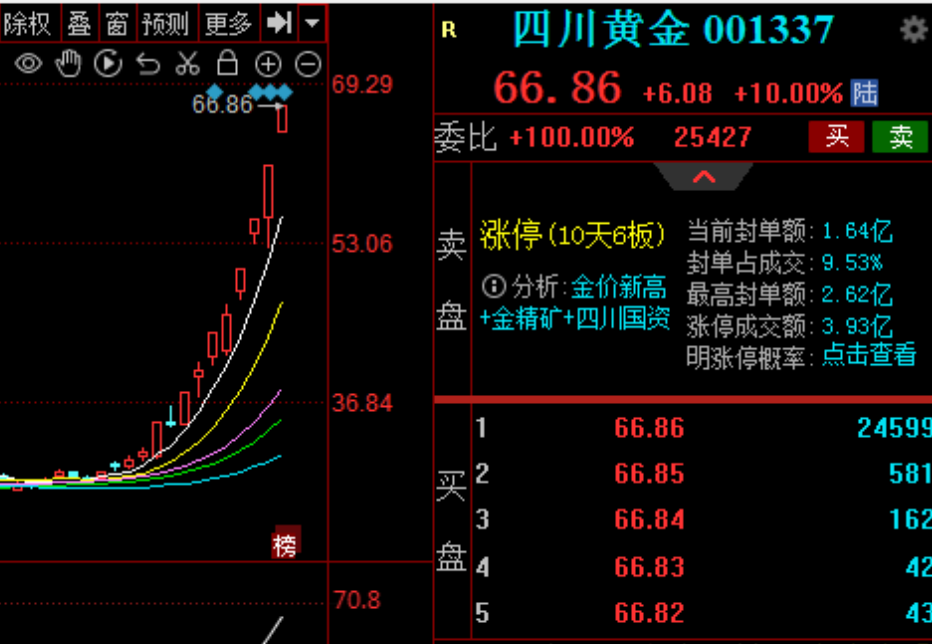
Core Viewpoint - The international gold price surged over $100 in a single trading day, with London spot gold breaking historical records, indicating a significant market reaction to geopolitical tensions and economic factors [1][10]. Group 1: Market Performance - On January 28, London spot gold reached a peak of $5311.06 per ounce, with a daily increase of 1.86%, while COMEX gold futures hit $5345 per ounce, rising by 3.33% [1]. - Domestic gold prices also set new records, with Shanghai Gold Exchange spot gold (Au99.99) peaking at 1185 CNY per gram [1]. - A surge in A-share gold concept stocks was observed, with over 30 stocks, including China Gold and Sichuan Gold, hitting the daily limit [1]. Group 2: Risk Warnings from Companies - Multiple listed companies in the gold and silver sectors issued risk warnings, highlighting the potential volatility in their revenues due to fluctuating metal prices [3][4]. - Jin Hui Co. reported that silver sales accounted for only 12.46% of its total revenue, indicating limited exposure to silver price fluctuations [4]. - China Gold projected a significant decrease in net profit for 2025, estimating a drop of 55% to 65% year-on-year [4]. Group 3: Regulatory Measures - Exchanges and banks implemented measures to cool down the overheated gold and silver markets, including adjusting margin requirements and risk levels [5][9]. - The Chicago Mercantile Exchange raised margin requirements for certain silver contracts to approximately 11% of nominal value, effective January 28 [5]. - The Shanghai Gold Exchange and the Shanghai Futures Exchange announced adjustments to margin levels and trading limits for silver and gold futures contracts [7]. Group 4: Geopolitical Influences - The surge in gold prices is attributed to geopolitical tensions, particularly related to Greenland and Middle Eastern issues, which have heightened market uncertainty [10][11]. - Analysts suggest that the ongoing geopolitical risks could sustain the upward trend in gold prices, with potential for prices to exceed $6000 per ounce if current conditions persist [11][12].

王召金:1.25全球信用重构下,黄金5000争夺战,FOMC会议见分晓
Sou Hu Cai Jing· 2026-01-24 21:17
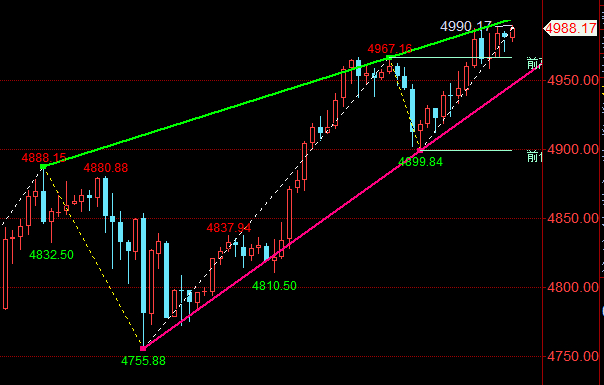
Group 1 - The core argument focuses on the intense trading around the 5000 mark for spot gold, driven by three main factors: long-term value reshaping under de-risking trends, short-term catalysts from Federal Reserve policy shifts, and potential disruptions from Arctic geopolitical tensions [1] - Global central banks continue to increase gold holdings and expand non-USD settlement systems, enhancing gold's monetary and safe-haven attributes, positioning it as a "ultimate shield" against uncertainties [1] - Recent spot gold in London reached a high of 4989, with a year-to-date increase of 15%, just shy of the 5000 mark, with market focus on the upcoming FOMC meeting and divergent views on the Fed's interest rate path through 2026 [1] Group 2 - Technical analysis indicates that gold is in a strong upward channel, with the 5/10-day moving averages in a bullish arrangement and MACD showing a continued golden cross, although short-term overbought conditions are evident [2] - Key resistance levels are identified between 5050-5100, with 5100 being a significant previous high, while support is noted at 4900 and further at 4850, marking critical short-term thresholds [2] Group 3 - The upcoming FOMC meeting is highlighted as a key event, with attention on interest rate decisions, the SEP report, and Powell's statements, with institutions predicting varied timelines for rate cuts in 2026 [4] - Economic indicators such as CPI, non-farm payrolls, and PCE are crucial for shaping policy expectations, with PCE being a core inflation measure that could influence gold prices depending on whether it exceeds or falls below expectations [5] Group 4 - Short-term trading strategies suggest a focus on range trading, with specific entry points for both short and long positions based on identified resistance and support levels, including a stop-loss strategy to manage risk [6]
美联储政策突传转向 沪金警示回调风险
Jin Tou Wang· 2026-01-22 06:05
Group 1 - Gold futures are currently trading around 1074.22, with a slight decline of 0.09%, reaching a high of 1099.62 and a low of 1074.00 [1] - The short-term outlook for gold futures appears bearish [1] Group 2 - A Reuters survey indicates that most economists expect the Federal Reserve to maintain the benchmark interest rate at 3.50%-3.75% this quarter, reversing previous expectations of a rate cut before March [3] - The strong growth outlook for the U.S. economy and persistent inflation above the 2% target are the main reasons supporting this judgment [3] - 58% of economists surveyed expect no change in rates this quarter, with a consensus that the January FOMC meeting will result in no action [3] - Concerns about political interference are rising, with Trump criticizing Powell for not cutting rates effectively and potential criminal investigations into Powell's actions [3] Group 3 - The survey has raised the U.S. GDP growth forecast for this year to 2.3%, up from 2% last month, with an average of 2% expected by 2028 [4] - The chief economist at Oxford Economics is more optimistic, predicting a growth rate of 2.8% due to AI investments and tax cuts contributing 0.6 percentage points [4] - Inflation, as measured by PCE, is expected to remain above the 2% target this year and through 2028, with an average unemployment rate of 4.5% [4] Group 4 - As of January 22, 2026, the main gold futures contract has surpassed 1100 yuan/gram, creating a historical high and showing a high-level oscillation [5] - Technical indicators suggest a bullish trend in the short term, but caution is advised due to the RSI nearing the overbought zone [5] - Support is noted at 1090 yuan/gram, while resistance is observed at 1120 yuan/gram, with geopolitical tensions and global central bank gold purchases supporting the long-term trend [5]
1983年来最猛涨幅!白银直奔100美元,机构都在扫货,黄金被抛弃?
Sou Hu Cai Jing· 2026-01-19 09:19
Core Viewpoint - Silver prices have surged past $90 per ounce, reaching a historical high of $94, marking a 31% increase in the first two weeks of 2026, the strongest start to a year since 1983 [1][3] Monetary Revaluation - The revaluation of silver's monetary attributes is driven by challenges to the credibility of the US dollar and doubts about the Federal Reserve's policy independence, leading to increased demand for silver as a hedge against inflation [3][5] - A domestic precious metals investment institution reported a 200% year-on-year increase in offline silver bar sales in the first week of 2026, indicating a shift in investor focus from gold to silver [3] Macro Policy Shift - Easing inflation pressures and a softening labor market in the US have shifted the Federal Reserve's focus towards full employment, reinforcing expectations for interest rate cuts [5][7] - The anticipated rate cuts have lowered the opportunity cost of holding silver, attracting significant allocation of funds into silver ETFs, with one major fund's silver ETF surpassing 5 billion yuan, a 35% increase from the end of last year [5][7] Industrial Supply-Demand Dynamics - Silver's unique conductivity makes it an essential material for industries such as renewable energy and AI infrastructure, with a persistent supply shortage since 2021 [7][9] - A domestic photovoltaic company plans to increase its production capacity by 40% in 2026, leading to a 25% increase in silver procurement prices due to long-term supply agreements [7][9] Summary - The combination of monetary revaluation, macroeconomic policy shifts, and industrial supply-demand dynamics continues to drive silver's value reassessment, making a move towards the $100 mark a likely event [9]

CA Markets:美元指数横盘震荡,美联储政策与中东局势双重博弈
Sou Hu Cai Jing· 2026-01-16 03:25
Core Viewpoint - The dollar index is experiencing narrow fluctuations due to a complex interplay of factors, including diverging expectations regarding Federal Reserve monetary policy, geopolitical risks in the Middle East, and changes in global liquidity conditions [1]. Group 1: Federal Reserve Policy Divergence - The Federal Reserve's monetary policy direction remains a key variable influencing the dollar index, with recent FOMC meeting minutes revealing significant internal divisions among officials regarding the path for interest rate cuts in 2026 [3]. - Hawkish officials argue that core PCE inflation remains at 2.3%, above the 2% target, and advocate for limiting rate cuts to 50 basis points, while dovish officials suggest initiating cuts in the first half of the year, potentially totaling 75-100 basis points [3][4]. - Market consensus has shifted towards expectations of a more accommodative Fed, with a 62% probability of a rate cut by March 2026 and a 58% chance of a total cut of 75 basis points for the year, reflecting a growing belief in policy easing [4]. Group 2: Geopolitical Risks - Escalating geopolitical tensions, particularly in the Middle East, are providing support for the dollar index, with recent U.S. sanctions on Iran aimed at curbing its oil exports contributing to increased risk premiums [5][6]. - The sanctions have led to a 1.2% rise in international oil prices, with Brent crude futures reaching $79.8 per barrel, as market participants seek safe-haven assets amid heightened geopolitical risks [6]. - Historical trends indicate a strong positive correlation between Middle Eastern geopolitical tensions and the dollar index, as the dollar attracts cross-border capital during periods of regional instability [7]. Group 3: Liquidity Conditions - Changes in global and domestic liquidity conditions are adding another layer of complexity to the dollar index's movements, with the People's Bank of China conducting a significant reverse repo operation to address pre-Spring Festival liquidity pressures [8][10]. - The interbank market's DR007 rate has remained above 2.4%, indicating tight liquidity conditions ahead of the holiday, which has led to increased demand for dollar financing among domestic institutions [10]. - The ongoing reduction of the Federal Reserve's balance sheet and high LIBOR rates reflect tightening offshore dollar liquidity, further supporting the dollar index amid seasonal demand fluctuations [10].
首席经济学家眼中的2026年大类资产图景
Xin Lang Cai Jing· 2026-01-12 12:29
Core Viewpoint - The global macro environment is entering a critical phase, with a shift from a unipolar to a multipolar order, leading to a revaluation of assets, particularly focusing on gold, RMB assets, stocks, and emerging markets [3][16]. Group 1: Federal Reserve Policy Shift - The Federal Reserve's policy direction is a key variable for global asset pricing, with expectations of continued interest rate cuts in 2026 due to internal liquidity demands rather than fully controlled inflation [5][17]. - The probability of the Fed entering a new expansionary phase is increasing, which may lead to a downward trend in short-term rates while long-term inflation expectations remain elevated, resulting in a steepening yield curve [5][19]. - The correlation between the US dollar index and risk indicators has weakened, indicating a decline in the dollar's safe-haven status during risk events [5][19]. Group 2: Precious Metals Outlook - Gold is transitioning from a traditional safe-haven asset to a core anchor in the new asset pricing system, with expectations of significant price increases due to long-term upward trends and global liquidity indicators [7][21]. - Silver and certain base metals present elastic opportunities, as historical correlations with global liquidity suggest potential for structural market movements [7][21]. - Both gold and silver are viewed as important stabilizers in asset allocation, with no systemic basis for a downturn amid ongoing Fed rate cuts and a weakening dollar [7][21]. Group 3: Emerging Markets Revaluation - The transition to a multipolar order is reflected in unconventional market phenomena, such as the weakening of the dollar's safe-haven property and narrowing emerging market spreads, indicating a need for asset revaluation [9][23]. - Emerging markets have surpassed developed economies in manufacturing output, yet their asset valuations do not fully reflect this shift, suggesting significant long-term revaluation potential [9][23]. - The underrepresentation of the multipolar trend in asset prices presents future investment opportunities [9][10][23]. Group 4: RMB Assets and Stock Market - The RMB is expected to appreciate steadily in 2026, supported by the Fed's rate cuts and rising price levels in China, with potential for over 30% cumulative appreciation in the long term [11][24]. - The stock market outlook is positive, with expectations for A-shares to reach their peak in the second half of the year, driven by economic recovery and price increases [11][15][26].
首席经济学家眼中的2026年大类资产图景
第一财经· 2026-01-12 10:21
Core Viewpoint - The article discusses the insights from the "2026 China Chief Economist Forum Annual Meeting," highlighting the shift in global asset pricing logic and the focus on gold, RMB assets, stocks, and emerging markets as key investment areas amid a changing macroeconomic environment [3]. Group 1: Federal Reserve Policy - The Federal Reserve's policy direction is seen as a critical variable for global asset pricing, with expectations of continued interest rate cuts driven by the financial system's liquidity needs rather than controlled inflation [4]. - There is an increasing probability that the Federal Reserve will continue to cut rates and re-enter an expansionary balance sheet cycle in 2026, leading to a downward trend in short-term interest rates while long-term inflation expectations may not decline simultaneously, resulting in a steepening yield curve [6]. - The correlation between the US dollar index and risk indicators has weakened, indicating that the dollar's safe-haven status is no longer stable [6]. Group 2: Gold and Precious Metals - Gold is viewed as transitioning from a traditional safe-haven asset to a "core anchor" in the new asset pricing system, with expectations of a significant upward shift in its price center due to the restructuring of the global credit system [9]. - Silver and certain base metals are highlighted for their potential, as silver's historical correlation with global liquidity remains strong, suggesting that structural opportunities within precious metals may not yet be fully realized [9]. - Both gold and silver are considered important stabilizers in asset allocation, with no systemic basis for a decline in their prices amid ongoing rate cuts and a weakening dollar [9]. Group 3: Multi-Polar Order and Asset Repricing - The transition from a unipolar to a multipolar world order is reflected in unconventional market phenomena, such as the weakening of the dollar's safe-haven property and the narrowing of emerging market spreads [12]. - Emerging markets are increasingly significant in global manufacturing, trade, and economic growth, yet their asset valuations have not fully adjusted to reflect this change, indicating a long-term repricing opportunity [12][13]. Group 4: RMB Assets - There is a consensus among economists that the RMB is likely to appreciate steadily in 2026 due to the combined effects of the Federal Reserve's rate cuts and rising price levels in China, with potential for over 30% cumulative appreciation in the long term [15][16]. - The stock market is also viewed positively, with expectations that the A-share market may reach its peak in the second half of the year, driven by economic recovery and price increases [18].
首席经济学家眼中的2026年大类资产图景:多极秩序与宽松拐点下的资产再定价
Di Yi Cai Jing· 2026-01-12 09:31
Group 1: Global Asset Revaluation - A new round of asset revaluation is underway, focusing on gold, RMB assets, stocks, and emerging markets due to a shift in global macroeconomic conditions [1] - The transition from a unipolar to a multipolar international order and the renewed divergence in the macro cycles of China and the U.S. are driving this revaluation [1] Group 2: Federal Reserve Policy Shift - The Federal Reserve's policy direction is a key variable for global asset pricing, with expectations of continued interest rate cuts and a return to balance sheet expansion by 2026 [2][5] - The relationship between unemployment rates and inflation suggests that the Fed is likely to maintain a dovish stance, putting downward pressure on the U.S. dollar index [5] Group 3: Precious Metals Outlook - Gold is transitioning from a traditional safe-haven asset to a core anchor in the new asset pricing system, with expectations of significant price increases [9] - Silver and certain base metals are also seen as having potential due to their historical correlation with global liquidity [9] Group 4: Emerging Markets Valuation - Emerging markets are viewed as undervalued, with their manufacturing output surpassing that of developed economies, yet their asset valuations have not fully adjusted to this reality [12] - The ongoing transition to a multipolar world is not yet reflected in asset prices, presenting future investment opportunities [12] Group 5: RMB Assets and Stock Market - The RMB is expected to appreciate steadily through 2026, with potential cumulative gains exceeding 30% in the long term, influenced by the Fed's rate cuts and rising price levels in China [13] - The stock market outlook is positive, with expectations of a peak in A-shares in the second half of the year, driven by economic recovery and price increases [15]
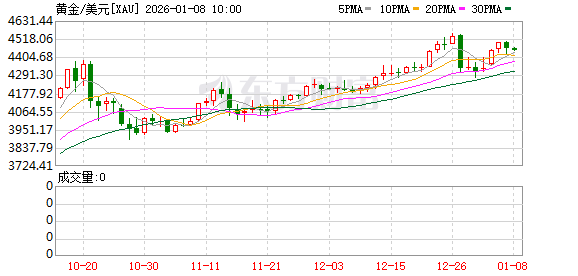
一个月涨超9% 谁在背后疯狂买入黄金?
Zhong Guo Jing Ying Bao· 2026-01-08 02:00
Core Viewpoint - The recent surge in gold prices is primarily driven by speculative funds, with expectations of a shift in Federal Reserve policy leading to lower real interest rates, thus reducing the holding costs of gold [3][4]. Group 1: Market Dynamics - As of January 7, 2026, the London spot gold price opened at $4,494.59 per ounce, with a monthly increase exceeding 9% [2]. - The relationship between gold prices and real interest rates is notably negative, with current economic indicators suggesting a weakening labor market and declining consumer confidence, which heightens expectations for Federal Reserve rate cuts [3]. - The lack of significant changes in fundamental factors indicates that the recent volatility in gold prices is largely driven by speculative trading rather than institutional investment [3][4]. Group 2: Central Bank Demand - Global central bank demand for gold remains robust, with a net purchase of 45 tons in November 2025, bringing total purchases for the year to 297 tons, primarily driven by emerging market central banks [4]. - The ongoing accumulation of gold reserves by central banks reflects a strategic shift away from reliance on a single reserve currency, enhancing gold's status as a "currency substitute" [4]. Group 3: Silver Market Influence - The silver market has experienced significant upward pressure, contributing to the rise in gold prices, with a notable shortage in silver delivery stocks since October 2025 [4][5]. - Increased speculative trading in the silver market may spill over into the gold market, further driving up gold prices in the short term [5]. Group 4: Future Outlook - Morgan Stanley maintains a bullish outlook for gold, projecting prices could reach $5,000 per ounce in 2026, supported by strong demand from central banks and investors [6]. - The anticipated demand for gold in 2026 is expected to average 585 tons per quarter, with central bank purchases projected at 755 tons, indicating a sustained interest in gold despite potential price corrections [6][7]. - The trajectory of gold prices will largely depend on the Federal Reserve's monetary policy, with a continued easing cycle likely to support gold investment demand [7].