高切低

Search documents
中加基金固收周报︱贸易战烈度增加,市场在缩量中趋向防守
Xin Lang Ji Jin· 2025-10-24 07:52
Market Overview - The A-share market experienced a decline across major indices last week, with trading volume continuing to decrease amid divergent market performance [1] - Among the 31 Shenwan first-level industries, banking, coal, and food and beverage sectors performed relatively well [1] Macro Data Analysis - In September, the new social financing scale was 35,338 billion yuan, with new RMB loans amounting to 12,900 billion yuan; the year-on-year growth rate of social financing stock was 8.7%, slightly down from 8.8% [5] - M1 new caliber stock year-on-year growth rate was 7.2%, up from 6.0% last month; M2 stock year-on-year growth rate was 8.4%, down from 8.8% [5] - The main contributors to new social financing were short-term loans to enterprises (increased by 0.25 trillion yuan year-on-year), corporate bonds (increased by 0.20 trillion yuan), and off-balance-sheet notes (increased by 0.19 trillion yuan) [5] - The consumer price index (CPI) in September was -0.3%, a slight improvement from -0.4% the previous month; the producer price index (PPI) decreased by 2.3% year-on-year, with a narrowing decline [6] Stock Market Strategy Outlook - The market experienced wide fluctuations last week, with trading volume and margin financing continuing to decline, dropping below 2 trillion yuan [8] - The upcoming period until early November is expected to be filled with macro events, leading to a prevailing cautious sentiment in the market [8] - The technology sector's long-term logic remains intact, and its high valuations have seen some digestion during recent adjustments [8] - Defensive dividend sectors may see an increase in allocation in the short term, while attention should be paid to stocks with catalysts in the dividend sector [8] - The long-term outlook indicates that the ongoing U.S.-China struggle has set a baseline, with international capital markets beginning to question U.S. governance and institutional credibility [8] - The current liquidity environment remains supportive, with a potential influx of funds into the equity market as the wealth effect increases among residents [8]

【申万宏源策略 | 一周回顾展望】高切低进行时,但攻守有别
申万宏源证券上海北京西路营业部· 2025-10-20 02:03
Core Viewpoint - The article discusses the current market strategy of "high cut low" and emphasizes the different approaches for offense and defense in investment strategies [2] Group 1 - The market is experiencing a phase where high-quality assets are being favored while lower-quality assets are under pressure [2] - There is a notable divergence in performance between different sectors, with some showing resilience while others are struggling [2] - The article highlights the importance of selecting stocks based on their fundamentals and market positioning to navigate the current environment [2] Group 2 - Recent economic indicators suggest a mixed outlook, with certain metrics showing improvement while others remain concerning [2] - The investment community is advised to remain cautious and to focus on sectors that demonstrate strong growth potential despite broader market volatility [2] - The article points out that strategic asset allocation will be crucial in maximizing returns while managing risks in the current market landscape [2]

申万宏源:A股“高切低”的风格切换正在演绎但攻守有别
智通财经网· 2025-10-19 00:27
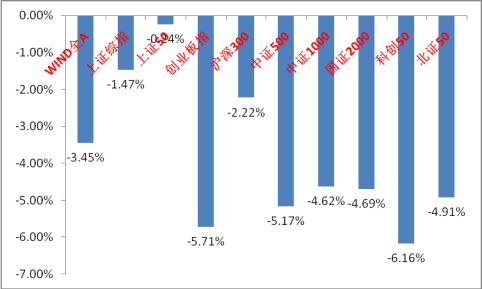
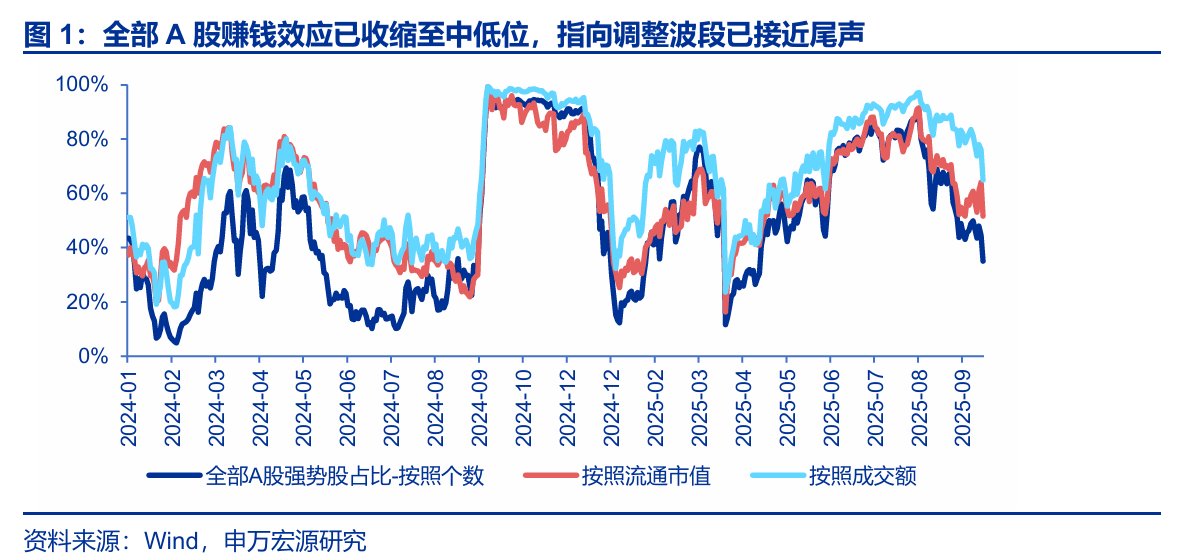
Group 1 - The market is currently experiencing a "high-cut low" style switch, but this defensive characteristic is not leading to an overall index increase, indicating a continued adjustment phase since early September [1][2] - The overall profitability effect in the A-share market has declined to a medium-low level, suggesting that the adjustment phase is nearing its end, while the "high-cut low" trading strategy is becoming less attractive [1][2] - Discussions about style switching in the fourth quarter are increasing, with a focus on technology leading the market recovery rather than cyclical sectors [1][8] Group 2 - The overseas environment is stabilizing, with recent events in the U.S. banking sector causing temporary risk aversion, but the VIX index has peaked and is now declining [7] - The potential for a significant market rally is anticipated in Q4 2025, driven by factors such as rising overseas AI capital expenditure and advancements in the domestic AI industry [8][9] - The mid-term market outlook remains unchanged, with expectations that technology sector catalysts will significantly outpace those of cyclical sectors until spring 2026 [8][9] Group 3 - The current market structure suggests that the transition from a structural bull market to a comprehensive bull market hinges on the effectiveness of anti-involution policies, particularly in high-market-share sectors like photovoltaics and chemicals [10] - The profitability diffusion indicators show a contraction in various sectors, with notable declines in metals, power equipment, and real estate, while coal and banking sectors continue to expand [14] - The financing sentiment index indicates a cautious approach among investors, reflecting the current market dynamics and potential for future growth [15]

申万宏源策略一周回顾展望(25/10/13-25/10/18):高切低进行时,但攻守有别
Shenwan Hongyuan Securities· 2025-10-18 13:42
Group 1 - The "high-cut low" style switch is currently unfolding, but there are differences in offense and defense. The market has shown that cyclical and value trends cannot lead the overall index higher, and the market continues its adjustment phase since early September. The key catalyst for cyclical trends has not yet arrived, and the trend of technology growth industries remains concentrated. A-shares will ultimately need to wait for technology to lead for effective breakthroughs [1][3][4] - Discussions about style switching in the fourth quarter have increased significantly. The current "high-cut low" market is defensive in nature, with intensified competition among offensive assets (such as non-ferrous metals and chemicals) within cyclical and value sectors, while defensive assets show absolute returns. The overall profit effect is declining, and technology rebounds show better profit effects [4][5][11] Group 2 - The overseas environment has become more stable. Recent credit risks in U.S. regional banks have created short-term disturbances in risk appetite. However, these risks are still considered isolated events, and the VIX index has peaked and started to decline. A potential turning point in overseas pressures may have passed [8] - The mid-term market judgment remains unchanged: before spring 2026, the catalytic effect of technology industries will significantly exceed that of cyclical industries. Although the long-term cost-effectiveness of technology is currently low, short-term cost-effectiveness issues have been sufficiently digested, allowing for the emergence of a new round of technology trends [8][9] Group 3 - Spring 2026 may represent a structural high point for the A-share market, but it is unlikely to be the peak for the entire year or the current bull market. The conditions for a comprehensive bull market will become increasingly sufficient over time [11] - In the short term, cyclical products (such as non-ferrous metals and chemicals) are not performing well, with a preference for defensive and hedging assets (such as banks and food and beverage). The outlook for 2026 is better than for 2025, with opportunities still available in Q4 2025, particularly in areas like overseas computing power, advanced manufacturing represented by new energy, and national defense and military industries [11][12]
申万宏源策略一周回顾展望:高切低进行时,但攻守有别
Shenwan Hongyuan Securities· 2025-10-18 13:04
Group 1 - The report indicates a style switch towards "high cut low," but with different offensive and defensive characteristics. The current market has shown that cyclical and value stocks cannot lead the overall index higher, and the market has continued its adjustment phase since early September. A breakthrough in A-shares is expected to ultimately rely on technology leadership [3][6][7] - Discussions about style switching in the fourth quarter have increased. The current "high cut low" market is defensive in nature, with a decline in overall profitability. The report emphasizes that the key catalytic moment for cyclical stocks has not yet arrived, while the trend in technology growth industries remains promising [6][7][11] - The report highlights three mid-term positive factors for technology growth: 1. Continued upward trend in overseas AI capital expenditure beta 2. Ongoing progress in domestic AI industry trends 3. 2025 is expected to be an upward turning point for the linkage between primary and secondary markets, with emerging industry highlights increasing over time [7][11][12] Group 2 - The overseas environment has become more stable, with recent credit risks in U.S. regional banks being categorized as individual events. The VIX index has peaked and started to decline, indicating that the most intense phase of overseas pressure may have passed [11][12] - The mid-term market judgment remains unchanged, with technology industry catalysts expected to significantly outpace cyclical catalysts before spring 2026. Although the long-term value of technology is currently low, short-term value issues have been sufficiently digested, allowing for a new round of technology market performance [11][12] - The report anticipates that spring 2026 may be a structural high point for the A-share market, facing challenges such as demand-side verification and potential delays in the supply-demand turning point. The report suggests that the improvement in supply-demand dynamics will not be "disproven" but may be "delayed" [12][15] Group 3 - The report suggests that after a short-term adjustment, there will still be technology-led market performance in Q4 2025. While spring 2026 may represent a phase high point, it is unlikely to be the peak for the entire year or the current bull market [15][16] - The report emphasizes that cyclical products with offensive logic (such as non-ferrous metals and chemicals) are currently underperforming, while defensive and hedging assets (like banks and food and beverage) are favored. The outlook for 2026 is more promising than for 2025, with opportunities in sectors like advanced manufacturing represented by new energy and national defense [15][16][23] - The report highlights the importance of the anti-involution trend as a key structural factor in transitioning from a mid-term bull market to a full bull market, focusing on industries with high global market share such as photovoltaics and chemicals [16][23]
高切低成胜负手?资金悄然加码医药!A股最大医疗ETF5日吸金近7亿,港股通创新药ETF(520880)溢价率飙逾1%
Xin Lang Ji Jin· 2025-10-17 12:00
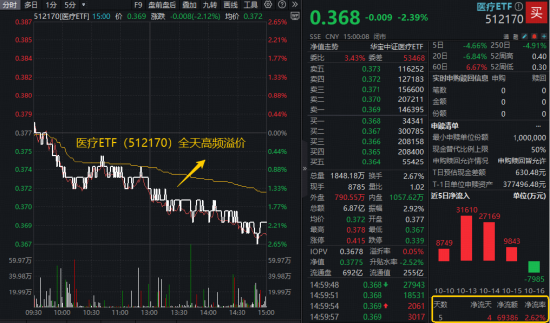
Core Viewpoint - The Chinese asset market is undergoing a significant adjustment, with major indices in A-shares and Hong Kong experiencing sharp declines, particularly in high-tech stocks, while the healthcare sector shows signs of strong buying interest despite the overall market downturn [1][3][7]. A-Shares Market - A-shares saw all three major indices decline, with the Shenzhen Component Index and the ChiNext Index both dropping over 3% [1]. - The largest medical ETF in A-shares (512170) focused on medical devices and CXO, closed down 2.39% but experienced a significant increase in trading volume, with a 30% rise to 687 million yuan, indicating strong buying pressure [1][5]. - The medical sector has been on a downward trend for several years, but this year has shown significant recovery, with current price and valuation levels still at historical lows, suggesting a high margin of safety [5]. Hong Kong Market - The Hong Kong innovative drug sector has experienced high volatility, with the Hong Kong Stock Connect Innovative Drug ETF (520880) dropping 2.53% and seeing a decrease in trading volume to 313 million yuan [3]. - Among the 37 companies covered by the ETF, 33 saw declines, with major stocks like China Biologic Products, CSPC Pharmaceutical Group, and CanSino Biologics all falling over 4% [3]. - The innovative drug sector in Hong Kong has faced a correction after a significant surge earlier in the year, with profit-taking observed since mid-September [7]. Investment Strategies - Analysts suggest that the innovative drug sector may be entering a configuration window, with multiple catalysts expected in the fourth quarter, including industry conferences and positive earnings forecasts [7]. - Investment strategies focus on identifying companies with strong third-quarter earnings and exploring opportunities in the innovative drug sector, while also considering underperforming segments like medical devices and services [7][8]. ETF Performance - The medical ETF (512170) and the Hong Kong Stock Connect Innovative Drug ETF (520880) have attracted significant capital inflows recently, indicating a shift in market sentiment towards these sectors [8]. - The medical ETF is the largest in the market, with a scale of 26.4 billion yuan, and is noted for its unique focus on the pharmaceutical sector [10].
又见高切低!高位ETF止盈潮涌,目前低位标的有哪些?
Sou Hu Cai Jing· 2025-10-17 08:50
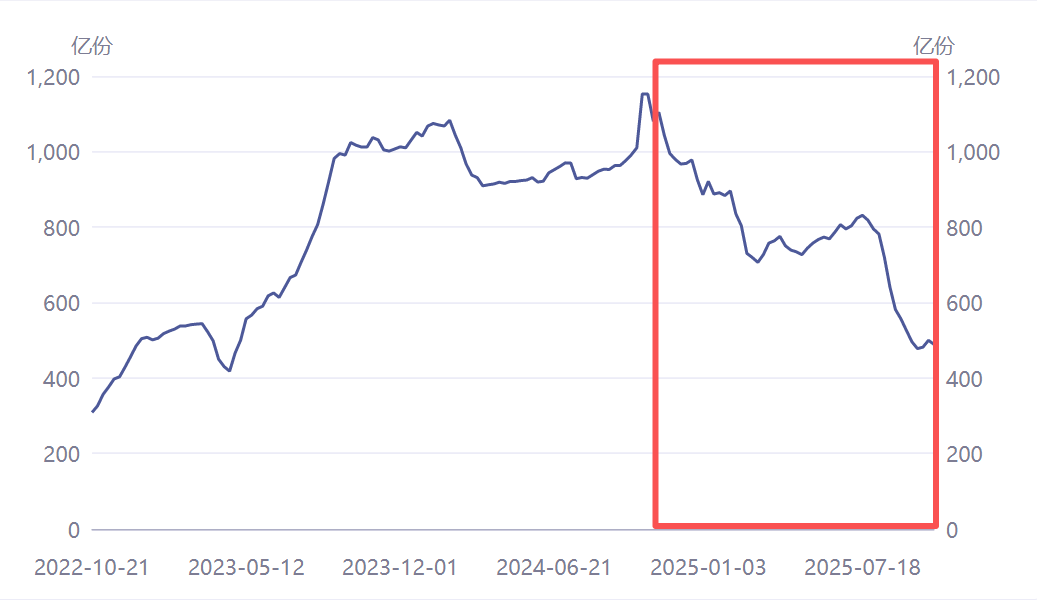
Group 1 - The capital market has seen a significant rise in technology sectors such as innovative drugs, humanoid robots, AI computing power, and semiconductors, while public utilities, non-bank financials, real estate, and consumer sectors have underperformed [1] - There is a noticeable structural characteristic of funds "cutting high and buying low," with increased market volatility post-National Day, leading to capital withdrawal from previously high-performing sectors and investment in lagging sectors [1] - The ChiNext 50 ETF has experienced a net outflow of nearly 50 billion yuan this year, making it the ETF with the largest net selling amount, with its latest share size nearly halved compared to the beginning of the year [1] Group 2 - In contrast, some ETFs that have performed poorly this year, such as the Guotai CSI Coal ETF and Penghua CSI Liquor ETF, have seen net inflows exceeding 8 billion yuan, with their latest share sizes reaching historical highs [4] - Investors are increasingly taking profits from high-return funds and shifting towards lower-priced fund products, indicating a "fear of heights" in market sentiment [5] - Fund managers are adopting a more cautious strategy, balancing offense and defense, with a growing trend of risk aversion as they aim to protect gains [5][6] Group 3 - The food and beverage sector is currently at a low valuation, with a PE ratio of 20.76, indicating attractive investment opportunities [7] - The Huaxia CSI Subdivision Food and Beverage ETF has a scale exceeding 5 billion yuan, covering various segments including liquor and dairy products [8] - The coal sector is witnessing increased demand as electricity consumption rises, with the Guotai CSI Coal ETF's share size growing over 300% this year, reflecting strong capital interest [9]
上银基金陈博:低利率时代的新潮买手
Sou Hu Cai Jing· 2025-10-15 12:14
Core Insights - The article highlights the investment strategies of Chen Bo, a fund manager at Shangyin Fund, who successfully manages both dividend and technology-focused funds, demonstrating a unique ability to navigate different asset classes [1][2]. Group 1: Investment Strategy - Chen Bo employs a "barbell strategy" that combines dividend and technology assets, allowing investors to switch between aggressive and defensive positions based on market conditions [2][17]. - The strategy has performed well during market fluctuations in 2023 and 2024, showcasing its adaptability [2]. - Key investment principles include "small but beautiful Alpha," high Return on Equity (ROE), and a focus on dynamic portfolio rebalancing to optimize risk-reward ratios [3][11][26]. Group 2: Performance Metrics - Chen Bo's fund, Shangyin Future Life Flexible Allocation A, has received a dual five-star rating for its performance over three and five years, ranking in the top 10% of its peers [1]. - The fund's performance metrics include a three-year ranking of 101 out of 1718 and a five-year ranking of 249 out of 1488 [1]. Group 3: Investment Philosophy - The investment philosophy emphasizes the importance of high ROE as a criterion for selecting quality companies, with a long-term view on maintaining above-average returns [3][19]. - Chen Bo believes that both dividend and technology assets benefit from a low-interest-rate environment, which supports their growth potential [2][18]. - The focus on identifying companies with clean balance sheets and high growth potential is central to the investment approach [11][12]. Group 4: Market Outlook - Chen Bo expresses optimism about the Chinese equity market, anticipating a systemic revaluation of risk assets, which could lead to significant wealth transfer as market conditions improve [27]. - The article suggests that various asset styles, including both dividend and growth stocks, will perform well in a true bull market [27].

近半资金撤离!高位ETF止盈潮涌,什么情况?
券商中国· 2025-10-15 12:00
Core Viewpoint - A significant amount of capital is fleeing high-position ETFs, indicating a structural shift in market behavior where funds are moving from high-performing sectors to those that have underperformed [1][3][4]. Market Dynamics - Recent market volatility has intensified, with a clear "high-cut low" structural characteristic. Funds are withdrawing from previously high-performing sectors while reallocating to those with lower gains. This rotation is expected to be a prolonged process with multiple reversals [2][4]. - Year-to-date, there is a stark divergence in industry performance, with sectors like non-ferrous metals, communications, electronics, and power equipment seeing gains over 40%, while sectors such as food and beverage, coal, and transportation have not seen positive returns [4]. ETF Performance - High-performing ETFs are experiencing significant capital outflows, with the STAR Market 50 ETF being the most affected, seeing a net outflow of nearly 50 billion yuan this year, reducing its share size by almost half [5]. - Other ETFs, such as the ChiNext ETF, have also faced substantial outflows, with over 20 billion yuan leaving since September [5]. - Conversely, underperforming ETFs, particularly in the brokerage sector, have attracted over 10 billion yuan in net inflows, indicating a shift in investor sentiment towards these lagging assets [8]. Investment Trends - The trend of "selling high and buying low" is evident, with funds increasingly favoring ETFs that have not performed well this year. For instance, the brokerage sector ETFs have seen a significant increase in share size, with the Huabao Brokerage ETF's circulation nearly tripling since the beginning of the year [8]. - The market is witnessing a rotation towards assets with strong balance sheets and robust operational patterns, which are expected to benefit from market volatility [12]. Future Outlook - The ongoing trend of capital moving from high-return sectors to those with lower valuations is anticipated to continue, with the potential for prolonged market reversals. Investors are advised to focus on assets with resilience and long-term value creation potential [10][12].

上银基金陈博:低利率时代的新潮买手
点拾投资· 2025-10-15 11:00
Core Viewpoint - The article discusses how both technology and dividend assets benefit from a low interest rate environment, despite appearing to be conflicting asset classes [4][18]. Group 1: Investment Strategy - Chen Bo employs a "barbell strategy" combining both dividend and technology assets to provide a more adaptable product mix for investors [4][19]. - The investment framework emphasizes three key concepts: "small and beautiful" alpha, high ROE as a standard for excellent companies, and "high cut low" for dynamic portfolio adjustments [5][14]. - The strategy has shown strong performance during market fluctuations in 2023 and 2024, demonstrating the effectiveness of this approach [4][16]. Group 2: Investment Philosophy - Chen Bo's investment philosophy is influenced by notable figures such as Peter Lynch, Warren Buffett, and Charlie Munger, focusing on finding small-cap growth stocks with potential for significant returns [6][12]. - High ROE is considered a critical indicator of a company's long-term profitability and competitive advantage, with a benchmark of 15% ROE being highlighted [21][22]. - The article emphasizes the importance of adapting to macroeconomic conditions, distinguishing between bull and bear market strategies [15][31]. Group 3: Market Insights - The current low interest rate environment is expected to favor both growth and dividend-paying stocks, with a shift in focus from traditional assets to those that can provide better returns [19][20]. - The article notes that as the economy transitions, the focus should be on identifying new growth sources within the market, regardless of whether the assets are classified as dividend or technology [28][29]. - Chen Bo predicts a systemic revaluation of Chinese risk assets, suggesting that various styles of stocks will perform well in a true bull market [31].