AI时代

Search documents
哦吼,又涨回来了!
猛兽派选股· 2026-02-09 04:09
我看有好几个人在后台问平均股价指数的副图公式,也不知道AI助手的回复你们满意没有。这东西,唉~就是一句话的事情,以前也讲 过很多次: 光伏这边我就不再啰嗦了,以前的旧文: 光伏的春天又来了 总体来讲,一阶段突破比高位基底要好做,高位基底需要更挑剔的技巧和眼光,要严格要求,要严格要求,要严格要求,比如这样的绝 对的标致美人: 平均股价:"880003$CLOSE"; 就这么简单,前面880003就是平均股价指数的代码,后面CLOSE就是提取指数中的收盘价,如果你想提取最高价,就是HIGH,最低价 就是LOW。其实你们问任何一个AI工具,这种简单编程绝对不会有障碍。很多人,竟然还没有意识到已经处于AI时代。 又涨回来了,但涨回来的都是谁呢,骰盅一开~乖乖个隆里咚。 天孚果然比中际和新易更有延伸潜力,还有光库,也是同一个原理: 半导体设备中的光力,是不是后发加速?还记得我什么时候发过的图吗: 电网设备要有耐心,走的是传统趋势模式,并非堆量模式,盯牢领涨一哥的行为: 大盘今天表现,应该基本可以确定本次调整结构的回撤下限,结构应该是窄幅横盘,大致和前面的结构类似。这也符合领导要求的低波 动率指标。 ...


积累源于热爱与生活
Xin Lang Cai Jing· 2026-02-08 22:43
胡梦瑶表示,此次获奖作品灵感源于对反乌托邦题材的长期关注与现实思考。她巧妙借鉴《楚门的世 界》设定,并引入《悲惨世界》中追求理想的角色形成对照,构建了一个人类在AI时代面临精神困境 的寓言世界。她认为,创作的核心来自日常真诚的积累——热爱阅读雨果、鲁迅等经典,积极参与课堂 讨论,在音乐剧、旅行与生活观察中汲取养分,这些经历共同塑造了她文字的个性与灵性。 她也特别强调了生活实践与时代关联的重要性,亲身体验AI技术让她更能深刻反思其局限。在发言 中,胡梦瑶衷心感谢南京外国语学校开放包容的环境,丰富的课程与活动为其提供了思想成长的土壤。 (来源:南京晨报) 转自:南京晨报 南京外国语学校 胡梦瑶 来自南京外国语学校的胡梦瑶同学,凭借一篇融合科幻、象征与思辨的佳作《陌恒的世界》,一举夺得 高中组首奖。在颁奖典礼的分享环节中,胡梦瑶以"人是一根能思想的苇草"开篇,娓娓道来她的写作感 悟。 最后,她向海峡对岸的文友发出诚挚寄语,期待以文字架设心桥,共同在思考与写作中活出真我。她的 分享展现了当代青少年的文学素养与思辨精神。 ...
不吃“后悔药”
Xin Lang Cai Jing· 2026-02-08 07:09
施瑞雪 上海闵行区新梅小学三(1)班 期末考试结束了,我躲在快乐小屋里打游戏,窗外阳光灿烂,我的心情如鲜花开放。 妈妈推开门,把一本不知从哪里找来的书扔在床上:"小雪,不要把宝贵的时间浪费在游戏上,你得趁 现在学习能力最强的时候,抓紧时间多学习一点知识。"我不爱听这种话,头也不抬怼了她一句:"再厉 害的骏马跑了一百里也要歇一歇吃口草吧。"妈妈是学霸,也是外婆的骄傲。在她们看来,既然进了学 校,就应该从早到晚把自己的脑袋埋在书堆里。她语重心长地说:"我很后悔小时候没有多学一点,现 在想学就发现记性大不如前了。" 我说:"这话说得跟外婆一样。"妈妈顺势开导起我:"是啊,外婆小时候没有机会好好读书,我替她吃 了后悔药,就格外刻苦地读书,才有今天的一份让别人羡慕的工作。不过我还是后悔在青少年时代没用 更多的课外知识来提升自己。""课外知识",哈哈,被我抓住话柄:"游戏就是课外知识啊。"妈妈还是 老一套:"游戏就是娱乐,不算正经知识。"我可不这么认为:游戏里面其实包含了许多的知识,编程员 都是数学超好的人才,游戏里每一步都有多种可能性,找到最优选项,就是游戏的乐趣和挑战。有些游 戏看似简单,其实有许多坑要避免,这难道不 ...
给公司全员送了iPhone 17 Pro Max,也分享下我在AI时代创业的10条感悟。
数字生命卡兹克· 2026-02-07 11:45
Core Viewpoint - The article reflects on the journey of a young company, emphasizing the importance of curiosity, adaptability, and the evolving nature of work in the AI era. It highlights the significance of asking good questions, the rise of individual contributors, and the need for a flexible approach to roles and responsibilities in a rapidly changing environment. Group 1: Company Growth and Culture - The company has grown to nearly 30 employees without any external financing, maintaining healthy cash flow while prioritizing risk control alongside aggressive expansion [7][10][11] - The team consists mostly of young individuals, with about two-thirds being post-2000s generation, contributing to a vibrant company culture [2][3] - Despite not making significant profits this year, the company rewarded employees with bonuses and gifts, fostering a positive atmosphere [10][12][14] Group 2: Insights on Curiosity and AI - Curiosity is deemed more important than intelligence in the AI era, as individuals who are eager to explore new tools can significantly enhance productivity [19][20][26] - The ability to ask good questions is becoming more valuable than providing answers, as organizations need individuals who can identify key issues and understand constraints [27][30][31] Group 3: Changing Nature of Work - The rise of AI has empowered individuals who prefer to work independently, allowing them to accomplish tasks that previously required teamwork [33][41][43] - Job roles are evolving from traditional task-based responsibilities to a focus on judgment and decision-making, necessitating a shift in how companies structure their teams [45][56][58] Group 4: Embracing AI and Technology - The concept of "Vibe Coding" allows non-programmers to generate code by clearly describing their needs, democratizing coding skills [61][72] - The company encourages all employees, regardless of their technical background, to utilize AI tools to enhance their productivity [72][73] Group 5: Accountability and Risk Management - AI tools are valuable but come with limitations; the company emphasizes that responsibility for AI-generated outputs lies with the users [74][80][84] - A culture of trial and error is encouraged, allowing employees to learn from mistakes while maintaining a balance between innovation and risk [87][90] Group 6: Work Environment and Flexibility - The company advocates for in-person work, believing that face-to-face interactions foster creativity and problem-solving that remote work cannot replicate [85][91] - There is no formal attendance policy; instead, the focus is on business results and contributions that can be reused by others, reflecting a shift in how productivity is measured [94][98] Group 7: Financial Sustainability - From the outset, the company has prioritized establishing a viable business model to ensure cash flow and sustainability, recognizing that financial health is crucial for long-term success [94][97][100]

AI时代真正值钱的3种能力
虎嗅APP· 2026-02-06 14:10
本文来自微信公众号: 考拉Clara ,作者:考拉Clara,原文标题:《知识变便宜了,差距却更大了:AI时代真 正值钱的3种能力》,头图来自:AI生成 一、我在想一个问题:我们还需 要学习吗? 作为90后,我的很多同龄人可能早已成为父母。 不知道你是否也有过这样的时刻——甚至是在某个深夜,望着孩子熟睡的脸,心里忽然掠过一阵隐隐的不安: 孩子在书桌前埋头苦背单词、刷题、记忆那些艰深的古文注释。 以下文章来源于考拉Clara ,作者考拉Clara 考拉Clara . 十年互联网产品人|虎嗅作者|喜欢原创 ,有关 | 情感 | 成长 | 职场 | 商业 | 的内容分享,一个务实的理想主义 者,欢迎和我做朋友,也欢迎参观朋友圈(更多真实/有趣/思考),个人v号:zhjclara。 那一刻的焦虑无比真实: 不是担心孩子不够用功,而是害怕他们努力的方向,也许正在失效。 我们这一代人受的教育,大多是"填鸭式学习",拼命往脑子里塞满知识,总以为将来用得上。 但现在,AI就像一座"随时可取的超级知识仓库",里面应有尽有。 我们还需要鼓励孩子继续做那只辛苦囤知识的鸭子吗? 我越来越相信:学习本身不会消失,但"旧模式的学习"一定 ...

腾讯“内讧”?微信封杀元宝红包
3 6 Ke· 2026-02-05 23:22
Core Viewpoint - Tencent's Spring Festival "Yuanbao" red envelope activity faced unexpected challenges when WeChat restricted access to its links, raising questions about the implications of this internal conflict and the strict external link management policies of WeChat [3][14][19]. Group 1: Event Overview - The Yuanbao red envelope activity launched on February 1 with a cash pool of 1 billion yuan, generating significant user engagement and discussions about potential "induced sharing" practices [1][12]. - The excitement surrounding the event was short-lived, as WeChat implemented restrictions on the Yuanbao links just three days later, citing risks associated with "induced sharing" [2][14]. Group 2: WeChat's Link Management - WeChat is known for its stringent external link management, having previously restricted links from platforms like Douyin, Taobao, and Alipay [4][5]. - The platform's history of "link wars" with competitors highlights its commitment to maintaining control over its ecosystem, with notable actions taken against various external links over the years [5][8]. Group 3: Internal Dynamics and User Reactions - Despite being a Tencent product, the Yuanbao activity faced scrutiny for its similarity to practices WeChat typically opposes, leading to accusations of double standards [12][14]. - User feedback indicated dissatisfaction with the decreasing value of red envelopes over time, compounding the criticism of the activity's structure and WeChat's handling of it [13][24]. Group 4: Strategic Implications - WeChat's decision to restrict its own product's links may serve to uphold its reputation for fairness and could provide a basis for future actions against competitors' promotions [18][24]. - The timing of WeChat's restrictions coincided with Alibaba's launch of its own Spring Festival marketing initiatives, suggesting a strategic maneuver to limit competition [18][19]. Group 5: Market Response and Future Outlook - The Yuanbao activity's failure to replicate the success of previous red envelope campaigns indicates challenges in user engagement and acceptance of its promotional model [23][24]. - The incident reflects broader trends in the competitive landscape of the internet industry, where understanding user sentiment and adhering to established rules are crucial for success [24].


决胜AI时代!中国发用电能力让马斯克羡慕
Xin Lang Cai Jing· 2026-02-05 12:24
特别声明:以上文章内容仅代表作者本人观点,不代表新浪网观点或立场。如有关于作品内容、版权或其它问 题请于作品发表后的30日内与新浪网联系。 决胜AI时代!中国发用电能力让马斯克羡慕 决胜AI时代!中国发用电能力让马斯克羡慕 #中国人用10万亿度电有多牛# 决胜AI时代!中国发用电能力让马斯克羡慕。 ...

突破有限理性:AI时代的组织设计和创新
3 6 Ke· 2026-02-04 02:11
Core Insights - The article discusses how organizations can adapt to environmental changes through effective design, emphasizing the limitations of human rationality and the need for specialized departments and roles [1][2] Group 1: Organizational Design and AI - Organizations are evolving into complex ecosystems that require clear internal collaboration and coordination mechanisms to respond to environmental changes [1] - The introduction of AI is seen as a potential solution to overcome the constraints of human limited rationality in organizational decision-making [2][3] - AI's role in decision-making is highlighted, particularly in the processing and output stages of the decision-making model, which can enhance organizational design [3][4] Group 2: AI's Impact on Decision-Making - AI can provide answers to questions posed by organizations, but its decision-making logic remains opaque, paralleling human decision-making processes that often rely on heuristics [4][5] - AI is viewed as an external brain that can supplement human roles in organizations, with certain tasks being more suitable for machines while others require human judgment [5][6] Group 3: AI in Organizational Practices - Case studies illustrate how AI can significantly reduce costs and improve efficiency in various organizational functions, such as game development, while also highlighting its limitations [7][8] - Employees express concerns about effectively instructing AI, indicating that successful AI implementation relies on knowledgeable personnel [8] Group 4: Governance and Ethical Considerations - The integration of AI into high-level management raises complex issues regarding accountability and the ethical implications of AI-driven decisions [9] - New governance mechanisms are needed to address the challenges posed by AI in strategic decision-making, including accountability for AI-generated outcomes and the potential erosion of human judgment [9] Group 5: Organizational Change Theories - The article critiques traditional planned change theories in the context of digital transformation, suggesting that organizations must adopt a more flexible, iterative approach to change driven by data and practice [14][15] - A new theory of continuous change is proposed, where organizational goals evolve through ongoing iterations rather than being predetermined [15][16] Group 6: Future Organizational Structures - The emergence of AI may lead to new organizational forms that prioritize flexibility and real-time data-driven processes, potentially redefining the concept of organizational scale [12][13] - Organizations may need to shift from a traditional role-based structure to one that is process-oriented, allowing for more adaptive and efficient operations [12][13]
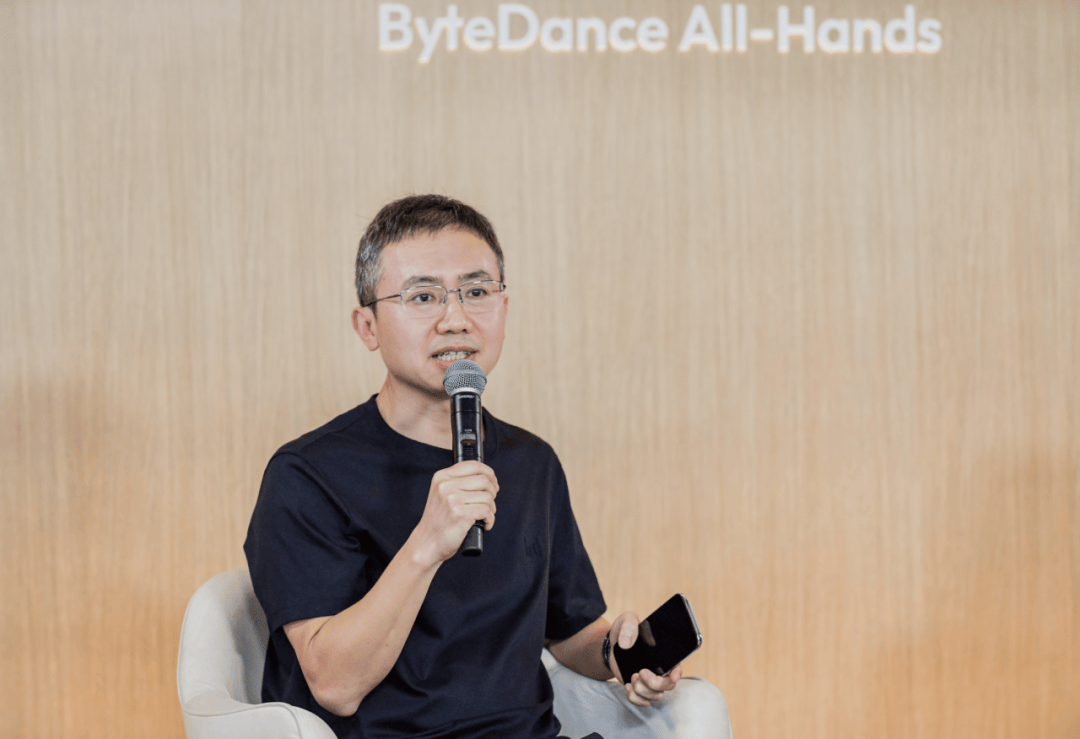
字节跳动CEO梁汝波:AI时代存在重要机会,2026年要“勇攀高峰”
Sou Hu Cai Jing· 2026-01-30 02:54
Core Insights - The core message of the article emphasizes ByteDance's strategic focus on leveraging AI opportunities, particularly through the development of assistant applications and the integration of existing services to achieve higher operational efficiency and talent density [2][3][4][5][6][7] Group 1: Strategic Focus - ByteDance's CEO, Liang Rubo, set the 2026 keyword as "climbing to new heights," highlighting the importance of pursuing significant opportunities in the AI era [2] - The company recognizes that the AI peak is comparable to the major technological peaks of the past 50 years, such as PC and Web, with the current focus on assistant applications [2] - There is a consensus in the industry that assistant applications will evolve beyond simple search functionalities to include creative and programming capabilities [2] Group 2: Business Integration and Efficiency - The company aims to focus its business strategy on achieving higher integration and collaboration among departments to avoid internal competition and inefficiencies [3] - Liang emphasized the need for continuous investment in business efficiency, particularly in areas like computing costs, resource utilization, and system architecture [3] - The company is committed to enhancing talent density and employee compensation to drive innovation and maintain a competitive edge in the AI landscape [3][7] Group 3: Public Trust and Cultural Values - Building global public trust is essential for supporting foundational services, which includes actively engaging with regulators and prioritizing user data security [4] - The company aims to foster a culture of humility and responsiveness to public feedback while exploring external collaborations [4][5] - Liang highlighted the importance of maintaining an entrepreneurial mindset to navigate industry changes effectively [5][6] Group 4: Talent Investment - ByteDance views investment in talent as a strategic priority rather than a cost, planning to enhance compensation and incentive structures to attract top talent globally [7] - Specific measures include increasing performance bonuses by 35% and significantly raising salary adjustments compared to previous cycles [7] - The company encourages potential talent to join and seize opportunities in the evolving landscape [7]
字节跳动发布2026年度关键词:“勇攀高峰”
新华网财经· 2026-01-30 01:04
Core Viewpoint - The core theme of the article is ByteDance's ambition to "climb to new heights" in the AI era, focusing on the development of its Dola assistant application as a key priority for 2026 [1][3]. Group 1: AI Opportunities - CEO Liang Rubo emphasized the significant opportunities presented by the AI era, stating that ByteDance aims to pursue the most important ones, particularly through the Dola assistant application [3]. - Liang highlighted that ByteDance's foundational AI models are among the top tier in China, with image and video generation capabilities ranking internationally [3]. - The company recognizes that while Dola's user base and experience are improving, there is still a gap compared to leading global competitors [3]. Group 2: Historical Context and Future Challenges - Liang reflected on the tech industry's evolution over the past 50 years, noting that major peaks of opportunity arise approximately every 15 to 20 years, citing Microsoft, Google, and Apple as examples of companies that capitalized on these peaks [5]. - He pointed out that the challenges of reaching new peaks are increasing, with the current AI peak expected to be at least as significant as the previous PC and internet peaks [5][6]. - The duration of peak opportunities is shortening, with the competition in the PC era lasting over a decade, while the mobile era was clearly defined within four years of the iPhone's launch [6]. Group 3: Talent and Incentives - To achieve its goals, ByteDance plans to enhance talent density and increase incentives to attract and retain top talent [10]. - The company has reported that its promotion rates and speed are higher than those of other leading firms, particularly benefiting early-career employees [10]. - ByteDance is committed to increasing its talent investment, with plans to raise bonuses and salary adjustments significantly, aiming for competitive compensation across global markets [11]. Group 4: Strategic Focus and Collaboration - Liang stated that achieving the "climb to new heights" goal requires strategic focus, business integration, and continuous improvement in operational efficiency [12]. - The company aims to build a global reputation for public trust, emphasizing the importance of user data and privacy protection while fostering healthy industry relationships [11][12].