能源转型

Search documents
长江有色:2日锡价暴跌 看跌氛围浓厚现货交投观望为主
Xin Lang Cai Jing· 2026-02-02 08:43
今日午盘后沪锡走势:今日沪锡合约2603大跌,开盘价报405000元/吨,盘中最高报420640元/吨,最低 报392650元/吨,结算价报410860元/吨,收盘报392650元/吨,下跌48530元,跌幅11%;沪锡主力月 2603合约成交量190922手,持仓量38321手,较前一日减少1758手。 今日现货锡价走势:据长江有色金属网获悉,2月2日ccmn长江综合市场1#锡价报391000元/吨-394000 元/吨,均价报392500元/吨,较前一日价格下跌31000元;今日长江现货市场1#锡价报391750元/吨-393750 元/吨,均价392750元/吨,较上一交易日价格下跌31000元/吨。 ccmn锡市分析:宏观面,美联储人事地震的冲击波正席卷全球市场。随着鹰派人物凯文·沃什获得下任 美联储主席提名,市场对货币政策的预期发生剧烈逆转,3月降息概率骤降至冰点。这场"预期风暴"叠 加超预期的PPI通胀数据,共同推高了美元与美债收益率,引发了大宗商品的全线抛售,并显著打压了 股市风险偏好。金融市场的逻辑,正在被这场突如其来的宏观变局重塑。与此同时,国内正值春节前传 统需求淡季,下游采购几近真空,市 ...


粤电力A(000539) - 000539粤电力A投资者关系管理信息20260202
2026-02-02 07:46
证券代码:000539、200539 证券简称:粤电力 A、粤电力 B 广东电力发展股份有限公司投资者关系活动记录表 编号:2026001 | 投资者关系活动 | 特定对象调研 □分析师会议 | | | --- | --- | --- | | 类别 | □媒体采访 □业绩说明会 | | | | □新闻发布会 □路演活动 | | | | □现场参观 | | | | □其他 (请文字说明其他活动内容) | | | 时间 | 2026 年 1 月 30 日 | | | 地点 | 公司 楼会议室 35 | | | 参与单位名称及 | 国盛证券 高紫明、张卓然 | | | 人员姓名 | 嘉实基金 孙逸晨 | | | | 鹏华基金 司马朝阳 | | | | 太保资产 魏巍 | | | 上市公司接待人 | 副总经理、董事会秘书、财务负责人 刘维 | | | 员姓名 | 黄晓雯 董事会事务部 | | | | 经营部 申潇雨 | | | | 发展部 杨锦波 | | | | 郭映嘉、李蘅 新能源公司 | | | | 年公司主要经营情况? 问题一:2025 | | | | 2025 年度,由于电力市场竞争加剧及相关政策调整,公 ...

3月19-20日 常州!2026锂电关键材料及应用市场高峰论坛
鑫椤锂电· 2026-02-02 07:17
关注公众号,点击公众号主页右上角" ··· ",设置星标 "⭐" ,关注 鑫椤锂电 资讯~ -广告- 2026锂电关键材料及应用市场高峰论坛 会议背景 2026年,锂电行业正以磅礴之势开启新一轮周期性增长浪潮,其特征表现为需求端的强势复苏、全球 化版图的加速扩张、技术路线的颠覆性迭代,形成"量价齐升+技术跃迁"的螺旋式上升格局。 然而,从当前有效产能情况来看,电芯及各种材料的远期供应存在着一定的缺口。面对明确的供应缺 口,如何保障稳定、高效的供应链,将成为抓住这轮确定性增长的关键。 为把握锂电行业这一轮发展机遇,鑫椤资讯将于 2026年3月19日-20日 (19日报到)举办 2026锂电关键 材料及应用市场高峰论坛 。本届论坛将聚焦两大核心议题: 一:前沿技术及市场供需深度研讨 会议设置"碳酸锂专场"、"动力电池用关键材料专场"和"储能电池用关键材料专场"三大专题论坛,邀请 专家学者、头部企业及国际专家,通过多维度数据洞察、技术案例拆解与产业链协同对话,深度剖析 2026年锂电上下游供需格局演变,为行业提供前瞻性战略指引。 会议主办: 鑫椤资讯 会议时间: 2026年3月19-20日 会议地点: 江苏·常州 ...

净流出超7900亿元!
Zhong Guo Ji Jin Bao· 2026-02-02 06:24
Core Viewpoint - In January, the stock ETF market experienced significant outflows, totaling over 790 billion yuan, with a notable net outflow of 37.20 billion yuan on January 30 alone [1][5][3]. Group 1: ETF Market Performance - On January 30, the Shanghai Composite Index fell over 2%, closing down 0.96% at 4117 points, with most industry sectors declining, while communication, electronics, and agriculture sectors showed gains [2][3]. - The total net outflow for all stock ETFs (including cross-border ETFs) in January reached 795.67 billion yuan [5]. - The largest inflows were seen in thematic ETFs such as non-ferrous metals, chemicals, electric grid equipment, and satellite ETFs, while broad-based ETFs like the CSI 300 ETF and SSE 50 ETF faced significant outflows [6][7]. Group 2: Specific ETF Data - On January 30, the SGE Gold 9999 index had the highest net inflow of 16.24 billion yuan, while the CSI 300 index saw the largest outflow of 73.23 billion yuan [3]. - Over the past five days, the SGE Gold 9999 index attracted over 20.2 billion yuan, and the chemical sector saw inflows exceeding 9.9 billion yuan [3]. - Leading fund companies like Huaxia Fund reported significant inflows in their non-ferrous metals ETF and chip ETF, with net inflows of 1.134 billion yuan and 430 million yuan, respectively [3]. Group 3: Sector Insights - The chemical industry ETF from E Fund saw a net inflow of 390 million yuan, while the chip ETF from E Fund had a net inflow of 170 million yuan [4]. - Analysts suggest that geopolitical uncertainties and rising nationalism may drive resource commodities into a super cycle, with metals like gold, silver, copper, aluminum, tungsten, and cobalt being particularly noteworthy [9]. - Investment opportunities are identified in sectors such as steel, building materials, chemicals, and silicon materials, which are expected to benefit from demand recovery [9].
中国变压器产业迎来全球性爆发期
Jing Ji Guan Cha Wang· 2026-02-02 06:23
国泰海通证券分析认为,当需求在短时间内集中爆发,而变压器产能提升需要时间,这将成为供应链中的瓶颈。欧美电网的"老龄化"问题不容忽视,数据显 示,美国46%的配电设施已超期服役,平均使用年限超过25年的设计寿命;欧洲部分电网设施已运行50年。极端天气下,老旧变压器故障率在过去十年飙升 了70%,修复周期长达120周。 全球变压器供给端面临诸多挑战。变压器生产涉及多道复杂工序,新建产能的调试周期需要1—2年,国际巨头的扩产计划要到2027年才能逐步见效。目前, 全球大型变压器交货周期已延长至115—130周,部分高端型号的交货周期甚至长达2.3至4年,远远无法满足市场的迫切需求。 同时,原材料成本居高不下,变压器生产成本的60%以上来自铜、取向硅钢等核心材料,全球范围内原材料的紧平衡状态和技术壁垒,使得生产成本持续承 压。在这样的全球缺货背景下,中国变压器产业的优势得以凸显。 在当前全球电力设备市场中,中国变压器行业正经历前所未有的繁荣。据央视财经调研,广东、江苏等地的变压器工厂已接近或达到产能极限,部分企业针 对数据中心的订单甚至排至2027年。广东佛山一家电气设备企业的生产线持续超负荷运转,仓库和停车场堆满了 ...

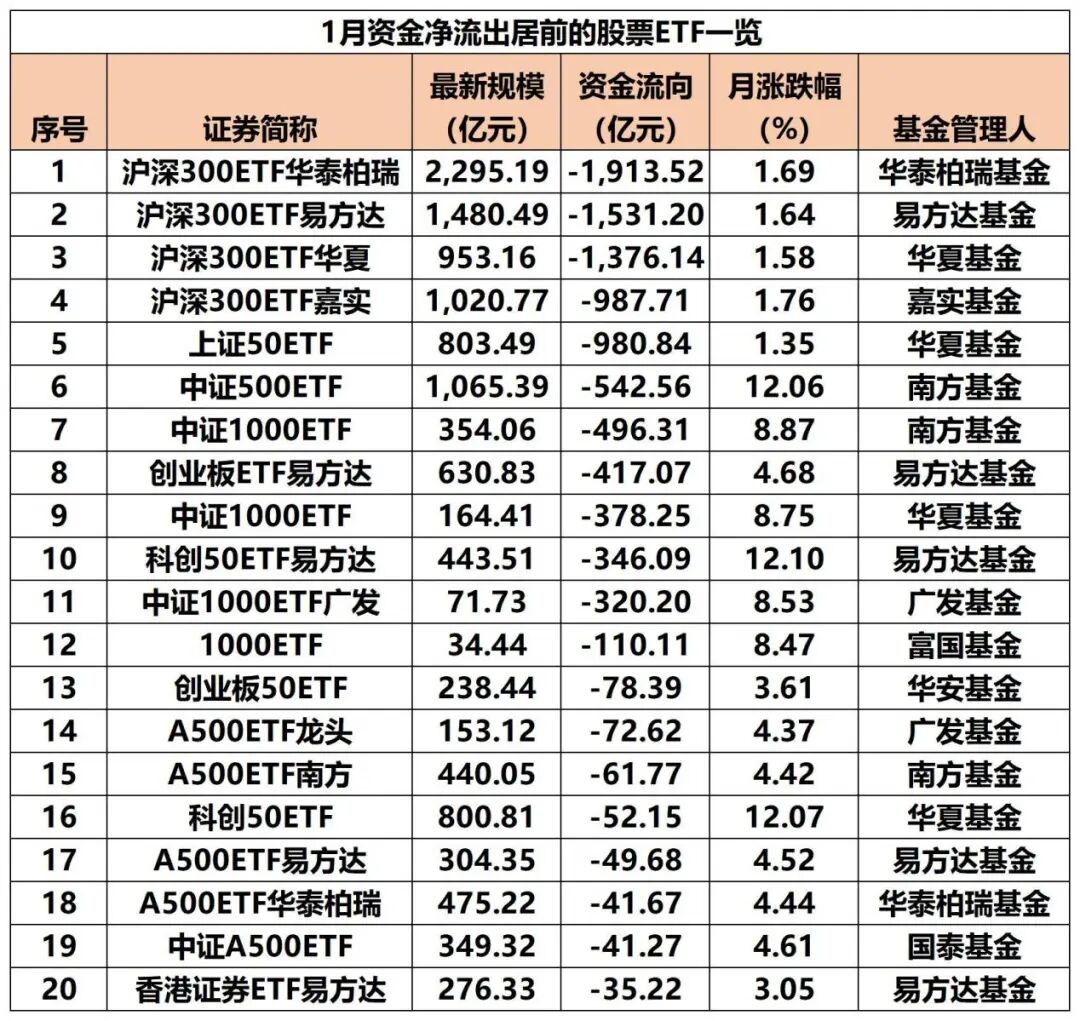
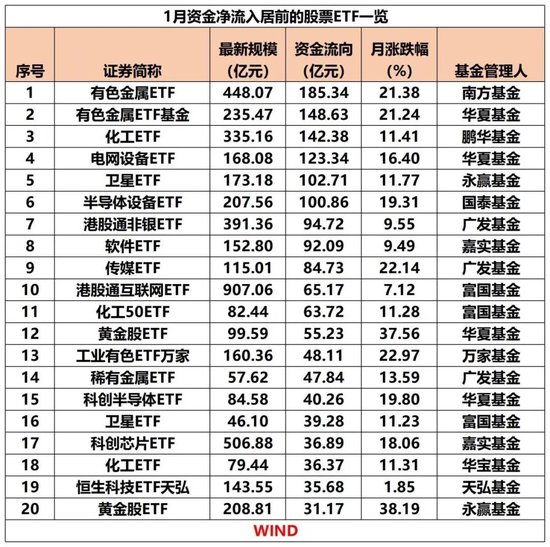
1月股票ETF资金累计净流出超7900亿元
Xin Lang Cai Jing· 2026-02-02 06:22
Core Viewpoint - In January, the stock ETF market in China experienced a significant net outflow of over 790 billion yuan, indicating a turbulent market environment with specific sectors showing varied performance [1][5][11]. Summary by Category Market Performance - On January 30, the Shanghai Composite Index fell by over 2%, closing down 0.96% at 4117 points, with most sectors declining, while communication, electronics, and agriculture sectors showed gains [2][12]. - The total net outflow for stock ETFs (including cross-border ETFs) on January 30 was 37.20 billion yuan, with industry theme ETFs and commodity ETFs seeing inflows of 112.63 billion yuan and 21.66 billion yuan, respectively [3][13]. ETF Inflows and Outflows - In January, the cumulative net outflow for all stock ETFs reached 795.67 billion yuan, with popular theme ETFs like non-ferrous metals, chemicals, electric grid equipment, and satellite ETFs attracting significant inflows [5][15]. - The largest net outflows were observed in broad-based ETFs such as the CSI 300 ETF, which saw a net outflow of 1,913.52 million yuan, followed by other major ETFs [7][17]. Sector-Specific Insights - The SGE Gold 9999 index recorded a net inflow of 16.24 billion yuan on January 30, while the CSI 300 index had a net outflow of 73.23 billion yuan [3][13]. - Notable inflows were seen in specific ETFs managed by major fund companies, with the non-ferrous metals ETF and chip ETF from Huaxia Fund seeing inflows of 11.34 billion yuan and 4.3 billion yuan, respectively [3][13][14]. Investment Opportunities - Analysts suggest that geopolitical uncertainties and rising national consciousness may drive resource commodities into a super cycle, highlighting metals like gold, silver, copper, and aluminum as having long-term investment value [8][18]. - The focus is also on sectors benefiting from domestic demand and self-sufficiency trends, such as engineering machinery, new energy vehicles, and AI computing, which are expected to provide structural investment opportunities [8][18].
锌期货期权2026年2月报告:锌:板块共振重心上移阶段调整后仍存上行可能-20260202
Fang Zheng Zhong Qi Qi Huo· 2026-02-02 05:30
Report Title - Zinc Futures and Options February 2026 Report [1] Report Industry Investment Rating - Not mentioned in the provided content Core Viewpoints - **Macro**: The Fed has paused rate cuts, and the manufacturing sectors in China and the US show resilience. Geopolitical disturbances, the emphasis on key supply chains in AI, high - tech manufacturing, and energy transition have amplified the positive impact on the supply side. Capital flowing from precious metals to non - ferrous metals has boosted sector rotation. However, there is a divergence between strong expectations and actual demand, and a significant correction due to weakening expectations should be guarded against [6]. - **Supply**: Zinc concentrate supply is seasonally tight. Domestic smelters have completed winter stockpiling, but some lead - zinc mines in China had routine maintenance and shutdowns in January, weakening domestic supply. Overseas mines are also affected by factors like the Iran situation and community protests. European natural gas price hikes and low LME inventories have strengthened the external market. Domestic refined zinc shows a situation of weak supply and demand and is in a stage of inventory accumulation [6]. - **Demand**: In 2026, the real estate sector is stabilizing and recovering. Manufacturing is expected to be led by high - end manufacturing and AI development. There is a divergence between price increases and seasonal weakness in the downstream. In terms of imports and exports, the export performance was good in 2025, and in 2026, the incremental space for zinc demand is still mainly in the overseas market. The domestic and export demand for galvanized products is expected to remain strong [6]. - **Inventory**: Domestic inventory is recovering, while LME zinc inventory has recovered from a low level but remains relatively tight. The LME 0 - 3 spread is in a slight contango state, and the strong LME zinc price boosts the domestic market [6]. - **Outlook**: In February 2026, geopolitical changes will affect the non - ferrous and precious metals sectors. Supply - demand mismatches around the Spring Festival and capital flows during the holiday may lead to a temporary cooling of the market. However, the downside space is expected to be limited. Buy - hedgers can consider the opportunity to buy on dips. The market is expected to operate in the range of 24,000 - 27,000 yuan/ton, and after a full correction, a long - biased strategy on dips can be considered [6]. Summary by Directory Global Macro and Zinc Market - **Long - term Zinc Price Trends**: After the subprime mortgage crisis, factors such as global liquidity floods, supply - side reforms, the Fed's QE, the European energy crisis, the COVID - 19 pandemic, the Fed's tightening cycle, and the current Fed's rate - cut expectations and geopolitical disturbances have all affected zinc prices [10]. - **Weakening US Dollar Trend**: In 2026, the Fed is expected to cut rates twice. Concerns about policy continuity and independence, political risks, global capital re - balancing, and the strengthening of external currencies all contribute to a weakening US dollar [12]. - **Manufacturing Recovery**: Zinc prices are highly correlated with global manufacturing sentiment. The Fed's rate - cut expectations and the recovery of manufacturing data support non - ferrous metals. However, the strong performance of the sector has exceeded the manufacturing recovery rhythm, and there is a divergence between strong expectations and weak reality [16]. - **US Stagflation Expectations**: The US employment market growth is slowing, inflation is volatile, and geopolitical situations are causing oil price fluctuations [19]. - **Domestic Policy Support**: China will maintain a loose fiscal and moderately loose monetary policy in 2026. There will be continued optimization and upgrading in consumer goods and large - scale equipment renewal, and infrastructure construction related to technology development will also continue [24]. Zinc Supply Analysis - **Overseas Zinc Mine Production**: In Q3 2025, the total output of tracked mines decreased slightly quarter - on - quarter by 0.9% but increased year - on - year by 9.69%. From January to September 2025, it increased year - on - year by 11.35%, with an incremental contribution of about 400,000 tons. Mines like Antamina, Kipushi, Tara, and Gamsberg are the main sources of incremental production in 2025 [31]. - **Global Zinc Mine Output**: In 2025, global zinc mine supply rebounded after three years of decline. In 2026, there is still room for growth, but overseas growth may slow down while China's growth may emerge. The copper/zinc ratio may lead to an adjustment in mine - end increments [37]. - **Domestic Zinc Mine Production**: In 2025, domestic zinc concentrate production increased by about 70,000 tons year - on - year. In 2026, projects like Huoshaoyun and Zhugongtang may bring an increase of 100,000 - 200,000 tons and 50,000 - 80,000 tons respectively [39]. - **Zinc Concentrate Imports**: In 2025, zinc concentrate imports reached 5,325,542.08 tons, a year - on - year increase of 30.62% [44]. - **Global Refined Zinc Production**: In 2025, refined zinc production recovered to some extent, but the improvement from the mine end to zinc ingot production was affected by overseas profit factors [47]. - **Processing Fees**: In January 2026, domestic and imported processing fees weakened seasonally, indicating a strong mine end [51]. - **Refined Zinc Enterprise Profits**: Refined zinc enterprises are in a loss situation, but the long - term contract price in 2026 has generally increased [55]. - **Refined Zinc Output**: In 2025, refined zinc output increased with profit recovery, but it weakened at the end of the year and in early 2026, and is expected to decline during the Spring Festival [59]. - **Refined Zinc Imports and Exports**: In 2025, imports decreased by 31.78% year - on - year, and exports increased by 459.90%. In 2026, there is still a possibility of intermittent export window openings [63]. Zinc Demand Analysis - **Apparent and Actual Consumption**: In 2025, the apparent consumption of zinc ingots was mostly higher than the five - year average and slightly higher than the actual consumption, indicating an improvement in supply. However, supply decreased significantly at the end of the year [69]. - **Galvanizing Enterprises**: The operating rate of galvanizing enterprises was weak, with limited recovery in actual consumption. There is still an expectation of capacity release, and export demand has development potential [73]. - **Zinc Die - Casting Enterprises**: The operating rate of zinc die - casting alloy enterprises was better in the first half of 2025 but weakened in the second half. There was a polarization between large and small factories [76]. - **Zinc Oxide Industry**: The operating rate of the zinc oxide industry was weak, with a significant decline from May to June and a continuous decline from October to December [80]. Zinc Inventory Analysis - **Exchange Inventories**: As of the end of January 2026, LME zinc inventory was 110,000 tons, a year - on - year decrease of 39.13%, and SHFE zinc inventory was 65,154 tons, a year - on - year increase of 199.13%. Both overseas and domestic inventories are at relatively low historical levels [86]. - **Social Inventories**: As of January 2026, social inventories have recovered from a low level and are at a relatively high level in recent years, indicating a situation of increasing supply and weakening demand [89]. Zinc Supply - Demand Balance - **Global Refined Zinc**: In 2025, global refined zinc supply is expected to be slightly in surplus, and in 2026, the surplus is expected to expand to 290,000 tons [94]. - **Domestic Refined Zinc**: In 2025, domestic refined zinc turned to a slight surplus. In 2026, domestic production is expected to increase further, and there may be intermittent export opportunities, maintaining a surplus pattern [97]. Zinc Technical Analysis - Since the fourth quarter of 2025, zinc has been in an upward channel. In January 2026, it accelerated its rise but faced adjustment pressure at the end of the month. After breaking through last year's high, the upper - resistance level has expanded above 27,000 yuan. A long - biased strategy on dips can be considered [102]. Arbitrage Analysis - **Domestic - Overseas and Cross - Variety Arbitrage**: The zinc Shanghai - London ratio is highly correlated with the RMB - US dollar exchange rate. The import window for zinc has opened intermittently, and there may be opportunities for cross - market reverse arbitrage and export. The copper - zinc ratio reached a new high at the end of 2025, but there may be room for the ratio to return in 2026 [109]. Zinc Option Market - **Option Volatility Analysis**: In 2025, the historical and implied volatilities of Shanghai zinc options showed a trend of rising and then falling. Different option strategies can be adopted according to different volatility levels [113]. Summary: Zinc Market Outlook and Operational Suggestions - In February 2026, zinc is expected to maintain high volatility. Supply - demand mismatches, macro and mine - end changes may intensify fluctuations. The market is expected to operate in the range of 24,000 - 27,000 yuan/ton. Option strategies such as selling out - of - the - money calls during the consolidation period and buying zinc and selling copper for arbitrage can be considered. For the industrial side, buy - hedging can be considered at low levels after a full correction, and sell - hedging opportunities currently exist [121].
镍及不锈钢:印尼配额待落地重心提升后构筑新区间:镍及不锈钢期货与期权2026年2月报告-20260202
Fang Zheng Zhong Qi Qi Huo· 2026-02-02 05:18
镍及不锈钢期货与期权2026年2月报告 镍及不锈钢:印尼配额待落地 重心提升后构筑新区间 有色与新能源金属团队 杨莉娜 交易咨询号:Z0002618 2026年2月2日 www.founderfu.com 摘要 • 市场表现:2026年1月,镍及不锈钢期货开门红,镍期货在13.3-15.3万元之间波动,重心显著上移。不锈钢震荡上 行,重心同步提升,在13000-15000之间波动,重心低位上移,走势更为稳健。月末出现阶段获利了结。 • 宏观因素:全球科技、AI、能源转型发展倾向明显,地缘扰动、资源国民族主义提升供给端脆弱性,主要经济体货 币政策趋宽松,多因素提振有色金属整体牛市格局。阶段虽因美元反弹,以及地缘变化出现调整,但是长期逻辑未 改。 • 供需:强预期驱动:印尼镍矿扰动持续升温,从12月中下旬,即启动基于印尼收缩镍矿配额,全球供需形势可能从 过剩向紧平衡方向转变的行情,而印尼加大非法采矿惩罚力度、雨季供应扰动、可能对镍矿中钴、铁单独计税等, 从数量到镍产品其它成本均形成了较强的抬升预期,且菲律宾季节性矿端减产,矿端强势延续,矿价重心出现明显 回升。不过,印尼精炼镍新增产能、MHP新增投产预期仍存,未来 ...
“卖爆了”,这个“传统夕阳产业”缘何爆发?
Jing Ji Guan Cha Wang· 2026-02-02 04:17
在全球电力设备市场,中国变压器正迎来一场"爆单潮"。据央视财经在我国广东,江苏等地调研发现, 大量变压器工厂已经处于满产的状态,其中部分面向数据中心的业务订单都排到了2027年。 央视记者在广东佛山一家电气设备企业看到,生产线正满负荷运转,仓库和停车场堆满了待交付的变压 器产品。"今年开年不到一个月,订单同比增加七八成,生产线从第一天起已经是满负荷运转了。"一位 研发中心负责人介绍说。满产的情况也出现在长三角,在江苏的一家变压器工厂,产品订单已经排到 2027年底,其中,国内首台全绝缘超高压大容量变压器近日发往北美市场。 变压器,这个曾被视为"传统夕阳产业"的领域为何一夜间突然迎来大爆发?作为"电压调节器",自19世 纪诞生以来,变压器就被广泛地应用于从发电、输电、配电到最终用电的全过程。 当前,全球AI算力建设进入爆发期,正在制造一场"电力饥渴"。此时,高功率,高稳定的供电成为算力 集群的"生命线",让变压器成为稀缺资源。国泰海通证券研报指出,全球数据中心市场规模将由2024年 的2427.2亿美元增长到2032年的5848.6亿美元,变压器正升级为算力基础设施的核心。 作为全球最大的变压器买家,美国正面临 ...
欧盟2025年新增储能装机27.1GWh,2030年目标装机750GWh
中关村储能产业技术联盟· 2026-02-02 03:47
Core Viewpoint - The European battery storage market is experiencing significant growth, with a record installation capacity expected to reach 27.1 GWh by 2025, marking a 45% year-on-year increase, primarily driven by utility-scale systems [3][4]. Group 1: Market Growth and Projections - The EU's battery storage capacity has increased tenfold since 2021, from 7.8 GWh to 77.3 GWh, indicating a robust growth trajectory [3]. - By 2030, the EU aims to achieve a tenfold increase in battery storage capacity to meet energy flexibility demands, targeting a total capacity of 750 GWh [3]. - Utility-scale systems contributed 55% of the new installations in 2025, highlighting their role as the main driver of market expansion [3]. Group 2: Manufacturing and Supply Chain Challenges - The EU's midstream battery production capacity is projected to reach 252 GWh by 2025, but there are structural gaps in the production of active materials for battery electrodes [4]. - Over 90% of battery cell production capacity is currently focused on electric vehicles rather than stationary storage, indicating a need for diversification [4]. - High production costs and project delays are hindering competitiveness, necessitating the establishment of a more resilient and integrated European battery supply chain [4]. Group 3: Recommendations for Development - To accelerate the deployment of battery storage systems, the report suggests simplifying approval processes for independent and hybrid projects, prioritizing mature and grid-compatible projects [5]. - The report calls for investments in innovation to ensure a reliable supply of key raw materials and to expand recycling capacities, aiming to create a resilient and cost-effective battery supply chain [5]. - It recommends the establishment of unified safety standards and accident reporting systems across the EU to enhance industry trust and performance, alongside stricter regulations on battery recycling and carbon footprint disclosure [5].