
货币宽松

Search documents
美国降息之争走向何方
Jing Ji Ri Bao· 2025-08-11 22:05
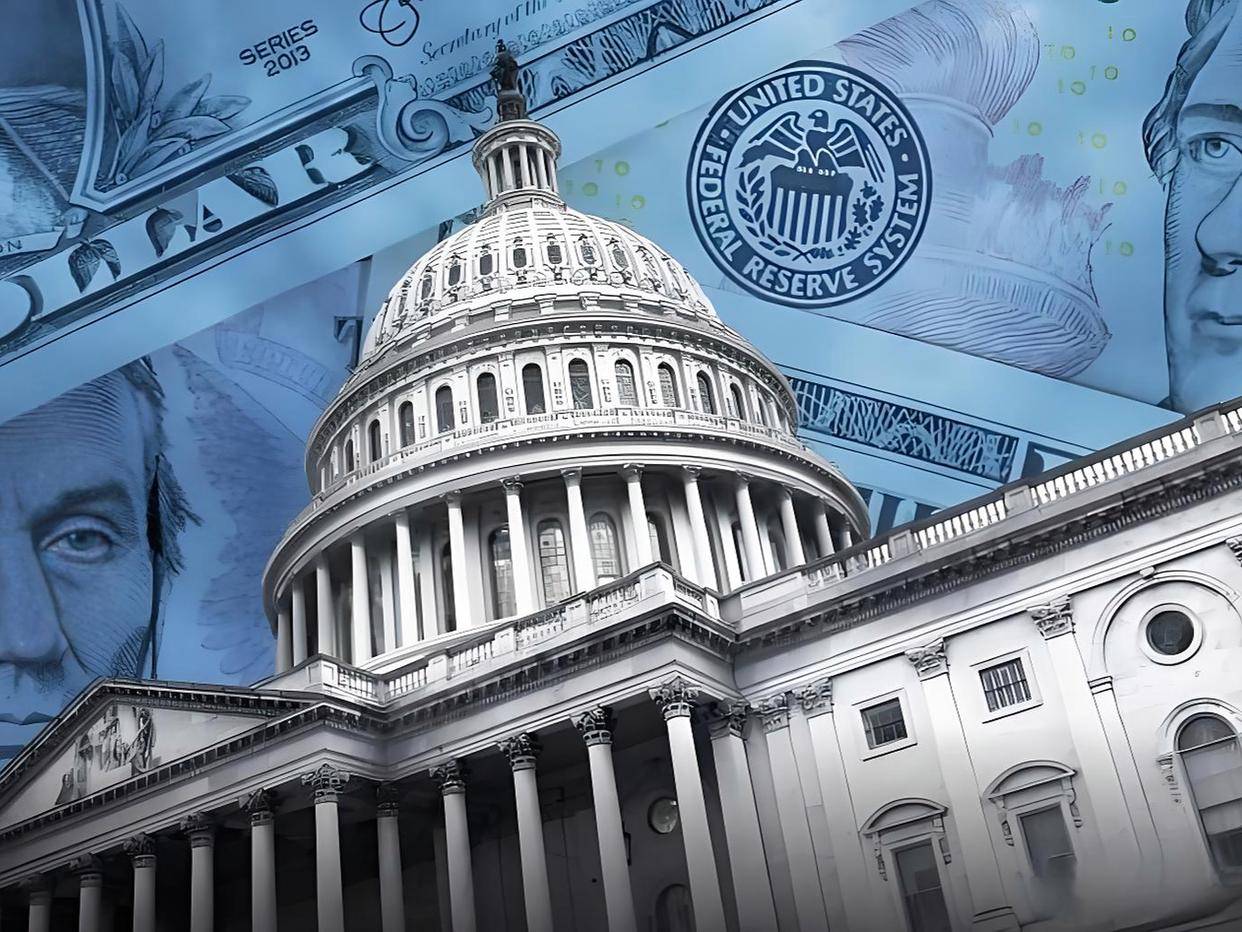
Core Viewpoint - The ongoing conflict between the U.S. government and the Federal Reserve regarding interest rate cuts has escalated from policy disagreements to a broader struggle over economic governance, impacting global markets. Group 1: Government Pressures for Rate Cuts - The U.S. government is under significant pressure to push for rapid and substantial interest rate cuts due to three main factors: fiscal pressure, political cycle dynamics, and the need to counteract the effects of increased tariffs [1][2]. - The federal government's interest expenditure for the fiscal year 2024 is projected to be approximately $1.1 trillion, with the national debt exceeding $37 trillion as of August 10, indicating a growing fiscal burden that the government hopes to alleviate through lower interest rates [1]. - The urgency for rate cuts is heightened by the upcoming 2026 midterm elections, as the government seeks to stimulate the economy and improve public perception through short-term market gains [1]. Group 2: Federal Reserve's Stance - The Federal Reserve remains resistant to the government's pressures, citing the need for a low inflation environment to justify rate cuts, and expressing concerns that high inflation could lead to a wage-price spiral if cuts are implemented prematurely [2][4]. - The core PCE price index rose by 2.8% year-on-year in June, exceeding expectations, which reinforces the Fed's cautious approach to interest rate adjustments [2]. - The Fed emphasizes its independence and the importance of maintaining data integrity, suggesting that succumbing to political pressure could undermine market trust and lead to adverse long-term effects [2][4]. Group 3: Employment Data and Political Maneuvering - Recent employment data indicates a rise in the unemployment rate and a downward revision of job creation figures, prompting the U.S. government to attempt to influence labor statistics and reshape the Federal Reserve's decision-making body [3][4]. - The dismissal of the Bureau of Labor Statistics head and the push for a new appointee who supports rate cuts reflect the government's strategy to manipulate data to create a rationale for lowering rates [3]. - The potential impact of these political maneuvers on the Federal Reserve's voting structure could influence upcoming decisions on interest rates, although the long-term consequences of undermining data credibility could be detrimental [3][4]. Group 4: Economic Implications and Future Outlook - The standoff between the U.S. government and the Federal Reserve highlights deep-rooted issues in U.S. economic governance, with the government’s push for rate cuts driven by an unsustainable debt-driven growth model [4][5]. - The Federal Reserve may be compelled to lower rates if unemployment rises significantly or consumer spending weakens, while a rebound in inflation due to tariffs could lead to a more cautious approach [4]. - Regardless of the outcome, this ongoing conflict reveals significant fractures in the governance of the U.S. economy, indicating a complex interplay between short-term political objectives and long-term economic stability [5].
市场近乎锁定9月美联储降息
Sou Hu Cai Jing· 2025-08-11 08:11
这种预期的形成背后是多重经济因素的叠加:7月的美国就业数据表现疲软,就业岗位远低于预期,同时多项通胀指标仍未回落。这种经济下滑信号为政策 提供了降息空间,并推动市场提前反应。 根据最新数据显示,美联储在9月降息25个基点的概率已高达 约90.7%,仅有9.3%的可能继续维持利率不变。10月降息概率亦持续升温,反映市场对此次货 币宽松措施的高度预期。 美联储9月极可能降息已成为市场共识,不应忽视其对全球货币政策同步性的影响。中国投资者应以"研判为先"思路关注后续数据变化。 对中国投资者而言,这种降息概率的上升意味着全球资金面有望进一步宽松,对科技股、消费股等敏感板块带来正面刺激。同时,也意味着人民币资本流动 与外资动向或将更具弹性,需密切关注美联储决策节奏与沟通导向。 ...

中辉有色观点-20250807
Zhong Hui Qi Huo· 2025-08-07 01:59
| 品种 | 核心观点 | 主要逻辑及价格区间 | | --- | --- | --- | | 黄金 | | 美联储表态鸽派,关税谈判接近尾声,短期盘面调整。中长期来看,多国货币政策 | | | 回调做多 | 宽松预期,央行买黄金,黄金与其他资产相关性较低,长期黄金继续战略配置。 | | ★★ | | 【770-794】 | | 白银 | | 美国降息预期和中美欧等国宽松财政刺激等支撑作用明显,白银基本面变化不大, | | | 反弹做多 | 工业需求坚挺,供给端增量有限,白银长期向上趋势不变。不过短期白银品种弹性 | | ★★ | | 较大,短期试多长期做多。【9000-9300】 | | | | 海内外宏观政策进入窗口期,铜精矿干扰和美元疲软帮助铜止跌反弹,但是需求淡 | | 铜 | 回调试多 | 季叠加海内外库存累库限制铜反弹空间,短期建议等待铜充分回调后再试多,中长 | | ★★ | | 期依旧看好铜,沪铜关注区间【77500,79500】 | | 锌 | 海外 | LME 锌库存连续去化超预期,国内需求疲软继续累库。锌外强内弱,沪锌跟随 | | | 反弹沽空 | 伦锌止跌反弹,建议锌前期空单止盈兑现后 ...
美联储竟要降息4次?比特币、以太坊本周这样布局!暴跌后狂拉!HAEDAI翻倍,LIZARD爆涨10倍!操作很关键!
Sou Hu Cai Jing· 2025-08-05 03:25
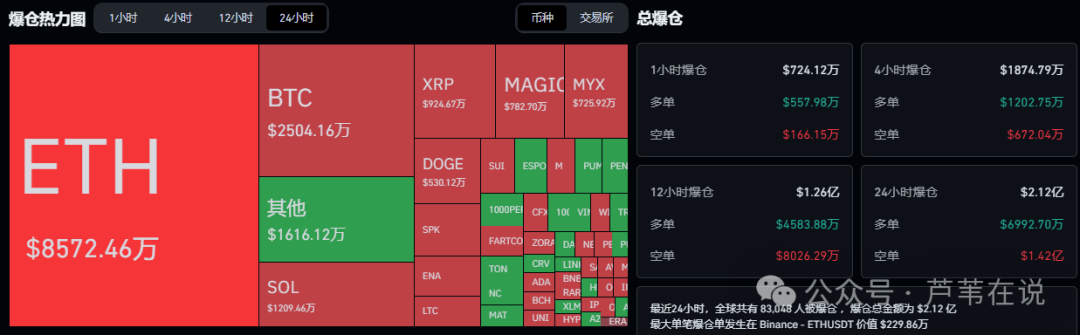
Group 1 - The U.S. stock market experienced a rebound after two days of decline, with major indices recovering losses from the previous week, primarily due to Trump's increasing influence over Federal Reserve personnel and market expectations for interest rate cuts [1] - In the past 24 hours, a total of 83,048 individuals were liquidated, with a total liquidation amount of $212 million, including $69.9 million from long positions and $142 million from short positions [1] Group 2 - The market anticipates an 80% probability of interest rate cuts following the impact of the recent non-farm payroll data, although expert opinions may quickly reverse [2] - Bitcoin (BTC) is currently experiencing a narrow range of fluctuations between $104,000 and $115,500, with potential upward movement towards $116,411 [2] - Ethereum (ETH) has rebounded strongly, reaching $3,725, and is at a critical resistance level; a breakthrough could confirm a reversal [4] Group 3 - The dominance of Bitcoin is declining, while Ethereum and altcoins are expected to rise, with altcoins following Ethereum's lead [6] - Recent trading activity has shown significant profits, with one asset, $LIZARD, surging to a market value of $12 million, indicating a potential for substantial future gains [6]
五矿期货早报有色金属-20250805
Wu Kuang Qi Huo· 2025-08-05 01:01
Report Investment Rating No relevant information provided. Core Viewpoints - Copper price rebounds due to overseas equity market recovery, mine - end production cut concerns, but upward height is limited in the off - season [1]. - Aluminum price fluctuates, with a short - term trend of weakening oscillation due to inventory accumulation and uncertain trade situation [3]. - Lead price is expected to oscillate weakly as supply remains loose [4]. - Zinc price has an increased risk of decline due to weak industry data and the weakening of previous supporting factors [5]. - Tin price is expected to oscillate weakly in the short term due to the strengthening of the resumption of production in Myanmar and the weak supply - demand situation [6][7]. - Nickel price may decline as the macro - atmosphere cools, demand is weak, and the price of nickel ore is expected to fall [8]. - Lithium carbonate price may be supported at the bottom due to the expected improvement in the supply - demand relationship, but the supply reduction sustainability needs to be observed [10]. - Alumina price may face an over - capacity situation, and it is recommended to short at high prices [12]. - Stainless steel price is expected to be strongly oscillating in the short term [14]. - Cast aluminum alloy price has limited rebound space due to weak supply - demand in the off - season [16]. Summary by Metal Copper - Price: LME copper rose 0.78% to $9708/ton, Shanghai copper main contract reached 78370 yuan/ton [1]. - Inventory: LME inventory decreased by 2175 tons to 139575 tons, domestic electrolytic copper social inventory increased by 16000 tons [1]. - Price Outlook: In the current off - season, the upward space of copper price is limited, with the Shanghai copper main contract running between 77600 - 79000 yuan/ton and LME copper 3M between 9600 - 9800 dollars/ton [1]. Aluminum - Price: LME aluminum fell 0.06% to $2570/ton, Shanghai aluminum main contract reached 20440 yuan/ton [3]. - Inventory: Domestic aluminum ingot social inventory accumulated, LME aluminum inventory increased by 925 tons to 463725 tons [3][18]. - Price Outlook: Aluminum price may oscillate weakly in the short term, with the Shanghai aluminum main contract running between 20350 - 20600 yuan/ton and LME aluminum 3M between 2540 - 2600 dollars/ton [3]. Lead - Price: Shanghai lead index rose 0.09% to 16751 yuan/ton, LME lead 3S rose to $1974.5/ton [4]. - Inventory: Domestic social inventory decreased to 6.63 tons, LME lead inventory was 27.53 tons [4]. - Price Outlook: Lead price is expected to oscillate weakly as supply remains loose [4]. Zinc - Price: Shanghai zinc index fell 0.32% to 22249 yuan/ton, LME zinc 3S fell to $2734.5/ton [5]. - Inventory: Domestic social inventory continued to accumulate to 10.73 tons, LME zinc inventory was 97000 tons [5][18]. - Production: In July 2025, the domestic refined zinc production was 60.28 tons, and it is expected to reach 62.15 tons in August [5]. - Price Outlook: The risk of zinc price decline increases due to weak industry data and the weakening of previous supporting factors [5]. Tin - Price: On August 4, 2025, the Shanghai tin main contract closed at 266590 yuan/ton, up 0.56% [6]. - Supply - Demand: Supply is expected to increase in the third and fourth quarters, but short - term smelting faces raw material pressure; domestic demand is weak, while overseas demand is strong due to AI [6][7]. - Price Outlook: Tin price is expected to oscillate weakly, with the domestic tin price between 250000 - 270000 yuan/ton and LME tin price between 31000 - 33000 dollars/ton [7]. Nickel - Price: Nickel price rebounded slightly, nickel iron price was stable after rising, and refined nickel price rebounded slightly with flat trading [8]. - Market Situation: Macro - atmosphere cools, stainless steel price falls, and nickel ore price is expected to decline [8]. - Price Outlook: Nickel price is expected to decline, with the Shanghai nickel main contract between 115000 - 128000 yuan/ton and LME nickel 3M between 14500 - 16500 dollars/ton [8]. Lithium Carbonate - Price: The MMLC index was 68832 yuan, unchanged from the previous day, and the LC2509 contract closed at 68920 yuan, also unchanged [10]. - Market Situation: The fundamental improvement depends on the actual reduction of the mine end, and the supply - demand relationship is expected to improve before the peak season [10]. - Price Outlook: Lithium carbonate price may be supported at the bottom, but the supply reduction sustainability needs to be observed, with the Guangzhou Futures Exchange LC2509 contract between 66800 - 70900 yuan/ton [10]. Alumina - Price: The alumina index rose 2.25% to 3224 yuan/ton, overseas FOB price fell to $376/ton, and the import window was closed [12]. - Inventory: The futures warehouse receipt was 0.66 tons, remaining at a historical low [12]. - Strategy: It is recommended to short at high prices, with the domestic main contract AO2509 between 3000 - 3400 yuan/ton [12]. Stainless Steel - Price: The stainless steel main contract closed at 12925 yuan/ton, up 0.66%, and spot prices in some regions increased [14]. - Inventory: Social inventory decreased by 0.66%, but 300 - series inventory increased by 1.00%, and the supply of 316L was tight [14]. - Price Outlook: Stainless steel price is expected to be strongly oscillating in the short term [14]. Cast Aluminum Alloy - Price: The AD2511 contract rose 0.05% to 19930 yuan/ton, and the spot price was flat [16]. - Inventory: The inventory of recycled aluminum alloy ingots in three regions decreased [16]. - Price Outlook: Cast aluminum alloy price has limited rebound space due to weak supply - demand in the off - season [16].
非农爆冷美元跳水 美联储降息预期升温
Jin Tou Wang· 2025-08-04 03:18
周一(8月4日)亚盘早盘,美元指数最新价报98.75,涨幅0.07%,开盘价为98.65。美国7月非农就业报 告显示新增就业仅7.3万人,显著低于预期的10万人,且前两月数据合计下修25.8万人,强化了市场对美 联储9月启动降息的预期。 受此影响,美元指数延续跌势,自近期高点100.257持续回落。报告数据验证了美联储理事沃勒和鲍曼 此前的预警——就业市场增长可能被高估。这一疲软表现令市场预计美联储将加快货币宽松步伐,9月 降息概率大幅攀升。随着就业市场降温迹象显现,美联储政策转向的预期正持续升温,投资者密切关注 后续经济数据以确认这一趋势。 上周五,美元指数上涨在100.25之下遇阻,下跌在98.60之上受到支持,意味着美元短线上涨后有可能保 持下跌的走势。如果美指今天上涨在99.15之下遇阻,后市下跌的目标将会指向98.40--97.70之间。 ...
今夜避险,鲍威尔是个灾难!
Wind万得· 2025-08-01 14:52
Core Viewpoint - The U.S. stock market faced downward pressure due to weak economic data and updates on tariff policies from President Trump, leading to significant declines in major indices [1][9]. Economic Data Summary - The July employment report revealed only 73,000 new non-farm jobs, significantly below the expected 100,000, with prior months' data also revised downwards [9]. - The ISM Manufacturing Purchasing Managers' Index (PMI) for July recorded at 48, indicating continued contraction in manufacturing activity, with the employment index dropping to 43.8, below market expectations [10][11]. - The price index decreased to 64.8, suggesting a reduction in cost pressures faced by businesses [12]. Market Reactions - The Dow Jones Industrial Average fell over 520 points, a decline of 1.2%, while the S&P 500 and Nasdaq Composite dropped by 1.3% and over 1.6%, respectively [1]. - The dollar index decreased by 1.2% to 98.84, and the 10-year U.S. Treasury yield fell by 13 basis points [3]. - Bank stocks were heavily impacted, with JPMorgan Chase down approximately 4%, and both Bank of America and Wells Fargo declining over 3% [12]. Tariff Policy Impact - New tariffs announced by the Trump administration, ranging from 10% to 41%, have raised concerns about the North American Free Trade Agreement, particularly with a significant increase in tariffs on Canadian goods from 25% to 35% [9][12]. Sector-Specific Developments - In the technology sector, Amazon's stock plummeted over 7% due to lower-than-expected quarterly operating profit guidance, while Apple saw a 2% increase following better-than-expected earnings [13].

非农数据验证沃勒和鲍曼降息的理由:劳动力市场出现疲软迹象
news flash· 2025-08-01 13:03
Core Insights - The U.S. labor data supports calls for monetary easing, indicating signs of weakness in the labor market [1] - The 10-year Treasury yield is at 4.295%, while the 2-year yield is at 3.801% [1] - July saw only 73,000 new jobs added, with the unemployment rate slightly rising from 4.1% to 4.2% [1] - Previous employment data has been significantly revised downwards, with May's job additions revised from 144,000 to 19,000, and June's from 147,000 to 14,000 [1] - Federal Reserve officials Waller and Bowman expressed concerns about the labor market's weakness prior to the employment report [1]
【UNFX课堂】全球货币政策步入“大分化”时代:五大央行路径殊途,重塑市场格局
Sou Hu Cai Jing· 2025-08-01 05:24
全球经济的同步叙事已然落幕。随着各国从疫情后的通胀冲击中走出,世界主要中央银行正 踏上截然不同的政策路径,昔日一致对外的紧缩阵线已不复存在。这种由各国国内经济状况 主导的"大分化",正深刻重塑全球资本流动、汇率及资产配置的未来图景。 高位观望的"暂停者":美欧央行的如履薄冰 在当前全球货币政策的棋局中,美联储(Fed)和欧洲中央银行(ECB)占据了相似的战略位置:它们 都已将利率提升至被认为是"限制性"的水平,并暂时按下了"暂停"键。 它们的目标一致:在不引发严重经济衰退的前提下,确保通胀被彻底驯服。然而,相似的立场之下,两 者面临的挑战和内部的博弈却各有侧重,使得它们的"暂停"显得如履薄冰。 美联储:鹰派立场下的内部分歧 美联储在7月的会议上将联邦基金利率维持在了 4.25%至4.50% 的区间,这标志着其紧缩周期的平台 期。主席鲍威尔的公开表态延续了"更高更久"(Higher for Longer)的鹰派基调,强调抗击通胀的斗争 尚未结束。 他指出,尽管整体通胀已从峰值回落,但服务业通胀(特别是剔除住房的核心服务通胀)依然顽固,劳 动力市场的紧张状况也未完全缓解。这构成了美联储维持高利率的核心理由。 然而 ...
2025下半年的经济方向,我们要怎么走?
Hu Xiu· 2025-07-31 07:04
Core Viewpoint - The recent economic work conference has provided direction for the economy in the second half of the year, emphasizing continued monetary easing and fiscal support, with a focus on increasing liquidity and reducing financing costs. A significant change is the clear intention to "counter involution" [1] Group 1 - The economic strategy remains focused on monetary easing and fiscal support [1] - There is an emphasis on maintaining ample liquidity in the market [1] - Financing costs are expected to continue decreasing [1] Group 2 - The conference marks the first time a clear stance has been taken to address the issue of "involution" [1]