
利率政策

Search documents
大批持枪美军接管首都,各方才反应过来,特朗普分明是要动真格了
Sou Hu Cai Jing· 2025-08-20 03:41
Group 1 - The article discusses the heightened security measures in Washington D.C., including the deployment of National Guard troops and federal law enforcement, amidst a backdrop of political tension and a recent mass arrest [1][3][12] - The initial deployment of 800 National Guard members was not met with significant concern, but as armed personnel began to gather, residents realized the situation was more complex than initially perceived [3][5] - Reports indicate that violent crime rates in Washington have been declining over the past two years, contradicting the narrative of a "dangerous city" as portrayed by the Trump administration [5][10] Group 2 - The Trump administration appears to be attempting to expand presidential power by seeking greater control over the D.C. police department, including efforts to appoint a federal official as the emergency police chief [5][12] - Tensions between Trump and Federal Reserve Chairman Jerome Powell have escalated, with Trump criticizing the Fed's renovation costs, which reportedly increased from $1.9 billion to as high as $3.1 billion, as a means to undermine the Fed's independence [6][7] - Trump is reportedly looking for Powell's successor, narrowing down candidates who support his economic policies, indicating a strategic move to reshape the Federal Reserve [7][12] Group 3 - The timing of Trump's actions, particularly the military presence in D.C. and the conflict with Powell, coincides with his meeting with Russian President Putin, suggesting a potential diversion of public attention from the meeting [8][10] - Supporters of Trump view these measures as necessary for public safety, while critics question whether the actions are genuinely about security or a test of presidential power [10][12]


新世纪期货交易提示(2025-8-20)-20250820
Xin Shi Ji Qi Huo· 2025-08-20 01:42
Report Industry Investment Ratings - Iron Ore: Oscillating weakly [2] - Coking Coal and Coke: Oscillating weakly [2] - Rebar and Coil: Bearish [2] - Glass: Bearish [2] - Soda Ash: Weak [2] - CSI 50: Rebound [2] - CSI 300: Oscillating [2] - CSI 500: Upward [4] - CSI 1000: Upward [4] - 2-Year Treasury Bond: Oscillating [4] - 5-Year Treasury Bond: Oscillating [4] - 10-Year Treasury Bond: Oscillating [4] - Gold: High-level oscillation [4] - Silver: High-level oscillation [4] - Pulp: Consolidating [6] - Logs: Range-bound oscillation [6] - Soybean Oil: Oscillating and correcting [6] - Palm Oil: Oscillating and correcting [6] - Rapeseed Oil: Oscillating and correcting [6] - Soybean Meal: Oscillating [6] - Rapeseed Meal: Oscillating [6] - Soybean No. 2: Oscillating [6] - Soybean No. 1: Oscillating weakly [6] - Live Pigs: Oscillating weakly [8] - Natural Rubber: Oscillating [10] - PX: On the sidelines [10] - PTA: Oscillating [10] - MEG: Buy on dips [10] - PR: On the sidelines [10] - PF: On the sidelines [10] Core Viewpoints - The short-term manufacturing recovery has been interrupted, and the ZZJ meeting fell short of expectations. The domestic supply policy expectations have been temporarily disproven, leading to intensified capital-level gaming and market corrections. The fundamentals of various commodities show different characteristics, with some facing supply and demand imbalances, while others are affected by policy, market sentiment, and cost factors [2][4][6][8][10]. - The fiscal revenue has shown positive growth, and the central bank has increased support for disaster-stricken areas. The market sentiment for stock index futures is bullish, while the trend of treasury bonds is weakening. Gold is affected by multiple factors and is expected to maintain high-level oscillation [4]. Summary by Related Catalogs Black Industry - Iron Ore: Global shipments have increased significantly, port inventories have slightly risen, but there is no obvious pressure to accumulate inventory under high port clearance. Terminal demand is weak, and steel mills have limited motivation to cut production actively. In late August, there are expectations of production cuts in northern regions, but the intensity is lower than expected. The short-term fundamentals have limited contradictions, and it is expected to operate weakly [2]. - Coking Coal and Coke: The Dalian Commodity Exchange has adjusted the trading limit for the main coking coal futures contract. The demand for real estate and infrastructure is weak, and coking coal is undergoing high-level adjustments. The overall recovery of coal mines in the production areas is still slow, and the inventory of clean coal in coal mines last week reached the lowest level since March 2024. The downstream coking and steel enterprises maintain high operating rates, and some coal mines have saturated pre-sales orders. In the short term, coal prices are still supported. Overall, the long-term coking production restrictions in Hebei and Shandong have positive factors on the supply side, and the short-term adjustment range is limited. To break through the previous high, continuous reduction in supply is required [2]. - Rebar and Coil: The production restriction policy for Tangshan steel mills is clear, and the reduction is lower than expected. The demand for building materials has declined month-on-month, external demand exports have been overdrawn in advance, real estate investment continues to decline, and the total demand is difficult to show counter-seasonal performance. With no increase in total demand throughout the year, a pattern of high in the front and low in the back will be formed. The profits of the five major steel products are acceptable, production has increased slightly, apparent demand has declined, and steel mill inventories have accelerated to accumulate. The increase in social inventories has expanded. In mid-August, there are expectations of supply contraction due to military parade production restrictions, and the overall inventory pressure in the steel market is not large. During the traditional peak season, the spot demand for rebar is still weak, and there is pressure from warehouse receipts. In the short term, rebar futures will undergo significant adjustments to find support [2]. - Glass: Market sentiment has cooled significantly, and the middle and lower reaches are in the stage of digesting previous inventories, with a significant weakening of restocking demand. The short-term supply and demand pattern has not improved significantly. There is no water release or ignition of glass production lines, the operating rate is basically stable, weekly production remains unchanged month-on-month, and manufacturer inventories continue to accumulate. During the military parade, it is unlikely for glass factories in Shahe to stop production. The market is subject to many sentiment disturbances, and there is room for restocking in the middle and lower reaches of the glass industry, but the rigid demand has not recovered. In the long term, the real estate industry is still in an adjustment cycle, and the demand for glass is difficult to rebound significantly. In the short term, the spot is weak, the futures price has broken through the support level, and attention should be paid to whether the actual demand can improve [2]. - Soda Ash: The short-term spot is weak, the futures price has broken through the support level, and attention should be paid to whether the actual demand can improve [2] Financial Sector - Stock Index Futures/Options: On the previous trading day, the CSI 300 Index closed down 0.38%, the SSE 50 Index closed down 0.93%, the CSI 500 Index closed down 0.19%, and the CSI 1000 Index closed up 0.07%. Funds flowed into the soft drink and forestry sectors, while funds flowed out of the insurance and aerospace and defense sectors. In July, the national general public budget revenue increased by 2.6% year-on-year, with central and local revenues increasing by 2.2% and 3.1% respectively, the highest monthly growth rate this year. From January to July, the national general public budget revenue was 13.5839 trillion yuan, a year-on-year increase of 0.1%, and the growth rate turned positive. Since April, national tax revenues have shown a year-on-year growth trend, driving the continuous recovery of fiscal revenues. In July, tax revenues increased by 5%, reaching a new high this year, and the decline in tax revenues from January to July narrowed significantly by 0.9 percentage points compared to the first half of the year. The People's Bank of China has increased the quota of re-lending for supporting agriculture and small businesses by 100 billion yuan. Market sentiment is bullish, and liquidity is increasing. It is recommended to hold long positions in stock index futures [2][4]. - Treasury Bonds: The yield to maturity of the 10-year China Bond has decreased by 1bp, FR007 has increased by 7bps, and SHIBOR3M has remained flat. The central bank conducted 580.3 billion yuan of 7-day reverse repurchase operations on August 19, with a net injection of 465.7 billion yuan. Market interest rates are fluctuating, and the trend of treasury bonds is weakening. It is recommended to hold long positions in treasury bonds with a light position [4]. - Gold: In the context of a high-interest rate environment and global restructuring, the pricing mechanism of gold is shifting from being centered on real interest rates to being centered on central bank gold purchases. The actions of central banks are crucial, reflecting the demand for "decentralization" and risk aversion. In terms of currency attributes, Trump's "Make America Great Again" bill has been passed, which may exacerbate the US debt problem and lead to cracks in the US dollar's currency credit. In the process of de-dollarization, the non-fiat currency attribute of gold is prominent. In terms of financial attributes, in a global high-interest rate environment, the substitution effect of gold as a zero-yield bond for bonds has weakened, and its sensitivity to the real interest rate of US Treasury bonds has decreased. In terms of risk aversion, geopolitical risks have marginally weakened, but Trump's tariff policies have intensified global trade tensions, and market risk aversion remains, which is an important factor driving up the gold price. In terms of commodity attributes, the demand for physical gold in China has significantly increased, and the central bank has restarted gold purchases since November last year and has increased its holdings for eight consecutive months. Currently, the logic driving the rise in gold prices has not completely reversed. The Fed's interest rate policy and tariff policies may be short-term disturbing factors. It is expected that this year's interest rate policy will be more cautious, and the evolution of tariff policies and geopolitical conflicts will dominate market risk aversion. According to the latest US data, non-farm payrolls show that the labor market is unexpectedly weak, non-farm employment is lower than market expectations, and the unemployment rate has risen to 4.2%. The PCE data in June shows that inflation has slowed down, with core PCE rising by 2.8% year-on-year, exceeding market expectations, and PCE rising by 2.6% year-on-year, also exceeding market expectations. In July, CPI rose by 2.7% year-on-year, lower than the expected 2.8%, the same as the previous month. In the short term, the prospect of peace between Russia and Ukraine may increase, which will suppress the risk aversion demand for gold. The market's expectation of a Fed rate cut in September reaches about 85%, and the rate cut expectation has been fully priced in. Attention should be paid to Powell's speech this week, and it is expected that the gold price will remain in high-level oscillation [4]. Light Industry and Agriculture - Pulp: The spot market price was stable on the previous trading day. The latest FOB price for softwood pulp remained at $720/ton, and for hardwood pulp at $500/ton. The cost support for pulp prices has weakened. The profitability of the paper industry is at a low level, paper mills have high inventory pressure, and their acceptance of high-priced pulp is low. Demand is in the off-season, and raw materials are purchased on a rigid basis, which is negative for pulp prices. The pulp market shows a pattern of weak supply and demand, and the price is at a critical point. It is expected that pulp prices will mainly consolidate [6]. - Logs: The average daily shipment volume of logs at ports last week was 63,300 cubic meters, a decrease of 900 cubic meters from the previous week. As the "Golden September and Silver October" season approaches, the willingness of processing plants to stock up has increased, and the average daily outbound volume has remained relatively stable at over 60,000 cubic meters. In July, the volume of logs shipped from New Zealand to China was 1.476 million cubic meters, a 5% increase from the previous month. The shipment volume in July was low, and it is expected that the arrival volume in August will remain low. The expected arrival volume this week is 323,000 cubic meters, a month-on-month increase. The recent arrival of ships has decreased, and the supply pressure is not large. As of last week, the log inventory at ports was 3.06 million cubic meters, a month-on-month decrease of 20,000 cubic meters, approaching the critical threshold of 3 million cubic meters. It is expected that the inventory will continue to decline. The spot market price is stable, with the price of 6-meter Class A logs in the Shandong spot market stable at 790 yuan/cubic meter and in the Jiangsu market at 800 yuan/cubic meter. The CFR price in August is $116/cubic meter, a $2 increase from the previous month, and cost support has strengthened. In the short term, the spot market price is stable, the expected arrival of logs this week will increase month-on-month, the overall supply pressure is not large, and as the processing plants' willingness to stock up increases as September approaches, the average daily outbound volume remains at 63,000 cubic meters. The fundamentals have few contradictions, and it is expected that log prices will mainly range-bound [6]. - Oils and Fats: In July, Malaysian palm oil continued the trend of increasing production and inventory accumulation, but the ending inventory of 2.11 million tons was far lower than market expectations. Although the production increase was lower than expected, it was still at a relatively high level. Shipping agency data shows that the export demand for Malaysian palm oil has been strong since August. Although the implementation time of Indonesia's biodiesel policy is uncertain, the demand growth still provides long-term support for palm oil prices. The import volume of soybeans to China in August remains high, oil mills have a high operating rate, and the export volume of soybean oil to India has increased, but it has not stopped the inventory accumulation trend of soybean oil in oil mills. Palm oil inventory may rebound, and rapeseed oil continues to reduce inventory. The double festival stocking may gradually start, and demand will pick up. However, international crude oil futures have declined, and Chicago soybean oil futures have also fallen, dragging down the price of oils and fats. After a significant increase in the early stage, oils and fats may oscillate and correct in the short term. Attention should be paid to the weather in US soybean-producing areas and the production and sales of Malaysian palm oil [6]. - Grains and Oilseeds: The USDA has significantly reduced the planted area of soybeans. Although the yield per unit has increased significantly, the initial inventory, production, and ending inventory of US soybeans have all decreased. Most US soybeans are in the critical pod-setting stage, and there is some rain in the central and western regions, but the temperature is high. The crop inspection data from ProFarmer shows that the number of pods per plant is higher than last year and the three-year average, and there are still expectations of a bumper harvest for US soybeans. The Ministry of Commerce has imposed anti-dumping measures on imported Canadian rapeseed, increasing the import cost, and the market is worried about a supply shortage. Before the export of US soybeans shows substantial improvement, the high premium pattern of Brazilian soybeans is difficult to change, providing cost support for domestic soybean meal. The arrival volume of soybeans in China from August to September is high, the operating rhythm of oil mills is generally high, and the inventory of soybean meal is at a high level, with a very abundant supply. After the downstream has completed centralized restocking, the purchasing sentiment has returned to caution. It is expected that soybean meal will oscillate. Attention should be paid to the weather in US soybean-producing areas and the arrival of soybeans [6]. - Live Pigs: On the supply side, the average trading weight of live pigs in China continues to decline. The average trading weight of live pigs has dropped to 124.03 kg, a slight decrease of 0.01%. The average trading weights of live pigs in various provinces have fluctuated, but overall, they are still decreasing. The recent increase in temperature has slowed down the weight gain of live pigs, and after the premium of fat pigs over standard pigs turned positive, the price of large pigs is relatively high. Slaughtering enterprises have increased their procurement of low-priced standard pigs to relieve the procurement pressure, resulting in a decline in the overall procurement weight. As the breeding side may continue to adopt a weight reduction strategy and slaughtering enterprises will still focus on purchasing standard pigs, it is expected that the average trading weight of live pigs in most regions will continue to decline. On the demand side, the average settlement price of live pigs for key slaughtering enterprises in China last week was 14.17 yuan/kg. The settlement price has shown a downward trend. Affected by the accelerated slaughtering rhythm of the breeding side and the impact of high temperatures on terminal consumption, slaughtering enterprises have pressured prices for procurement, causing the price to fall from a high level. The average operating rate of key slaughtering enterprises is 33.25%, a month-on-month increase of 0.76 percentage points. The price difference between fat and standard pigs in China has shown an oscillating and fluctuating trend, and the overall average has remained stable. At the beginning of the week, due to the tight supply of large pigs in some regions, the price of fat pigs was supported, driving the price difference to widen. As the supply of large pigs in some regions increased and demand was flat, the price difference narrowed. Near the weekend, due to the increased enthusiasm of the breeding side for slaughtering, the concentrated release of standard pig supply led to a rapid decline in prices, causing the price difference to widen again. Against the background of a continuous increase in live pig supply and high temperatures continuing to restrict consumption demand, the weekly average price of live pigs in the next week may remain oscillating [8]. Soft Commodities and Chemicals - Natural Rubber: The impact of weather factors in the main natural rubber producing areas has weakened, but the geopolitical conflict has not been effectively resolved, slightly interfering with rubber tapping work. The profit from rubber tapping in the Yunnan production area has increased slightly, and the tight supply of raw materials has supported the purchase price at a high level. The weather in the Hainan production area is currently good, but the overall latex production is lower than the same period last year and lower than expectations. Driven by the futures market, the procurement enthusiasm of local processing plants has increased, and the raw material purchase price has also increased. In Thailand, the price of cup lump rubber has continued to rise, but the profit has continued to narrow, and the rubber tapping progress in some areas is restricted by geopolitical factors. The weather in the Vietnam production area is good, and the raw material price has also shown an upward trend. On the demand side, the capacity utilization rate of China's semi-steel tire sample enterprises is 69.7%, a month-on-month decrease of 0.27 percentage points. The capacity utilization rate of full-steel tire sample enterprises is 60.06%, a month-on-month increase of 0.80 percentage points. In terms of production, the overall capacity of semi-steel tire enterprises has been dragged down by the shutdown and production reduction of individual factories, while the utilization rate of full-steel tire enterprises has increased due to the resumption of work of some maintenance enterprises and the moderate increase in production of enterprises with shortages. The capacity utilization rate of semi-steel tires may show a differentiated trend. On the one hand, the resumption of work of
研究所晨会观点精萃-20250820
Dong Hai Qi Huo· 2025-08-20 01:09
1. Report Industry Investment Ratings - No specific industry investment ratings are provided in the report. 2. Core Views of the Report - Overseas, the market anticipates the possible end of the Russia - Ukraine conflict, leading to a decline in global risk - aversion sentiment. The market awaits the Jackson Hole Economic Policy Symposium for US interest - rate policy clues, with the US dollar remaining volatile and global risk appetite rising. Domestically, China's economic data in July slowed down and fell short of expectations. Policy stimulus expectations are strengthening, and the short - term uncertainty of tariff risks has decreased, leading to an overall increase in domestic risk appetite [2]. - For assets, the stock index is expected to oscillate strongly at a high level in the short term, with a short - term cautious long - position strategy. Treasury bonds are expected to oscillate and correct at a high level, and it is advisable to watch cautiously. In the commodity sector, black commodities are expected to correct in the short term, non - ferrous metals to oscillate, energy and chemicals to oscillate weakly, and precious metals to oscillate at a high level, all with a cautious watching strategy [2]. 3. Summary by Categories Macroeconomic and Financial - **Macroeconomic Situation**: Overseas, the expected end of the Russia - Ukraine conflict reduces global risk - aversion, and the market awaits US interest - rate policy clues. Domestically, economic data in July was weak, but policy stimulus expectations are rising, and the short - term tariff risk uncertainty is reduced [2]. - **Asset Performance and Strategies**: The stock index is expected to oscillate strongly at a high level in the short term (cautious long - position). Treasury bonds are expected to oscillate and correct at a high level (cautious watching). Black commodities are expected to correct (cautious watching), non - ferrous metals to oscillate (cautious watching), energy and chemicals to oscillate weakly (cautious watching), and precious metals to oscillate at a high level (cautious watching) [2]. Stock Index - **Market Performance**: The domestic stock market declined slightly due to the drag of insurance, military, and securities sectors. - **Fundamentals and Policy**: China's economic data in July was weak. Policy stimulus expectations are rising, and the short - term tariff risk uncertainty is reduced. The short - term upward macro - driving force is weakening, and attention should be paid to Sino - US trade negotiations and domestic incremental policies. A short - term cautious long - position strategy is recommended [3]. Precious Metals - **Market Performance**: Precious metals declined slightly on Tuesday. The probability of a September interest - rate cut fell below 90%, and inflation data showed resistance to the decline in inflation. - **Outlook**: The long - term positive logic remains unchanged. Attention should be paid to entry opportunities at key points [4]. Black Metals Steel - **Market Performance**: Steel futures and spot prices continued to decline slightly on Tuesday, with low trading volumes. - **Fundamentals**: Demand is weakening, inventory is rising, and high - temperature and rainy weather restricts building material demand. Supply is showing signs of reduction, and a short - term oscillating and weakening trend is expected [4][5]. Iron Ore - **Market Performance**: Iron ore futures and spot prices continued to decline slightly on Tuesday. - **Fundamentals**: Steel profits are high, but iron - making water production may decline due to approaching events. Supply is increasing, and port inventory is rising. Iron ore prices may weaken in the short term [5]. Ferrosilicon and Silicomanganese - **Market Performance**: Spot and futures prices of ferrosilicon and silicomanganese declined on Tuesday. - **Fundamentals**: Manufacturers' production enthusiasm is high, and production capacity is increasing. A short - term oscillating and weakening trend is expected [6]. Soda Ash - **Market Performance**: The main soda ash contract was weak on Tuesday. - **Fundamentals**: Supply is increasing, demand is weak, and profits are declining. The high - supply, high - inventory, and weak - demand pattern persists, and the upside space is limited [7]. Glass - **Market Performance**: The main glass contract was weak on Tuesday. - **Fundamentals**: Supply is stable, demand is difficult to improve significantly, and profits are decreasing. The price has declined recently [7]. Non - Ferrous Metals and New Energy Copper - **Market Performance**: The US economy is slowing down, and copper demand is expected to weaken. - **Outlook**: Copper prices may not remain strong in the long run as supply is relatively sufficient and demand is weakening [9]. Aluminum - **Market Performance**: Aluminum prices declined on Tuesday, and the overall sentiment in the commodity market was weak. - **Fundamentals**: Domestic social inventory is rising, and the medium - term upside space is limited. The short - term oscillation trend is expected, but the rebound foundation is weakening [9]. Aluminum Alloy - **Market Performance**: The supply of scrap aluminum is tight, and production costs are rising. - **Outlook**: The short - term price is expected to oscillate strongly, but the upside space is limited due to weak demand [9]. Tin - **Market Performance**: The combined operating rate in Yunnan and Jiangxi decreased slightly. Terminal demand is weak, and inventory decreased this week. - **Outlook**: The price is expected to oscillate in the short term, but the upside space is restricted by high - tariff risks, production resumption expectations, and weak demand [10]. Lithium Carbonate - **Market Performance**: The main lithium carbonate contract declined on Tuesday. - **Fundamentals**: There is a short - term positive impact on supply, and the industry profit is improving. It is expected to oscillate at a high level [11]. Industrial Silicon - **Market Performance**: The main industrial silicon contract declined on Tuesday. - **Outlook**: It is expected to oscillate within a range as black commodities weaken and polysilicon oscillates [11]. Polysilicon - **Market Performance**: The main polysilicon contract declined on Tuesday. - **Fundamentals**: The number of warehouse receipts is increasing, and the industry is promoting self - regulation. It is expected to oscillate at a high level [12][13]. Energy and Chemicals Crude Oil - **Market Performance**: Oil prices declined slightly as the market assesses the prospects of a cease - fire in the Russia - Ukraine conflict. - **Outlook**: Oil prices are expected to remain weak in the long term [14]. Asphalt - **Market Performance**: The asphalt price is following the decline of crude oil, and the spot market is weak. - **Outlook**: It is expected to remain in a weak oscillation pattern as inventory reduction is limited [14]. PX - **Market Performance**: Crude oil price decline led to a correction in the energy - chemical sector. PX is in a tight supply situation in the short term. - **Outlook**: It is expected to oscillate and wait for changes in PTA plants [14]. PTA - **Market Performance**: Pakistan's anti - dumping on PTA exports has a limited impact. Downstream demand has rebounded slightly. - **Outlook**: The supply is limited, and demand is rising slightly. The price is supported but the upside space is restricted [15]. Ethylene Glycol - **Market Performance**: Port inventory has decreased slightly, and downstream demand has rebounded. - **Outlook**: Supply and demand are expected to increase slightly, and it will maintain an oscillating pattern [15]. Short - Fiber - **Market Performance**: The short - fiber price declined due to sector resonance. Terminal orders have increased slightly. - **Outlook**: It may continue to be short - sold in the medium term, waiting for further improvement in terminal orders [15]. Methanol - **Market Performance**: There is a regional differentiation, with the inland strong and the port weak. - **Outlook**: It is expected to oscillate weakly in the short term [16][17]. PP - **Market Performance**: Supply pressure is increasing, and downstream demand is rising slightly. - **Outlook**: The 09 contract is expected to oscillate weakly, and the 01 contract should be monitored for peak - season restocking [17]. LLDPE - **Market Performance**: Supply pressure remains high, and demand is showing signs of improvement. - **Outlook**: The 09 contract is expected to oscillate weakly, and the 01 contract should be monitored for demand and restocking [17]. Agricultural Products US Soybeans - **Market Performance**: The CBOT November soybean contract declined. The market is waiting for the results of the ProFarmer crop tour. - **Field Conditions**: The number of soybean pods in some states is higher than average, and moist soil may promote growth [18]. Soybean and Rapeseed Meal - **Market Performance**: The pressure of soybean and soybean meal inventory in domestic oil mills has eased. - **Supply Situation**: Canadian rapeseed imports are restricted, but the purchase of Australian rapeseed may diversify supply sources [19]. Soybean and Rapeseed Oil - **Market Performance**: Rapeseed oil port inventory is decreasing, and soybean oil has high - inventory pressure in the short term. - **Outlook**: Rapeseed oil supply is expected to shrink, and soybean oil's supply - demand situation will improve in the fourth quarter [19]. Fats and Oils - **Market Performance**: International crude oil and Chicago soybean oil prices declined, which will drag down the Malaysian palm oil market. - **Fundamentals**: Palm oil production has a small increase, and exports have improved significantly. However, the inverted price difference may affect future demand [19]. Corn - **Market Performance**: Northeast corn prices are weak, and the market is inactive. - **Supply Outlook**: New corn will be listed in August, and the supply is expected to be sufficient. Corn futures are weak [20]. Pigs - **Market Performance**: The spot pig price is weak, and the supply is increasing. - **Outlook**: The price decline has slowed down, and attention should be paid to the consumption peak during the start of the school term [20][21].
英国央行:市场押注今年维持利率4%,降息概率不到50%
Sou Hu Cai Jing· 2025-08-18 14:02
本文由 AI 算法生成,仅作参考,不涉投资建议,使用风险自担 【货币市场押注英国央行今年维持利率4%不变】因通胀加速和更具韧性的迹象压缩进一步放松政策空 间,货币市场目前押注英国央行今年剩余时间将维持利率在4%不变。 周一,交易员降低对年内再次降 息25个基点的押注,互换显示下调利率概率不到50%。 本月早些时候,市场还完全消化了降息预期。 ...
全球紧盯!杰克逊霍尔年会倒计时,鲍威尔讲话或聚焦五大主题
智通财经网· 2025-08-18 07:49
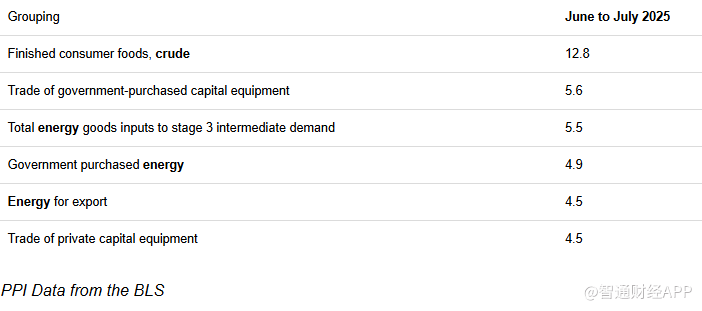
Grouping 1 - The Jackson Hole Global Central Bank Conference in 2025 will focus on the labor market amidst transformation, with Fed Chair Jerome Powell likely addressing inflation, rising producer prices, and a weak job market [1] - The Producer Price Index (PPI) rose by 0.9% month-over-month in July, with service prices increasing by 1.1%, marking the largest increase since March 2022 [1][2] - Companies like Nike and Adidas are raising prices to offset additional tariff-related costs, indicating a trend among large retailers to pass on costs to consumers [4] Grouping 2 - The Consumer Price Index (CPI) increased by 0.2% month-over-month in July, with a year-over-year increase of 2.7%, driven by rising energy service prices [5] - The energy sector has seen significant price fluctuations, with companies like Talen Energy and Vistra Energy experiencing substantial year-to-date price increases [5] - The employment market remains weak, with only 73,000 non-farm jobs added in July, and adjustments to previous employment data leading to concerns about future job reports [8][9] Grouping 3 - Powell may discuss the impact of artificial intelligence on the labor market, as major tech companies have made significant layoffs while investing heavily in AI [12] - The market anticipates a 90% probability of a 25 basis point rate cut by the Fed in September, which could benefit small-cap stocks most affected by tariffs [13]
美国通胀压力回来了?PPI大超预期,9月降息悬了
Sou Hu Cai Jing· 2025-08-15 08:31
Group 1 - The core point of the article is the significant increase in the U.S. Producer Price Index (PPI) for July, which saw its largest rise in three years, with a year-on-year increase of 3.3% compared to 2.3% in June, and a month-on-month increase of 0.9%, far exceeding market expectations of 0.2% [1][3] - The core PPI, excluding food and energy, also rose sharply, with a year-on-year increase of 3.7%, the highest since February, and a month-on-month increase of 0.9%, the highest since April 2022 [3][5] - The surge in PPI has led to a decline in U.S. stock index futures, with the Nasdaq futures down 0.36%, S&P 500 down 0.35%, and Dow futures down 0.29%, while the dollar index rose by 0.21% [3][5] Group 2 - A key driver of the PPI increase is the rise in service costs, which increased by 1.1% in July, the largest increase since March 2022, and wholesale and retail profit margins jumped by 2% due to mechanical equipment wholesale [3][5] - The article highlights that the increase in PPI has dampened expectations for a rate cut by the Federal Reserve in September, as traders are now less confident in the likelihood of a rate cut due to the unexpected inflation data [5][6] - There is a lack of consensus among Federal Reserve officials regarding interest rate cuts, with some advocating for caution until inflation is fully under control, while others support immediate cuts [6][8]

每日机构分析:8月14日
Xin Hua Cai Jing· 2025-08-14 13:56
Group 1 - BNP Paribas suggests that the European Central Bank (ECB) may raise interest rates in Q4 2025, viewing it as a "recalibration" of the neutral rate due to fiscal policies offsetting tariff drag [1] - Rabobank analysts express a more pessimistic outlook for Eurozone growth and inflation, predicting that deposit rates will remain unchanged until the end of 2027 [2] - Goldman Sachs believes the ECB's rate-cutting cycle has ended, forecasting that rates will remain stable for an extended period [2] Group 2 - Santander Bank analysts note that the UK's GDP growth of 0.3% in Q2 exceeded expectations, indicating that concerns over employment weakness may be overstated, supporting the Bank of England's decision to keep rates unchanged [3] - The Dutch International Bank highlights that the UK's GDP growth was primarily supported by government consumption and inventory, while household consumption and business investment showed significant weakness [3] - Monex Europe analysts point out that the Norwegian central bank's decision to maintain rates and signal caution on rate cuts supports the krone, despite short-term influences from risk sentiment and oil price fluctuations [3]
新增社融连续8个月同比多增,金融支持实体经济力度较大
Xin Lang Cai Jing· 2025-08-13 13:06
Core Insights - The People's Bank of China reported that in the first seven months of this year, RMB loans increased by 12.87 trillion yuan, which is a decrease of 660 billion yuan compared to the same period last year [1] - The total social financing scale increased to 23.99 trillion yuan, which is an increase of 5.12 trillion yuan year-on-year [1] - In July, RMB loans decreased by 50 billion yuan, marking the first negative growth since August 2005 [1] - New social financing in July was 1.16 trillion yuan, an increase of 389.3 billion yuan year-on-year, continuing a trend of year-on-year growth for eight consecutive months [1] Group 1: Loan and Financing Trends - Analysts attribute the weak credit performance in July to factors such as overdraft effects, local government hidden debt replacement, and adjustments in the real estate market [1] - The loan balance at the end of July showed a year-on-year growth of 6.9%, significantly higher than the nominal economic growth rate, indicating stable support from credit to the real economy [1] - The average new loan amount for June and July combined was approximately 1.1 trillion yuan, which is consistent with the previous year's average of 1.2 trillion yuan, suggesting stable credit performance when smoothing out short-term effects [1][2] Group 2: Monetary Policy and Economic Support - The increase in social financing in July was primarily supported by government bond financing, indicating a significant scale of hidden debt replacement [2] - Analysts emphasize the importance of monitoring broader financial indicators such as social financing scale and M2, which provide a more comprehensive view of financial support for the real economy [2] - As of the end of July, M1 grew by 5.6% year-on-year, and M2 grew by 8.8%, both showing an acceleration in growth rates compared to the previous month [2] Group 3: Future Outlook and Policy Measures - Analysts expect that after the short-term disturbances from overdraft effects diminish, new credit in August will return to positive values, with social financing remaining at a high level [2][3] - The introduction of new personal consumption loan subsidies is anticipated to lower borrowing costs for residents, potentially stimulating credit demand [3] - The central bank's recent actions to lower interest rates on new corporate loans to approximately 3.2% and personal housing loans to about 3.1% reflect a commitment to maintaining a supportive monetary policy stance [3][4]
澳联储如期降息25基点 澳元持稳静待后续政策路径
Jin Tou Wang· 2025-08-13 03:59
澳元兑美元日线图显示出明显的盘整走势特征。汇价目前运行在一个相对狭窄的横盘通道内,上方面临 0.6607的阻力位,下方则获得0.6429的支撑。布林带指标显示波动率处于收缩状态,上轨位于0.6607, 下轨在0.6429,中轨维持在0.6518附近,表明市场正处于整理阶段。MACD指标呈现微弱的负面信号, 差值为-0.0006,DEA值同样为-0.0006,MACD柱状图接近零轴,显示动量缺乏明确方向性。这种状态 反映出多空双方力量相对均衡,市场缺乏强烈的趋势性特征。 澳洲联储政策委员会一致决定将指标利率下调25个基点至3.60%,这是两年来的低点,也是七个月来的 第三次降息。利率期货显示,在9月下一次会议上进一步放松政策的可能性仅为三分之一,大多数分析 师认为澳洲联储将选择等待10月底发布的第三季通胀数据,然后再决定是否在11月采取行动。凯投宏观 亚太经济部主管MarcelThieliant称,澳洲联储重申了其'对前景保持谨慎'的观点,这表明澳洲央行将保 持每季度仅有一次放松政策,"凯投宏观亚太经济部主管MarcelThieliant称,最重要的是,央行的经济预 测支持市场对其进一步宽松的预期,我们认为它最 ...
澳洲联储利率决策悬念迭起 澳元波动风险加剧
Jin Tou Wang· 2025-08-12 04:08
今年以来的高点0.6625(7月24日)仍是下一个阻力位,随后是2024年11月7日的高点0.6687,再往上则 是0.7000这一心理关口。支撑位方面,8月1日的低点0.6418是首要支撑,其下方是200日均线0.6389以及 6月23日的低点0.6372。 周二(8月12日)亚市早盘,澳元兑美元上涨,目前交投于0.65附近,截止北京时间11:14分,澳元/美元 报价0.6523,上涨0.16%,上一交易日澳元/美元收盘报0.6512。 这种政策沟通模式的转变,已使央行决策风险从短期波动因素演变为影响澳元的系统性风险源。在缺乏 明确政策信号的情况下,澳元汇率对市场情绪的敏感度明显提升,波动幅度可能进一步扩大。为应对这 一变化,市场参与者正逐步转向数据驱动的交易策略,通过密切跟踪通胀、就业等关键经济指标来预判 政策走向。这种转变也使得澳元资产的价格发现机制面临新的挑战。 澳洲联储取消前瞻性政策指引的举措,正显著加大市场对利率政策预判的难度。7月意外维持利率不变 的决策曾引发澳元短线急涨,这一案例凸显了政策不确定性带来的市场风险。当前环境下,若澳洲联储 再次意外按兵不动,可能推动澳元短线快速反弹;反之,若出台超 ...