美元信用

Search documents
精卫填“海”系列(十二):金价飙升下的两大隐患:稳定币与浅衰退
Tebon Securities· 2025-04-28 12:02
Group 1: Dollar Credit Impact on Gold Prices - The increasing fiscal pressure and concerns over Federal Reserve independence are undermining dollar credit, accelerating gold price increases. As of April 22, 2025, gold prices surged to $3,400-$3,500 per ounce, with key ratios like gold-silver, gold-copper, and gold-oil breaking historical thresholds[6][11] - The total U.S. public debt reached $36.2 trillion by the end of March 2025, with interest payments accounting for over 13% of fiscal expenditures in 2024[6] - The market is witnessing a "triple kill" of dollar assets (stocks, bonds, and currency), leading to a flight to gold as a traditional currency anchor[6] Group 2: Risks from Stablecoin Issuance - The recent GENIUS Act passed by the U.S. Senate on March 13, 2025, is expected to boost stablecoin issuance from $230 billion to $2 trillion by the end of 2028, creating $1.6 trillion in new demand for short-term Treasury bills[3][27] - Stablecoins like USDT and USDC are becoming widely used for cross-border payments, with USDT's market cap at approximately $147 billion and USDC at around $62 billion as of April 27, 2025[14][18] - The issuance of stablecoins may counteract the current sell-off in U.S. Treasuries, potentially leading to a risk of gold price corrections as dollar credit stabilizes[27] Group 3: Signs of Shallow Recession in the U.S. - The U.S. economy is showing signs of weakening, with the unemployment rate at 4.2% in March 2025 and a significant decline in consumer confidence as indicated by the Michigan Consumer Sentiment Index[28][29] - As of April 23, 2025, 27% of S&P 500 companies have downgraded their earnings expectations for 2025, while only 9% have raised them, indicating a bearish outlook[28] - The likelihood of a recession in Q2 2025 is increasing, driven by significant corrections in U.S. asset prices, impacting household wealth[28] Group 4: Federal Reserve's Interest Rate Outlook - The market anticipates a high probability of a 100 basis point rate cut in 2025, with the next cut expected in June, as indicated by the CME model[32][34] - The March FOMC dot plot showed a majority of committee members favoring a 50 basis point cut in 2025, suggesting a shift in monetary policy to address economic concerns[32][37] - Trump's recent statements indicate a potential easing of tensions with the Federal Reserve, which may stabilize market expectations regarding dollar credit[32] Group 5: Risk Factors - Potential risks include Trump's fluctuating statements, unexpected rebounds in overseas inflation, and the U.S. economy maintaining stability, which could all impact the outlook for gold prices and dollar credit[39]
经济知识问答|为什么市场抛售会推高美债收益率
Sou Hu Cai Jing· 2025-04-23 13:14
新华社北京4月23日电 经济知识问答|为什么市场抛售会推高美债收益率 新华社记者宿亮 曹筱凡 2024财年,美国政府的利息支出已超过1万亿美元,占GDP约4%,占全年财政收入比例超过22%,也就 是说政府收入近四分之一要拿去付利息。这种背景下,美国政府信用动摇导致票面利率不断提高,会继 续推高美国财政负担。 当美国政府信用动摇时,美国联邦储备委员会作为美债的"最后保险人"会出资增持美债,相当于向市场 增发美元,这实际上就是"财政赤字货币化"。 债券价格和收益率的关系涉及几个概念:发行价、到期价、市场价、票面利率。 根据圣路易斯联储银行的数据,截至2024年第四季度,美联储持有的美国政府债务总额为4.6万亿美 元。这笔钱是美联储和美国联邦政府通过左手倒右手"制造"出来的现金。从2019年开始,美联储持有的 美债规模显著增长,显示近年来美联储不得不增发更多货币才能稳定美债收益率,由此不断削弱美元信 用。(完) 举例来说,一张债券发行价为100美元,到期价为105美元,那么票面利率就是5%。不过,这个5%的票 面利率并不等于收益率,因为债券可以上市交易,在到期前根据供求关系涨价、降价。交易过程中,如 果购买者以10 ...
川普要跪?
小熊跑的快· 2025-04-23 01:03
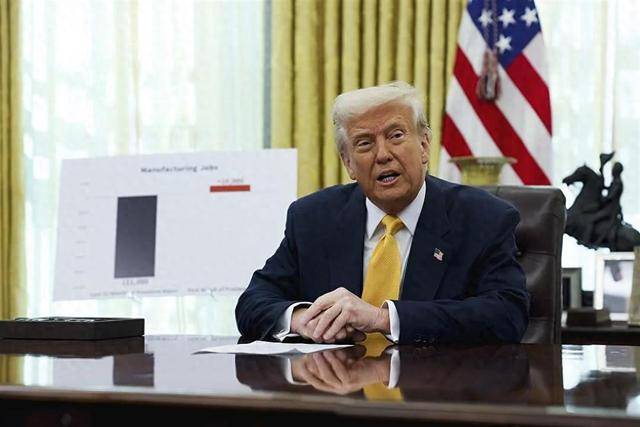
Core Viewpoint - The article discusses the potential easing of trade tensions between the U.S. and China, highlighting recent statements from Trump and other officials that suggest a shift in policy direction towards more constructive negotiations [1]. Group 1: Trade Relations - Trump expressed a desire for the U.S.-China trade war to be unsustainable, indicating that both sides do not view the current situation as viable [3]. - Bessent stated at a private investor summit that the trade war is not sustainable and that negotiations with China may be a "hard battle" but are necessary [3]. Group 2: Monetary Policy - Trump called for the Federal Reserve to lower interest rates and expressed no intention to dismiss Fed Chairman Powell, urging for more proactive measures regarding interest rates [2]. - The White House Press Secretary Levitt mentioned that Trump wants the U.S. dollar to maintain its status as the world's reserve currency [4]. Group 3: Market Reactions - Following these statements, the U.S. dollar and stock market experienced a rebound, with futures continuing to rise post-market [1]. - The article suggests that with the current high tariffs and effective embargoes, the situation may only improve from here, hinting at potential investment opportunities [1].

川普要跪?
小熊跑的快· 2025-04-23 01:03
2. 特朗普称美联储应该降低利率,且他无意解雇美联储主席鲍威尔,还表示希望鲍威尔在利率问题上采取更加积极的行动 3. 贝森特周二在华盛顿特区由摩根大通主办的私人投资者峰会上表示,与中国的贸易战是不可持续的,"没有人认为目前的现状 是可持续的",贸易战局势可能会在 "不久的将来" 缓和。他还坚称,特朗普政策的目标 "不是脱钩",但与中国谈判可能是 "一 场艰苦的战斗",双方都 "不认为现状是可持续的"。 4. 2025 年 4 月 23 日,美国白宫新闻秘书莱维特表示,特朗普希望美元继续保持世界储备货币地位。 以上回应了近期大家关注的中美关税,美元信用,联储独立性,安抚意味浓厚。 美元,美股即刻反弹,盘后期货继续涨;目前中美高关税实质禁运的前提下,已经没有更差了,置之死地而后生,过程肯定是曲 折的,后面只会越来越来好,有没有被错杀的机会? 1. 川普发表关税缓和言论,抛出橄榄枝: ...
戴康:对等关税强化新范式底层逻辑,黄金再创新高
戴康的策略世界· 2025-04-21 07:46
01 再创新高,黄金近期为何大涨? 回顾黄金的定价框架: ①金融属性:10Y美债实际利率作为持有黄金的机会成本,与黄金价格显 著负相关。②避险属性:金融、经济、地缘政治出现大幅波动或危机时往往提升黄金避险需求,带来 风险溢价。③货币属性:黄金对美元体系有一定的替代性,美元信用削弱将利好黄金。 自我们24年初提示黄金配置机会以来,金价屡创新高! 近期,由于市场对美国经济前景的担忧日 益加剧,特别是随着特朗普政府可能实施的破坏性贸易政策引发市场不确定性,黄金作为避险资产的 需求显著增加。 戴康 CFA 广发证券发展研究中心 董事总经理、首席资产研究官 邮箱:daikang@gf.com.cn 法律声明 请向下滑动参见广发证券股份有限公司有关微信推送内容的完整 详见:24.3.1 《 债务周期下的资产配置-避险资产篇——"债务周期大局观"系列(四) 》 24.7.17《 金价再创新高,还有上车机会吗?》 24.9.13 《 黄金、利率债双双新高之际 》 24.10.23 《 金价再创新高,坚定"黄金信仰"! 》 25.1.31 《戴康:黄金为何是新投资范式的基石配置 ? 》 25.3.15 《戴康:黄金破3000之 ...
鲍威尔,可能真的被“炒掉”!
Sou Hu Cai Jing· 2025-04-20 06:49
Core Viewpoint - The conflict between President Trump and Federal Reserve Chairman Powell is evolving from a verbal dispute into a systemic crisis, challenging the independence of the Federal Reserve and the credibility of U.S. monetary policy [1][5]. Group 1: Political Dynamics - Trump has publicly criticized Powell, calling him "slow and incompetent," and has suggested that he could easily replace him if desired [1][3]. - The White House is reportedly exploring the possibility of replacing Powell, with former Fed governor Kevin Walsh as a potential successor [1][5]. - This power struggle is not merely about policy differences but poses a broader challenge to the independence of the Federal Reserve and the stability of the global financial system [1][8]. Group 2: Powell's Position - Powell, appointed by Trump, has maintained the Fed's traditional independence and has resisted political pressure to implement monetary easing [3][6]. - His commitment to data-driven policy adjustments, especially in the context of ongoing inflation and high interest rates, has frustrated Trump, who seeks a more compliant monetary policy to support his re-election efforts [3][6]. - The potential removal of Powell could set a dangerous precedent, undermining the Fed's operational independence and transforming it into a political tool [5][8]. Group 3: Economic Implications - Trump's economic policies, including tax cuts and trade wars, have contributed to inflation and economic instability, which he now attributes to Powell's actions [6]. - Economists and market participants largely support Powell, warning that political pressure on the Fed could lead to higher inflation and unemployment [6][8]. - The credibility of the Fed, built on its commitment to non-political decision-making, is at risk if the independence of the institution is compromised [6][8].
国泰海通宏观|全球货币变局:美元会崩溃吗?
2025-04-15 14:30
Summary of Conference Call Industry or Company Involved - The discussion revolves around the global monetary system and its implications, particularly focusing on the U.S. dollar and its long-term trends. Core Points and Arguments 1. **Global Monetary Changes**: The global supply chain and asset pricing are undergoing significant changes due to shifts in the economic and monetary systems, driven by changes in trust among countries [1][2][3]. 2. **Dollar's Long-term Outlook**: Despite recent volatility, the long-term risk of a collapse of the U.S. dollar is considered low, as it is fundamentally supported by the stability of the U.S. economy [3][4]. 3. **Trust Crisis**: Recent market reactions indicate a trust crisis in the dollar rather than a liquidity crisis, with concerns about the dollar's creditworthiness affecting its value [2][3]. 4. **Trade Dynamics**: The U.S. aims to bring manufacturing back, but it is unlikely that most manufacturing will return to the U.S. in the short term. Third-party countries like Southeast Asia and Mexico may not quickly replace China's production capabilities [5][6]. 5. **Long-term Trade Trends**: Since 2018, the direct export of goods from China to the U.S. has been declining, with more goods being routed through third countries. This trend is expected to continue, albeit slowly [7][8]. 6. **Impact of U.S. Policies**: The uncertainty surrounding U.S. policies, particularly under the Trump administration, could further affect the dollar's credibility and the global trade system [4][9][24]. 7. **Nature of Currency**: The essence of paper currency is likened to government bonds, relying on trust in the issuing government. The dollar's status as a global currency is under scrutiny due to geopolitical tensions [10][13]. 8. **De-dollarization Trends**: Countries are beginning to reduce their reliance on the dollar, especially those with unstable relations with the U.S. This trend may lead to a diversification of currency reserves [14][18]. 9. **Gold as an Alternative**: There is a growing trend among countries to increase their gold reserves as a hedge against dollar dependency, especially in light of geopolitical uncertainties [19][22]. 10. **Market Reactions**: The relationship between the dollar's actual interest rates and gold prices has changed, with gold prices rising even as dollar interest rates increase, indicating a shift in investor sentiment [20][21]. 11. **Future Outlook**: The potential for a significant decline in the dollar's credibility exists, particularly if U.S. policies continue to disrupt global trade. This could lead to a reevaluation of asset pricing frameworks [27][30]. Other Important but Possibly Overlooked Content 1. **Historical Context**: The discussion references historical instances of currency trust issues, such as the reliance on gold before World War II, highlighting the cyclical nature of trust in currencies [11][12][21]. 2. **Economic Interdependence**: The interconnectedness of global economies means that actions taken by the U.S. can have far-reaching effects on other nations' economic strategies and currency choices [25][26]. 3. **Investment Strategies**: Investors are advised to consider the implications of these trends on their asset allocations, particularly in light of the changing dynamics of currency trust and trade relationships [31][35]. This summary encapsulates the key insights from the conference call, focusing on the evolving landscape of global monetary systems and the implications for the U.S. dollar and international trade.
疯王与关税
雪球· 2025-04-13 04:07
Group 1 - The article discusses the basic principles of trade, emphasizing that trade surplus is a means while trade deficit is an end goal, ultimately for spending money [2] - It highlights that in international trade, the U.S. has maintained a trade deficit for decades, which is unsustainable in the long run [7][10] - The article points out that the U.S. dollar's status as the world's reserve currency allows the country to print money and maintain a trade deficit, but this creates a looming risk if the dollar's credibility is questioned [8][10] Group 2 - The article argues that the U.S. faces two major problems: the credibility of the dollar is under scrutiny, and the manufacturing sector is being pressured by global competition, particularly from China [10][13] - It suggests that the current administration's contradictory policies aim to maintain the dollar's international status while also seeking a trade surplus, which is inherently impossible [15] - The article emphasizes that high tariffs may increase trade friction costs but will not necessarily lead to the intended outcomes due to issues like transshipment and smuggling [18][19] Group 3 - The article discusses the implications of rising U.S. Treasury yields, noting that a sudden increase could lead to higher borrowing costs for companies and potentially trigger widespread bankruptcies [26][27] - It warns that a significant drop in Treasury prices could undermine the dollar's credibility, leading to a feedback loop where countries start selling off U.S. debt [29][30] - The article concludes that investors should focus on valuation rather than being swayed by political rhetoric, as the complexities of the global economy are far more significant than any single political figure [20][21]

贸易战加剧美元信用崩塌风险
Zheng Quan Shi Bao· 2025-04-10 18:10
美债遭遇史诗级抛售后的美国政府表态,突出了当前政策的不确定性,这对美元信用是一个沉重打击, 市场也势必重新对美元信用计价。甚至有市场观点认为,继1971年美元与黄金脱钩以来的历史转折点或 在不远的将来。 美国对冲基金大佬达利欧的最新警告引发市场震动:"如果美国政府不立刻削减赤字,3年内必爆债务危 机。"这一预言背后是美债持有结构的深刻变化——传统机构投资者(外国央行、美国本土银行、美联 储)集体撤退,而风险承受力更弱的高风险"游资"正在接盘。 这种持有者结构的变化,显示不同市场主体对美元资产的不同态度。主要以对冲基金为主的私人资本追 逐美债高收益率和套利机会,特别是2022年美联储缩表以来,美国对冲基金(尤其是多策略平台基金) 成为美债最大的边际买家,而主权基金则倾向于规避风险,外国投资者持有美债比例已从2015年峰值 43%降至2024年的27%。 4月8日,美国3年期国债拍卖结果出炉,结果不理想,作为衡量美国国内需求的指标,美国境内投资者 获配比例为6%出头,是历史最低纪录之一。这显示,作为过去市场增量的私人资本,在"股债汇三 杀"的风险里,推升了美债流动性危机,暴露了美元信用体系的结构性脆弱。 近日美债 ...
戴康:黄金破3000之际!
戴康的策略世界· 2025-03-15 07:48
Group 1 - The core viewpoint of the article emphasizes the recent surge in gold prices, driven by increased demand for gold as a safe-haven asset amid growing concerns about the U.S. economic outlook and potential disruptive trade policies from the Trump administration [1][3]. - The pricing framework of gold is outlined, highlighting its financial attributes, safe-haven characteristics, and monetary properties, which are significantly influenced by factors such as the 10Y U.S. Treasury real interest rates and the weakening of the U.S. dollar's credit [1]. - Since the beginning of 2024, the company has consistently suggested opportunities for gold allocation, noting that gold prices have reached new highs [1]. Group 2 - The article discusses the long-term outlook for gold, suggesting that ongoing concerns regarding U.S. debt and geopolitical risks will continue to support gold prices, reinforcing the belief in gold as a sovereign credit alternative [3]. - The demand for gold from central banks is mentioned as a supportive factor for gold prices in the medium to long term, alongside the potential erosion of U.S. dollar credit due to debt issues [3].