
人工智能

Search documents
通信行业周报:光模块:1.6T放量在即,上游再趋紧
GOLDEN SUN SECURITIES· 2026-03-29 10:24
Investment Rating - The report maintains a "Buy" rating for key companies in the optical module sector, specifically recommending companies like Zhongji Xuchuang and Xinyi Sheng [13]. Core Insights - The 1.6T optical module is entering a phase of large-scale release in 2026, with upstream core components (DSP, EML, silicon photonics capacity, and isolators) facing a tightening supply situation [22][28]. - The DSP market is dominated by a duopoly of Broadcom and Marvell, with advanced process capacity becoming a bottleneck due to high demand from AI chips [23][28]. - EML chips are primarily led by overseas companies like Sumitomo, while domestic firms are accelerating to fill the supply gap [24][27]. - The silicon photonics sector is seeing increased penetration, with a diverse design landscape and critical reliance on foundry capacity [25][28]. - Isolators are becoming a hidden bottleneck in the delivery of high-speed optical modules due to their essential role in preventing damage from reflected light [26][32]. Summary by Sections Optical Module Market - The 1.6T optical module is set for large-scale production, driven by the evolution of AI computing clusters towards higher density [22]. - Supply constraints are emerging for core components, particularly DSPs, which are critical for high-speed signal recovery [28]. DSP Market - The DSP market is characterized by a duopoly, with Broadcom and Marvell controlling the majority of the supply for 1.6T DSPs [23]. - Advanced process nodes (5nm and 3nm) are creating significant barriers to entry, with TSMC's capacity being heavily allocated to AI chip production [23][28]. EML Market - The EML chip market is currently dominated by Japanese firms, but domestic companies are rapidly advancing to meet the growing demand [24][27]. Silicon Photonics - The silicon photonics segment is experiencing accelerated growth due to its high integration and cost advantages, with a focus on both design and foundry capabilities [25][28]. Isolators - Isolators are becoming increasingly critical in high-speed optical modules, with their production facing challenges due to material dependencies and manufacturing complexities [26][32]. Investment Recommendations - The report suggests focusing on companies within the optical module supply chain, particularly those with strong capabilities in silicon photonics and EML production, such as Zhongji Xuchuang and Xinyi Sheng [10][16].
北美电网扩容投资将超750亿美元,中国电力设备迎机遇期【投资前瞻3.30—4.3】
和讯· 2026-03-29 09:30
Macro and Financial - The draft of the Financial Law of the People's Republic of China is open for public consultation, marking a significant upgrade for the insurance industry with a focus on coordinating regulations across various financial sectors [2][3] - China's average daily token usage has surpassed 140 trillion, indicating a rapid growth and the emergence of a new value system in the AI industry, driven by the marketization of data elements [4] - The central government disclosed childcare subsidy funds for 31 provinces for the first time, with amounts ranging from 4 billion to 5 billion yuan for several provinces, reflecting the implementation of a new subsidy system for children under three years old [5] Capital Market - Rising energy prices have led to stagflation expectations, prompting central banks to reconsider interest rate hikes, which could negatively impact major asset classes [6] - The U.S. stock market has experienced significant declines while oil prices have surged, indicating a potential turning point in financial markets as investors shift focus from short-term inflation fears to long-term economic stagnation concerns [9] - The World Gold Council has noted a significant drop in gold prices, reminiscent of the 2008 and 2020 crises, with rising bond yields exerting pressure on gold [10] Industry Insights - Huawei's head of the Pangu model has announced his departure, potentially to pursue entrepreneurship in the AI sector [13] - The International Energy Agency (IEA) has issued recommendations for oil conservation in response to global supply disruptions, emphasizing behavioral changes rather than large-scale infrastructure investments [14] - China Telecom is transitioning to a token-based business model, aiming to integrate technology and talent to enhance AI service offerings [15] - Hanwang Technology's chairman discussed the future of bionic flight technology, emphasizing its potential applications in various sectors [16][17] - A report from Dongwu Securities highlights that the U.S. power investment is driven by the need for high-voltage infrastructure, with expectations of over $75 billion in investments in the next 5-10 years, benefiting Chinese power equipment manufacturers [18]


管涛:能源供给冲击重塑全球央行政策路径|政策与监管
清华金融评论· 2026-03-29 09:30
Core Viewpoint - The article analyzes the impact of geopolitical conflicts, particularly the ongoing Israel-Iran conflict, on global monetary policy and economic conditions, highlighting the challenges faced by central banks in balancing growth and inflation control [2][3]. Group 1: U.S. Federal Reserve's Dilemma - The Federal Reserve is caught in a dilemma between employment and inflation risks, with internal divisions persisting regarding interest rate decisions [5]. - The Fed's recent meeting maintained the federal funds rate target range at 3.50% to 3.75%, indicating uncertainty about the economic impact of the Middle East situation [6]. - Fed Chair Powell signaled a hawkish stance, stating that rate cuts would not be considered until inflation shows further improvement [7]. Group 2: European Central Bank and Bank of England's Policy Shifts - The European Central Bank (ECB) has maintained key interest rates but acknowledged increased uncertainty in the eurozone economic outlook due to geopolitical tensions, leading to upward revisions in inflation forecasts [10][11]. - The Bank of England (BoE) has shifted its stance, removing previous indications of potential rate cuts and signaling readiness to act to keep inflation within target [12][13]. Group 3: Bank of Japan's Position - The Bank of Japan (BoJ) held its benchmark rate at 0.75%, with internal divisions on the need for rate hikes, as inflation risks are perceived to be rising due to global tensions [15][16]. - The BoJ's focus on the Middle East situation highlights its potential impact on Japan's economic outlook and inflation levels [16]. Group 4: Energy Prices and Economic Risks - The ongoing Israel-Iran conflict has led to significant volatility in energy markets, with predictions of Brent crude oil prices reaching $110 per barrel, reflecting a 62% increase from previous forecasts [19]. - The article warns of potential stagflation risks as high energy prices could suppress economic growth and complicate monetary policy responses from central banks [21]. Group 5: Asset Pricing and Market Reactions - Financial markets are currently pricing in inflation shocks while overlooking the adverse effects of high energy costs on economic growth [22]. - Since the conflict began, commodity prices have shown significant divergence, with Brent crude oil prices rising by 65% while gold prices have dropped by 15.2% [22].

国资彻底退出,华为亲儿子最大变数来了!
商业洞察· 2026-03-29 09:21
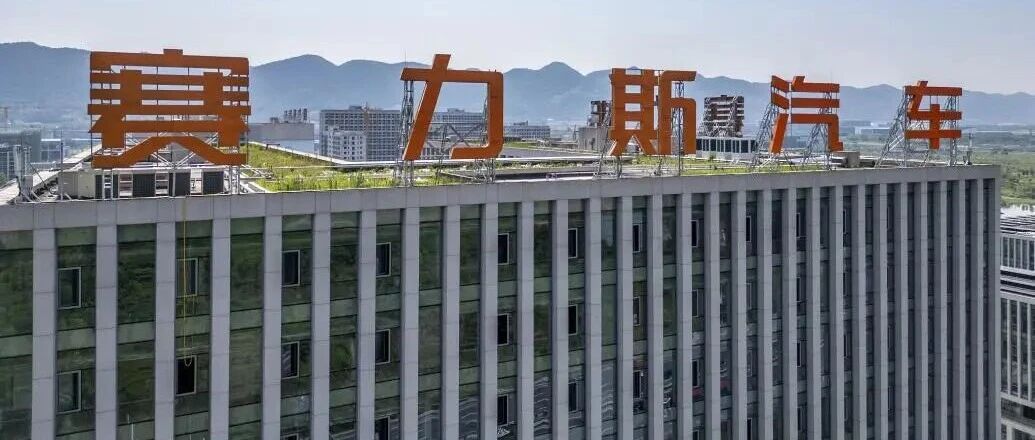
Core Viewpoint - The recent complete acquisition of Chongqing Blue Electric Vehicle Technology Co., Ltd. by Seres Group marks a significant shift in the company's strategy, moving from a partnership with state-owned enterprises to full ownership, which may have implications for its financial performance and future direction [3][6][19]. Group 1: Shareholder Changes - Chongqing Blue Electric's two major state-owned shareholders, Chongqing Qingfeng and Chongqing Yard Investment, have completely exited, allowing Seres to increase its stake from 35% to 100% [3][5]. - The management team associated with the state-owned enterprises has also left, indicating a full return to Seres' control [5][8]. Group 2: Market Performance and Strategy - Blue Electric, a sub-brand of Seres targeting the mid-range new energy market, has shown disappointing sales, with projections of 34,000 units in 2024, dropping to 26,000 in 2025, and only 4,000 in the first two months of 2026 [9][11]. - Despite the low sales figures, the strategic value of Blue Electric lies in its subsidiary, Chongqing Phoenix Technology, which focuses on AI and smart driving technologies, crucial for the future of the automotive industry [11][12]. Group 3: Financial Implications - The exit of state-owned enterprises means that Seres will now bear all operational losses and debt risks associated with Blue Electric, which could negatively impact its overall financial health if losses continue [12][14]. - Seres' stock price has declined over 40% since reaching a peak in October 2025, reflecting market concerns about its financial stability amid increasing competition and operational pressures [14][19]. Group 4: Long-term Outlook - While the immediate financial outlook may be challenging due to the full acquisition, this move allows Seres to streamline operations and focus on developing core technologies without external constraints [19][20]. - The automotive industry is undergoing a transformation where companies with self-developed technologies will thrive, while those reliant on external capital may struggle [19][20].

【广发宏观团队】应该如何度过“贝叶斯定价”的阶段?
郭磊宏观茶座· 2026-03-29 09:14
Core Viewpoint - The article discusses the "Bayesian pricing" phase in global markets, particularly in relation to oil prices and geopolitical uncertainties, emphasizing the need for dynamic adjustments in investment strategies based on evolving information and market conditions [1][5]. Group 1: Investment Strategies During Bayesian Pricing - Investors should avoid overcommitting to a single scenario and instead adopt a balanced asset allocation approach, considering the strengths of various asset classes amid geopolitical uncertainties [2][3]. - Utilizing volatility for contrarian positioning is advised, as market reactions to fragmented news can create opportunities for reverse trades when assets deviate from their intrinsic values [3]. - Focusing on low-correlation assets can reduce reliance on geopolitical cues, allowing for investment in sectors like industrial exports from developing countries and essential consumer goods benefiting from income growth [4]. Group 2: Market Dynamics and Asset Performance - Global markets are experiencing a "Bayesian pricing" mode, with oil prices fluctuating around $100 per barrel, leading to inflationary trading patterns and adjustments in stock indices [5][6]. - The S&P Global Flash PMI indicates a slowdown in U.S. growth momentum, with employment metrics showing contraction, suggesting a potential stagflation scenario [16][18]. - Commodity prices are adjusting in response to high oil prices and inflation, with gold and oil showing a positive correlation, while other sectors like technology are facing downward pressure [8][30]. Group 3: Economic Indicators and Forecasts - The article highlights expectations for CPI and PPI, with projections indicating slight increases in both metrics due to ongoing inflationary pressures and commodity price fluctuations [20][22]. - The construction sector is showing mixed signals, with infrastructure projects seeing increased cement supply, while residential construction lags behind [27]. - The article notes that the Chinese economy is expected to maintain a relatively stable growth trajectory, with GDP forecasts suggesting a nominal growth of 5.47% for Q1 [20].

铜箔行业专题报告:高端锂电+PCB产品放量,铜箔行业迎来量利上行期
HUAXI Securities· 2026-03-29 08:42
Investment Rating - Industry Rating: Recommended [5] Core Insights - The lithium battery copper foil market is expected to see rapid growth, with shipments projected to reach 940,000 tons in 2025, a year-on-year increase of 36%, and further growth to 1,150,000-1,200,000 tons in 2026, exceeding 20% year-on-year [1][9] - The trend towards ultra-thin copper foil is clear, driven by cost optimization and performance enhancement needs, with the proportion of ultra-thin products (5/4.5μm) expected to rise to 25% in 2025 and 50% in 2026 [1][13] - The PCB copper foil market is also expanding, with the global market size projected to grow from 47.7 billion yuan in 2024 to 71.7 billion yuan in 2029, at a compound annual growth rate (CAGR) of 8.5% [3][35] Summary by Sections Lithium Battery Copper Foil - Demand is on the rise, with significant growth in shipments expected due to the expanding downstream demand from the power and energy storage sectors [1][9] - The high copper prices have led to a strong demand for cost reduction, with a notable reduction in copper usage and costs when using 4.5μm products compared to 6μm [12][17] - The industry is experiencing a tightening supply-demand balance, with limited capacity expansion and a concentration of market share among leading manufacturers, as evidenced by the CR5 market share increasing to 45.8% in 2025 [23][27] Electronic Circuit Copper Foil - The demand for high-frequency and high-speed PCB copper foil is robust, driven by advancements in AI computing, electrification, and consumer electronics [3][31] - The global market for AI and high-performance computing PCB copper foil is expected to grow significantly, with a projected CAGR of 36.1% from 2024 to 2029 [35][36] - Domestic manufacturers are actively positioning themselves in the high-end PCB copper foil market, which is characterized by high processing fees and stringent performance requirements [3][55] Investment Recommendations - The copper foil industry is identified as a capital-intensive sector with high raw material costs, leading to limited capacity expansion in the early stages [4][57] - The anticipated rapid growth in demand for power and energy storage batteries is expected to tighten supply and increase processing fees, enhancing profitability for suppliers [4][58] - Recommended stocks benefiting from these trends include Nord Technology, Tongguan Copper Foil, Zhongyi Technology, Defu Technology, and Jiayuan Technology [58]



贝索斯募了一只“捡尸基金”
投中网· 2026-03-29 08:33
Core Viewpoint - The article discusses the controversial implications of artificial intelligence (AI) on the manufacturing industry, particularly focusing on Jeff Bezos's new $100 billion fund aimed at acquiring and automating companies affected by AI disruption [4][10][15]. Group 1: Bezos's New Fund and Its Purpose - Jeff Bezos is reportedly raising a $100 billion fund to acquire manufacturing companies severely impacted by AI, intending to transform them into fully automated and intelligent factories [4][10]. - The fund is part of the "Project Prometheus," which aims to apply AI to the physical economy, focusing on sectors like aerospace and automotive [6][10]. - The initial financing round for Project Prometheus raised $6.2 billion, with a team of over 100 employees, primarily from leading AI firms [6][7]. Group 2: Historical Context and Criticism - The article draws parallels between the current AI revolution and the Industrial Revolution, highlighting the potential for significant societal changes and disruptions [12][21]. - Critics, including political figures like Bernie Sanders, argue that Bezos's fund represents a threat to workers, as it aims to replace human labor with robots in manufacturing [15][17]. - Concerns are raised about the concentration of power in the hands of a few capitalists who could dictate production and labor organization across multiple industries, potentially leading to a "shadow government" scenario [19][21]. Group 3: The Luddites and Modern Implications - The historical Luddites, who protested against the Industrial Revolution's impact on their livelihoods, are referenced to illustrate the potential for similar movements in response to AI advancements [13][22]. - The article suggests that while technology progresses, the societal implications and the fate of workers remain unresolved questions that need addressing [21][22]. - It emphasizes the need for transparency and accountability from companies like Project Prometheus, which could reshape industrial systems without sufficient public oversight [19][21].

安科瑞:26年业绩有望迎加速拐点-20260329
HTSC· 2026-03-29 07:45
Investment Rating - The report maintains a "Buy" rating for the company with a target price of RMB 37.50 [7][5]. Core Views - The company is expected to see accelerated performance in 2026, driven by policies supporting virtual power plants and new energy systems, as well as the expansion of overseas business [1][4]. - The company's revenue for 2025 is projected to be RMB 1.094 billion, with a year-on-year growth of 2.90%, and a net profit of RMB 205 million, reflecting a year-on-year increase of 20.81% [1][5]. - The report highlights the improvement in gross margin to 46.45% in 2025, up by 1.78 percentage points year-on-year, primarily due to an increase in the software proportion within core business [2][5]. Summary by Sections Financial Performance - In 2025, the company achieved a revenue of RMB 1.094 billion, with a net profit of RMB 205 million and a non-recurring net profit of RMB 179 million [1]. - The gross margin for 2025 is reported at 46.45%, with net profit margin at 18.74%, indicating a year-on-year increase of 2.78 percentage points [2]. Business Segments - The company's overseas revenue in 2025 grew by 24.01% year-on-year, while domestic revenue increased by 1.99% [3]. - The revenue breakdown for 2025 includes RMB 430 million from power monitoring systems, RMB 386 million from energy management products, and RMB 79 million from fire safety products [3]. Market and Policy Environment - The report notes that policies from the National Development and Reform Commission are expected to drive demand for energy efficiency management, benefiting the company's growth [4]. - The company is advancing its EMS platform from version 2.0 to 3.0, integrating AI technology to enhance monitoring and control across various energy sectors [4]. Profit Forecast and Valuation - The forecast for net profit in 2026 is adjusted to RMB 314 million, reflecting a decrease of 10.59% from previous estimates, with a projected compound annual growth rate of 35.71% through 2028 [5]. - The report assigns a price-to-earnings ratio of 30x for 2026, based on the company's competitive advantages in software and product line [5].

马斯克 xAI 初创团队已全部离职了
程序员的那些事· 2026-03-29 07:20
Core Viewpoint - The entire founding team of xAI, initially established by Elon Musk, has departed, indicating significant instability within the company and potential implications for its future operations and projects [2]. Group 1: Departure of Founding Team - Since January, eight co-founders have left the company, including notable figures such as Manuel Kroiss, Zhang Guodong, and Toby Pohlen [1]. - As of March 27, 2023, the last remaining founding member, Ross Nodding, has officially left xAI, marking the complete exit of the original team [2]. - This personnel change coincides with a restructuring phase at xAI, suggesting possible strategic shifts within the company [2]. Group 2: Context of Departure - Ross Nodding was a key executive at xAI, directly reporting to Musk and responsible for prioritizing company projects [2]. - Nodding's background includes experience at Tesla, where he was involved in the development of data centers for autonomous driving systems [2]. - The departure of the founding team raises questions about the future direction of xAI, especially as Musk prepares for a potential IPO of SpaceX, which acquired xAI earlier this year [2].

电新行业周报20260323-20260329:风电新增装机规模显著提升,溶剂价格上行景气高企-20260329
Western Securities· 2026-03-29 06:52
Investment Rating - The report recommends investment in the wind power sector, highlighting companies such as Dajin Heavy Industry, Tiensun Wind Energy, Oriental Cable, and Zhongtian Technology, with a focus on Hailey Wind Power and Yunda Co., Ltd. [1] Core Insights - The wind power sector has seen a significant increase in new installed capacity, with 11.04 GW added in January-February 2026, representing a 15% year-on-year growth [1] - The European energy storage market is expected to grow rapidly, with Chinese storage companies securing over 15 orders in the first half of the year, totaling nearly 30 GWh, making Europe the largest overseas market for Chinese firms [1] - The report highlights the rise in solvent prices, with ethylene carbonate (EC) at 7050 CNY/ton, propylene carbonate (PC) at 7750 CNY/ton, and dimethyl carbonate (DMC) at 5750 CNY/ton, indicating a robust market environment [3] - The report notes a decline in new photovoltaic (PV) installations, with 32.48 GW added in January-February 2026, down 18% from the previous year [4] Summary by Sections Wind Power - New wind power installations reached 11.04 GW in January-February 2026, a 15% increase year-on-year [1] - Recommended companies include Dajin Heavy Industry, Tiensun Wind Energy, Oriental Cable, and Zhongtian Technology, with a focus on Hailey Wind Power and Yunda Co., Ltd. [1] Energy Storage - The European energy storage market is projected to grow quickly, with Chinese companies securing significant orders [1] - Recommended companies in the energy storage sector include Deye Co., Sunshine Power, and Huabao New Energy, with a focus on Zhengtai Power, Airo Energy, and Goodwe [1] Solvent Prices - Solvent prices have increased, with EC at 7050 CNY/ton (+2.92%), PC at 7750 CNY/ton (+7.64%), and DMC at 5750 CNY/ton (+3.60%) [3] - Recommended companies in the electric vehicle sector include Enjie Co., CATL, Tianci Materials, and Putailai [3] Photovoltaic Installations - New PV installations totaled 32.48 GW in January-February 2026, down 18% from 39.47 GW in the same period last year [4] - Recommended companies in the photovoltaic sector include Aiko Solar and GCL-Poly Energy, with a focus on Juhe Materials [4]