
电动化

Search documents
观车 · 论势 || 现在说市场透支,尚早
Zhong Guo Qi Che Bao Wang· 2025-12-10 02:55
Group 1 - The core viewpoint of the articles highlights the mixed performance of the Chinese automotive market in November, with retail sales showing a year-on-year decline of 7% but a month-on-month increase of 1%, indicating underlying market resilience despite concerns about potential market saturation and the impact of subsidy reductions [1][2]. - The decline in November's retail sales is attributed to a high comparison base from the previous year, where sales reached 2.423 million units, marking a 16.5% year-on-year increase, suggesting that the current year's performance is still stable with double-digit growth compared to the same period last year [1]. - The Chinese government continues to support automotive consumption, as evidenced by a recent policy that encourages green and low-carbon consumption in the automotive sector, indicating a long-term commitment to fostering a sustainable automotive market [2]. Group 2 - China's automotive exports have emerged as a new growth point, with exports reaching 5.616 million units from January to October, reflecting a 15.7% year-on-year increase, showcasing the increasing competitiveness of Chinese brands in international markets [3]. - The automotive market's natural fluctuation after rapid growth is seen as a transition towards high-quality development rather than a sign of market exhaustion, emphasizing the industry's ongoing innovation and adaptation [3]. - The continuous improvement in electric and intelligent vehicle penetration rates, along with a robust supply chain, positions the Chinese automotive market for sustained long-term growth and resilience against market risks [3].
均胜电子(0699.HK):全球汽车TIER1的技术外溢-从智能汽车到具身智能
Ge Long Hui· 2025-12-10 01:39
Core Insights - The company has undergone several developmental phases, starting from local component manufacturing to becoming a global Tier 1 supplier in the automotive industry [1][2] Phase Summaries Foundation Phase (2004–2010) - The company began by supplying interior and functional components to domestic automakers, establishing core customer relationships and understanding vehicle development processes [1] - Focus was on solidifying manufacturing, quality, and supply chain management systems, evolving from "able to supply" to "reliable, stable, and replicable" [1] Internationalization Phase (2011–2018) - The company went public in 2011, using capital market support to acquire quality assets like Preh and KSS, transitioning from a single Chinese supplier to a global Tier 1 player [1] - Key strategies included acquiring capabilities, customers, and platforms, gaining access to advanced technologies and global automotive projects [1] - The company established R&D and production bases in Europe and America, creating an operational network across China, Europe, and North America [1] Optimization and Integration Phase (2019–2024) - Building on successful acquisitions, the company entered a phase of "digesting and optimizing," increasing R&D investment in smart cabins, vehicle networking, and energy management [2] - The company is restructuring global factories and supply chains, aiming to enhance efficiency and profitability, with a noticeable recovery in gross margin and expense ratio starting in 2023 [2] - The focus is on transforming previously acquired assets into reusable platform capabilities to realize scale effects in profitability [2] Re-Entrepreneurship Phase (2025–Present) - The company aims to innovate and expand into a dual pillar development path of "automotive + robotics Tier 1" while maintaining stability and improving profitability in its core business [2] - It plans to deepen its expertise in automotive safety and electronics while establishing a subsidiary for humanoid robots, leveraging automotive-grade capabilities in new applications [2] - The shift is towards surrounding intelligent hardware and embodied intelligence ecosystems, laying the groundwork for future growth [2]

安徽全柴动力股份有限公司关于2025年第三季度业绩说明会召开情况的公告
Shang Hai Zheng Quan Bao· 2025-12-09 20:08
Core Viewpoint - The company held a Q3 2025 earnings presentation on December 9, 2025, to provide insights into its operational results and financial status, emphasizing its commitment to innovation and market expansion in both traditional and new energy sectors [1]. Group 1: Earnings Presentation Overview - The earnings presentation was conducted via the Shanghai Stock Exchange's online platform, featuring participation from the company's chairman and key executives [1]. - The meeting aimed to address investor inquiries regarding the company's performance and future strategies [1]. Group 2: Investor Questions and Company Responses - The company plans to continue focusing on its core engine business while accelerating the development of new energy products such as hybrid, hydrogen fuel cells, and electric drive systems [2]. - The subsidiary Yuanjun Hydrogen is currently in the testing and trial production phase for hydrogen fuel cell systems, with no commercial application yet [2]. - The company aims to enhance its product structure and quality, expand market share, and explore overseas markets as potential growth areas for 2025 and beyond [2][3]. - The company is committed to technological innovation, increasing R&D efforts, and optimizing product performance across various energy types, including traditional and clean energy [2]. - To improve profitability, the company is focusing on market expansion, internal management enhancement, and cost reduction strategies [3].

汽车行业周报:多家车企发布购置税补贴方案,曹操出行发布Robotaxi十年百城千亿目标-20251209
Yong Xing Zheng Quan· 2025-12-09 14:53
Investment Rating - The report maintains an "Overweight" rating for the automotive industry [6] Core Insights - The automotive industry is expected to see stable growth in consumer demand due to supportive policies and increasing sales of new energy vehicles [16][4] - The report highlights the importance of focusing on leading companies in smart technology and the resonance of technology and model cycles in the vehicle sector, as well as the electric and intelligent incremental segments in the parts sector [4][16] Summary by Sections Market Review - The automotive sector rose by 1.38% from December 1 to December 5, 2025, outperforming the overall A-share market, ranking 10th among all primary industries [18][21] - The largest gain was in automotive parts, which increased by 1.83%, while passenger vehicles saw the smallest increase of 0.21% [21] Industry Data Tracking 1. **Total Industry Volume**: In October 2025, approximately 3.322 million vehicles were sold, with a month-on-month increase of 3% and a year-on-year increase of 8.8%. New energy vehicles accounted for about 51.6% of the market share [2][36] 2. **Company Sales**: BYD, Geely, and FAW-Volkswagen were the top three in retail sales for October 2025, with sales of approximately 296,000, 266,000, and 136,000 vehicles, respectively [2] 3. **Weekly Data**: For November 1-30, 2025, retail sales of passenger vehicles were about 2.263 million, down 7% year-on-year but up 1% month-on-month [38] 4. **Raw Material Prices**: As of December 5, 2025, the price of battery-grade lithium carbonate was approximately 93,250 CNY/ton, a decrease of 1% from the previous week [45] Industry News and Company Announcements - Several automakers announced purchase tax subsidy plans, including a maximum subsidy of 15,000 CNY from GAC and a cash discount of up to 17,000 CNY from Leap Motor [3][49] - Cao Cao Mobility announced a strategic goal for its Robotaxi service, aiming for a 100 billion CNY investment over ten years across 100 cities [3][49] Investment Recommendations - The report suggests focusing on companies that lead in smart technology and those that align with the technological and model cycles, such as SAIC Motor, Xpeng Motors, Xiaomi, and Leap Motor [4][16] - In the parts sector, it recommends looking at companies involved in electric and intelligent incremental segments, including Huaguang Co., Chuanhuan Technology, Yinlun Co., and Horizon Robotics [4][16]
告别“黑马”标签!中创新航跻身全球TOP3,一场靠技术“蓄谋已久”的突围
高工锂电· 2025-12-09 13:11
Core Insights - The global power battery industry has reached a significant turning point, with the top three companies in installed capacity now all being Chinese firms [2] - The competition among leading Chinese battery manufacturers is shifting from a focus on scale and cost to defining technological trends, building industry ecosystems, and leading the global value chain [3][4] - The rise of CALB to the global top three highlights the need to redefine the height of the Chinese battery industry beyond mere scale [5] Group 1: Electrification Trends - The electrification market is maturing, with consumers globally unified in their pursuit of charging experience, emphasizing range and fast-charging capabilities [6] - CALB's core competency lies in its ability to translate industry consensus and trends into mass-producible technological solutions [7] - CALB's fast-charging battery technology, featuring a 5C supercharging capability, meets the core demand of consumers for "charging in 15 minutes for a range of 400 kilometers" [8] Group 2: Strategic Alliances - CALB's choice of partners reflects a high degree of consensus in technology philosophy and market judgment, particularly with high-growth new energy vehicle manufacturers [10] - A notable example is CALB's joint investment of 7.5 billion yuan with Leap Motor to establish a battery company, solidifying a long-term cooperative relationship based on shared strategic goals [11] - CALB's deep collaboration with XPeng Motors, where all models of the XPeng G7 are equipped with CALB's 5C supercharging battery, underscores their mutual commitment to advanced electrification and intelligent integration [12] Group 3: Delivery and Global Expansion - CALB has entered the supply chains of major global automotive groups such as Volkswagen, Hyundai, and Toyota, indicating trust in its manufacturing and quality control capabilities [14] - The recent decision by SAIC Audi to adopt CALB's battery solutions for its high-end electric model E5 Sportback demonstrates CALB's alignment with the demands of the premium electric vehicle market [15] - CALB's production capacity is strategically synchronized with the production and market plans of its global customers, ensuring agile responses to market needs [16] Group 4: China's Electrification Power - CALB's ascent signifies that Chinese battery companies have achieved a historic milestone by occupying the top three positions globally [22] - The evolution of Chinese power battery and new energy vehicle supply chain companies into a paradigm force reflects a fundamental shift in global electrification competition logic [23] - This transformation positions China as a leader in innovation and value creation in the electrification sector, moving from a manufacturing hub to a source of technological advancement [24]


多省市抢抓这一热门赛道!为何成为未来五年布局重点?
Zhong Guo Qi Che Bao Wang· 2025-12-09 07:19
Core Viewpoint - Various provinces and cities in China are prioritizing the automotive industry in their 14th Five-Year Plans, focusing on areas such as autonomous driving, flying cars, and the smart and electric transformation of vehicles [3][4][5]. Group 1: Automotive Industry Development - The automotive industry is recognized as a key area for future development across multiple regions, with plans to enhance automotive consumption and innovation [4][5]. - Chongqing aims to become a significant source of industrial innovation, focusing on advanced driving assistance, high-end components, and next-generation solid-state batteries [4]. - Guangdong's plan emphasizes boosting consumption by removing unreasonable restrictions on automotive purchases and enhancing consumer protection [4]. Group 2: Technological Advancements - The shift towards electric and intelligent vehicles is seen as a core driver of change in the global automotive industry, with a projected market penetration rate of 59.3% for new energy passenger vehicles by 2025, an increase of 7 percentage points from the previous year [6]. - Emerging technologies such as solid-state batteries and vehicle-to-grid (V2G) systems are highlighted as crucial for the future of electric vehicles, promising significant improvements in performance and energy efficiency [6][9]. Group 3: Economic Impact - The automotive industry has a substantial multiplier effect on the economy, with a ratio of 1:10, meaning every unit of growth in the automotive sector can lead to a tenfold increase in related industries [7]. - In the context of slowing real estate investment and a complex global trade environment, local governments are increasingly viewing the automotive sector as a vital driver for economic stability [7]. Group 4: Green Transformation - The automotive industry's electrification is positioned as a critical pathway for achieving China's carbon neutrality goals, with a focus on green transformation [9]. - The automotive sector is also seen as a key player in promoting domestic consumption, accounting for over 10% of total retail sales in consumer goods [9]. Group 5: Strategic Importance - The emphasis on the automotive industry in the 14th Five-Year Plans reflects a strategic response to global industrial changes and is aligned with China's national conditions [9]. - The integration of strong supply chains in manufacturing and enhanced consumer quality in the automotive sector is expected to drive economic growth and technological innovation [9].

工业母机ETF(159667)连续5日净流入超1亿元,工程机械与机器人领域现积极信号
Mei Ri Jing Ji Xin Wen· 2025-12-09 03:50
Group 1 - The total sales of excavators in China increased by 13.9% year-on-year in November, while the total sales of loaders rose by 32.1%, driven by the construction peak season and overseas channel restocking [1] - The average working hours of construction machinery showed a month-on-month recovery, with domestic replacement demand, electrification trends, and growth in emerging overseas markets expected to drive the industry positively [1] - In the humanoid robot sector, Zhongqiong released the T800 robot, which features high flexibility and intelligent path planning capabilities; Lingyi Intelligent Manufacturing completed the assembly service of over 5,000 humanoid robots, showing significant progress in domestic and international cooperation [1] Group 2 - The manufacturing PMI has rebounded, and policy initiatives along with "anti-involution" measures are likely to improve the demand for machinery and equipment [1] - The Industrial Mother Machine ETF (159667) tracks the China Securities Machine Tool Index (931866), which selects 50 listed companies involved in machine tool manufacturing and services, reflecting the overall performance of the machine tool industry [1] - The index constituents are primarily concentrated in the machinery equipment sector, focusing on the manufacturing industry, indicating a high degree of industry concentration [1]

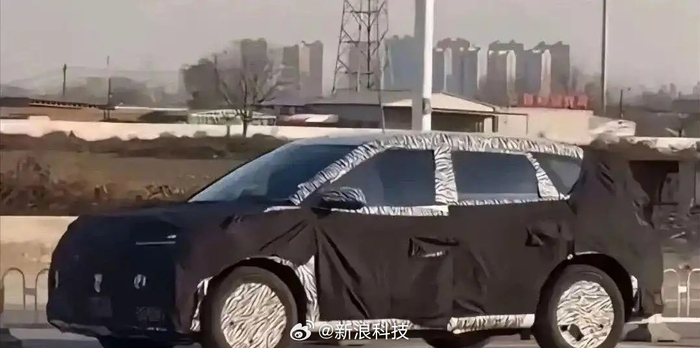
小米三款新车曝光,覆盖家庭性能豪华市场
Xin Lang Ke Ji· 2025-12-08 23:53
Group 1 - Xiaomi has unveiled a comprehensive product lineup for its automotive division, focusing on family, performance, and luxury vehicles [1][2] - The first model, YU9, targets family users with a length exceeding 5.2 meters and offers six or seven seats, featuring a range-extended system for long-distance travel [1][3] - The second model, YU7 GT, is a high-performance SUV designed to compete with Tesla's Model Y, emphasizing extreme performance and technology [2][3] Group 2 - The third model, SU7 L, is an extended luxury version of the SU7, aimed at the executive luxury sedan market, with a length potentially exceeding 5.2 meters and a wheelbase over 3.1 meters [3] - SU7 L focuses on enhancing rear-seat space and luxury experience, targeting users who prioritize business travel [3] - Xiaomi's retail sales for November reached 46,249 units, indicating strong market performance [3]

工程机械销量数据点评报告:11月挖机销量同比+13.9%,内销数据改善明显
CHINA DRAGON SECURITIES· 2025-12-08 10:44
Investment Rating - The investment rating for the engineering machinery industry is "Recommended" (maintained) [5] Core Viewpoints - The report highlights significant structural growth characteristics, with high-end products and exports being the core driving forces for the machine tool sector [4] - In November 2025, excavator sales reached 20,027 units, a year-on-year increase of 13.9%, with domestic sales at 9,842 units (up 9.11%) and exports at 10,185 units (up 18.8%) [8] - For the period from January to November 2025, a total of 212,162 excavators were sold, marking a 16.7% year-on-year increase, with domestic sales at 108,187 units (up 18.6%) and exports at 103,975 units (up 14.9%) [8] - Loader sales in November 2025 reached 11,419 units, a year-on-year increase of 32.1%, with domestic sales at 5,671 units (up 29.4%) and exports at 5,748 units (up 34.8%) [8] - The report indicates a strong domestic replacement demand for engineering machinery, driven by equipment renewal policies, and a rapid growth in exports with an improving structure [8] - The "Belt and Road" initiative regions are experiencing industrialization and infrastructure growth, while the North American market is expected to recover due to a rate cut cycle and replenishment demand [8] - The European market shows signs of marginal improvement after two years of decline, and Chinese brands have significant growth potential in the European and American markets due to low penetration rates [8] - Electrification and intelligence are opening new growth curves, enhancing both volume and pricing, while also broadening application scenarios [8] - Leading companies are expected to continue increasing their market share overseas, supported by technological upgrades and global expansion strategies [8] Summary by Sections - **Excavator Sales Data**: November 2025 saw excavator sales of 20,027 units, with a 13.9% year-on-year increase. Year-to-date sales reached 212,162 units, up 16.7% [8] - **Loader Sales Data**: November 2025 loader sales were 11,419 units, a 32.1% increase year-on-year, with year-to-date sales at 115,831 units, up 17.2% [8] - **Investment Recommendations**: The report suggests focusing on leading companies with a well-established global presence, including XCMG (000425.SZ), SANY Heavy Industry (600031.SH), LiuGong (000528.SZ), Shantui (000680.SZ), Hengli Hydraulic (601100.SH), and Zhongji United (605305.SH) [8]





比亚迪王传福,最新发声!
Zhong Guo Zheng Quan Bao· 2025-12-05 12:16
Core Insights - BYD is focusing on three core directions for future development: enhancing electric and intelligent technology, improving marketing capabilities, and expanding overseas markets [1][3]. Group 1: Technology and Innovation - The company emphasizes "technology as king," highlighting the increasing homogeneity in industry technology and the need for continuous innovation to maintain a competitive edge [2]. - BYD has a strong engineering team of 120,000, which is crucial for ongoing technological advancements and maintaining leadership in the market [2]. - The company plans to invest significantly in AI technology, focusing on manufacturing scenarios to drive its application in automotive and component manufacturing [4]. Group 2: Market Performance - In November, BYD's sales reached 480,200 units, a year-on-year decrease of 5.25%, while cumulative sales for the first 11 months of the year were 4.182 million units, reflecting a year-on-year increase of 11.3% [2]. - The company has successfully expanded its overseas market presence, with November overseas sales surpassing 100,000 units for the first time, reaching 131,900 units compared to 28,100 units in the same month last year [2]. Group 3: Marketing and Brand Strategy - The company acknowledges past marketing weaknesses and plans to enhance brand strength and competitiveness in high-end products while avoiding aggressive marketing tactics [3]. - BYD aims to build long-term brand recognition and consumer trust, even if it means sacrificing short-term market share [3].
