稳增长政策

Search documents
杨德龙:2025年“十大预言”得到初步验证 布局下半年投资机会
Xin Lang Cai Jing· 2025-05-21 11:03
Group 1 - The core prediction for 2025 indicates a decline in the US stock market, dollar, and US Treasury bonds, while A-shares and Hong Kong stocks are expected to enter a bull market driven by technology stocks [1][2] - The US economy is projected to slow down, with the Federal Reserve continuing its rate-cutting cycle, leading to a gradual decline in the dollar index and increased risks of a peak in the US stock market [2][3] - The recent launch of China's DeepSeek model has challenged the perception of US technological dominance, contributing to a decline in US tech stocks [2][3] Group 2 - The Federal Reserve's interest rate cuts have been delayed due to concerns over rising prices from the trade war, despite previous cuts totaling 100 basis points [3][4] - Warren Buffett's significant reduction in US stock holdings is attributed to high valuations, with Berkshire Hathaway holding $350 billion in cash, indicating a cautious approach to market entry [4] - China's economic data shows improvement, with a target GDP growth of around 5% for the year, necessitating more stable growth policies to boost investment and consumption [5][6] Group 3 - A significant shift of household savings towards capital markets is anticipated, as the real estate market has peaked and is no longer a viable investment avenue [6][7] - The decline in deposit rates below 1% is expected to encourage investments in the stock market, with government policies aimed at stabilizing both the real estate and stock markets [7][8] - Fiscal policies are expected to play a crucial role in stimulating consumption and investment, especially during periods of economic slowdown [8][9] Group 4 - The market is likely to favor high-quality leading stocks in sectors such as brand consumption, new energy, technology, and brokerage firms, with technology stocks leading the charge [8][9] - International market volatility is expected to increase, with gold prices projected to rise in the long term due to the depreciation of the dollar's value [9][10] - The expectation of a stronger RMB and increased foreign investment in A-shares and Hong Kong stocks is noted, as Chinese assets are considered undervalued [10][11] Group 5 - A bull market in A-shares and Hong Kong stocks is anticipated, with significant investment opportunities and a notable increase in the potential for profit [11][12] - The overall market is still at a low point, presenting a favorable time for strategic investments in Chinese assets as valuations are expected to recover [11][12]
有色金属日报-20250521
Chang Jiang Qi Huo· 2025-05-21 01:59
Report Industry Investment Rating - No relevant information provided Core View of the Report - The copper market shows a mixed situation with positive macro - factors but weakening fundamentals, and the Shanghai copper may maintain a volatile pattern recently [1] - For aluminum, with the uncertain impact of the Guinea issue and the approaching off - season, it is recommended to wait and see [2] - Nickel is expected to have limited downside due to cost support but may show a weakening trend in the medium - to - long - term due to supply surplus [3][5] - Tin prices are expected to have increased volatility, and it is necessary to focus on supply resumption and downstream demand [6] Summary by Related Catalogs Basic Metals Copper - As of May 20, the Shanghai copper main 06 contract fell 0.26% to 77,540 yuan/ton. Macro factors are positive, but the demand has shown signs of weakening, and the inventory is accumulating at a low level [1] Aluminum - As of May 20, the Shanghai aluminum main 07 contract fell 0.45% to 20,075 yuan/ton. The Guinea issue affects the alumina price, and the downstream demand may weaken with the approaching off - season [2] Nickel - As of May 20, the Shanghai nickel main 06 contract fell 0.83% to 122,870 yuan/ton. The nickel market has a complex situation with cost support but supply surplus in the medium - to - long - term [3][5] Tin - As of May 20, the Shanghai tin main 06 contract rose 0.29% to 264,760 yuan/ton. The tin market has a tight raw material supply, and the price is affected by supply resumption and downstream demand [6] Spot Transaction Summary Copper - Spot copper prices rose, but the downstream acceptance of high - priced copper was limited, and the actual procurement was mainly based on rigid demand [7] Aluminum - The spot aluminum market showed a weak transaction, with the holder reluctant to sell at a low price and the downstream having a low procurement willingness [8] Alumina - The alumina spot market was active, with the price rising and the trading volume increasing [9] Zinc - The spot zinc market had a weak transaction, and the downstream entered the traditional off - season with low procurement willingness [10] Lead - The lead spot market had a general trading atmosphere, and the downstream replenished inventory according to rigid demand [11][12] Nickel - The nickel spot market had an improved transaction compared with the previous day, with the demand for rigid procurement increasing at low prices [13] Tin - The tin spot market had a slow sales situation, with some merchants having a strong wait - and - see attitude [14] Warehouse Receipt and Inventory Report - SHFE copper futures warehouse receipts decreased by 16,175 tons to 45,738 tons; LME copper inventory decreased by 3,575 tons to 170,750 tons [16] - SHFE aluminum futures warehouse receipts decreased by 1,351 tons to 61,146 tons; LME aluminum inventory decreased by 2,525 tons to 390,925 tons [16] - SHFE zinc futures warehouse receipts decreased by 175 tons to 1,526 tons; LME zinc inventory decreased by 4,075 tons to 156,725 tons [16] - SHFE lead futures warehouse receipts decreased by 5,067 tons to 44,980 tons; LME lead inventory decreased by 600 tons to 245,750 tons [16] - SHFE nickel futures warehouse receipts decreased by 329 tons to 23,142 tons; LME nickel inventory increased by 90 tons to 202,098 tons [16] - SHFE tin futures warehouse receipts decreased by 94 tons to 8,025 tons; LME tin inventory decreased by 85 tons to 2,655 tons [16]
【广发宏观钟林楠】LPR与存款利率下调的三个细节
郭磊宏观茶座· 2025-05-20 12:48
Core Viewpoint - The recent adjustments in the Loan Prime Rate (LPR) and deposit rates are aimed at addressing the high real interest rates that are constraining economic growth and consumer spending [1][2][3] Group 1: LPR and Deposit Rate Adjustments - On May 20, the People's Bank of China announced a reduction in the 1-year LPR to 3.0% and the 5-year LPR to 3.5%, both down by 10 basis points from the previous month [1][2] - Major state-owned banks and some joint-stock banks have also lowered deposit rates, with the rates for demand deposits, 1-year fixed deposits, and 3-year fixed deposits reduced to 0.05%, 0.95%, and 1.25%, respectively [1][2] - The adjustments are part of a broader financial policy initiative that was anticipated in the market, reflecting a transmission mechanism linking policy rates to LPR and deposit rates [2][9] Group 2: Economic Implications - High real interest rates are identified as a significant barrier to economic growth, increasing debt pressure and limiting investment and consumption [1][3] - The reduction in nominal interest rates, through both LPR and deposit rate cuts, is expected to balance asset-liability sheets and stimulate microeconomic activity [1][3] - The adjustments are seen as a necessary step to enhance the overall demand in the economy and support growth [9] Group 3: Changes in Rate Adjustment Patterns - The recent LPR adjustments indicate a shift in the approach to rate cuts, with both the 1-year and 5-year LPR being reduced simultaneously, a departure from previous practices where they were adjusted separately [10][11] - This change is attributed to a broader growth stabilization strategy that encompasses various sectors beyond real estate, including manufacturing and consumer spending [11][12] Group 4: Deposit Rate Dynamics - The reduction in fixed deposit rates is more pronounced than that of demand deposit rates, leading to a flatter deposit rate curve [12][13] - This strategy aims to alleviate the trend of deposit termization and reduce banks' funding costs, thereby enhancing their lending capacity [12][13] - The overall decline in deposit rates is intended to stabilize interest margins and encourage banks to increase credit supply to the real economy [13][14] Group 5: Future Policy Directions - The current monetary policy adjustments are seen as a foundational step, with further fiscal and quasi-fiscal measures anticipated to support consumption, trade, and technological advancements [15][16] - The government aims to enhance income for low- and middle-income groups and promote service consumption to drive economic growth [15][16] - Ongoing efforts to optimize supply-side policies and address competitive pressures in various sectors are also highlighted as critical for future economic stability [16]


有色金属日报-20250520
Chang Jiang Qi Huo· 2025-05-20 02:10
Report Summary 1. Report Industry Investment Rating No information provided. 2. Core Viewpoints - The macro - situation is favorable, but the fundamentals of non - ferrous metals are mixed. Copper may maintain a volatile pattern, aluminum requires observation, nickel is expected to oscillate weakly, and tin price volatility may increase [1][3][5][6] 3. Summary by Metal Copper - As of May 19, the closing price of SHFE copper main contract 06 dropped 0.63% to 77,820 yuan/ton. The macro trading sentiment has warmed up, but the fundamentals are weakening with demand showing signs of decline and inventory starting to accumulate at a low level. The spot premium may be under pressure, and it may maintain a volatile pattern [1] - In the spot market, domestic spot copper prices dropped significantly. The downstream's low purchasing willingness led to light trading during the day [7] - SHFE copper futures warehouse receipts decreased by 1,334 tons to 61,913 tons, and LME copper inventory decreased by 5,050 tons to 174,325 tons [16] Aluminum - As of May 19, the closing price of SHFE aluminum main contract 07 fell 0.20% to 20,110 yuan/ton. The revocation of mining licenses in Guinea has affected alumina prices. Alumina production capacity and inventory are changing, and electrolytic aluminum production capacity is increasing. The downstream开工率 may decline, and it is recommended to wait and see [2][4] - In the spot market, the aluminum market's trading was stable with most areas having a small premium, while the Guangdong market was at a discount. The alumina market's trading heat continued to rise [8] - SHFE aluminum futures warehouse receipts decreased by 323 tons to 62,497 tons, and LME aluminum inventory decreased by 2,000 tons to 393,450 tons [16] Nickel - As of May 19, the closing price of SHFE nickel main contract 06 dropped 0.67% to 123,850 yuan/ton. The macro situation has changed, and the supply - demand relationship in the nickel market is complex. The cost is firm, but there is a long - term supply surplus, so it is expected to oscillate weakly [5] - In the spot market, some merchants replenished their stocks at low prices at the beginning of the week, but overall trading activity needs further improvement [13] - SHFE nickel futures warehouse receipts decreased by 30 tons to 23,471 tons, and LME nickel inventory increased by 6,786 tons to 202,008 tons [16] Tin - As of May 19, the closing price of SHFE tin main contract 06 fell 0.22% to 264,860 yuan/ton. Tin production and import - export data have changed. The supply of tin ore is tight, but there are strong expectations of mine resumption. The price volatility may increase, and it is necessary to focus on supply and demand [6] - In the spot market, merchants replenished their stocks at low prices for essential needs [14] - SHFE tin futures warehouse receipts decreased by 64 tons to 8,119 tons, and LME tin inventory increased by 5 tons to 2,740 tons [16] Zinc - In the spot market, the price of zinc dropped. The market trading was lackluster, with loose supply leading to a decline in the premium and weak trading [9][10] - SHFE zinc futures warehouse receipts decreased by 474 tons to 1,701 tons, and LME zinc inventory decreased by 3,400 tons to 160,800 tons [16] Lead - In the spot market, the price of lead dropped. The downstream replenished stocks as needed, and the overall trading was average [11][12] - SHFE lead futures warehouse receipts increased by 126 tons to 50,047 tons, and LME lead inventory decreased by 2,500 tons to 246,350 tons [16]
4月宏观数据解读 | 4月外部经贸环境急剧变化,宏观经济保持较强韧性
Xin Lang Cai Jing· 2025-05-19 09:10
事件 据国家统计局2025年5月19日公布的数据,4月规模以上工业增加值同比实际增长6.1%,前值为7.7%,1- 4月累计同比为6.4%,2024年全年累计同比为5.8%;4月社会消费品零售总额同比增长5.1%,前值为 5.9%,1-4月累计同比为4.7%,2024年全年累计同比为3.5%;1-4月全国固定资产投资累计同比增长 4.0%,前值为4.2%,2024年全年累计同比增长3.2%。 基本观点 总体上看,在4月关税战骤然升级背景下,国内宏观经济保持较强韧性,背后主要是今年逆周期调节政 策发力,实施一个上调、两个增加,即上调财政赤字率,增加超长期特别国债发行及增加专项债发行和 使用,包括"两新"、"两重"等在内的稳增长政策效应在促消费、扩投资方面持续体现。其中,4月工业 增加值增速放缓,主要原因是当月外部经贸环境骤然收紧,工业企业出口交货值同比增速较上月大幅回 落,但内需发力仍带动当月工业生产增速处于较高水平。4月社零同比增速放缓,或主要源于外部经贸 环境变数加大,对居民消费信心造成一定影响。不过,4月以旧换新政策扩围加力在支撑居民商品消费 方面继续发挥积极作用,当月家电、通讯器材、家具、文化办公用品等 ...

周度经济观察:关税影响体现,后续风险可控-20250519
Guotou Securities· 2025-05-19 07:38
Economic Indicators - In April, industrial added value year-on-year was 6.1%, a significant drop of 1.6 percentage points from March, indicating a slowdown in industrial production[4] - Fixed asset investment in April grew by 3.5% year-on-year, down 0.8 percentage points from March, with infrastructure investment declining by 3 percentage points to 9.6%[7] - Real estate investment in April saw a year-on-year decrease of 11.3%, a slight decline of 1.3 percentage points from March, with new construction area down by 22.1%[11] Consumer and Market Trends - Retail sales of consumer goods in April increased by 5.1% year-on-year, down 0.8 percentage points from the previous month, but still at a relatively high level[13] - Social financing in April grew by 8.7% year-on-year, an increase of 0.3 percentage points from the previous month, primarily driven by government bond issuance[16] - The A-share market has shifted from initial panic over economic slowdown to a focus on the extent of economic deceleration, with confidence in the economy improving for the second half of the year[20] Tariff Impact and Policy Response - The imposition of reciprocal tariffs has led to a noticeable decline in total demand, with April's PPI showing a month-on-month decrease of 0.4%[5] - The recent U.S.-China trade negotiations have eased expectations regarding tariffs, suggesting a potential moderation in the negative impact on the real economy[5] - The central bank's likelihood of significantly tightening monetary policy appears limited due to greater downward pressure on the economy compared to earlier in the year[22]
4月外部经贸环境急剧变化,宏观经济保持较强韧性
Dong Fang Jin Cheng· 2025-05-19 06:39
Economic Performance - In April, the industrial added value grew by 6.1% year-on-year, a decrease of 1.6 percentage points from the previous month[4] - The retail sales of consumer goods increased by 5.1% year-on-year, down 0.8 percentage points from the previous month[7] - Fixed asset investment grew by 4.0% year-on-year in the first four months, a decline of 0.2 percentage points from the previous value[9] External Environment Impact - The slowdown in industrial growth is attributed to a tightening external economic environment, with export delivery value growth dropping by 6.8 percentage points to 0.9%[5] - Consumer confidence has been affected by external trade uncertainties, as indicated by a consumer confidence index of 87.5 points in March, down 0.9 points from the previous month[7] - The manufacturing PMI production index fell by 2.8 percentage points, indicating a contraction in manufacturing activity due to reduced external demand[5] Policy Response - The government has implemented counter-cyclical adjustment policies, including increasing the fiscal deficit ratio and issuing special bonds to support growth[2] - The "old-for-new" policy has positively impacted consumer spending, particularly in appliances and communication equipment, with retail sales in these categories showing double-digit growth[8] - Infrastructure investment, excluding electricity, grew by 5.8% year-on-year, reflecting the government's focus on stabilizing economic growth amid external pressures[12] Future Outlook - Industrial production growth is expected to decline further to around 5.3% in May due to ongoing external trade challenges[6] - Fixed asset investment growth is projected to accelerate, particularly in infrastructure, as the government continues to push for economic stability[12] - The overall macroeconomic resilience is anticipated to persist despite external pressures, supported by proactive fiscal and monetary policies[13]
铜周报:中美关税降温,铜价走势仍强-20250519
Chang Jiang Qi Huo· 2025-05-19 02:17
2025-5-19 长江期货股份有限公司交易咨询业务资格:鄂证监期货字[2014]1号 汪国栋 执业编号:F03101701 投资咨询号: Z0021167 张 桓 执业编号:F03138663 咨询电话:027-65777106 铜周报:中美关税降温,铜价走势仍强 01 主要观点策略 02 宏观及产业资讯 03 期现市场及持仓情况 目 录 04 基本面数据 01 主要观点策略 01 主要观点策略 上周沪铜偏强震荡,截至上周五收至78140元/吨,周涨幅0.89%。旺季转淡,库存低位累库,对铜价的支撑作用减弱。中美日内 瓦经贸会谈联合声明互降关税,同时美国通胀降温,美联储降息概率加大,整个宏观面上交易情绪回暖,对铜价有所提振。 60000 65000 70000 75000 80000 85000 90000 95000 24-03-20 24-03-28 24-04-09 24-04-17 24-04-25 24-05-08 24-05-16 24-05-24 24-06-03 24-06-12 24-06-20 24-06-28 24-07-08 24-07-16 24-07-24 24-08-01 24 ...
先行指标透射经济发展动能强劲 中国高质量发展“枝繁叶茂”
Yang Shi Wang· 2025-05-17 08:47
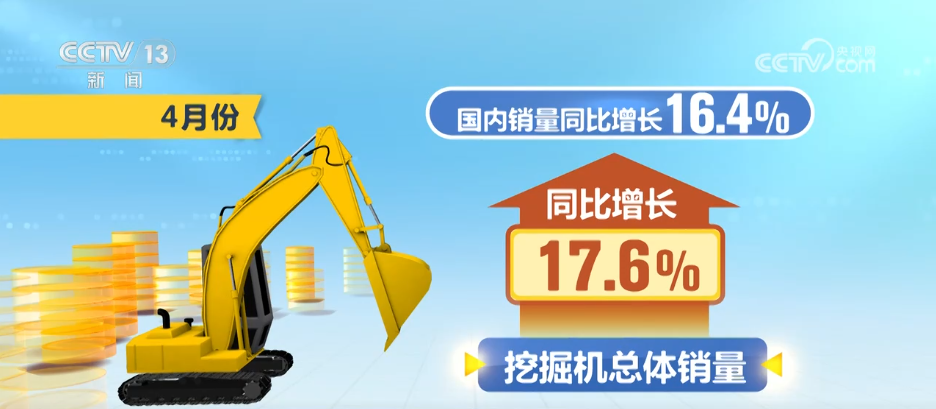
Group 1 - The core viewpoint is that macro policies have positively influenced investment and production, leading to a recovery in the engineering machinery industry, as indicated by a 17.6% year-on-year increase in excavator sales in April [1] - In April, the overall operating rate of engineering machinery increased by 1.6 percentage points month-on-month, with road construction showing significant activity [1] - Nearly half of the provinces in China reported positive month-on-month growth in operating rates, with the Northeast region leading at 61.13% [3] Group 2 - In the first four months of the year, local government bond issuance reached approximately 35,354 billion yuan, a year-on-year increase of about 84%, marking a record high for the same period in recent years [5] - The number of project bids in April saw a year-on-year increase of 10.0% and a month-on-month increase of 7.8%, with energy, transportation, and municipal facilities leading the growth [5] - The balance of inclusive loans to small and micro enterprises increased by 12.5% year-on-year in the first quarter [8] Group 3 - The express delivery development index in China grew by 6.5% year-on-year in April, with daily express volume averaging around 550 million pieces [9][10] - The expansion of the air cargo network is evident, with 288 new air cargo routes opened between January 2024 and April 2025, covering all six continents [10] Group 4 - The average annual salary for urban non-private sector employees in China was 124,110 yuan, reflecting a year-on-year growth of 2.6% [12] - The average annual salary for urban private sector employees was 69,476 yuan, with a year-on-year growth of 4.0% [12]
指数高开回落 市场将继续盘整还是蓄势待发?
第一财经· 2025-05-14 03:28
解锁【第一财经智享会员】实时解读市场动态,把握投资先机。 【第一财经智享会员专属】 国联证券投资顾问刘俊认为,随着四月份年报季报披露期结束,* * * * * *的业绩风险已得到较为充分 的 释 放 , 其 市 场 表 现 呈 现 明 显 回 暖 态 势 。 市 场 运 行 的 主 线 逻 辑 将 逐 步 转 向 以 下 驱 动 因 素 : 一 是 * * * * * * , * * * * * *; 二 是 * * * * * *; 三 是 * * * * * * 。 这 些 因 素 有 望 成 为 推 动 板 块 轮 动 上 涨 的 重 要 催 化 剂。就短期市场走势而言,指数大概率* * * * * *。 国 泰 海 通 证 券 资 深 市 场 分 析 师 袁 强 认 为 , 在 投 资 策 略 的 制 定 过 程 中 , 传 统 消 费 板 块 中 的 * * * * * * 及 * * * * * *等子行业可能相对缺乏弹性。从季节性轮动规律来看,* * * * * *更具表现机会。以即将到来 的6 1 8购物节为例,这一消费时点预计将对* * * * * *、* * * * * *等细分赛道形成显 ...