
人民币升值

Search documents
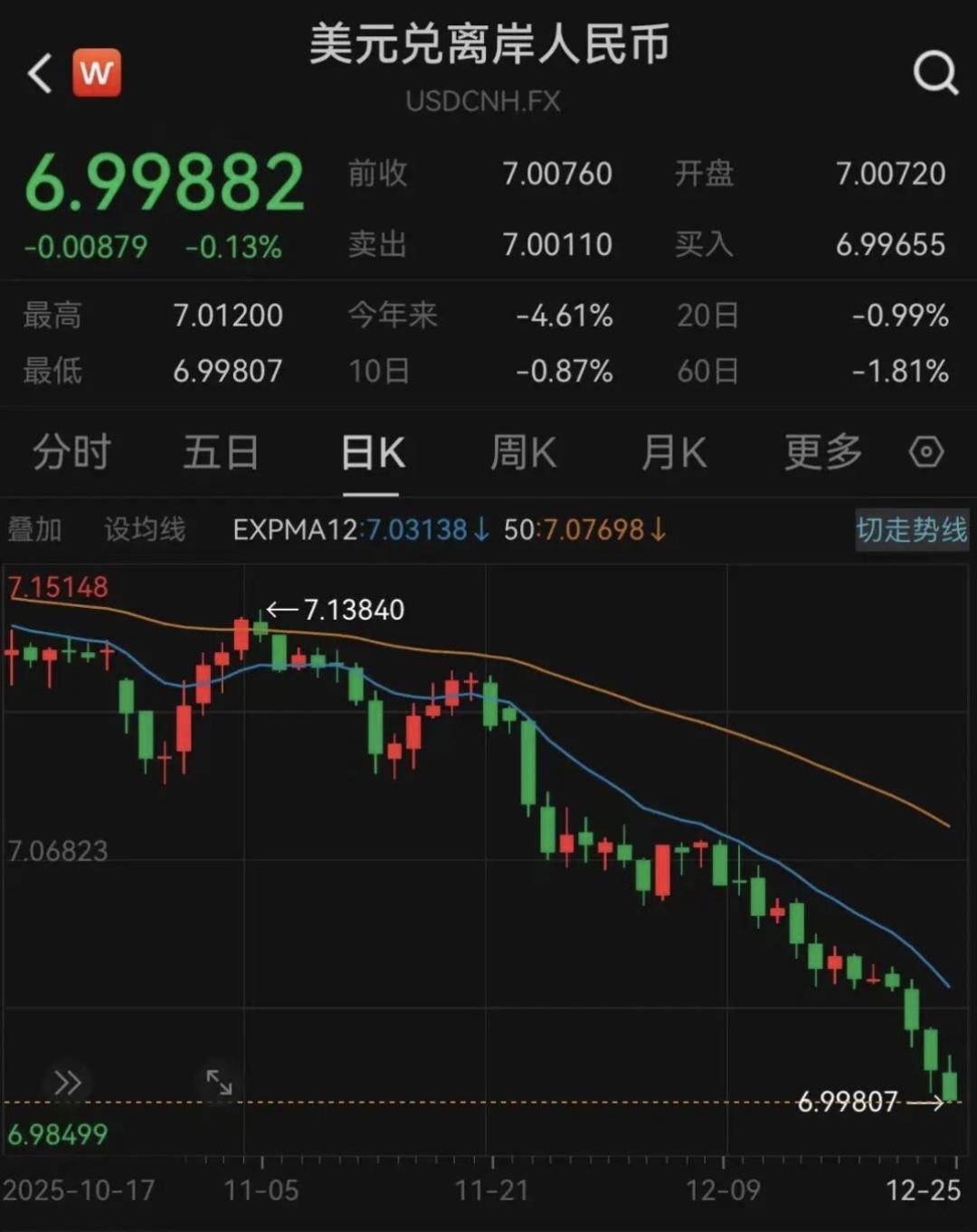
强势升值!离岸人民币收复7.0 成本进口型行业受益
Sou Hu Cai Jing· 2025-12-25 23:21
Group 1 - The offshore RMB against the US dollar has strengthened, breaking the key level of 7.0, reaching a high of 6.9965, marking a new high since September 2024 [3] - Industries benefiting from RMB appreciation include commercial aerospace, paper manufacturing, and cross-border payment, which have shown strong performance in the secondary market [3][4] - The appreciation of the RMB has reduced the procurement costs of raw materials priced in US dollars for cost-importing industries like aviation and paper, leading to exchange rate gains [4] Group 2 - Export-oriented industries such as home appliances, electronics, textiles, and machinery face short-term pressure due to RMB appreciation, which may weaken international price competitiveness and erode exchange rate gains and profit margins [4] - Despite the appreciation, analysts suggest that it will not significantly alter the overall depreciation of the RMB against most non-USD currencies for the year, limiting the impact on export competitiveness [4] - The appreciation of the RMB enhances purchasing power for ordinary citizens, making overseas travel and study more affordable, while also helping to stabilize domestic prices by reducing the costs of imported energy and raw materials [6] Group 3 - Major blue-chip stocks, consumer leaders, and core technology companies are expected to receive liquidity support from foreign capital, with strong performances noted in the robotics and semiconductor sectors [5] - Institutions maintain a cautiously optimistic outlook on future exchange rate trends, with expectations of further RMB appreciation driven by seasonal capital flows and export settlement needs before the Spring Festival [6] - The breakthrough of the RMB at a key level is anticipated to boost market sentiment, benefiting consumer staples and growth sectors favored by foreign investors, although sustainability requires fundamental support [6]

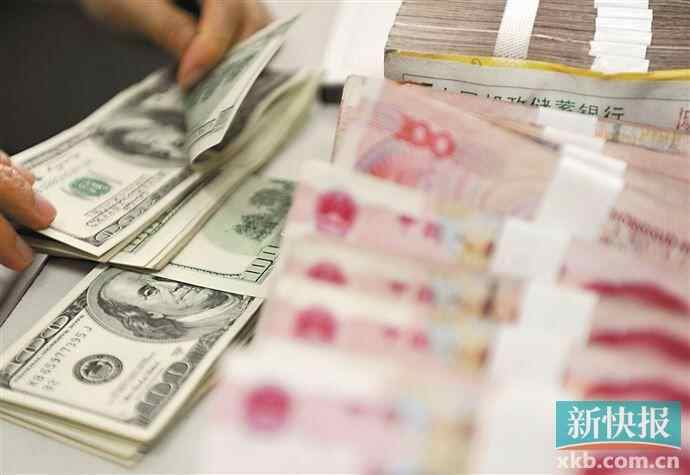
人民币“破7”创15个月来新高
Sou Hu Cai Jing· 2025-12-25 23:12
Core Viewpoint - The offshore RMB has surpassed the 7.0 mark against the USD, indicating the start of a new appreciation cycle for the RMB, with significant implications for the economy and capital markets [2]. Impact on the Real Economy - The appreciation of the RMB is expected to lower import costs for raw materials and advanced technology equipment, supporting industrial upgrades [2]. - The shift towards a stronger RMB will encourage the economy to transition from "price competition" to "brand, technology, and market diversification" [2]. - Companies will be pressured to enhance product value and competitiveness due to the appreciation of the RMB amidst positive growth in merchandise exports [2][3]. Impact on Specific Industries - Import-dependent industries, companies with significant USD liabilities, and certain service trade sectors are likely to benefit from RMB appreciation [3]. - Sectors such as energy, agriculture, and materials may see reduced import costs, while industries like aviation, duty-free, and outbound tourism could experience increased revenues [3]. Impact on Capital Markets - RMB appreciation is likely to attract capital inflows, positively affecting stocks and bonds across various asset classes [4]. - The valuation repair effect suggests that a 0.1 percentage point increase in the exchange rate could enhance stock valuations by 3% to 5% [5]. - The attractiveness of RMB-denominated assets is expected to increase, particularly for foreign investors, leading to accelerated cross-border capital inflows [5]. - Improved market confidence and liquidity are anticipated as the RMB strengthens, enhancing the appeal of A-shares and Hong Kong stocks to foreign capital [5]. Summary of Effects on Households - The appreciation of the RMB enhances its purchasing power against foreign currencies, reducing costs for overseas travel, shopping, education, and medical services [6]. - A 10% appreciation of the RMB against the USD could lower costs for Chinese citizens traveling or studying in the U.S. by nearly 10% [6]. - The appreciation cycle may lead to rising asset prices, increasing the real value of RMB-denominated assets held by households, such as real estate [6].
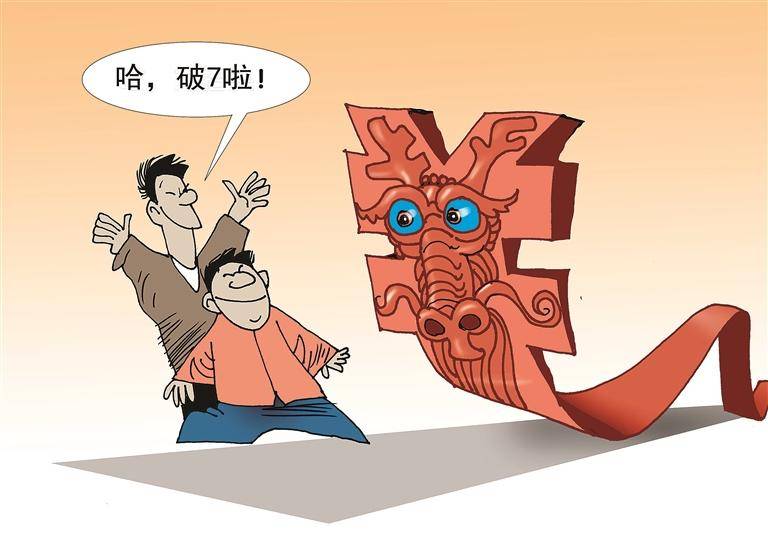
经济稳中向好支持汇率走强
Sou Hu Cai Jing· 2025-12-25 22:13
Core Viewpoint - The recent appreciation of the Renminbi is attributed to a combination of external pressures easing, internal resilience strengthening, precise policy adjustments, and a shift in market expectations [1] Group 1: External Factors - The primary driving force behind the recent Renminbi appreciation is the shift in the US dollar environment, particularly due to the Federal Reserve's ongoing interest rate cuts, which are expected to suppress the long-term trajectory of the dollar [1] - The US dollar index has declined approximately 2.0% since late November, reflecting the enhanced expectations of interest rate cuts by the Federal Reserve [1] Group 2: Internal Factors - China's economic resilience and attractiveness provide solid fundamental support for the Renminbi, especially with marginal improvements in economic data and rising policy expectations [1] - China's trade surplus exceeded 1 trillion USD for the first time in the first 11 months, showcasing unexpected resilience in exports [1] - The performance of China's capital markets has attracted continuous foreign investment, with international investors increasing their holdings of Chinese government bonds [1] Group 3: Market Sentiment - Several foreign institutions, including the International Monetary Fund, World Bank, and Goldman Sachs, have raised their economic growth forecasts for China, indicating increased foreign interest in allocating assets in Renminbi [1]
人民币杀回“6时代”!两年半首次破7,你的钱袋子突然鼓了
Sou Hu Cai Jing· 2025-12-25 20:55
Core Viewpoint - The offshore RMB has surged past the 7.0 mark against the USD for the first time since 2024, reaching a high of 6.9968, marking a significant moment for the currency [1][3]. Group 1: Reasons for RMB Appreciation - The appreciation of the RMB is attributed to both external and internal factors. Externally, the weakening of the USD due to soft economic data and the Federal Reserve's shift to a rate-cutting stance has created a favorable environment for the RMB [6]. - Internally, China's trade surplus has exceeded 1 trillion USD for the first time in history, highlighting the strength of the Chinese economy and its critical role in global supply chains [8][10]. Group 2: Impact on Daily Life and Economy - The strengthening of the RMB enhances purchasing power for consumers, particularly benefiting those involved in overseas shopping and travel, as costs for foreign goods and services decrease [11]. - For the broader economy, while Chinese exports may face price pressures due to a stronger RMB, domestic consumers and importers will benefit from lower costs for USD-denominated goods, potentially reducing production and living expenses [12]. Group 3: Policy Implications - The RMB's rise above 7.0 may open up opportunities for monetary policy adjustments, particularly in terms of interest rate cuts, as the pressure to maintain exchange rate stability diminishes [14]. - This shift could allow for more aggressive measures to stimulate domestic demand and lower financing costs for the real economy [14]. Group 4: Overall Economic Resilience - The recent appreciation of the RMB reflects the resilience and substantial scale of the Chinese economy, as evidenced by the record trade surplus achieved through competitive manufacturing [16][17]. - The market's response indicates a renewed confidence in the Chinese economy, suggesting that as long as internal strengths are maintained, external challenges can be navigated effectively [17].
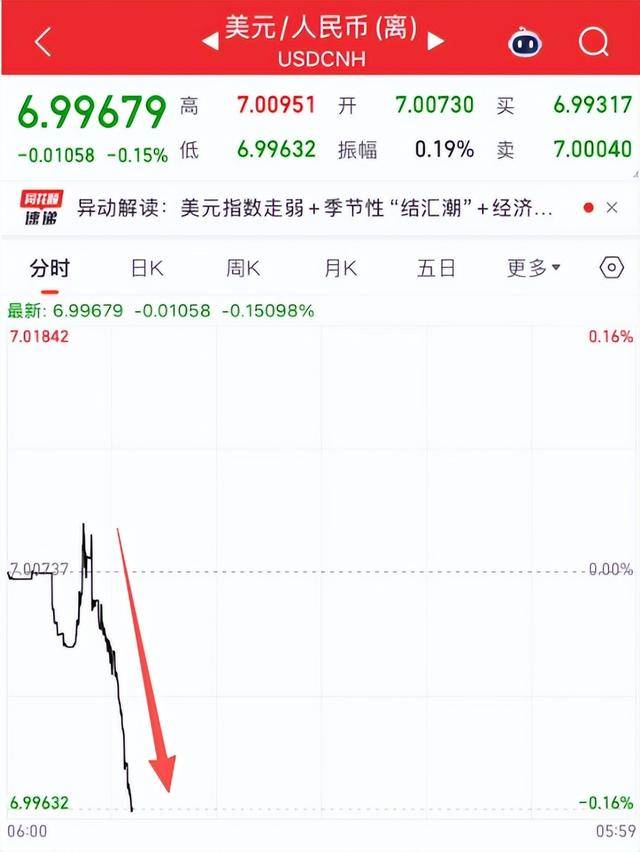
人民币时代即将开启,十年内将升值到6.0,背后的四大动力揭秘
Sou Hu Cai Jing· 2025-12-25 20:26
Core Viewpoint - The article discusses the potential appreciation of the Chinese yuan to 6.0 within the next decade, exploring the motivations behind this shift from a historically stable exchange rate to a push for yuan appreciation [1][3]. Group 1: Reasons for Promoting Yuan Appreciation - Promoting a steady rise in the yuan can lower the costs of energy and raw material procurement, as China's industrial structure has evolved from low-end manufacturing to a more competitive mid-to-high-end manufacturing sector [3][4]. - The yuan's appreciation could significantly increase per capita GDP, as the current economic situation in China is undervalued compared to other countries, with a potential 10% appreciation leading to a 10% increase in GDP [4]. - Addressing the trade imbalance is crucial, as China's trade surplus reached $1 trillion, indicating strong competitiveness but also necessitating adjustments in trade structure [4][6]. Group 2: Motivations Behind Yuan Appreciation - The substantial trade surplus and resilient economic growth, even amidst global economic challenges, provide a stable foundation for yuan appreciation [6][8]. - The decline of the US dollar, which has entered a rate-cutting cycle and lost 8% of its value this year, contributes to a growing distrust in the dollar, prompting a shift towards the yuan [6][8]. - The increasing global demand for yuan payments, with China's manufacturing surpassing 30% of global output, supports the ongoing internationalization of the yuan, projected to rise from 5% to 15% market share by 2035 [8].

破7 离岸人民币对美元汇率创新高
Xin Lang Cai Jing· 2025-12-25 17:24
Core Viewpoint - The recent appreciation of the Renminbi (RMB) against the US dollar has significant implications for both individual investors and the broader Chinese economy, with the RMB breaking the 7.0 mark for the first time since September 2024, indicating a shift in market dynamics and potential investment opportunities [1][4]. Group 1: Impact on Individuals - Individuals holding USD deposits are experiencing negative returns due to the RMB's appreciation, as seen in the case of a resident who lost approximately 1,033 RMB on a USD deposit despite earning interest [2]. - Families with children studying abroad benefit from the RMB's strength, as it reduces the cost of tuition and living expenses in foreign currencies, with one family saving around 17,000 RMB on exchange costs compared to earlier in the year [3]. Group 2: Market Dynamics - The RMB's appreciation is driven by a combination of external pressures easing, internal economic resilience, and market expectations shifting, particularly in light of anticipated interest rate cuts by the Federal Reserve [5][6]. - The recent trend of RMB appreciation is expected to positively influence the Chinese stock and bond markets, as it enhances the attractiveness of RMB-denominated assets to foreign investors [7]. Group 3: Economic Implications - A stronger RMB is likely to lower import costs for raw materials and advanced technology, supporting China's economic transition from price competition to brand and technology diversification [8]. - Industries reliant on imports, such as energy and agriculture, as well as sectors with significant USD liabilities, are expected to benefit from the RMB's appreciation [8]. Group 4: Capital Market Effects - The appreciation of the RMB is anticipated to attract capital inflows, benefiting various asset classes including stocks and bonds, through valuation enhancement, increased foreign investment, and improved market confidence [9]. - A 0.1 percentage point increase in the RMB's value could lead to a 3% to 5% increase in stock valuations, making RMB-denominated assets more appealing to foreign investors [9].
大盘七连涨!年内纪录会被打破吗?
Mei Ri Jing Ji Xin Wen· 2025-12-25 14:35
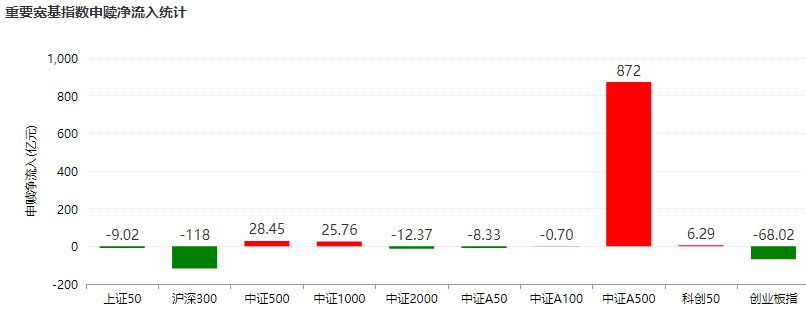
今天,A股三大指数集体小幅上扬。截至收盘,上证指数上涨0.47%,深证成指、创业板指数分别上涨0.33%、0.30%。沪深两市成交额达到19245 亿元,较昨日放量443亿元。 整个市场有3773只个股上涨,1473只个股下跌,个股涨跌幅的中位数为上涨0.54%。 大盘方面,没有太多要说的,达哥在最近两三天的文章中都阐述过,即观察上证指数反弹至9-10月上升趋势线附近时的情况。 今天,上证指数日K线七连涨,年内仅次于4月8日-17日的八连涨,未来两天,该纪录会被打破吗?值得观察。 资金层面,有不少积极因素出现。 其次是大资金持续流入股市。据Wind数据,主要宽基指数整体资金申赎净流入统计显示,最近一个月中证A500净流入872亿元。 因此,资金层面对市场有一定的托底作用。 首先是人民币持续升值。今天离岸人民币兑美元盘中破"7",截至16:00,最高至6.996。 人民币升值,利好哪些板块呢?达哥认为,大致有几类。 一是外资扫货、外资偏好及外资配置类,包括金融、食品饮料、医药生物、家电、科技成长等; 二是进口依赖型行业,包括造纸、有色金属(矿)、石油炼化、基础化工等; 三是减轻债务压力类,包括航空运输等; 四是 ...
人民币升破“7”字大关:造纸印刷板块领涨,市场静待跨年行情
Sou Hu Cai Jing· 2025-12-25 13:56
Core Insights - The offshore RMB to USD exchange rate broke the psychological barrier of 7.0 on December 25, 2025, reaching a low of 6.99853, marking the first time since 2024 [1][2] - The RMB's appreciation is driven by strong domestic economic fundamentals and external factors, including the US Federal Reserve's interest rate cuts [3] Exchange Rate Dynamics - The RMB to USD exchange rate showed a trend of "initial decline followed by a rise" throughout 2025, with an increase of 2827 basis points (3.9%) for onshore RMB and 3305 basis points (4.5%) for offshore RMB [2] Market Response - The stock market reacted positively to the currency appreciation, with A-shares rising collectively, particularly benefiting sectors like paper, machinery, and military equipment [4] - The paper industry, heavily reliant on imported raw materials, stands to gain from reduced procurement costs due to RMB appreciation [4] Beneficiary Sectors - Key sectors benefiting from RMB appreciation include: - Import-dependent industries such as paper and aviation, which will see cost reductions [5] - Domestic consumption-related sectors including agriculture, light manufacturing, and consumer electronics [5] - Service industries like utilities, transportation, and cross-border e-commerce [5] Industry Leaders - Leading companies in the paper industry are gaining attention: - Bohui Paper is advancing a "pulp-paper integration" strategy to enhance self-sufficiency in raw materials [6] - Wuzhou Special Paper, a major player in specialty paper, will benefit from lower raw material costs due to RMB appreciation [6] - Sun Paper, a leader in pulp-paper integration, has significant raw material self-sufficiency due to its operations in Laos [6]
人民币升破7.0整数关口 !汇率创新高,对你我有何影响?
Sou Hu Cai Jing· 2025-12-25 12:20
12月25日,离岸市场人民币汇率持续走强,升破7.0大关,为2024年9月以来首次;在岸人民币最高升至7.0061,美元指数跌破98。多家机构认为,2026年 人民币有望继续升值。人民币"更值钱了",对普通人来说,出国旅游、留学、海淘更省钱了。 记者注意到,中国外汇交易中心12月25日受权公布人民币对美元的市场汇价,即人民币对美元市场中间价为7.0392,上调79个基点。 据梳理,本轮人民币强升值可追溯至今年10月。自10月中旬以来,美元趋弱下、人民币升值,引发市场关注。 | 机构 | 预测区间 | 核心驱动因素 | | --- | --- | --- | | . | | | | 中信证券 | 7.0附近 | 年底结汇、政策防单边预期 | | 华泰证券 | | 2026年底6.82 美元反弹有限、人民币资产低估 | | 瑞银 | 2026年中6.9 | 中国出口仍非常有竞争力 | | 高盛 2026年底6.85 汇率+利率下行提升资产定价 | | | | 德意志银行 2026年底6.7 | | 美元"弱周期",人民币国际化加速 | 对出口企业压力大,人民币升值会让"中国制造"在国际市场上变贵,可能影响订单和利 ...
人民币破7创14个月新高!人民币升值影响几何?
Sou Hu Cai Jing· 2025-12-25 11:11
Core Viewpoint - The offshore RMB has broken the 7.0 mark against the USD, indicating the start of a new appreciation cycle for the RMB, driven by various factors including reduced external pressures and improved internal resilience [1][2]. Exchange Rate Movement - As of December 25, the offshore RMB/USD exchange rate reached 6.9999, up 77 basis points from the previous close, marking a 14-month high since October 2024 [1]. - The onshore RMB/USD rate also surpassed 7.01, increasing by 92 basis points [1]. - Year-to-date, the offshore RMB has appreciated by 4.6%, while the onshore RMB has risen by 4% [1]. Economic Impact - The appreciation of the RMB is expected to lower import costs for raw materials and advanced technology, supporting industrial upgrades [3]. - Industries reliant on imports, companies with significant USD liabilities, and certain service sectors are likely to benefit from the RMB's strength [3]. - Sectors such as energy, agriculture, and materials may see reduced costs, while industries like aviation and tourism could experience increased revenues [3]. Capital Market Effects - The RMB's appreciation is anticipated to attract capital inflows, positively impacting stocks and bonds across various markets [5]. - A 0.1 percentage point increase in the exchange rate could enhance stock valuations by 3% to 5% [5]. - The trend of cross-border capital inflows is expected to accelerate, with foreign investors benefiting from both asset appreciation and currency gains [6]. Consumer Impact - The strengthening of the RMB enhances purchasing power for overseas travel, shopping, and education, reducing costs for families planning to go abroad [7]. - A 10% appreciation in the RMB against the USD could lower costs for Chinese citizens traveling or studying in the U.S. by nearly 10% [7]. - The appreciation cycle may lead to an increase in the value of RMB-denominated assets, such as real estate, although investors are advised to approach this with caution [7].