
即时零售

Search documents
淘宝闪购启动年货节,30分钟到家定义“即时满足”式新年采购
Yang Zi Wan Bao Wang· 2026-01-01 04:52
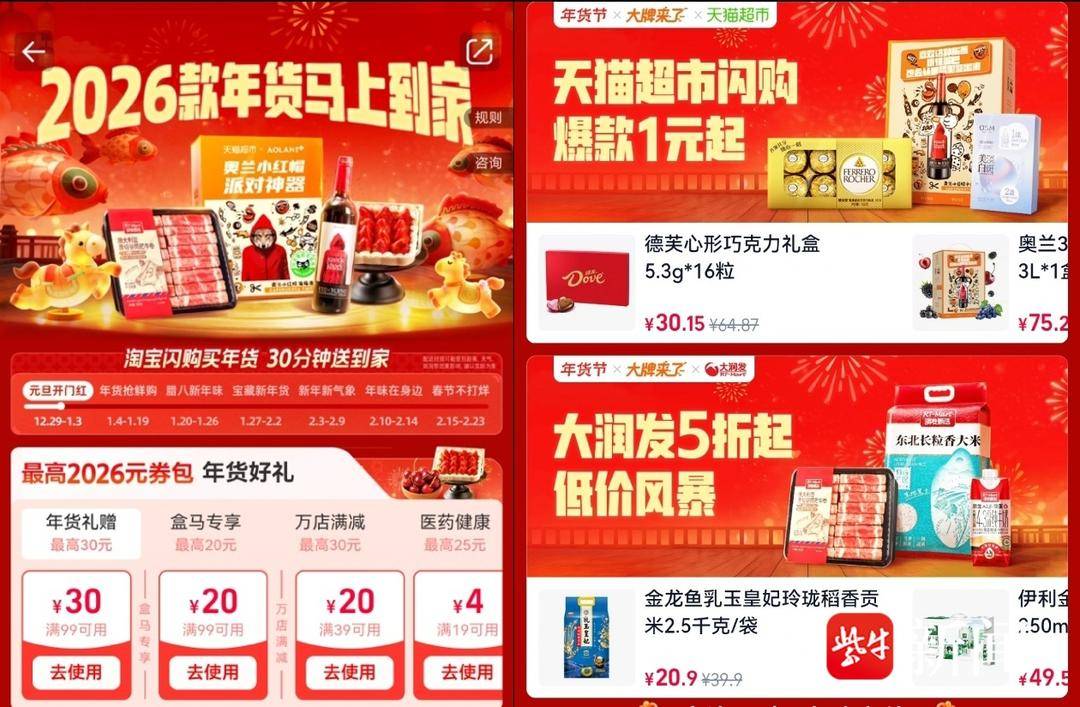
Core Insights - Taobao Flash Sale has officially launched the 2026 New Year Festival, emphasizing "30-minute delivery for New Year goods" as its core proposition, focusing on four high-frequency scenarios: reunion, travel, gifting, and festive decoration [1] Group 1: Market Trends - The purchasing behavior for New Year goods is shifting from traditional bulk buying by families to a more personalized and scenario-based "instant gratification" approach, driven by younger consumers [3] - New Year goods are no longer seen as pre-festival stock but are integrated into daily life, available as quality choices at any time [3] Group 2: Product Offerings - The New Year Festival will feature a variety of high-quality products, including Chilean cherries, red strawberry gift boxes, live Boston lobsters, Australian Wagyu beef rolls, and festive items like "wealthy silver willow" and New Year rose bouquets, catering to diverse scenarios such as gifting, gatherings, and holiday decorations [3] Group 3: Consumer Insights - The Taobao Flash Sale New Year Festival aims to meet the emotional needs of young consumers by aligning product offerings with their real-life demands, focusing on instant retail models that resonate with the desire for self-care and social interaction during the New Year [3]


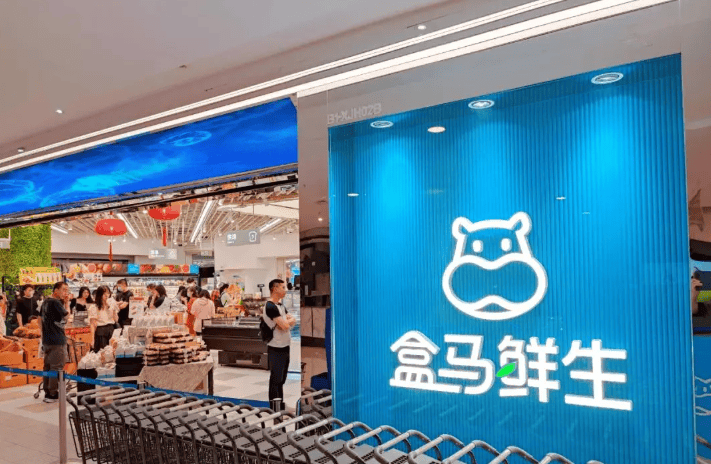
2025年是盒马盈利破局的零售革命,即时零售的价值标杆
Sou Hu Cai Jing· 2026-01-01 03:18
Core Insights - Hema achieved a significant milestone in 2025 by surpassing a GMV of 75 billion yuan and turning its adjusted EBITA positive for the first time, ending a seven-year loss streak and becoming the first self-operated instant retail platform to achieve scalable profitability [1][13][17] - The company's transformation from "trial and error" to "strategic focus" is evident in its dual business model of "Hema Fresh" and "Super Box" combined with a multi-layered retail network [1][2] Business Model and Strategy - Hema's dual business strategy allows for comprehensive coverage of "all customer groups + all scenarios," with Hema Fresh targeting the mid-to-high-end market and Super Box focusing on community discount retail [3][8] - The company opened 72 new stores in 2025, bringing the total to over 420 across more than 50 cities, with membership exceeding 40 million [1][3] Operational Efficiency - The reintroduction of the front warehouse business is integrated into a "1 store + N warehouses" ecosystem, enhancing delivery efficiency with 89% of orders delivered within 30 minutes [4][5] - Hema's operational costs have decreased by 18%, and inventory turnover days have been reduced to 28 days, laying a solid foundation for profitability [4][13] Product Innovation - Hema's self-owned brand accounted for 35% of sales in 2025, with the "Hema MAX" brand achieving a gross margin exceeding 40%, driving profit growth [8][9] - The company has successfully launched products tailored to consumer needs, such as "30-minute ready-to-cook meals" and "low-calorie light meals," which have seen high sales and repeat purchase rates [9][10] Market Position and Growth Potential - Hema's market value has doubled from 40 billion yuan in 2024 to 80 billion yuan in 2025, with a PE ratio of 35 times, indicating strong market recognition [14][18] - The company plans to open nearly 100 new Hema Fresh stores in 2026, expanding into over 50 new cities, and aims to invest 2 billion yuan in developing retail AI models [17][18]
聚力释放消费潜能:以民生导向激活内需增长新引擎
Qi Lu Wan Bao· 2026-01-01 01:38
Core Viewpoint - In 2026, Jining aims to enhance consumer spending and improve living standards by implementing targeted consumption initiatives, with a goal of achieving a 6% growth in total retail sales of consumer goods for the year, thereby driving high-quality economic development [1][2] Group 1: Consumer Demand and Policies - The city plans to stimulate consumer demand by promoting trade-in policies and collaborating with merchants to offer coupons and discounts, particularly in sectors like automobiles, home appliances, and digital products [1] - Over 200 promotional events titled "Canal City, Benefit Purchase Jining" will be organized to encourage consumption [1] Group 2: Housing Market Initiatives - Jining will accelerate the construction of high-quality residential properties and implement policies to facilitate the purchase of new homes through trade-in programs, including home buying festivals and group purchasing for key demographics [1] Group 3: Service Consumption Expansion - The city intends to tap into the potential of service consumption by expanding sectors such as dining, tourism, education, healthcare, and elder care, while also promoting new economic models like first-store economy and food economy [1] - Initiatives will include the development of smart business districts, unmanned stores, and the promotion of new retail formats such as instant retail and live-streaming e-commerce [1] Group 4: Infrastructure and Logistics Enhancement - Jining will focus on upgrading consumer platforms and expanding core commercial districts, while also enhancing the logistics network to improve rural consumption supply [2]
2025年十四大事件
Xin Lang Cai Jing· 2025-12-31 16:02
Core Insights - The year 2025 marks a significant "paradigm shift" in the global business landscape, transitioning from visions of AI, consumption, and geopolitics into practical industrial applications [1][40]. Group 1: AI and Technology Developments - DeepSeek's emergence and Manus's $1 billion sale to Meta signify a pivotal moment in China's AI technology sector, reducing reliance on foreign models and initiating a trend towards open-source large models [2][41]. - The rapid competition in the AI field has led to numerous emerging competitors for DeepSeek, including Doubao, Qianwen, Lingguang, and Antifufu, alongside established players like Baidu and Kimi [4][43]. - AI models have evolved from mere chat tools to autonomous decision-making agents, with companies shifting from "buying models" to "nurturing agents" for task execution [6][45]. Group 2: Economic and Market Trends - The low-altitude economy in China is projected to exceed 1.5 trillion yuan, with cities like Shenzhen and Guangzhou pioneering eVTOL urban routes and drone deliveries becoming standard for logistics giants [8][46]. - The year 2025 is recognized as the year of humanoid robots entering factories, with significant orders surpassing 10,000 units, indicating a shift from experimental technology to industrial-grade products [10][49]. - Global trade dynamics are shifting, with the normalization of tariff battles between the US and Europe against Chinese electric vehicles and solar industries, prompting a "global localization" strategy among Chinese firms [12][51]. - The introduction of solid-state batteries in China, including the first national standards, addresses electric vehicle charging anxieties and strengthens China's position in the global renewable energy value chain [13][52]. Group 3: Consumer Behavior and Cultural Shifts - The establishment of the Hainan Free Trade Port marks a critical step in China's institutional openness, attracting global capital and talent [15][54]. - The rise of the "silver economy" in response to China's aging population is expected to create a trillion-yuan market for elder care products and services [28][67]. - The backlash against high-priced pre-made dishes, highlighted by public figures like Luo Yonghao, reflects a growing consumer demand for transparency and value, signaling the end of the "arrogant brand era" [24][63]. - The decline of the Labubu toy series from a speculative investment to a more accessible product illustrates a shift in consumer sentiment towards value-driven purchases [29][72]. Group 4: Capital and Investment Trends - The focus of global capital is shifting from generic large models to investments in "sovereign AI" infrastructure, with data centers becoming strategic national assets [16][57]. - Starbucks' decision to sell part of its Chinese operations to local investors signifies the end of the era where foreign brands dominated the market solely through globalization [34][73].

2025年十四大事件
首席商业评论· 2025-12-31 13:49
Core Insights - The year 2025 marks a significant paradigm shift in China's and the global business landscape, transitioning from vision to industrial implementation of AI, consumption, and geopolitical changes [3][4]. Group 1: AI and Technology Developments - DeepSeek's emergence in early 2025 signifies a pivotal moment for China's AI technology sector, reducing reliance on foreign models and initiating a trend towards open-source large models [5]. - The rapid competition in the AI field has led to the emergence of numerous competitors, including Doubao, Qianwen, and Lingguang, alongside established players like Baidu and Kimi [7]. - AI has evolved from a simple chat tool to a productivity employee, marking the beginning of an era of automated decision-making [10]. Group 2: Economic and Market Trends - The low-altitude economy is projected to exceed 1.5 trillion yuan in 2025, with cities like Shenzhen and Guangzhou leading the way in eVTOL operations and drone deliveries becoming standard for logistics giants [11]. - The year 2025 is recognized as the year of humanoid robots entering factories, with significant orders surpassing 10,000 units, indicating a shift from experimental technology to industrial applications [14][16]. - Global trade dynamics are shifting, with the normalization of tariff battles between the US and Europe against Chinese electric vehicles and solar industries, prompting a move towards localized global strategies [18][20]. - The introduction of solid-state batteries in China is set to revolutionize the electric vehicle market, addressing energy storage concerns and enhancing safety [21][23]. Group 3: Consumer Behavior and Cultural Shifts - The "silver economy" is emerging as a key driver of domestic demand, with policies targeting the aging population leading to a surge in consumption in this sector [38][40]. - The rise of GLP-1 drugs is reshaping health and lifestyle industries, significantly impacting consumer habits and the broader economic landscape [41]. - The decline of speculative trends in collectible toys, such as Labubu, reflects a shift in consumer sentiment towards value-driven purchases rather than hype [42][44]. - The backlash against high-priced pre-made dishes, highlighted by public figures like Luo Yonghao, indicates a growing demand for transparency and value in branding [35][37]. Group 4: Corporate Strategies and Capital Trends - Starbucks' decision to sell part of its Chinese operations to local investors marks the end of the era where foreign brands dominated solely through globalization, necessitating a more localized approach [45][46]. - The capital landscape is shifting towards investments in sovereign AI infrastructure, with data centers becoming critical national assets [27]. Group 5: Overall Business Landscape - The events of 2025 illustrate a transition to a new business paradigm where technology, market efficiency, consumer sovereignty, and localized capital strategies are paramount [48][49][52][54].

2026年电商们打响全面战争
21世纪经济报道· 2025-12-31 12:50
Core Viewpoint - The essence of the e-commerce business is "traffic," and the competition in the industry has evolved into a complex and multi-dimensional landscape, driven by various factors such as technology, consumer habits, and supply chain dynamics [1][2]. Group 1: E-commerce Competition Dynamics - In February 2025, Liu Qiangdong initiated a fierce competition in the food delivery sector, disrupting the market with substantial subsidies, leading to increased spending on sales and marketing by major players like Meituan, Alibaba, and JD.com, which collectively spent an additional 614 billion yuan in the third quarter [1]. - The competition is characterized by a shift from traditional e-commerce to instant retail, with platforms like JD.com, Meituan, and Alibaba engaging in a "comprehensive war" rather than a zero-sum game [2][6]. - The integration of AI in consumer decision-making and the transition of supply chains from a focus on scale to efficiency and resilience are reshaping the industry's development logic [2]. Group 2: Strategic Moves and Financial Implications - JD.com launched a recruitment initiative for quality dining merchants, offering zero commission for early entrants, marking the beginning of the food delivery war [4]. - Alibaba's recent performance indicates a significant growth in its instant retail business, with revenues reaching 229.06 billion yuan, a 60% year-on-year increase, despite a 53% drop in net profit for the second quarter of fiscal year 2026 [6][7]. - The competitive landscape is intensifying, with platforms reflecting on their strategies, as evidenced by Meituan's CEO acknowledging the unsustainable nature of past competitive practices [9]. Group 3: Market Trends and Future Outlook - The ongoing battle for market share in instant retail is not just about creating new consumption scenarios but also about capturing traditional e-commerce users and offline market shares [7][10]. - The industry is entering a phase of refined and localized operations, moving away from "barbaric growth" towards a more sophisticated approach [2][12]. - The exploration of local life and instant retail by platforms like Xiaohongshu and Douyin continues, despite challenges, indicating that the competition will remain dynamic and multifaceted [10].


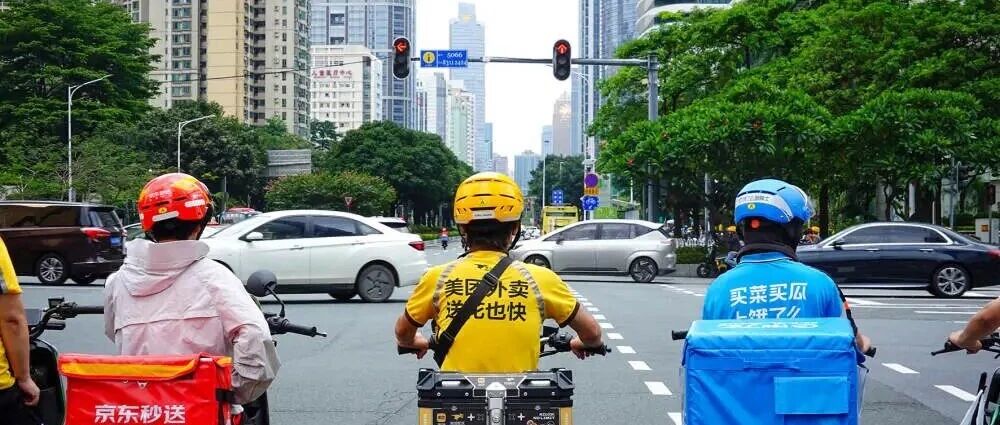
美团上线分配抢单模式,彻底“封杀”单王骑手
3 6 Ke· 2025-12-31 11:56
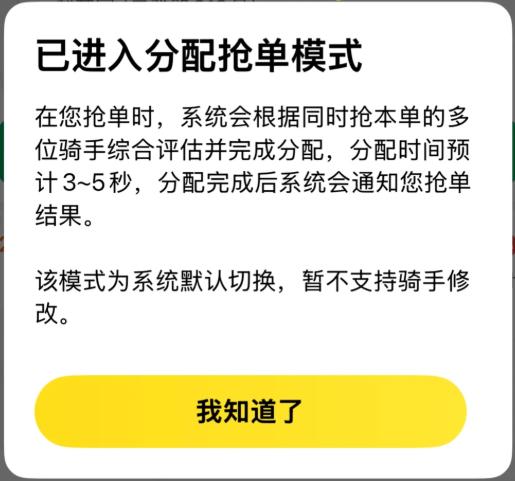
Core Viewpoint - Meituan has introduced a new order distribution model that replaces the previous pure抢单 (grab order) mechanism, leading to significant changes in the working conditions and income of delivery riders, sparking mixed reactions within the rider community [1][10]. Group 1: Reasons for Changing Order Distribution Rules - The new distribution model was implemented in mid-December and is currently being tested in cities like Guangzhou, Dongguan, Foshan, and Changsha [1]. - The distribution model still allows for a抢单 (grab order) approach, but introduces a 3 to 5 second waiting period for the system to evaluate and assign orders, effectively shifting control from riders to the platform [2][3]. - The previous抢单 model had significant issues, including the prevalence of "外挂" (cheating software) that undermined fair competition, leading to frustration among regular riders [2][3]. Group 2: Impact on Riders - Riders have expressed dissatisfaction with the loss of autonomy in choosing orders, as the new model enforces mandatory order assignments, which can lead to penalties for rejecting orders [10][11]. - Income disparities have emerged, with top riders experiencing a decrease in order volume and income due to the average distribution of orders, while less experienced riders may not see significant income improvements despite receiving more orders [13][14]. - The new model has intensified "order anxiety" among riders, as they are now compelled to accept orders that may not align with their preferences or capabilities, leading to a more stressful working environment [3][10]. Group 3: Strategic Considerations for Meituan - Meituan aims to enhance user experience by ensuring better coverage in less serviced areas, thus increasing overall market share in the competitive food delivery sector [4][7]. - The platform's algorithm is designed to optimize order distribution based on rider, user, and merchant experiences, potentially improving efficiency and reducing delivery times [4][7]. - The shift to a distribution model reflects a long-term strategic adjustment in response to increasing competition and the need for improved rider retention and user satisfaction [7][18].
互联网电商25Q3业绩总结及展望:即时零售转向UE修复,加速打造AI生态闭环
Shenwan Hongyuan Securities· 2025-12-31 11:38
Investment Rating - The report recommends investment in Alibaba, Meituan, Pinduoduo, and JD.com, indicating a positive outlook for these companies in the upcoming quarters [3][4]. Core Insights - Online consumption remains stable, with a total retail sales of 45.6 trillion yuan in the first 11 months of 2025, a year-on-year growth of 4.0%. The online retail sales reached 14.5 trillion yuan, growing by 9.1% year-on-year, while the physical goods online retail sales grew by 5.7% to 11.8 trillion yuan [2][14]. - The Double Eleven shopping festival saw an extended promotional period, averaging 3 days longer than previous years, leading to a robust growth in sales across major platforms [2][26]. - The competition in the instant retail sector has peaked, with platforms shifting strategies towards differentiation rather than direct price competition [2][49]. - Cloud business performance has been strong, with significant revenue growth from AI-related products, indicating a shift towards high-quality development driven by ecosystem investments [2][37]. Summary by Sections 1. Online Consumption and Retail Dynamics - Online consumption continues to grow steadily, with a penetration rate increasing to 25.9%. The high base effect from last year's trade-in policy is now impacting growth rates, leading to a slowdown in the growth of express delivery and online retail sales [2][14][19]. - Major platforms are increasing their investment in instant retail, with JD.com experiencing a significant decrease in GMV growth due to the high base effect from last year [19][20]. 2. AI and Product Development - The AI industry is experiencing intensified competition, with major internet companies completing 182 updates or iterations of large models in Q3 2025. This shift is moving from a broad approach to a more focused strategy on optimizing parameters and enhancing user experience [2][37][42]. - Alibaba's cloud business has shown accelerated revenue growth, with AI-related products achieving triple-digit year-on-year growth for nine consecutive quarters [2][37]. 3. Instant Retail and Competitive Landscape - The instant retail sector has seen peak competition, with platforms investing heavily to maintain market share. However, as the sector enters a seasonal downturn, competition is stabilizing, and platforms are focusing on differentiation strategies [2][49]. - Meituan and Taobao's flash sales have stabilized daily order volumes, while JD.com maintains a steady volume in its delivery services [49][51]. 4. Investment Recommendations - The report suggests that while the platforms are entering a high base period, the long-term profit elasticity remains strong, with Alibaba and Meituan expected to see profit recovery in the upcoming quarters [3][4].
深圳迎来“硬折扣”玩家 专家称与即时零售携手可形成优势
Sou Hu Cai Jing· 2025-12-31 11:34
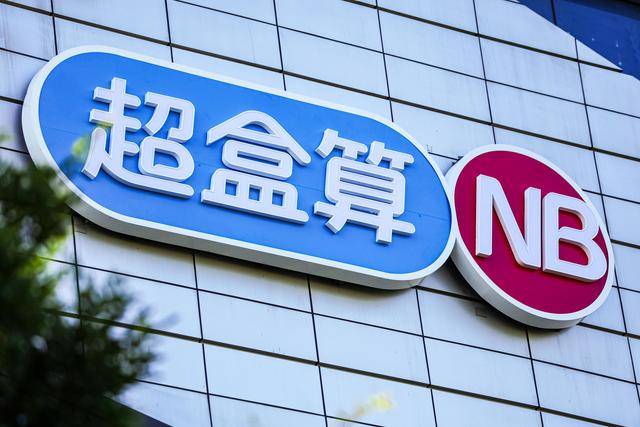
Group 1 - The core viewpoint of the article highlights the entry of a new player, "超盒算NB," into the South China retail market, with plans to open three new stores in Dongguan and Shenzhen before the 2026 Spring Festival [1][3] - "超盒算NB" is an upgraded version of "盒马NB," focusing on affordable community supermarkets aimed at practical family consumers, with over 60% of products being private labels and a selection of approximately 1,500 essential items in stores sized between 600 to 800 square meters [3] - The hard discount market in China is projected to reach a trillion yuan scale, with a current penetration rate of only 8%, significantly lower than Germany's 42% and Japan's 31% [3][4] Group 2 - Recent trends show that e-commerce giants are rapidly entering the hard discount sector, with JD's discount supermarket and Meituan's "快乐猴" both launching in 2025, alongside traditional retailers like Zhongbai Group and Wumart expanding in various cities [4] - Shenzhen is identified as having unique advantages in the hard discount sector due to its high penetration of instant retail, which can enhance customer flow and store efficiency through online ordering and in-store pickup or delivery [4]
华创证券:首次覆盖顺丰同城给予“推荐”评级 目标价18.1港元
Zhi Tong Cai Jing· 2025-12-31 11:05
Core Viewpoint - The instant delivery industry is in a high growth phase, with SF Express City (09699) strengthening its competitive edge as an independent third-party delivery leader, expected to show higher growth potential under the new journey of instant retail [1] Group 1: Instant Retail Market Potential - Instant retail has significant development potential, emerging as a new battleground for major players [1] - The market for narrow instant retail in China (excluding food delivery) is projected to reach 781 billion yuan in 2024, with a year-on-year growth of 20.15%, and a CAGR of 50% from 2018 to 2024 [1] - The online food delivery market in China is expected to grow at a CAGR of 24% from 2018 to 2024 [1] - E-commerce giants are competing around the "30-minute living circle," aiming to activate traffic through both near-field and far-field synergies [1] Group 2: Growth in Instant Delivery Demand - The demand for instant delivery is driven by the increasing richness of product supply and consumer demand for "minute-level" fulfillment, with the order volume in China's instant delivery industry expected to reach approximately 48.28 billion orders in 2024, a year-on-year increase of 17.6% [2] - The average annual growth rate from 2019 to 2024 for the instant delivery industry is projected to be 20.3% [2] - By 2030, the nationwide instant delivery order volume is expected to reach 100.84 billion orders, with an estimated annual growth rate of 13.1% from 2024 to 2030 [2] Group 3: Profitability Improvement - SF Express City is the largest third-party instant delivery service platform in China, aiming to become the "first brand in new consumption delivery" by covering four major scenarios: food delivery, local retail, near-field e-commerce, and near-field services [3] - The company benefits from its independent status, allowing it to match new demand more effectively [3] - SF Express's advantages include high quality, high pricing, and peak avoidance [3] Group 4: Internal and External Growth Drivers - The internal growth driver is the empowerment from SF Holdings (002352), which drives high growth in internal orders [4] - The external growth driver includes benefiting from the new journey of instant retail, with revenue from merchants accounting for 73% of local delivery services in 2024, increasing to 77% in the first half of 2025 [4] - The service volume directed at consumers is expected to grow at a CAGR of 30% from 2021 to 2024 [4] - Investments in White Rhino and autonomous vehicles are expected to reduce costs and increase asset value [4] Group 5: Profit Forecast - The company’s projected net profit for 2025-2027 is 230 million, 460 million, and 710 million yuan, representing year-on-year growth of 73%, 100%, and 55% respectively [4] - The expected EPS for the same period is 0.25, 0.50, and 0.77 yuan, with corresponding PE ratios of 40, 20, and 13 times [4] - The target price is set at 18.1 HKD, corresponding to a market value of 16.6 billion HKD, with a potential upside of 64% [4]