
自动驾驶

Search documents
买车用车能否更轻松?
Xin Lang Cai Jing· 2026-02-24 18:20
Core Viewpoint - The article discusses the ongoing policy changes in China's automotive sector aimed at stimulating consumer demand and facilitating the growth of the industry through the removal of unreasonable restrictions on vehicle purchases and transactions [4][10]. Group 1: Policy Changes - The Chinese government is implementing a series of measures to eliminate "invisible barriers" that hinder consumer spending in the automotive sector, focusing on the entire lifecycle of vehicles, including purchase, use, and exchange [6]. - The "Special Action Plan to Boost Consumption" aims to shift from purchase management to usage management, with specific measures such as issuing additional new energy vehicle purchase quotas for carless families in major cities like Beijing and Guangdong [6][10]. - The second-hand car market is undergoing significant reforms, with the removal of migration restrictions for small non-operational vehicles meeting the National V standard, promoting easier transactions and cross-regional operations [6][7]. Group 2: Market Dynamics - The second-hand car market is projected to exceed 20 million transactions in 2025, marking a historical high, driven by the easing of restrictions and improved transaction processes [11]. - The automotive industry in China achieved production and sales of 34.53 million and 34.40 million vehicles in 2025, respectively, reflecting year-on-year growth of 10.4% and 9.4%, maintaining its position as the world's largest automotive market for 17 consecutive years [11]. - The simplification of second-hand car transaction processes has significantly reduced transaction costs and improved efficiency, benefiting both consumers and businesses, particularly small and medium-sized enterprises [11]. Group 3: Consumer Experience and Market Expansion - The automotive sector is evolving from merely a transportation tool to a lifestyle choice, with opportunities in the automotive modification market and new consumption scenarios such as car events and self-driving tourism [8][10]. - The government is promoting the development of smart connected vehicles, with policies facilitating testing and demonstration on various road types, indicating a shift towards mass production and application of autonomous driving technologies [9][12]. - The article highlights the need for improved data sharing and transparency in the second-hand car market to address information asymmetry, which is crucial for enhancing consumer trust and transaction efficiency [13]. Group 4: Future Challenges and Opportunities - Despite the positive developments, the automotive consumption chain still faces deep-rooted challenges, including fragmented information on vehicle history and a lack of standardized inspection systems [13]. - The article suggests that expanding automotive services, such as rentals and modifications, can create a comprehensive consumption ecosystem that enhances consumer experiences and drives industry growth [14].

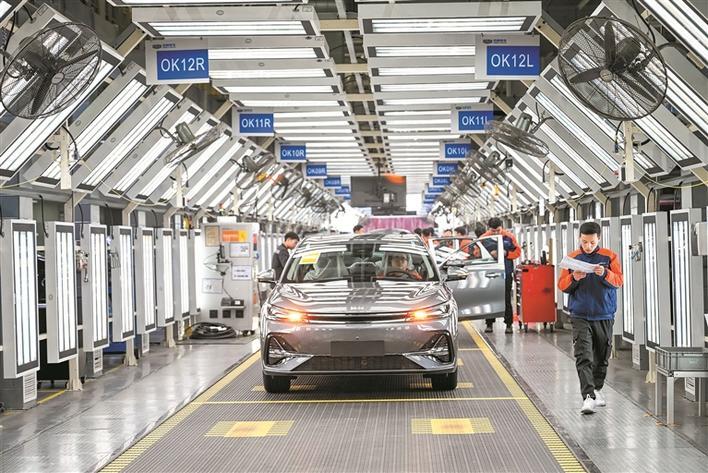
春节事件梳理先锋领航0222
2026-02-24 14:16
"先锋领航"春节事件梳理 核心要点: 春节期间,海外主要股指多数上涨,原油价格走强,黄金白银价 格上涨;美伊谈判陷入僵局,美方下达最后通牒;美国最高法院判决 对等关税违法;国内春节假期出行、旅游、酒店、影视均有升温,机 器人、AI 应用表现亮眼。马年六大趋势前瞻:中美同步降息,全球 步入货币宽松周期;AI 超级应用迎来爆发元年,AI 应用将从"可用" 走向"好用";中国力量崛起,全球 AI 竞争格局重塑;地缘政治风 险加剧,不确定性持续升温;大宗商品进入新一轮上涨周期;A 股牛 市逻辑不改,结构性机会延续,AI、机器人、商业航天、自动驾驶等 方向仍将是主线。 1、全球资产表现:海外股指多数上涨,人民币一度升至 6.88 春节假期前后(2 月 16 日-2 月 20 日),海外股指多数上涨。美 股方面,受最高法裁定 IEEPA 关税违法对风险偏好的提振,纳指、标 普 500 和道指分别上涨 1.5%、1.1%和 0.3%。亚洲市场,韩国综合指 数大涨 5.5%,恒指下跌 0.6%。欧洲方面,CAC40、富时 100、DAX30 集体上涨。美元指数反弹 0.9%、离岸人民币一度升至 6.88。油价继 续走强、金价 ...
特斯拉Cybercab量产在即 Robotaxi产业生态或生变数
Zheng Quan Ri Bao Wang· 2026-02-24 13:36
技术与成本逻辑重塑 全球智能电动汽车产业竞争持续升级,自动驾驶商业化进程进入新的观察窗口。 日前,特斯拉宣布其首辆Cybercab在美国得州超级工厂正式下线,并将于今年4月份开启量产。 Cybercab是首款专为特斯拉无人驾驶出租车服务(Robotaxi)设计的运营车辆,无方向盘、无踏板、无后 视镜。 受访人士普遍认为,Cybercab不仅是一款新车型,更承载着特斯拉从整车制造商向出行服务运营平台延 伸的重要战略意图。标志着特斯拉在全自动驾驶领域迈出关键一步,但其商业化前景仍取决于监管审批 进度。 在自动驾驶技术加速迭代、全球多地Robotaxi试点逐步铺开的背景下,Cybercab量产节点的临近,使 Robotaxi商业化路径再次成为焦点。其能否真正跑通商业模型,如何与既有出行体系形成协同乃至竞 争,对全球尤其是中国Robotaxi产业意味着什么,成为资本市场与产业界关注的核心议题。 与全球市场同步,中国Robotaxi产业近年来亦在政策引导与技术创新推动下稳步推进。北京、上海、深 圳、广州、武汉等城市陆续开放自动驾驶测试与示范运营区域,多家企业已获批开展限定区域Robotaxi 试点。 在技术路径上,中国 ...

特斯拉(TSLA.US)起诉加州DMV,力求在Robotaxi落地前洗清FSD“虚假宣传”污点
Zhi Tong Cai Jing· 2026-02-24 13:17
Core Viewpoint - Tesla has officially filed a lawsuit against the California Department of Motor Vehicles (DMV) to overturn an administrative ruling regarding alleged "false advertising" related to its autonomous driving systems [1][2] Group 1: Legal Proceedings - Tesla claims that the DMV's conclusion regarding misleading statements in marketing "Autopilot" and "Full Self-Driving" (FSD) features lacks factual basis [1] - The lawsuit follows a history of regulatory scrutiny that began in 2021, focusing on whether Tesla's product naming could mislead consumers into believing the vehicles are fully autonomous [1] - A preliminary ruling by the California Office of Administrative Hearings (OAH) in late 2025 categorized Tesla's terminology as misleading, posing a risk of suspension of the company's vehicle sales license in the state [1] Group 2: Regulatory Compliance and Adjustments - In December, a court ruled in favor of the DMV, recognizing the misleading nature of the terms and suggesting license suspension, although the penalties were later mitigated, allowing Tesla time to rectify the situation [2] - In early 2026, Tesla modified its official descriptions, adding the "Supervised" suffix, and passed the DMV's compliance review on February 17, temporarily alleviating the threat of license suspension [2] - Tesla argues that it has provided adequate risk warnings in user manuals and activation interfaces, aiming to eliminate potential legal risks and protect its brand reputation [2] Group 3: Industry Implications - The outcome of this legal battle is expected to have significant implications for the global autonomous driving industry, particularly in setting compliance standards [2] - If Tesla fails to clear the "misleading consumers" allegations, it could lead to larger-scale consumer class-action lawsuits, potentially impacting the valuation logic tied to AI-driven premiums [3]
2026年2月李想与何小鹏相似判断越来越多
理想TOP2· 2026-02-24 12:29
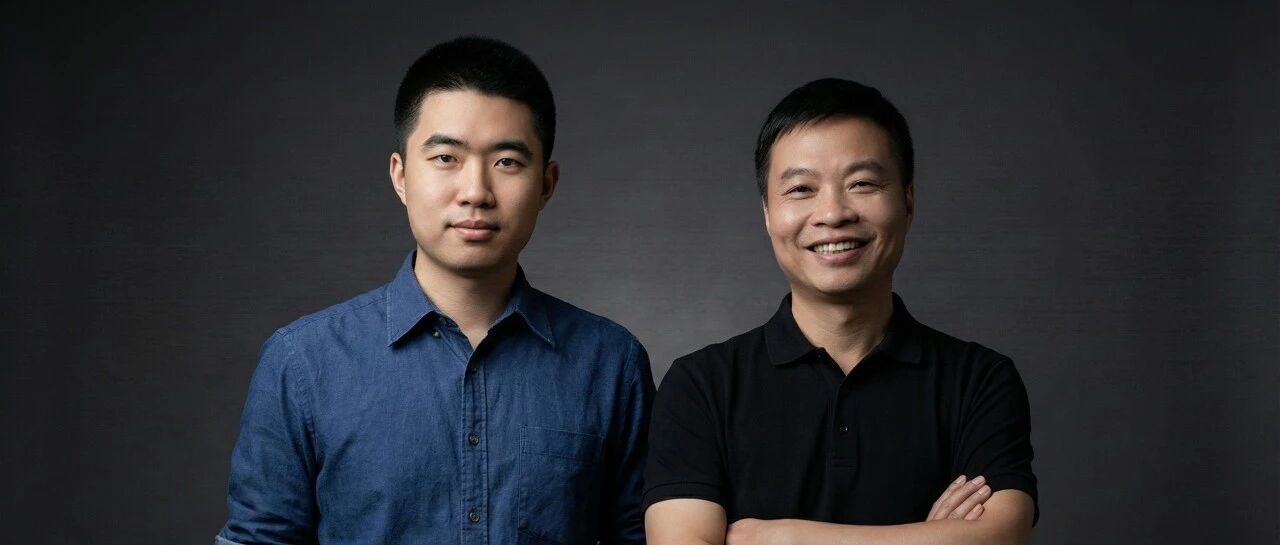
Core Viewpoint - Both Li Xiang and He Xiaopeng are increasingly aligning their visions, defining their companies as embodied intelligence firms, and emphasizing the importance of self-developed chips for autonomous driving [1][2]. Group 1: Company Definitions and Strategies - Both companies define themselves as embodied intelligence firms, with a focus on AI that interacts with the physical world [3]. - Li Xiang has anchored the mission of his company to "Be Proactive, Change the World," while He Xiaopeng has not made a similar declaration [3]. - There are differences in their approaches to autonomous driving, with He Xiaopeng combining the management of autonomous driving and smart cockpit, while Li Xiang has separate leadership for each [6]. Group 2: Robotics and AI Development - He Xiaopeng has set a mass production expectation for the next-generation IRON robot by the end of 2026, but did not specify its practical value [7]. - Li Xiang anticipates that humanoid robots capable of household tasks will be ready for mass production within 3-5 years, emphasizing the urgency to start development [8]. Group 3: Globalization Efforts - He Xiaopeng has a clearer and faster globalization strategy, aiming to sell 1 million vehicles overseas by 2030, with a focus on five key markets [9]. - In contrast, Li Xiang has not publicly defined overseas targets and has faced setbacks in previous international expansion plans [10][11]. Group 4: Energy Solutions - Li Xiang believes both range-extended and pure electric vehicles have long-term competitiveness, having made a high-level judgment on the importance of range-extended technology despite investor pressure [18]. - He Xiaopeng's understanding of range-extended vehicles evolved around 2024, initially viewing pure electric as the ultimate solution [19]. Group 5: Product Design and SKU Management - Li Xiang's strategy involves independent platforms for range-extended and pure electric vehicles, maximizing their respective advantages [20]. - He Xiaopeng appears more flexible with product SKUs, while Li Xiang aims to reduce SKU complexity [25]. Group 6: Hands-On Management Philosophy - Both leaders emphasize a hands-on approach, with He Xiaopeng mentioning the importance of being involved in product development and management [26]. - Li Xiang's team also stresses the need for direct engagement in product and design processes to bridge the gap between vision and reality [27].


广东“新春第一会”!让低空经济“飞”起来、自动驾驶“跑”起来、具身智能“用”起来
Zhong Guo Zheng Quan Bao· 2026-02-24 12:26
Core Viewpoint - The Guangdong Provincial High-Quality Development Conference emphasizes the coordinated development of manufacturing and service industries as a key strategy for achieving high-quality economic growth during the 14th Five-Year Plan period [2]. Group 1: Focus on Coordinated Development - This year's conference marks the fourth consecutive year that Guangdong has held its "New Year First Meeting" on the first working day after the Spring Festival, focusing on the theme of "coordinated development of manufacturing and service industries" [2]. - Guangdong's Secretary of the Provincial Party Committee, Huang Kunming, highlighted that promoting the synergy between manufacturing and service sectors is essential for industrial advancement, embracing technological trends, and enhancing economic circulation [2]. Group 2: White Paper Insights - The Guangdong Provincial Development and Reform Commission released a "White Paper on Coordinated Development of Manufacturing and Service Industries," which outlines strategies centered on intelligent upgrades and green transformations to elevate traditional industries [2]. - Since 2021, Guangdong has facilitated over 46,000 industrial enterprises in completing technological upgrades and digital transformations [2]. Group 3: Future Projections - The White Paper projects steady growth in the province's productive service sector by 2025, with financial sector value-added expected to increase by 7.7% year-on-year and revenue from information transmission, software, and IT services anticipated to rise by 9.7% [3]. - The retail sales of consumer goods in Guangdong are expected to reach 4.6 trillion yuan by 2025, with new business models such as "door-to-door economy," fresh e-commerce, and short video e-commerce emerging [3]. Group 4: Empowering Manufacturing and Services - Huang Kunming stated that the dual advancement of manufacturing and services is crucial for Guangdong's high-quality development and modernization [4]. - The strategy includes strengthening the industrial system, nurturing leading enterprises, and fostering technological innovation to enhance the overall ecosystem [4][5].
抢抓“DeepSeek”时刻!小鹏、吉利发声
Zhong Guo Ji Jin Bao· 2026-02-24 12:20
Group 1: Core Perspectives - The CEOs of Geely and Xpeng emphasize the importance of smart technology and international expansion in the automotive industry, marking a historical turning point for the sector [1] - Xpeng aims to leverage the "DeepSeek" moment for autonomous driving by 2026, with plans to introduce its second-generation VLA for L4-level autonomous driving [2][3] - Geely is committed to sustainable development and will avoid vicious competition, focusing on technology, quality, brand, service, and corporate ethics [1][5] Group 2: Company Developments - Xpeng's delivery volume reached 429,400 units in 2025, a 126% year-on-year increase, with over 45,000 units delivered overseas, marking a 96% growth [3] - Xpeng plans to launch at least four new models in overseas markets by 2026, with the P7+ already undergoing trials in Austria [3] - Geely's G-ASD advanced driving assistance system will continue to evolve, with the next version debuting in the Zeekr 8X model, enhancing the driving experience [5] Group 3: International Strategy - Geely views high-quality international expansion as essential, transitioning from "international trade" to "product-oriented" strategies [6] - The company aims to establish a localized system in key markets through product output, brand expansion, and resource integration, striving to transform from "Made in China" to a "global brand" [6] - As of February 24, Geely's stock price was HKD 16.80, with a market capitalization of HKD 181.7 billion, while Xpeng's stock was HKD 70.65, with a market cap of HKD 135.1 billion [4][6]

三地共造一辆“未来之车”:超8400亿的集群效应
Xin Jing Bao· 2026-02-24 11:18
Core Viewpoint - The launch of the L3-level autonomous driving trial with 30 vehicles of the Arcfox Alpha S marks a significant milestone in Beijing's smart connected vehicle industry, transitioning from testing to mass application [1][2][5] Group 1: Industry Development - The Arcfox Alpha S (L3 version) has received conditional approval for road use, making it one of the first two companies in China to achieve this milestone [1] - The smart connected vehicle industry in the Beijing-Tianjin-Hebei region is evolving into a comprehensive development model, with R&D in Beijing, manufacturing in Tianjin, and application scenarios in Hebei [1][8] - The autonomous driving sector in Beijing has seen significant advancements, with over 48 million kilometers of testing completed, showcasing a robust infrastructure for autonomous vehicle deployment [6][9] Group 2: Policy and Regulation - Beijing has been at the forefront of autonomous driving policy, being the first to issue road testing support policies and establishing a regulatory sandbox for smart connected vehicles [6][7] - The implementation of the "Beijing Autonomous Driving Vehicle Regulations" in 2025 has further solidified the legal framework for autonomous driving in the region [6] - Collaborative policies between Beijing, Tianjin, and Hebei aim to promote innovation and standardization in the smart connected vehicle sector [9][10] Group 3: Market and Consumer Adoption - The autonomous driving trial is expected to expand to personal users by the second quarter of 2026, indicating a shift towards broader consumer adoption [2] - Autonomous taxis and other driverless vehicles have become commonplace in areas like Yizhuang, demonstrating the practical application of autonomous technology in daily life [4][7] - The competitive pricing and convenience of autonomous taxis are attracting regular users, indicating a positive reception from the public [4]

自动驾驶行业更新报告:L3强标征求意见,国内智驾政策持续推进
CAITONG SECURITIES· 2026-02-24 11:09
Investment Rating - The investment rating for the automotive industry is "Positive" (maintained) [1] Core Insights - In February 2026, China began soliciting public opinions on the L3 strong standards, completing the draft of "Safety Requirements for Autonomous Driving Systems of Intelligent Connected Vehicles" on February 5, 2026. The public consultation for this and four other mandatory national standards started on February 12, 2026, and will end on April 13, 2026. This strong standard primarily targets L3 and L4 levels of autonomous driving, replacing the recommended standard GB/T 44721-2024 [4] - The proposed implementation date for the L3 strong standard is July 1, 2027. The standard includes mandatory (GB) and recommended (GB/T) classifications, with violations of the mandatory standard leading to legal consequences. The L3 strong standard has completed the drafting phase and is currently in the public consultation stage, followed by review, approval, and publication [4] - Earlier, China approved L3 vehicles for road testing, with two models from Changan and BAIC Blue Valley receiving approval for road access trials on December 15, 2025. These models will undergo the next phase of road testing, with specific requirements set by the Ministry of Industry and Information Technology [4] - Investment recommendations include: 1) Vehicle manufacturers: Jianghuai Automobile, Xpeng Motors-W; 2) Component suppliers: Bertley, Coboda, Nexperia, Horizon Robotics-W, among others. Attention is also recommended for Huayi Technology [4] Summary by Sections - **L3 Strong Standards**: The draft for L3 strong standards has been completed and is open for public consultation, with a focus on safety requirements for autonomous driving systems [4] - **Implementation Timeline**: The strong standard is set to be implemented by July 1, 2027, following a series of approval processes [4] - **Road Testing Approvals**: Two L3 models have been approved for road testing, indicating progress in the industry [4] - **Investment Opportunities**: Specific companies are recommended for investment based on the ongoing developments in autonomous driving policies [4]
曹操出行(02643)今日股价大涨 曹操司机亮相春晚
智通财经网· 2026-02-24 10:30
Group 1 - The stock price of Cao Cao Mobility (02643) showed strong performance, rising over 9% during the day and closing at HKD 36.32, up 6.01% with a trading volume of 149 million, ranking among the top in its sector [1] - Cao Cao Mobility's driver Zhang Guirong was invited to appear on the CCTV Spring Festival Gala, highlighting the platform's core value of "user first" and becoming the first practitioner in the ride-hailing industry to perform on this stage [1] - The company is accelerating its scale deployment of Robotaxi, having announced the launch of 100 Robotaxi vehicles in Hangzhou's Binjiang District, supported by the "Green Intelligent Traffic Island" [1] Group 2 - Cao Cao Mobility is collaborating with Geely and related partners to develop fully customized Robotaxi models with pre-installed autonomous driving components, aiming to launch the model this year and deploy a total of 100,000 units by 2030 [2] - The "Green Intelligent Traffic Island" will be expanded alongside the Robotaxi business, providing comprehensive automated operational support and creating an integrated travel ecosystem with partners [2] - The company has established a unique development model combining "smart customized vehicles + smart driving technology + smart operations," and has outlined a clear three-step strategy for Robotaxi development [2] Group 3 - At a recent annual partner conference, Cao Cao Mobility officially launched its global business travel service strategy, entering the trillion-yuan corporate travel service market [3] - The company's overseas ride-hailing services now cover 42 countries, forming a comprehensive service capability that integrates "travel + business travel" [3] - By integrating resources from its subsidiaries, the company aims to create a global, all-scenario technology travel platform to enhance the travel experience for Chinese enterprises and their employees worldwide [3]