
全球化

Search documents
为中国硬科技国际化发展“架桥铺路”——证券行业服务科技创新调研之中金公司样本
Shang Hai Zheng Quan Bao· 2025-12-29 19:06
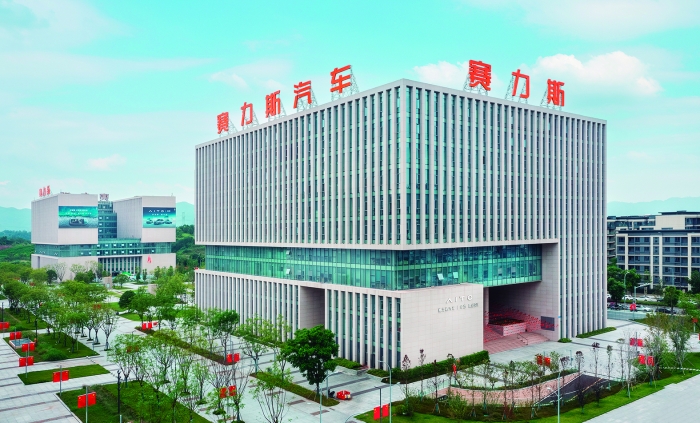
Core Insights - The article discusses the successful "A+H" dual listing of two Chinese companies, Sanhua Intelligent Control and Seres Group, highlighting their journey from manufacturing to global competitiveness in the context of China's transition from "Made in China" to "Intelligent Manufacturing" [5][6]. Group 1: Sanhua Intelligent Control - Sanhua Intelligent Control, which started as a refrigeration parts manufacturer, completed its dual listing in June 2025, marking a significant milestone in its 41-year history [6]. - The company managed to complete its listing process in just five months, capitalizing on a favorable market window as the Hong Kong stock market began to recover [6][9]. - The IPO attracted over 45 times institutional subscription, with foreign long-term cornerstone investors accounting for 45% of the total, indicating strong international confidence in Chinese hard-tech manufacturing [9]. Group 2: Seres Group - Seres Group, a technology-driven company focused on electric vehicles, became the first luxury electric vehicle company to achieve a dual listing in Hong Kong in November 2025 [7]. - The company aims to leverage its Hong Kong listing to expand its international market presence, having already entered over 70 countries with cumulative exports exceeding 550,000 vehicles [9][10]. - During its IPO process, Seres also executed a significant asset acquisition, purchasing 100% of Longsheng New Energy for approximately 8.164 billion yuan, integrating advanced manufacturing capabilities into its operations [8]. Group 3: Role of Investment Banks - China International Capital Corporation (CICC) played a crucial role in facilitating the listings of both companies, providing strategic advice and connecting them with international investors [12]. - CICC's efforts included organizing roadshows in major financial hubs to communicate the companies' growth stories and core competencies to potential investors [10][11]. - The investment bank's approach emphasizes the importance of understanding both the Chinese market and international investor preferences, acting as a bridge for Chinese companies seeking global expansion [11][12].


独家对话 | 王佶的“数据信仰”:从汽配到游戏、搏出千亿元市值,世纪华通如何用算法跑赢巨头?
Mei Ri Jing Ji Xin Wen· 2025-12-29 09:17
Core Insights - Century Huatong has transformed from a struggling company in the gaming industry to the leader in A-share market capitalization by 2025, overcoming challenges from mergers and market competition [1] - The company's stock price has more than doubled in a year, surpassing a market value of 100 billion yuan, with overseas revenue now accounting for over 50% of total income [1] Leadership and Strategy - Wang Ji, a key figure in the company's turnaround, has been instrumental in increasing mobile game revenue from 30% to 70% since joining in 2014 [2] - The company adopts a "data-driven" approach to address skepticism about its ability to succeed in overseas markets dominated by Tencent and NetEase [2] Globalization Approach - The company prioritizes global themes and focuses on SLG and casual gaming genres, implementing a strategy of "overseas first verification, domestic selective launch" [3] - By launching new products in overseas markets first, the company validates product models before adapting them for the domestic market, thereby minimizing risks and enhancing efficiency [3] Market Expansion - Century Huatong views overseas markets as a whole and adjusts strategies based on product performance in different regions, with local teams established in key markets like Europe and Japan [4] - The company plans to focus on emerging markets in Southeast Asia and Latin America while also strengthening its presence in mature markets like Europe and North America [4] Competitive Strategy - To compete domestically against Tencent and NetEase, the company will explore its long-standing IPs and target unmet player needs with differentiated products [5] - The company believes that the casual gaming sector, while competitive, offers long-term strategic value due to its potentially longer lifecycle compared to SLG games [6] Innovation and AI Integration - The company is investing in AI technologies, such as an automated testing platform that significantly reduces testing time and costs [8] - AI-native games are seen as a future direction, evolving traditional gaming into a comprehensive digital social infrastructure [9] Financial and Brand Positioning - The recent removal of financial restrictions has improved the company's funding environment and investor confidence, leading to increased stock liquidity and market interest [10] - The company aims to build a sustainable global competitive advantage over the next 3 to 5 years, expanding beyond gaming into AI, robotics, and semiconductor sectors [11]

【干货】2025年煤矿机械产业链全景梳理及区域热力地图
Qian Zhan Wang· 2025-12-29 06:09
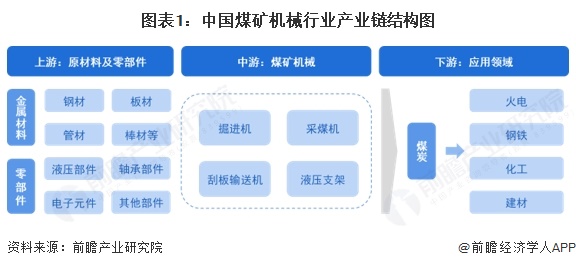
Core Insights - The coal mining machinery industry is experiencing a shift towards intelligent, green, and globalized operations, with major investments from leading companies and energy groups focusing on high-end equipment projects and technological collaborations [11]. Industry Overview - The coal mining machinery industry consists of three main segments: upstream (raw materials and components), midstream (manufacturing of coal mining equipment), and downstream (coal industry applications) [2][4]. - Upstream suppliers include companies like Benxi Steel and Hengli Hydraulic, while midstream manufacturers include Zhengzhou Coal Mining Machinery and SANY Heavy Industry [4][5]. - The downstream sector primarily consists of coal enterprises such as China Coal Energy and Datang Power [4][5]. Regional Distribution - Jiangsu Province is identified as the primary hub for coal mining machinery companies, with significant activity also in Shandong, Shaanxi, and Shanxi provinces [6]. - The coal mining machinery industry is well-established in Liaoning, Shanxi, and Beijing, covering all segments of the supply chain [9]. Investment Trends - Recent investments in the coal mining machinery sector focus on smart technology, green initiatives, and international expansion [11]. - Notable investments include: - In 2023, Shanxi Coal Machinery invested 2.1 billion yuan in a smart high-end coal machinery project, expected to generate an annual output value of 3 billion yuan [13]. - In 2023, Shaanxi Coal Group acquired Xuzhou Coal Mining Machinery for 1.8 billion yuan, increasing its market share in intelligent conveyor systems from 16% to 27% [13]. - In 2025, XCMG launched the world's first unmanned electric mining truck, aiming for zero-carbon operations [13].




东吴证券:全球化纵深与AI破局 汽车零部件开启第二增长极
Zhi Tong Cai Jing· 2025-12-29 04:05
Core Viewpoint - The report from Dongwu Securities indicates that the overall Beta of the sector is expected to weaken by 2026, with structural opportunities being more favorable than overall opportunities. The focus should be on three technological main lines: "Intelligent Driving (L2++/L3/L4) + Liquid Cooling (AIDC) + Humanoid Robots," along with the long-term certainty of "going global" [1]. EPS Dimension - The stock market is seeking alpha through cyclical resilience, prioritizing product companies with high competitiveness that can enhance market share and companies that can increase average selling prices (ASP) by entering high-value sectors through internal and external growth [2]. - Globalization is expected to open growth opportunities in the automotive parts sector, with a focus on enhancing growth potential and risk resistance by prioritizing production capacity in Europe, North America, and Southeast Asia. With profit recovery and deeper customer engagement, companies may transition to global Tier 1/platform leaders between 2026 and 2030. Recommended companies include Fuyao Glass, Xingyu Co., Minth Group, Joyson Electronics, and Xingyuan Magnesium, with New Spring Co. as a focus [2]. PE Dimension - Intelligent Driving: The penetration of L2++ is accelerating, with L3 regulations and urban NOA speeding up, and L4-level smart vehicles rapidly coming to market. The focus should be on chips, domain controllers, core sensors, and drive-by-wire chassis, emphasizing systematic capabilities in cost, algorithms, and safety redundancy. Recommended companies include Horizon Robotics, Black Sesame, and Desay SV, with Bertel and Nexperia as points of interest [3]. - Robotics: Transitioning from "0 to 1" to "1 to 10," benefiting from supply chains involving large models, actuators, reducers, lead screws, and force sensors. The focus should be on automotive parts leaders with "technology synergy + manufacturing collaboration." Recommended companies include Top Group, Joyson Electronics, and Shuanghuan Transmission, with interest in Yapp Automotive Parts and Daimay Co. [3]. - Liquid Cooling: Growth in AI capital expenditure and increased power consumption in AIDC; the liquid cooling temperature control market is projected to reach hundreds of billions by 2030. The automotive parts sector should focus on thermal management, pipelines, and quick connectors, emphasizing system integration and cost reduction capabilities. Recommended companies include Minth Group, Yinlun Co., and Feilong Co. [3].

外媒评价:海南自由贸易港是中国经济自由化进程的重要标志
Huan Qiu Wang· 2025-12-29 01:11
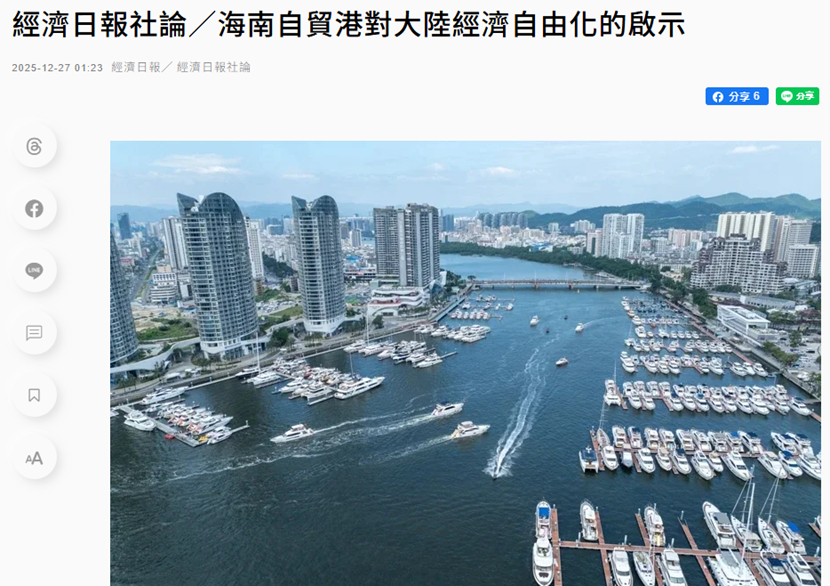
Core Insights - The Hainan Free Trade Port officially commenced operations on December 18, marking a significant step in China's economic liberalization efforts [1][4] - The new policies include a "borderless" zone where 74% of goods are imported duty-free, and value-added processing over 30% is also exempt from taxes [1] - The initiative aims to position Hainan as a new gateway for foreign investment and trade, contrasting sharply with the high tariffs imposed by the United States [1][4] Economic Impact - The Hainan Free Trade Port is expected to serve as a pilot for economic liberalization, potentially leading to gradual tariff reductions and expanded openness in mainland China [4] - The first week of the port's operation saw a remarkable increase in foreign investment, with 1,972 new foreign-funded enterprises registered, representing a 2.3-fold year-on-year increase [4] - From December 18 to 24, the value of goods benefiting from "zero tariffs" in the first line exceeded 400 million yuan, while goods in the second line that enjoyed tax exemptions for processing exceeded 20 million yuan [4]
东吴证券:全球化纵深×AI破局 汽车零部件开启第二增长极
Zhi Tong Cai Jing· 2025-12-28 07:49
Core Viewpoint - The automotive parts sector is expected to see a weakening overall Beta by 2026, with structural opportunities being more favorable than total market opportunities. The focus should be on "intelligent driving (L2++/L3/L4) + liquid cooling (AIDC) + humanoid robots" as key technological lines, along with long-term certainty in overseas expansion [1]. Summary by Categories EPS Dimension - Companies should seek alpha through high-competitiveness products that enhance market share and those that can increase average selling price (ASP) by entering high-value sectors through internal and external growth [2]. - Globalization is expected to enhance growth potential and risk resilience in the automotive parts sector, particularly in Europe, North America, and Southeast Asia. With profit recovery and deeper customer engagement, companies may transition to global Tier 1/platform leaders between 2026 and 2030. Recommended companies include Fuyao Glass (600660), Xingyu Co., Ltd. (601799), Minth Group, Joyson Electronics (600699), and Xingyuan Magnesium (301398), with New Spring Co., Ltd. (603179) as a focus [2]. PE Dimension - Intelligent Driving: The penetration of L2++ is accelerating, with L3 regulations and urban NOA speeding up, and L4-level smart vehicles being rapidly deployed. Companies should prioritize chips, domain controllers, core sensors, and drive-by-wire systems that demonstrate systematic capabilities in cost, algorithms, and safety redundancy. Recommended companies include Horizon Robotics, Black Sesame (000716), and Desay SV Automotive, with Bertel (603596) and Nexperia as points of interest [3]. - Robotics: Transitioning from "0 to 1" to "1 to 10," benefiting from large models and supply chains including actuators, reducers, lead screws, and force sensors. Focus should be on automotive parts leaders with "technology synergy + manufacturing collaboration." Recommended companies include Top Group (601689), Joyson Electronics, and Shuanghuan Transmission (002472), with YaPu Co., Ltd. (603013) and Daimay Co., Ltd. (603730) as points of interest [3]. - Liquid Cooling: Growth in AI capital expenditure and increased power consumption in AIDC are expected to create a market space of hundreds of billions for liquid cooling temperature control by 2030. The automotive parts sector should focus on thermal management, pipelines, and quick connectors, emphasizing system integration and cost reduction capabilities. Recommended companies include Minth Group, Yinlun Machinery (002126), and Feilong Co., Ltd. (002536) [3].
【策略报告】汽车零部件2026年投资策略:全球化纵深×AI破局,汽零开启第二增长极
东吴汽车黄细里团队· 2025-12-28 06:24
Core Viewpoint - The overall Beta of the automotive parts sector is expected to weaken in 2026, with structural opportunities being more favorable than total opportunities. The humanoid robot sector opens up valuation elasticity for automotive parts, focusing on three main technology lines: "Intelligent Driving (L2++/L3/L4) + Liquid Cooling (AIDC) + Humanoid Robots," along with the long-term certainty of "going overseas." Traditional advantageous tracks should be selectively laid out based on "performance realization + new order production" [3][8]. EPS Dimension - In the existing market, companies with high competitiveness that enhance market share and those that enter high-value tracks through internal and external expansion to increase ASP should be prioritized. The globalization of automotive parts opens up growth space, with a focus on production capacity in Europe, North America, and Southeast Asia, significantly enhancing growth potential and risk resistance. Companies are expected to transition to global Tier 1/platform leaders between 2026-2030. Recommended companies include Fuyao Glass, Xingyu Co., Minth Group, Joyson Electronics, and Xingyuan Zhuomag, with New Spring Co. as a focus [4][8]. PE Dimension - Intelligent Driving: The penetration of L2++ is accelerating, with L3 regulations and urban NOA speeding up, and L4-level smart vehicles rapidly landing. Focus on chip + domain control + core sensors + steer-by-wire chassis (systematic capabilities in cost/algorithm/safety redundancy). Recommended companies include Horizon Robotics, Black Sesame, and Desay SV. Companies to watch include Bertel and Nexperia [5][9]. - Robotics: Transitioning from "0→1" to "1→10," benefiting from large models + actuators/reducers/lead screws/force sensors, with a focus on automotive parts leaders that have "technological synergy + manufacturing collaboration." Recommended companies include Top Group, Minth Group, and Shuanghuan Transmission, with a focus on Yapu Co. and Daimay Co. [5][9]. - Liquid Cooling: AI capital expenditure growth and AIDC power consumption increase; the liquid cooling temperature control market is expected to reach hundreds of billions by 2030. Automotive parts should focus on thermal management/pipes/quick connectors, emphasizing system integration and cost reduction capabilities. Recommended companies include Minth Group, Yinlun Co., and Feilong Co. [5][9]. Emerging Industries - The expansion of emerging industries is expected to be less than anticipated, with downstream demand also falling short of expectations, and increasing geopolitical uncertainties [7]. Globalization - The global light vehicle market has a capacity of nearly 80 million units. The overseas light vehicle market is vast, with the 2024 overseas light vehicle production expected to reach 51.7 million units, accounting for 66% of the global market. The globalization of automotive parts is crucial for achieving significant revenue scales [47][49][50]. Conclusion - The automotive parts sector is entering a phase where structural opportunities are prioritized over total market growth. Companies focusing on intelligent driving, robotics, and liquid cooling technologies are expected to lead the way, while globalization will enhance growth potential and resilience against risks [3][4][5][8].





TCL李东生:将中国制造产业优势,扩展到全球
2 1 Shi Ji Jing Ji Bao Dao· 2025-12-27 10:58
Core Viewpoint - Tijuana, located on the US-Mexico border, is emerging as a critical hub for cross-border manufacturing and trade, with a focus on electronics, automotive, and medical devices, as global supply chains are restructured, making Mexico a key destination for Chinese companies like TCL [1][10] Group 1: Globalization and Market Strategy - TCL's approach to globalization is not merely market expansion but involves long-term planning around industrial capabilities and organizational structure, establishing regional operational centers to enhance its global operational system [4][5] - The company aims to create five localized TCL entities globally, enhancing brand influence and supporting global business expansion through local production and supply chains [4][5] - TCL's overseas sales now account for 60% of its smart terminal business, indicating that international markets are crucial for revenue and profit growth [5][11] Group 2: Challenges and New Cycles - TCL identifies two overlapping new cycles: a new global economic pattern and a technological transformation, both presenting challenges and opportunities for Chinese enterprises [5][6] - The shift towards localization and regionalization in global trade rules is reshaping the global economic landscape, which could benefit Chinese companies while also posing challenges [5][10] Group 3: Industrial Capability Building - The logic of overseas expansion is shifting from mere production to collaborative capability building, with TCL focusing on establishing local supply chains and enhancing local manufacturing capabilities [7][9] - TCL's manufacturing base in Mexico, particularly the MOKA factory, has evolved from initial capacity expansion to enhancing profitability, with an annual production capacity now reaching approximately 3 million units [8] Group 4: New Trade Ecosystem - The global manufacturing system is characterized by interdependence among industries and economies, with recent trade tensions complicating this ecosystem, yet fostering industrial development in countries like Mexico and Vietnam [10][11] - Chinese companies, including TCL, are playing a pivotal role in this new trade ecosystem, enhancing their survival and competitiveness in the global market [10][11] Group 5: Competitive Landscape - The competition in the consumer electronics market is intensifying, with TCL emerging as a leading player, facing challenges from both domestic and international brands [11][12] - The necessity for Chinese companies to engage in international competition is underscored by domestic market pressures and the need for differentiation in global markets [11][12]

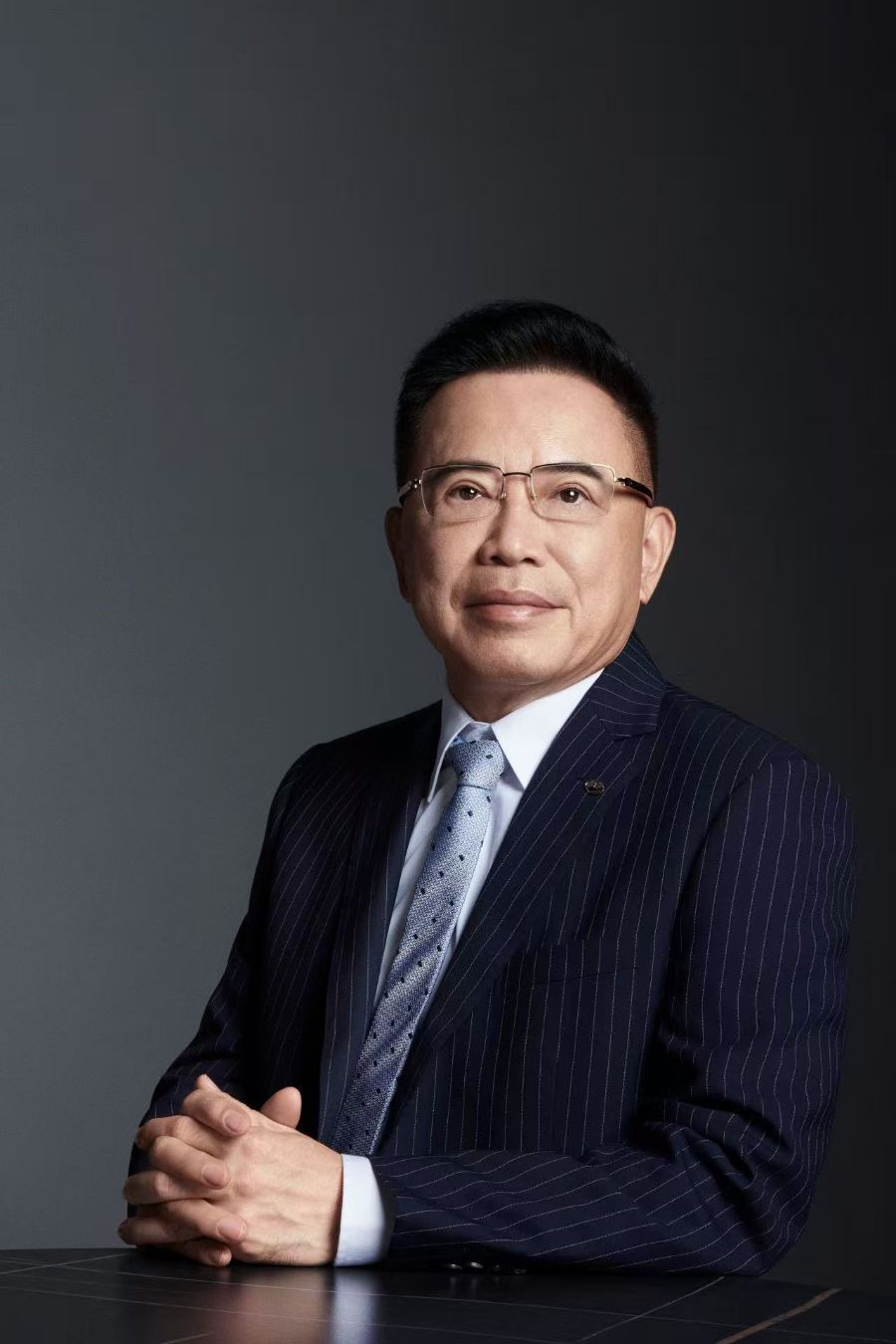
21专访|TCL李东生:将中国制造产业优势,扩展到全球
2 1 Shi Ji Jing Ji Bao Dao· 2025-12-27 10:05
Core Viewpoint - Tijuana, located on the US-Mexico border, is emerging as a critical hub for global manufacturing and trade, particularly for electronics, automotive, and medical devices, as companies like TCL expand their production bases in response to global supply chain restructuring [2][3] Group 1: Globalization and Business Strategy - TCL's approach to globalization is not merely market expansion but involves a long-term strategy focused on industrial capabilities and organizational structure, with a systematic upgrade of its global operations [3] - The company aims to establish five regional centers globally, enhancing local production, assembly, and supply chains to increase brand influence and business value [3] - TCL's overseas sales now account for 60% of its smart terminal business, highlighting the importance of international markets for revenue and profit growth [3] Group 2: Challenges and New Cycles - The current global landscape presents two overlapping challenges: a new cycle in global economic and trade patterns and a technological transformation cycle [5] - The shift towards localization and regionalization in global trade is creating both opportunities and challenges for Chinese enterprises, including TCL [5] - The rise of artificial intelligence and green development is reshaping business models and necessitating a focus on sustainability for Chinese companies [5][9] Group 3: Industrial Capability and Local Integration - The logic of overseas expansion is shifting from mere production to collaborative capability building, emphasizing the construction of supply chains and R&D capabilities [6] - TCL's strategy includes establishing local supply chains and manufacturing bases, as seen in its operations in Vietnam and Poland, which integrate local resources and talent [6][7] - The MOKA factory in Tijuana has evolved from a production facility to a key player in the local industrial ecosystem, enhancing its profitability and operational capacity [7] Group 4: New Trade Ecosystem - The global manufacturing system is characterized by interdependent relationships among industries and economies, which are being reshaped by recent trade dynamics [10] - Chinese companies, including TCL, are playing a crucial role in developing new trade ecosystems in countries like Mexico and Vietnam, enhancing their competitiveness in the global market [10][11] - The expansion of Chinese enterprises into international markets is driven by domestic pressures and the need to compete with multinational corporations [11][12] Group 5: Future Outlook - Participation in international competition is essential for Chinese companies to overcome growth limitations and achieve global leadership [12] - The ongoing evolution of globalization is complex and decentralized, requiring companies to focus on capabilities, organization, and resilience in their international strategies [12]
手握11亿美金现金,MiniMax赴港IPO,不为输血为哪般?
Jin Rong Jie· 2025-12-27 06:35
Core Insights - The recent IPO attempts of Zhipu AI and MiniMax in Hong Kong represent a significant moment for Chinese AI companies, showcasing their capabilities in the global market [1][8] - MiniMax has successfully challenged the stereotype that Chinese AI companies only focus on domestic markets, proving that they can create globally appealing and monetizable AI products [1][2] Group 1: MiniMax's Strategy - MiniMax's success is attributed to its focus on "full-modal" AI, engaging in text, voice, music, and video, achieving top-tier global rankings in these areas [2] - The company has launched products like Talkie and Hai Luo AI, which have gained high download volumes overseas, contributing to its revenue growth [2] - MiniMax has expanded its reach to over 200 countries, amassing more than 212 million users, with a significant portion of revenue coming from subscription models [2] Group 2: Financial Performance - MiniMax's revenue has seen explosive growth, increasing from $3.46 million in 2023 to $30.5 million in 2024, and reaching $53.4 million in just the first nine months of 2025, with a year-on-year growth exceeding 170% [3] - The company has achieved a gross margin of 23.3% by 2025, indicating improved monetization and cost control capabilities [3] - Despite high revenue growth, MiniMax reported a net loss of $269 million in 2023, escalating to $465 million in 2024, and $512 million in the first nine months of 2025, with cumulative losses exceeding $1.327 billion [3][4] Group 3: Challenges and Competition - MiniMax's high losses are primarily due to substantial R&D expenditures, which reached $180 million in the first three quarters of 2025, amounting to 337.4% of its revenue during that period [4] - The company faces intense competition from major players like OpenAI, Google, and Meta in the global market, as well as domestic competitors such as Doubao and Tencent [6] - Legal challenges also pose a risk, as MiniMax is facing lawsuits from major Hollywood studios over potential copyright infringements related to its Hai Luo AI product [6] Group 4: Comparison with Zhipu AI - MiniMax and Zhipu AI represent two distinct approaches to the AI market, with MiniMax focusing on consumer products and global outreach, while Zhipu AI emphasizes technology and infrastructure [7] - MiniMax's revenue model is primarily driven by consumer subscriptions, while Zhipu AI relies on B2B and government projects for income [7] - The contrasting strategies of these companies highlight the diverse pathways for growth within the Chinese AI industry, with MiniMax aiming for a global consumer base and Zhipu AI targeting domestic institutional clients [7][8]