
高端化

Search documents
邵阳电缆夹市场趋势报告2025:技术演进与选型参考
Sou Hu Cai Jing· 2025-11-15 03:43
在电力传输与通信工程的产业链中,电缆夹作为保障线缆安全稳定运行的关键零部件,其产品性能与应用适配性直接影响工程质量与运维成本。邵阳作为湖 南省重要的装备制造基地,近年来依托电力产业升级与基础设施建设热潮,电缆夹市场呈现出稳步增长的发展态势。本文将结合权威行业数据、核心技术分 析、主流品牌表现及实用选购指南,为相关从业者提供全面的参考依据。 一、行业发展现状与数据洞察 根据中国电力企业联合会发布的《2024年电力装备产业发展白皮书》数据显示,2023年我国电力工程建设投资规模达1.2万亿元,同比增长8.3%,其中配电 网建设投资占比提升至42%。电缆夹作为配电网建设的基础耗材,市场需求随投资增长同步攀升,全年市场规模突破68亿元,同比增长11.5%。 从区域市场特征来看,邵阳所在的华中地区因承接东部产业转移及本地新能源项目落地,成为电缆夹需求增长的核心区域之一。邵阳市工信局统计数据显 示,2023年本地规模以上电力装备企业实现电缆夹及相关产品产值3.2亿元,较上年增长14.2%,其中近三成产品供应湖南、湖北、江西三省的新能源光伏电 站及特高压配套工程。 当前市场供给端呈现多元化特征,金属材质电缆固定夹占比达58 ...

趋势研判!2025年中国加氢树脂行业产业链图谱、行业产能、产量、细分市场及未来发展趋势分析:绿色需求打开成长空间,DCPD树脂引领行业发展[图]
Chan Ye Xin Xi Wang· 2025-11-15 02:24
Core Insights - Hydrogenated resins, known for their enhanced chemical stability, heat resistance, and reduced odor, are increasingly used in high-end adhesives, specialty coatings, and electronic packaging [1][2] - By the end of 2024, China's hydrogenated resin production capacity is expected to reach 578,000 tons per year, accounting for over 50% of global capacity, with production increasing from 220,000 tons in 2020 to 420,000 tons [1][9] - The industry is projected to grow to approximately 4.83 billion yuan in 2024 and is expected to reach 5.27 billion yuan in 2025, driven by demand from sectors like new energy vehicles [1][11] Overview of the Hydrogenated Resin Industry - Hydrogenated resins are modified resin materials produced through hydrogenation of petroleum resins, resulting in improved chemical stability and reduced reactivity [2][3] - The production process involves multiple steps, including pre-treatment, polymerization, and hydrogenation refining, typically conducted in high-pressure fixed-bed reactors [3] Current Development Status of China's Hydrogenated Resin Industry - China's hydrogenated resin industry is experiencing significant growth, with production capacity expected to reach 578,000 tons per year by the end of 2024, driven by enhanced raw material supply and downstream demand [8][9] - The production volume is anticipated to double from 220,000 tons in 2020 to 420,000 tons in 2024, with a notable increase in exports due to supply constraints in Europe [8][9] Market Size and Forecast - The market size for hydrogenated resins in China is projected to grow from approximately 4.83 billion yuan in 2024 to 5.27 billion yuan in 2025, reflecting a steady growth trend [11] Industry Chain of China's Hydrogenated Resin Industry - The industry has established a complete value chain, from upstream raw material supply to downstream applications in adhesives, coatings, and high-performance rubber products [12] Competitive Landscape of China's Hydrogenated Resin Industry - The industry is characterized by competition between international giants and domestic leaders, with companies like ExxonMobil and Eastman holding significant market shares in high-end segments [13] - Domestic companies such as Henghe Materials and Puyang Shenghong Chemical are rapidly expanding their production capacity, indicating an intensifying competitive environment [13] Development Trends in China's Hydrogenated Resin Industry - The industry is moving towards high-end, green, and globalized development, with a focus on technological innovation and the expansion of applications in new energy vehicles and other emerging markets [15][16] - The shift towards lower VOC and higher bio-based content materials is driven by stringent environmental regulations and growing demand for sustainable products [16] - The competitive landscape is expected to evolve, with leading companies consolidating their market positions through mergers, capacity integration, and strategic collaborations [17]

十月份国民经济运行总体平稳,发展新动能继续壮大——实现全年预期目标具备有利条件
Ren Min Ri Bao Hai Wai Ban· 2025-11-15 02:09
Economic Overview - The national economy has maintained a steady and progressive development despite facing various risks and challenges, with favorable conditions for achieving annual targets [1] - The macroeconomic policies continue to exert positive effects, with recent measures including a 500 billion yuan new policy financial tool to enhance local government financial capacity and stimulate effective investment [8] Consumer Market - The consumer market has shown significant potential, with a 4.3% year-on-year increase in total retail sales of consumer goods from January to October, and a 5.3% increase in service retail sales [2] - In October, retail sales of food and daily necessities grew by 9.1% and 7.4% respectively, outpacing overall retail growth [2] - Online retail sales increased by 9.6% year-on-year, with physical goods retail growing by 6.3%, indicating a robust trend in e-commerce [3] Industrial Production - Industrial production has expanded, with a 4.9% year-on-year growth in the value added of industrial enterprises above designated size in October, supported by 29 out of 41 major industries showing growth [4] - The equipment manufacturing sector saw an 8% increase in value added, contributing significantly to overall industrial growth [4] - High-tech manufacturing and digital product manufacturing also experienced growth, with increases of 7.2% and 6.7% respectively [4] Corporate Profitability - Industrial enterprises above designated size reported a 3.2% year-on-year increase in profits from January to September, with notable growth in the equipment manufacturing and high-tech sectors at 9.4% and 8.7% respectively [5] Emerging Consumption Trends - The growth of new consumption patterns is evident, with significant increases in the retail of upgraded products, such as a 23.2% rise in communication equipment and a 13.5% rise in cultural and office supplies [2] - The service sector has also shown resilience, with retail sales in tourism, transportation, and cultural services maintaining over 10% growth [2]
落子上海!恒力重工打造国际化船舶研发设计中心
Sou Hu Cai Jing· 2025-11-14 07:08
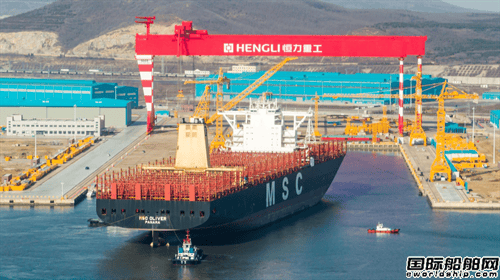
Core Viewpoint - Hengli Heavy Industry announced the establishment of an international ship research and design center in Shanghai, enhancing its capabilities in high-end shipbuilding and attracting top talent in the industry [2][4]. Fundraising and Investment Projects - Guangdong Songfa Ceramics Co., Ltd. approved a proposal to increase the implementation subject and location of fundraising projects, designating Hengli Shipbuilding and its subsidiaries as the implementation body for the "Hengli Heavy Industry Group Co., Ltd. International Ship Research and Design Center Project (Phase I)" [2][3]. - The total amount raised through the issuance of shares was approximately RMB 3.99 billion, with a net amount of approximately RMB 3.93 billion after deducting issuance costs [2]. Project Details - The Hengli Shipbuilding (Dalian) green high-end equipment manufacturing project has a total investment of approximately RMB 8 billion, with planned fundraising of RMB 3.5 billion [3]. - The Hengli Heavy Industry International Ship Research and Design Center (Phase I) project has a total investment of approximately RMB 740 million, with planned fundraising of about RMB 430 million [3]. Strategic Importance - Hengli Shipbuilding, as a wholly-owned subsidiary of Hengli Heavy Industry, plays a crucial role in the shipbuilding sector, leveraging its strong R&D team to enhance operational efficiency and expedite project implementation [4]. - Shanghai's status as a leading international shipping center provides access to top-tier shipping resources and talent, which is expected to strengthen the company's R&D capabilities in green, high-end, and intelligent shipbuilding [4]. Company Background - Hengli Heavy Industry was established in response to national initiatives, acquiring the former STX Dalian assets for RMB 2.11 billion to create a world-class high-end shipbuilding base [5]. - The company has commenced construction on over 60 vessels, with a backlog of approximately 170 orders scheduled for delivery until 2029 [5]. - Once fully operational, Hengli Heavy Industry's projects are expected to produce over 150 large vessels annually and cover four types of dual-fuel systems, positioning it as the largest and most comprehensive shipbuilding base globally [5].

比亚迪(002594):比亚迪2025年10月销量点评:出海销量同环比高增,总量超过44万辆
Changjiang Securities· 2025-11-14 05:43
Investment Rating - The investment rating for BYD is "Buy" and is maintained [6]. Core Insights - In October, BYD's total sales reached 442,000 units, a year-on-year decrease of 12.1% but an increase of 11.5% month-on-month. Passenger vehicle sales were 437,000 units, down 12.7% year-on-year and up 11.1% month-on-month [2][4][10]. - The export sales in October were 84,000 units, showing a significant year-on-year increase of 167.8% and a month-on-month increase of 17.9% [2][10]. - Cumulatively, from January to October 2025, BYD's total sales reached 3.702 million units, up 13.9% year-on-year, with cumulative export sales of 778,000 units, up 136.4% year-on-year [2][10]. Summary by Sections Sales Performance - October total sales: 442,000 units, YoY -12.1%, MoM +11.5% - Passenger vehicle sales: 437,000 units, YoY -12.7%, MoM +11.1% - Brand performance: Ocean series sales at 395,000 units, Equation Leopard at 31,000 units, and Tengshi at 10,000 units [2][10]. Export Growth - October export sales: 84,000 units, YoY +167.8%, MoM +17.9% - Cumulative export sales from January to October: 778,000 units, YoY +136.4% [2][10]. Strategic Developments - Continued focus on overseas market expansion and high-end product offerings, with new factories established in Thailand, Uzbekistan, Brazil, and Hungary, and new entries into Vietnam, Pakistan, and Tunisia [10]. - The launch of new high-end models is expected to enhance performance, with a projected net profit of 35 billion yuan for 2025, corresponding to a PE ratio of 26X [10].

行业深度 | 2025Q3:盈利分化加剧 高端化&智能化亮眼【民生汽车 崔琰团队】
汽车琰究· 2025-11-14 02:14
Core Viewpoint - The automotive industry is experiencing a divergence in performance, driven by scale effects and a shift towards high-end products, impacting profitability across different segments [2][4][5]. Passenger Vehicles - In Q3 2025, wholesale sales of passenger vehicles reached 7.686 million units, a year-on-year increase of 14.7% and a quarter-on-quarter increase of 8.1% [2]. - Wholesale sales of new energy passenger vehicles were 4.024 million units, up 24.2% year-on-year and 10.9% quarter-on-quarter, with a penetration rate of 52.4% [30][49]. - Revenue for six major domestic companies, including SAIC and BYD, totaled 537.8 billion yuan, reflecting a year-on-year growth of 7.8% [2]. - The gross margin for passenger vehicle companies was 15.1%, down 2.5 percentage points year-on-year but up 2.2 percentage points quarter-on-quarter [2]. - Net profit attributable to parent companies in Q3 2025 was 13.57 billion yuan, a decline of 20.2% year-on-year and 11.1% quarter-on-quarter [2]. Auto Parts - The auto parts sector saw revenue of 279.8 billion yuan in Q3 2025, a year-on-year increase of 17.9% and a quarter-on-quarter increase of 5.0% [3]. - The gross margin for the auto parts sector was 18.3%, up 0.6 percentage points year-on-year [3]. - The net profit growth rate for the auto parts sector was 13.8% year-on-year, with a net profit margin of 5.8% [3]. Commercial Vehicles - Heavy truck wholesale sales reached 282,000 units in Q3 2025, a year-on-year increase of 58.1% [4]. - Revenue from key heavy truck companies was 108 billion yuan, up 26.9% year-on-year [4]. - The gross margin for key bus companies was 19.3%, an increase of 7.4 percentage points year-on-year [4]. Motorcycles - The wholesale sales of mid-to-large displacement motorcycles reached 259,000 units in Q3 2025, a year-on-year increase of 19.2% [5]. - Revenue for the motorcycle sector was 15.41 billion yuan, reflecting a year-on-year increase of 25.4% [5]. - The overall gross margin for key motorcycle companies was 23.2%, up 0.4 percentage points year-on-year [5]. Investment Recommendations - For passenger vehicles, companies such as Geely, Xpeng, and BYD are recommended due to their focus on smart and global expansion [5]. - In the auto parts sector, companies involved in smart driving and lightweight components are highlighted for investment [5][6].





湘潭“脱胎”老三样
2 1 Shi Ji Jing Ji Bao Dao· 2025-11-13 13:21
湘潭钢铁集团有限公司(以下简称"湘钢")工厂内,加热的钢坯在机械设备中被传送、轧制,巨大的器 械运作时发出的轰鸣声敲击着在场所有人的耳膜——这是重工业的声音,而钢坯之下运作的自动转钢系 统,却悄然暗示着湘潭产业的"脱胎换骨"。 在湘潭,城市产业版图中的"普通钢、燃油汽车、房地产"老三样正在转型升级为"特种钢、电动汽车、 先进电池"新三样。连续4年上榜全国先进制造业百强市的湘潭,正大踏步向先进制造业高地迈进。 "含智量"升级 湘潭市最新政府工作报告中,"三优三特"占据重要位置。在"着力构建先进制造业产业体系"方面,其中 提到,提升"三优三特"能级。 在工业和信息化部"新型工业化媒体调研行"湖南站情况介绍会上,湘潭市人民政府副秘书长李先金提 到,湘潭立足本地工业基础,构建了以"三优三特"为骨干的现代化产业体系,即先进钢铁材料、新能源 汽车、先进能源材料及电池三大优势主导产业,和电子信息与智能终端、电机电控电传动与高端装备制 造、高端医疗器械三大新兴特色产业。 "三优"之中,先进钢铁材料产业以湘钢集团为核心。 "先进"二字,在于智能化,也在于高端化等。高端化方面,近年来,湘钢高端品种研发及应用取得历史 突破,先后完 ...
宇通客车(600066):宇通客车10月销量点评:季初销量偏平淡,公司完成全年目标信心充足
Changjiang Securities· 2025-11-13 12:44
Investment Rating - The investment rating for the company is "Buy" and is maintained [6]. Core Views - The company reported a total of 3,040 bus sales in October 2025, representing a year-on-year decrease of 5.6% and a month-on-month decrease of 36.1%. For the period from January to October 2025, total bus sales reached 37,000 units, an increase of 5.9% year-on-year [2][4]. - The company is recognized as a global leader in the bus industry, with strong long-term growth potential and a consistent high dividend payout capability, highlighting its investment value [2][10]. - The domestic market is experiencing growth in seated buses, supported by the "old-for-new" policy, which is boosting the demand for new energy buses. In the overseas market, the company's globalization and high-end strategy are advancing, with exports enhancing profitability and supporting continuous performance improvement [10]. Summary by Sections Sales Performance - In October 2025, the company sold 3,040 buses, down 5.6% year-on-year and down 36.1% month-on-month. The sales of medium and large buses were 2,462 units, down 11.5% year-on-year and down 37.3% month-on-month. Cumulatively, from January to October 2025, the company sold 37,000 buses, up 5.9% year-on-year, with medium and large bus sales at 30,000 units, down 1.6% year-on-year [2][4][10]. Market Strategy - The company is enhancing its direct sales and service model to improve service quality and efficiency. The "old-for-new" policy is expected to continue driving the recovery of the bus market domestically. Internationally, the company is accelerating its overseas expansion, with the first overseas new energy commercial vehicle factory in Qatar expected to be completed by the end of 2025, with an initial annual production capacity of 300 units, expandable to 1,000 units [10]. Financial Outlook - The company is projected to have a full-year dividend of 1.5 yuan per share (before tax) in 2024, with a total payout of 3.32 billion yuan and a dividend rate of 80.7%. The expected mid-year dividend for 2025 is 0.5 yuan per share, with a payout ratio of approximately 57.2%. The forecasted net profit attributable to the parent company for 2025 and 2026 is 4.82 billion yuan and 5.62 billion yuan, respectively, corresponding to PE ratios of 14.8X and 12.7X [10].
汽车行业系列深度十二:2025Q3:盈利分化加剧,高端化、智能化亮眼
Minsheng Securities· 2025-11-13 12:30
Investment Rating - The report maintains a positive outlook on the automotive industry, particularly highlighting opportunities in high-end and intelligent vehicles, as well as the growth of new energy vehicles [4]. Core Insights - The automotive industry is experiencing a divergence in profitability, driven by scale effects and a shift towards high-end and intelligent products. The wholesale sales of passenger vehicles reached 7.686 million units in Q3 2025, up 14.7% year-on-year and 8.1% quarter-on-quarter. New energy vehicle sales were particularly strong, with 4.024 million units sold, reflecting a year-on-year increase of 24.2% [1][39]. - The report emphasizes the growth in the component sector, with revenues reaching 279.8 billion yuan in Q3 2025, a year-on-year increase of 17.9%. The profitability of intelligent components is notably strong, with a gross margin of 18.3% [2]. - In the commercial vehicle segment, heavy truck sales increased by 58.1% year-on-year, with revenues of 108 billion yuan, while bus profitability is also on the rise due to domestic and export demand [3]. - The motorcycle segment is seeing accelerated growth in mid-to-large displacement models, with sales of 259,000 units in Q3 2025, up 19.2% year-on-year [4]. Summary by Sections 1. Industry Overview - The automotive sector's fund holding ratio decreased to 6.00% in Q3 2025, reflecting a slight decline in investor confidence amid concerns over seasonal demand and competition [12]. 2. Passenger Vehicles - The report notes that the passenger vehicle market is being driven by policy support and the increasing penetration of new energy vehicles, with a total of 5.947 million units insured domestically in Q3 2025, up 2.6% year-on-year [39]. - The average selling price (ASP) is showing divergence, with some brands performing better than others, particularly in the new energy segment [39]. 3. Components - The component sector is benefiting from scale effects and a decrease in raw material costs, leading to a gross margin increase of 0.6 percentage points year-on-year [2][3]. - Key areas such as intelligent driving and lightweight components are outperforming the average growth rates in the industry [2]. 4. Commercial Vehicles - Heavy truck sales reached 282,000 units in Q3 2025, with a revenue increase of 26.9% year-on-year, while bus sales also showed positive growth [3]. 5. Motorcycles - The motorcycle segment is experiencing robust growth, particularly in exports, with total revenue reaching 15.41 billion yuan, a year-on-year increase of 25.4% [4]. 6. Investment Recommendations - The report recommends investing in high-quality autonomous brands such as Geely, Xpeng, BYD, and others, as well as in key component manufacturers in the intelligent driving and new energy sectors [4].



新型工业化调研行|“老三样”变“新三样” 湘潭制造业转型升级迈大步
Zhong Guo Jing Ying Bao· 2025-11-13 08:31
Group 1: Economic Development and Industry Transformation - Xiangtan City is driving high-quality economic development through model innovation, transitioning from traditional industries like ordinary steel, fuel vehicles, and real estate to advanced manufacturing sectors such as special steel, electric vehicles, and advanced batteries [1] - Since the 14th Five-Year Plan, Xiangtan has focused on strengthening its leading advantages in advanced steel materials, new energy vehicles, and advanced energy materials and batteries, achieving over 100 billion in revenue scale [1] - The production of new energy vehicles has significantly increased from 170,000 units in 2020 to nearly 600,000 units this year, with new energy vehicles accounting for over 50% of total production [1] Group 2: Company Strengths and Innovations - Xiangtan Steel Group (Xianggang) has become the strongest domestic producer in the medium and thick plate sector, capitalizing on the demand for raw materials as China became the "world factory" [2] - Xianggang has successfully replaced imports in several technical products, achieving global firsts in certain niche areas, such as the development of high toughness steel plates and core production technologies previously monopolized by foreign companies [3] - The company aims to accelerate its development towards high-end, intelligent, and green manufacturing, aspiring to become a national-level intelligent factory during the 15th Five-Year Plan [3]