
中央经济工作会议

Search documents
王微:“十五五”期间会有一系列消费新增长点涌现
Zhong Guo Xin Wen Wang· 2025-12-16 14:50
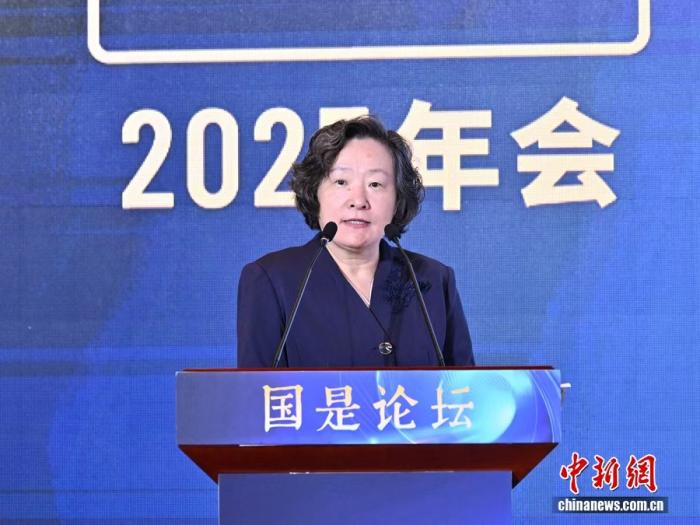
王微:"十五五"期间会有一系列消费新增长点涌现 中新网北京12月16日电(记者 谢艺观)"'十五五'期间,围绕着商品提质、服务扩容、数字升级以及绿色 健康等重大领域,会有一系列消费新增长点不断涌现,有些新增长点的量级会超过万亿级,成为整个中 国消费市场非常重要的发展动能。" 16日,国务院发展研究中心市场经济研究所原所长、二级研究员王微在中国新闻社举办的"国是论坛: 2025年会"上如是表示。 王微指出,短期看,一方面外部环境存在较大不确定性,另一方面国内经济运行存在结构性矛盾。如, 在需求侧,居民消费信心不足、预期偏弱,导致居民消费行为趋于谨慎;在供给侧,虽呈现"供强需 国务院发展研究中心市场经济研究所原所长、二级研究员王微进行主旨演讲。 李太源 摄 弱"态势,但大量供给与新兴消费需求不相匹配,结构性矛盾突出,亟待通过供给调整推动供需更好匹 配。 中央经济工作会议指出,"明年经济工作在政策取向上,要坚持稳中求进、提质增效",并明确"深入实 施提振消费专项行动"。 王微表示,政策应在以下几方面持续优化发力:一是优化以旧换新政策,在稳定推进以旧换新的基础 上,强化对服务消费的支持,与相关政策协同助力文化、教育、 ...

聚焦中央经济工作会议 | 中央财办有关负责同志详解2025年中央经济工作会议精神
Xin Hua She· 2025-12-16 13:56
Core Viewpoint - The 2025 Central Economic Work Conference outlines China's economic performance and strategic priorities, emphasizing resilience and innovation in the face of challenges, while setting a roadmap for future growth and stability. Economic Performance and Outlook - The overall economic operation is stable with expected growth around 5% for the year, positioning China among the leading global economies, with a GDP target of approximately 140 trillion yuan [2] - Employment remains stable, with significant growth in foreign trade and diversified exports [2] - The construction of a modern industrial system is progressing, with advancements in technology and innovation, particularly in AI, biomedicine, and robotics [2] - Reforms and opening-up measures are advancing, with a focus on building a unified national market and addressing "involution" in competition [2] - Positive progress in risk mitigation in key areas, including local government debt management and the completion of housing projects [2] - Social welfare policies, such as childcare subsidies and free preschool education, are being implemented to enhance public welfare [2] Challenges and Strategic Responses - The conference acknowledges ongoing economic challenges, including external environmental changes and domestic supply-demand imbalances [3] - Despite these challenges, China's long-term economic fundamentals remain strong, supported by its socialist system, large market, complete industrial system, and rich talent resources [3] - The government plans to implement more proactive macroeconomic policies, including fiscal and monetary measures, to support economic recovery [4][5] Fiscal Policy - The fiscal policy will maintain necessary deficits and debt levels while addressing local fiscal challenges and ensuring sustainable finances [5][6] - Emphasis on optimizing fiscal expenditure structure to support major national strategies and enhance social welfare [6][7] Monetary Policy - The monetary policy will focus on stabilizing economic growth and ensuring reasonable price recovery, maintaining liquidity, and supporting key sectors like technology and small enterprises [8][9] - A flexible approach to monetary tools will be adopted to align financing growth with economic and price expectations [8][9] Domestic Demand and Investment - Expanding domestic demand is a top priority, with a focus on boosting consumption and investment, particularly in services and infrastructure [9][10] - The government aims to enhance consumer purchasing power and support new consumption models while increasing investment in social welfare and urban renewal projects [10] Regional Development and Coordination - The conference emphasizes the importance of regional coordination in development, with specific strategies for enhancing the roles of major economic provinces [19][20] - Plans include tailored support for local economies and promoting urban-rural integration [19][20] Green Transition and Employment - The government is committed to a green transition, with initiatives aimed at carbon peak and neutrality, alongside promoting green industries [21][22] - Employment policies will focus on stabilizing job markets, particularly for key demographics like graduates and migrant workers, while enhancing vocational training [23][24] Real Estate Market Stability - The real estate market is under scrutiny, with measures to stabilize housing prices and promote high-quality development [26][27] - Strategies include addressing supply-demand dynamics and supporting real estate companies in transitioning to new business models [27][28]
聚焦中央经济工作会议|中央财办有关负责同志详解2025年中央经济工作会议精神
Xin Hua She· 2025-12-16 12:53
聚焦中央经济工作会议|中央财办有关负责同志详解2025年中央经济工作会议精神 新华社北京12月16日电 题:中央财办有关负责同志详解2025年中央经济工作会议精神 新华社记者 在"十四五"即将收官、"十五五"新程待启的关键时点,2025年12月10日至11日召开的中央经济工作会议 备受瞩目。 当前经济形势怎么看?"十五五"新开局重点任务如何推进?聚焦舆论关注的热点问题,中央财办有关负 责同志会后第一时间接受中央主要媒体采访,深入解读中央经济工作会议精神。 问:2025年我国交出怎样的经济"成绩单"?明年经济形势如何? 答:中央经济工作会议对今年经济工作进行全面总结,指出2025年是很不平凡的一年,我国经济顶压前 行、向新向优发展,展现强大韧性和活力。 一是运行总体平稳、稳中有进。主要经济指标符合预期,预计全年经济增长5%左右、继续位居世界主 要经济体前列,经济总量有望达到140万亿元左右。就业总体稳定,外贸较快增长、出口多元化成效明 显。 二是现代化产业体系建设持续推进。新质生产力稳步发展,科技创新成果丰硕,人工智能、生物医药、 机器人等研发应用走在全球前列。 三是改革开放迈出新步伐。全国统一大市场建设向纵深 ...
聚焦中央经济工作会议丨中央财办有关负责同志详解2025年中央经济工作会议精神
Xin Hua Wang· 2025-12-16 12:52
Core Viewpoint - The 2025 Central Economic Work Conference outlines China's economic performance and strategic priorities, emphasizing resilience and innovation in the face of challenges, while setting a roadmap for future growth and stability. Economic Performance and Outlook - The overall economic operation is stable with expected growth around 5% for the year, positioning China among the leading global economies, with a projected GDP of approximately 140 trillion yuan [2] - Employment remains stable, with significant growth in foreign trade and diversified exports [2] - The construction of a modern industrial system is progressing, with advancements in technology and innovation in sectors like AI and biomedicine [2] - Reforms and opening-up measures are advancing, with a focus on creating a unified national market and addressing competitive issues [2] - Risk mitigation in key areas has shown positive results, including the orderly replacement of local government hidden debts and the completion of housing delivery tasks [2] - Social welfare policies, such as childcare subsidies and free education for preschoolers, are being implemented to enhance public welfare [2] Challenges and Strategic Responses - The conference acknowledges ongoing economic challenges, including external environmental changes and domestic supply-demand imbalances [3] - Despite these challenges, China's long-term economic fundamentals remain strong, supported by a large market, complete industrial system, and abundant talent resources [3] - The government plans to continue implementing proactive macroeconomic policies, focusing on quality and efficiency [4][5] Fiscal and Monetary Policy - The fiscal policy will maintain necessary deficits and debt levels while addressing local fiscal difficulties and ensuring sustainable finances [5][6] - Monetary policy will remain moderately accommodative, with a focus on stabilizing economic growth and ensuring liquidity [8][9] Domestic Demand and Investment - Expanding domestic demand is a top priority, with a contribution rate of 71% to economic growth in the first three quarters [9] - The government aims to stimulate consumption by addressing structural changes and enhancing residents' income [9][10] - Investment strategies will focus on infrastructure and social welfare, with an emphasis on high-quality projects and private sector engagement [10] Regional Development and Innovation Centers - The construction of international technology innovation centers in Beijing, Shanghai, and the Guangdong-Hong Kong-Macau Greater Bay Area is a key strategic initiative to enhance global competitiveness [11][12] - The expansion of these centers aims to integrate innovation resources and promote high-quality development [12] Market Regulation and Competition - The government is addressing market distortions and enhancing fair competition through regulatory reforms and the establishment of a unified national market [13][14] - Measures will be taken to regulate local government behaviors and ensure compliance with fair competition standards [14] Trade and Foreign Investment - The government plans to enhance foreign trade and investment through a series of measures, including expanding service sector openness and optimizing the business environment for foreign investors [15][17] - Efforts will be made to sign more trade agreements and promote high-quality imports [16][17] Employment and Real Estate Market - Employment policies will focus on stabilizing job growth, particularly for key demographics such as graduates and migrant workers [22][23] - The real estate market will be stabilized through measures that address both supply and demand, encouraging the transformation of real estate companies and promoting high-quality housing development [25][27]
博时基金市场异动陪伴12月16日:沪深三大指数跌超1%,创业板指跌超2%
Xin Lang Cai Jing· 2025-12-16 08:03
♨博时基金市场异动陪伴 市场表现: MACD金叉信号形成,这些股涨势不错! 责任编辑:江钰涵 ♨博时基金市场异动陪伴 市场表现: 12月16日,沪深三大指数跌超1%,创业板指跌超2%。 12月16日,沪深三大指数跌超1%,创业板指跌超2%。 解析: ‼今日A股市场调整,创业板指数跌幅较深,或是海内外多重压力共同作用的结果。外部看,隔夜美股 因AI概念股持续抛售而收跌,全球科技板块情绪受挫传导至A股相关板块。同时,美联储官员暗示货币 政策已达"良好位置",叠加日本央行加息预期扰动,全球流动性宽松预期受限,或边际压制成长板块估 值。国内层面,市场正处于重要会议后的政策细则等待期,增量政策的落地节奏尚不明朗。加之临近年 底,部分资金倾向于获利了结或转向防御,市场整体情绪趋于谨慎。 ‼最新公布的11月份宏观经济数据呈现出"外需有韧性,内需待巩固"的复杂图景。一方面,出口同比增 长5.7%,展现出超预期韧性;规模以上工业增加值在装备制造和高技术制造业支撑下保持稳定;CPI同 比涨幅扩大及PPI环比转正,也显示价格压力有所缓解。另一方面,社会消费品零售总额同比增速放 缓,固定资产投资同比降幅扩大,其中房地产开发投资下滑显 ...

国贸商品指数日报-20251216
Guo Mao Qi Huo· 2025-12-16 03:15
Report Summary 1) Report Industry Investment Rating No information provided. 2) Core View of the Report On December 15th, the domestic commodity futures market closed with mixed results. New energy materials, shipping futures, black commodities, precious metals, non - metallic building materials, most chemicals, energy products, and most agricultural and sideline products showed gains, while basic metals and all oilseeds and fats declined. Industrial products had a differentiated performance, and agricultural products were also mixed [1]. 3) Summary by Related Catalogs Black Commodities - Most black commodities rose. Recently, the supply and demand of steel were both weak, and the steel futures market remained weak. Affected by the cold wave, outdoor construction was further restricted, and the apparent demand for the five major steel products last week dropped to 839.72 million tons, the lowest in the same period in recent years, with a month - on - month decline of 2.83%. Although the fundamentals were not strongly driven, policy factors might cause fluctuations. In the short term, due to positive domestic and foreign macro - expectations, steel trading was active, and steel prices still had the impetus to rebound, but the upward space was limited, with a medium - term weak outlook [1]. Basic Metals - This category had the largest decline. For copper, after the Fed's interest rate cut and restart of Treasury bond purchases, the liquidity expectation was marginally relaxed, and the tone of the Central Economic Work Conference was positive. Although the short - term bullish sentiment cooled, the risk of continuous decline in copper prices was small, and it might shift to a volatile trend. The supply of copper ore remained tight, the supply of refined copper in China was expected to increase, but the downstream operating rate was stable, and the surplus pressure was not significant. - Lithium carbonate first fell and then rose. The arrival volume of lithium ore at ports was expected to increase month - on - month in the next month, and the tight supply situation at the mine end was expected to ease marginally. The resumption of production at lithium mines was in progress. The high - growth demand for energy storage continued, the supply - demand pattern of lithium carbonate had not changed, and social inventories continued to decline, which supported the strong operation of futures prices [1]. Energy and Chemical Products - The movement of energy and chemical products was volatile. On Monday, the main contract of SC crude oil was hesitant, and the market sentiment became more cautious. In the short term, crude oil inventories decreased while refined oil inventories increased significantly, and the fundamentals remained under pressure. Geopolitical and macro - factors were still uncertain, and oil prices were under pressure and volatile. In the medium term, the contradiction of oversupply was predominant, and the center of oil prices might decline. However, there was a risk of upward correction in oil prices from December to January due to the resonance of geopolitical risks, cold wave impacts, and low - inventory destocking [1]. Oilseeds and Fats - All oilseeds and fats declined. Due to weak US export demand and the upcoming harvest in Brazil, traders closed their long positions, and US soybeans fell to a seven - week low. In the domestic market, both soybean meal and rapeseed meal were weak. The main contract of soybean meal increased in positions and declined, and the main contract of rapeseed meal also slightly declined. The market lacked the impetus to continue rebounding. In addition to the weak external market suppressing the cost of soybean imports, the domestic soybean meal market fundamentals were also bearish. Although the short - term spot prices were supported, the far - month contracts were still suppressed by the loose supply pattern. The electronic trading of CBOT soybean oil oscillated at a low level. The uncertainty of the US biodiesel policy was bearish for the soybean oil market, and the decline of US soybeans also dragged down the domestic oil market. The main contracts of soybean oil and palm oil both declined, and the decline of rapeseed oil futures was obvious. The abundant international supply continued to pressure the market. Although the news of strict customs inspections on non - genetically modified rapeseed oil imports briefly boosted the market sentiment, the impact on actual supply and demand was limited, and the speculation sentiment in the rapeseed oil market cooled. The near - term supply should focus on the crushing rhythm of Australian rapeseeds [1].
有色金属日报 2025-12-16-20251216
Wu Kuang Qi Huo· 2025-12-16 01:16
张世骄 从业资格号:F03120988 0755-23375122 zhangsj3@wkqh.cn 有色金属日报 2025-12-16 五矿期货早报 | 有色金属 铜 【行情资讯】 吴坤金 从业资格号:F3036210 交易咨询号:Z0015924 0755-23375135 wukj1@wkqh.cn 曾宇轲 从业资格号:F03121027 0755-23375139 zengyuke@wkqh.cn 王梓铧 从业资格号:F03130785 0755-23375132 wangzh7@wkqh.cn 刘显杰 从业资格号:F03130746 0755-23375125 liuxianjie@wkqh.cn 陈逸 从业资格号:F03137504 0755-23375125 cheny40@wkqh.cn 贵金属走强带动情绪面回暖,铜价冲高,昨日伦铜 3M 合约收涨 1.16%至 11686 美元/吨,沪铜主力合 约收至 92480 元/吨。LME 铜库存减少 25 至 165875 吨,注销仓单比例下滑,Cash/3M 升贴水下滑。 国内电解铜社会库存小幅增加,保税区库存较上周四小幅减少,上期所日度仓单增加 ...
东方财富证券研究所所长孟杰:中国经济“向新向优” 信心和底气不断增强
Zheng Quan Ri Bao· 2025-12-15 15:52
本报记者 周尚伃 12月10日至11日,中央经济工作会议在北京举行,全面总结2025年经济工作,深刻分析当前经济形势,并部署2026年经济 工作。围绕会议核心精神与关键部署,《证券日报》记者采访了东方财富证券研究所所长孟杰。 孟杰进一步补充表示,从具体实施路径来看,本次会议新增"发挥存量政策和增量政策集成效应,加大逆周期和跨周期调 节力度"的提法,预示后续宏观政策将是存量政策与增量政策、逆周期与跨周期政策并重并行。同时,会议强调"健全预期管理 机制,提振社会信心",体现出对信心和预期的重视。其中,财政政策提出"保持必要的财政赤字、债务总规模和支出总量", 强调要"重视解决地方财政困难",重点方向是"兜牢基层'三保'底线";货币政策具体工具上包括"降准降息"总量性政策和"扩大 内需、科技创新、中小微企业等重点领域"的鼓励支持性政策。 培育长期动能 对于会议确定的2026年经济工作八项重点任务,孟杰认为,这一系列部署将系统性地培育长期动能。 在孟杰看来,会议在经济工作总体方向上强调"持续扩大内需、优化供给",在重点工作部署方面首位强调"坚持内需主 导",既有需求侧的收入提振、优化"两新"等,也有供给侧的"扩大优质 ...

国贸期货日度策略参考-20251215
Guo Mao Qi Huo· 2025-12-15 07:28
Report Industry Investment Ratings - Bullish: Platinum [1] - Bearish: Industrial Silicon, Fuel Oil [1] - Volatile: Stock Index, Treasury Bond, Aluminum Oxide, Zinc, Nickel, Stainless Steel, Tin, Gold, Silver, Palladium, Polysilicon, Lithium Carbonate, Rebar, Hot Rolled Coil, Iron Ore, Manganese Silicon, Ferrosilicon, Glass, Soda Ash, Coke, Coking Coal, Palm Oil, Soybean Oil, Rapeseed Oil, Cotton, Sugar, Corn, Soybean Meal, Pulp, Log, Urea, Propylene, PVC, Caustic Soda, LPG, Container Shipping [1][2] Core Views - In the short - term, be cautious about the “buy - the - rumor, sell - the - news” adjustment after the policy implementation of the Central Economic Work Conference. However, the market adjustment since mid - November has opened up space for the stock index to rise next year, providing a layout window [1]. - Asset shortage and weak economy are beneficial to bond futures, but the central bank has recently warned about interest - rate risks, suppressing the upward space. There is an opportunity to go long at low positions [1]. - Metal prices are affected by factors such as industrial drivers, risk preferences, and macro - policies, showing different trends of high - level volatility, short - term rebound with limited upward drive, and short - term shock - strengthening [1]. - Precious metals have different short - and long - term trends, with some having short - term shocks and long - term upward potential, and some being recommended to wait and see [1]. - New energy - related products are affected by factors such as production capacity, demand, and cost, showing trends of decline, shock, and short - term pressure [1]. - Black metal prices are affected by factors such as macro - drivers, supply - demand, and inventory, and some products have opportunities for basis positive - spread positions [1]. - Agricultural product prices are affected by factors such as reports, policies, and supply - demand, and different products have different trends and investment suggestions [1]. - Energy - chemical product prices are affected by factors such as international agreements, supply - demand, and cost, showing trends of decline, shock, and short - term upward movement [1][2]. Summary by Related Catalogs Macro Finance - Stock Index: In the short - term, be cautious about the “buy - the - rumor, sell - the - news” adjustment after the policy implementation of the Central Economic Work Conference. In the long - term, the market adjustment since mid - November has opened up space for the stock index to rise next year. Investors can gradually establish long positions during the adjustment period and use the discount structure of stock - index futures to optimize investment costs and win - rates [1]. - Treasury Bond: Asset shortage and weak economy are beneficial to bond futures, but the central bank has recently warned about interest - rate risks, suppressing the upward space. The market sentiment is fluctuating recently, and there is an opportunity to go long at low positions [1]. Non - ferrous Metals - Aluminum Oxide: Industrial drivers are limited, and risk preferences are fluctuating. The aluminum price is oscillating widely at a high level. Domestic alumina production and inventory are both increasing, and the fundamentals are weak. Some short - positions are closed in the short - term, and the price rebounds, but the upward drive is limited [1]. - Zinc: Short - term macro - benefits have been digested, the fundamentals have improved, the cost center has moved up, and it is expected to be oscillating strongly in the short - term. Pay attention to the changes in domestic growth - stabilizing policies [1]. - Nickel: The macro - sentiment is fluctuating. Pay attention to domestic growth - stabilizing policies and the RKAB approval of Indonesian nickel mines in 2026. Global nickel inventory is still high. The nickel price may oscillate weakly in the short - term. Pay attention to position changes and macro - sentiment. The cost of integrated MHP provides support below. Operate mainly in the short - term, and the long - term supply of primary nickel will be in surplus [1]. - Stainless Steel: The macro - sentiment is fluctuating. Pay attention to domestic growth - stabilizing policies and the RKAB approval of Indonesian nickel mines in 2026. The price of raw - material ferronickel has temporarily stabilized, the social inventory of stainless steel has decreased slightly, and the estimated production cut by steel mills in December has increased. Pay attention to the actual production of steel mills. The raw - material price has stabilized, and steel mills have raised prices. The stainless - steel futures are oscillating. It is recommended to operate mainly in the short - term and look for opportunities to sell on rallies for hedging [1]. - Tin: The situation in the Democratic Republic of the Congo is still tense. Tin is still regarded as bullish in the long - term. Look for opportunities to go long on pullbacks [1]. Precious Metals and New Energy - Gold: It has fallen after reaching a high. The gold price is expected to oscillate in the short - term, but there is still upward space in the long - term [1]. - Silver: It has fallen after reaching a high, with sharp fluctuations. The silver price is expected to oscillate widely in the short - term. It is recommended to wait and see [1]. - Platinum: The platinum price is expected to oscillate strongly in the short - term and can be bought on dips in the long - term [1]. - Palladium: The palladium price is expected to enter an oscillation phase in the short - term. From the perspective of the relative strength of the fundamentals, the “long platinum, short palladium” arbitrage strategy can be continued [1]. - Industrial Silicon: Production is increasing in the northwest and decreasing in the southwest. The production schedules of polysilicon and organic silicon in December are decreasing [1]. - Polysilicon: There is an expectation of production - capacity reduction in the long - term. Terminal installations are increasing marginally in the fourth quarter. Large manufacturers have a strong willingness to support prices and a low willingness to deliver. The number of delivery brands has increased [1]. - Lithium Carbonate: It is the traditional peak season for new - energy vehicles. Energy - storage demand is strong. Supply - side production resumption has increased. There is great pressure at the key level of 100,000 yuan [1]. Black Metals - Rebar: The macro - drive has increased in December, providing some rebound momentum. After the futures price rises, it is beneficial for the entry of basis positive - spread positions. Do not chase high in single - side trading, and can appropriately participate in spot - futures positions [1]. - Hot Rolled Coil: The macro - drive has increased in December, providing some rebound momentum. After the futures price rises, it is beneficial for the entry of basis positive - spread positions. Do not chase high in single - side trading, and the spot - futures positive - spread positions can still be continuously participated in [1]. - Iron Ore: The near - month contract is restricted by production cuts, but the commodity sentiment is good, and there is still an upward opportunity for the far - month contract [1]. - Manganese Silicon: Direct demand is weakening, supply is high, inventory is accumulating, and the price is under pressure [1]. - Ferrosilicon: Direct demand is weakening, supply is high, and the downstream is under pressure, so the price is under pressure [1]. - Glass: Supply and demand provide support, and the valuation is low, but short - term sentiment dominates, and the price is fluctuating strongly [1]. - Soda Ash: It follows the trend of glass. The supply - demand situation is okay, the valuation is low, and the downward space is limited. It may be under pressure to oscillate [1]. - Coke: From a valuation perspective, the current decline is likely to be near the end. The coke contract at 1630 prices in the expectation of 2 - 3 rounds of price cuts. Each coking - coal contract is also close to the key support level. Further decline requires a continuous increase in coking - coal supply. From a drive perspective, it may need to wait. Downstream is expected to start a new round of inventory replenishment around mid - December. For the strategy, treat single - side trading with a short - term mindset for now, and wait and see for the long - term. Close out hedging short - positions [1]. - Coking Coal: The logic is the same as that of coking coal [1]. Agricultural Products - Palm Oil: The MPOB report is bearish, but the German RED III policy is bullish for origin exports. The night - session shows a rebound. It is recommended to wait and see [1]. - Soybean Oil: The USDA report has no highlights. Recently, pay attention to the bearish impact of imported soybean auctions on the supply side [1]. - Rapeseed Oil: Affected by the news of the return of imported non - GMO rapeseed oil, the supply of rapeseed oil has become relatively tight, and there is an expectation of a rebound [1]. - Cotton: There is a strong expectation of a domestic new - crop harvest, but the purchase price of seed cotton supports the cost of lint cotton. The downstream opening rate remains low, but the yarn - mill inventory is not high, and there is a rigid demand for inventory replenishment. Considering the growth of spinning capacity, the cotton demand in the new - crop market year is relatively resilient. Currently, the cotton market is in a situation of “having support but no drive”. In the future, pay attention to the setting of direct - subsidy prices and cotton - planting areas in the No. 1 Central Document in the first quarter of next year, the intention of cotton - planting areas next year, weather during the planting period, and peak - season demand from March to April [1]. - Sugar: Currently, there is a global surplus of sugar and an increase in domestic new - crop supply. The bearish consensus is relatively consistent. If the futures price continues to fall, there is strong cost support below, but the short - term fundamentals lack continuous drive. Pay attention to changes in the capital side [1]. - Corn: In the short - term, funds are taking profits, and the futures price is giving back the emotional premium, but the spot contradiction has not been completely resolved. The short - term decline of the futures price is expected to be limited. Still, pay attention to changes in farmers' grain - selling mentality and inventory at each link [1]. - Soybean Meal: There are rumors of delayed customs clearance in China. Today, the成交率 and成交 premium of domestic imported soybean auctions are high, reflecting the market's expectation of commercial shortages, which is bullish for the near - month contract and positive spreads. US soybean exports are weak, there is no obvious speculation drive for South American weather, and the Brazilian discount is expected to be under pressure later. The M05 contract is expected to be relatively weak [1]. - Pulp: Pulp futures have been fluctuating greatly recently, being pulled by the reality of “weak demand” and the expectation of “strong supply”. It is recommended to wait and see for single - side trading, and consider the 1 - 5 reverse spread for the spread [1]. - Log: Log futures have fallen due to the negative impact of falling foreign - market quotes and spot prices. The 01 contract is under great pressure as the delivery month approaches and is expected to oscillate weakly [1]. Energy and Chemicals - Fuel Oil: OPEC+ has suspended production increases until the end of 2026. The Russia - Ukraine peace agreement is still being promoted. The US has intensified a new round of sanctions against Russia. The short - term supply - demand contradiction is not prominent, and it follows the trend of crude oil [1]. - Asphalt: The short - term supply - demand contradiction is not prominent, and it follows the trend of crude oil. The demand for catch - up construction during the 14th Five - Year Plan is likely to be falsified, and the supply of Ma瑞 crude oil is sufficient. The asphalt profit is high [1]. - Natural Rubber: The raw - material cost provides strong support. The futures - spot price difference is at a low level. The mid - stream inventory may return to the accumulation trend [1]. - BR Rubber: The trading of butadiene has improved, the ex - tank price has increased, and there is bullish support on the export side. The listed price of major producers of cis - 1,4 - polybutadiene rubber has stabilized, and the ex - factory price of private enterprises has increased. High production and high inventory are still pressures, but the long - term demand for tires at home and abroad is increasing. Pay attention to the export situation of synthetic rubber [1]. - PTA: The gasoline cracking profit has declined, and gasoline blending performance has weakened. The PX cost is high, and the PTA profit is under pressure. The commissioning of new polyester plants has pushed the polyester load to a high level. The cancellation of the Indian BIS certification is expected to drive an increase in exports [1]. - Ethylene Glycol: The inventory is accumulating, and the price is falling accordingly. The coal price has fallen, and the cost support for domestic ethylene glycol has continued to weaken. The strong expectation of domestic plant commissioning is suppressing the rise of ethylene glycol [1]. - Short - fiber: The short - fiber price continues to closely follow the cost fluctuations [1]. - Styrene: The styrene market as a whole maintains a narrow - range oscillation. Discussions about exports provide some support, but the polymer market sales are weak. US gasoline demand has weakened, the price of blending oil has declined, and the price of high - octane components has declined [1]. - Urea: The number of overhauls has decreased, and the operating load is at a high level. There are overseas arrivals, and the supply has increased. The downstream demand operating rate has weakened. The crude - oil price has fallen, and the oil - based production cost has decreased [2]. - Propylene: The number of overhauls is small, and the operating load is relatively high. The supply pressure is relatively large. The downstream improvement is less than expected. The propylene monomer price is at a high level, providing strong cost support. The crude - oil price has fallen, and the oil - based production cost has decreased [2]. - PVC: The futures price has returned to the fundamentals. There will be fewer overhauls in the future, and new production capacity will be released, increasing the supply pressure. The demand has weakened, and orders are not good [2]. - Caustic Soda: The pre - delivery of alumina in Guangxi has started, some alumina plants have delayed production, and the procurement rhythm has slowed down. The operating load is high, and there are few overhauls. There is inventory - accumulation pressure for caustic soda in Shandong, and the price of liquid chlorine is high. The short - positions in the 01 contract have been rolled over to the March contract, and the shorts have not left the market [2]. - LPG: Geopolitical and tariff tensions have eased, and the international oil and gas market has returned to the fundamental logic of looseness. The FEI has recently rebounded and repaired upwards. The heating demand in the Northern Hemisphere is gradually being released, and there is support from chemical rigid demand. The production and sales of domestic C3/C4 are smooth, and there is no inventory pressure. After the decline in the PG futures price, it maintains a range - bound oscillation. Pay attention to the price increase of the near - month contract affected by natural gas and the decline of the far - month spread [2]. - Container Shipping: The price increase in December was less than expected. The expectation of price increases in the peak season was priced in advance. The shipping capacity supply in December is relatively loose [2].
成材:宏观和基本面偏弱,钢价弱势运行
Hua Bao Qi Huo· 2025-12-15 02:31
晨报 成材 成材:宏观和基本面偏弱 钢价弱势运行 整理 投资咨询业务资格: 负责人:赵 毅 从业资格号:F3059924 投资咨询号:Z0002978 电话:010-62688526 成文时间: 2025 年 12 月 15 日 逻辑: 近日,国家发展改革委、财政部、商务部、央行、国务院国 资委等多个部门密集开展部署,贯彻落实中央经济工作会议精神,开列 2026 年重点任务清单。围绕提振消费、推动投资止跌回稳、培育壮大新 动能等,明年将有更多增量政策根据形势变化出台。将适当增加中央预算 内投资规模,靠前实施具备条件的"十五五"重大项目。与此同时,还要 积极稳妥化解重点领域风险。深入整治"内卷式"竞争,大力规范市场秩 序。上周,建筑钢材企业检修和复产范围有所缩小,预计本周影响产量有 所下降。按照轧机日均产量测算,上产线检修影响产量 13.44 万吨、周环 比 20.34 万吨,预计本周产线检修影响产量 11.27 万吨。上周,247 家钢 厂高炉炼铁产能利用率 85.92%,环比上周减少 1.16 个百分点;钢厂盈利 率 35.93%,环比上周减少 0.43 个百分点;日均铁水产量 229.2 万吨,环 比上周 ...