
全栈AI

Search documents
阿里巴巴-W(09988):重启新篇章:聚焦、增长、重估
SINOLINK SECURITIES· 2025-12-04 09:19
Investment Rating - The report assigns a "Buy" rating for Alibaba Group, with a target market value of 3.36 trillion RMB and a target price of 192.48 HKD for FY2026 [5]. Core Insights - Alibaba has restructured its organization to focus on "e-commerce, cloud + AI," enhancing resource allocation and competitive response [2][25]. - The company is actively participating in the instant retail market, which is expected to exceed 2 trillion RMB by 2030, thus defending its market share [16]. - Alibaba Cloud is positioned as a top-tier player in AI and cloud computing, with significant investments in self-developed capabilities [4]. Summary by Sections Company Overview - Alibaba Group is a leading global e-commerce and internet technology group that has recently restructured its business into four main segments: China E-commerce Group, International Digital Commerce Group, Cloud Intelligence Group, and Others [2]. Investment Logic - Instant retail is crucial for maintaining e-commerce traffic advantages, with a notable increase in daily active users (DAU) and order volumes since May [3]. - The company has seen a significant rise in order volume, with peak orders reaching 120 million in July, and a substantial increase in market share in the food delivery sector [3][19]. - Alibaba's investment in user experience (UE) is expected to improve as scale and efficiency increase, with current losses narrowing significantly [3]. Financial Forecasts, Valuation, and Rating - The adjusted net profit forecasts for FY2026-2028 are 107.9 billion, 149.4 billion, and 175.8 billion RMB, respectively, with corresponding adjusted P/E ratios of 24.8, 17.9, and 15.2 [5]. - The e-commerce business (excluding instant retail) is valued at 11 times earnings, while the cloud business is valued at 7 times sales [5]. - The report anticipates stable market share for Alibaba's traditional e-commerce business and significant growth potential for its cloud services driven by AI [5]. Additional Insights - The report highlights the competitive landscape in the instant retail market, with Alibaba's aggressive strategies to boost user engagement and order fulfillment capabilities [19][39]. - Alibaba's cash reserves are the highest among competitors, providing a strong foundation for sustaining long-term investments in the instant retail sector [51][52]. - The introduction of the "High De" street ranking by Amap aims to synergize online and offline services, indicating potential growth in the in-store business [58].

AI泡沫原罪:英伟达是AI戒不掉的“毒丸”?
3 6 Ke· 2025-12-02 14:09
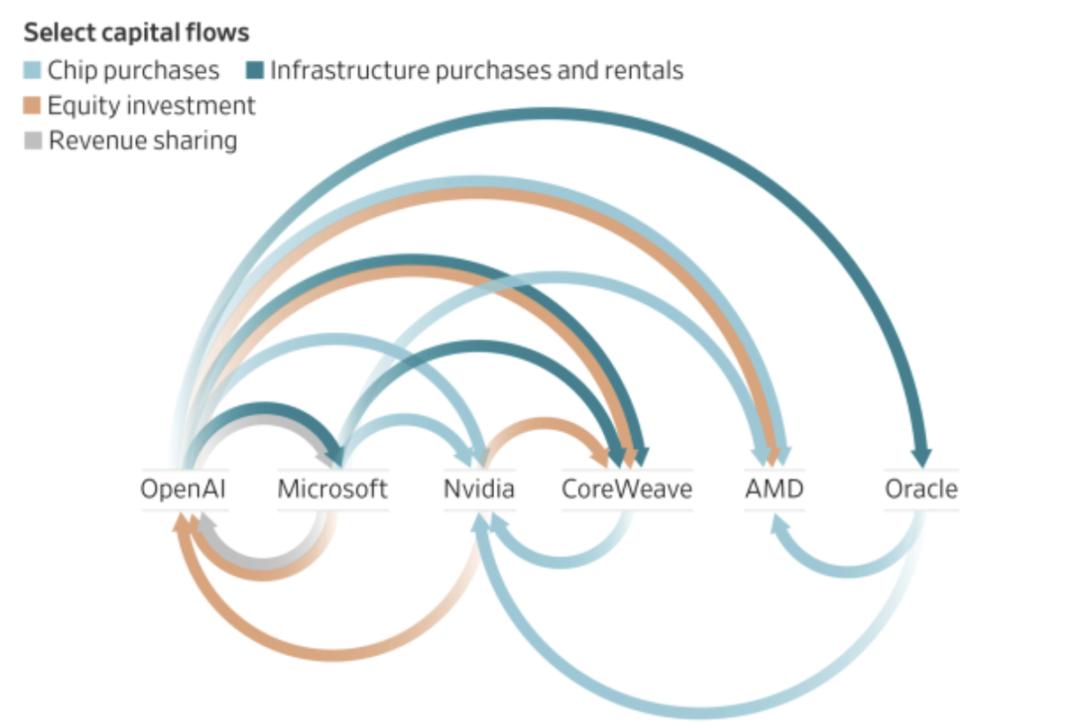
Core Insights - The AI investment landscape has experienced a frenzy since the launch of ChatGPT in 2022, with various sectors being heavily promoted. However, as major players announce significant investments in AI infrastructure, concerns about a potential bubble have emerged [1][6][40] - The core issue lies in the uneven distribution of profits across the AI industry chain, where upstream players reap most benefits while downstream application developers struggle with high costs and low revenues [6][22][40] Financing and Profit Distribution - The financing landscape is characterized by a complex cycle where downstream customers, like OpenAI, rely on upstream suppliers for funding, leading to a distorted profit distribution [1][4] - Major players in the AI industry chain include wafer foundries (e.g., TSMC), computing power providers (e.g., NVIDIA), cloud service providers (e.g., Microsoft), model developers (e.g., OpenAI), and end-user applications [6][22] - Cloud service providers face significant upfront costs, with a typical economic model showing that for every 100 units of revenue, 55 units go to costs, 10 units to operating expenses, and only 35 units to profit [8][12][14] Economic Models and Risks - Cloud service providers often appear profitable on paper but face cash flow issues due to high initial investments in infrastructure, leading to a situation where they may be operating at a loss despite reported profits [15][30] - The cost structure for cloud services is heavily influenced by the price of GPUs, which constitute a significant portion of operational costs. For instance, 70% of the revenue from cloud services may go to GPU costs [16][17][30] Industry Dynamics and Competition - The AI industry is witnessing a shift in competitive dynamics, with upstream players like NVIDIA enjoying high margins while downstream application developers like OpenAI struggle with profitability [22][40] - The competition is intensifying as companies explore vertical integration strategies to reduce costs and improve margins. For example, OpenAI is looking to establish its own data centers to mitigate reliance on expensive cloud services [41][48] - The emergence of new cloud service providers, often backed by NVIDIA, raises questions about their long-term viability in a market dominated by a few major players [42][43] Future Outlook - The AI investment landscape is expected to evolve towards a scenario of structural oversupply and downward pressure on profits, as companies seek to lower costs and improve the economic viability of AI applications [53] - Key indicators to watch include the pace of model deployment in end-user applications, the impact on SaaS companies, and the potential for new hardware innovations driven by AI [53]


具身觉醒:AI 从感知到行动的能力跃迁
Tai Mei Ti A P P· 2025-12-02 10:10
本文摘自《云栖战略参考》,这本刊物由阿里云与钛媒体联合策划。目的是为了把各个行业 先行者的技术探索、业务实践呈现出来,与思考同样问题的"数智先行者"共同探讨、碰撞, 希望这些内容能让你有所启发。 具身智能,正成为 AI 革命的核心共识与下一站锚点。当 AI 技术从数字世界迈向物理世界,硬件恰是 这场跃迁中智能体与物理环境交互的关键载体。这一趋势,正沿着三条核心赛道加速落地,并呈现出技 术复杂度和成熟度的差异。 智能硬件以智能手机、PC、AI 眼镜为代表,从设备工具升级为场景伙伴,依托成熟的端云协同架构、 实时数据处理能力与轻量化模型部署,实现多模态智能交互并 提供更多场景化服务,正迈向规模化落 地阶段;智能驾驶系统,在端到端大模型驱动下正逐步实现局部自主决策,并开始展现出超越预设规则 的自主应变能力,但模型泛化性与安全性仍需持续优化,对高弹性算力集群与多源异构数据融合也提出 更高要求;机器人技术突破门槛最高,算力层面需构建云边端深度协同的架构,数据层面需解决多模态 真实场景数据的采集、合成与处理的问题,模型层面则要同时兼顾复杂推理与运动控制,当前核心是突 破从实验室原型到产业落地的关键跨越。 尽管当前三大领域 ...

字节中兴合作的AI手机将于12月初发布,主打高权限Agent能力
3 6 Ke· 2025-11-30 01:36
Core Insights - The mobile industry is entering a new chapter with the upcoming release of an AI-native phone developed by ByteDance and ZTE, set to launch in early December [1][2] - This phone features a high-permission AI agent that integrates deeply with hardware, software, and the operating system, offering a significantly enhanced user experience compared to current AI smartphones [1][4] - The first generation of this AI phone has a production volume of approximately 30,000 units, with a second generation already in the planning stages for release in the first half of next year [1][2] Group 1: Industry Dynamics - The AI phone is positioned as a key player in the evolving landscape of mobile technology, with 2024 being regarded as the "year of AI phones" and expectations for killer AI applications by 2026 [4][5] - The competitive landscape for AI phones is emerging in three tiers: pioneers (Honor, OPPO, Huawei), ecosystem collaborators (Xiaomi, Vivo), and cross-industry entrants (ByteDance, ZTE Nubia) [4][5] - ByteDance's entry into the mobile market introduces new variables, leveraging its strengths in recommendation algorithms and natural language processing to potentially redefine user interaction from "clicking icons" to "intent recognition" [5][6] Group 2: Strategic Partnerships - ByteDance's collaboration with ZTE Nubia allows for a comprehensive approach to hardware design and manufacturing, addressing ByteDance's previous shortcomings in hardware implementation [2][3] - The AI phone project is part of ByteDance's broader strategy to explore new user interface interactions and enhance its AI hardware capabilities, with the Ocean team responsible for multiple AI device developments [2][3] - ZTE has the opportunity to reshape its hardware and software capabilities through this partnership, potentially positioning itself among the top-tier brands in the AI era [5][7] Group 3: Future Outlook - The AI-native phone represents a culmination of ByteDance's efforts to establish a full-stack AI ecosystem, integrating computing power, model capabilities, applications, and hardware [3][6] - The collaboration signifies a shift in strategy for ByteDance, moving from merely being an app developer to a player in the hardware space, aiming to control the entry points of AI technology [6][7] - Both ByteDance and ZTE face challenges in the early stages of AI phone development, but they also share significant opportunities for growth and innovation in the market [7]

夸克眼镜补全AI to C硬件入口 阿里“全栈AI”战略形成闭环|聚焦
Sou Hu Cai Jing· 2025-11-28 02:15
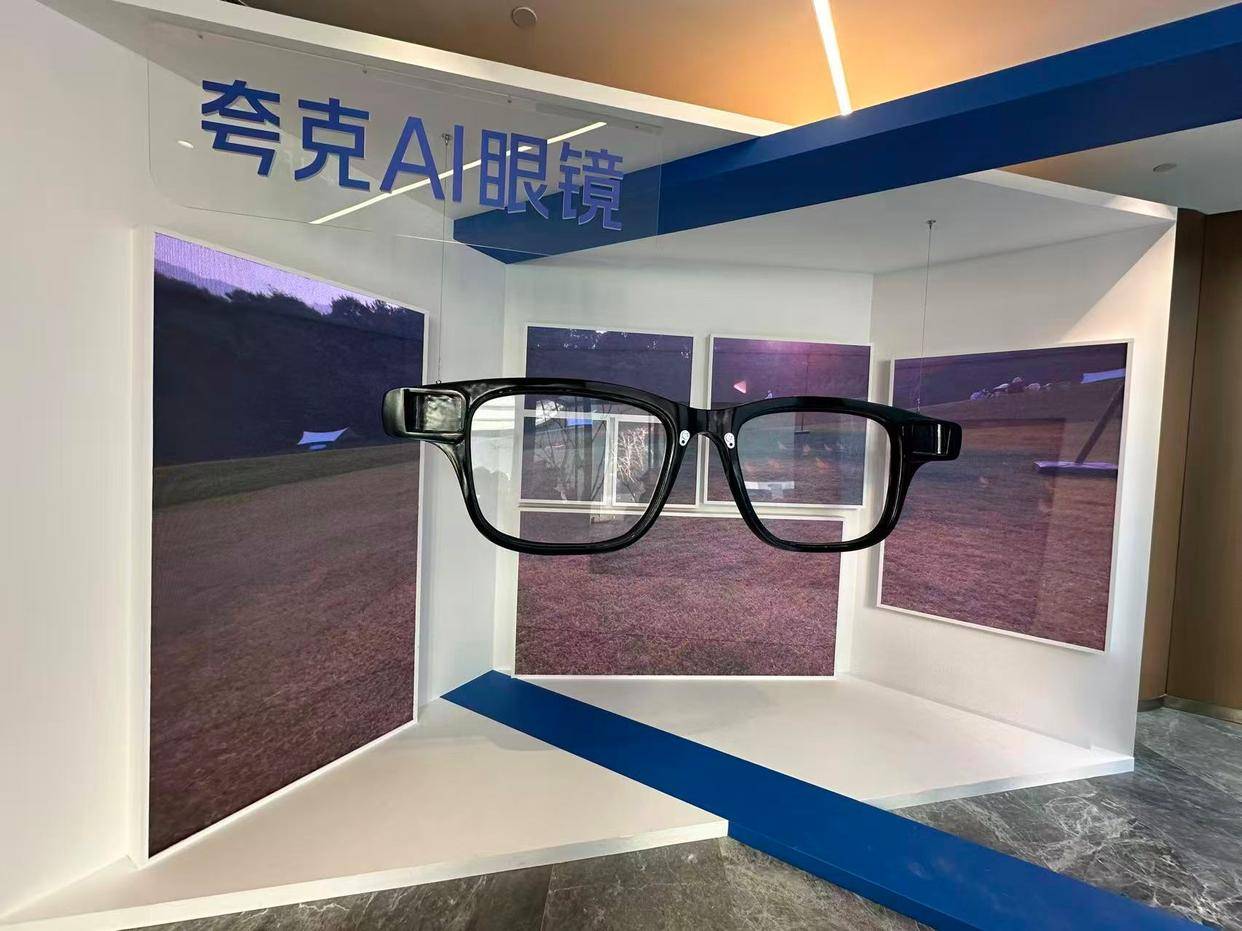
Core Viewpoint - The launch of Alibaba's Quark AI glasses marks a significant step in the company's AI to C strategy, integrating hardware into its ecosystem and positioning itself in the growing AI glasses market [1][3][20]. Product Launch and Sales Performance - Quark AI glasses were officially released on November 27, with over 7,000 units sold on Tmall and over 500 units on JD.com by November 28, achieving top sales rankings in their respective categories [1]. - The glasses are the first smart hardware to feature the Qianwen assistant, which is part of Alibaba's broader strategy to create an AI ecosystem [6]. Supply Chain and Technology - The glasses are supported by a strong supply chain, including companies like Luxshare Precision, Qualcomm, and JBD, which contributed advanced technologies such as a compact AR light engine and high-performance chips [3][5]. - The dual-chip design, featuring Qualcomm's AR1 and Hengxuan's BES2800, allows for optimized performance and power efficiency, addressing the need for both high-load and lightweight tasks [5]. Market Outlook and Strategic Positioning - Alibaba's leadership expressed optimism about the AI glasses market, predicting that AI glasses will become essential for everyone, potentially transforming human-computer interaction [8]. - The global market for glasses exceeds 1.5 billion units annually, with a shorter replacement cycle compared to smartphones, indicating a significant opportunity for growth in the AI glasses segment [8]. Ecosystem Integration - Quark AI glasses integrate various Alibaba services such as Alipay, Gaode Map, and Taobao, enhancing their utility and user experience [9]. - Future developments will focus on expanding the glasses' capabilities in areas like identity verification, health monitoring, and online learning, aiming to create a comprehensive smart ecosystem [17]. Challenges and Industry Dynamics - The AI glasses industry faces challenges in balancing performance, weight, and battery life, with ongoing efforts to improve materials and chip technology [18][19]. - The competitive landscape is intensifying as major players like Alibaba, Baidu, and Xiaomi enter the market, driving rapid advancements in product features and applications [21].
B端C端全面进击,阿里打响AI未来之战
21世纪经济报道· 2025-11-26 06:57
文/陈归辞 从2月宣布投入3800亿元建设AI基础设施,到9月宣布向超级人工智能(ASI)进发至上周开启千问APP正式公测,今年以来阿里巴巴在AI领域的密集布局与 多线叙事,以及持续投入的进取姿态,正推动其业绩增长与资本市场估值重回巅峰。 11月2 5日阿里发布的2 0 2 6财年第二季度财报,阿里巴巴集团收入2 4 7 7 . 9 5亿元,剔除已出售业务影响,收入同比增长1 5%,超市场预期。 AI+云、消费两大战略领域业务强劲增长。阿里云季度收入同比加速增长3 4%,AI相关产品收入连续第九个季度实现三位数增长;大消费平 台协同效应显著,即时零售带动淘宝Ap p月活跃消费者快速增长。 随着阿里AI战略在今年全面铺开,一条从AI算力、云平台、大模型再到应用层面的完整布局的全栈AI能力已清晰浮现,阿里正向B端与C端 全面发力。 在财报分析师电话会上,阿里巴巴集团CEO吴泳铭分享了AI战略进展,阿里正在AI t o B 和AI t o C两大方向齐发力——在AI t o B领域,做 世界领先的全栈AI服务商,服务千行百业不断增长的AI需求;在AI t o C领域,基于性能领先的AI模型和阿里生态优势,打造面向C ...

技术先行:阿里千问APP为何跑出更快的C端加速度?
Sou Hu Cai Jing· 2025-11-24 18:24
Core Insights - The article discusses the emerging narrative of "catching up" in the AI large model sector between China and the US, highlighting the competitive dynamics between Google and Alibaba [2][6] - Both companies are pursuing a "full-stack" approach, integrating cloud computing, chips, large models, and applications to create a comprehensive ecosystem [4][6] Group 1: Company Strategies - Google was initially perceived as lagging in AI, but the release of Gemini 3 has garnered positive feedback from industry leaders [3][6] - Alibaba's Qwen series models have achieved significant success, with the Qwen app surpassing 10 million downloads in its first week, breaking previous records [4][7] - Both companies are focusing on building robust foundational technologies before launching consumer-facing applications, demonstrating strategic patience [8][10] Group 2: Market Dynamics - The AI landscape is characterized by instability, with user engagement fluctuating significantly among competing applications [10][11] - Alibaba's Qwen model has become the most widely downloaded open-source large model globally, indicating a shift in developer preferences towards open-source solutions [12][13] - The competition between open-source and closed-source models is highlighted, with Alibaba favoring an open-source approach to foster a developer ecosystem, while Google maintains a closed-source strategy to protect its core assets [11][12] Group 3: Future Outlook - The article suggests that the ultimate goal for AI applications is to create a "business closed loop" that continuously generates value for users [19][21] - Alibaba's strategy includes leveraging its AI capabilities to enhance existing business operations, creating a seamless integration of AI across its services [22][23] - The full-stack approach adopted by both companies is expected to yield higher value elasticity and resilience in the face of market fluctuations [23]


生成式AI,阿里云凭什么是亚太唯一领导者?
硬AI· 2025-11-24 09:45
Core Viewpoint - Alibaba Cloud has been recognized as the only Asia-Pacific company to be positioned in the leader quadrant across all four dimensions of the latest Gartner report on Generative AI technology innovation, alongside global leaders like Google and OpenAI [2][4][17] Group 1: Full-Stack Capability - Alibaba Cloud's full-stack capabilities span from infrastructure to applications, which is crucial in the rapidly evolving landscape of Generative AI [2][4] - In the infrastructure dimension, Alibaba Cloud is recognized for its high stability and resource scheduling capabilities, ranking alongside major players like Google, Microsoft, and AWS [3] - The model engineering dimension highlights Alibaba Cloud's leading position in data processing and training efficiency, with a threefold increase in end-to-end training acceleration [3][4] Group 2: Model and Application Leadership - In the model entity dimension, Alibaba Cloud leads over AWS and Microsoft, only trailing behind Google and OpenAI, showcasing its comprehensive model coverage and multi-modal iteration [4] - Alibaba Cloud's knowledge management and productivity applications are mature, with a 15-fold increase in model invocation on its Bailian platform over the past year, indicating strong enterprise adoption [4][8] Group 3: Market Penetration and Competitive Position - According to Omdia, over 70% of China's Fortune 500 companies have deployed Generative AI, with Alibaba Cloud's penetration exceeding 50% [4][8] - By the first half of 2025, Alibaba Cloud is projected to hold over 35% of the AI cloud market in China, surpassing the combined share of the second to fourth-ranked competitors [8][9] Group 4: Strategic Insights - The report emphasizes that the depth of foundational capabilities creates a stronger competitive moat, with Alibaba Cloud being the only Asia-Pacific company in the leader quadrant across all four dimensions [9][17] - The synergy between cloud and AI is highlighted as essential for reducing costs and enhancing performance, with Alibaba Cloud demonstrating significant cost reductions in inference through its integrated technology stack [7][8] Group 5: Global Competitive Landscape - The global competition in Generative AI is characterized by two main approaches: model-centric ecosystems like OpenAI and cloud-centric models like Alibaba and Google [11][13] - Both Alibaba and Google are noted for their vertical integration capabilities, combining cloud, model, and chip technologies, which positions them as the leading players in the market [11][12][13]

百度集团-SW(09888):——(9888.HK)2025Q3财报点评:百度集团-SW(09888):AI业务商业化加速落地,同比实现高速增长
Guohai Securities· 2025-11-21 12:34
Investment Rating - The report maintains a "Buy" rating for Baidu Group-SW (9888.HK) [1] Core Views - Baidu's Q3 2025 revenue was approximately 31.17 billion yuan, a year-on-year decline of 7% and a quarter-on-quarter decline of 5%. The non-GAAP net profit was 3.77 billion yuan, down 36% year-on-year and 21% quarter-on-quarter, with a gross margin of approximately 41.25% [4][5] - The core business revenue for Baidu was 24.66 billion yuan, also down 7% year-on-year and 6% quarter-on-quarter. The non-GAAP operating profit was 2.23 billion yuan, a significant drop of 67% year-on-year and 49% quarter-on-quarter [4][5] Summary by Sections Recent Performance - Baidu's total revenue for Q3 2025 was approximately 31.17 billion yuan, with core revenue of about 24.66 billion yuan, both reflecting a 7% year-on-year decline. iQIYI's revenue was 6.7 billion yuan, down 8% year-on-year [4][5] - Online marketing revenue decreased by 18% year-on-year, while non-online marketing revenue grew by 21% [5] Online Marketing - The online marketing segment saw revenue of approximately 15.3 billion yuan, down 18% year-on-year. Baidu is advancing AI transformation in its search services, with about 70% of mobile search results pages containing AI-generated content. AI-native marketing services have become a significant growth driver, achieving revenue of 2.8 billion yuan, a year-on-year increase of 262% [5][6] Cloud Services - Baidu is accelerating the development of enterprise AI-native applications, with AI application revenue reaching 2.6 billion yuan, a 6% year-on-year increase. The intelligent cloud infrastructure revenue was 4.2 billion yuan, up 33% year-on-year, and AI high-performance computing facility subscription revenue grew by 128% [6][7] Autonomous Driving - Baidu's autonomous driving business is expanding globally, with over 250,000 weekly orders for fully autonomous operations as of October 2025. The service has been launched in 22 cities, with significant partnerships in Switzerland and Abu Dhabi [6][7] Financial Forecast - The report adjusts Baidu's revenue forecasts for 2025-2027 to 130.2 billion, 136.8 billion, and 145.4 billion yuan, respectively. Non-GAAP net profits are projected at 19.2 billion, 20.1 billion, and 22.7 billion yuan, with corresponding non-GAAP EPS of 6.99, 7.29, and 8.26 yuan. The non-GAAP P/E ratios are expected to be 14.9, 14.3, and 12.6x [7][9]

联想加速布局“AI+体育” 智慧体育业务渗透足球领域
Zheng Quan Ri Bao Zhi Sheng· 2025-11-20 13:41
Group 1 - Lenovo and the Chinese Football Association have launched the first AI Command Center for football events in China, marking a significant step towards the integration of AI and sports [1][2] - The AI Command Center features a large-screen visualization and intelligent interaction model, covering three core functions: event status, event supervision, and command scheduling [1] - The center's operational management capabilities include real-time display of standings for 16 Chinese Super League teams, match schedules, and weather conditions across different regions [1] Group 2 - The establishment of the AI Command Center is expected to inject strong development momentum into the intelligent, professional, and international aspects of Chinese football [2] - Lenovo's full-stack AI has already been implemented across various industries, including manufacturing, education, and finance, showcasing its versatility [2] - Industry experts view Lenovo's push into "AI + Sports" as an expansion of its intelligent business sector, indicating ongoing growth in the AI ecosystem [3]
