均衡配置
Search documents
中信期货晨报:国内商品期货涨多跌少,沪银领涨期市-20251113
Zhong Xin Qi Huo· 2025-11-13 07:59
1. Report Industry Investment Rating No relevant content provided. 2. Core Viewpoints of the Report - The global macro situation this week focuses on changes in US dollar liquidity. Although there is short - term tightness, it won't have a significant impact on major asset prices. There are two factors for improvement: marginal easing of monetary policy and normal release of funds in the TGA account when the US government resumes work [7]. - In October, China's export growth was weaker than expected, but there were more positive signs in inflation data, and consumer data may slightly exceed expectations [7]. - In November, the macro environment enters a vacuum period, and major assets may enter a short - term shock period. However, the overall allocation idea in the fourth quarter remains unchanged, and the macro environment is still favorable for risk assets. It is recommended to allocate major assets evenly in the fourth quarter, hold long positions in stock indices, non - ferrous metals (copper, lithium carbonate, aluminum, tin), and precious metals, and increase positions appropriately if there is a correction [7]. 3. Summary by Directory 3.1 Macro Highlights - **Overseas Macro**: The short - term tightness of US dollar liquidity won't have a large impact on major asset prices. Monetary policy is marginally easing, and the release of TGA account funds after the US government resumes work can relieve the short - term pressure [7]. - **Domestic Macro**: October's export growth was weaker than expected, but there were positive signs in inflation data, and consumer data may slightly exceed expectations [7]. - **Asset Views**: In November, major assets may enter a shock period. The overall allocation idea in the fourth quarter remains unchanged, and it is recommended to evenly allocate major assets, hold long positions in stock indices, non - ferrous metals, and precious metals, and increase positions if there is a correction [7]. 3.2 Viewpoint Highlights 3.2.1 Financial Sector - **Stock Index Futures**: Catalyzed by technology events, the growth style is active. There is a risk of overcrowding in small - cap funds, and the short - term trend is expected to be a volatile upward [8]. - **Stock Index Options**: The overall trading volume has slightly declined, and the short - term trend is expected to be volatile [8]. - **Treasury Bond Futures**: The bond market continues to be weak. The short - term trend is expected to be volatile, affected by policy, fundamental repair, and tariff factors [8]. 3.2.2 Precious Metals - **Gold/Silver**: Due to the easing of geopolitical and economic and trade situations, precious metals are in a phased adjustment. The short - term trend is expected to be volatile, affected by the US fundamentals, Fed's monetary policy, and global equity market trends [8]. 3.2.3 Shipping - **Container Shipping to Europe**: The peak season in the third quarter has passed, and there is a lack of upward momentum. The short - term trend is expected to be volatile, and attention should be paid to the rate of freight decline in September [8]. 3.2.4 Steel and Iron Ore - **Steel**: In the off - season, the fundamentals are under pressure, and the short - term trend is expected to be volatile, affected by the issuance of special bonds, steel exports, and iron - water production [8]. - **Iron Ore**: The short - term fundamentals are stable, and the short - term trend is expected to be volatile, affected by overseas mine production and shipment, domestic iron - water production, weather, port inventory, and policy [8]. 3.2.5 Black Building Materials - **Coke**: The game between coking and steel enterprises continues, and the short - term trend is expected to be volatile, affected by steel mill production, coking costs, and macro sentiment [8]. - **Coking Coal**: The market sentiment is weak, but the spot price is rising. The short - term trend is expected to be volatile, affected by steel mill production, coal mine safety inspections, and macro sentiment [8]. - **Silicon Iron**: The supply - demand driving force is limited, and it follows the valuation fluctuations of coal. The short - term trend is expected to be volatile, affected by raw material costs and steel procurement [8]. - **Manganese Silicon**: After the first - round steel procurement inquiry is announced, the price follows the decline of coking coal. The short - term trend is expected to be volatile, affected by cost prices and overseas quotes [8]. - **Glass**: Prices have been lowered in various regions, and downstream purchasing sentiment is weak. The short - term trend is expected to be volatile, affected by spot sales [8]. - **Soda Ash**: Supply exceeds demand, and cost - driven upward movement is limited. The short - term trend is expected to be volatile, affected by soda ash inventory [8]. - **Aluminum Oxide**: The fundamentals are still in an oversupply situation, and the price is under pressure. The short - term trend is expected to be volatile, affected by ore复产 and electrolytic aluminum复产 [8]. - **Aluminum**: The stock - futures linkage leads to an upward - volatile price. The short - term trend is expected to be a volatile upward, affected by macro risks, supply disruptions, and demand [8]. - **Zinc**: The export window is open, and the price is fluctuating at a high level. The short - term trend is expected to be volatile, affected by macro risks and zinc ore supply [8]. - **Lead**: Social inventory is slightly increasing, and the price is fluctuating. The short - term trend is expected to be volatile, affected by supply disruptions and battery exports [8]. - **Nickel**: Market sentiment is improving, and the price is fluctuating. The short - term trend is expected to be volatile, affected by macro and geopolitical changes, and Indonesian policies [8]. - **Stainless Steel**: Warehouse receipts are decreasing, and the price is fluctuating. The short - term trend is expected to be volatile, affected by Indonesian policies and demand growth [8]. - **Tin**: The inventory of Shanghai tin continues to decrease, and the price is fluctuating. The short - term trend is expected to be volatile, affected by the resumption of production in Wa State and demand improvement [8]. - **Industrial Silicon**: The supply in the southwest is rapidly decreasing, and the price is fluctuating. The short - term trend is expected to be volatile, affected by supply - side production cuts and photovoltaic installations [8]. - **Lithium Carbonate**: The resumption of production expectation is fluctuating, and the price may fluctuate significantly. The short - term trend is expected to be volatile, affected by demand, supply disruptions, and technological breakthroughs [8]. 3.2.6 Energy and Chemicals - **Crude Oil**: There is a lack of short - term driving forces, and the price is expected to be volatile, affected by OPEC+ production policies and the Middle East geopolitical situation [10]. - **LPG**: Refinery output has decreased, and import costs are under pressure. The short - term trend is expected to be volatile, affected by cost factors such as crude oil and overseas propane [10]. - **Asphalt**: The spot price in Shandong has stabilized, and the futures price is expected to be volatile, affected by sanctions and supply disruptions [10]. - **High - Sulfur Fuel Oil**: The futures price is volatile, and attention should be paid to the Russia - Ukraine conflict. The short - term trend is expected to be volatile, affected by geopolitics and crude oil prices [10]. - **Low - Sulfur Fuel Oil**: The refined oil market is strong, and the price may be on a volatile upward trend, affected by crude oil prices [10]. - **Methanol**: High inventory suppresses the price, and overseas disturbances are not significant. The short - term trend is expected to be volatile, affected by the macro - energy situation and overseas developments [10]. - **Urea**: Export information boosts the spot market, and the futures price is expected to be volatile in the short term, affected by export quotas and coal prices [10]. - **Ethylene Glycol**: The spot market is loose, and there is little hope of reversing the downward trend in the short term. The short - term trend is expected to be a volatile downward, affected by coal and oil prices, port inventory, and Sino - US trade friction [10]. - **PX**: The market sentiment is rational, and the processing fee is strongly supported by strong supply and demand. The short - term trend is expected to be volatile, affected by crude oil fluctuations and macro changes [10]. - **PTA**: The market sentiment is flat, and the basis is under pressure. The short - term trend is expected to be volatile, affected by crude oil fluctuations and macro changes [10]. - **Short - Fiber**: Consumers tend to buy on dips, and attention should be paid to the off - peak and peak season conversion. The short - term trend is expected to be volatile, affected by downstream yarn mill purchasing and peak - season demand [10]. - **Bottle Chips**: The market performance is flat, and it follows the cost passively. The short - term trend is expected to be volatile, affected by bottle - chip enterprise production cuts and new device commissioning [10]. - **Propylene**: Inventory needs time to be digested, and the price is expected to be on a volatile downward trend, affected by oil prices and the domestic macro situation [10]. - **PP**: Maintenance support is limited, and the price is expected to be on a volatile downward trend, affected by oil prices and domestic and overseas macro situations [10]. - **Plastic**: Downstream transactions have increased, but maintenance support is limited. The price is expected to be on a volatile downward trend, affected by oil prices and domestic and overseas macro situations [10]. - **Styrene**: There are still concerns about over - inventory, and the price is expected to be on a volatile downward trend, affected by oil prices, macro policies, and device operations [10]. - **PVC**: The weak reality suppresses the price, and it is expected to be volatile, affected by expectations, costs, and supply [10]. - **Caustic Soda**: With low valuation and weak expectations, the price is expected to be volatile, affected by market sentiment, production, and demand [10]. 3.2.7 Agriculture - **Oils and Fats**: Rapeseed oil is relatively strong, and attention should be paid to the effectiveness of upper - level technical resistance. The short - term trend is expected to be a volatile upward, affected by US soybean weather and Malaysian palm oil production and demand data [10]. - **Protein Meal**: US soybeans are testing the upper - level resistance, and it is recommended to hold reverse spreads on Dalian soybean meal. The short - term trend is expected to be volatile, affected by weather, domestic demand, macro factors, and Sino - US and Sino - Canadian trade wars [10]. - **Corn/Starch**: The market is in a short - term tight situation, and the price is expected to be volatile at a high level, affected by demand, macro factors, and weather [10]. - **Pigs**: Supply and demand are loose, and the price is weak. The short - term trend is expected to be a volatile downward, affected by breeding sentiment, epidemics, and policies [10]. - **Natural Rubber**: With the approaching expiration of the November contract, there may be a pulse - like upward movement. The short - term trend is expected to be volatile, affected by production - area weather, raw material prices, and macro changes [10]. - **Synthetic Rubber**: The short - term trend is expected to be volatile, affected by crude oil fluctuations [10]. - **Cotton**: The price has slightly declined, and the short - term trend is expected to be volatile, affected by demand and inventory [10]. - **Sugar**: The price is fluctuating within a narrow range, and the short - term trend is expected to be a volatile downward, affected by imports and Brazilian production [10]. - **Pulp**: The market is dominated by funds, and the long - position advantage remains. The short - term trend is expected to be volatile, affected by macro - economic changes and US dollar - denominated quotes [10]. - **Double - Glued Paper**: In the tendering peak season, the price is expected to stabilize in November and be volatile, affected by production and sales, education policies, and paper - mill operations [10]. - **Logs**: In the de - inventory cycle, the price is expected to be volatile, affected by special port fees, shipment volume, and dispatch volume [10].
A股高位震荡 周期板块延续强势表现
Shang Hai Zheng Quan Bao· 2025-11-07 19:10
Group 1: Market Overview - The A-share market experienced fluctuations with all three major indices closing lower, with the Shanghai Composite Index down 0.25%, Shenzhen Component down 0.36%, and ChiNext down 0.51% [2] - The total trading volume in the Shanghai and Shenzhen markets was 20,202 billion yuan, a decrease of 557 billion yuan from the previous day [2] - There was a notable rotation of market styles, with cyclical sectors such as chemicals, lithium batteries, and photovoltaics showing steady strength [2] Group 2: Chemical Sector Performance - The chemical sector was a standout performer, with multiple stocks hitting the daily limit, particularly in the organic silicon segment [3] - Dongyue Silicon Material saw a 20% increase, while other companies like Hoshine Silicon Industry, Xin'an Chemical, and Xingfa Group also showed active performance [3] - The organic silicon market is currently facing competitive pressure due to supply factors, but no new production capacity is expected in the next two years, suggesting that sales prices may gradually recover next year [3] Group 3: Phosphate Chemical Sector Insights - The phosphate chemical sector also saw significant gains, with Qing Shui Yuan hitting the daily limit for two consecutive days [4] - The yellow phosphorus index has increased by over 7% in the past two weeks, with the current spot price at 22,200 yuan per ton, up 264 yuan from the previous trading day [4] - The price increase is attributed to reduced production from wet-process phosphoric acid facilities and recovering demand for downstream electrolyte raw materials [4] Group 4: Investment Strategies - Several brokerages recommend a balanced allocation strategy in response to market style changes, with a focus on new momentum industries like technology and high-end manufacturing [6] - Dongguan Securities suggests that the market style is expected to be more balanced than in the third quarter, with a focus on cyclical sectors showing marginal improvement [6] - Dongwu Securities highlights November as a critical time for institutional reallocation, with a shift from pursuing excess returns to locking in profits as year-end approaches [6] Group 5: Economic Outlook - Huatai Securities emphasizes the positive correlation between new and old economies, suggesting that strong performance in the new economy can drive growth in the old economy [7] - The old economy sectors currently have low valuations and market expectations, indicating potential for recovery [7] - The influx of new capital from insurance and foreign investments is expected to favor value styles in the coming year [7]
中信期货晨报:国内商品期货多数上涨,黑色系涨幅居前-20251107
Zhong Xin Qi Huo· 2025-11-07 00:54
1. Report Industry Investment Rating No relevant content provided. 2. Core Views of the Report - Overseas macro: The Fed cut interest rates by 25 basis points to 3.75%–4.00% in October and announced to end balance - sheet reduction and fully renew Treasury bonds and agency MBS from December, transitioning the liquidity environment from contraction to stability. - Domestic macro: Domestic policy support has been strengthened, and economic resilience has been maintained. The manufacturing industry slowed down in October, but the construction and service industries remained in expansion. Policy - based financial instruments and special bonds are being implemented faster, and investment recovery is accelerating. - Asset views: With the Fed's actions, Sino - US summit results, and policy announcements, market sentiment has improved. It is recommended to maintain a balanced allocation strategy. Non - ferrous metals perform relatively well, black commodities have rebound opportunities, bonds are in a slightly stronger oscillation pattern, and precious metals have medium - to - long - term allocation value [6]. 3. Summary by Relevant Catalogs 3.1 Macro Highlights - Overseas: The Fed's actions aim to manage risks during the economic data vacuum period, balancing growth and liquidity stability. - Domestic: Policy emphasis on "science and technology self - reliance, anti - involution, and expanding domestic demand" has strengthened the focus on economic construction. The economy continues to stabilize. - Asset Allocation: Adopt a "balanced allocation, structural offensive" strategy, with different asset classes having different performance characteristics and investment opportunities [6]. 3.2 View Highlights 3.2.1 Financial - Stock index futures: Driven by technology events, the growth style is active, but there is a risk of overcrowding in small - cap stocks. Expected to oscillate and rise. - Stock index options: Market turnover has slightly declined, and the option market liquidity may be lower than expected. Expected to oscillate. - Treasury bond futures: The bond market remains weak, affected by policy, fundamental, and tariff factors. Expected to oscillate [7]. 3.2.2 Precious Metals - Gold/silver: Due to the easing of geopolitical and trade tensions, precious metals are in a phased adjustment. Expected to oscillate, affected by US fundamentals, Fed policy, and global equity market trends [7]. 3.2.3 Shipping - Container shipping to Europe: The peak season in the third quarter has passed, and there is a lack of upward momentum. Expected to oscillate, with attention on the rate of freight decline in September [7]. 3.2.4 Black Building Materials - Steel products: The market is weak, and attention should be paid to cost support. Expected to oscillate, affected by special bond issuance, steel exports, and iron - water production. - Iron ore: Market sentiment is weak, and attention should be paid to demand changes. Expected to oscillate, affected by overseas mine production, domestic iron - water production, and other factors. - Other products in this sector, such as coke, coking coal, etc., are also expected to oscillate, each affected by different factors [7]. 3.2.5 Non - ferrous Metals and New Materials - Most non - ferrous metals are expected to oscillate, with different influencing factors for each metal. For example, copper is affected by trade frictions, and aluminum is affected by inventory changes [7]. 3.2.6 Energy and Chemicals - Most products in this sector are in a situation of weak supply - demand and are expected to oscillate. Some products, such as ethylene glycol and styrene, are expected to oscillate and decline, affected by factors such as supply - demand, cost, and trade [9]. 3.2.7 Agriculture - The agricultural sector shows a differentiated trend. Some products, such as protein meal, are expected to oscillate and rise, while others, such as natural rubber and sugar, are expected to oscillate and decline, affected by factors such as weather, supply - demand, and policies [9].
政策与数据真空期,均衡配置或是良策!
Mei Ri Jing Ji Xin Wen· 2025-11-06 06:47
Core Insights - The market is experiencing increased rotation due to recent macro events and the completion of Q3 earnings reports, leading to a policy and performance vacuum in the short term [1] - Despite the lack of a main driving force, the market remains active with substantial trading volume and buying interest, indicating a rotation among sectors [1] - As external uncertainties diminish, a clearer direction for the "14th Five-Year Plan" is emerging, suggesting a stronger market outlook in the future [1] Investment Strategies - A balanced allocation strategy between emerging technology and dividend stocks is recommended for current market conditions [1] - As of November 5, the Dividend Low Volatility ETF (159547) has a 12-month dividend yield of 4.08%, noted for having the lowest comprehensive fee rate among similar products [1] - For those seeking a less hands-on approach, the Dividend Quality ETF (159758) incorporates quality factors in stock selection, with electronics as the largest weight sector, providing a diversified stock basket [1]
中信期货晨报:国内商品期货多数下跌,新能源材料跌幅居前-20251106
Zhong Xin Qi Huo· 2025-11-06 01:55
1. Report Industry Investment Rating No relevant content provided. 2. Core Viewpoints of the Report - Overseas macro: The Fed cut interest rates by 25 basis points to 3.75%–4.00% in October and announced to end balance - sheet reduction in December, transitioning the liquidity environment from contraction to stability [6]. - Domestic macro: Domestic policy support has been strengthened, and economic resilience has been maintained. The Fourth Plenary Session and the "15th Five - Year Plan Proposal" set the tone of "scientific and technological self - reliance, anti - involution, and expanding domestic demand" [6]. - Asset viewpoints: With policy announcements, market sentiment has improved. It is recommended to maintain a balanced allocation strategy. Non - ferrous metals are relatively strong, black commodities have short - term rebound opportunities, bonds are in a slightly strong oscillation pattern, and precious metals have medium - to - long - term allocation value [6]. 3. Summary by Related Catalogs 3.1 Macro Highlights - Overseas: The Fed's interest rate cut and end of balance - sheet reduction aim to manage risks during the economic data vacuum period, balancing growth and liquidity stability [6]. - Domestic: Policy support has strengthened, and the economy has continued to stabilize. Although the manufacturing PMI declined in October, the construction and service industries remained in expansion [6]. - Asset allocation: Policy announcements have improved market sentiment. In the short term, stock indices may oscillate, but in the medium term, the equity market has upward momentum. A balanced allocation strategy is recommended [6]. 3.2 Viewpoint Highlights Financial - Stock index futures: Driven by technology events, the growth style is active, with a short - term forecast of oscillatory upward movement [7]. - Stock index options: Market turnover has slightly declined, with a short - term forecast of oscillation [7]. - Treasury bond futures: The bond market remains weak, with a short - term forecast of oscillation [7]. Precious Metals - Gold/silver: Due to geopolitical and trade easing, precious metals are in a short - term adjustment phase, with a short - term forecast of oscillation [7]. Shipping - Container shipping to Europe: The peak season in the third quarter has passed, and there is no upward driving force, with a short - term forecast of oscillation [7]. Black Building Materials - Steel: The fundamentals provide limited support, and the market is weak, with a short - term forecast of oscillation [7]. - Iron ore: Market sentiment is weak, and prices are falling, with a short - term forecast of oscillation [7]. - Coke: After three rounds of price increases, the market is under pressure and oscillating [7]. - Coking coal: Supply remains tight, and the futures and spot markets have diverged, with a short - term forecast of oscillation [7]. - Glass: Supply is expected to be disrupted, and the market is expected to oscillate [7]. - Soda ash: Spot prices are low, and some manufacturers are under maintenance, with a short - term forecast of oscillation [7]. Non - ferrous Metals and New Materials - Copper: Due to renewed trade frictions, copper prices have declined in the short term, with a short - term forecast of oscillation [7]. - Alumina: The fundamentals are weak, and prices are under pressure, with a short - term forecast of oscillation [7]. - Aluminum: Inventory has decreased, and prices are oscillating upward, with a short - term forecast of oscillatory upward movement [7]. - Zinc: Inventory is expected to be excessive, and prices are oscillating weakly, with a short - term forecast of oscillation [7]. - Nickel: LME nickel inventory has exceeded 250,000 tons, and prices are oscillating weakly, with a short - term forecast of oscillation [7]. - Stainless steel: Warehouse receipts have continued to decline, and the market has rebounded slightly, with a short - term forecast of oscillation [7]. - Tin: Supply constraints remain, and prices are oscillating, with a short - term forecast of oscillation [7]. - Industrial silicon: Supply is abundant, and prices are oscillating in the short term, with a short - term forecast of oscillation [7]. - Lithium carbonate: Warehouse receipts have continuously declined, and prices have strengthened slightly, with a short - term forecast of oscillation [7]. Energy and Chemicals - Crude oil: Supply pressure continues, and geopolitical risks remain, with a short - term forecast of oscillation [9]. - LPG: Supply is still excessive, and attention should be paid to cost - side developments, with a short - term forecast of oscillation [9]. - Asphalt: With the weakening of crude oil and rebar, asphalt futures prices are difficult to support, with a short - term forecast of oscillatory decline [9]. - High - sulfur fuel oil: With the weakening of crude oil, fuel oil futures prices are weak, with a short - term forecast of oscillatory decline [9]. - Low - sulfur fuel oil: It follows the weak oscillation of crude oil, with a short - term forecast of oscillatory decline [9]. - Methanol: After continuous decline, it is not advisable to chase short positions, with a short - term forecast of oscillation [9]. - Urea: High inventory pressure and cost support coexist, with a short - term forecast of narrow - range oscillation [9]. - Ethylene glycol: Cost and fundamentals are in a downward resonance, with a short - term forecast of oscillatory decline [9]. - PX: Supply has not decreased, and profits are supported, with a short - term forecast of oscillation [9]. - PTA: Market sentiment is cautious, and short - term profits are supported, with a short - term forecast of oscillation [9]. - Short - fiber: Downstream factories are digesting previous stocks, with a short - term forecast of oscillation [9]. - Bottle chips: Affected by cost and limited supply - demand drivers, with a short - term forecast of oscillation [9]. - Propylene: Downstream trading has improved limitedly, with a short - term forecast of oscillation [9]. - PP: Cost support still exists, with a short - term forecast of oscillation within a range [9]. - Plastic: Short - term maintenance has decreased, with a short - term forecast of oscillation within a range [9]. - Styrene: There are still concerns about over - inventory, with a short - term forecast of oscillatory decline [9]. - PVC: Market sentiment has cooled, with a short - term forecast of oscillatory decline [9]. - Caustic soda: Supply - demand is under pressure, and cost has increased, with a short - term forecast of oscillation [9]. Agriculture - Fats and oils: The expected increase in palm oil production in Malaysia is strong, with a short - term forecast of oscillatory decline [9]. - Protein meal: The crushing profit has continued to repair, with a short - term forecast of oscillation [9]. - Corn/starch: Downstream orders support port prices, with a short - term forecast of oscillation [9]. - Live pigs: Supply - demand is loose, with a short - term forecast of oscillatory decline [9]. - Natural rubber: The market is oscillating and adjusting, with a short - term forecast of oscillatory decline [9]. - Synthetic rubber: It has rebounded from the bottom, with a short - term forecast of oscillatory decline [9]. - Cotton: The short - term upward momentum has weakened, with a short - term forecast of oscillation [9]. - Sugar: The general direction is to maintain a short - position operation, with a short - term forecast of oscillatory decline [9]. - Pulp: The strong trend has paused, with a short - term forecast of oscillation [9]. - Double - gum paper: Spot prices are stable, with a short - term forecast of oscillation [9]. - Logs: Spot prices are stable, with a short - term forecast of oscillation [9].
券商研判11月A股策略:风格切换概率加大 均衡配置为上策
Zheng Quan Shi Bao· 2025-11-05 18:35
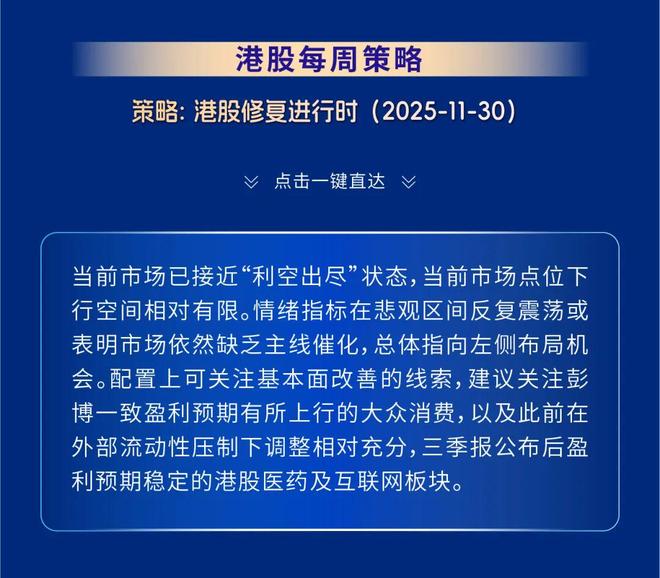
Core Viewpoint - The A-share market has shown significant signs of style switching since November, with traditional value sectors like banks and utilities performing well, while previously strong sectors such as metals, new energy, and innovative pharmaceuticals have experienced increased volatility [1][2]. Group 1: Market Style Switching - Historical data indicates that when market valuations are high, style switching tends to occur at year-end, driven by policy, industry trends, and fund reallocation [2]. - Since 2005, there have been five instances of year-end style switching, with four of them shifting towards stable sectors like finance or consumption [2]. - In the current bull market, institutional behavior is likely to dominate style switching, with significant reallocations observed in the third quarter, particularly in the electronics, communication, and power equipment sectors [2][3]. Group 2: Institutional Behavior and Profit Taking - The fourth quarter often sees profit-taking pressures on leading sectors, as institutions shift focus from seeking excess returns to locking in profits [3]. - As of the third quarter of 2025, the electronics sector held a 25% share in active equity funds, with TMT (Technology, Media, and Telecommunications) exceeding 40%, marking historical highs [3]. - The potential for structural adjustments is heightened as institutions may face pressure to sell if others begin to realize profits [3]. Group 3: Long-term Outlook on Technology Sector - Despite short-term pressures, the long-term outlook for the technology sector remains positive, with continued value in growth stocks [6]. - The macroeconomic environment, particularly the onset of a U.S. interest rate cut cycle, is expected to enhance liquidity and support growth stock valuations [6]. Group 4: Balanced Investment Strategy - Multiple brokerages recommend a balanced investment strategy for November, favoring traditional value stocks [7]. - There is a noted improvement in capital returns for sectors like non-bank financials, steel, basic chemicals, and machinery, although these sectors have not attracted significant investor interest [8]. - Recommendations include focusing on upstream resources like copper, aluminum, and lithium, as well as capital goods and sectors benefiting from domestic demand recovery [8].
市场风格切换了?要调仓吗?券商最新观点出炉
证券时报· 2025-11-05 10:34
Core Viewpoint - The A-share market is experiencing a significant style switch in November, with the banking sector leading the market gains while previously strong sectors like metals and new energy are declining [1][2]. Group 1: Market Trends - On November 4, the banking sector rose by 2.03%, leading the market, while the metals sector fell by 3.04% [1]. - Historical data shows that in bull markets, style switches often occur at year-end, primarily driven by policy, industry trends, and fund reallocation [3][4]. Group 2: Institutional Behavior - In the fourth quarter, there is often pressure to realize profits from leading sectors, as these sectors have seen significant gains [5]. - As of Q3 2025, the electronic sector's holding ratio reached 25%, and TMT (Technology, Media, and Telecommunications) exceeded 40%, both at historical highs [5]. Group 3: Investment Strategy - Short-term recommendations suggest a balanced allocation to navigate market volatility during the style switch period, while long-term views remain optimistic about growth stocks [7]. - Traditional industries are gaining attention, with sectors like non-bank financials, steel, and basic chemicals showing improved capital returns, despite not being favored by investors [8].
大盘全线反弹,A500ETF易方达(159361)获2亿份净申购,机构称可采取均衡配置应对风格切换期波动
Mei Ri Jing Ji Xin Wen· 2025-11-05 07:14
Group 1 - The market showed recovery in the afternoon, with sectors such as power grid equipment, batteries, energy storage, and film theaters leading the gains [1] - As of 14:37, the CSI A500 index rose by 0.5%, and the A500 ETF from E Fund (159361) saw net subscriptions exceeding 200 million units [1] - Notable stocks that hit the daily limit include Hongfa Technology, Samsung Medical, and Tebian Electric [1] Group 2 - Dongwu Securities indicated that in the context of a macroeconomic and earnings vacuum, a breakthrough of the psychological barrier at 4000 points is unlikely to happen quickly, suggesting that the market may "exchange time for space" [1] - The CSI A500 index consists of 500 stocks with large market capitalization and good liquidity, covering 91 out of 93 sub-industries in the CSI third-level industry, reflecting the overall performance of representative companies in A-shares [1] - Investors looking for balanced broad-based investments may consider products like the A500 ETF from E Fund (159361) [1]
市场风格切换了?要调仓吗?最新解读来了
天天基金网· 2025-11-05 05:20
Core Viewpoint - The article discusses the significant style switching in the A-share market observed in November, highlighting the shift from previously strong sectors like metals and new energy to more stable sectors such as banking and public utilities [3][4]. Group 1: Market Trends - In November, the banking sector rose by 2.03%, leading the market, while the previously strong metals sector fell by 3.04% [3]. - Historical data indicates that in bull markets, style switching often occurs at year-end, primarily driven by policy changes, industry trends, and fund rebalancing [4][6]. Group 2: Investment Strategies - Investors are advised to adopt a balanced allocation strategy to navigate the expected market volatility during the style switching period [7]. - Long-term growth in technology stocks remains promising, with macroeconomic factors expected to play a more significant role than valuation metrics [7][8]. Group 3: Sector Recommendations - Certain traditional industries, such as non-bank financials, steel, and basic chemicals, have shown improved capital returns but are currently underappreciated by investors [8]. - The article suggests focusing on sectors benefiting from global manufacturing recovery, including copper, aluminum, and lithium, as well as domestic sectors like coal and food and beverage [8].
中信期货晨报:国内商品期货多数下跌,农副产品跌幅居前-20251105
Zhong Xin Qi Huo· 2025-11-05 05:18
1. Report Industry Investment Rating No information provided in the given content. 2. Core Viewpoints of the Report - Overseas macro: The Fed cut interest rates by 25 basis points to 3.75%–4.00% in October and will end balance - sheet reduction in December, transitioning the liquidity environment from contraction to stability [6]. - Domestic macro: Domestic policy support has been strengthened, and economic resilience has been maintained. The manufacturing industry slowed down in October, but the construction and service industries continued to expand. Investment repair accelerated, and the economy continued to stabilize [6]. - Asset views: With policy announcements, risk appetite has improved, and a balanced allocation strategy is maintained. Liquidity improvement and eased Sino - US economic and trade relations will benefit equity assets, especially in technology, independent manufacturing, and innovation. However, short - term policy benefits have been fully priced, and the stock index may fluctuate. In the medium term, the equity market has upward momentum. A "balanced allocation, structural offensive" strategy is recommended [6]. 3. Summary by Related Catalogs 3.1 Macro Highlights - Overseas: The Fed's actions in October aimed at risk management, balancing growth and liquidity stability [6]. - Domestic: Policy orientation emphasized economic construction. Although the manufacturing PMI declined in October, the economy showed resilience with investment repair [6]. - Assets: A balanced allocation strategy is suggested. Non - ferrous metals, black commodities, bonds, and precious metals have different performance characteristics and investment opportunities [6]. 3.2 Viewpoint Highlights 3.2.1 Financial Sector - Stock index futures: Catalyzed by technology events, the growth style is active, and it is expected to rise with fluctuations [7]. - Stock index options: Market turnover has slightly declined, and it is expected to move sideways [7]. - Treasury bond futures: The bond market remains weak, and it is expected to move sideways [7]. 3.2.2 Precious Metals - Gold and silver: Due to geopolitical and economic - trade easing, precious metals are in a phased adjustment, and are expected to move sideways [7]. 3.2.3 Shipping - Container shipping to Europe: The peak season has passed, and there is no upward driving force. It is expected to move sideways [7]. 3.2.4 Black Building Materials - Steel products: With limited fundamental support, the price is under pressure. It is expected to move sideways [7]. - Iron ore: Port inventory is accumulating rapidly, and it is expected to move sideways [7]. - Coke: Cost support is strengthening, and a third price increase may be implemented. It is expected to move sideways [7]. - Coking coal: Supply is tight, and the spot price is rising. It is expected to move sideways [7]. 3.2.5 Non - ferrous Metals and New Materials - Copper: Due to renewed trade frictions, the copper price has declined in the short term. It is expected to move sideways [7]. - Aluminum: Inventory has decreased, and the aluminum price is expected to rise with fluctuations [7]. 3.2.6 Energy and Chemicals - Crude oil: Supply pressure persists, and it is expected to move sideways [9]. - LPG: Supply is excessive, and it is expected to move sideways [9]. - Asphalt: With the decline of crude oil and rebar prices, it is expected to decline with fluctuations [9]. - Ethylene glycol: Supply surplus expectations suppress the price, and it is expected to decline with fluctuations [9]. 3.2.7 Agriculture - Oils and fats: After rising and then falling, it is expected to decline with fluctuations [9]. - Protein meal: The crushing profit is being repaired, and it is expected to move sideways [9].