
就业风险

Search documents
美联储“三把手”威廉姆斯:随着时间的推移而降息是适宜的。需确保关税不会造成广泛的通胀。太长时间维持过于限制性的政策可能对就业构成风险
Hua Er Jie Jian Wen· 2025-09-04 16:08
Core Viewpoint - The Federal Reserve's third-in-command, Williams, suggests that it is appropriate to lower interest rates over time, emphasizing the need to ensure tariffs do not lead to widespread inflation and warning that maintaining overly restrictive policies for too long could pose risks to employment [1] Group 1 - Williams indicates that a gradual reduction in interest rates is suitable as time progresses [1] - There is a necessity to ensure that tariffs do not result in broad inflationary pressures [1] - Prolonged maintenance of excessively restrictive monetary policies may jeopardize employment levels [1]
美联储预防式降息将至,美元资产会怎么走?
Xin Lang Cai Jing· 2025-08-26 10:01
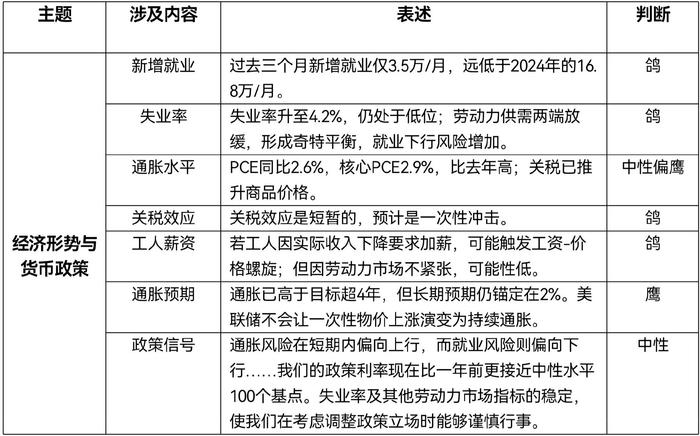
Group 1 - Federal Reserve Chairman Jerome Powell signaled a dovish stance at the Jackson Hole conference, indicating an openness to interest rate cuts, which led to a significant market reaction with the Dow Jones rising by 2% to a new historical high [1] - The U.S. economy is showing signs of slowing, with new job additions averaging only 35,000 per month over the past three months, significantly below the expected 168,000 for 2024 [1] - Powell highlighted that inflation risks are currently tilted upwards while employment risks are leaning downwards, suggesting a cautious approach to policy adjustments [1] Group 2 - Analysts expect the Federal Reserve to cut rates by 25 basis points in September, primarily as a preventive measure against future economic uncertainties, with a total of up to two rate cuts anticipated within the year [4] - The stock market typically benefits from rate cuts due to improved liquidity and lower financing costs, which can enhance risk appetite [2][4] - The technology sector remains resilient and independent of traditional economic cycles, contributing to the recent highs in the stock market [5] Group 3 - The anticipated rate cuts are expected to address weaknesses in traditional demand, particularly in manufacturing and real estate, which have been adversely affected by high financing costs [6] - Market reactions to rate cuts often lead to upward adjustments in stock indices, with the S&P 500 potentially reaching around 6,400 to 6,700 points [4][6] - The long-term outlook for U.S. Treasury yields and the dollar may not necessarily decline significantly following rate cuts, as historical patterns suggest a rebound in yields and dollar strength post-cut [7]

市场炸锅!鲍威尔讲话后,9月降息预期骤升
Sou Hu Cai Jing· 2025-08-25 09:14
Core Points - The balance of risks has shifted, with increased pressure on employment compared to previous concerns about inflation [1][8] - The impact of tariffs on inflation is viewed as a one-time effect, with limited long-term risks [3][8] - The adjustment of the Federal Reserve's policy framework allows for more flexible operations [3][8] - The possibility of a rate cut in September is open, contingent on upcoming data trends [5][8] Summary by Categories Employment and Inflation - The current labor market appears balanced but is not healthy, as both labor supply and demand are slowing down [1][3] - If employment data continues to weaken, the Federal Reserve may consider rate cuts without significant concerns about inflation [5][7] Tariff Impact - Tariffs are expected to cause a temporary price increase, but this will not lead to a sustained high inflation trend [3][5] - The price effects of tariffs are becoming visible, but the key question remains whether these increases will lead to persistent inflation [5][8] Federal Reserve Policy - The Federal Reserve has removed specific language from its policy framework, allowing for more straightforward communication and decision-making [3][8] - The cautious but dovish tone of Powell's speech indicates that if the job market continues to weaken, the likelihood of a rate cut increases [7][8]
2025年杰克逊霍尔会议鲍威尔讲话解读:强调就业降温、释放鸽派信号,为9月降息打开空间
Dong Fang Jin Cheng· 2025-08-25 03:52
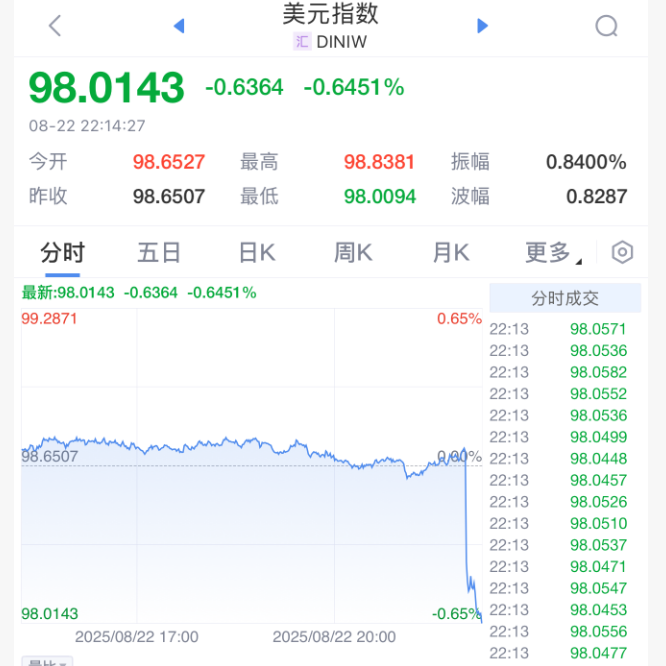
Employment and Economic Outlook - Powell's speech indicates rising downside risks in the labor market, suggesting a potential need for interest rate cuts[2] - July non-farm payrolls increased by only 73,000, significantly below the expected 115,000, with prior values revised down by 258,000[4] - The current labor market is described as a "peculiar balance," where both supply and demand have slowed, leading to increased unemployment risks[4] Inflation and Monetary Policy - Powell shifts to a "short-term shock" view on inflation, deeming tariff impacts as one-time increases rather than persistent inflation drivers[5] - The Federal Reserve's new policy framework removes previous commitments to an average inflation target of 2% and the quantitative assessment of full employment[6] - This framework adjustment allows the Fed to prioritize employment over inflation when conflicts arise, facilitating potential rate cuts[6] Market Reactions and Future Projections - Following Powell's remarks, the probability of a 25 basis point rate cut in September surged from approximately 75% to 91.3%[6] - The dollar index fell by 0.78% to 97.88, while the two-year Treasury yield rose by 8 basis points to 3.69%, and the S&P 500 index increased by 1.6%[8] - If the core PCE price index drops below 2.8% in October, further rate cuts may occur in November and December, totaling 50-75 basis points for the year[8]
FPG财盛国际:鲍威尔引发黄金大涨后,接下来如何走?
Sou Hu Cai Jing· 2025-08-25 03:05
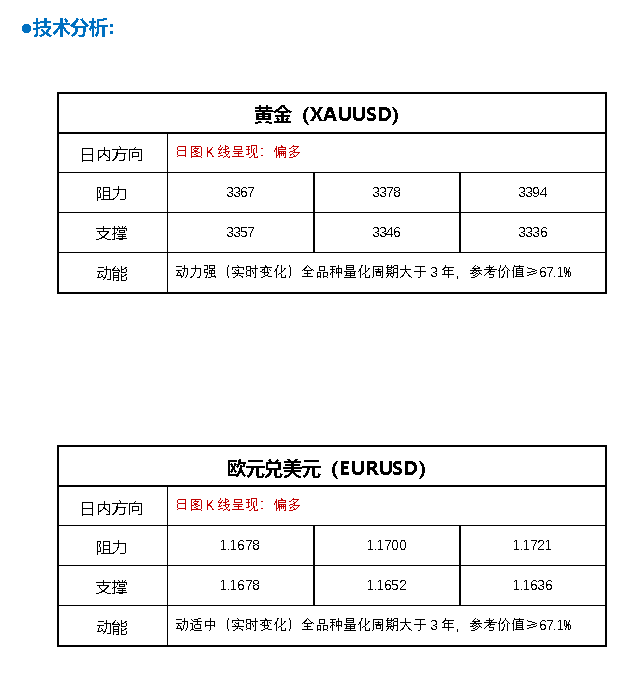
Group 1 - The core viewpoint highlights that despite ongoing inflation risks, gold prices surged significantly following Powell's dovish remarks, with a 90% probability of a 25 basis point rate cut by the Federal Reserve before September [1] - Upcoming key data releases include durable goods orders, GDP, and the core Personal Consumption Expenditures (PCE) price index, which is favored by the Federal Reserve [1] - Powell indicated that stable unemployment and labor market indicators allow for cautious policy adjustments, despite the current restrictive policy stance [1] Group 2 - Analyst Felix noted that while gold prices rose, they have not yet surpassed the $3,400 per ounce mark, with geopolitical risks easing after optimistic news regarding Russia and Ukraine [1] - If gold prices rise above $3,400, the next resistance levels would be the June 16 high of $3,452 and the historical high of $3,500 [1] - Analyst Chad suggested that if gold prices retract, they may find support at the 50-day simple moving average around $3,350 per ounce, with further targets at the 20-day moving average of $3,345 and the 100-day moving average of $3,309 [2] Group 3 - The daily chart for gold (XAUUSD) shows a bullish bias with resistance at $3,367 and support at $3,357, indicating strong momentum [3] - The daily chart for the euro against the dollar (EURUSD) also reflects a bullish direction, with resistance at 1.1678 and support at 1.1678 [4] - Key indicators to watch today include the German IFO Business Climate Index, U.S. new home sales, and the Dallas Fed Business Activity Index [4]
鲍威尔杰克逊霍尔放鸽!强调就业风险,暗示可能因此需要降息
Sou Hu Cai Jing· 2025-08-22 15:30
Core Viewpoint - Federal Reserve Chairman Jerome Powell indicated that the current economic situation suggests an increase in downside risks to employment, which may necessitate a rate cut [1][2][3] Economic Conditions and Outlook - The labor market remains close to maximum employment, but the unemployment rate has risen by nearly one percentage point, a development historically associated with recessions [4][6] - GDP growth has significantly slowed to 1.2% in the first half of the year, reflecting a decrease in consumer spending [6] - The labor market is experiencing a "peculiar balance" due to a significant slowdown in both labor supply and demand, indicating rising employment risks [5][6] Inflation Dynamics - Short-term inflation risks are tilted upward, while employment risks are tilted downward, creating a challenging scenario for monetary policy [3][8] - Higher tariffs have begun to push up prices in certain categories, with the PCE price index rising by 2.6% over the past 12 months, and core PCE prices increasing by 2.9% [6][7] - The impact of tariffs on consumer prices is expected to accumulate over the coming months, with significant uncertainty regarding timing and magnitude [7] Monetary Policy Implications - The current policy rate is closer to neutral than it was a year ago, allowing for cautious consideration of policy adjustments [8][9] - The Federal Open Market Committee (FOMC) will base decisions on data assessments and their implications for economic outlook and risk balance [9] - The revised monetary policy framework aims to promote maximum employment and price stability under a variety of economic conditions [10][14]
暴涨!刚刚,鲍威尔宣布!美联储降息大消息!
Zhong Guo Ji Jin Bao· 2025-08-22 14:52
Core Viewpoint - Federal Reserve Chairman Jerome Powell signals potential interest rate cut in September, indicating a shift in monetary policy due to changing economic risks [3][4][8] Group 1: Economic Conditions - Powell highlights that the labor market appears stable but is experiencing a unique balance due to significant slowdowns in both labor supply and demand, leading to rising downside risks for employment [3][12] - The U.S. GDP growth rate has slowed to 1.2% in the first half of the year, significantly lower than the projected 2.5% for 2024, primarily due to reduced consumer spending [13] - Inflation risks are currently tilted upwards, while employment risks are leaning downwards, creating a challenging situation for policymakers [4][14] Group 2: Monetary Policy Outlook - Powell suggests that the baseline outlook and risk balance may necessitate adjustments to the policy stance, with a reasonable scenario indicating a one-time increase in price levels due to tariffs [3][14] - The market now anticipates a 90% probability of a rate cut in September, up from 75% prior to Powell's speech, with traders pricing in two rate cuts by the end of the year [8] - Powell's comments indicate a dovish stance, suggesting he may support a 25 basis point rate cut at the upcoming Federal Open Market Committee meeting [7][8] Group 3: Market Reactions - Following Powell's speech, the dollar index fell approximately 0.5%, and U.S. Treasury yields dropped, with the two-year yield decreasing by 9 basis points to 3.70% [5] - Major U.S. stock indices surged, with the Dow Jones rising over 700 points, the Nasdaq increasing by nearly 2%, and the S&P 500 gaining about 1.5% [8]
瑞达期货沪锡产业日报-20250821
Rui Da Qi Huo· 2025-08-21 09:00
Report Summary 1. Report Industry Investment Rating No investment rating is provided in the report. 2. Core View of the Report - The Fed's July meeting minutes signaled a hawkish stance, with most believing inflation risk outweighs employment risk. In the tin market, despite Myanmar's restart of mining permit approvals, actual tin ore output will not occur until the fourth quarter, and the Congo's Bisie mine plans to resume production in phases. Currently, tin ore processing fees remain at historical lows. On the smelting side, production rebounded in July due to multiple factors, but raw material shortages are still severe in Yunnan, and the scrap recycling system in Jiangxi is under pressure with low operating rates. On the demand side, downstream processing enterprises are in the traditional off - season, with most maintaining only essential production and orders being mediocre. Recently, tin prices have fluctuated, with downstream enterprises making essential purchases at low prices. Domestic and LME inventories are on a downward trend. Technically, positions are decreasing, and both bulls and bears are cautious, expecting range - bound oscillations. It is recommended to wait and see, focusing on the 266,000 - 271,000 yuan/ton range [3]. 3. Summary According to the Catalog 3.1 Futures Market - The closing price of the main futures contract of Shanghai Tin was 266,480 yuan/ton, down 1,360 yuan. The closing price of the September - October contract was down 240 yuan. LME 3 - month tin was at 33,770 US dollars/ton, up 68 US dollars. The main contract's open interest of Shanghai Tin was 18,744 lots, down 633 lots. The net position of the top 20 futures was - 1,514 lots, down 642 lots. LME tin total inventory was 1,630 tons, down 25 tons. Shanghai Futures Exchange inventory of tin was 7,792 tons, down 13 tons, and the warehouse receipt was down 25 tons [3]. 3.2现货市场 - The SMM 1 tin spot price was 266,800 yuan/ton, down 184 - 700 yuan. The Yangtze River Non - ferrous Market 1 tin spot price was 268,410 yuan/ton, up 2,300 yuan. The basis of the Shanghai Tin main contract was 320 yuan/ton, up 660 yuan. The LME tin premium (0 - 3) was 81 US dollars/ton, down 8 US dollars [3]. 3.3 Upstream Situation - The import volume of tin ore and concentrates was 1.21 million tons, down 0.29 million tons. The average price of 40% tin concentrate processing fee was 10,500 yuan/ton, unchanged. The average price of 40% tin concentrate was 254,000 yuan/ton, down 2,000 yuan, and the average price of 60% tin concentrate was 258,000 yuan/ton, down 2,000 yuan. The average price of 60% tin concentrate processing fee was 6,500 yuan/ton, unchanged [3]. 3.4 Industry Situation - The monthly output of refined tin was 14,000 tons, down 1,600 tons. The monthly import volume of refined tin was 3,762.32 tons, up 143.24 tons [3]. 3.5 Downstream Situation - The price of 60A solder bars in Gejiu was 173,830 yuan/ton, up 460 yuan. The cumulative output of tin - plated sheets (strips) was 1.6014 million tons, up 0.1445 million tons. The monthly export volume of tin - plated sheets was 140,700 tons, down 33,900 tons [3]. 3.6 Industry News - The Fed's July meeting minutes showed that most thought inflation risk was higher than employment risk, sending a hawkish signal. The National Energy Administration announced that the total electricity consumption in July was 1.02 trillion kWh, a year - on - year increase of 8.6%. The Ministry of Industry and Information Technology and other departments will further standardize the competition order in the photovoltaic industry and curb low - price disorderly competition [3].

美联储:多数委员认为通胀风险大于就业风险。
Sou Hu Cai Jing· 2025-08-20 18:07
Group 1 - The core viewpoint of the article indicates that the majority of Federal Reserve members believe that the risks associated with inflation outweigh those related to employment [1] Group 2 - The article highlights the Federal Reserve's focus on inflation management as a priority in their monetary policy decisions [1] - It suggests that the current economic environment is prompting a reassessment of the balance between inflation control and employment stability [1]
美联储会议纪要:多数官员恩威,通胀风险超过就业风险,多数人提到关税的影响全面显现出来需要一段时间
Hua Er Jie Jian Wen· 2025-08-20 18:04
Core Viewpoint - The Federal Reserve's meeting minutes indicate that most officials prioritize inflation risks over employment risks, suggesting a shift in focus towards managing inflationary pressures [1] Summary by Relevant Categories Inflation Risks - Majority of officials expressed that inflation risks are currently more significant than employment risks, indicating a potential tightening of monetary policy to combat inflation [1] Tariff Impact - Many officials noted that the effects of tariffs are becoming more apparent and will require time to fully manifest, suggesting ongoing economic adjustments related to trade policies [1]