收益率曲线陡峭化

Search documents
黄金与美国乱局:为何只有它看穿了特朗普的危险游戏?
Jin Rong Shi Bao· 2025-09-03 07:34
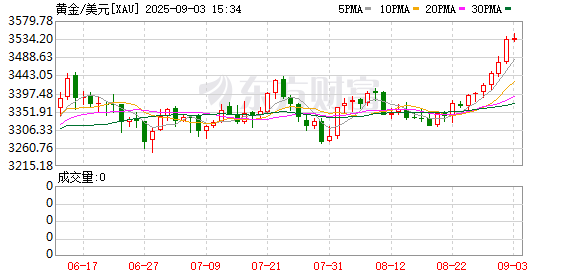
Core Viewpoint - There is a strong belief that gold is responding to the deterioration of U.S. fiscal conditions, economic slowdown, and criticisms of the Federal Reserve by the Trump administration, despite cash flow assets not reflecting these issues [1]. Group 1: Reasons for Gold's Recent Surge - The primary reason for gold's recent surge is the continued weakening of the U.S. dollar, which is inversely related to gold prices as gold is priced in dollars [3]. - Gold's correlation with the VIX index indicates that as market volatility increases, gold prices tend to rise, suggesting that gold benefits from both a weaker dollar and increased stock market volatility [3]. - The significant rise in gold prices from $2000 to over $3500 in the past year and a half cannot be solely attributed to demand from price-sensitive buyers, as the market dynamics have shifted [6]. Group 2: Buyer Dynamics - There are two types of buyers in the gold market: "belief buyers" (such as ETFs, central banks, and speculators) who buy regardless of price based on macroeconomic or risk-hedging views, and "opportunistic buyers" (like households in emerging markets) who buy at favorable prices [6]. - The World Gold Council's second-quarter demand report indicates that "belief buyers," particularly gold ETF investors, have been strong participants in the market this year [6]. Group 3: Market Expectations and Influences - Investors are increasingly moving into gold mining stocks, reflecting expectations of sustained high gold prices, as mining companies' stock prices begin to reflect anticipated future increases in gold prices [9]. - The steepening yield curve, with declining short-term rates and persistently high long-term rates due to inflation concerns, enhances gold's attractiveness as a hedge against risk [11]. - Central banks remain significant buyers of gold, with a long-term trend of increasing purchases, despite a slowdown in reported purchases in the first half of the year [11]. Group 4: Geopolitical and Economic Factors - Recent actions by Trump against the Federal Reserve may encourage other central banks to diversify their holdings away from the dollar and towards gold, as central bank leaders are particularly cautious about the risks of being dependent on the dollar [12].

亚洲股市下挫,美日长债收益率飙升,日元承压,现货黄金持稳
Hua Er Jie Jian Wen· 2025-09-03 06:28
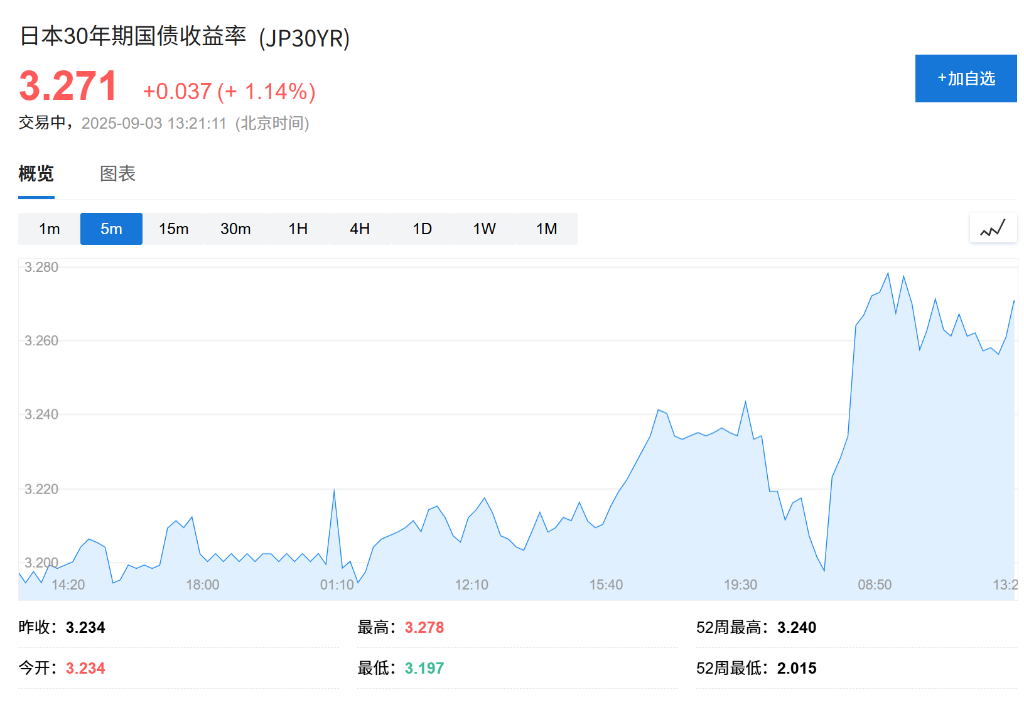
Group 1 - A global bond sell-off is intensifying due to a surge in corporate debt issuance and concerns over fiscal conditions in developed countries, affecting U.S. Treasuries, European bonds, and spreading to Japan [1][2] - The record corporate bond issuance, with at least $90 billion in investment-grade debt issued globally, has made this week one of the busiest in the credit market this year, with European issuance reaching a record €49.6 billion in a single day [2][3] - The rise in bond yields is diminishing the attractiveness of stocks, leading to pressure on Asian equity markets, while the Japanese yen weakens amid domestic political uncertainty [1][2] Group 2 - In Japan, local political uncertainties are exacerbating bond market pressures, with concerns over the potential resignation of a key ally of Prime Minister Shigeru Ishiba, increasing political volatility [3] - The upcoming 30-year government bond auction is causing cautious sentiment among investors, contributing to selling pressure on long-term bonds, with the 30-year yield reaching 3.28%, the highest on record [3] - The U.S. yield curve is under pressure to steepen, with analysts noting that the long-term yields are rising faster than short-term yields, influenced by various factors including upcoming employment data [7][8]
国债策略月报-20250901
Guang Da Qi Huo· 2025-09-01 11:20
Report Industry Investment Rating - No relevant content provided Core Viewpoints of the Report - After continuous decline in August, the current yield of the ten - year treasury bond once approached 1.85%, more than 45BP higher than the reverse repurchase policy rate. With long - term capital and economic fundamentals both favorable to the bond market, the allocation power of the bond market is gradually increasing, and the bond market adjustment is basically in place. However, the expectation of anti - involution promotes the continuous strengthening of the equity market, which is negative for long - term bonds. Short - term bonds are relatively stable under the expectation of worry - free capital, and the yield curve is expected to become steeper [6] Summary According to the Table of Contents 1. Bond Market Performance: Risk Appetite Rebounds, Treasury Bonds Decline Significantly - **Yield and Price Changes**: In August, the capital market remained loose, and there was no significant marginal change in the economic fundamentals. However, with the rebound of risk appetite, equity assets rose significantly, suppressing bond market sentiment. Long - term bond yields increased significantly, and the treasury bond yield curve steepened. As of August 29, the yields of 2 - year, 5 - year, 10 - year, and 30 - year treasury bonds were 1.40%, 1.63%, 1.84%, and 2.14% respectively, with changes of - 1.53BP, 6.12BP, 13.35BP, and 19.25BP compared to July 31. The closing prices of TS, TF, T, and TL main contracts were 102.418 yuan, 105.515 yuan, 107.81 yuan, and 116.55 yuan respectively, with changes of 0.06%, - 0.20%, - 0.62%, and - 2.16% compared to July 31 [5][8] - **Trading Volume and Open Interest**: On August 29, the trading volumes of 2 - year, 5 - year, 10 - year, and 30 - year bonds were 35,583, 61,424, 81,725, and 153,398 hands respectively, with changes of - 219, - 2479, - 37, and 473 hands compared to July 31. The open interests were 76,824, 136,875, 199,086, and 140,380 hands respectively, with changes of - 33,460, - 55,118, - 32,215, and - 17,436 hands compared to July 31 [13] - **Net Basis Spread**: The net basis spreads of TS, TF, T, and TL main contracts showed narrow - range fluctuations [14] - **Inter - period Spread**: The inter - period spreads of short - term and long - term treasury bonds rebounded from low levels [16][19] 2. Policy Dynamics: Central Bank's Flexible Injection, Capital Interest Rates First Rise Then Fall - **Reverse Repurchase Operations**: From August 1 to 29, the central bank's reverse repurchase injection was 631.46 billion yuan, and the reverse repurchase maturity was 636.8 billion yuan, with a net withdrawal of 5.34 billion yuan. As of August 29, the reverse repurchase balance was 227.31 billion yuan [23] - **Buy - out Reverse Repurchase**: In August, the central bank carried out 50 billion yuan of 6 - month buy - out reverse repurchase operations and 70 billion yuan of 3 - month buy - out reverse repurchase operations. After deducting the maturity amount, the net injection of buy - out reverse repurchase in August was 30 billion yuan [24] - **MLF Operations**: In August, the central bank carried out 60 billion yuan of medium - term lending facility (MLF) operations, with a net injection of 30 billion yuan, marking six consecutive months of "increased roll - over". Together with the 30 billion yuan of buy - out reverse repurchase, the total net injection of medium - term liquidity in August reached 60 billion yuan, the highest monthly level since February this year [27] - **LPR and PSL**: In August, the loan prime rate (LPR) remained unchanged, with the 1 - year LPR at 3.00% and the 5 - year LPR at 3.50%. In July, the net withdrawal of the pledged supplementary lending (PSL) was 23 billion yuan, and the balance was 126.39 billion yuan [28] 3. Bond Supply and Demand: Government Bond Issuance Accelerates - **Government Bond Issuance**: In August, the government bond issuance was 232.94 billion yuan, with a maturity of 100.03 billion yuan and a net issuance of 132.91 billion yuan. Among them, the net issuance of treasury bonds was 84.9 billion yuan, and the net issuance of local bonds was 48.01 billion yuan. As of August, the cumulative net issuance of treasury bonds was 467.11 billion yuan, with an issuance progress of 70.14%; the cumulative net issuance of local bonds was 570.58 billion yuan, with an issuance progress of 79.25% [42] - **Special Bond Issuance**: In August, the issuance of new special bonds slowed down [43] - **Bond Issuance Multiple**: In July, the overall multiple of local bond issuance increased month - on - month [45] - **Cash Bond Trends**: The yield of treasury bonds decreased slightly, the yield of US treasury bonds fluctuated sideways, and the credit spread of credit bonds was slightly compressed [46][49][50] 4. Strategy Views: Long - term Bonds Bearish, Short - term Bonds Stable - Given the long - term capital and economic fundamentals favorable to the bond market, the adjustment of the bond market is basically in place. However, the strengthening of the equity market is negative for long - term bonds, while short - term bonds are relatively stable, and the yield curve is expected to become steeper [6]
美国预算赤字和贸易逆差:收益率曲线陡峭化和信用评级下调的催化剂
Refinitiv路孚特· 2025-08-29 06:04
Core Viewpoint - The article highlights the increasing pressure on the US economy due to expanding trade and budget deficits, which are leading to a steeper yield curve and weakening credit conditions [1][4]. Economic Indicators - The US GDP is projected to contract by 0.3% in Q1 2025, driven by increased imports and reduced government spending, although this is partially offset by rising consumer spending and exports [1][2]. - In the first quarter of 2025, imports surged by 41.3% before tariffs were fully implemented, with March imports reaching $346 billion and the trade deficit widening to $163 billion [1][3]. Employment and Consumer Confidence - The consumer confidence index fell by 9% from March to April 2025, yet job creation exceeded expectations and the unemployment rate remained stable at 4.2% [2]. - Despite the resilience of the job market, the implementation of tariffs is expected to negatively impact employment conditions [2]. Trade Deficit Dynamics - The overall trade deficit has increased since the implementation of tariffs, despite a reduction in the trade deficit with China during Trump's first term [2][4]. - Countries like Vietnam and Thailand have benefited from supply chain shifts, increasing their trade surplus with the US [2]. Credit and Fiscal Concerns - Moody's downgraded the US credit rating from Aaa to Aa1 due to rising fiscal deficits and increasing federal debt, with the five-year credit default swap (CDS) spread widening by 20 basis points [3][4]. - The yield curve has steepened, with the 30-year Treasury yield reaching a 19-month high amid concerns over fiscal sustainability and trade tensions [3][5]. Future Projections - The tax reform bill passed by the House is expected to add $3.1 trillion to the national debt over the next decade, potentially pushing the budget deficit close to 7% of GDP in the coming years [5]. - The debt-to-GDP ratio is projected to increase by 8% to 10% over the four-year term, with long-term bond yields expected to rise significantly, potentially exceeding 6% in the coming years [6].
陡峭化加剧!通胀升温与财政赤字风险叠加 全球长期公债收益率抬升
智通财经网· 2025-08-27 03:54
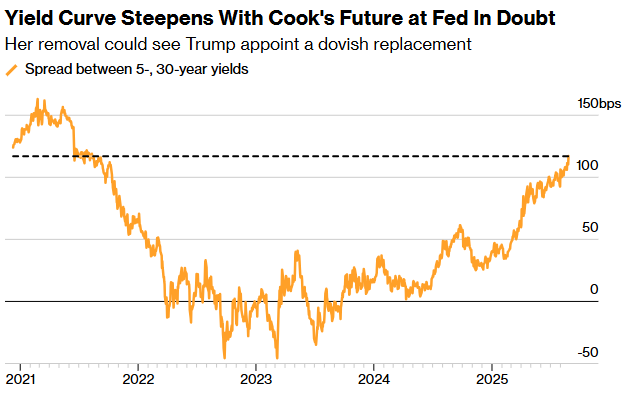
Group 1: Bond Market Overview - Long-term bond prices have significantly declined across the US, France, and the UK, driven by heightened investor concerns over inflation and government spending [1] - The yield on 30-year US Treasury bonds has risen to 4.9%, while UK and Japanese bonds are nearing historical highs, indicating a global trend of increasing borrowing costs [1][4] - The widening gap between 5-year and 30-year US Treasury yields has reached 117 basis points, the largest increase since 2021, reflecting market volatility [4] Group 2: US Treasury Bonds - Investors speculate that if Trump successfully replaces Fed Governor Lisa Cook with a more dovish policymaker, inflationary pressures may intensify [4] - The performance of 30-year US Treasury bonds has outpaced similar bonds in Europe and the UK, highlighting a growing divergence in fiscal risks and institutional credibility [4] Group 3: Japanese Bonds - Japan faces significant costs to maintain its debt levels, with 10-year bond yields reaching their highest since 2008 amid rising expectations for interest rate hikes [4] Group 4: French Bonds - The 10-year French bond yield is currently the highest in the Eurozone, surpassing yields from countries previously at the center of the European sovereign debt crisis, such as Greece and Portugal [5] Group 5: UK Bonds - UK borrowing costs are under pressure, complicating the fiscal challenges for Chancellor Rachel Reeves ahead of the autumn budget speech [7] - Over the past year, the yield on 30-year UK bonds has increased by approximately 110 basis points, compared to an 80 basis point rise in US bonds [10] Group 6: Australian and New Zealand Bonds - Australia and New Zealand have the steepest yield curves globally, with central banks indicating further rate cuts, supporting short-term bond yields while long-term bonds face pressure from increased issuance [11] - The recent dovish stance from the New Zealand central bank has reinforced the trend of "steepening" trades in global bond markets, indicating ongoing opportunities for investors [13]
川普:鲍威尔灾难,不降息严重损害住房产业
Sou Hu Cai Jing· 2025-08-20 04:57
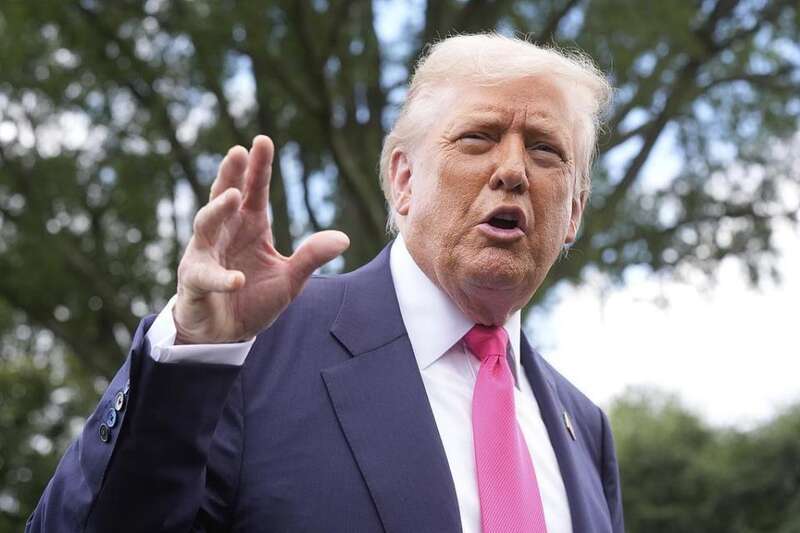
Core Viewpoint - The article discusses the increasing pressure on the Federal Reserve from former President Trump and the financial market's strong bets on a dovish stance from the Fed during the upcoming Jackson Hole meeting [1][3][4]. Group 1: Political Pressure on the Federal Reserve - Former President Trump has intensified his criticism of Fed Chairman Jerome Powell, labeling him a "disaster" for maintaining high interest rates that harm the housing market and restrict access to mortgages for Americans [3]. - Trump has repeatedly called for significant rate cuts and has suggested he would appoint the next Fed chair, indicating a desire for a more aggressive monetary policy [3]. Group 2: Market Expectations and Betting - Financial markets are showing strong expectations for a 50 basis point rate cut at the September meeting, with traders placing substantial bets on this outcome [4]. - The number of options contracts betting on a 50 basis point cut has reached 325,000, with a premium cost of approximately $10 million, indicating a potential profit of $100 million if the Fed follows through [4]. Group 3: Market Sentiment and Risks - A shift in market sentiment is evident, with investors moving away from short positions to a more neutral stance, as indicated by a recent JPMorgan survey [5]. - However, there are risks associated with this consensus, as any deviation from expected dovish comments by Powell could negatively impact the bond market [5]. Group 4: Institutional Investor Strategies - Different types of institutional investors are displaying varied strategies; asset managers are favoring long-term bonds, while hedge funds are employing complex strategies involving both long and short positions in different maturities [6]. - The mixed signals from bond options indicate a divergence in expectations, with traders preparing for a steepening of the yield curve [6].
杰克逊霍尔央行年会前夜,资金豪赌鲍威尔放鸽,押注50基点降息
Hua Er Jie Jian Wen· 2025-08-20 00:40
Group 1 - Traders are heavily betting on a 50 basis point rate cut by the Federal Reserve next month, despite a significant increase in the July PPI [1] - The number of options contracts betting on a 50 basis point cut has reached 325,000, with a premium cost of approximately $10 million, potentially yielding a profit of $100 million if the cut occurs [1] - Market sentiment is shifting, with short positions decreasing to a monthly low, indicating a change in investor stance [1][2] Group 2 - According to Morgan Stanley's client survey, direct short positions have decreased by 4 percentage points, reflecting the lowest level of direct shorts since July 14 [2] - There is a warning that if Fed Chair Powell does not exhibit the expected dovish tone, the front end of the yield curve could face bearish corrections [3] - Institutional investors are showing a mixed positioning, with asset managers increasing net long positions in long-term bonds, while hedge funds are increasing net short positions in 10-year Treasury futures [3]
8.18债市午盘10年国债收益率破1.75%,利率债崩跌,市场紧急预警
Sou Hu Cai Jing· 2025-08-19 00:23
Group 1 - The bond market is experiencing a significant downturn, with the 10-year government bond yield surpassing 1.75% and approaching 1.8%, while the 30-year yield has reached 2.0375%, a four-month high [2] - The decline in the bond market is attributed to a peculiar mismatch of funds, exacerbated by a liquidity crunch due to corporate tax payments, which has outpaced the central bank's liquidity injections [2][4] - Despite the turmoil in the bond market, the stock market is thriving, with the Shanghai Composite Index breaking 3700 points, indicating a classic "stock-bond seesaw" effect where funds are flowing into equities while leaving bonds vulnerable [4][6] Group 2 - There is a silent battle among institutions in the bond market, with banks and insurance companies quietly accumulating long-term government bonds, while funds and brokerages are urgently selling off [6] - In just one week, funds have net sold 621 billion in interest rate bonds, leading to a reduction in the duration of medium- and long-term pure bond funds to 5.2 years, a three-week low [6] - The breach of the 1.75% threshold has shifted focus to the 1.8% psychological level, with a notable increase in volatility and trading activity as market participants engage in a tug-of-war [6][8]

高盛称5年期美债收益率已触及2021年来最极端水平!美联储需降息至零方能修复?
Zhi Tong Cai Jing· 2025-08-07 00:35
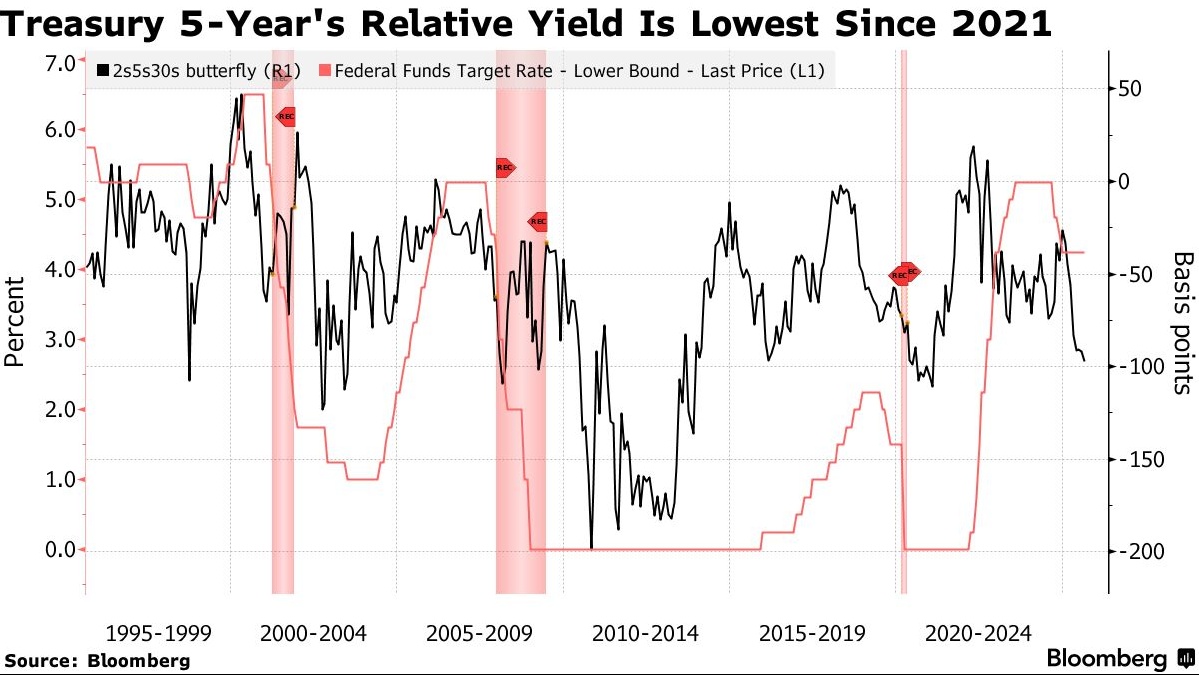
Group 1 - Goldman Sachs' interest rate strategy team highlights that the valuation level of the five-year U.S. Treasury bonds is historically rare unless the Federal Reserve lowers the benchmark interest rate to zero [1] - As of Wednesday, the five-year Treasury yield stands at 3.78%, close to the high range since early 2022 when the Fed's policy rate was at zero [1] - The relative value assessment model indicates that the yield on five-year bonds is at a historically high level, with the current result of the butterfly spread model approaching -100 basis points, reaching the lower limit of the volatility range since early 2021 [1] Group 2 - The valuation phenomenon is closely related to market expectations regarding the timing and magnitude of Fed rate cuts, which are difficult to sustain in the long term [4] - Since the beginning of the year, the market has increasingly priced in short-term rate cuts, expecting a larger cumulative reduction [4] - The five-year Treasury bond has been the best-performing segment this year, supported by rate cut expectations, while long-term bonds face upward yield risks due to persistent inflation and expanding U.S. budget deficits [4] Group 3 - Data shows that since the end of last year, the five-year Treasury yield has declined by 60 basis points, while the two-year yield has decreased by 52 basis points, and the thirty-year yield has remained nearly unchanged [4] - This further highlights the relative advantage of mid-term bonds under the influence of rate cut expectations [4]
二季度低迷之后,“最火美债交易”回来了
Hua Er Jie Jian Wen· 2025-08-04 00:57
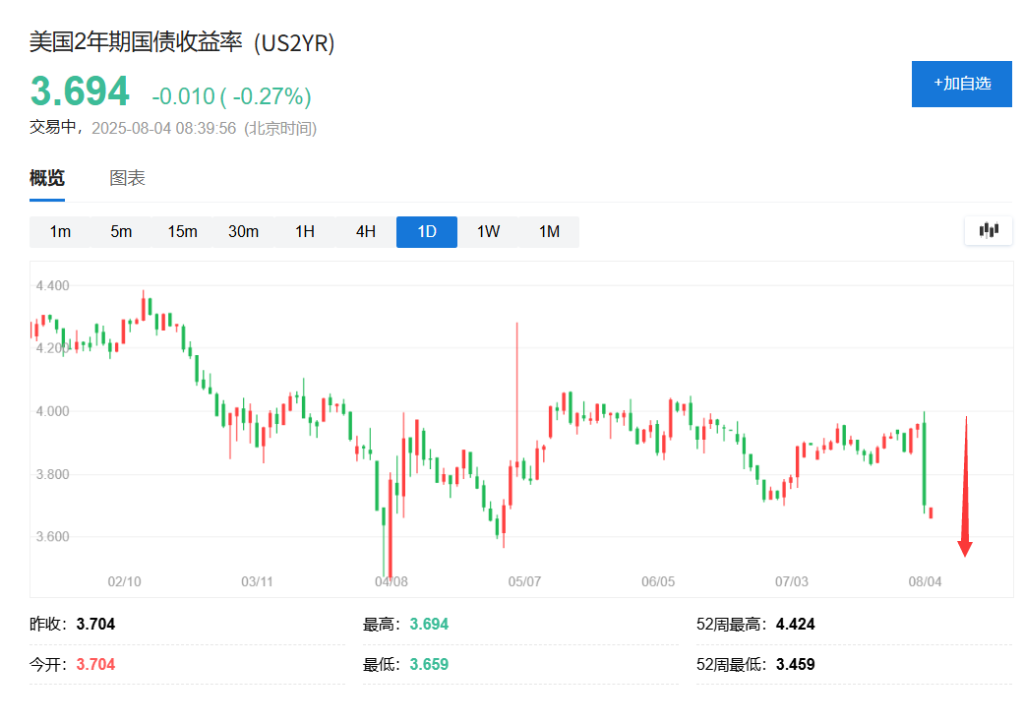
Core Viewpoint - A surprisingly weak employment report has reversed the pessimistic sentiment in the U.S. Treasury market, reviving the "steepening yield curve" strategy that had previously been under pressure [1]. Group 1: Employment Report Impact - The July non-farm payroll report showed a slowdown in job growth and a significant downward revision of 258,000 jobs for May and June, altering the market narrative [1]. - Following the report, all U.S. Treasury yields fell, with the two-year Treasury leading the decline, dropping over 25 basis points in a single day, marking the largest daily drop since December 2023 [1]. Group 2: Market Reactions - Traders are betting on an earlier interest rate cut by the Federal Reserve, with futures market pricing indicating an 84% chance of a rate cut next month and at least two cuts expected by the end of the year [4]. - The steepening yield curve strategy, which had been unprofitable since April, saw a resurgence as short-term yields plummeted, leading to the largest single-day increase in the yield difference between two-year and thirty-year Treasuries since April 10 [5]. Group 3: Future Expectations - The weak employment data provides strong evidence for those advocating for early rate cuts, including dissenting Federal Reserve officials and President Trump [7]. - Analysts suggest that the upcoming $125 billion Treasury issuance could support the steepening trend, with the government set to issue securities including $10 billion and $30 billion in 10-year and 30-year bonds [7].