
牛市两段论

Search documents
申万宏源策略一周回顾展望(25/11/17-25/11/22):调整是也只是怀疑牛市级别
Shenwan Hongyuan Securities· 2025-11-22 12:46
Core Viewpoints - The current adjustment is characterized as a "doubtful bull market level," indicating that the major trends in the AI industry chain have not ended, although there are short-term fluctuations and a temporary lack of cost-effectiveness in large trends. This situation resembles historical patterns observed in early 2014, early 2018, and early 2021 [1][3][5] - The "two-stage bull market theory" remains unchanged, suggesting that the transition from Bull Market 1.0 to 2.0 is a typical feature of the A-share bull market cycle. The transition period is expected to occur in the first half of 2026, with a full bull market potentially starting in the second half of 2026 [1][5][6] Summary by Sections Adjustment Phase - The adjustment phase is seen as a "doubtful bull market level," where the AI industry chain is experiencing a lack of cost-effectiveness, leading to a market correction. Historical experiences indicate that such adjustments are typical and often occur in quarterly cycles [3][4] - The current market conditions show that the implied equity risk premium (ERP) in sectors like telecommunications and electronics is still above historical lows, while the price-to-earnings (PE) ratios are at absolute historical highs [3][4] Spring Market Outlook - The spring market is expected to be more promising post-adjustment, with economic growth needing to maintain a high level to achieve the 2035 medium-developed country goal. The third quarter of 2025 showed weak economic performance, and December 2025 is seen as a critical window for laying out economic policies for 2026 [6][7] - The technology sector is anticipated to see a rapid improvement in cost-effectiveness, with institutional investors reducing their technology holdings in the short term. The micro-structural improvements in the technology sector are also expected to play a significant role in the spring market rotation [6][7] 2026 Industry Style and Rhythm Outlook - The transition from Bull Market 1.0 to 2.0 is expected to favor high-dividend defensive stocks. The actual improvement in economic sentiment will catalyze cyclical stocks to lead index breakthroughs, with technology trends and manufacturing global influence being the main themes of the bull market [8] - In the spring of 2026, the early validation of policy bottoms, cyclical price increases, and improved year-on-year PPI expectations will provide a foundation for cyclical assets. Key areas of focus include basic chemicals, industrial technology, innovative pharmaceuticals, and defense industries, with potential rebounds in AI computing power, storage, energy storage, and robotics [8]
申万宏源策略一周回顾展望:调整是也只是“怀疑牛市级别”
Shenwan Hongyuan Securities· 2025-11-22 11:49
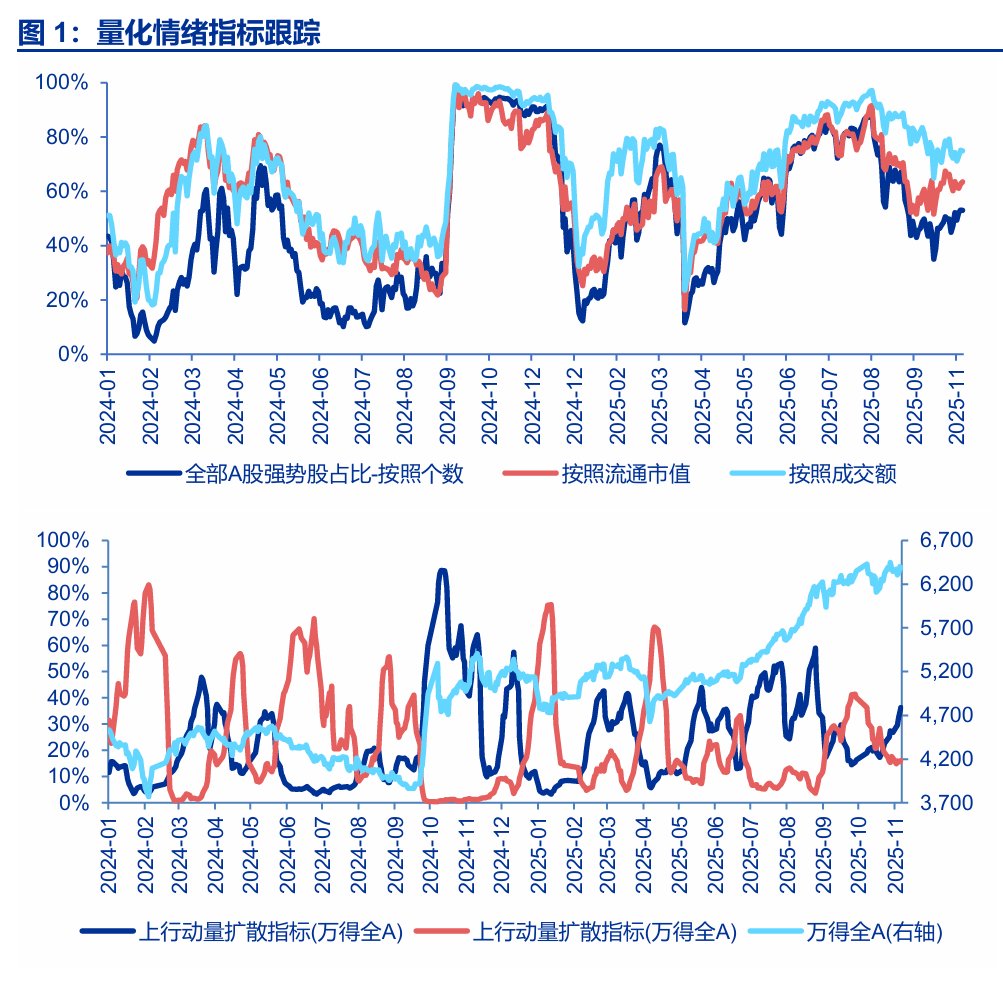
Group 1 - The report indicates that the current adjustment phase is characterized as a "doubtful bull market level," with the AI industry chain experiencing a significant trend that has not yet ended, while smaller fluctuations are present and the cost-effectiveness of large trends is temporarily insufficient. This situation resembles historical patterns observed in early 2014 with the ChiNext, early 2018 with food and beverage, and early 2021 with new energy [4][6][7] - The "bull market two-stage theory" remains unchanged, confirming the high-level area of the bull market 1.0 phase. The transition from bull market 1.0 to 2.0 is expected to occur in the first half of 2026, with a focus on the accumulation of conditions for a comprehensive bull market and adjustments in industry trends to digest cost-effectiveness issues [6][7][9] - The report emphasizes that while adjustments are occurring, it is crucial to maintain a firm belief in the bull market. The adjustment phase is seen as a potential bottom, particularly when it aligns with the core track's bull-bear boundary [6][7] Group 2 - The report expresses optimism for the spring market following the adjustment, highlighting that achieving the 2035 medium-developed country goal requires maintaining a high economic growth rate. The economic performance in Q3 2025 was weak, and December 2025 is identified as a critical window for laying out economic policies for 2026, with the possibility of an early verification of the "policy bottom" [7][8] - Two key clues for the spring market are discussed: first, the management's emphasis on economic growth and the potential early verification of the "policy bottom"; second, the mid-term upward trend of the technology industry remains unchanged, with the AI industry still in "stage 3" and moving towards "stage 4," indicating non-linear growth in industry profits [8][9] - The report anticipates that the transition from bull market 1.0 to 2.0 will favor high-dividend defensive strategies, with the actual improvement in economic sentiment catalyzing a breakthrough in cyclical stocks, while the technology industry's trend and global influence of manufacturing will be the main lines of the bull market [9] Group 3 - The report outlines expectations for the 2026 industry style rhythm, indicating that cyclical stocks may serve as the foundational assets for the spring market, with basic chemicals and industrial technology being highlighted as higher elasticity directions. The technology sector is expected to rebound, focusing on innovative pharmaceuticals and national defense industries [9][10] - Specific sectors such as AI computing power, storage, energy storage, and robotics are anticipated to have rebound opportunities in the spring [9][10] - The report includes quantitative sentiment indicators and ETF tracking data, providing insights into market dynamics and investor sentiment [2][17]
申万宏源“牛市两段论”:科技结构牛或在2026年春季达到高峰
2 1 Shi Ji Jing Ji Bao Dao· 2025-11-19 02:33
Core Insights - The conference held by Shenwan Hongyuan focused on investment opportunities during the "14th Five-Year Plan" period, emphasizing various sectors including asset allocation, high-end manufacturing, artificial intelligence, and consumption [1][3]. Group 1: Economic Development and Innovation - Liu Jian, Chairman of Shenwan Hongyuan, highlighted the shift in China's economic growth model towards innovation-driven development, with a focus on original innovation and technological breakthroughs [3]. - China's R&D expenditure is projected to exceed 3.6 trillion yuan in 2024, representing approximately 2.69% of GDP, surpassing Japan and South Korea in terms of R&D scale [3]. Group 2: Market Outlook and Bull Market Analysis - Zhao Wei, Chief Economist at Shenwan Hongyuan, indicated that 2026 will be a pivotal year for reform and development, suggesting that accelerating reforms will create significant opportunities [3][4]. - The "bull market two-stage theory" proposed by Fu Jingtao suggests that the first stage, characterized by a technology-driven market, may peak in spring 2026, followed by a comprehensive bull market in the second half of 2026 [4][5]. - Fu Jingtao noted that the current bull market is still in its early stages, with a shift in asset allocation towards equities expected to drive market growth [5].



申万宏源傅静涛:“牛市1.0”科技结构牛可能在2026年春季来到高峰
2 1 Shi Ji Jing Ji Bao Dao· 2025-11-18 04:52
Core Viewpoint - The analysis presented by Shenyin Wanguo's chief analyst suggests a two-phase bull market, with 2025 representing the "Bull Market 1.0" focused on technology, and a potential transition to a broader bull market in the second half of 2026 [1] Group 1: Market Phases - The "Bull Market 1.0" in 2025 is characterized by a technology-driven structure, with expectations of a peak in the spring of 2026 [1] - The second half of 2026 may initiate a comprehensive bull market, termed "Bull Market 2.0" [1] Group 2: AI Industry Insights - The AI industry trend is expected to continue evolving, but the stock prices of A-share AI industry chain companies are currently in a long-term low cost-performance zone [1] - This situation is reminiscent of previous market phases, such as the early 2014 ChiNext, early 2018 food and beverage sector, and early 2021 new energy sector [1] Group 3: Historical Context - Historically, markets often undergo a phase of skepticism before continuing with industry trend-driven rallies [1]
牛市两段论——申万宏源2026年A股投资策略
申万宏源证券上海北京西路营业部· 2025-11-18 02:40
Core Viewpoint - The article presents a two-stage bull market theory for A-shares in 2026, suggesting a strategic approach to investment during this period [2] Group 1: Market Outlook - The first stage of the bull market is expected to be driven by macroeconomic recovery and policy support, leading to a significant increase in market liquidity [2] - The second stage will likely be characterized by corporate earnings growth and improved fundamentals, which will sustain the market rally [2] Group 2: Investment Strategy - The article emphasizes the importance of sector rotation, recommending investments in cyclical sectors during the initial phase and defensive sectors as the market matures [2] - It highlights the potential for technology and healthcare sectors to outperform in the long term, given their growth prospects and innovation [2] Group 3: Risk Factors - The analysis points out potential risks such as geopolitical tensions and domestic economic challenges that could impact market performance [2] - It also notes the importance of monitoring inflation trends and interest rate movements as critical factors influencing market dynamics [2]

申万宏源2026年A股投资策略:牛市两段论
Shenwan Hongyuan Securities· 2025-11-17 13:31
Core Insights - The report emphasizes that the bull market is not over, with a significant shift in Chinese residents' asset allocation towards equities still in its early stages [3][34][51] - The transition from "following" to "leading" in external circulation is a key theme, highlighting the need for A-shares to embrace competitive thinking [3][12][20] - The report outlines a two-phase bull market, with "Bull Market 1.0" expected to peak in spring 2026 and "Bull Market 2.0" potentially starting in the second half of 2026 [4][6][7] Group 1: Competitive Landscape - Global competition is intensifying, and A-shares must adopt a competitive mindset to navigate this environment [3][20][22] - The shift in external circulation from "following" to "leading" reflects China's growing competitiveness and the need to enhance its global influence [3][12][19] - The report suggests that the A-share market can reflect the outcomes of competitive events, impacting pricing and risk preferences [3][22] Group 2: Asset Allocation Trends - The report introduces a "resident asset allocation migration degree indicator," indicating that the migration towards equities is still in its early phase, with significant potential for growth [34][36] - Historical data shows that the peak of equity allocation occurred in 2021, followed by a decline until 2024, with a rebound expected in 2025 [36][51] - The report highlights that the accumulation of profit-making effects in the A-share market is undergoing a qualitative change, which will improve conditions for capital inflow over time [3][34][51] Group 3: Bull Market Phases - "Bull Market 1.0" is characterized by a focus on technology sectors, particularly AI, which may face short-term adjustments but is expected to continue its long-term trend [4][6][7] - "Bull Market 2.0" is anticipated to be a comprehensive bull market driven by cyclical improvements in fundamentals, emerging industry trends, and increased asset allocation towards equities [4][6][7] - The report predicts that by mid-2026, a clearer visibility of supply-demand dynamics will emerge, supporting the transition to "Bull Market 2.0" [4][6][7] Group 4: Industry Outlook - The report identifies key sectors for investment, including technology, manufacturing, and emerging industries, which are expected to benefit from cyclical improvements and policy support [4][6][7] - The anticipated recovery in the manufacturing sector and the emergence of new demand sources are crucial for the overall market outlook [4][6][7] - The report suggests that the transition from "Bull Market 1.0" to "Bull Market 2.0" will involve a shift in investment focus from high-growth technology stocks to cyclical and value-oriented sectors [4][6][7]
申万宏源证券晨会报告-20251117
Shenwan Hongyuan Securities· 2025-11-17 00:43
Group 1: Macroeconomic Outlook - The report anticipates a non-typical economic recovery in 2026, driven by confidence rebuilding and policy support, with a potential for profit improvement in the latter half of the year [9][10] - Key factors contributing to export resilience include fiscal expansion in developed economies, easing of US-China tariff conflicts, and improvements in China's industrial competitiveness [9] - The report emphasizes the importance of reform in driving economic benefits, suggesting that 2026 will mark a significant acceleration in reform efforts [9][10] Group 2: A-Share Market Strategy - The report outlines a two-phase bull market strategy, with 2025 characterized as "Bull Market 1.0" focused on technology, and 2026 potentially entering "Bull Market 2.0" with broader market participation [10][11] - It predicts that 2026 will see a rebound in profitability across the A-share market, with expected growth rates of 7% in 2025 and 14% in 2026 for net profits [10][11] - The transition from "Bull Market 1.0" to "Bull Market 2.0" is expected to be marked by a shift towards cyclical stocks and a resurgence in technology-driven sectors [10][11] Group 3: Bond Market Strategy - The bond market outlook for 2026 suggests a low-interest environment with ongoing asset allocation adjustments, although the attractiveness of bond assets may be limited [11][12] - The report highlights the importance of timing in duration strategies, with a focus on credit certainty as a key investment theme [12][13] - Potential risks include a shift towards a more bearish market due to inflationary pressures and fiscal policy changes [12][13] Group 4: Shipping and Shipbuilding Sector - The report indicates a positive outlook for the shipbuilding sector, driven by rising second-hand ship prices surpassing new build prices, signaling a potential supercycle [20][21] - Historical trends show that improvements in shipping market conditions typically lead to delayed increases in shipbuilding stock prices, suggesting a similar pattern may occur [20] - The report emphasizes the importance of monitoring oil tanker rental rates and their impact on shipbuilding market dynamics [20][21] Group 5: Environmental Sector - The environmental sector is expected to benefit from stable municipal environmental profits, improved cash flows, and adjustments in water pricing, highlighting opportunities in environmental assets [19][21] - The report suggests that the dual carbon goals and AI integration will drive growth in the environmental sector, with specific recommendations for companies involved in waste management and renewable energy [19][21] - The focus on municipal environmental projects is expected to enhance the attractiveness of certain stocks within the sector [19][21]





申万宏源2026年A股投资策略概要:牛市两段论
Shenwan Hongyuan Securities· 2025-11-16 11:43
Group 1 - The report emphasizes that the global competition has intensified, and A-shares should embrace a competitive mindset, reflecting the reality of pricing competition [2][4] - The migration of Chinese residents' asset allocation towards equities is still in its early stages, which could drive a bull market, with the macroeconomic framework indicating that the accumulation of A-share profitability is undergoing a qualitative change [3][5] - The report outlines a "two-phase bull market" theory, with "Bull Market 1.0" expected to peak in spring 2026, followed by a potential "Bull Market 2.0" in the second half of 2026 [6][10] Group 2 - The report predicts that 2026 will see a significant rebound in profitability, with the first double-digit growth in net profit for A-shares in five years, forecasting a 7% growth in 2025 and 14% in 2026 [13] - The transition from "Bull Market 1.0" to "Bull Market 2.0" will likely favor high-dividend defensive stocks, while the latter phase will be characterized by cyclical stocks leading the market [10][13] - Three structural clues for 2026 include recovery trades in basic chemicals and industrial metals, opportunities in the AI industry chain, and the enhancement of manufacturing influence [14]
申万宏源:抢跑26年景气展望的行情不断演进
智通财经网· 2025-11-09 01:19
Core Viewpoint - The report from Shenwan Hongyuan indicates that Hong Kong stocks have outperformed A-shares during two phases: the industrial trend fermentation phase and the phase where Chinese assets are generally superior with clear structural main lines. The outlook remains positive for a rebound in the fourth quarter, particularly favoring high elasticity in the Hang Seng Technology Index [1]. Short-term Market Structure Characteristics - The technology growth sector currently lacks long-term cost-effectiveness, experiencing high volatility while awaiting industrial trend catalysts. The Shanghai Composite Index has been fluctuating narrowly, with the technology growth sector showing wide fluctuations. The absence of a dominant structure to lead the market breakout is noted, similar to previous years when long-term low cost-effectiveness areas struggled to gain valuation [2][3]. Mid-term Market Judgments - The "two-stage bull market" theory is maintained, with the first stage of the technology structure bull market occurring in 2025. The spring of 2026 may present challenges, including a critical verification period for demand and sensitivity to performance disturbances and liquidity shocks in low cost-effectiveness areas. The market is expected to experience a structural breakthrough, but the timing and conditions for a comprehensive bull market are still developing [4]. Upcoming Market Trends - The market is anticipated to see a rotation in sectors, particularly with the PPI turning positive and the emergence of price increase catalysts. The sectors of energy storage and photovoltaics are expected to show early signs of recovery, with potential for further upward movement in the AI industry, humanoid robots, innovative pharmaceuticals, and defense industries [5]. Quantitative Indicators - Various quantitative indicators show a continued expansion of profit effects across sectors, with significant participation from coal, oil and petrochemicals, and steel. However, sectors like non-ferrous metals and transportation are experiencing contraction [9]. ETF Market Overview - The ETF market reflects varied performance across sectors, with notable changes in share volumes and price fluctuations. For instance, the Huatai-PineBridge CSI Photovoltaic Industry ETF has seen a 1.6% increase in share volume over five trading days, while the Southern CSI New Energy ETF has experienced a 1.2% decrease [10].
申万宏源策略一周回顾展望(25/11/03-25/11/08):抢跑26年景气展望的行情不断演进
Shenwan Hongyuan Securities· 2025-11-08 14:05
Group 1 - The short-term market structure indicates that technology growth has insufficient long-term cost-effectiveness, leading to high-level fluctuations while waiting for industrial trend catalysts to accumulate [1][5][6] - The recent narrow fluctuations of the Shanghai Composite Index and the wide fluctuations in technology growth reflect a lack of dominant structures to lead the market breakthrough [2][5][6] - The historical experience shows that when long-term cost-effectiveness is low, the difficulty of earning valuation money significantly increases, requiring continuous verification of industrial catalysts and high growth in performance to sustain effective upward trends [2][5][6] Group 2 - The mid-term market judgment maintains a "two-stage bull market" theory, with 2025's technology structure bull market being the first stage, and the spring of 2026 potentially marking a phase peak [7][8] - The market may face three challenges in spring 2026: verification of demand-side key periods, increased sensitivity to performance disturbances and liquidity shocks in low cost-effectiveness areas, and the need for time to wait for new structural highlights in the domestic technology industry [7][8] - The bull market is expected to have depth, with conditions for a comprehensive bull market becoming increasingly sufficient over time, and at least three mid-term returns yet to be realized [8] Group 3 - The economic direction for the next year is expected to evolve with a rotation in the fourth quarter, driven by the price increase cycle and the anticipated turning point in PPI [10] - The rotation of sectors will continue, with potential upward opportunities in the AI industry chain, humanoid robots, innovative pharmaceuticals, and national defense industries [10] - The report highlights that the market has already begun to anticipate the economic improvement of 2026, with the electricity equipment sector nearing low cost-effectiveness and the price increase cycle showing short-term cost-effectiveness limitations [10]