财政收支

Search documents
北京晒政府账本:今年财政收入预计增长约4%
Di Yi Cai Jing· 2026-01-25 07:37
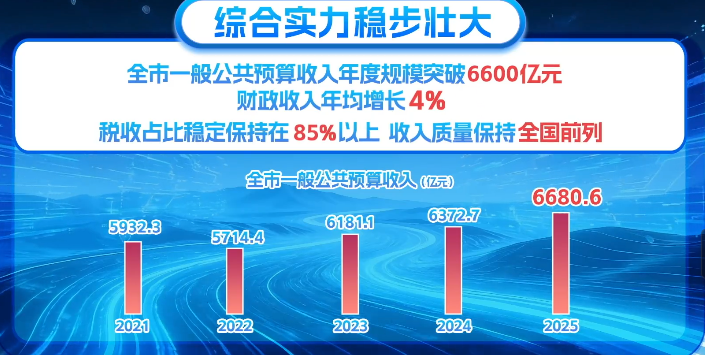
Core Viewpoint - Beijing's fiscal revenue for 2025 is projected to grow steadily, outperforming the national average, with a general public budget revenue of 668.06 billion yuan, reflecting a year-on-year increase of 4.8% [1][3]. Fiscal Revenue - The general public budget revenue for Beijing in 2025 is 668.06 billion yuan, with a growth rate of 4.8%, closely aligning with the city's GDP growth rate of 5.4% [1][3]. - Tax revenue constitutes 86.5% of the general public budget revenue, indicating strong revenue resilience and quality [1][3]. - The growth rate of Beijing's general public budget revenue exceeds the national average and is higher than the 2024 growth rate of 3.1% [3]. Economic Context - Beijing's fiscal revenue growth is attributed to stable economic performance, with a GDP of 5.2 trillion yuan and a growth rate of 5.4%, surpassing the national growth rate by 0.4 percentage points [3]. - The city ranks sixth in general public budget revenue among 31 provinces, with expectations to maintain this position in 2025 [3]. Sector Contributions - The contribution of high-tech industries, digital economy sectors, and unicorn companies to fiscal revenue has increased by 7.6%, 7.4%, and 6.7% respectively since 2020 [3]. Fiscal Expenditure - The general public budget expenditure for 2025 is projected at 840.19 billion yuan, remaining stable with a year-on-year growth of 4.8% [5]. - Over 80% of the budget expenditure is allocated to improving public welfare [5]. - Government fund revenue is expected to reach 219.39 billion yuan, marking a year-on-year increase of 4.7%, reversing a trend of decline [5]. Future Projections - For 2026, the general public budget revenue is anticipated to be 695 billion yuan, with a growth rate of around 4%, consistent with the 2025 expectations [5][6]. - The general public budget expenditure for 2026 is projected at 860.02 billion yuan, reflecting a year-on-year increase of 2.4% [6].

财政部:2025年财政收入呈“前低中高后稳”态势
Xin Hua Cai Jing· 2026-01-20 17:18
三是重点支出保障有力。2025年,财政部门持续优化支出结构,社会保障和就业、科技、教育、卫生健 康等重点领域支出得到了较好的保障。前11个月,上述四项支出合计超过10万亿元,占一般公共预算支 出的四成多。 一是财政收入"前低中高后稳"。分季度看,全国一般公共预算收入一季度下降1.1%;二季度由降转升, 增长0.6%;三季度增幅明显提高,增长2.5%。进入四季度,10月份增长3.2%,11月份与2024年同期基 本持平。其中,税收收入自4月份以来持续保持同比增长,成为拉动财政收入增长的主要引擎,这也反 映出我国经济运行延续了稳中有进的发展态势。 二是收支平衡目标可以实现。收入方面,全国一般公共预算收入保持恢复性增长态势,总体平稳。支出 方面,全国一般公共预算支出靠前发力、保持强度,为经济社会发展提供了必要的财力支撑。预计全年 可以实现收支平衡。 新华财经北京1月20日电(记者董道勇)20日,财政部综合司司长李先忠在国新办新闻发布会上表示, 2025年度的财政收支数据还在汇总当中,预计1月底或2月初正式对社会发布。就目前初步掌握的情况 看,2025年财政收支运行可以概括为以下三点。 (文章来源:新华财经) "同时 ...
2025年度财政收支数据预计1月底或2月初正式对社会发布
Sou Hu Cai Jing· 2026-01-20 09:49
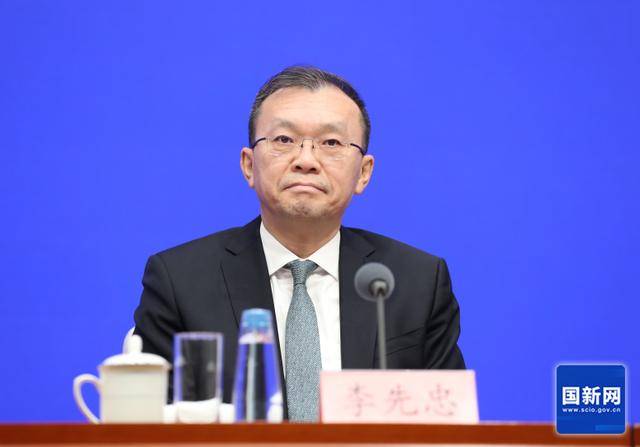
国务院新闻办公室于1月20日下午举行新闻发布会,介绍发挥积极财政政策作用,推动经济社会高质量 发展有关情况。财政部综合司司长李先忠介绍,2025年度的财政收支数据还在汇总当中,预计1月底或2 月初正式对社会发布。 李先忠表示,就目前初步掌握的情况看,2025年财政收支运行可以概括为以下三点。 一是财政收入"前低中高后稳"。分季度看,全国一般公共预算收入一季度下降1.1%;二季度由降转升, 增长0.6%;三季度增幅明显提高,增长2.5%。进入四季度,10月份增长3.2%,11月份与2024年同期基 本持平。其中,税收收入自4月份以来持续保持同比增长,成为拉动财政收入增长的主要引擎,这也反 映出我国经济运行延续了稳中有进的发展态势。 二是收支平衡目标可以实现。收入方面,全国一般公共预算收入保持恢复性增长态势,总体平稳。支出 方面,全国一般公共预算支出靠前发力、保持强度,为经济社会发展提供了必要的财力支撑。预计全年 可以实现收支平衡。 来源:北京日报客户端 记者:丰家卫 三是重点支出保障有力。2025年,财政部门持续优化支出结构,社会保障和就业、科技、教育、卫生健 康等重点领域支出得到了较好的保障。前11个月,上述 ...
财政部:去年社会保障和就业、科技、教育、卫生健康等重点领域支出占一般公共预算支出超四
Sou Hu Cai Jing· 2026-01-20 09:03
国务院新闻办公室1月20日举行新闻发布会,介绍发挥积极财政政策作用,推动经济社会高质量发展有 关情况。 关于2025年财政收支的运行情况,财政部综合司司长李先忠介绍,目前,2025年度的财政收支数据还在 汇总当中,预计1月底或2月初正式对社会发布。就目前初步掌握的情况看,2025年财政收支运行可以概 括为以下三点。 一是财政收入"前低中高后稳"。分季度看,全国一般公共预算收入一季度下降1.1%;二季度由降转升, 增长0.6%;三季度增幅明显提高,增长2.5%。进入第四季度,10月份增长3.2%,11月份与2024年同期 基本持平。其中,税收收入自4月份以后持续保持同比增长,成为拉动财政收入增长的主要引擎,反映 出经济运行延续稳中有进发展态势。 三是重点支出保障有力。2025年,财政部门持续优化支出结构,社会保障和就业、科技、教育、卫生健 康等重点领域支出得到较好保障。前11个月,上述四项支出合计超10万亿元,占一般公共预算支出的四 成多。同时,持续加快债券资金使用,前11个月超长期特别国债、地方政府专项债券、中央金融机构注 资特别国债等资金共支出5.15万亿元,比上年同期增加1.61万亿元,增长45.5%,增 ...
图说中国宏观专题-经济动能等待变化
2025-12-31 16:02
Summary of Key Points from the Conference Call Industry Overview - The macroeconomic data for November indicates a weakening in China's economy, particularly in domestic demand, with consumption, fixed asset investment, and the real estate market showing signs of decline [1][4] - Industrial enterprises are experiencing negative growth in revenue and profit for two consecutive months, raising concerns about corporate profitability and its impact on stock valuations [1][5] Core Insights and Arguments - **Economic Performance**: November's industrial value added showed a slight increase of 0.44% month-on-month, but high-tech industries grew at a slower pace, with some sectors like smartphones and solar batteries experiencing negative growth [2][4] - **Consumer Spending**: Retail sales growth was only 1.3% year-on-year, with significant declines in categories such as jewelry and home appliances due to high base effects and recent price fluctuations [2][3] - **Investment Trends**: Fixed asset investment decreased by 2.6% year-on-year, with manufacturing, infrastructure, and real estate investments all showing declines [2][4] - **Real Estate Market**: The real estate sector continues to struggle, with sales volume and area reaching their lowest points of the year, indicating a lack of recovery [3][4] - **Corporate Profitability**: Industrial enterprises reported a revenue decline of 0.3% and a profit drop of 13.1% year-on-year, with the profit margin decreasing to 5.3% [5][6] - **Inventory and Debt Levels**: Industrial inventories are on the rise, with nominal and actual inventories increasing by 4.6% and 6.8% year-on-year, respectively, indicating growing operational pressures [7] - **Monetary Policy**: M1 and M2 money supply growth has slowed, reflecting weak consumer demand, while short-term loans to households decreased significantly [8] - **Fiscal Policy**: General public fiscal revenue fell to -0.02% year-on-year, with government spending growth lagging behind previous years, particularly in infrastructure [8][9] Additional Important Insights - **Government Initiatives**: The Central Economic Work Conference emphasized the need to stimulate economic potential, stabilize the real estate market, and boost investment, which may enhance risk appetite in the market [2][4][15] - **Sectoral Performance**: High-tech manufacturing and related raw material industries are showing resilience, while traditional consumer goods and public utilities face challenges [8][10] - **Future Outlook**: The fiscal rhythm is expected to accelerate in 2026, with a focus on timely implementation of policies to support economic recovery and corporate profitability [10][11] This summary encapsulates the critical insights from the conference call, highlighting the current challenges and potential policy responses within the Chinese economy and specific industries.
浙商证券浙商早知道-20251222
ZHESHANG SECURITIES· 2025-12-21 23:32
Group 1: Company Overview - The report focuses on Changling Hydraulic (605389), a leading company in hydraulic components, which is expected to enter a new growth phase due to the proposed acquisition by the Core Semiconductor Group [4]. - The anticipated revenue for Changling Hydraulic from 2025 to 2027 is projected to be 1,038 million, 1,248 million, and 1,534 million respectively, with growth rates of 17%, 20%, and 23% [4]. - The net profit attributable to the parent company is forecasted to be 114 million, 143 million, and 181 million for the same period, with growth rates of 21%, 25%, and 27% [4]. Group 2: Industry Insights - The macroeconomic report indicates that the slowdown in fiscal revenue growth in November is aligned with the overall economic slowdown, limiting support for fiscal income [5]. - The market outlook for 2026 suggests a strong fiscal expansion, with a potential slight increase in the deficit ratio, although the overall fiscal strength may decline [5]. - The bond market analysis highlights that the central bank's actions to inject liquidity are expected to keep year-end liquidity friction at historically low levels, with a significant decline in repo rates compared to previous years [8].
数据点评 | 财政的四大发力点(申万宏观·赵伟团队)
赵伟宏观探索· 2025-12-18 16:03
Core Viewpoint - The focus of future fiscal revenue and expenditure may be on maintaining deficits, standardizing tax incentives, supplementing local financial resources, and resolving hidden debts [2][48]. Group 1: Fiscal Revenue and Expenditure Overview - In the first eleven months of 2025, the national general public budget revenue reached 200,516 billion yuan, a year-on-year increase of 0.8%, while expenditure was 248,538 billion yuan, up 1.4% year-on-year [6][47]. - The divergence in fiscal revenue and expenditure in November showed improved expenditure but pressured income, with broad fiscal expenditure down 1.7% year-on-year, a significant narrowing of the decline by 17.5 percentage points compared to October [2][7]. - Broad fiscal revenue fell by 5.2% year-on-year in November, further declining by 4.6 percentage points from October [2][50]. Group 2: Factors Influencing Fiscal Performance - The divergence in fiscal revenue is partly due to base disturbances and the ongoing drag of land finance, with November 2024 broad fiscal revenue showing a recovery of 11% year-on-year, creating high base pressure [8][48]. - The income growth rate weakened, further constraining overall financial expansion space, while the low performance of land finance persisted [2][8]. Group 3: Support for Fiscal Expenditure - The 5,000 billion yuan limit on local special bonds and the implementation of financial tools became significant supports for broad fiscal expenditure in November, with government fund expenditure turning positive [10][49]. - Despite the ongoing drag from land finance and short-term pressure on income, the fiscal expenditure growth rate is expected to continue recovering due to the support from the local debt limit [10][49]. Group 4: Future Fiscal Strategy - Looking ahead to 2026, the focus of fiscal revenue may emphasize maintaining necessary fiscal deficits and standardizing tax incentives and fiscal subsidy policies [13][48]. - The expenditure side will prioritize addressing local fiscal difficulties and urging local governments to actively manage debts, targeting both the stock of hidden debts and the flow issues of local financial resources [13][48].

广发宏观:11月财政收支情况简评
GF SECURITIES· 2025-12-18 15:09
Group 1: Fiscal Revenue Overview - In November, fiscal revenue showed a year-on-year growth of 0.0%, down from 3.2% in the previous period, primarily due to a high base effect from last year[3] - Central government revenue decreased by 4.2% year-on-year, while local government revenue increased by 4.1%[4] - Cumulative fiscal revenue for the first 11 months of the year grew by 0.8% year-on-year, marking one of the lowest levels in the past decade, only better than 2020 and 2022[3] Group 2: Tax Revenue Analysis - Tax revenue in November increased by 2.8% year-on-year, down from 8.6% previously, with corporate income tax showing a significant decline of 5.2%[4] - Personal income tax grew by 11.4% year-on-year, while domestic value-added tax (VAT) increased by 3.3%[5] - The decline in corporate income tax is attributed to an early revenue recognition effect from the previous year's fourth quarter[4] Group 3: Fiscal Expenditure Insights - General public budget expenditure in November decreased by 3.7% year-on-year, with cumulative expenditure progress at 84%, the slowest in five years[6] - Infrastructure-related expenditures, particularly in agriculture and community services, saw significant declines, with cumulative spending down by 13.6% and 8.3% respectively[6] - Technology expenditure, however, increased by 27.4% year-on-year, indicating a shift in spending priorities[6] Group 4: Broader Fiscal Context - The fiscal deficit reached 4.8 trillion yuan, with a deficit progress of 62%, largely due to reduced infrastructure spending[7] - Government fund budget revenue fell by 15.8% year-on-year, reflecting ongoing weakness in the real estate sector[7] - The upcoming fiscal policies for 2026 are expected to be crucial, with potential acceleration in spending to stimulate economic activity[8]
【广发宏观吴棋滢】11月财政收支情况简评
郭磊宏观茶座· 2025-12-18 15:01
Summary of Key Points Core Viewpoint - The article discusses the recent trends in China's fiscal revenue and expenditure, highlighting a decline in revenue growth due to high base effects from the previous year and a slowdown in public budget expenditure, particularly in infrastructure-related spending. Group 1: Fiscal Revenue Trends - In November, fiscal revenue showed a year-on-year growth of 0.0%, down from 3.2% in the previous year, primarily due to high base effects from the same period last year [1][4] - The cumulative public budget revenue for the first 11 months of the year increased by 0.8% year-on-year, marking one of the lowest growth rates in the past decade, only better than 2020 and 2022 [1][4] - Major tax categories showed varied performance, with corporate income tax experiencing a significant decline, while personal income tax and domestic value-added tax remained strong, with personal income tax growing by 11.5% year-to-date [5][6] Group 2: Public Budget Expenditure - Public budget expenditure recorded a year-on-year decline of -9.8% in October and -3.7% in November, with cumulative expenditure progress for the first 11 months at 84%, slower than previous years [2][8] - Expenditure related to infrastructure, particularly in rural and community sectors, saw significant declines, while technology spending grew by 27.4% year-on-year in November [2][9] - The public budget revenue-expenditure gap reached 4.8 trillion yuan, with a deficit progress of 62%, influenced by the slowdown in infrastructure spending [12] Group 3: Broader Fiscal Context - Government fund budget revenue fell by 15.8% year-on-year, indicating a continued weak performance in the income side, aligning with the downturn in real estate data [15][16] - The article emphasizes the importance of observing fiscal trends in early 2026, as the first quarter will be critical for assessing the impact of policy financial tools and investment stabilization efforts [3][15]

11月财政收支增速有所放缓,2026年积极财政将主动靠前发力
Hua Xia Shi Bao· 2025-12-18 13:52
Group 1 - The core viewpoint of the articles indicates a weakening trend in China's fiscal revenue and expenditure data for 2025, with a notable slowdown in revenue growth and a narrowing decline in expenditure [2][5][9] - From January to November 2025, the national general public budget revenue reached 200,516 billion yuan, showing a year-on-year growth of 0.8%, consistent with the growth rate from January to October [2][5] - Tax revenue for the same period totaled 164,814 billion yuan, with a year-on-year increase of 1.8%, while November's fiscal revenue was 1.4 trillion yuan, remaining flat compared to the same month in 2024 [2][5] Group 2 - On the expenditure side, from January to November, the national general public budget expenditure grew by 1.4%, a decrease of 0.6 percentage points compared to the previous ten months [2][8] - In November, the year-on-year expenditure growth rate was -3.7%, an improvement from October's -9.8%, but still at a low level due to last year's low base [2][8] - The structure of expenditure showed a decline in infrastructure spending, with a cumulative growth rate of -7.7%, while social welfare spending increased by 8.1% [8] Group 3 - The government fund revenue continued to be under pressure from the real estate sector, with a year-on-year decline of 4.9% from January to November 2025, and a significant drop of 15.8% in November alone [7] - The income from land use rights transfer saw a narrowing decline of 26.8%, indicating ongoing weakness in real estate demand [7] - Non-tax revenue has been in negative growth since May, with November's year-on-year decline narrowing to 10.8% from 32.8% in October, but still constraining overall revenue growth [6][7]