
中美关系

Search documents
中国驻美大使呼吁美方回归理性 停止极限施压
Xin Hua Wang· 2025-10-15 06:15
Group 1 - The core message emphasizes the need for the U.S. to return to rationality and stop extreme pressure, advocating for dialogue to resolve concerns based on mutual respect and equal consultation [1][2] - The speaker highlights that trade wars and tariff battles yield no winners, and both sides should learn from past experiences that such conflicts only lead to mutual harm [1] - The importance of maintaining a direction of mutual respect, peaceful coexistence, and win-win cooperation is stressed, acknowledging the historical and cultural differences between China and the U.S. [1] Group 2 - The call for collective action to enhance U.S.-China exchanges and cooperation is made, emphasizing the need for both top-down strategic guidance and bottom-up support [2] - The role of the U.S.-China National Council as a bridge for civil exchanges over the past 60 years is recognized, highlighting its contributions to improving bilateral relations [2] - The business community is identified as a stabilizing force in U.S.-China relations, promoting practical cooperation and cultural exchanges [2]
中国驻美大使谢锋:起而行之,汇聚各界促进中美交流合作的磅礴力量
Ge Long Hui A P P· 2025-10-15 05:52
谢锋强调,中国具有独特的制度、市场、产业、人才优势,在产业转型、科技创新、消费扩容、新型城 镇化、基础设施建设、保障改善民生等方面蕴含重大机遇。即将召开的中共二十届四中全会将研究关于 制定"十五五"规划的建议,该规划是未来5年中国经济社会发展的蓝图。中方将坚定不移推进高质量发 展和高水平开放,同包括美国在内的世界各国分享发展红利。欢迎美国朋友用足"240小时过境免 签"和"中国领事"APP在线签证申办等政策利好,多到中国走走看看,亲身感受真实、立体、全面的中 国。 谢锋表示,回顾近半个世纪中美交往史,有风有雨是常态,风雨兼程、克难前行是主流,是大势。面对 变乱交织的世界,我们有一千条理由把中美关系搞好,没有任何借口把中美关系搞砸。有志者事竟成, 办法总比困难多,路在脚下,事在人为。在座各位都是中美关系的利益攸关方,众人拾柴火焰高。值此 中美关系关键时刻,让我们齐心协力,继往开来,把握正确方向,排除困难干扰,推动中美关系沿着正 确轨道行稳致远! 格隆汇10月15日|2025年10月14日,谢锋大使应邀出席美中关系全国委员会年度颁奖晚宴并致辞。 谢锋指出,中美关系离不开自上而下的战略引领,也需要自下而上的支撑。近 ...
宝城期货豆类油脂早报-20251015
Bao Cheng Qi Huo· 2025-10-15 01:41
Report Summary 1) Report Industry Investment Rating No industry investment rating is provided in the report. 2) Core Viewpoints - The overall view for bean meal, palm oil, and soybean oil in the short - term, medium - term, and intraday is "oscillating weakly". The core logics for these commodities are affected by multiple factors such as Sino - US relations, policies, production, exports, inventories, and cost support [5][6][7]. 3) Summary by Variety Bean Meal (M) - **Viewpoints**: Short - term: oscillating; Medium - term: oscillating; Intraday: oscillating weakly; Reference view: oscillating weakly [5][6]. - **Core Logic**: With the US Treasury Secretary's statement that it is not certain to impose a 100% tariff on Chinese goods, market sentiment has fluctuated. The expectation of tightened domestic long - term soybean supply has cooled, weakening the support for the futures price of the 2601 contract of domestic bean meal. Also, factors like Sino - US relations, import arrival rhythm, oil mill start - up rhythm, and inventory pressure affect it [5][6]. Palm Oil (P) - **Viewpoints**: Short - term: oscillating; Medium - term: oscillating; Intraday: oscillating weakly; Reference view: oscillating weakly [6][7]. - **Core Logic**: The spill - over effect of the pressure on international oil prices on the oil market continues. Also, the weakening of the palm oil market industrial chain exerts obvious pressure. Macro - sentiment's influence on the oil market has significantly increased. Before the market sentiment recovers, the palm oil futures price will continue to be under pressure following the external market. Additionally, factors like biodiesel attributes, Malaysian palm production and exports, Indonesian exports, main - producing countries' tariff policies, domestic arrivals, inventories, and substitution demand play a role [6][7]. Soybean Oil (Not elaborated in detail in the core logic section like the above two, but listed in the summary table) - **Viewpoints**: Short - term: oscillating; Medium - term: oscillating; Intraday: oscillating weakly; Reference view: oscillating weakly [6]. - **Core Factors**: Sino - US relations, US biofuel policy, US soybean oil inventory, domestic soybean cost support, supply rhythm, and oil mill inventory [6].
大越期货油脂早报-20251015
Da Yue Qi Huo· 2025-10-15 01:25
Report Industry Investment Rating - Not provided Core Viewpoints - The prices of oils and fats are expected to fluctuate. The domestic fundamentals are loose, and the domestic supply of oils and fats is stable. Sino - US relations are tense, which puts pressure on the price of US soybeans. The inventory of Malaysian palm oil is neutral, and demand has improved. Indonesia's B40 policy promotes domestic consumption, and the B50 plan is expected to be implemented in 2026. The domestic fundamentals of oils and fats are neutral, and the import inventory is stable [2][3][4] - The current main logic is centered around the relatively loose global fundamentals of oils and fats. The main bullish factor is that the US soybean inventory - to - sales ratio remains around 4%, indicating tight supply. The main bearish factors are that the prices of oils and fats are historically high, domestic inventories of oils and fats are continuously increasing, the macro - economy is weak, and the expected production of related oils and fats is high [5] Summary by Related Catalogs Daily Views - Soybean Oil - The MPOB report shows that in August, Malaysian palm oil production decreased by 9.8% month - on - month to 1.62 million tons, exports decreased by 14.74% month - on - month to 1.49 million tons, and the end - of - month inventory decreased by 2.6% month - on - month to 1.83 million tons. The report is neutral, and the production reduction is less than expected. Currently, the export data of Malaysian palm oil this month shows a 4% month - on - month increase, and the supply pressure of palm oil will decrease in the subsequent production - reduction season [2] - The basis of soybean oil is 180, with the spot price higher than the futures price, which is bullish. The commercial inventory of soybean oil on August 22 was 1.18 million tons, a month - on - month increase of 20,000 tons and a year - on - year increase of 11.7%, which is bearish. The futures price is below the 20 - day moving average, and the 20 - day moving average is downward, which is bearish. The short positions of the main soybean oil contract are increasing, which is bearish. It is expected that soybean oil Y2601 will fluctuate in the range of 8,000 - 8,400 [2] Daily Views - Palm Oil - The MPOB report for August shows a decrease in Malaysian palm oil production, exports, and inventory. The report is neutral, and the production reduction is less than expected. Currently, the export data shows a 4% month - on - month increase, and the supply will increase in the subsequent production - increase season [3] - The basis of palm oil is - 70, with the spot price lower than the futures price, which is bearish. The port inventory of palm oil on August 22 was 580,000 tons, a month - on - month increase of 10,000 tons and a year - on - year decrease of 34.1%, which is bullish. The futures price is below the 20 - day moving average, and the 20 - day moving average is downward, which is bearish. The long positions of the main palm oil contract are decreasing, which is bullish. It is expected that palm oil P2601 will fluctuate in the range of 9,100 - 9,500 [3] Daily Views - Rapeseed Oil - The MPOB report indicates a decrease in Malaysian palm oil production, exports, and inventory in August. The report is neutral, and the production reduction is less than expected. Currently, the export data shows a 4% month - on - month increase, and the supply will increase in the subsequent production - increase season [4] - The basis of rapeseed oil is 201, with the spot price higher than the futures price, which is bullish. The commercial inventory of rapeseed oil on August 22 was 560,000 tons, a month - on - month increase of 10,000 tons and a year - on - year increase of 3.2%, which is bearish. The futures price is above the 20 - day moving average, and the 20 - day moving average is upward, which is bullish. The long positions of the main rapeseed oil contract are decreasing, which is bullish. It is expected that rapeseed oil OI2601 will fluctuate in the range of 9,700 - 10,100 [4] Recent Bullish and Bearish Analysis - Bullish factor: The US soybean inventory - to - sales ratio remains around 4%, indicating tight supply [5] - Bearish factors: The prices of oils and fats are historically high, domestic inventories of oils and fats are continuously increasing, the macro - economy is weak, and the expected production of related oils and fats is high [5]
资金打架,在交叉点上寻找稳定性
Hu Xiu· 2025-10-14 10:53
Group 1 - The article discusses China's recent sanctions against a South Korean shipbuilding company and the potential for increased external disturbances in the market [3][4] - The domestic stock market is experiencing volatility due to differing opinions among institutions regarding the main sectors to focus on in the fourth quarter, leading to a redistribution of capital [3] - Despite concerns about U.S.-China relations, the overall tone remains stable, with indications that high-level talks between the two countries are likely to occur at the end of October [3][4] Group 2 - The imposition of new sanctions by China on a South Korean shipyard's U.S. subsidiaries has raised fears of escalating U.S.-China tensions, but the impact is deemed insufficient to cause significant market disruption [4] - The current state of U.S.-China relations is characterized by minor disputes rather than major confrontations, suggesting that while there may be ongoing small-scale conflicts, the larger framework for negotiation remains intact [4]
美国盲猜中国稀土管制三个原因,其背后细节不止于矿石
Sou Hu Cai Jing· 2025-10-14 09:40
Core Viewpoint - China's Ministry of Commerce announced new export controls on specific rare earth technologies, particularly those related to military applications, which has sparked significant reactions from the U.S. and other countries [4][9][11]. Group 1: Export Control Announcement - On October 9, China's Ministry of Commerce decided to implement export controls on certain rare earth technologies, including extraction and separation processes for metals like terbium, erbium, and dysprosium [4]. - The policy aims to manage the use and flow of these technologies, particularly in areas that may pose national security risks, rather than completely halting exports [9][11]. Group 2: U.S. Reaction and Misinterpretations - The U.S. response was immediate, with Treasury Secretary Janet Yellen suggesting that China's move was a sign of economic distress and a distraction from other issues, such as the Middle East situation [6][11]. - The U.S. interpretations of China's motives reflect a misunderstanding of China's strategic intentions, which are based on compliance and sustainable resource management rather than economic desperation [6][8]. Group 3: Importance of Rare Earth Elements - Rare earth elements are critical for modern industries, including electric vehicles, batteries, wind power, semiconductors, and military equipment, making China's export controls significant on a global scale [4][11]. - The U.S. heavily relies on China for rare earth materials, with military applications being particularly sensitive, as seen in the F-35 fighter jet, which requires over 400 kilograms of rare earth materials per unit [11]. Group 4: Broader Implications and Strategic Context - The situation highlights the growing geopolitical tensions and the U.S.'s tendency to politicize trade and resource management issues, viewing them through a lens of national security [13][15]. - China's export control policy is part of a broader strategy to align with international responsibilities and ensure the sustainable use of its resources, contrasting with the U.S.'s approach of imposing restrictions on China in various sectors [9][13]. Group 5: Call for Dialogue - The article emphasizes the need for constructive dialogue between China and the U.S. to address mutual concerns about resource management and industry security, rather than engaging in speculation and misunderstanding [15][17]. - Establishing transparent rules and collaborative efforts for sustainable development is presented as a more effective approach than adversarial posturing [17].


特朗普对华嘴软,美股反弹
Guan Cha Zhe Wang· 2025-10-14 02:35
Group 1 - The U.S. stock market experienced a rebound on October 13, following a significant drop the previous weekend, coinciding with President Trump's softened stance on imposing high tariffs on China [1][3] - Trump's initial threat to impose tariffs came after China's announcement of restrictions on rare earth exports, but he later expressed optimism about U.S.-China relations, stating "everything will be fine" [1][3] - Major stock indices responded positively to Trump's change in tone, with the Nasdaq index leading the gains at 2.2% and the Dow Jones Industrial Average rising by 630 points, or 1.4% [3] Group 2 - Analyst Adam Sarhan from 50 Park Investments noted that Trump's attitude shift sent a positive signal to the market, indicating a potential improvement in U.S.-China relations [3] - Market reactions to Trump's statements have led to frustration among professional investors, with Patrick O'Hare from Briefing commenting on the market's susceptibility to Trump's social media posts [3] - O'Hare highlighted the fragility of market pricing, suggesting that stock prices are easily influenced by threats to optimistic market outlooks [3]

大越期货油脂早报-20251014
Da Yue Qi Huo· 2025-10-14 01:29
1. Report Industry Investment Rating No relevant content provided. 2. Core Views of the Report - The overall price of oils and fats is expected to fluctuate and consolidate. The domestic fundamentals are loose, and the domestic supply of oils and fats is stable. Sino - US relations are tense, which puts pressure on the price of new US soybeans due to受挫 exports. The inventory of Malaysian palm oil is neutral, and the demand has improved. Indonesia's B40 policy promotes domestic consumption, and the B50 program is expected to be implemented in 2026. The domestic fundamentals of oils and fats are neutral, and the import inventory is stable [2][3][4]. - The main logic currently centers around the relatively loose global fundamentals of oils and fats. The main risk point is the El Nino weather [5]. 3. Summary by Related Catalogs Daily Views of Different Oils Soybean Oil - **Fundamentals**: The MPOB report shows that Malaysian palm oil production in August decreased by 9.8% month - on - month to 1.62 million tons, exports decreased by 14.74% month - on - month to 1.49 million tons, and the end - of - month inventory decreased by 2.6% month - on - month to 1.83 million tons. The report is neutral with less - than - expected production cuts. Currently, the export data of Malaysian palm oil this month shows a 4% month - on - month increase. Subsequently, it will enter the production - reduction season, reducing the supply pressure of palm oil. The overall assessment is neutral [2]. - **Basis**: The spot price of soybean oil is 8462, with a basis of 194, indicating that the spot price is at a premium to the futures price, which is bullish [2]. - **Inventory**: On August 22, the commercial inventory of soybean oil was 1.18 million tons, an increase of 20,000 tons from the previous 1.16 million tons, a month - on - month increase of 20,000 tons and a year - on - year increase of 11.7%, which is bearish [2]. - **Market**: The futures price is running below the 20 - day moving average, and the 20 - day moving average is downward, which is bearish [2]. - **Main Position**: The short positions of the main soybean oil contract have decreased, which is bearish [2]. - **Expectation**: The soybean oil contract Y2601 is expected to fluctuate in the range of 8000 - 8500 [2]. Palm Oil - **Fundamentals**: Similar to soybean oil, the MPOB report is neutral with less - than - expected production cuts. Currently, the export data of Malaysian palm oil this month shows a 4% month - on - month increase. Subsequently, it will enter the production - increase season, increasing the supply of palm oil. The overall assessment is neutral [3]. - **Basis**: The spot price of palm oil is 9422, with a basis of - 58, indicating that the spot price is at a discount to the futures price, which is bearish [3]. - **Inventory**: On August 22, the port inventory of palm oil was 580,000 tons, an increase of 10,000 tons from the previous 570,000 tons, a month - on - month increase of 10,000 tons and a year - on - year decrease of 34.1%, which is bullish [3]. - **Market**: The futures price is running below the 20 - day moving average, and the 20 - day moving average is downward, which is bearish [3]. - **Main Position**: The long positions of the main palm oil contract have decreased, which is bullish [3]. - **Expectation**: The palm oil contract P2601 is expected to fluctuate in the range of 9100 - 9500 [3]. Rapeseed Oil - **Fundamentals**: The same as above, the MPOB report is neutral with less - than - expected production cuts. Currently, the export data of Malaysian palm oil this month shows a 4% month - on - month increase. Subsequently, it will enter the production - increase season, increasing the supply of palm oil. The overall assessment is neutral [4]. - **Basis**: The spot price of rapeseed oil is 10228, with a basis of 206, indicating that the spot price is at a premium to the futures price, which is bullish [4]. - **Inventory**: On August 22, the commercial inventory of rapeseed oil was 560,000 tons, an increase of 10,000 tons from the previous 550,000 tons, a month - on - month increase of 10,000 tons and a year - on - year increase of 3.2%, which is bearish [4]. - **Market**: The futures price is running above the 20 - day moving average, and the 20 - day moving average is upward, which is bullish [4]. - **Main Position**: The long positions of the main rapeseed oil contract have decreased, which is bullish [4]. - **Expectation**: The rapeseed oil contract OI2601 is expected to fluctuate in the range of 9800 - 10200 [4]. Recent利多利空Analysis - **利多Factors**: The US soybean stock - to - use ratio remains around 4%, indicating tight supply [5]. - **利空Factors**: The price of oils and fats is at a relatively high historical level, and the domestic inventory of oils and fats continues to accumulate. The macro - economy is weak, and the expected production of related oils and fats is high [5].
闻泰股权冻结如何影响转债?
HUAXI Securities· 2025-10-13 08:47
Event Impact - On October 9, 2025, Wentai announced a suspension of trading for its convertible bonds due to undisclosed important information[1] - The Dutch government mandated that its subsidiary, Anshi Semiconductor, must maintain its current operational status for one year, affecting decision-making authority[1] - Despite operational changes, Anshi's profits will still fully belong to Wentai, indicating no immediate impact on shareholder economic rights[1] Company Position - Wentai firmly opposes the politicization of business issues and is pursuing legal and diplomatic channels to challenge the Dutch government's directive[2] - The company emphasizes that Anshi's compliance and contributions should not be undermined, and it seeks to counter external political pressures[2] Risk Assessment - Concerns exist regarding whether the equity freeze could trigger ST (Special Treatment) regulations; however, current assessments suggest limited risk of triggering delisting warnings[2] - The likelihood of operational disruptions that could lead to ST warnings is considered low at this stage[2] Convertible Bond Pricing - Wentai's convertible bond prices are nearing their floor value, indicating that adjustments have been sufficient; further monitoring of the situation is advised[3] - If the Dutch government's restrictions ease, there may be opportunities for valuation recovery in the future[3] Risk Warning - The potential for unexpected developments in the situation remains a concern[4]

外交部回应美方关税威胁:这不是同中方打交道的正确方式
Yang Shi Xin Wen· 2025-10-13 08:20
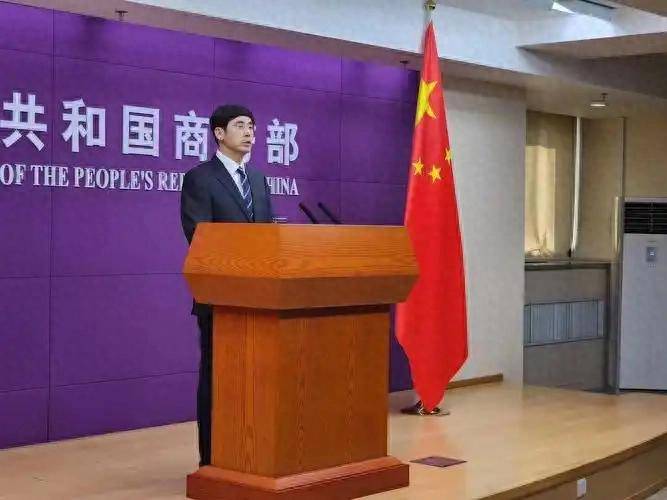
10月13日,外交部发言人林剑主持例行记者会。有记者问,中国出台严格管控稀土相关技术出口的新 规,美方持续出台一系列对华限制和制裁措施。中方对此有何评论? 林剑称,美方不仅没有反躬自省,反而以高关税相威胁,这不是同中方打交道的正确方式。中方敦促美 方尽快纠正错误做法,以两国元首通话重要共识为引领,在平等尊重和互惠基础上,通过对话解决各自 的关切,妥善管控分歧,维护中美关系稳定、健康、可持续发展。如果美方一意孤行,中方也必将坚决 采取相应的措施,维护自身正当权益。 (总台央视记者 申杨) 林剑对此表示,中国商务部发言人已经就此阐明了中方的立场,我要强调,近一段时间来,美方持续出 台一系列对华限制和制裁措施,严重损害中方利益。中方对此坚决反对。 ...