国产算力

Search documents
公募单季盈利首破2万亿,4000点关口有何调仓伏笔?
Di Yi Cai Jing Zi Xun· 2025-10-29 12:40
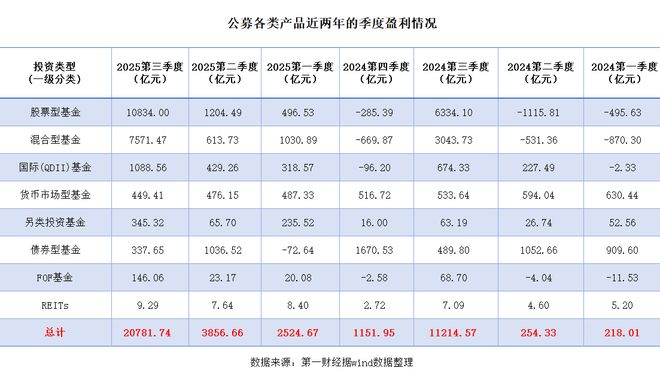
Core Insights - The public fund industry has achieved a record profit of over 2 trillion yuan in Q3, marking a historical peak for a single quarter [2][3] - Active equity products have shown a strong comeback, with the profit gap between active and passive index products narrowing significantly, indicating a more balanced market driving pattern [1][3] Group 1: Fund Performance - In Q3, the total profit of public funds reached 2.08 trillion yuan, a more than fourfold increase from the previous quarter's 385.67 billion yuan and over 80% growth compared to the same period last year [2][3] - The industry has now recorded profits for seven consecutive quarters, with cumulative profits for the year reaching 2.72 trillion yuan, surpassing the previous record of nearly 2 trillion yuan in 2020 [3][4] Group 2: Product Performance - Equity products, which are most correlated with the stock market, contributed significantly to profits, with Q3 profits amounting to 1.84 trillion yuan, accounting for nearly 90% of the industry's total profit [3][4] - Active equity products reported cumulative profits of 1.07 trillion yuan in the first three quarters, a fivefold increase year-on-year, while passive index products made 1.09 trillion yuan, a 140% increase [4] Group 3: Stock Holdings - By the end of Q3, public funds held a total of 3,108 stocks, a decrease of 49 from the previous quarter, indicating a slight increase in holding concentration [6] - Notable changes in major holdings included an increase in the number of funds holding Ningde Times, while Guizhou Moutai saw a decrease in holdings [7][8] Group 4: Market Outlook - The A-share market is experiencing a slow bull trend, with key sectors including the AI industry chain and sectors benefiting from domestic policies expected to drive future market performance [10][11] - Fund managers are optimistic about the market's recovery, with a focus on undervalued stocks and sectors that may benefit from economic improvements [11][12]







会议议程|启航新征程·国泰海通2026年度策略会
国泰海通证券研究· 2025-10-29 06:09
Core Insights - The article discusses the upcoming 2026 Annual Conference, highlighting key topics and speakers that will address macroeconomic challenges, investment strategies, and technological advancements in various sectors [2][4][12]. Group 1: Macroeconomic and Investment Outlook - The conference will feature discussions on China's macroeconomic challenges and strategies to address them, presented by experts from the Chinese Academy of Social Sciences [4]. - A session will focus on the outlook for the U.S. economy and monetary policy, providing insights into global economic trends [4]. - Investment strategies for 2026 will be explored, including equity investment strategies in China and Hong Kong, as well as financial engineering strategies [4][5]. Group 2: Technological Advancements - The future of artificial intelligence (AI) and its opportunities will be a key topic, with discussions on AI's impact on various industries [4][5]. - The conference will also cover advancements in humanoid robotics, including product iterations and applications, as well as the development of AI infrastructure in China [5][8]. Group 3: Consumer and Sectoral Insights - The conference will address the transformation of traditional consumption and the rise of new consumption trends, emphasizing the high growth potential in sectors like food and beverage, beauty, and home appliances [12][14]. - Insights into the agricultural sector will be shared, focusing on opportunities in pet care and livestock farming [14][23]. Group 4: Financial Strategies and Asset Allocation - Discussions will include asset allocation strategies in a low-interest-rate environment, with a focus on the implications for various asset classes [21][31]. - The role of ETFs and quantitative products in modern investment strategies will be examined, highlighting their relevance in the current market landscape [9][32].


通信ETF(515880)年内涨幅超115%,居全市场ETF榜首,原因为何?
Mei Ri Jing Ji Xin Wen· 2025-10-29 03:04
Core Viewpoint - The communication ETF (515880) has outperformed the market with a year-to-date increase of over 115%, primarily due to its significant exposure to optical modules, which represent over 51% of its index, and more than 80% when combined with servers, copper connections, and optical fibers, reflecting the fundamentals of AI computing power [1][2]. Group 1 - The demand for computing power is surging, with companies exceeding performance expectations due to rapid advancements in artificial intelligence, leading to increased reliance on high-speed optical module technologies [1][2]. - Major companies in the optical module sector have reported earnings that significantly surpassed expectations, with a busy earnings disclosure period ahead for both domestic and North American cloud service providers [1][2]. Group 2 - Capital expenditures in artificial intelligence are rising sharply, with North America's top four internet companies reporting a total capital expenditure of $95.8 billion in Q2 2025, a 64% year-on-year increase, indicating a robust global AI industry [2]. - The domestic computing power sector is accelerating, with advancements in both software and hardware, narrowing the gap between China and the U.S. in AI capabilities [2]. Group 3 - A slow bull market trend is forming in the A-share market, supported by favorable liquidity and fundamentals, with AI expected to be the core theme driving this market rally [2].
英博数科与神州光大强强联合,共推AI算力服务生态升级
Huan Qiu Wang· 2025-10-28 11:10
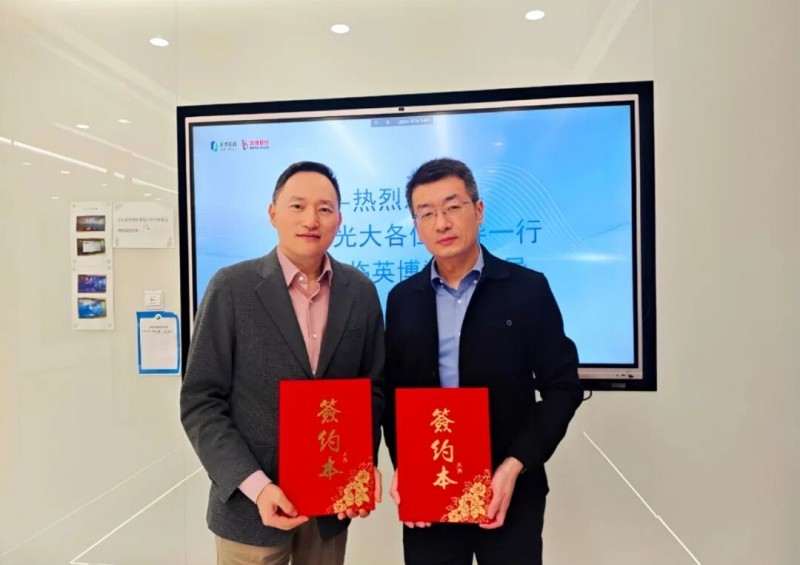
Core Insights - A strategic cooperation agreement has been signed between Yingbo Shuke and Shenzhou Guangda to enhance GPU high-end computing power, AI industry application innovation, and domestic computing power development [1] Group 1: Computing Power Infrastructure - The collaboration aims to establish a stable and reliable computing power infrastructure, which is essential for industry innovation and upgrading [3] - Shenzhou Guangda will provide technical support to Yingbo Shuke, enhancing the stability and resource utilization efficiency of computing clusters [3] - A comprehensive service system will be developed, including preventive inspections, rapid response, professional repairs, and spare parts support to ensure a high-availability computing environment [3] Group 2: AI Integration and Industry Empowerment - The partnership will promote the deep integration of AI technology with the real economy, targeting sectors such as finance, manufacturing, and healthcare [4] - Joint development of integrated hardware and software solutions based on large models will assist enterprises in achieving intelligent transformation [4] - A regular technical exchange mechanism will be established to explore AI development trends and foster innovation [4] Group 3: Domestic Computing Power Development - The collaboration will leverage shared advantages in domestic hardware, software adaptation, and industry resources to advance domestic computing power technology and ecosystem construction [5] - This initiative aims to enhance the market competitiveness of domestic computing power and establish a solid foundation for a mature industry ecosystem [6] Group 4: AI Talent Development - The cooperation extends to AI talent cultivation, exploring pathways for collaboration in training programs [6] - Joint laboratories and established AI training courses will be utilized to promote industry-education integration [6] - Various models such as course co-construction, training platform sharing, and talent certification will be implemented to develop high-quality AI application talents [6]
谢治宇三季度最新持仓披露!大幅加仓AI算力 中际旭创新进前十大重仓股
Zhi Tong Cai Jing· 2025-10-28 08:27
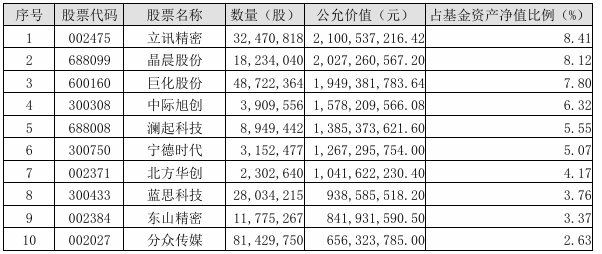
Core Insights - The fund managed by renowned fund manager Xie Zhiyu has made significant adjustments in its third-quarter report, indicating a strong focus on AI computing power sectors [1][3] - The fund has increased its positions in leading companies such as Zhongji Xuchuang, Lanke Technology, Beifang Huachuang, and Dongshan Precision, which are key players in optical modules, high-speed interconnect chips, semiconductor equipment, and PCBs [1][3] - Conversely, companies like Haida Group, Perfect World, and Pengding Holdings have been removed from the top ten holdings, suggesting a strategic shift in investment focus [1] Fund Performance - The XQ He Run Mixed A fund rose by 36.16% in Q3, significantly outperforming the benchmark return of 13.84% [2] - Year-to-date, the fund has increased by 39.63%, ranking in the top 35% among 4,503 similar products [2] - The fund's total assets increased by 3.127 billion yuan, reaching 24.982 billion yuan, with a stock position ratio of 90.28% as of the end of Q3 [3] Investment Strategy - The XQ He Yi fund also saw a rise of 30.89% in A shares and 30.69% in C shares during Q3, with a total asset growth of 2.7 billion yuan, reaching 18.679 billion yuan [5] - The fund's stock position ratio stood at 91.21% at the end of Q3, indicating a strong commitment to equity investments [5] - Xie Zhiyu noted that the rapid growth in AI sectors has led to market volatility, with concerns about the sustainability of demand growth amid changing macroeconomic conditions [5][6] Market Trends - The overseas computing power sector, particularly in optical modules and PCBs, remains a key driver of market growth, despite investor concerns about the long-term sustainability of demand [5] - The Chinese market has shown resilience due to strong fundamentals in technology and high-end manufacturing, with breakthroughs in domestic computing power boosting semiconductor equipment shipments [6] - The Hong Kong market has underperformed in Q3, influenced by fluctuations in the Hong Kong dollar and increased competition in sectors like e-commerce and new energy vehicles [6]


云计算50ETF(516630)午后小幅上涨,机构:坚定看好“光、液冷、国产算力”三条主线
Mei Ri Jing Ji Xin Wen· 2025-10-28 06:22
Group 1 - The A-share market showed mixed performance on October 28, with the Shanghai Composite Index briefly surpassing 4000 points, marking the highest level since August 19, 2015 [1] - Key sectors such as lithium battery electrolyte, copper-clad laminates, optical modules, circuit boards, and optical chips remained active [1] - The cloud computing 50 ETF (516630) saw a narrowing of gains in the afternoon, with leading stocks including Taxfriend, Kingsoft Office, Yunsai Zhili, and UFIDA, among which Taxfriend hit the 10% daily limit [1] Group 2 - On October 23, Anthropic announced a partnership with Google to deploy 1 million Google TPU chips for training its AI model Claude, with the expansion plan valued at several billion dollars, aiming for a computational capacity of 1GW by 2026 [1] - Google plans to enhance the efficiency and capacity of TPU chips, using the mature AI accelerator product line (TPUv7 Ironwood) as a foundation [1] - Open Source Securities believes this collaboration will improve the performance of the Claude model and strengthen the partnership between Anthropic and Google, highlighting the cost-effectiveness and versatility of TPU chips [1] Group 3 - The cloud computing 50 ETF (516630) tracks the cloud computing index (930851), which has a high AI computing power content, covering popular concepts such as optical modules & devices, computing power leasing, data centers, AI servers, and liquid cooling [2] - The cloud computing 50 ETF (516630) has the lowest total expense ratio among ETFs tracking this index [2]
港股异动 | 芯片股延续近期涨势 上海复旦(01385)涨超4% 华虹半导体(01347)涨超3%
智通财经网· 2025-10-28 03:56
Group 1 - Chip stocks continue their recent upward trend, with notable increases in Shanghai Fudan (+4.71% to HKD 43.6), Huahong Semiconductor (+3.12% to HKD 89.2), Hongguang Semiconductor (+1.92% to HKD 0.53), and SMIC (+1.75% to HKD 84.25) [1] - Domestic technology assets are rapidly appreciating, particularly in core AI computing power assets, driven by significant investments in high-end AI computing that are becoming industrialized and rapidly iterating [1] - The domestic AI chip era is emerging, with a fully integrated domestic AI industry chain from advanced processes and packaging to model acceleration and upgrades by major companies like ByteDance, Alibaba, and Tencent [1] Group 2 - The trend towards the localization of core software and hardware is becoming increasingly prominent against the backdrop of major power technology competition, with domestic computing power expected to resonate with domestic software [1] - This synergy is anticipated to drive the construction of a localized ecosystem, contributing to the important goal of achieving high-level technological self-reliance and strength [1]

公募机构上周调研近1200次 医药生物等行业成焦点
Zheng Quan Ri Bao Wang· 2025-10-28 03:11
Group 1 - Public institutions have increased their research efforts on listed companies during the third quarter reporting period, with 140 institutions participating in 1,188 research activities, a significant increase of 121.64% week-on-week [1] - The focus of the research is on verifying the performance quality of companies through in-depth analysis of financial data and operational conditions, identifying potential stocks that exceed market expectations, and optimizing investment portfolios for year-end assessments [1] - The most researched company was Taotao Automotive (301345), which was investigated 59 times, indicating strong interest from major public institutions like Bosera Fund and Huaxia Fund [1] Group 2 - The top ten companies researched by public institutions were from various industries, with only the electric equipment and basic chemical industries having two companies each, while other industries had one company each [2] - The pharmaceutical and biological industry was the most researched, with 197 investigations across 14 companies, highlighting the high importance placed on this sector by public institutions [2] - The mechanical equipment industry also received significant attention, with 165 investigations across 18 companies, while both the basic chemical and electric equipment industries had over 100 investigations [2] Group 3 - A total of 49 public institutions conducted at least 10 research activities, with an average of two investigations per working day, showcasing a broad engagement across various sectors [3] - Chuangjin Hexin Fund led with 40 research activities, particularly focusing on the pharmaceutical and biological sectors, followed by Ping An Fund and Yangtze River Asset Management with 27 and 23 investigations respectively [3] - Future investment strategies are expected to focus on technology sectors, including domestic and overseas computing power and robotics, while also considering opportunities in new energy and chemicals due to favorable policy changes and low valuations [3]



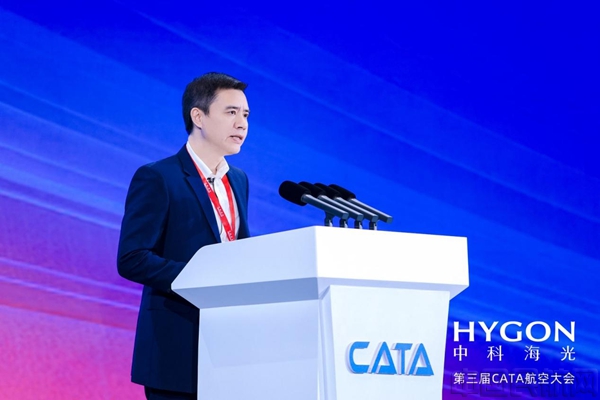
海光携国产算力方案亮相航空盛会 引领民航高质量发展
Zhong Guo Min Hang Wang· 2025-10-28 02:54
Core Insights - Haiguang Information showcased its high-end computing chips and autonomous platform solutions at the third CATA Aviation Conference, emphasizing its capabilities in aviation operational safety, intelligent scheduling, and cargo support with a focus on "independence, safety, and trustworthiness" [1][3] Group 1: Company Developments - Haiguang Information demonstrated various civil aviation application scenarios, including flight operation monitoring, flight safety analysis, and intelligent scheduling simulation, leveraging its self-controlled processors and computing platforms [1][3] - The company’s platform enables high-speed data collection, intelligent recognition, and real-time analysis of flight operation data, providing precise decision-making support for aviation operational safety [1] Group 2: Industry Innovations - Haiguang Information's Vice President, Yang Hongxuan, highlighted the company's commitment to providing a more resilient, efficient, and trustworthy domestic computing foundation for the civil aviation industry through software and hardware collaborative innovation [3] - The company constructed an AI computing platform based on DCU to address the complexity and real-time demands of civil aviation operations, utilizing large models for intelligent predictions regarding flight operation status, weather changes, and equipment health, significantly enhancing flight safety and scheduling efficiency [3]

果然大涨!
中国基金报· 2025-10-27 10:14
Core Viewpoint - The Hong Kong stock market experienced a significant rise driven by dual positive factors, with technology stocks leading the gains and certain sectors like pharmaceuticals and finance boosted by better-than-expected earnings reports [2][4]. Market Performance - On October 27, the three major indices in Hong Kong all rose, with the Hang Seng Index increasing by 1.05% to close at 26,433.70 points, the Hang Seng Tech Index up by 1.83% to 6,171.08 points, and the Hang Seng China Enterprises Index rising by 1.10% to 9,467.22 points [4]. - Key sectors that performed well included technology, brokerage, insurance, semiconductors, and pharmaceuticals [4]. Technology Sector - The recent U.S.-China business negotiations reached a basic consensus, which may enhance market risk appetite [6]. - The "14th Five-Year Plan" emphasizes accelerating high-level technological self-reliance, providing policy support for AI and domestic computing power sectors [7]. - Major tech stocks saw significant increases, with Baidu rising by 6.20%, Alibaba by 3.15%, Tencent by 2.90%, and JD.com by 2.33% [7][8]. Financial Sector - The financial sector led the market gains, driven by better-than-expected earnings from several companies. Notably, China Life Insurance expects a year-on-year profit increase of approximately 50% to 70% for the first three quarters [10]. - Several brokerage firms reported strong third-quarter results, with Citic Securities showing a 37.9% year-on-year increase in net profit [10]. Semiconductor Sector - The semiconductor sector received positive news, with companies like Beike Micro, Huahong Semiconductor, and SMIC seeing stock price increases of 5.74%, 4.98%, and 3.50%, respectively [12][13]. - The National Development and Reform Commission emphasized the importance of technological self-reliance, indicating a strategic focus on the sector [12]. Pharmaceutical Sector - The pharmaceutical sector also saw gains, with companies like Rongchang Bio, SiHuan Pharmaceutical, and WuXi AppTec increasing by 5.20%, 4.93%, and 4.18%, respectively [14][15]. - WuXi AppTec reported a net profit increase of 84.84% year-on-year for the first three quarters [14]. Copper Sector - The copper sector led the non-ferrous metals market, with companies like China Daye Nonferrous Metals and Luoyang Molybdenum rising by 11.11% and 5.19%, respectively [16]. - Analysts predict that domestic copper demand will enter a peak season, with expectations of increased production and rising copper prices [16]. Future Outlook - Huatai Securities suggests that the inflow of southbound funds may slow down in the future, having already exceeded HKD 500 billion this half-year [17]. - The market sentiment is currently neutral, indicating balanced risks, while the long-term trend remains positive due to improving industry dynamics and funding conditions [17].