业绩验证

Search documents
A股马年“开门红” 逾4000只个股飘红
Xin Lang Cai Jing· 2026-02-24 16:13
Group 1 - A-shares experienced a strong opening on the first trading day of the Year of the Horse, with the Shanghai Composite Index rising by 0.87% to close at 4117.41 points, the Shenzhen Component Index increasing by 1.36% to 14291.57 points, and the ChiNext Index up by 0.99% to 3308.26 points [1] - The trading volume in the Shanghai and Shenzhen markets reached 22.184 billion yuan, an increase of 2.193 billion yuan compared to the previous trading day, indicating a significant recovery in market activity [1] - Despite the positive opening, there was a notable structural divergence in the market, with expectations for strong performance in AI and robotics sectors not materializing, while cyclical sectors like petrochemicals and non-ferrous metals led the gains [1] Group 2 - The performance of capital flows aligned with post-holiday expectations, supporting the market's strong opening, as funds that had previously exited the market began to return [2] - However, the single-day increase in trading volume does not guarantee sustained capital inflows, and overall market sentiment remains cautious, influenced by the weak performance of Hong Kong stocks [2] - The market is entering an earnings verification period, with upcoming disclosures of 2025 annual reports and 2026 Q1 reports, making earnings performance a critical factor for stock movements [2] Group 3 - The technical outlook shows a clear recovery in short-term market sentiment, with over 4000 stocks closing higher and more than a hundred hitting the daily limit up, particularly in the oil and gas, and chemical sectors [3] - Despite the increase in trading volume, the overall market's willingness to chase higher prices remains limited, suggesting that a broad upward trend may be difficult to sustain [3] - Different types of investors are advised to adopt differentiated strategies, with short-term investors encouraged to take profits on high openings and wait for better buying opportunities, while swing traders should monitor the sustainability of price increases in cyclical sectors and signals of stabilization in technology stocks [3]
“巨无霸”缩水!宽基ETF开年大赎回 什么信号?
Sou Hu Cai Jing· 2026-02-09 00:49
Core Viewpoint - The stock ETF market has experienced significant net outflows since the beginning of the year, with a total reduction of nearly 700 billion yuan in scale, primarily due to a decrease in shares rather than market declines [1][2][4] Group 1: ETF Market Overview - As of February 6, the total scale of stock ETFs is approximately 3.14 trillion yuan, down nearly 700 billion yuan since the beginning of the year [2] - There have been 17 trading days with net outflows out of 25 since the start of the year, with a peak single-day net outflow exceeding 130 billion yuan [2] - The largest contributors to the outflows include the Huatai-PB CSI 300 ETF, which saw a net outflow of 196.54 billion yuan, and both the E Fund and Huaxia CSI 300 ETFs, each with net outflows exceeding 100 billion yuan [3][4] Group 2: Specific ETF Performance - The Huatai-PB CSI 300 ETF's scale has dropped from 420 billion yuan to around 220 billion yuan, a decrease of over 50% [4] - The E Fund CSI 300 ETF has also seen a significant decline, with its scale dropping from over 300 billion yuan to 146.57 billion yuan [4] - The South China CSI 1000 ETF's shares decreased from 256.51 billion to 100.51 billion, marking a decline of 60.82% [4] Group 3: Market Sentiment and Future Outlook - Institutional investors are currently exhibiting a cautious risk preference, which is reflected in the outflows from broad-based ETFs despite positive average returns [6][7] - Analysts believe that the market is transitioning from liquidity-driven to earnings-driven dynamics, with a focus on performance validation in 2026 [8][9] - The outlook for 2026 remains optimistic, with expectations of continued growth in emerging industries and a resilient A-share and Hong Kong market [8][9]

“巨无霸”缩水!宽基ETF开年大赎回,什么信号?
券商中国· 2026-02-08 08:19
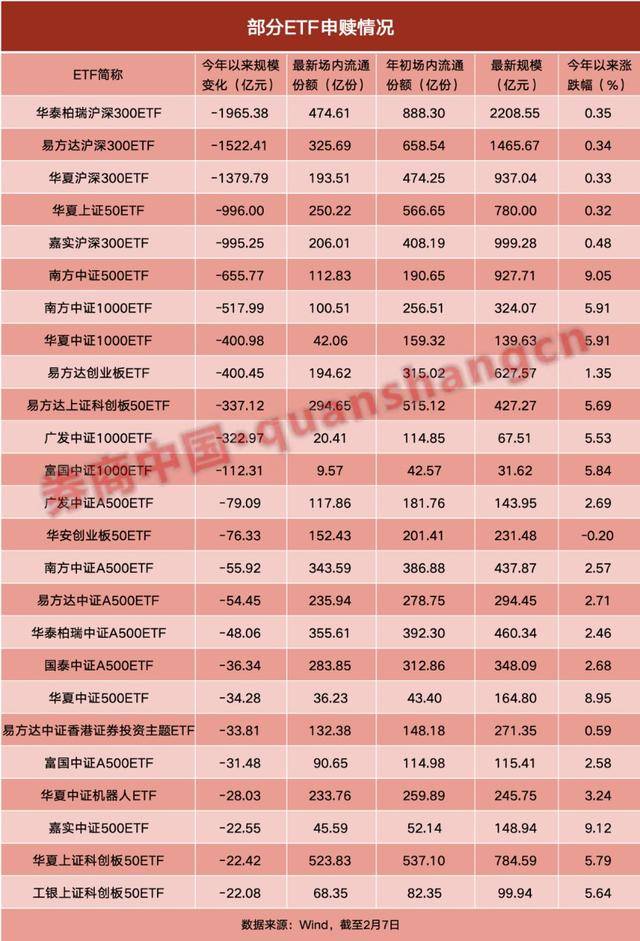
Core Viewpoint - The stock ETF market has experienced significant net outflows since the beginning of the year, with a total reduction of nearly 700 billion yuan, primarily driven by a decrease in shares rather than market declines [1][2][3] Group 1: ETF Market Overview - As of February 6, the total scale of stock ETFs is approximately 3.14 trillion yuan, down nearly 700 billion yuan since the start of the year [3][6] - The largest net outflows have been observed in the Huatai-PB CSI 300 ETF, which saw a net outflow of 1965.38 billion yuan, while the E Fund and Huaxia's CSI 300 ETFs also experienced outflows exceeding 1000 billion yuan [5][6] - Over 675 stock ETFs recorded net outflows, accounting for over 50% of the 1240 products tracked [5][6] Group 2: Share Reduction and Performance - The share reduction in major ETFs has been significant, with declines of 40% to over 60% in various products, including the Huatai-PB CSI 300 ETF, which saw a 46.57% drop in shares [2][6] - Despite the outflows, the average increase in stock ETFs is 3.59%, indicating that the outflows are not due to poor performance [8] - Specific ETFs like the Southern CSI 500 ETF and the Southern CSI 1000 ETF have shown positive performance despite significant net outflows [8] Group 3: Institutional Investor Sentiment - Institutional investors are currently exhibiting a cautious risk preference, leading to the observed outflows from broad-based ETFs [8][9] - Analysts suggest that the market is transitioning from liquidity-driven to earnings-driven dynamics, with a focus on profitability verification in 2026 [10][11] - The outlook for 2026 remains optimistic, with expectations for continued growth in emerging industries and a resilient A-share and Hong Kong market [10][11]

银叶投资许巳阳,最新研判
Zhong Guo Ji Jin Bao· 2026-01-27 04:00
Core Viewpoint - The market is expected to shift from "expectation speculation" in 2025 to "performance verification" in 2026, with a focus on structural opportunities despite potential volatility [1] Equity Market - The A-share market is anticipated to exhibit a range-bound pattern in 2026, supported by global liquidity easing and RMB appreciation, with an emphasis on structural opportunities [2] - Technology growth is identified as a key sector for the year, driven by the accelerating penetration of AI, which will boost demand across semiconductor equipment, materials, and storage [2] - Three main areas for investment are highlighted: 1. High-growth sectors including CPU and optical communication, alongside non-ferrous metals like copper, aluminum, gold, and rare earths, benefiting from strategic metal demand and supply constraints [2] 2. Recovery sectors such as aviation and tourism, showing signs of improvement, with low valuation stocks in chemicals and construction materials poised for significant price elasticity [3] 3. Thematic investments in commercial aerospace, solid-state batteries, and AR healthcare, with a focus on order fulfillment and revenue growth [3] - Precious metals are expected to continue their bull market, supported by central bank and ETF purchases, alongside safe-haven demand [3] Bond Market - The bond market is projected to experience a "low-level wide fluctuation" pattern, with a focus on defensive strategies and some flexibility [4] - Key factors influencing interest rate fluctuations include the pace of economic demand recovery, real estate risks, and inflation narratives [4] - Specific strategies for bond types include: - City investment bonds, where the pricing logic is shifting from "guaranteed repayment" to "state-owned enterprise credit," necessitating a focus on risk management [5] - Convertible bonds, where supply-demand mismatches create opportunities for stock selection and index enhancement [5] - REITs, which require careful selection for new issues and attention to secondary market pricing opportunities [5] Quantitative Strategy - The outlook for quantitative strategies in 2026 is optimistic, driven by liquidity, factor effectiveness recovery, and market rotation [6] - Sufficient liquidity is noted, with market trading volumes nearing 40 trillion, providing a conducive environment for quantitative strategies [6] - The return of factor effectiveness is expected to support stock selection and judgment, as corporate earnings are projected to recover [6] - Market rotation across themes such as technology and cyclical sectors is anticipated to create opportunities for excess returns through style rotation strategies [6]
十大券商一周策略:历次“降温”后反而大概率创新高,围绕业绩博弈情绪升温,长牛慢牛基础进一步夯实
Sou Hu Cai Jing· 2026-01-19 00:00
Group 1 - The A-share market is transitioning from an "emotion-driven" phase to one anchored by performance, indicating a shift towards a more stable upward trend [1][2] - As the annual report preview period approaches, the focus of investment logic is shifting from narrative-driven speculation to performance verification [1][2] - A robust investment strategy should combine high-growth sectors like AI computing with cyclical sectors such as resources and manufacturing to create a balanced portfolio [1][2] Group 2 - The adjustment of financing margins does not alter the overall upward trend of the market but will impact its structure, leading to increased competition among thematic sectors [2][4] - The current market environment suggests that the next key verification point will be the performance disclosures in April, with a focus on sectors like AI applications and robotics [3][4] - The market is expected to experience short-term fluctuations, with a focus on sectors benefiting from supply-demand improvements, such as new energy and consumer goods [4][5] Group 3 - The policy environment remains supportive, with indications of potential interest rate cuts, which could bolster market confidence and support a long-term bullish trend [6][7] - The current market structure is likely to see a rotation towards sectors with strong fundamentals, such as industrial resources and consumer recovery channels [3][7] - The investment focus should remain on sectors with high growth potential, including AI, semiconductor equipment, and traditional manufacturing [3][5][10] Group 4 - The "spring rally" is facing short-term pressures due to complex macroeconomic conditions and regulatory measures aimed at stabilizing the market [8][9] - Despite recent market corrections, the underlying logic for AI applications remains intact, suggesting continued investment opportunities in this area [8][12] - The overall market sentiment is expected to stabilize, with a focus on sectors like electronics, power equipment, and non-bank financials as potential investment areas [9][10]
不用猜了!2026年A股确定性最高的三大机会与两大雷区,都在这里
Sou Hu Cai Jing· 2026-01-02 00:56
Market Overview - The total trading volume in 2025 exceeded 420 trillion yuan, averaging over 17 trillion yuan daily, indicating a highly active market [1] - The Shanghai Composite Index rose by 18.41% throughout the year, with six instances of surpassing the 4000-point mark, closing at 3968.84 points [1] - The ChiNext Index surged by 49.57%, reflecting a strong growth in the technology sector [1] Sector Performance - The non-ferrous metals sector experienced a remarkable increase of 94.73%, followed by the telecommunications sector with an 84.75% rise [1] - Other sectors such as electronics, power equipment, and machinery also saw gains exceeding 40% [1] - Conversely, the food and beverage sector declined by 9.69%, and the coal sector fell by 5.27% [1] Market Dynamics - The market is transitioning from a reliance on financial and real estate sectors to a focus on technology and high-end manufacturing, driven by a "technology revolution" and "resource revaluation" [1] - The driving forces behind the market include the AI industry chain explosion, improved corporate earnings, and stable investments from state-owned funds and insurance companies [1] 2026 Market Outlook - The market is expected to maintain a "slow bull" trend in 2026, with a shift in focus from "expectations" and "valuations" to "performance" and "profitability" [2] - A projected earnings growth rate for all A-share listed companies is anticipated to rebound to 5%-8% [2] - Key drivers for this growth include a potential global manufacturing cycle recovery and the maturation of emerging industries like AI and commercial aerospace [2] Valuation and Funding - The overall market valuation is around 22 times earnings, which is not considered cheap but is not viewed as a bubble in the context of historical and economic transformation [3] - Continuous inflow of funds is expected as residents shift investments from real estate and savings to the stock market, supported by significant insurance fund allocation and ETF purchases [3] Investment Strategy for 2026 - The market is expected to experience distinct phases throughout 2026, with a focus on technology growth sectors like AI and semiconductors in Q1, followed by performance verification in Q2 [4] - Q3 may see a balanced market style, with stable performance in consumer sectors, while Q4 will likely focus on high dividend stocks and stable earnings [4] Sector Opportunities - Structural opportunities exist in the consumer sector, particularly in essential consumption, which remains stable and offers high dividends [5] - The performance of discretionary consumption sectors will largely depend on supportive policies for real estate [5] Key Investment Themes - The primary investment themes for 2026 include: 1. Technology-driven opportunities, particularly in AI and commercial aerospace [6] 2. High-end manufacturing with a focus on robotics and global expansion [6] 3. Cyclical sectors benefiting from new demand, such as industrial metals and chemicals [6]
年内收益218%!这只基金提前锁定冠军
第一财经· 2025-12-15 11:57
Core Viewpoint - The article discusses the intense competition among funds for year-end rankings, highlighting that as of December 12, 67 funds have achieved over 100% returns this year, with a significant focus on technology sectors such as computing chips and optical modules [3][5]. Fund Performance Summary - As of December 12, 67 funds have surpassed 100% returns, with 57 being actively managed equity funds, marking the best performance in five years [5][9]. - The top-performing fund, Yongying Technology Smart A, has a return rate of 218%, leading the second-place fund by over 51 percentage points [5][6]. - The competition for rankings is fierce among mid-tier funds, with several funds showing returns above 140%, indicating a narrow margin for potential ranking changes in the remaining trading days [6][8]. Investment Trends - The leading funds have a high concentration of investments in AI-related stocks, particularly in computing chips and optical modules, which are seen as essential components in the technology sector [8][9]. - The performance of the computing and optical module indices has been significant, with year-to-date increases of 93.83% and 172.08%, respectively [8]. Market Outlook - Analysts suggest that the technology sector's strong performance may continue into the next year, but there will be significant internal differentiation within the sector [3][10]. - The focus for investors is shifting from thematic investments to performance verification, emphasizing the importance of tracking technological advancements and profitability [12][13]. - The market is expected to favor companies with solid fundamentals, particularly in AI, pharmaceuticals, and high-end manufacturing, as these sectors are likely to see sustainable growth [13].

公募机构上周调研近1200次 医药生物等行业成焦点
Zheng Quan Ri Bao Wang· 2025-10-28 03:11
Group 1 - Public institutions have increased their research efforts on listed companies during the third quarter reporting period, with 140 institutions participating in 1,188 research activities, a significant increase of 121.64% week-on-week [1] - The focus of the research is on verifying the performance quality of companies through in-depth analysis of financial data and operational conditions, identifying potential stocks that exceed market expectations, and optimizing investment portfolios for year-end assessments [1] - The most researched company was Taotao Automotive (301345), which was investigated 59 times, indicating strong interest from major public institutions like Bosera Fund and Huaxia Fund [1] Group 2 - The top ten companies researched by public institutions were from various industries, with only the electric equipment and basic chemical industries having two companies each, while other industries had one company each [2] - The pharmaceutical and biological industry was the most researched, with 197 investigations across 14 companies, highlighting the high importance placed on this sector by public institutions [2] - The mechanical equipment industry also received significant attention, with 165 investigations across 18 companies, while both the basic chemical and electric equipment industries had over 100 investigations [2] Group 3 - A total of 49 public institutions conducted at least 10 research activities, with an average of two investigations per working day, showcasing a broad engagement across various sectors [3] - Chuangjin Hexin Fund led with 40 research activities, particularly focusing on the pharmaceutical and biological sectors, followed by Ping An Fund and Yangtze River Asset Management with 27 and 23 investigations respectively [3] - Future investment strategies are expected to focus on technology sectors, including domestic and overseas computing power and robotics, while also considering opportunities in new energy and chemicals due to favorable policy changes and low valuations [3]



“宁王”不服“寒王”!宁德时代飙升14%,创2022年2月以来新高
Ge Long Hui· 2025-08-29 05:27
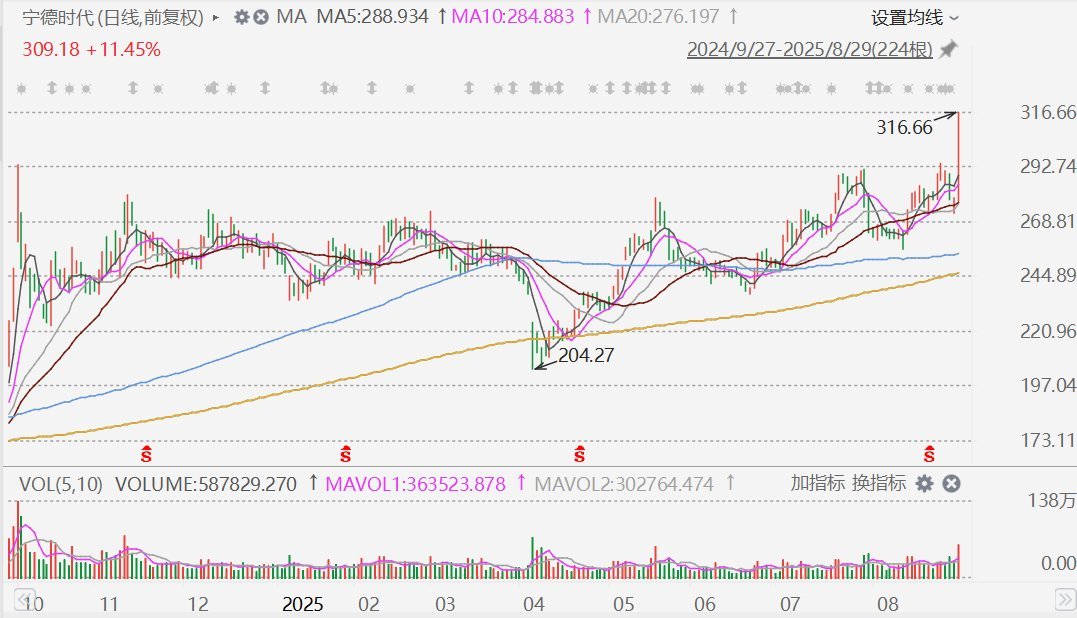
Group 1 - The core viewpoint of the report indicates that CATL's sodium battery mass production progress creates a technological moat alongside the Kirin battery's 40% market share [1] - Future trends may depend on the intensity of inventory replenishment by automakers in the fourth quarter and the realization of overseas orders [1] - The stock price is expected to maintain a fluctuating recovery pattern driven by technological breakthroughs and performance validation [1]

南方基金:沪指创近4年新高,慢牛行情下如何布局?
Sou Hu Cai Jing· 2025-08-14 02:17
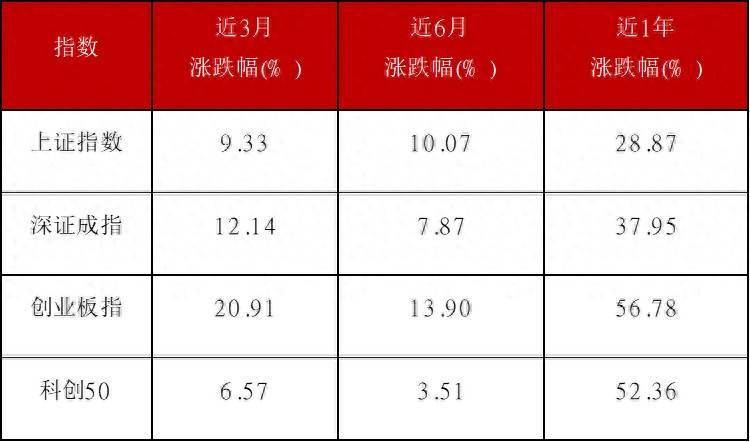
Market Performance - The market experienced a significant rise, with the three major indices showing a clear divergence in performance. The ChiNext Index led with a 3.62% increase, while the Shenzhen Component Index rose by 1.76%, and the Shanghai Composite Index closed at 3683.46 points, marking a nearly four-year high [1][2] - The Shanghai Composite Index has achieved an "eight consecutive days of gains," with both the Shenzhen Component Index and ChiNext Index reaching new highs for the year [3] Reasons for Market Strength - The rise in the market is attributed to several factors, including increased expectations for a Federal Reserve interest rate cut, which has improved external liquidity and market risk appetite. The U.S. Consumer Price Index (CPI) data showed a 0.2% month-on-month increase and a 2.7% year-on-year increase, slightly below market expectations, reinforcing the likelihood of a rate cut in September [2][7] - Financial support policies for consumer loans were released, further igniting market enthusiasm. The Ministry of Finance issued plans for personal consumption loan subsidies and service industry loan subsidies, aimed at boosting consumption from both supply and demand sides [2][7] - The Shanghai Composite Index broke through a key resistance level, attracting significant inflows of new capital as the market's upward momentum continued [2][7] Recent Market Trends - Over the past three months, the ChiNext Index has outperformed other major indices with a 20.91% increase, while the STAR 50 Index only recorded a 6.57% increase due to semiconductor industry adjustments. The Shanghai Composite Index rose by 9.33% [4][5] - In the past year, the ChiNext Index has seen a cumulative increase of approximately 56.78%, followed closely by the STAR 50 Index with a 52.36% increase [4][5] Structural Characteristics - The current market exhibits significant structural differentiation, with the ChiNext Index consistently leading. The turnover rate for the ChiNext Index reached 57.28% in the past month, indicating a strong concentration of funds [6] - The driving logic of the market may be shifting from "liquidity easing + policy expectations" to a phase that requires "performance verification," particularly during the mid-year reporting period [6][8] Future Outlook - The recent breakthroughs in technology, military, and cultural sectors are expected to enhance investor confidence in Chinese assets, suggesting a continued systemic revaluation of these assets [8] - Despite the ongoing rise in the market, the current valuation levels in a low-interest-rate environment still offer certain investment opportunities. Investors are advised to focus on high-quality stocks at lower valuations while avoiding excessive chasing of high-flying stocks [8][9]