套期保值

Search documents
棉花周报2025-10-20:北疆皮棉成本逐渐固化,棉价上方套保压力仍存短期价格或延续震荡走势,关注后续订单及宏观动态行-20251020
Rong Da Qi Huo ( Zheng Zhou )· 2025-10-20 07:55
Group 1: Investment Rating - There is no information provided about the industry investment rating in the report. Group 2: Core Views - The price of Zhengzhou cotton futures rebounded in the second half of this week. Currently, Xinjiang cotton is in the stage of concentrated supply. The cotton harvesting in northern Xinjiang is nearing completion, and a large number of cotton pickers are moving from north to south to southern Xinjiang for harvesting. The purchase price of seed cotton is relatively stable. The short - term price of Zhengzhou cotton is likely to fluctuate. Whether the cooling in the south will boost autumn and winter consumption and drive replenishment orders needs further observation. Macro factors such as Sino - US negotiations also need to be closely monitored [3][37]. - The cost of new - season lint cotton in northern Xinjiang is gradually solidified, with the mainstream theoretical cost ranging from 13,800 to 14,400 yuan/ton on a legal weight basis. There is certain hedging pressure above the short - term price of Zhengzhou cotton, and there is cost support below, so it is likely to remain volatile in the short term [3][37]. Group 3: Summary by Directory 1. First Part: Basic Data of Domestic and International Cotton Markets 1.1 One - Week Data Overview - As of October 17, the CRB commodity price index closed at 293.35 points, up 0.59 points from October 10. The Wenhua Commodity Index on October 17 was 159.47, down 2.43 points or 1.5% from October 10. The ICE cotton futures main contract for December on October 17 was 64.29 cents/pound, up 0.52 cents/pound or 0.8% from October 10. The main contract 01 of Zhengzhou cotton as of the week ending October 17 closed at 13,335 yuan/ton, up 10 yuan/ton from October 10, and the open interest increased by 31,000 lots to 586,000 lots [2][10][36]. - The prices of domestic and international cotton and related commodities showed different trends. For example, the price of gold increased, the price of crude oil decreased, and the prices of agricultural products in the plate increased [10]. - The prices of imported cotton from the US and Brazil decreased. For the US E/MOTM, the price decreased by 2.4 cents/pound, and for Brazil M, it decreased by 2.1 cents/pound [9]. 1.2 Domestic Market Conditions - **Textile Raw Material Trends**: On October 17, the prices of raw materials showed mixed trends compared to October 10. The price of viscose decreased by 76 yuan, while the prices of polyester staple fiber and CCI3128 remained unchanged, and the price of Zhengzhou cotton's main contract increased by 10 yuan [14][15]. - **Yarn Price Trends**: On October 17, the prices of domestic and imported yarns generally declined. The price of domestic yarns such as OE10S, C32S, and JC40S decreased, and the prices of imported yarns in RMB terms also decreased slightly. The price difference between domestic and imported yarns decreased [18][20][23]. - **Comparison of Domestic Cotton Futures and Spot Prices with International Cotton Price Index (Tax - included)**: On October 17, the domestic cotton spot price index CCI3128 was 14,757 yuan/ton. The difference between the spot price index and the foreign cotton price under the sliding - scale tariff decreased compared to October 10. The difference between the main contract and the FCIndexM under the sliding - scale tariff increased [26]. 2. Second Part: Zhengzhou Cotton Market Analysis 2.1 Zhengzhou Cotton Warehouse Receipts and Effective Forecasts - As of October 17, the registered warehouse receipts of Zhengzhou cotton were 2,653 lots (114,000 tons), with 183 effective forecasts. The total of warehouse receipts and effective forecasts was 121,000 tons, down from 127,000 tons on October 10 [30]. 2.2 Analysis of the Price Difference between Zhengzhou Cotton Futures and Spot - On October 17, the price difference between Zhengzhou cotton futures and the CCI3128B index was - 1,432 yuan/ton, an increase from - 1,329 yuan/ton on October 10 [33]. 2.3 Zhengzhou Cotton Price Analysis - **Macro - aspect**: The US government shutdown has lasted for some time, and the US economy is shifting from a contractionary monetary policy to a loose one. The market expects the Fed to cut interest rates by 25 basis points in October with a probability of 98%. In China, the consumer market in September was generally stable, with the CPI rising 0.1% month - on - month and falling 0.3% year - on - year [34]. - **Supply - side**: In September 2025, China's cotton imports were 100,000 tons, a month - on - month increase of 42.9% and a year - on - year decrease of 18.7%. From January to September 2025, the cumulative cotton imports were 680,000 tons, a year - on - year decrease of 69.8%. As of the end of September, the national commercial cotton inventory was 1.0217 million tons, at a historical low [35]. - **Downstream Market**: This week, the price of pure - cotton yarn was mainly stable. The trading atmosphere in the pure - cotton yarn market was weaker than last week, and the overall new orders were insufficient. The profit of yarn mills improved [35]. - **Technical Aspect**: The technical indicators of Zhengzhou cotton's main contract 01 turned stronger. The MACD green column turned red, the DIFF and DEA were about to form a golden cross, and the KDJ indicator was also about to form a golden cross [40]. 3. Third Part: International Market Analysis 3.1 US Cotton Export Dynamics - From September 12 - 18, the net signing of US 2025/26 - season upland cotton was 19,527 tons, a decrease of 54% from the previous week. The shipment of upland cotton was 31,116 tons, an increase of 14% from the previous week. The net signing of Pima cotton increased significantly, and the shipment of Pima cotton also increased [43]. - As of September 23, the CFTC fund net long position was - 68,812, a decrease of 3,305 from the previous week [46]. 3.2 ICE Cotton Futures Analysis - On October 17, the ICE cotton futures main contract for December was 64.29 cents/pound, up 0.52 cents/pound or 0.8% from October 10. Technically, the KDJ indicator was about to form a golden cross and diverge upwards, and the technical indicators turned stronger [48]. 4. Fourth Part: Operation Suggestions - For upstream cotton enterprises, they can hedge on the futures market based on the cost of lint cotton calculated from the purchase price of seed cotton, or consider buying put options to hedge risks. - For downstream textile enterprises, they can consider selling out - of - the - money put options to reduce the purchase cost of lint cotton when the raw material price drops [50].
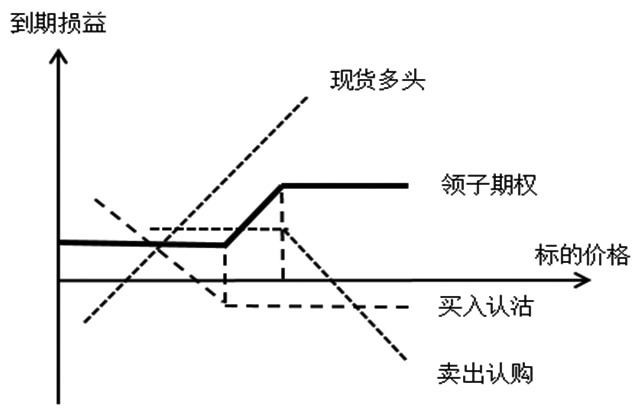
领子期权在白糖企业中的应用:可用于原料采购、库存管理及利润锁定三大场景
Bao Cheng Qi Huo· 2025-10-20 05:27
Report Industry Investment Rating - Not provided Core View of the Report - Collar options, a strategy combining buying put options and selling call options, can be applied in three scenarios: raw material procurement, inventory management, and profit locking, which can precisely control risk exposure and help sugar enterprises operate stably. In the current situation where domestic and foreign sugar prices are continuously fluctuating, sugar enterprises can use collar options to manage risk exposure [1][5][12] Summary by Relevant Catalog Characteristics and Advantages of Collar Options - Collar options are a strategy that combines buying put options to protect against downside risks and selling call options to obtain premiums. Its core is to limit the asset price fluctuation range within a preset interval, which can be regarded as a protective put option plus a covered call option, using the income from the covered strategy to offset the cost of the protective strategy [1] - For sugar enterprises, collar options are particularly suitable. Sugar prices are affected by seasonality, policies, and international sugar price fluctuations. Option risk management strategies are more flexible than futures strategies. The cost of collar options is lower than that of buying put options for hedging, and they can lock in the minimum and maximum expected selling prices [3] Comparison of Different Hedging Methods | Hedging Method | Hedging Effect | Hedging Cost | Flexibility | Applicable Situation | | --- | --- | --- | --- | --- | | Futures Hedging | Lock in downside risk and give up upside gain | High margin requirement | Fixed price | Sufficient funds, suitable for long - term hedging | | Buying Put Option Hedging | Lock in downside risk and retain upside gain | Low capital occupation (pay premium) | Customizable strike price | Limited funds, prevent short - term pullback in a bull market | | Collar Option Hedging | Limit price range | Pay premium | Customizable strike price | Sideways market, suitable for long - term hedging | [4] Application Scenarios of Collar Options Raw Material Procurement - A sugar - making enterprise can lock in the current sugarcane purchase cost by locking in the future sugar selling price. For example, it can buy a put option with an exercise price of 5200 yuan/ton and sell a call option with an exercise price of 5500 yuan/ton. If the sugar price drops to 4800 yuan/ton, the enterprise can exercise the option to reduce losses; if the sugar price rises to 5600 yuan/ton, it can still lock in the actual selling price of 5500 yuan/ton [6] Inventory Management - When a sugar - making enterprise has inventory backlog, it can buy a put option with an exercise price of 5200 yuan/ton and sell a call option with an exercise price of 5500 yuan/ton. When the sugar price falls below 5200 yuan/ton, the put option compensates for inventory losses; when the sugar price is between 5200 - 5500 yuan/ton, the inventory value is stable. The strategy can generate net premium income at the beginning and reduce inventory management costs [7] Profit Locking - A sugar - making enterprise can select the strike price of the collar option according to the production plan to compress the sugar price fluctuation range to the target profit interval (such as 5200 - 5500 yuan/ton) to ensure a stable processing profit. It can also adjust the strike price dynamically according to market expectations [9]
领子期权在白糖企业中的应用
Qi Huo Ri Bao Wang· 2025-10-20 00:46
Core Viewpoint - Collar options are a risk management strategy that combines buying put options and selling call options to limit asset price fluctuations within a predetermined range, applicable in raw material procurement, inventory management, and profit locking [1][5][12] Group 1: Application Scenarios - **Raw Material Procurement**: Sugar companies can lock in cane purchasing costs by buying put options and selling call options, mitigating risks of price drops and ensuring stable procurement costs [6][12] - **Inventory Management**: Companies can manage inventory value fluctuations by using collar options to stabilize inventory value during price volatility, allowing for potential income from sold call options to offset holding costs [7][12] - **Profit Locking**: By selecting appropriate strike prices, sugar companies can ensure their profit margins remain stable despite market price fluctuations, allowing for dynamic adjustments based on market expectations [10][12] Group 2: Advantages of Collar Options - **Cost Efficiency**: Collar options are generally cheaper than buying puts alone, as the premium from selling call options can offset the cost of purchasing puts [3][5] - **Flexibility**: This strategy offers more flexibility compared to traditional futures contracts, allowing companies to customize their risk management approach based on market conditions [4][5] - **Risk Management**: Collar options provide a balanced approach to risk management, allowing companies to lock in minimum and maximum selling prices while still participating in favorable market movements [3][12]

福建龙净环保股份有限公司 2025年第三季度报告
Shang Hai Zheng Quan Bao· 2025-10-17 19:18
Group 1 - The company reported a steady growth in operating performance for the first three quarters of 2025, achieving operating revenue of 7.858 billion yuan, a year-on-year increase of 18.09%, and a net profit attributable to shareholders of 780 million yuan, up 20.53% [5][6] - The company has secured new environmental equipment engineering contracts worth 7.626 billion yuan, with the power industry accounting for 61.51% and the non-power industry for 38.49% [6] - The company maintains a strong market position in air pollution control, benefiting from new coal power project constructions and existing unit environmental upgrades [6] Group 2 - The company has established a deep cooperation with Yiwei Lithium Energy, achieving full production and sales of energy storage cells, with a current production capacity of approximately 8.5 GWh and cumulative deliveries of 5.9 GWh [6] - The company is actively developing next-generation sodium-ion battery technology, having received support from the Fujian Provincial Department of Science and Technology for regional development projects [6] - The company reported a total equity attributable to shareholders of 10.632 billion yuan, an increase of 4.51% from the beginning of the period, with a debt-to-asset ratio of 62.01% and a low interest-bearing debt ratio of 16.90% [5][6] Group 3 - The company plans to sign a financial service agreement with its controlling shareholder, Zijin Mining Group, to optimize financial management and improve capital efficiency [41][43] - The financial service agreement will allow Zijin Financial Company to provide deposit, loan, settlement, and other financial services to the company and its subsidiaries, with a maximum daily loan balance of 500 million yuan [47] - The agreement is expected to enhance the company's financial management without compromising its independence or harming shareholder interests [49][50]

10.15犀牛财经早报:多家银行提高购金门槛并提示风险 银行理财资金配置逻辑生变
Xi Niu Cai Jing· 2025-10-16 02:04
Group 1 - Several banks have raised the minimum purchase threshold for gold and issued risk warnings amid rising international gold prices and increasing market risks, with some banks setting the threshold as high as 1000 yuan [1] - The first three new stocks in the growth tier of the Sci-Tech Innovation Board have adopted a lock-up agreement method for offline subscription, marking a new change in the A-share IPO market [1] - The IPO approval rate has improved this year, with a current approval rate of 95.08%, up nearly 10 percentage points from the same period last year, while 16 companies have been subjected to on-site inspections to prevent problematic listings [1] Group 2 - Traditional "low volatility and stable" investment strategies for bank wealth management are facing challenges due to increased bond market volatility and declining annual yields, prompting a shift towards more diversified strategies [2] - Many banks are accelerating the disposal of non-performing assets, with significant debt asset transfers occurring, as they face pressure on asset quality and profitability [2] - The international oil price is expected to remain weak due to ongoing negative fundamentals, including increased supply from OPEC+ and seasonal demand declines [3] Group 3 - A record number of A-share companies have engaged in hedging activities this year, with at least 1583 companies announcing hedging measures, surpassing the total for the entire previous year [4] - The world's first sub-angstrom snapshot spectral imaging chip, "Yuheng," has been developed by a team from Tsinghua University, marking a significant advancement in high-precision imaging technology [4] - The founder and CEO of Fengchao has resigned due to health reasons, but the company's operations will not be affected [5] Group 4 - The sports brand Peak has faced backlash over significant salary cuts, with reports of employees being required to submit reflections or face salary suspension [5] - WeRide has initiated an IPO application on the Hong Kong Stock Exchange, planning to issue up to 102.4 million ordinary shares [6] - A state-owned share transfer involving 3.56% of the shares of Shouchuang Securities is planned, pending regulatory approvals [7]
应对大宗商品不确定性 套期保值已成A股公司“常规操作”
Shang Hai Zheng Quan Bao· 2025-10-15 18:33
Group 1: Market Overview - In 2023, global uncertainties have led to increased volatility in major commodities such as gold, silver, and copper, reaching historical highs [1] - At least 1,583 A-share listed companies in the real economy have issued hedging announcements this year, surpassing the total of 1,503 for the entire year of 2024, marking a historical peak [1] - The participation rate of A-share listed companies in hedging activities reached 29.9% by the end of August, an increase of 1.3 percentage points compared to the end of 2024 [1] Group 2: Company Responses - Guoyan Platinum Industry, a leading player in the precious metals new materials sector, has seen steady performance growth over the past decade, achieving a record net profit of 579 million yuan in 2024 [2] - The company began participating in the futures market in 2009 to mitigate price risks following the 2008 financial crisis, and has since used futures tools to stabilize profitability despite market fluctuations [2][3] - Yunnan Copper Industry has maintained a robust performance, with a net profit of 1.317 billion yuan in the first half of the year, a year-on-year increase of 24.32% [4] Group 3: Market Challenges - Guoyan Platinum Industry faces challenges in hedging due to increased basis risk and market liquidity risks, leading to higher and less controllable hedging costs [2][3] - Yunnan Copper Industry has experienced significant price discrepancies in copper, impacting order stability and production plans due to global trade uncertainties [5] Group 4: Industry Trends - The importance of hedging as a long-term strategy for market value management has been increasingly recognized by listed companies, especially in light of commodity price volatility [7] - Companies are advocating for improvements in domestic futures markets and related regulations to enhance risk management capabilities [7][8] - There is a call for differentiated margin systems and financing tools to alleviate the financial pressure on companies engaged in hedging activities [8]
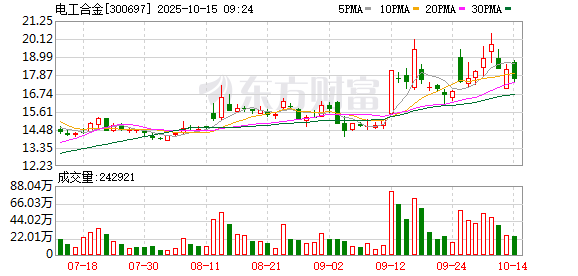
电工合金:公司的定价模式为“原材料价格+加工费”,并通过购买沪铜期货来实现套期保值
Mei Ri Jing Ji Xin Wen· 2025-10-15 01:23
Core Viewpoint - The recent rise in copper prices is a concern for companies, but Electric Alloy (300697.SZ) has a pricing model that mitigates the impact of raw material price fluctuations on its operating performance [2]. Group 1: Company Response - Electric Alloy's pricing model is based on "raw material price + processing fee," which helps in managing costs effectively [2]. - The company utilizes copper futures on the Shanghai Futures Exchange for hedging, which reduces the risk associated with raw material price volatility [2].

银河期货棉花、棉纱日报-20251014
Yin He Qi Huo· 2025-10-14 13:02
Report Summary 1. Report Industry Investment Rating No industry investment rating is provided in the report. 2. Core Viewpoints - The future trend of US cotton is expected to be mainly volatile, while Zhengzhou cotton is expected to show a slightly weakening volatile trend. The trading strategy suggests a wait - and - see approach for arbitrage and options [8]. - With the new cotton harvest, there will be selling hedging pressure on the futures market. The peak season demand in the market is mediocre, and its boosting effect on the futures price is limited [7]. 3. Summary by Directory Market Information - **Futures Market**: The closing prices of CF01, CF05, and CF09 contracts decreased by 35, 40, and 30 respectively; CY01 decreased by 70, while CY05 and CY09 remained unchanged. Trading volumes and open interest showed different degrees of increase or decrease [3]. - **Spot Market**: The price of CCIndex3128B decreased by 20, while CY IndexC32S remained stable. The price of FCY IndexC33S increased by 21, and the price of polyester staple fiber increased by 70 [3]. - **Spreads**: In cotton and yarn inter - month spreads and cross - product spreads, the values and their changes varied. For example, the 1 - 5 month spread of cotton was - 55 with a 5 - point increase, and the CY01 - CF01 spread was 6025 with a 35 - point decrease [3]. Market News and Views - **Cotton Market News**: In Hutubi County, 869,000 mu of cotton has entered the harvest period with a 100% mechanized harvest rate. The spot price of new cotton in 2025/26 in the inland warehouse is stable. In September, the textile and clothing export volume was 24.42 billion US dollars, a year - on - year decrease of 1.45%. From January to September 2025, the cumulative export was 221.686 billion US dollars, a year - on - year decrease of 0.33% [6]. - **Trading Logic**: This year, the output of Xinjiang cotton is high, and ginneries' enthusiasm for acquisition is average. There is no large - scale rush to purchase, and the acquisition price is around 6 yuan/kg. With the large - scale listing of new cotton, there will be selling hedging pressure on the futures market. The peak season demand is mediocre, and its boosting effect on the futures price is limited [7]. - **Trading Strategy**: For single - side trading, expect US cotton to be volatile and Zhengzhou cotton to be slightly weakening volatile. For arbitrage and options, adopt a wait - and - see approach [8]. - **Cotton Yarn Industry News**: The Zhengzhou cotton market continued to be volatile and weak last night. The theoretical cash flow of inland spinning enterprises turned from loss to profit, and the profit of Xinjiang spinning enterprises increased. The pure - cotton yarn market is still divided, with Xinjiang performing better than the inland. The overall price of pure - cotton yarn is in a stalemate, stable with a downward trend. The demand for pure - cotton cloth is weak, and the market price is stable with a downward trend [8][9]. Options - **Option Data**: The closing prices, price changes, implied volatilities, and other data of CF601C13400.CZC, CF601P13000.CZC, and CF601P12400.CZC are provided. The 120 - day HV of cotton decreased slightly, and the implied volatilities of different option contracts varied [13]. - **Option Strategy Suggestion**: The PCR of the main contract of Zhengzhou cotton increased in both open interest and trading volume. The option strategy is to wait and see [14][15]. Related Attachments The report provides multiple charts, including the 1% tariff - based price difference between domestic and foreign cotton, the basis of cotton in January, May, and September, the spread between CY05 - CF05 and CY01 - CF01, and the spread between different cotton contracts [16][17][20]
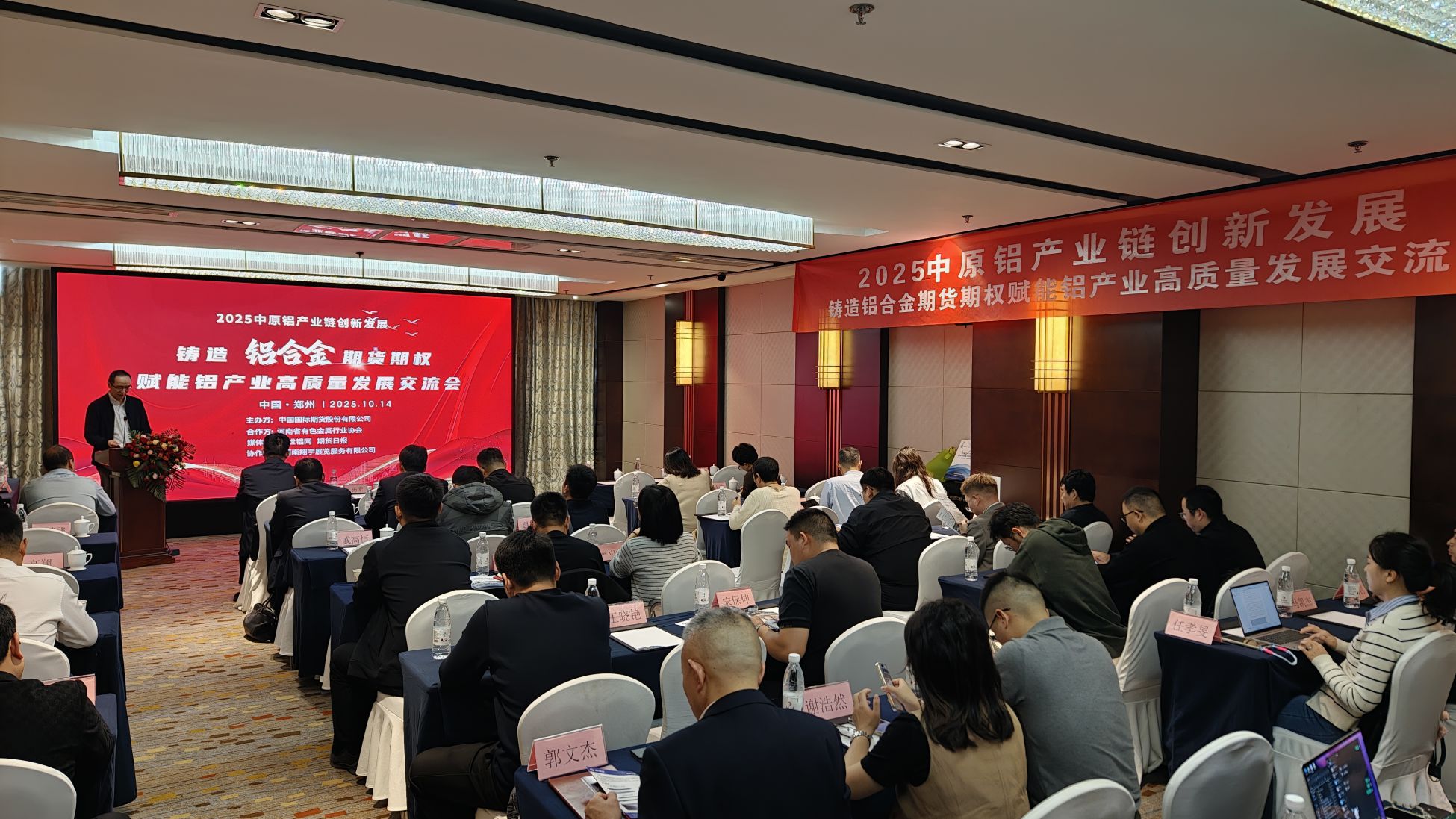
2025中原铝产业链创新发展暨铸造铝合金期货期权赋能铝产业高质量发展交流会在郑举行
Qi Huo Ri Bao Wang· 2025-10-14 07:26
Core Insights - The conference focused on the integration of futures tools with the aluminum industry, highlighting the importance of risk management strategies in stabilizing operations and enhancing quality in the aluminum sector [1][2] Group 1: Industry Overview - The aluminum industry faces price volatility from upstream mining to downstream manufacturing, which poses uncertainties for business operations [1] - The introduction of casting aluminum alloy futures and options enhances the variety of futures products available, providing a "risk protection wall" for aluminum companies [1] Group 2: Financial Tools and Strategies - Companies can utilize hedging strategies to lock in production costs and sales profits, allowing them to focus on technological innovation and capacity optimization [1] - Experts discussed how derivative tools like aluminum futures and options can help industry players effectively manage price fluctuations and ensure stable operations [1][2]
业绩“冰火两重天”!来看这些钢企的“增长秘籍”
Qi Huo Ri Bao· 2025-10-11 23:59
Core Viewpoint - The steel industry is experiencing a recovery despite an overall downturn, with several companies, including Shandong Steel, reporting significant improvements in profitability and operational performance [1][5]. Group 1: Company Performance - Shandong Steel expects a profit of approximately 632 million yuan for the first three quarters of 2025, a year-on-year increase of about 2.196 billion yuan [1]. - The company reported a net profit attributable to shareholders of around 140 million yuan, up approximately 15.91% year-on-year [1]. - Shandong Steel's half-year report indicated a revenue of 36.806 billion yuan, a decrease of 18.60% year-on-year, but a gross margin increase to 6.02%, up 4.15 percentage points [1]. - Other steel companies, such as Liugang Co., Anyang Steel, and New Steel, also reported improved profitability, with many turning losses into profits or significantly reducing losses [1][6]. Group 2: Industry Trends - The overall steel industry in China saw a 5.79% decline in revenue for key enterprises, while total profits increased by 63.26% year-on-year [6][7]. - The steel price index dropped by 7.09%, with specific products experiencing varying price declines [6]. - The profitability recovery is attributed to lower raw material costs and improved risk management practices among steel companies [5][12]. Group 3: Risk Management and Hedging - Steel companies are increasingly using hedging strategies to manage risks associated with price and currency fluctuations [10][11]. - Companies like Liugang and others have engaged in futures trading to hedge against raw material price volatility, effectively stabilizing their operational costs [10][12]. - The core value of hedging is to stabilize raw material costs, smooth out foreign exchange impacts, and enhance predictability of performance [12].