
中美贸易谈判

Search documents
烧碱周报:烧碱破位下行,偏空思路对待-20250609
Zhong Yuan Qi Huo· 2025-06-09 12:14
Report Industry Investment Rating No relevant content provided. Core View of the Report - The macro aspect shows that the Sino-US trade negotiations have released positive signals, and their progress should be monitored. In terms of supply and demand, there were many device overhauls in the caustic soda market at the beginning of June. The liquid caustic soda markets in Shandong and East China were both driven by "supply contraction", and the spot quotes were firm. However, the overall scale of overhauls in June was smaller than that of the previous month, and there was still pressure from new production capacity, which suppressed the market. During the week, the terminal demand showed differentiation. The main downstream in Shandong could support the price, but the non-aluminum market resisted high prices, and terminal procurement was inactive. Overall, the supply and demand situation in the liquid caustic soda market has changed little and lacks support. After the caustic soda 2509 contract broke through the lower limit, it should be treated with a bearish mindset. The upper reference pressure level for the caustic soda 2509 contract is around 2,500 yuan/ton, and the lower support level is around 2,200 yuan/ton [4]. Summary by Directory 01 Market Review - **Spot Market**: The price of 32% liquid caustic soda in Shandong remained stable. The 32% liquid caustic soda basis in Shandong widened. From May 30 to June 5, 2025, the price of 32% ion-exchange membrane caustic soda in Shandong remained at 880 yuan, the price of 50% ion-exchange membrane caustic soda decreased by 10 yuan to 1,410 yuan with a decline of -0.7%, and the price of 99% caustic soda flakes remained at 3,350 yuan. The price of light soda ash decreased by 50 yuan to 1,350 yuan with a decline of -3.57%, the price of alumina increased by 5 yuan to 3,275 yuan with an increase of 0.15%, the price of pulp decreased by 50 yuan to 6,150 yuan with a decline of -0.81%, the price of battery-grade lithium hydroxide decreased by 600 yuan to 69,000 yuan with a decline of -0.86%, while the prices of sea salt, viscose staple fiber, and ternary precursor remained unchanged [9][12][18]. - **Futures Market**: Relevant data on the closing prices of the active contracts of caustic soda, soda ash, alumina, PVC, and the number of warehouse receipts are presented [16]. 02 Market Analysis - **Supply Side - Production and Operating Rate**: From May 30 to June 5, 2025, the average capacity utilization rate of Chinese caustic soda sample enterprises with a capacity of 200,000 tons and above was 83.5%, a month-on-month decrease of 0.6%. The completion of device overhauls in the Northwest and Central China drove up the load, while new device overhauls and production cuts in North China and South China led to a decline in the load. The load in the Northwest increased by 2.2% to 90.5%, and in Central China, it increased by 6.2% to 90.2%. In North China, the load decreased by 3.7% to 77.1%, and in South China, it decreased by 4.6% to 83.1%. The load in Shandong decreased by 3.3% to 86.4%. It is estimated that the caustic soda capacity utilization rate this week will be around 83.1%, and the weekly output will be around 800,600 tons. Multiple enterprises in North China and South China had device overhauls during the reporting period [20][23]. - **Downstream - Alumina**: The profit margin of alumina has widened, increasing the production willingness of enterprises. Some enterprises completed their overhauls during the reporting period and resumed normal production. As of June 5, the built capacity of alumina in China was 112.4 million tons, the operating capacity was 86.55 million tons, and the operating rate was 77.00% [25]. - **Inventory**: As of June 5, 2025, the factory inventory of fixed liquid caustic soda sample enterprises with a capacity of 200,000 tons and above in China was 382,100 wet tons, a month-on-month decrease of -2.67% and a year-on-year increase of 5.52%. The capacity utilization ratio of the national liquid caustic soda sample enterprises was 23.22%, a month-on-month decrease of 0.06%. The capacity utilization ratios in the Northwest, North China, and East China decreased month-on-month, while those in Central China, Northeast China, South China, and Southwest China increased month-on-month. In North China, after continuous price increases in the Shandong market, high-price non-aluminum purchases decreased. After the Dragon Boat Festival holiday and due to factors such as inventory accumulation in overhauled devices, some areas experienced a slight increase in inventory. However, most enterprises cleared their inventories at the end of the month, driving down the inventory in North China. In East China, the regional supply decreased, non-aluminum industries replenished their inventories at the end and beginning of the month, and the export orders were shipped as needed, resulting in a decline in inventory [30]. - **Liquid Chlorine**: As of June 5, 2025, the average price of liquid chlorine in Shandong was 1 yuan/ton, a month-on-month increase of 101%. A chlor-alkali enterprise in Zibo, Shandong entered overhaul during the week, reducing the market supply and driving up the price of liquid chlorine in the surrounding areas. However, the chlorine-consuming downstream devices in Liaocheng, Shandong were unstable during the week, and some production enterprises reduced their loads to promote sales. As of June 5, the capacity utilization rate of PVC production enterprises was 80.72%, a month-on-month increase of 2.53% and a year-on-year increase of 5.56%. Among them, the utilization rate of the calcium carbide method was 82.31%, a month-on-month increase of 4.10% and a year-on-year increase of 8.49%; the utilization rate of the ethylene method was 76.53%, a month-on-month decrease of 1.59% and a year-on-year decrease of 2.56%. The average weekly profit of Shandong chlor-alkali enterprises was 635 yuan/ton, a month-on-month increase of 28.28% [34][35].
秦氏金升:6.9金价多头显疲态,黄金行情走势分析及操作建议
Sou Hu Cai Jing· 2025-06-09 10:16
周一(6月9日)亚欧时段,现货黄金探底回升,寄望晚些时候的中美贸易谈判可能缓解两国的紧张关系,早些时候金价一度失守3300关口至3293.66美元/盎 司,为近一周新低,但避险买盘和逢低买盘依然给金价提供支撑,目前金价回升至3320上方,一度上涨0.55%至3328.43美元/盎司,目前交投于3323.67美元/ 盎司附近。 消息面解读:俄乌冲突的升级无疑加剧了全球地缘政治风险,而黄金作为传统的避险资产,通常在这种不确定性上升的背景下受到市场青睐。俄罗斯军队的 持续推进以及双方在人道问题上的争执,可能进一步动摇投资者对全球经济稳定的信心,从而推高对黄金的需求。此外,乌克兰对俄罗斯关键设施的袭击可 能引发能源和供应链的进一步波动,这也将间接支撑金价。然而,若冲突短期内出现缓和迹象或国际社会介入促成谈判突破,避险情绪可能降温,金价或面 临回调压力。总体来看,短期内金价可能因地缘风险升温而保持上涨势头,但投资者需密切关注战事进展、国际贸易局势和全球宏观经济动态。 黄金走势分析:目前在日线走势上虽金价暂时维持在高位的震荡,一波大幅下跌之后K线开始逐步承压短周期均线维持偏弱走势,价格在前期的支撑带附近 没有走出太大的反 ...


世纪证券-宏观周报(6月第1周):中美元首通话提振市场情绪-20250609
Century Securities· 2025-06-09 08:38
Group 1: Market Overview - The market experienced a significant increase last week, with a weekly trading volume of 1,208.9 billion CNY, up by 114.9 billion CNY compared to the previous week[12] - The Shanghai Composite Index rose by 1.13%, the Shenzhen Component Index by 1.42%, and the ChiNext Index by 2.32%[12] - The optimism surrounding US-China negotiations was reignited following a direct phone call between President Xi Jinping and President Trump, leading to a rapid appreciation of the RMB[2] Group 2: Monetary Policy and Economic Indicators - On June 6, the central bank conducted a 1 trillion CNY reverse repurchase operation, alleviating upward pressure on deposit rates, with the one-year deposit rate falling to approximately 1.67%[2] - The ADP employment figures for May were below expectations, but the non-farm payroll data released later exceeded expectations, indicating resilience in the job market[3] - The probability of a rate cut by the Federal Reserve in September slightly decreased to 50.7%[3] Group 3: Bond Market and Risks - The bond market saw a decline in yields, with the 10-year government bond yield down by 2 basis points, reflecting a comfortable liquidity environment[13] - The central bank's net withdrawal from the open market was 671.7 billion CNY, indicating a proactive approach to manage liquidity ahead of upcoming bond maturities[13] - Risks remain from potential deterioration in US-China trade relations and unexpected weakness in economic fundamentals[3]

《能源化工》日报-20250609
Guang Fa Qi Huo· 2025-06-09 06:20
1. Report Industry Investment Ratings No investment ratings are provided in the report. 2. Report's Core Views Crude Oil - The short - term oil price may strengthen slightly due to macro - economic factors like stable US unemployment, potential Fed rate cuts, and progress in China - US trade talks, but the loose supply restricts the rebound space. Geopolitical conflicts may affect supply expectations. Suggest short - term participation in the rebound, with WTI in the range of [60, 70], Brent in [62, 72], and SC in [450, 500]. Consider long - volatility strategies in the options market [2]. Benzene Ethylene - Crude oil prices are oscillating. The benzene market has increasing supply and demand, but supply growth is greater. High imports are expected to continue. Benzene inventory de - stocking is difficult, dragging down benzene ethylene. Benzene ethylene supply increases while demand decreases, with inventory starting to accumulate. Maintain a short - selling approach, paying attention to raw material resonance and macro risks [8]. PE and PP - PE inventory accumulates at the beginning of the month, with slight de - stocking of social inventory. Supply and demand are in a state of pre - de - stocking, with limited upward and downward drivers. PP has new capacity coming online from June to July, facing seasonal demand slumps and inventory accumulation pressure. Suggest short - selling at high prices [13]. Polyester Industry - PX supply has increased, but there is a de - stocking expectation in June. It is expected to be in a high - level oscillation. PTA's short - term support is strong, and it is advisable to short at high levels. Ethylene glycol's supply and demand structure is good in June, with an expected short - term range oscillation. Short - fiber's absolute price fluctuates with raw materials, and attention should be paid to factory production cuts. Bottle - chip's processing fees are expected to be supported in June [34]. Methanol - The supply side is loose, and the demand side's MTO load increases while downstream profits decline. The price should be range - traded between 2200 - 2350, and inventory may shift from implicit to explicit accumulation [38]. Urea - The current market has high supply, weak demand, and inventory accumulation, putting downward pressure on the market. Only export expectations provide limited support. Pay attention to the start of agricultural top - dressing in mid - June and export port collection progress [41]. PVC and Caustic Soda - Caustic soda's price decline is due to cost reduction. Supply has increased overall, and demand is supported by alumina. Consider holding 7 - 9 calendar spreads. PVC may oscillate in the short term, but in the long run, supply - demand contradictions are prominent. Maintain a short - selling approach [50]. 3. Summaries by Relevant Catalogs Crude Oil - **Prices and Spreads**: Brent rose 0.01 to 66.48 dollars/barrel, WTI rose 0.02 to 64.60 dollars/barrel. Some spreads such as Brent - WTI decreased slightly [2]. - **Product Oil**: NYM RBOB decreased 0.08 to 207.60 cents/gallon, NYM ULSD rose 0.33 to 212.86 cents/gallon. Some product oil spreads and cracking spreads changed [2]. Benzene Ethylene - **Upstream**: Brent crude oil (August) rose 1.1 to 66.5 dollars/barrel. Some raw material prices such as CFR China pure benzene decreased slightly [5]. - **Spot and Futures**: Benzene ethylene's spot and futures prices decreased slightly, and its basis and monthly spreads changed [6]. - **Overseas Quotes and Import Profits**: Some overseas quotes were stable, and the import profit increased [7]. - **Industrial Chain**: The开工率 of some products changed, and the inventory of most products increased [8]. PE and PP - **Prices and Spreads**: Some futures prices and spreads of PE and PP changed, and some spot prices were stable or slightly increased [13]. - **Inventory and开工率**: PE inventory accumulated at the beginning of the month, and the开工率 of some devices increased [13]. Polyester Industry - **Downstream Product Prices and Cash Flows**: Some downstream polyester product prices and cash flows changed [34]. - **PX - Related**: PX supply increased, and some prices and spreads changed [34]. - **PTA - Related**: PTA's supply - demand situation changed, and some prices and spreads changed [34]. - **MEG - Related**: MEG's supply - demand and inventory situation changed, and some prices and spreads changed [34]. Methanol - **Prices and Spreads**: Some methanol futures prices and spreads changed, and some spot prices were stable or slightly increased [38]. - **Inventory and开工率**: Methanol enterprise and port inventory increased, and the开工率 of some upstream and downstream devices changed [38]. Urea - **Futures and Spreads**: Some futures prices and spreads changed [41]. - **Supply and Demand**: Domestic urea production and inventory data changed [41]. PVC and Caustic Soda - **Spot and Futures**: Some spot and futures prices of PVC and caustic soda changed [45]. - **Overseas Quotes and Export Profits**: Some overseas quotes were stable, and export profits changed [46][47]. - **Supply and Demand**: The开工率 of some devices and the inventory of some products changed [48][49][50].
美威胁英“别批准中国建新使馆”,专家:美方“提醒”更像是“情绪表达”
Huan Qiu Shi Bao· 2025-06-08 22:42
中国政府2018年买下位于伦敦的英国皇家铸币厂旧址,计划在此建造新的驻英使馆。这项计划过去数年 因英国反华势力操纵舆论受到影响。2022年,伦敦市哈姆雷特塔区议会拒绝批准建造新使馆。随着中英 加深交往,事情出现转机。今年1月,英媒报道称,英国政府可能批准在伦敦建设新的中国大使馆,但 必须满足一系列条件。《泰晤士报》在最新报道中也提到,今年初英国财政大臣里夫斯对中国进行正式 访问,回国后不到两周,伦敦警察厅和哈姆雷特塔区议会就放弃了对该项目的反对意见。另据美媒报 道,英国外交大臣拉米及内政大臣库珀今年1月也表示支持中国在伦敦兴建新大使馆的计划。 然而,据《泰晤士报》报道,大使馆项目引发新"安全担忧",因为皇家铸币厂靠近英国金融中心,那里 有3个"重要的数据中心",是关键通信电缆的敏感枢纽,被认为"可能容易受到攻击"。一名美国高级官 员声称:"美国对中国可能有机会获取我们最亲密盟友之一的敏感通信信息深感担忧。" 【环球时报综合报道】英国《泰晤士报》7日报道称,白宫警告唐宁街,不要允许中国在伦敦建设新的 大使馆,理由是新使馆所在地靠近伦敦的金融中心,所谓敏感金融数据面临"间谍活动风险"。8日接受 《环球时报》记者采 ...
翁富豪:6.7 非农数据后黄金市场波动加剧,下周黄金操作建议
Sou Hu Cai Jing· 2025-06-07 02:31
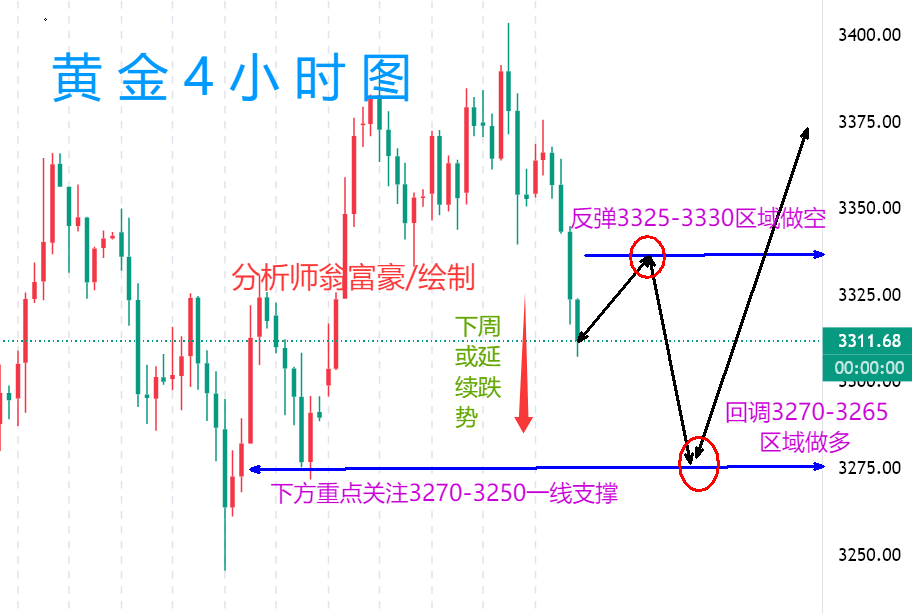
Group 1 - The U.S. non-farm payroll data for May showed an increase of 139,000 jobs, exceeding market expectations of 130,000, while the unemployment rate remained steady at 4.2%, aligning with forecasts [1] - Despite a decline from the previous value of 177,000 jobs, the better-than-expected performance strengthens the Federal Reserve's expectation to maintain current interest rate policies, leading to a significant drop in gold's safe-haven demand [1] - Following the data release, U.S. Treasury yields rose sharply, the U.S. dollar index strengthened, and spot gold prices fell by $40 to $3,331 per ounce [1] Group 2 - The month-over-month wage growth was 0.4%, and year-over-year growth was 3.9%, indicating persistent inflationary pressures, which further reduced market expectations for a rate cut by the Federal Reserve in the short term [1] - Despite the recent drop, gold prices have increased approximately 28% this year, highlighting its safe-haven value amid global geopolitical uncertainties [1] - Analysts believe that positive signals from U.S.-China trade negotiations have directly suppressed demand for safe-haven assets, with the decline in gold prices reflecting the market's immediate reaction to the easing trade relations [1] Group 3 - Technical analysis of gold indicates a bearish outlook for the upcoming week, with a focus on the support level between 3,270 and 3,250 [3] - If the support holds, there is potential for gold to rebound above 3,350 [3] - The daily chart shows a significant drop after being blocked at 3,375, closing at 3,307, suggesting a continuation of the downward trend [3] Group 4 - Suggested trading strategy includes selling on rebounds in the 3,325-3,330 range with a stop loss at 3,338 and a target of 3,315-3,295 [4] - Additionally, a buying strategy is recommended for pullbacks in the 3,270-3,265 range with a stop loss at 3,257 and a target of 3,300-3,330 [4]
研客专栏 | 中美通话的“留白”
对冲研投· 2025-06-06 11:40
以下文章来源于川阅全球宏观 ,作者邵翔 川阅全球宏观 . 卖方宏观研究,舞动漫天彩绸固然是一种本事,剪取庭前小枝也需要视角与功底。 文 | 邵翔 来源 | 川阅全球宏观 编辑 | 杨兰 审核 | 浦电路交易员 突然的通话,突然的缓和? 周四晚习主席应约同美国总统特朗普通电话,开始和结果与5月初的瑞士会晤十分相似:开始的比较突然,而结果也比市场预 期得要好。整个谈话历时约1个小时半小时,与习主席和前总统拜登通话的最短时长持平,而今年1月中美领导人的通话时间可能不到1小时。 我们认为这次通话将成为一次重要的分水岭。 中美之间将正式开启贸易谈判,但依旧不会是接下来一个月内美国贸易谈判的重点;"以时 间换空间",日本、韩国、印度、越南、甚至欧盟的谈判优先级还是会更高;而更重要的是中美竞争的形式将发生变化,从针尖麦芒式的关 税战,变为更加比拼"暗劲"的基本面和供应链的限制与反限制。同时值得注意的是,这次通话主要内容在经贸,而少有涉及地缘政治,这 是未来两国绕不过去的话题。 实际上,有了"前车之鉴",本次中美领导人通话前的"信号"铺垫已经比较明显。一方面,除了美国官员如哈塞特、贝森特持续透露两国领 导人接触的想法;此外, ...

【环球财经】期待中美贸易谈判进展 东京股市反弹
Xin Hua Cai Jing· 2025-06-06 08:06
Group 1 - The core viewpoint of the news is that the Tokyo stock market rebounded due to expectations of progress in trade negotiations between China and the United States following a phone call between the two leaders on June 5 [1] - The Nikkei 225 index rose by 187.12 points, closing at 37,741.61 points, with a gain of 0.50%, while the Tokyo Stock Exchange Price Index increased by 12.86 points, closing at 2,769.33 points, with a gain of 0.47% [1] - The market sentiment was supported by the confirmation of a second round of ministerial talks on tariffs and an agreement on mutual visits between the leaders of China and the U.S. [1] Group 2 - On June 6, all sectors in the Tokyo Stock Exchange, except for three (Aquaculture and Agriculture, Glass and Ceramics Products, and Fiber Products), experienced gains, with steel, construction, and machinery sectors leading the increases [2] - The weakening of the yen against the dollar during the trading hours also provided support to the stock market [1] - Despite the overall positive movement, the Tokyo stock market showed limited enthusiasm for aggressive buying due to weak U.S. employment data released on June 5, which led to declines in major U.S. stock indices [1]
不到24小时,美国4大部长发声,特朗普坐立难安,催促中国快接电话
Sou Hu Cai Jing· 2025-06-05 11:50
Group 1 - The article highlights the ongoing tensions between the US and China, with US officials accusing China of not adhering to agreements, while China has made significant concessions by reducing tariffs on US goods by 91% and suspending 24% of retaliatory tariffs for 90 days [1][5] - US Defense Secretary Lloyd Austin's remarks at the Shangri-La Dialogue indicate a strong stance against China's military expansion, suggesting that the US is prepared for conflict if deterrence fails, which reflects the heightened geopolitical tensions in the region [1][5] - The US Treasury Secretary has indicated that trade negotiations with China are currently stalled, emphasizing the need for direct communication between the leaders of both countries to facilitate progress [3][5] Group 2 - The article discusses the implications of the US's recent actions against Chinese high-tech products and other sectors, suggesting that these measures indicate a lack of genuine intent from the US to resolve issues through dialogue [5][7] - The situation is further complicated by domestic political dynamics in the US, where actions against institutions like Harvard University are seen as part of a broader cultural conflict, impacting international students, including many from China [3] - Analysts warn of potential crises in the US debt market due to extreme fiscal policies, which could have broader implications for the US economy and its relationship with China [5]

宏观金融数据日报-20250605
Guo Mao Qi Huo· 2025-06-05 08:25
1. Report Industry Investment Rating - Not provided in the given content 2. Core Viewpoints of the Report - The short - term fluctuations of stock indices are dominated by overseas variables, but Trump's administration has a changeable style, and tariff policies still face significant uncertainties. Domestic factors have limited driving force for stock indices, and the policy level is in a relative vacuum. It is recommended to adopt a wait - and - see approach for futures index operations and be cautious about chasing rising prices [6] 3. Summary by Relevant Catalogs 3.1 Money Market - DRO01 closed at 1.41 with a - 0.03bp change; DR007 at 1.55 with a 0.53bp change; GC001 at 1.49 with a - 1.00bp change; GC007 at 1.59 with a - 0.50bp change; SHBOR 3M at 1.65 with no change; LPR 5 - year at 3.50 with a - 10.00bp change. 1 - year, 5 - year, and 10 - year Chinese treasury bonds decreased by 1.28bp, 1.80bp, and 0.81bp respectively, while the 10 - year US treasury bond remained unchanged at 4.46 [4] - The central bank conducted 2149 billion yuan of 7 - day reverse repurchase operations yesterday, with 2155 billion yuan of reverse repurchases maturing, resulting in a net withdrawal of 6 billion yuan. This week, 16026 billion yuan of reverse repurchases will mature in the central bank's open market. After the monthly bank assessment, the money market has become looser, and the central bank uses various tools to maintain reasonable liquidity [4][5] 3.2 Stock Index Market - Yesterday, the Shanghai - Shenzhen 300 rose 0.43% to 3868.7, the Shanghai 50 rose 0.13% to 2690.8, the CSI 500 rose 0.78% to 5739, and the CSI 1000 rose 0.88% to 6123.2. The trading volume of the two markets was 1.15 trillion yuan, a slight increase of 116 billion yuan. Most industry sectors rose, while aviation, logistics, and aerospace sectors declined [5] - Rumors of Sino - US trade negotiations have affected the market. Stock indices have rebounded for two days but have not broken through key resistance levels, and trading volume has not significantly increased. Domestic factors have limited driving force for stock indices, and the policy level is in a vacuum. It is recommended to wait and see for futures index operations [6] 3.3 Futures Contract Market - For IF, the trading volume was 69824 with a - 7.1% change, and the open interest was 229448 with a - 2.9% change. For IH, the trading volume was 31907 with a - 20.4% change, and the open interest was 78806 with a - 3.8% change. For IC, the trading volume was 58090 with a - 16.3% change, and the open interest was 206376 with a - 3.4% change. For IM, the trading volume was 151505 with a - 7.9% change, and the open interest was 315489 with a - 1.8% change [5] - The IF basis for the current - month, next - month, current - quarter, and next - quarter contracts was 15.53%, 14.05%, 0.02%, and 6.60% respectively. The IH basis was 14.60%, 14.62%, 6.77%, and 3.65% respectively. The IC basis was 19.96%, 17.35%, 14.18%, and 11.80% respectively. The IM basis was 25.77%, 21.73%, 18.19%, and 15.27% respectively [7]