智能化

Search documents
柳工国内市场复苏预盈超15亿 年投逾10亿研发推新“三全”战略
Chang Jiang Shang Bao· 2026-01-29 01:36
Core Viewpoint - The domestic market is recovering, and Liugong (000528.SZ), a well-known company in the construction machinery industry, continues to show growth in its operating performance, with expected net profit exceeding 1.5 billion yuan in 2025, representing a year-on-year increase of over 15% [1] Financial Performance - For the fiscal year 2025, Liugong anticipates a net profit attributable to shareholders of approximately 1.526 billion to 1.659 billion yuan, an increase of 199 million to 332 million yuan compared to the previous year, translating to a growth rate of 15% to 25% [4] - The company expects a non-net profit of about 1.323 billion to 1.455 billion yuan, with a year-on-year increase of 185 million to 317 million yuan, reflecting a growth of 16% to 28% [4] - In the first three quarters of 2025, Liugong reported operating revenue and net profit attributable to shareholders of 25.760 billion yuan and 1.458 billion yuan, respectively, marking year-on-year growth of 12.71% and 14.58% [4] - The company has achieved continuous growth in revenue and net profit for three consecutive years, with 2023 and 2024 revenues of 27.519 billion yuan and 30.069 billion yuan, respectively, showing growth rates of 3.93% and 9.24% [6][5] Market Position and Strategy - Liugong ranks as the 18th largest construction machinery manufacturer globally, supported by its strong market position and technological advancements [1] - The company focuses on five key technological areas: internationalization, large-scale production, electrification, intelligence, and digitalization [1] - Liugong's strategic new businesses have become a second growth curve, emphasizing green, intelligent, and international solutions, including large-scale and electric mining solutions [9] Research and Development - Liugong's R&D investments for 2023 and 2024 are projected to be 1.047 billion yuan and 1.141 billion yuan, respectively, with a 2025 investment of 936 million yuan in the first three quarters, reflecting a year-on-year increase of 22.35% [2][10] - The company has established a balanced development in domestic and international markets, with overseas revenue accounting for 46.88% in the first half of 2025 [3][10] Product and Business Diversification - Liugong has evolved from a traditional equipment manufacturer to a provider of smart and green equipment and technology solutions, with a diverse product line that includes over 30 complete machine product lines and various key components [8][9] - The company has a significant historical background, having developed China's first wheel loader and achieved notable sales milestones in the industry [8]

研判2026!中国热等静压行业工作原理、发展历程、市场现状及趋势分析:自主攻关铸就全球领先,“国家队”刷新全球纪录[图]
Chan Ye Xin Xi Wang· 2026-01-29 01:21
Core Viewpoint - The article highlights China's advancements in the hot isostatic pressing (HIP) technology, showcasing the successful development of the world's largest HIP equipment, which signifies a shift to international leadership in high-end HIP equipment manufacturing. The market size for China's HIP industry is projected to reach approximately 2.742 billion yuan in 2024, reflecting a year-on-year growth of 13.59% [1][10]. Industry Overview - Isostatic pressing technology utilizes a closed high-pressure vessel to achieve material forming under uniform high pressure, categorized into cold, warm, and hot isostatic pressing based on temperature. Hot isostatic pressing operates at temperatures above 800°C, combining high pressure with inert gases to eliminate internal defects and achieve high-performance components essential for aerospace, additive manufacturing, and medical implants [2][4]. Industry Development History - The development of China's hot isostatic pressing technology has evolved from inception in the 1950s to achieving significant breakthroughs, including the first domestically produced equipment in 1977 and advancements in the 2000s that led to large-scale applications. The 2020s mark a phase of high-end leadership, with the introduction of the HIPEX1850, the world's second-largest HIP equipment [6][10]. Industry Chain - The upstream of the HIP industry includes raw materials such as high-purity inert gases, high-strength steel, titanium alloys, and various components. The midstream focuses on HIP process services and technology integration, while the downstream applications span aerospace, nuclear energy, medical, and automotive sectors [8]. Market Size - The Chinese HIP industry is expected to reach a market size of approximately 2.742 billion yuan in 2024, with a growth rate of 13.59% year-on-year, driven by advancements in equipment and technology [10][11]. Key Companies' Performance - The industry features a competitive landscape where state-owned enterprises lead equipment manufacturing and core services, while private companies explore emerging applications. Notable companies include: - **Steel Research Haopu**: The largest HIP technology service and equipment manufacturer in China, known for developing the HIPEX1850, which has advanced capabilities for large components [12]. - **Sichuan Aviation Industry Chuanxi Machinery**: A pioneer in HIP technology, recently signing contracts for the world's largest HIP equipment, enhancing capabilities in large engine development [14]. Industry Development Trends 1. **Intelligent and Green Transformation**: The industry is moving towards smart and environmentally friendly technologies, with AI systems for precise control and cooling technologies that reduce energy consumption [15]. 2. **Mature Technology and Cost Reduction**: As technology matures and costs decrease, HIP applications are expanding from high-end sectors to consumer markets, including energy storage and biomedical fields [16]. 3. **Collaborative Development of the Industry Chain**: The industry is forming a closed-loop collaboration among upstream materials, midstream equipment, and downstream applications, promoting domestic alternatives and standardization [18].


星宇股份递表港交所 招股书透露其毛利率增长乏力?
Zheng Quan Ri Bao Wang· 2026-01-28 13:14
Core Viewpoint - The company, Xingyu Automotive Lighting Co., Ltd., has submitted its listing application to the Hong Kong Stock Exchange, aiming to enhance its global production capacity and R&D investment, following its previous listing on the Shanghai Stock Exchange in 2011 [1] Group 1: Business Overview - Xingyu's business encompasses the design, development, manufacturing, and sales of automotive front and rear lighting, as well as interior and exterior decorative lights, serving both international automakers like Volkswagen and BMW, and domestic brands such as NIO and Li Auto [1] - According to Frost & Sullivan, the company holds a 11.0% market share in the Chinese automotive lighting market, ranking first, and a 4.2% share globally, ranking seventh [1] Group 2: Financial Performance - The company's revenue has shown consistent growth, with projected revenues of 10.248 billion yuan, 13.253 billion yuan, and 10.710 billion yuan for the years 2023, 2024, and the first three quarters of 2025, respectively [2] - Despite revenue growth, cost pressures are evident, with sales costs expected to rise by 31.5% in 2024, outpacing the revenue growth of 29.3%, leading to a decline in gross margin from 20.5% in 2023 to 19.1% in 2024 [2] Group 3: Competitive Landscape - The company's competitive advantages include a broad customer base, economies of scale, and strong product iteration capabilities, having established partnerships with nine of the top ten global automakers [3] - However, the company faces risks, as a significant portion of its revenue (approximately 66.7% in recent periods) comes from five major clients, making it vulnerable to fluctuations in their purchasing behavior [3] Group 4: Future Plans and Funding - The company plans to use the funds raised from the IPO for technology R&D, global production base expansion, and digital transformation, anticipating increased demand for high-end and smart automotive lighting as the industry evolves [4] - Industry experts suggest that the significance of the Hong Kong listing extends beyond financing, emphasizing the importance of improving operational resilience through capital structure and global resource allocation [4]

宝光股份:公司已建立了规范的财务、会计管理内部控制制度
Zheng Quan Ri Bao Wang· 2026-01-28 13:14
Group 1 - The company has established a standardized internal control system for financial and accounting management [1] - The company possesses a comprehensive financial management system and strictly adheres to the financial independent accounting regulations for listed companies [1] - The company aims to continuously enhance the level of financial digitization and intelligence as it develops [1]

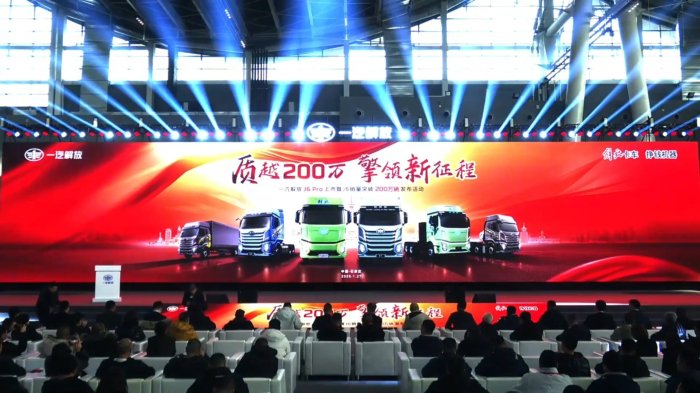
解放J6累计销量突破200万辆 全新J6 PRO正式上市
Xin Lang Cai Jing· 2026-01-28 09:28
Core Viewpoint - The launch of the J6 PRO and the milestone of J6 platform surpassing 2 million units sold highlight the achievements of FAW Jiefang in the commercial vehicle industry, showcasing its commitment to high-quality development and innovation in both traditional and new energy vehicles [1][5][19]. Group 1: Product Launch and Achievements - FAW Jiefang's J6 platform has achieved a cumulative sales milestone of over 2 million units, making it the top-selling single commercial vehicle platform globally [6][19]. - The J6 PRO product line is designed to meet new market demands with 30 innovative breakthroughs, emphasizing energy efficiency, safety, reliability, and practicality [6][17]. - The J6 PRO series includes both LNG and pure electric models, demonstrating FAW Jiefang's dual technological capabilities in traditional and new energy sectors [11][19]. Group 2: Customer Engagement and Strategic Partnerships - During the launch event, FAW Jiefang awarded the title of "Dream Partner - Winning Customer" to five key customers, recognizing their long-term support [13]. - A strategic cooperation agreement was signed with 10 key customers, resulting in over 2,000 orders for the J6 PRO, reflecting strong market recognition [17]. - Since the pre-order phase began in December 2025, a total of 3,315 orders for the J6 PRO have been received, indicating high customer confidence in the product [17]. Group 3: Future Strategy and Market Positioning - FAW Jiefang aims to leverage the J6 PRO to drive the transformation of the commercial vehicle industry towards high-end, intelligent, and green solutions [19]. - The company is committed to its "1333" strategic goal, focusing on customer-centricity and product leadership to enhance development momentum and value creation [19].

2026年汽车行业投资策略:智能化+全球化驱动,把握结构性机会
Shanghai Aijian Securities· 2026-01-28 07:13
Core Summary - The automotive industry is experiencing structural opportunities driven by smart technology and globalization, with a focus on high-level intelligent driving and global supply chain positioning [4][9][40] - In 2025, the automotive sector outperformed the market with a 24.3% increase, while the overall market saw a 9.4% growth in total vehicle sales [9][12] - The forecast for 2026 indicates a shift from volume-driven growth to a focus on structural opportunities, with total vehicle sales expected to increase by only 1% [9][16] Industry Trends - The growth of the automotive industry is being driven by smart technology and globalization, with significant advancements in high-level autonomous driving expected to commercialize in 2026 [9][49] - The penetration rate of L2+ technology in new energy vehicles reached 25.9% in 2025, indicating a trend towards mainstream adoption of advanced driving technologies [49] Investment Recommendations - Focus on leading companies with full-stack self-research capabilities in high-level autonomous driving, such as XPeng Motors, Xiaomi Group, and Li Auto, which are expected to benefit from product premiumization and valuation increases [9][10] - In the components sector, companies with Tier 0.5 capabilities are anticipated to transition from single-module supply to full-stack system integration, with a focus on computing chips and intelligent chassis [9][10] - The operational services sector is expected to see growth from Robotaxi services as high-level autonomous driving technology matures, with companies like Cao Cao Mobility and Pony.ai positioned to benefit [9][10] Sales and Market Dynamics - The automotive market is projected to transition to a "stock game" in 2026, with total sales expected to show only marginal growth due to the nearing ceiling of new energy vehicle penetration [16][44] - In 2025, the total vehicle sales reached 34.4 million units, with a 9.4% year-on-year increase, while new energy vehicle sales surged by 29.3% [16][44] Export Trends - In 2025, China's automotive exports reached 7.1 million units, maintaining its position as the world's largest automotive exporter, with a 21% year-on-year growth [30][31] - The export structure is shifting, with domestic brands increasing their share from 22% in 2024 to 24% in 2025, while foreign brands' share is declining [30][31] Policy Environment - The policy support for the automotive industry is expected to continue in 2026, with adjustments to the new energy vehicle purchase tax and a shift towards incentives that favor usage rather than purchase [40][41] - The transition from full exemption to partial tax reduction for new energy vehicles indicates a focus on sustainable fiscal policies [40][41]




港股异动 | 三一国际(00631)涨超6% 矿类大宗价格持续走强 全球矿机景气度有望升温
智通财经网· 2026-01-28 06:26
Core Viewpoint - Sany International (00631) has seen its stock price rise over 40% this month, reaching a new high of 12.85 HKD, driven by rising metal commodity prices and positive market sentiment regarding the mining machinery industry [1] Group 1: Company Performance - Sany International's stock price increased by 6.25% to 12.75 HKD, with a trading volume of 324 million HKD [1] - The company is expected to benefit from a recovery in domestic mining activities, with sales of tunneling machines and haul trucks anticipated to rebound [1] Group 2: Industry Outlook - According to China Merchants Securities, the global mining machinery industry may be at a turning point due to strengthened expectations of U.S. Federal Reserve interest rate cuts and rising commodity prices [1] - The outlook for the mining machinery sector is optimistic, with expectations of a new upward cycle driven by tightening resource supply and declining ore quality [1] - Galaxy Securities noted that Sany International's leading position in tunneling machines is expected to remain strong, with an increasing share of non-coal mining equipment and advantages in automation, electrification, and globalization [1]
向新而行|中国制造 更加“亮丽”
Yang Shi Wang· 2026-01-28 02:07
Group 1 - The core viewpoint of the article highlights the accelerated development of emerging industries in China, including new energy vehicles, photovoltaics, low-altitude equipment, and marine engineering equipment, enhancing the country's manufacturing reputation [2] - The Chinese government emphasizes the need for high-end, intelligent, and green development in the manufacturing sector, as stated by President Xi Jinping [2] - By 2025, the export scale of the "new three items" is expected to approach 1.3 trillion yuan, showcasing the growing prominence of Chinese manufacturing on the global stage [2]
未知机构:杭叉集团叉车龙头走向全球无人叉车人形机器人开启新成长纪元长江机械赵智勇-20260128
未知机构· 2026-01-28 02:05
Summary of Key Points from the Conference Call Company Overview - The company discussed is Hangcha Group, a leading manufacturer in the forklift industry, which is expanding its global presence and venturing into new technologies such as unmanned forklifts and humanoid robots [1][2]. Core Insights and Arguments - The current interest rate reduction is expected to lead to a recovery in demand for capital goods in Europe and the U.S., with emerging markets likely to benefit from capacity transfers, positioning the company's core forklift business to take full advantage of these trends [1][2]. - The company has been enhancing its global network since 1998, with multiple overseas subsidiaries opening, which has contributed to a continuous increase in its international market share [2]. - The forklift industry is undergoing a significant transition towards new energy solutions, with electric forklift sales in China rising from 23% in 2010 to an anticipated 74% by 2024 [2]. Additional Important Content - The company is making substantial investments in lithium battery and hydrogen energy products, which are expected to enhance its global market position through the advantages of its new energy products [3]. - In the smart technology sector, the company has a strong technical foundation and market presence, bolstered by internal growth and acquisitions. The acquisition of Guozi Robotics in July 2025 has strengthened its technological capabilities [4]. - The launch of the Hangcha X1 series humanoid logistics robots in October 2025 marks a strategic shift from being a traditional industrial vehicle manufacturer to a provider of comprehensive intelligent logistics solutions, with expectations for unmanned forklifts and humanoid robots to drive significant growth in the smart sector [4].

从三个“百亿”看洛阳经济潜能
Sou Hu Cai Jing· 2026-01-28 00:59
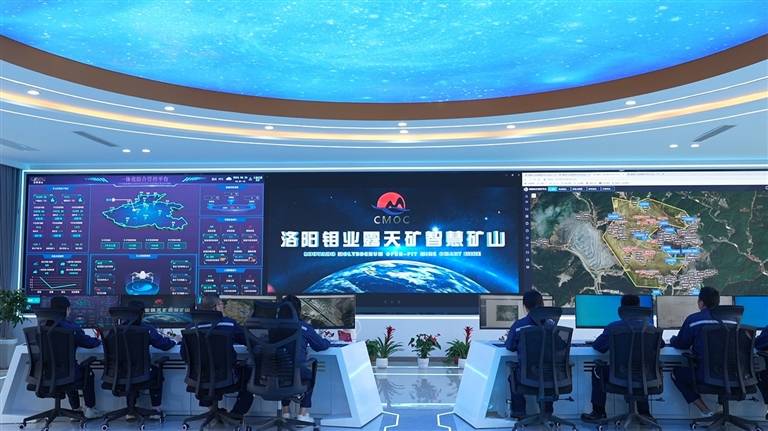
Core Insights - The article highlights the economic potential and growth of Luoyang, showcasing three major companies: Luoyang Molybdenum, AVIC Optoelectronics, and CATL, which are leading in resource, high-end manufacturing, and new energy sectors respectively [6][8][9]. Group 1: Company Performance - Luoyang Molybdenum achieved a profit exceeding 20 billion yuan and became the first A-share listed company in Henan to surpass a market value of 500 billion yuan, marking a successful global expansion for resource-based enterprises [6][9]. - AVIC Optoelectronics reported revenue exceeding 15.8 billion yuan in the first three quarters of 2025, establishing a strong position in the connector industry with significant technological barriers [6][8]. - CATL's Luoyang base has generated a cumulative output value exceeding 17.5 billion yuan since its inception, supported by a total investment of 32 billion yuan, contributing to the restructuring of the regional industrial ecosystem [6][8]. Group 2: Technological Innovation - Luoyang Molybdenum's digital transformation includes an AI blending system that reduced raw material waste from 15% to 3%, saving the equivalent of a small mine's output annually [9]. - AVIC Optoelectronics has diversified its product range from two types of aviation connectors to over 500 series, demonstrating resilience against market fluctuations through product diversification and scenario expansion [10]. - CATL's investment in a "lighthouse factory" with 95% automation and a solid-state battery pilot line positions it to capitalize on current and future market opportunities [11]. Group 3: Economic Impact - The Luoyang base of CATL has driven a 113.6% year-on-year growth in the city's electrical machinery and equipment manufacturing sector, significantly boosting industrial investment and overall economic growth [11]. - The article emphasizes the importance of traditional industries laying the foundation for new industries, creating a multi-faceted industrial structure that supports economic resilience [8][9]. Group 4: Systemic Collaboration - The integration of innovation and industry chains is crucial for transforming economic potential into growth, with Luoyang focusing on deepening the collaboration between various sectors [12][13]. - The article discusses the need for institutional reforms and the revitalization of idle resources to support the transformation of old industrial bases [14]. Group 5: Future Outlook - Luoyang's strategic initiatives aim to enhance its manufacturing capabilities and foster a modern industrial system, with a focus on high-quality development across various sectors [18][19]. - The city plans to leverage its historical industrial base while embracing innovation and reform to ensure sustainable economic growth [23].