关税战

Search documents
中国联手印度巴西反制!美国彻底绝望:特朗普关税由民众买单!
Sou Hu Cai Jing· 2025-08-20 02:52
Group 1 - The core issue of the trade war is that while the U.S. believes it is in control, China has successfully partnered with Brazil and India, shifting the agricultural power dynamics globally [1][5] - The U.S. soybean market share in China has plummeted from 34% to 18%, while Brazil has increased its share to 70%, indicating a significant shift in supply chain dependencies [3] - The price of Brazilian soybeans is significantly lower at $580 per ton compared to U.S. soybeans at $1,026 per ton after tariffs, making Brazilian products more competitive [3] Group 2 - The U.S. business community is struggling to mitigate the impacts of tariffs, with inventory turnover rates decreasing and costs rising across various sectors, including automotive and retail [7] - The tariffs have led to increased prices for a wide range of products, from coffee to automobiles, disproportionately affecting lower-income consumers [7] - The ongoing trade tensions are causing significant economic strain, with U.S. farmers and businesses facing mounting pressure to adapt to the changing market landscape [1][5][7]


特稿丨在关税逆风中艰难前行——当前世界经济形势辨析
Xin Hua Wang· 2025-08-19 12:52
Core Viewpoint - The global economy is facing significant challenges due to the impact of tariff wars, particularly from the United States, which is weakening growth momentum and creating uncertainty in international trade [1][5][6]. Group 1: Economic Performance of Developed Economies - The U.S. economy is experiencing a slowdown, with GDP growth affected by tariff policies, leading to a contraction in Q1 and a modest growth of 1.4% in personal consumption expenditures in Q2 [2][3]. - The Eurozone's GDP growth in Q2 was only 0.1%, the lowest since early 2024, with major economies like Germany and Italy facing export challenges [3]. - Japan has revised its GDP growth forecast for the fiscal year 2025 down to 0.7% from 1.2%, primarily due to the effects of U.S. tariffs [3]. Group 2: Global Economic Challenges - The global economy is under pressure from geopolitical tensions, tariff wars, and rising macroeconomic risks, with the U.S. being identified as a major source of risk [5][6]. - The International Monetary Fund (IMF) has highlighted that U.S. trade policies contribute to ongoing uncertainty and fragility in the global economy [3][5]. Group 3: Resilience in Emerging Markets - Many countries in the Asia-Pacific region are showing resilience and are becoming key drivers of global growth, with significant trade growth observed in developing countries [4][8]. - The global South is increasingly important in maintaining and enhancing multilateral trade systems, with countries like China demonstrating strong economic growth and potential [7][8]. Group 4: Impact of Tariff Policies - U.S. tariffs are expected to lead to significant costs for American businesses, with estimates suggesting hundreds of billions in direct costs, affecting pricing and employment [6]. - The uncertainty created by U.S. tariffs is damaging global supply chains and reducing the attractiveness of the U.S. market for global capital [6]. Group 5: Cooperation and Trade Diversification - Countries are focusing on deepening cooperation to enhance economic resilience, with initiatives like the Regional Comprehensive Economic Partnership (RCEP) being pursued in response to high tariffs [7]. - The IMF emphasizes the importance of practical cooperation among economies to reduce trade and investment barriers [7].
欧洲的好日子到头了!吸血大国多年,中美俄如今联合让它还债
Sou Hu Cai Jing· 2025-08-19 12:25
Group 1 - The article discusses the decline of Europe's high welfare system, which has been supported by historical wealth accumulation and exploitation of global resources [1][52] - It highlights that Europe's welfare benefits have been funded by the wealth extracted from other regions, including the Americas and Africa, particularly during the colonial era [11][30] - The article suggests that the current geopolitical landscape, including the rise of China and the impact of the Russia-Ukraine war, is challenging Europe's ability to maintain its welfare state [15][32] Group 2 - The text outlines how Europe's high welfare policies were established post-World War II, largely due to the Marshall Plan and subsequent economic growth [13][15] - It emphasizes that the reliance on cheap energy from Russia has been a cornerstone of Europe's economic stability, which has been disrupted by recent geopolitical tensions [30][36] - The article argues that the U.S. has shifted from being a supporter of Europe to exploiting its vulnerabilities, particularly in the context of military spending and trade tariffs [39][48] Group 3 - The narrative indicates that Europe's past exploitation of global resources has led to a false sense of security regarding its welfare system, which is now at risk of collapse [50][52] - It points out that the current economic pressures and the need for adjustments in welfare policies are becoming increasingly urgent as external support diminishes [52]
吃饭又砸锅?欧洲可不干!对华加税200%,G7跟不跟?美财长话音刚落,在座6国无一敢应声
Sou Hu Cai Jing· 2025-08-19 06:32
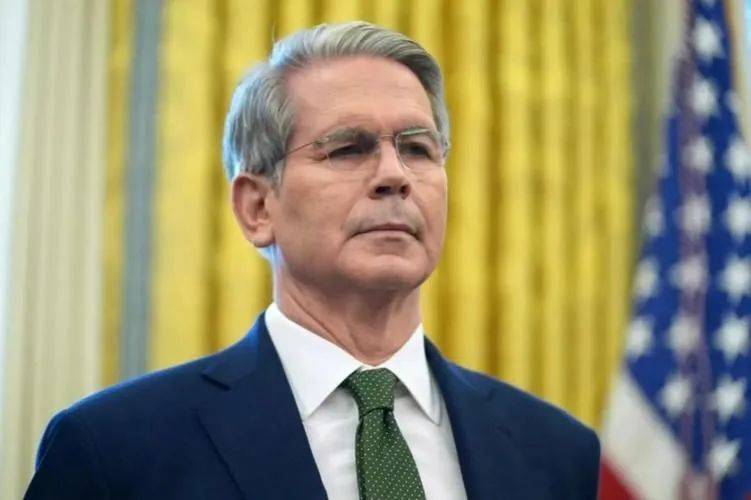
Group 1 - The article discusses the U.S. Treasury Secretary's push for European allies to prepare for higher tariffs on countries buying Russian energy, which is seen as a strategy targeting China rather than Russia [1][3][5] - European leaders' silence during the G7 meeting indicates their reluctance to engage in a trade war with China, as their economies are closely tied to Chinese markets, particularly in sectors like automotive and electronics [3][6] - The U.S. has a history of using its allies as tools in trade disputes, and the current situation reflects a growing awareness among European nations of the risks involved in aligning too closely with U.S. policies against China [6][8] Group 2 - The article highlights that the U.S. is unlikely to achieve favorable outcomes in a trade war with China without the support of its allies, and the recent G7 meeting showcased a lack of consensus on this issue [5][8] - The potential for retaliatory measures from China could negatively impact American companies that rely on the Chinese market, such as Apple and Tesla, leading to domestic discontent [8] - The dynamics of global trade are shifting, with countries recognizing the interconnectedness of their economies, making it increasingly difficult for the U.S. to impose unilateral trade measures without facing backlash [8]
特朗普求情没用,40艘货轮驶向中国,800万吨粮没有一粒来自美国
Sou Hu Cai Jing· 2025-08-19 05:13
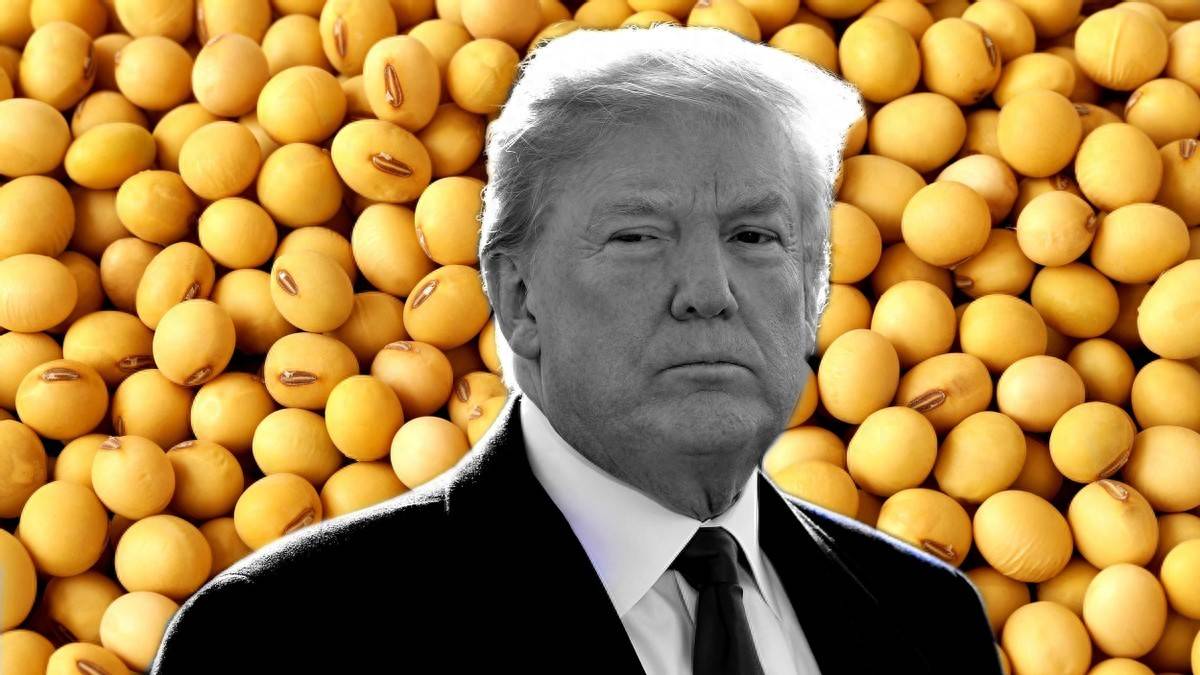
Group 1 - The core issue is the significant decline in U.S. soybean exports to China, leading to an accumulation of soybeans in U.S. storage facilities [3][5][11] - President Trump's request for China to increase soybean purchases by four times reflects the urgency of the situation, as U.S. farmers face unsold stock [3][5] - The trade tensions initiated by the "tariff war" have disrupted the traditional soybean trade between the U.S. and China, prompting China to seek alternative suppliers from South America [5][9][16] Group 2 - China has already secured soybean orders from South America, with approximately 8 million tons confirmed for September, indicating a shift away from U.S. soybeans [9][11] - The current soybean prices in the U.S. are declining, yet there are still few buyers, exacerbating the situation for American farmers [11][13] - China's diversification in trade relationships and the potential for increased orders from Argentina suggest that the U.S. may struggle to regain its market share in the soybean sector [13][16][18]
特朗普果然不可信!美国财长隔空喊话,要求G7对中国加税200%?欧洲可不干!现场鸦雀无声
Sou Hu Cai Jing· 2025-08-19 04:03
Group 1 - The U.S. Treasury Secretary, Bessent, is urging Europe to support imposing high tariffs on energy buyers from Russia, particularly targeting China, which has garnered international attention [1][3] - Bessent's call for tariffs is not new; similar proposals were made during the G7 summit in June, where he suggested a 200% secondary tariff on China, but received no support from European leaders [1][3] - The proposed tariffs are part of a broader strategy linked to the upcoming "Putin-Trump meeting," with the U.S. seeking to pressure Europe into joining its sanctions efforts against Russia [1][3] Group 2 - European countries are hesitant to follow the U.S. lead due to their economic ties with China, particularly Germany's automotive industry and Japan's electronics supply chain, which could face severe repercussions from retaliatory measures [3][4] - The previous "reciprocal tariff" policies under the Trump administration have damaged trust among European allies, making them reluctant to support U.S. initiatives that could harm their own economies [4][6] - The unilateral imposition of tariffs by the U.S. is seen as a threat to global trade order, potentially disrupting supply chains and increasing operational costs for businesses worldwide [6][9] Group 3 - European leaders, including Germany's Chancellor and France's President, emphasize the need to protect their own interests and assert that discussions regarding Ukraine's territorial issues must involve Ukraine itself [7][9] - Analysts express caution regarding the upcoming "Putin-Trump meeting," highlighting the challenges Trump faces in negotiating with Putin and the potential consequences of a failed dialogue [9] - The overall sentiment among European nations suggests a reluctance to be coerced into supporting U.S. tariffs against China, indicating a preference for dialogue and cooperation over unilateral actions [9]
保护主义将给世界带来什么?美智库专家:1930年代的美国历史里有答案
Sou Hu Cai Jing· 2025-08-19 02:49
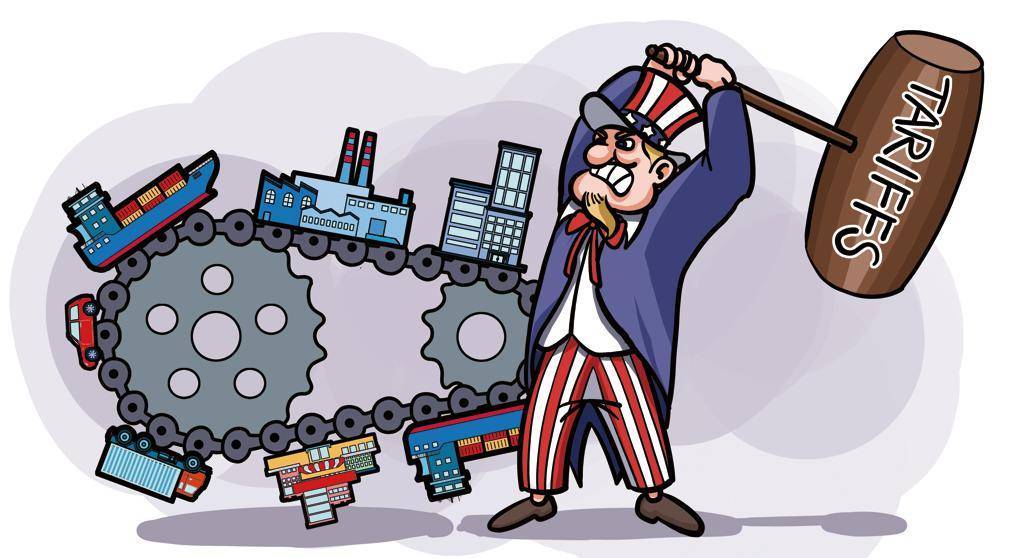
Core Viewpoint - The article argues that the U.S. government's initiation of a tariff war is detrimental to economic globalization and exacerbates geopolitical tensions, reminiscent of the international environment before the rise of fascism in the 1930s [1][3]. Historical Context - The article draws parallels between the current tariff policies and the Smoot-Hawley Tariff Act of 1930, which aimed to protect jobs and farmers by raising tariffs on imports. Despite opposition from over 1,000 economists, the act was signed into law, leading to a significant reduction in U.S. imports and exports during the Great Depression [3][4]. - The Smoot-Hawley Tariff Act is cited as a misguided response to an economic crisis, which, while achieving short-term effects, ultimately resulted in greater long-term losses for the U.S. economy and contributed to global instability [4]. Current Tariff Wars - The first round of the current tariff war targets Canada, Mexico, and China, affecting goods worth $1.4 trillion. The second round, characterized by "reciprocal tariffs," is seen as a unilateral approach fraught with flaws and miscalculations [5][6]. - The U.S. administration claims that countries are eager to negotiate, but the reality is that the "reciprocal tariffs" have led to retaliatory measures, escalating into a third round of tariffs [6]. Economic Implications - While short-term coercive measures may yield significant financial contributions to the U.S. economy, the long-term consequences are expected to be severe, undermining globalization and eroding the rules-based international trade system [6]. - The article highlights that economic globalization has historically facilitated trade, investment, and the movement of people, contributing to the rise of major economies like China and India. However, the trend of de-globalization in the late 2010s has led to a slowdown in growth for emerging economies [6].
今日评 | 以“慢牛”拉动资本市场稳中向好
Sou Hu Cai Jing· 2025-08-19 00:09
Core Insights - A-shares indices collectively rose, with the Shanghai Composite Index surpassing 3731 points, marking a nearly 10-year high [1] - The total market capitalization of A-shares exceeded 100 trillion yuan, setting a historical record [1] - Daily trading volume reached 2.76 trillion yuan, indicating a sustained increase in market activity [1] Economic Context - The capital market serves as a "barometer" for economic operations, with the economic fundamentals acting as a "value anchor" [1] - Multiple favorable factors, including accelerated industrial upgrades, flourishing technological innovations, and stable foreign trade, have contributed to the upward movement of indices [1] - Expectations of interest rate cuts by the Federal Reserve and the resilience of the Chinese economy have attracted foreign investments, leading to upgrades in ratings by several international financial institutions [1] Market Sentiment - A stable stock market enhances expectations and boosts investor confidence [1] - The rise in the stock market provides returns to investors and supports corporate development with real capital [1] - The overall valuation level of A-shares remains relatively low, with long-term capital inflows indicating potential for further upward movement [1] Future Outlook - There is a caution against short-term speculative trading that could lead to market volatility [1] - The expectation is for a "slow bull" market to solidify the positive momentum in the capital market, contributing to high-quality economic development [1]
川普巧施连环计,库克怒掏7000亿
3 6 Ke· 2025-08-18 23:25
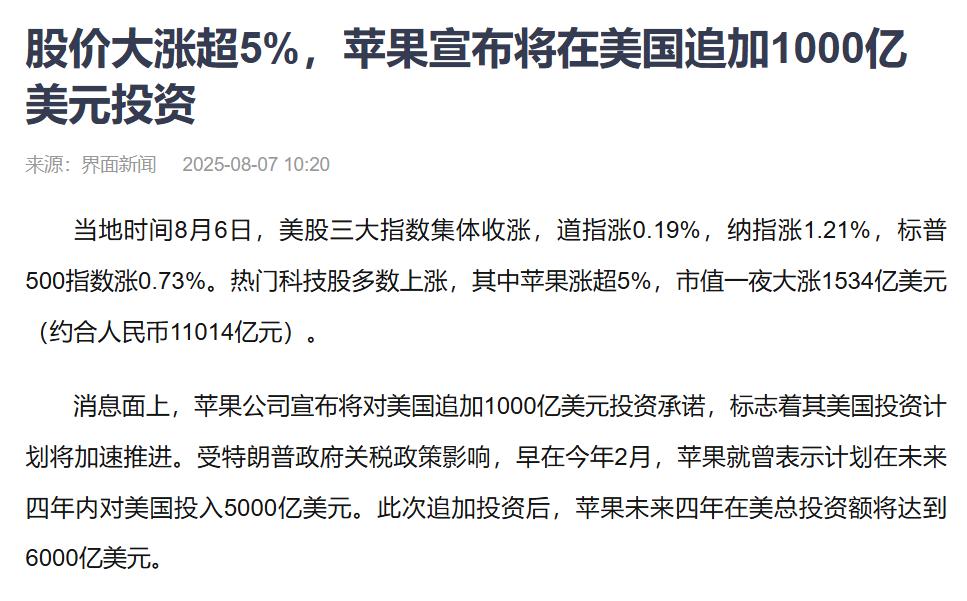
Core Viewpoint - Apple is set to invest a total of $700 billion in the U.S., which includes $600 billion for domestic construction and an additional $100 billion for the American Manufacturing Program (AMP), leading to a significant increase in its stock price and a boost for the U.S. manufacturing sector [2][4][22] Investment Details - The investment will be spread over four years, averaging about $175 billion per year, which exceeds Apple's annual net profit of approximately $100 billion and accounts for nearly half of its total revenue [4][19] - The AMP plan includes procurement and investment in suppliers, which are essential for Apple's operations, thus much of this investment may not represent new spending but rather a reallocation of existing expenses [15][19] Political and Economic Context - The investment is seen as a "protection fee" to secure favorable treatment amid trade tensions, particularly with India, which has become a major source of iPhone exports to the U.S. [6][10] - The move is also politically beneficial for former President Trump, as it showcases significant investment in the U.S. economy, potentially creating jobs and providing political capital [20][22] Historical Precedents - Apple has a history of making large investment commitments in response to government pressures, having previously pledged $350 billion and later $430 billion in investments during Trump's and Biden's administrations, respectively [17][22] Financial Implications - Analysts estimate that only 15% to 25% of the announced investment may represent actual new cash outlay, suggesting that the bulk of the investment may be reclassified existing expenditures [19][22] - If Apple were to lose tariff exemptions, it could face annual profit losses of approximately $2 billion due to increased tariffs on imports from China and India [19][22]

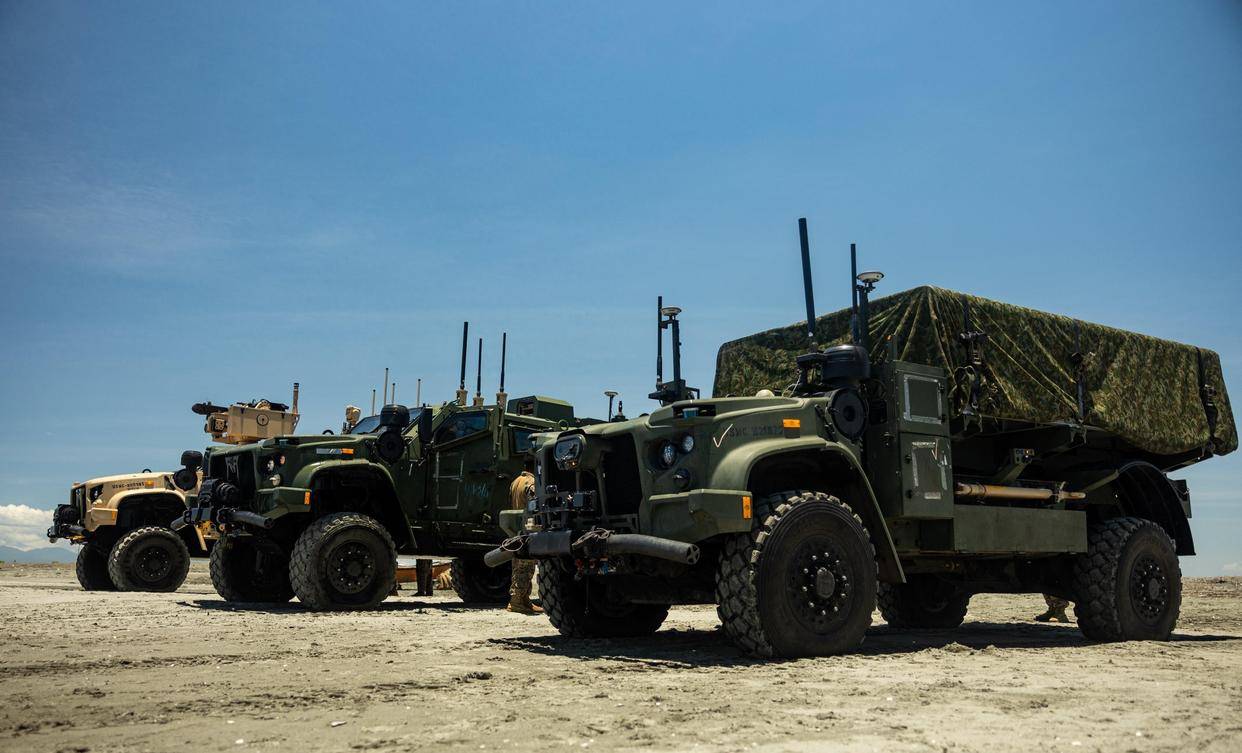
美国关税战暂缓,军事围堵却加速?菲北部导弹部署直指中国咽喉
Sou Hu Cai Jing· 2025-08-18 23:11
Group 1 - The U.S. has temporarily suspended most tariffs on China due to domestic economic pressures, while simultaneously accelerating military deployments in the Philippines, indicating a dual strategy of economic and military maneuvers [1][3]. - The imposition of tariffs as high as 145% has led to significant domestic economic issues in the U.S., including a 30% increase in e-commerce product prices and a 40% drop in agricultural exports, causing severe inventory problems for farmers [3]. - The U.S. military is deploying the NMESIS anti-ship missile system in the Philippines, which has a range of 185-260 kilometers, to enhance its military presence in the region, particularly near critical maritime routes [4]. Group 2 - Philippine President Marcos is playing a crucial role by rejecting Chinese demands and aligning with the U.S., indicating a strategic partnership that ties economic cooperation to military support [6]. - The Philippines has increased provocative actions in the South China Sea, including incursions into Chinese territorial waters, which heightens regional tensions and risks conflict [6]. - China is responding to the dual pressures of the tariff war and military encirclement by reducing its economic dependence on the U.S., with exports to the U.S. dropping to 14.7% of its total, while increasing trade with ASEAN and Africa by 25% [7].