量化宽松

Search documents
国信证券晨会纪要-20250912
Guoxin Securities· 2025-09-12 02:51
Group 1: Macro and Strategy - The report highlights the impact of the Federal Reserve's quantitative easing (QE) policies on U.S. Treasury yields, indicating that while QE provides liquidity, its long-term effects significantly lower yields [8][9]. - The report outlines four phases of the Federal Reserve's bond purchasing history, detailing the transition from traditional monetary policy to QE during the 2008 financial crisis and the COVID-19 pandemic [9][10]. - Recent economic data indicates a potential rebound in the bond market, with expectations for improved performance following the release of economic growth data on September 15 [11][12]. Group 2: Industry and Company Insights - The semiconductor industry, particularly the analog chip sector, is expected to see growth, with global market sizes projected to increase by 3.3% and 5.1% in 2025 and 2026, respectively [16][17]. - Domestic companies in the analog chip market are anticipated to benefit from increased demand in industrial, automotive, and AI applications, with significant potential for domestic market share growth [17][18]. - The renewable energy sector, particularly wind power, is experiencing favorable pricing outcomes, with competitive bidding results indicating strong investment returns for wind projects [19][20]. - Agricultural products are projected to enter a bullish cycle, with expectations for rising prices in beef and milk, driven by supply dynamics and market recovery [21][22][23]. - The report notes that the company Golden Meat Industry has seen a significant increase in profits from its beef and lamb business, despite challenges in its pig farming segment [35][36]. Group 3: Company-Specific Developments - Daikin Heavy Industries has secured a large contract worth approximately 1.25 billion yuan for offshore wind turbine foundations, which is expected to positively impact its financial performance in 2026 [24][25]. - Kelaiying, a leading CDMO in China, is expanding its service offerings and is projected to achieve steady revenue growth, with a forecasted revenue of 66.8 billion yuan in 2025 [26][28]. - Aibo Medical has reported a significant increase in net profit driven by high-end artificial crystal products, with a 30% quarter-on-quarter growth in the second quarter [29][30][31]. - Bluko is launching new products to enhance its IP portfolio, which is expected to drive revenue growth, particularly in the lower-priced market segment [33][34].




海外债市系列之五:海外央行购债史:日本央行篇
Guoxin Securities· 2025-09-10 08:02
Report Industry Investment Rating No relevant content provided. Core Viewpoints - The report systematically analyzes the key stages of the Bank of Japan's bond - buying policy from its inception to the present, exploring the macro - economic background, policy goals, and evolution of bond - buying methods at each stage, and focusing on its impact on the direction, shape, and liquidity of the Japanese bond market's yield curve. The Bank of Japan's bond - buying behavior has evolved from a traditional tool for increasing money supply to a core and controversial means in global monetary policy operations [17]. Summary by Stages First Stage (1960s - 1980s): The Germination of Traditional Tools - **Macro - background and Policy Goals**: In the context of financial liberalization, facing issues such as international payment emergencies and domestic credit out - of - control, the Bank of Japan aimed to adjust money supply and smooth short - term liquidity fluctuations through open - market operations [18][19]. - **Bond - buying Method**: Initially, it mainly bought securities in the secondary market through open - market operations. After the expansion of the government bond market, it included long - term government bonds in open - market operations, with purchases starting one year after bond issuance. Sales operations also began in 1972 [20][21]. - **Impact on the Bond Market**: The bond trading of the Bank of Japan had an insignificant impact on the overall level and curve shape of government bond yields. Market interest rates were mainly determined by the official discount rate, strict financial control systems, and economic cycle changes such as the oil crisis [24]. Second Stage (1990 - 2000): Exploration after "Zero - Interest Rate" - **Macro - background and Policy Goals**: After the burst of the Japanese asset - price bubble in the 1990s, the economy entered the "Lost Decade." With the exhaustion of traditional interest - rate reduction space, the Bank of Japan gradually increased bond purchases to create a continuously loose monetary policy environment [27][30]. - **Bond - buying Method**: Besides reducing interest rates, it significantly increased bond - buying volume in the open market. In 1999, it introduced direct purchases of short - term treasury bills and government short - term securities [30][31]. - **Impact on the Bond Market**: Japanese government bond yields entered a long - term downward channel due to economic recession, deflation expectations, and continuous interest - rate cuts. The Bank of Japan's bond - buying behavior strengthened this trend, and this exploration accumulated experience for subsequent quantitative easing policies [32]. Third Stage (2001 - 2012): The First Appearance and Repeated Use of Quantitative Easing (QE) - **Macro - background and Policy Goals**: To counter the impact of the 2001 Internet bubble burst on the global economy and address economic recession and deflation pressure in Japan, the Bank of Japan adjusted its monetary policy framework and launched QE [37][38]. - **Bond - buying Method**: During the QE launch (2001 - 2005), it increased commercial bank reserve balances and promised to continue QE until the core CPI year - on - year growth rate stabilized above 0%. It also increased long - term government bond purchases multiple times. QE was briefly withdrawn in 2006 but restarted in 2008, with an expansion of the bond - buying scale and asset scope [39][41][42]. - **Impact on the Bond Market**: During the first QE period, long - term government bond yields initially declined rapidly but rebounded in 2003. After the QE restart in 2008, yields declined significantly again. Overall, the QE policy increased government bond demand, but it did not necessarily drive yields down continuously in the short term [45]. Fourth Stage (2013 - 2016): The Shock of "Quantitative and Qualitative Easing" (QQE) - **Macro - background and Policy Goals**: Under the framework of "Abenomics," QQE aimed to reverse deep - rooted deflation expectations and achieve a 2% inflation target within two years [49][50]. - **Bond - buying Method**: Compared with the QE period, QQE significantly increased the scale, variety, and duration of bond purchases. The annual government bond purchase amount increased from 50 trillion yen to 80 trillion yen, the average remaining maturity of purchased bonds was extended, and the purchase of risk assets such as ETFs and J - REITs was increased [51]. - **Impact on the Bond Market**: QQE quickly pushed Japanese medium - and long - term government bond yields to historical lows, flattening the yield curve. The Bank of Japan became the dominant buyer in the bond market, which led to a decline in secondary - market trading activity and impaired the price - discovery function of the government bond market [57]. Fifth Stage (2016 - 2023): The Fine - Tuning of Yield Curve Control (YCC) - **Macro - background and Policy Goals**: To address the side - effects of QQE, such as financial institution profit damage and policy sustainability issues, the Bank of Japan introduced the YCC framework to improve the flexibility and sustainability of monetary policy [60][61]. - **Bond - buying Method**: The YCC framework targeted a short - term policy rate of - 0.1% and a 10 - year government bond yield of around 0% with a fluctuation range of ±0.1%. The Bank of Japan would adjust bond - buying volume flexibly according to market conditions. The fluctuation range was gradually relaxed over time [62]. - **Impact on the Bond Market**: As the YCC fluctuation range widened, the fluctuation range of the 10 - year government bond yield increased, and the yield level gradually rose. The YCC policy achieved precise control over the 10 - year government bond yield, but the bond market lost some of its market - pricing function [68]. Sixth Stage (2024 - Present): Saying Goodbye to Unconventional Policies and Moving towards Normalization - **Macro - background and Policy Goals**: After the COVID - 19 pandemic, due to factors such as rising global commodity prices, yen depreciation, and wage increases, Japan's core CPI remained above 2%, providing conditions for the Bank of Japan to exit ultra - loose policies [71]. - **Bond - buying Method**: In March 2024, the Bank of Japan ended negative interest rates, exited the YCC policy, and stopped buying risk assets while maintaining government bond purchases. In July 2024, it announced a plan to gradually reduce bond - buying volume, with a slowdown in the reduction rate announced in June 2025 [73][74]. - **Impact on the Bond Market**: As the Bank of Japan's monetary policy returned to normal, government bond yields rose rapidly. The Bank of Japan's role changed from the "biggest buyer" to a "gradual seller," posing challenges to the market [80]. Overall Summary The Bank of Japan's bond - buying tools have evolved from simple liquidity adjustment to QE (emphasizing "quantity"), QQE (emphasizing "quantity" and "quality"), and YCC (emphasizing "price"), reflecting continuous innovation and adaptation to achieve monetary policy goals in different economic environments. The impact of QE on long - term government bond yields was not always one - way, while later QQE and YCC policies made the Bank of Japan a dominant participant in the bond market, with a more direct impact on bond market liquidity and yields [83][84].
美国低利率时代,有哪些投资机遇?
2025-09-09 14:53
Summary of Key Points from the Conference Call Industry or Company Involved - The discussion revolves around the U.S. economy and its response to three major economic crises: the Internet bubble burst, the financial crisis, and the COVID-19 pandemic. Core Insights and Arguments 1. **Monetary Policy Evolution**: The U.S. has implemented various monetary policies across different crises, including interest rate cuts and quantitative easing, to stimulate economic recovery. For instance, during the Internet bubble, the Fed cut rates by 550 basis points over 30 months, while during the financial crisis, rates were brought close to zero and multiple rounds of quantitative easing were initiated [1][11][12]. 2. **Fiscal Policy Measures**: The U.S. government responded to crises with fiscal stimulus measures, including tax cuts and increased public spending, leading to significant increases in government deficit and leverage ratios. For example, the deficit rate reached 14% during the COVID-19 pandemic [1][9][14]. 3. **Asset Price Performance**: Different asset classes reacted variably during the crises. After the Internet bubble burst, stock prices fell significantly, while real estate prices increased. Conversely, during the financial crisis, both stock and real estate markets faced severe declines, with the Dow Jones Industrial Average dropping by 49% [2][4][6][10][16]. 4. **Investment Opportunities**: The low-interest-rate environment has created investment opportunities primarily in gold, real estate, and specific sectors like energy and materials. Technology stocks, however, require a longer recovery period [3][19]. 5. **Impact of COVID-19**: The pandemic led to a sharp decline in GDP by 7.5% in Q2 2020, with significant unemployment and business disruptions. The Fed responded with aggressive rate cuts and expanded its balance sheet significantly [8][9][10]. 6. **Long-term Trends**: The U.S. stock market has maintained a long bull market due to technological advancements and sustained inflows from long-term funds like pensions and mutual funds. This shift in asset allocation from real estate to financial assets reflects changing risk preferences among investors [19][20]. Other Important but Possibly Overlooked Content 1. **Comparison with Japan**: The U.S. bond fund market did not experience the same contraction as Japan's, attributed to the U.S. economy's resilience and quicker recovery from crises [18]. 2. **Inflation and Interest Rates**: The low-interest-rate environment has led to a general increase in asset prices, with housing prices rising over 40% during the pandemic period [9][10]. 3. **Government Debt Levels**: The federal government’s leverage ratio increased significantly during the crises, reaching 141% during the pandemic, indicating a substantial rise in government debt relative to GDP [14][19]. 4. **Sector-Specific Performance**: The technology, consumer, and healthcare sectors have shown particularly strong performance during the recovery phases following the crises [7][10]. This summary encapsulates the key points discussed in the conference call, highlighting the U.S. economic landscape's response to significant crises and the resulting investment implications.
就业增长陷入停滞、美联储是救命稻草、欧洲财政之殇
2025-09-07 16:19
Summary of Key Points from Conference Call Records Industry Overview - The records primarily discuss the **U.S. labor market** and its implications for various industries, including **mining, manufacturing, construction, retail, wholesale, technology, and finance**. The **education, healthcare, and leisure sectors** are noted as exceptions with some positive growth [1][4]. Core Insights and Arguments - **Labor Market Stagnation**: Recent employment data indicates a significant slowdown in the U.S. labor market, with the JOLTS report showing job vacancies fell to **7.18 million**, the first time below the number of unemployed at **7.23 million** [2]. - **Weak Employment Growth**: The private sector added only **54,000 jobs** in August, down from **100,000** in July, and the non-farm payrolls showed an increase of just **22,000 jobs**, far below expectations [2]. - **Sector-Specific Declines**: Industries closely tied to the economic cycle, such as mining, manufacturing, and construction, have experienced consistent job losses over the past three months, while most service sectors also reported negative growth [4]. - **Factors Contributing to Labor Market Weakness**: - **Tariffs**: High tariffs (up to **20%** for some countries) have increased costs for businesses, leading to reduced hiring and delayed investments [5]. - **Immigration Policy**: Stricter immigration policies have reduced labor supply, particularly affecting industries reliant on low-wage workers [5]. - **Economic Uncertainty**: Global supply chain issues and geopolitical risks have heightened uncertainty, further suppressing hiring and investment [5]. - **Impact of AI on Employment**: The rapid development of artificial intelligence has negatively affected job demand, particularly for younger workers in roles like software engineering and customer service [8][9]. Additional Important Insights - **Federal Reserve's Response**: The Federal Reserve may maintain a loose monetary policy, potentially lowering interest rates or implementing quantitative easing to stimulate economic growth and employment [3][6]. - **Market Reactions to Employment Data**: The recent arrest of **450 workers** at Hyundai's U.S. plant has raised concerns about the labor market, contradicting policies aimed at encouraging manufacturing to return to the U.S. [7]. - **Challenges Ahead**: The labor market faces ongoing challenges from tariffs, immigration policies, and the rise of AI, which collectively hinder both demand and supply for labor [9]. Conclusion - The U.S. labor market is currently facing significant challenges, with various sectors experiencing job losses and economic uncertainty. The Federal Reserve's potential actions to address these issues will be critical in shaping future employment trends and overall economic recovery.
美财长抨击美联储独立性危机 呼吁进行独立审查
Sou Hu Cai Jing· 2025-09-05 17:17
Core Viewpoint - U.S. Treasury Secretary Becerra criticizes the Federal Reserve for jeopardizing its independence due to "mission creep" and calls for an independent review of its monetary policy [1] Group 1: Criticism of the Federal Reserve - Becerra argues that the core of independence lies in credibility and political legitimacy, both of which have been undermined by the Fed overstepping its authority [1] - He expands on his consistent view that the Fed has engaged in "functional monetary policy experimentation" [1] - Becerra criticizes the Fed for injecting excessive stimulus through quantitative easing after the 2007-09 financial crisis and for over-regulating the banking system [1] Group 2: Call for Review - Becerra states that unconventional policies like quantitative easing should only be used in true emergencies and in coordination with other federal government departments [1] - He has repeatedly urged Fed Chair Powell to conduct an internal review of non-monetary policy functions [1] - Becerra proposes a comprehensive, honest, independent, and non-partisan review of the entire institution, including monetary policy, regulation, communication, staffing, and research [1]
薛鹤翔:以史为鉴:美联储降息周期人民币怎么走?人民币系列报告
Sou Hu Cai Jing· 2025-09-05 10:45
Core Viewpoint - The article discusses the historical trends of the Chinese Yuan (RMB) exchange rate following the Federal Reserve's interest rate cuts, indicating that the RMB is expected to appreciate moderately in the current rate cut cycle due to various supportive factors [3][4][22]. Group 1: Historical Trends of RMB Exchange Rate - Since 1980, there have been eight rounds of Federal Reserve rate cuts, primarily aimed at preventing or responding to economic recessions and unexpected risk events [5]. - Historical data shows that the RMB's response to Fed rate cuts is influenced by the relative economic strength of China and the U.S., monetary policy differences, and the global financial environment [3][5]. - Specific periods of RMB performance include: - 1995-1996: RMB appreciated slightly during preemptive rate cuts [10]. - 1998: RMB remained stable around 8.28 during the Asian financial crisis [10]. - 2001-2003: RMB fluctuated narrowly between 8.27-8.28 during a period of economic weakness in the U.S. [12]. - 2007-2008: RMB accelerated in appreciation amid the subprime mortgage crisis [13]. - 2019: RMB faced depreciation pressures due to trade tensions but regained strength after subsequent Fed rate cuts [14]. - 2020: RMB appreciated again as the economy recovered post-COVID-19 [14]. Group 2: Current Factors Supporting RMB Appreciation - The RMB has recently appreciated due to several factors, including a weaker U.S. dollar, strengthened expectations of Fed rate cuts, increased attractiveness of RMB-denominated assets, and continuous adjustments in the RMB central parity rate [15][20]. - The U.S. dollar has been in a downtrend, influenced by rising fiscal deficits and concerns over debt sustainability, which has weakened dollar credibility [16]. - Expectations for Fed rate cuts have intensified, with market indicators suggesting a high probability of rate adjustments in the near future [18][19]. - The A-share market has seen significant rebounds, enhancing the attractiveness of RMB assets and increasing foreign investment interest [20]. - The RMB central parity rate has been adjusted upwards, signaling positive market sentiment and contributing to the currency's strength [20]. Group 3: Outlook for RMB in the Current Rate Cut Cycle - The RMB is expected to appreciate moderately in the current Fed rate cut cycle, supported by improving economic conditions in China and a narrowing interest rate differential between China and the U.S. [22][24]. - China's economy is gradually stabilizing, with strong export performance and supportive domestic policies aimed at boosting internal demand [23]. - The narrowing interest rate differential, as the Fed cuts rates while China's monetary policy remains relatively stable, is likely to enhance the attractiveness of RMB assets to foreign investors [24].


在黄金暴涨之后白银也疯了
Sou Hu Cai Jing· 2025-09-02 07:09
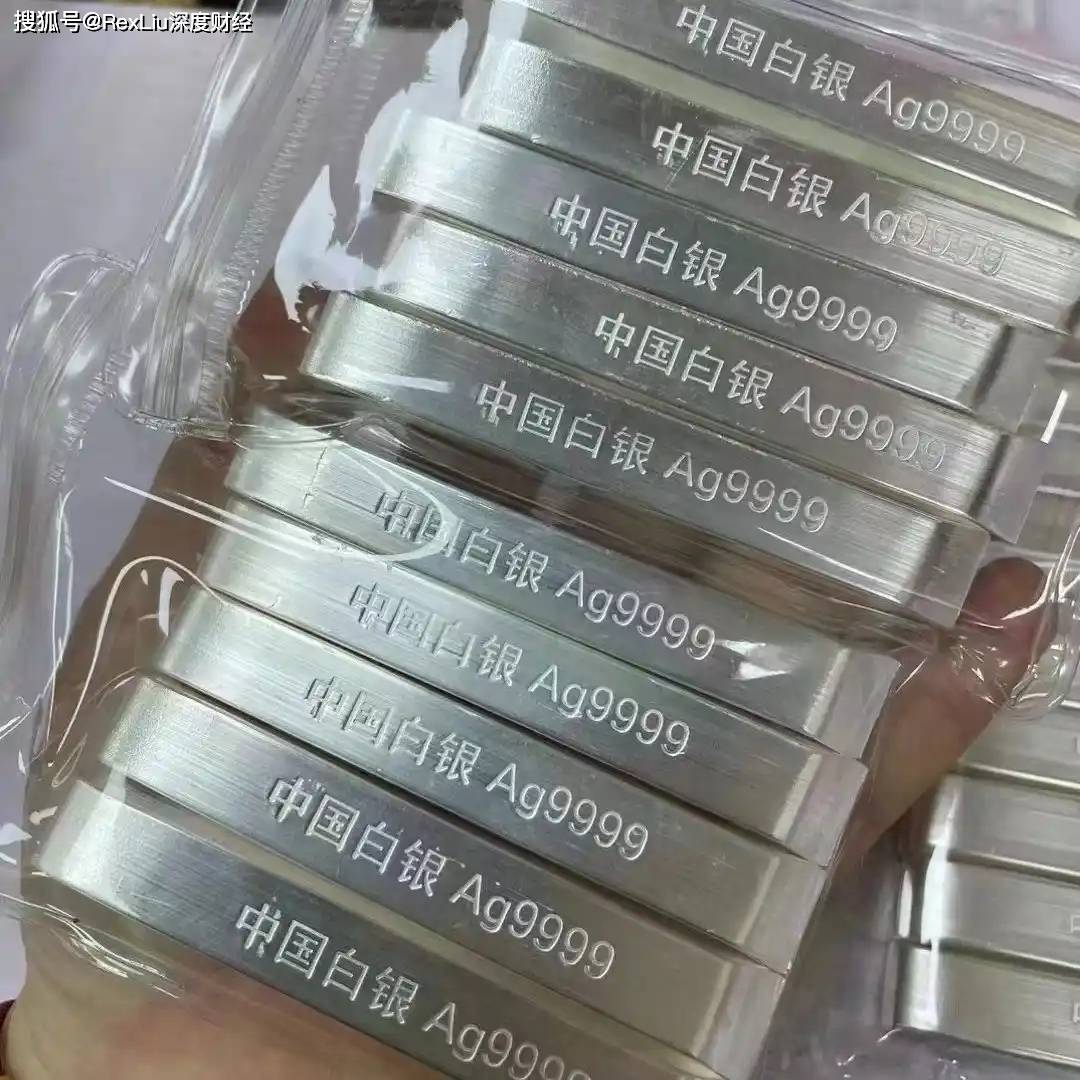
Group 1: Market Overview - The global precious metals market has seen a significant surge, with spot silver prices surpassing $40 per ounce, marking a 14-year high and a year-to-date increase of over 40% [2] - Gold prices have also reached new heights, with COMEX gold futures hitting $3,557 per ounce, a historical peak [2] - The primary catalysts for this price surge include strong expectations for interest rate cuts by the Federal Reserve and heightened geopolitical risks [2] Group 2: Factors Influencing Silver Prices - Silver serves as both a precious metal and a critical industrial material, with industrial demand significantly supporting silver prices [3] - The explosive growth of the photovoltaic industry is a key driver, with global new solar installations expected to exceed 600 GW in 2024, leading to a surge in silver usage for solar paste [3] - The World Silver Association predicts a silver supply shortage of 117 million ounces by 2025 due to demand outpacing supply [3] Group 3: U.S. Policy and Silver Market - The U.S. Geological Survey has classified silver as a strategic resource, with the U.S. currently relying on imports for 64% of its silver supply [3] - There are potential plans for the U.S. government to impose tariffs of up to 50% on silver to protect domestic supply chains, with a report expected in October 2025 to outline specifics [3] Group 4: Historical Context and Trends - The current gold bull market has seen prices rise 170% since 2019, with historical bull markets driven by factors such as the collapse of the Bretton Woods system and the 2008 financial crisis [5][6] - The gold-silver ratio currently stands at 88, indicating that gold is relatively expensive compared to silver, which historically signals a potential for silver price increases [4] Group 5: Investment Strategies - Investors are encouraged to consider various methods for participating in precious metals, including purchasing gold and silver ETFs for better liquidity and ease of trading [7] - Diversification is advised, with a recommendation to allocate investments in both gold and silver while avoiding concentrated bets [8]
日本央行副行长释放明确信号:将继续推进加息步伐
智通财经网· 2025-09-02 03:33
Group 1 - The Bank of Japan's Deputy Governor, Masayoshi Amamiya, stated that continuing to raise interest rates is an appropriate policy choice due to improvements in the economy and prices [1] - Despite three interest rate hikes, Japan's real interest rates remain significantly low due to persistent inflation, indicating that there is still room for monetary policy normalization [1] - Policymakers need to balance various risks, including the potential for economic downturns and the risk of prices rising beyond expectations [1] Group 2 - Amamiya expressed a preference for adjusting short-term policy rates for monetary easing or tightening rather than relying on changes in the scale of Japanese government bond purchases [2] - The plan to reduce the Bank of Japan's bond purchases should be based on the principle of long-term rates being determined by the market, while ensuring predictability and flexibility to support market stability [2] - Following the Bank of Japan's signals, the USD/JPY exchange rate rose by 0.35% to 147.68, indicating ongoing pressure on the yen [2]
日本国债为何被抛售?
21世纪经济报道· 2025-08-31 00:34
Core Viewpoint - Japan's long-term government bonds are facing significant sell-offs, with the 30-year bond yield reaching a historical high of 3.22% as of August 27, driven by unexpected GDP growth and potential interest rate hikes by the Bank of Japan [1] Group 1: Market Dynamics - The rise in bond yields is attributed to a structural supply-demand imbalance in the Japanese government bond market, where the main buyers are pension funds, life insurance companies, and foreign investors [1] - The Bank of Japan, which has been the largest buyer of government bonds since 2013, plans to reduce its bond purchases starting March 2024, leading to a lack of buyers in the market [1][2] - In July, Japanese pension funds and insurance companies net sold 130 billion yen of bonds, indicating their inability to increase purchases due to asset allocation and capital regulation constraints [2] Group 2: Auction Results and Investor Sentiment - The bidding rate for the 20-year government bond auction in May was only 2.50 times, the lowest since 2012, prompting the Japanese government to reassess its bond issuance plans [3] - The government plans to issue 176.9 trillion yen in bonds this fiscal year, but has reduced the issuance of long-term bonds by over 3 trillion yen due to market conditions [3] - Investor concerns about Japan's political situation are evident, as the ruling party does not hold a majority in the Diet, complicating governance and potentially leading to further fiscal expansion [3] Group 3: Policy Challenges - The Japanese Ministry of Finance faces challenges in effectively managing the bond issuance strategy, as further reductions in long-term bond issuance would necessitate increased short-term bond issuance, leading to higher interest payments [4] - The Bank of Japan is unlikely to change its policy of reducing bond purchases due to its significant holdings of 575.9 trillion yen in government bonds and a book loss of 28.6 trillion yen [5] - Despite speculation about potential interest rate hikes due to external pressures, the current economic conditions and anticipated impacts from U.S. tariff policies make such a move unlikely [5]

黄金新一轮上涨蓄势待发?
雪球· 2025-08-30 03:05
Group 1 - The article discusses the implications of Trump's potential control over the Federal Reserve Board, suggesting that it could undermine the independence of the Fed and damage the credibility of the US dollar [3][4] - Trump's motivation to control the Federal Reserve is not only to achieve interest rate cuts but also to implement more aggressive monetary easing policies to reduce the burden of national debt [6][8] - Historical context is provided, indicating that past attempts to influence the Fed, such as Nixon's pressure on Chairman Burns, have been aimed at achieving similar monetary policy goals [4][5] Group 2 - The article references Ray Dalio's debt monetization theory, which includes measures such as reducing government spending, increasing fiscal revenue, and lowering interest rates [7] - The current US government debt-to-GDP ratio is approximately 120%, with a critical threshold for potential crisis identified between 120% and 300% [8] - The article highlights the case of Turkey, where aggressive interest rate cuts led to a decrease in government debt ratio despite high inflation, illustrating a potential strategy for the US [9] Group 3 - The article predicts that if Trump seeks not only interest rate cuts but also monetary expansion, central banks worldwide may react by increasing gold purchases, potentially driving gold prices higher [14] - It notes that the US stock market is undergoing a revaluation of gold and resource stocks in light of the broader context of US debt monetization and dollar depreciation [14] - The article suggests that the general public tends to be slow to react to rising gold prices, but as prices stabilize, acceptance of higher prices will increase, leading to a resurgence in gold jewelry sales [14]