
套期保值

Search documents
纯苯,苯乙烯风险管理日报-20250923
Nan Hua Qi Huo· 2025-09-23 11:21
1. Report Industry Investment Rating - Not provided in the given content 2. Core Viewpoints of the Report - The fundamentals of pure benzene and styrene are still weak, with low valuations but high inventories, and the rebound momentum is insufficient. In the short term, they mainly follow the fluctuations of crude oil and are expected to move in a range. It is recommended to take a wait - and - see approach for unilateral trading [4]. 3. Summary by Relevant Catalogs 3.1 Price Forecast and Hedging Strategies - **Price Range Forecast**: The monthly price range forecast for pure benzene is 5600 - 6200, and for styrene is 6800 - 7400. The current 20 - day rolling volatility of styrene is 29.40%, and its historical percentile in 3 years is 85.8% [3]. - **Hedging Strategies**: - **Inventory Management**: For enterprises with high finished - product inventory worried about styrene price decline, they can short styrene futures (EB2511, 25% hedging ratio, entry range 7000 - 7100) and sell call options (EB2511C7100, 50% hedging ratio, entry range 70 - 90) [3]. - **Procurement Management**: For enterprises with low regular procurement inventory and hope to purchase according to orders, they can buy styrene futures (EB2511, 50% hedging ratio, entry range 6800 - 6850) and sell put options (EB2511P6800, 75% hedging ratio, entry range 120 - 150) [3]. 3.2 Core Contradictions - **Supply**: In the pure benzene market, two sets of devices in East China postponed their maintenance plans, two long - shut small pure benzene devices in Shandong plan to resume production, and there are import transactions from Europe to China, so the supply is expected to increase in the fourth quarter. For styrene, two new large - scale devices had short - term shutdowns, and the supply continued to tighten in September but is expected to increase monthly after September [4]. - **Demand**: Downstream production and maintenance coexist in the pure benzene market, and the terminal is likely to have an off - peak season this year, so the pattern of inventory accumulation is difficult to change. The terminal demand for styrene has limited growth, and the pick - up is average [4]. 3.3利多 and利空解读 - **利多 Factors**: As of September 22, the port inventory of pure benzene in Jiangsu was 10.7 tons, a month - on - month decrease of 20.15%. Pre - holiday stocking led to destocking of pure benzene ports. In September, two sets of 600,000 - ton styrene devices of Zhejiang Petrochemical were under maintenance, and the supply of styrene continued to tighten [5]. - **利空 Factors**: It is heard that there are import transactions from Europe to China in November and December, and the import volume of pure benzene in the fourth quarter is expected to return to a high level. The maintenance plans of some factories' devices in East China were postponed, and two long - shut pure benzene devices in Shandong plan to resume production in mid - October. Two large - scale styrene devices in Jilin Petrochemical and Guangxi Petrochemical are planned to be put into production in the fourth quarter [6][9]. 3.4 Basis and Spread Changes - **Basis Changes**: - **Pure Benzene**: The basis of East China - BZ03 on September 23 was - 30, up 36 from the previous day; the basis of East China - BZ04 was 10, up 41 from the previous day [10]. - **Styrene**: The basis of East China - EB09 on September 23 was 81, down 100 from the previous day; the basis of East China - EB10 was 34, down 34 from the previous day [10]. - **Spread Changes**: The spreads of pure benzene and styrene in various periods generally showed a downward trend, such as the spot spread of pure benzene decreased by 35 yuan/ton from September 22 to September 23 [11]. 3.5 Industrial Chain Price - **Pure Benzene**: The prices of pure benzene in various markets and futures contracts generally declined on September 23 compared with the previous day. For example, the price of BZ2603 decreased by 51 yuan/ton, and the price of the pure benzene East China market decreased by 15 yuan/ton [12]. - **Styrene**: The prices of styrene in various regions and futures contracts also declined. For example, the price of EB2510 decreased by 76 yuan/ton, and the price of styrene East China decreased by 100 yuan/ton [13]. - **Related Products**: The prices and profits of related products such as caprolactam, phenol, and aniline also changed to varying degrees [13].
潮宏基:公司利润主要来源于产品设计和服务
Zheng Quan Ri Bao· 2025-09-22 09:39
Group 1 - The company announced on September 22 that its profits primarily come from product design and services [2] - The company indicated that fluctuations in gold prices are influenced by various factors, and it will use hedging tools to mitigate the impact of gold price volatility on its profits [2]


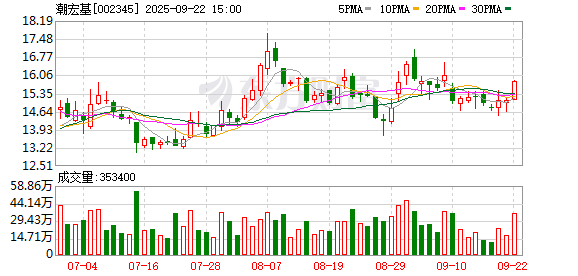
潮宏基(002345) - 002345潮宏基投资者关系管理信息20250922
2025-09-22 06:34
Group 1: Product Strategy - The company focuses on high value-added products to stimulate consumer demand and enhance profit margins, launching series like Zhenjin Zhenzuan and cultural products from the Palace Museum, which have increased customer satisfaction and average transaction value [1] - Future product development will continue to align with customer needs, emphasizing brand strength and industry leadership in areas such as traditional craftsmanship and IP collaborations [2] Group 2: Financial Strategy - In response to fluctuations in gold prices during the current Federal Reserve's interest rate cut cycle, the company plans to utilize hedging tools to mitigate the impact on profits [2] - The company's profit primarily derives from product design and services, indicating a strategic focus on maintaining profitability despite market volatility [2] Group 3: Investor Relations - The investor relations activity was conducted via an online platform, ensuring compliance with regulations and preventing the disclosure of any undisclosed significant information [1]
行业聚焦产能调控与市场挑战 期货工具成生猪企业“稳舵手”
Qi Huo Ri Bao· 2025-09-22 01:40
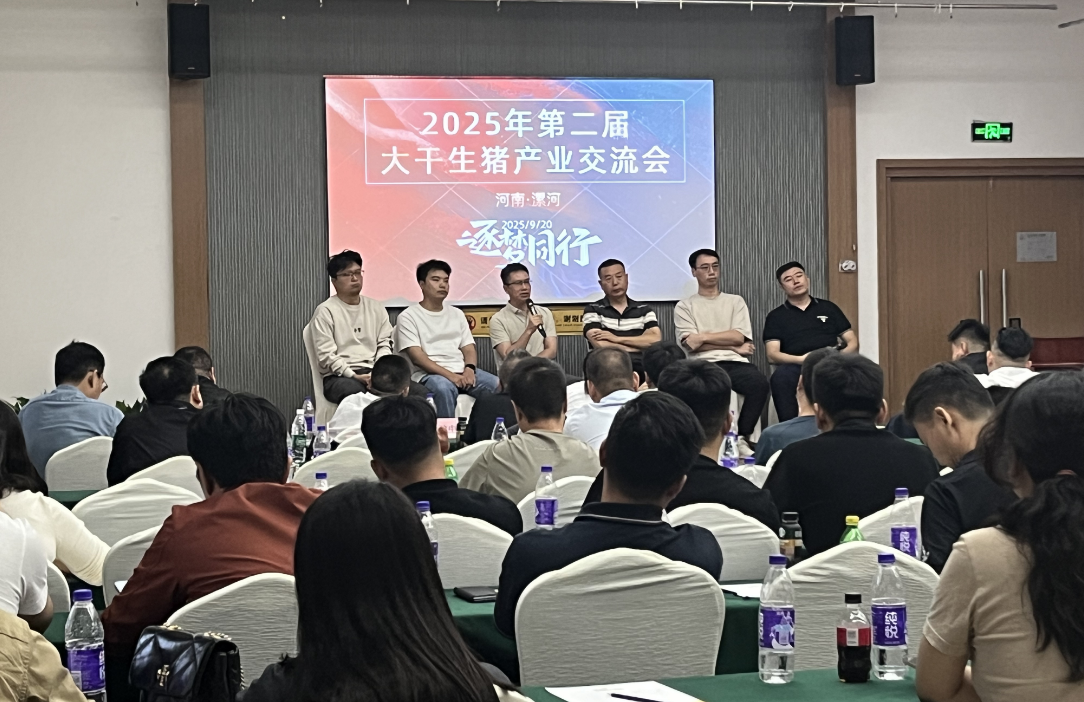
Core Viewpoint - The current pig industry is facing a dilemma of high production capacity and low prices, prompting discussions on capacity regulation and market outlook at a recent industry seminar [1][3]. Group 1: Industry Challenges - The pig industry is caught in a "production-loss" cycle, with high sow productivity and improved farming efficiency leading to oversupply and sustained pressure on prices [3]. - Despite efforts to reduce market supply through measures like lowering slaughter weights, the overall goal of capacity reduction has not been achieved due to high breeding sow inventory and quick recovery of production by large enterprises after cutbacks [3]. Group 2: Risk Management Strategies - Many leading companies plan to maintain current production levels and utilize hedging strategies to manage market risks and lock in profits, indicating a shift towards using financial derivatives for risk management [3][4]. - Companies like Guangxi Shennong emphasize a balanced approach to hedging, focusing on risk prevention while maintaining competitive advantage, viewing hedging as a long-term strategic tool rather than mere speculation [4]. Group 3: Market Outlook - Industry representatives predict that the domestic pig market will exhibit new characteristics, including improved disease prevention capabilities post-African swine fever, a likely long-term saturation of production capacity, and a potential reduction in the amplitude of price fluctuations [5]. - The cyclical nature of the pig market is expected to persist, but future cycles may be shorter compared to the historical average of four years, with factors like hoarding and secondary fattening potentially causing price volatility [5].
每周股票复盘:奇精机械(603677)泰国新工厂建成投产
Sou Hu Cai Jing· 2025-09-20 21:34
Core Viewpoint - The company is actively expanding its business in precision manufacturing for mechanical components, particularly in the fields of industrial robots and drones, while also establishing a new production facility in Thailand to enhance its operational capabilities [2][3]. Group 1: Company Performance and Market Position - As of September 19, 2025, the company's stock price is 19.98 yuan, up 4.77% from the previous week, with a total market capitalization of 3.848 billion yuan, ranking 24th in the home appliance components sector [1]. - The company has a total of 15 drone component products, with 2 already designated for production, and 1 of these is currently in mass production [2][4]. Group 2: Production and Operational Developments - The company has established a production base in Thailand at the end of 2020, with a new factory construction project initiated in 2023, expected to be completed by September 2024 [3]. - The new factory will primarily focus on automotive components, with plans to simultaneously run clutch and automotive parts production [3][4]. - The company employs a production model that combines "order-based production" with "inventory-based production" to manage seasonal sales fluctuations [3]. Group 3: Strategic Initiatives and Future Prospects - The company is in the process of developing industrial robot components, specifically steel wheels for reducers, which are currently in the small batch sampling stage and have not yet reached mass production [2][4]. - A subsidiary, Qijing Nuotong, has been established to focus on heat pump projects, with production expected to commence in the fourth quarter of this year [2][4]. - Approximately one-third of the company's revenue comes from exports, which are primarily priced and settled in US dollars, making the company sensitive to exchange rate fluctuations [3][4].

镍、不锈钢产业风险管理日报-20250918
Nan Hua Qi Huo· 2025-09-18 01:49
Report Information - Report Title: Nickel & Stainless Steel Industry Risk Management Daily Report [1] - Date: September 18, 2025 [1] - Research Team: Nanhua New Energy & Precious Metals Research Team [2] - Analysts: Xia Yingying, Guan Chenghan [2] Industry Investment Rating - Not provided in the report Core Viewpoints - The nickel and stainless steel futures markets showed weak intraday oscillations, with the overall non - ferrous metals market relatively soft and no significant changes in the fundamentals [4]. - There are still supports in the new energy sector. The nickel salt supply is tight, and price increases are frequent, expected to remain strong. The nickel - iron price is firm, but high - price transactions have declined [4]. - The stainless steel futures price once fell below 12,900, and the spot market offered discounts. There was some improvement in transactions, but the fundamental momentum is currently calming down, and attention should be paid to subsequent macro - level trends [4]. - Although the takeover of a small part of the PT Weda Bay nickel mine has limited impact on actual production, it has raised concerns about the nickel ore supply [4][6]. - The news of Antam and CATL promoting the construction of an integrated nickel smelter in Indonesia supports the long - term demand for nickel in the new energy field [6] Key Points by Category Price Forecast - The predicted price range for Shanghai nickel is 118,000 - 126,000 yuan/ton, with a current 20 - day rolling volatility of 15.17% and a historical percentile of 3.2% [3]. - The predicted price range for stainless steel is 12,500 - 13,100 yuan/ton, with a current 20 - day rolling volatility of 7.61% and a historical percentile of 1.1% [3] Risk Management Strategies Shanghai Nickel - **Inventory Management**: When facing the risk of product price decline and inventory depreciation, sell Shanghai nickel futures (NI main contract) with a 60% hedging ratio and sell call options (over - the - counter/on - exchange options) with a 50% hedging ratio [3]. - **Procurement Management**: When worried about rising raw material prices, buy Shanghai nickel forward contracts (far - month NI contracts) according to the production plan, sell put options (on - exchange/over - the - counter options), and buy out - of - the - money call options (on - exchange/over - the - counter options) [3] Stainless Steel - **Inventory Management**: When facing the risk of product price decline and inventory depreciation, sell stainless steel futures (SS main contract) with a 60% hedging ratio and sell call options (over - the - counter/on - exchange options) with a 50% hedging ratio [4]. - **Procurement Management**: When worried about rising raw material prices, buy stainless steel forward contracts (far - month SS contracts) according to the production plan, sell put options (on - exchange/over - the - counter options), and buy out - of - the - money call options (on - exchange/over - the - counter options) [4] Market Data Nickel Futures - The closing price of Shanghai nickel main - continuous contract is 121,790 yuan/ton, with a 0% change [8]. - The closing price of Shanghai nickel continuous - one contract is 121,990 yuan/ton, down 0.67% [8]. - The closing price of Shanghai nickel continuous - two contract is 122,180 yuan/ton, down 0.63% [8]. - The closing price of Shanghai nickel continuous - three contract is 122,370 yuan/ton, down 0.63% [8]. - The LME nickel 3M price is 15,445 US dollars/ton, down 0.63% [8] Stainless Steel Futures - The closing price of stainless steel main - continuous contract is 12,935 yuan/ton, with a 0% change [11]. - The closing price of stainless steel continuous - one contract is 12,935 yuan/ton, down 0.27% [11]. - The closing price of stainless steel continuous - two contract is 12,985 yuan/ton, down 0.27% [11]. - The closing price of stainless steel continuous - three contract is 13,060 yuan/ton, down 0.19% [11] Inventory Data - Domestic social nickel inventory is 41,055 tons, an increase of 1,125 tons [12]. - LME nickel inventory is 228,468 tons, an increase of 2,034 tons [12]. - Stainless steel social inventory is 902,600 tons, a decrease of 16,100 tons [13]. - Nickel pig iron inventory is 28,652 tons, a decrease of 614.5 tons [13] News and Event Analysis Positive Factors - Indonesia's APNI plans to revise the HPM formula by adding elements such as iron and cobalt [7]. - Indonesia shortens the nickel ore quota license period from three years to one year [7]. - Stainless steel inventories have decreased for several consecutive weeks [7]. - The takeover of part of the PT Weda Bay nickel mine by the Indonesian forestry working group [7]. - CATL and Antam promote the construction of an integrated nickel smelter in Indonesia [7][6] Negative Factors - High pure nickel inventories [7]. - Sino - US tariff disturbances [7]. - Uncertainty in the EU's stainless steel import tariffs has increased [7]. - South Korea's anti - dumping duty on Chinese stainless steel thick plates has been implemented [7]. - Relatively weak stainless steel spot transactions [7]
期货衍生品成聚酯产业企业生存发展“必需品”
Qi Huo Ri Bao Wang· 2025-09-17 23:56
Core Viewpoint - The polyester industry is facing significant challenges due to price volatility across the supply chain, but the integration of futures and options is fundamentally changing the landscape by providing companies with tools to manage costs and stabilize profits [1][2][3] Group 1: Impact of Derivatives on Cost Management - Futures and options help companies lock in processing fees and control raw material costs, allowing them to focus on technology development and market expansion rather than engaging in price wars [1] - Companies can utilize hedging strategies, such as selling futures to secure prices and profits for inventory, which mitigates the risk of production losses when market prices decline [1][2] Group 2: Pricing Logic and Market Efficiency - The introduction of a basis pricing model, which combines futures prices with spot adjustments, has improved pricing efficiency in the polyester supply chain, reducing information asymmetry and enhancing price discovery [2] - This new pricing mechanism allows upstream and downstream companies to operate more efficiently, with better capacity utilization and reduced risks of overpaying for raw materials [2] Group 3: Risk Management and Industry Integration - The development of a comprehensive risk management framework through futures and options has led to a more integrated and collaborative industry structure, with tools available for managing risks from raw materials to finished products [2][3] - Leading companies are leveraging derivatives to enhance their operational efficiency and drive collaboration across the supply chain, thereby increasing the overall resilience of the industry [3] Group 4: Future Outlook - The reliance on derivatives is shifting from being an optional strategy to a necessity for stability and competitiveness in the polyester industry, indicating a move towards more stable and higher-quality growth [3]
豫光金铅20250917
2025-09-17 14:59
Summary of Yuguang Jin Lead Conference Call Company Overview - **Company**: Yuguang Jin Lead - **Industry**: Lead and Silver Mining and Smelting Key Points Silver Production and Recovery - Silver production is closely linked to the silver content in lead concentrate, with a stable production forecast for the next 1-2 years and a target of 1,700 tons by 2025 [2][3] - The company boasts a silver recovery rate of over 99.5%, significantly higher than the industry average of 92%-95%, providing a competitive advantage [2][7] - The silver recovery is primarily achieved through the recycling of precious metals from lead concentrates [3] Raw Material Procurement - The lead concentrates procured contain silver in low, medium, and high grades, with low-grade silver not being priced [4] - The pricing coefficient for high-grade ores is influenced by market supply and demand, as well as negotiation outcomes [5] - The company optimizes raw material structure by purchasing high-silver-content ores rather than solely increasing the proportion of raw ores [10] Mining Projects - The company holds a 25% stake in an Australian mining project, currently in the exploration phase, focusing on report completion, market analysis, and financing [2][9] - The project has low open-pit mining costs and high silver content, but the company plays a collaborative role due to its minority stake [9] Production Capacity and Financials - The company’s smelting capacity utilization for lead and copper is at 100%, while gold and silver are close to full capacity [4][39] - Recent investments have led to high depreciation costs, approximately 300 million yuan annually, with future capital expenditures directed towards fundraising projects, R&D, and environmental improvements [4][40] Market Dynamics and Pricing - The company faces challenges in negotiating with miners due to a relatively weak bargaining position, influenced by tight raw material supply [14] - The prices of small metal products are significantly affected by market fluctuations, impacting profit margins [12][13] High-Purity Metals and R&D - The company is in the pilot stage for high-purity metals, with no mass production yet achieved [15][17] - The copper foil project has a production capacity of about 3,000 tons, with ongoing efforts to improve yield and cost control [19] Environmental and Operational Strategies - The company emphasizes environmental protection, including wastewater treatment projects, with a treatment cost of approximately 27-30 yuan per ton [23] - The company has a long-term strategy to extend its industrial chain towards upstream mining resources, although challenges exist due to resource scarcity [25] Industry Outlook - The overall profitability of the lead-zinc smelting industry is currently favorable, driven by high silver and precious metal prices [28] - Future silver price trends are expected to be influenced more by its financial attributes rather than industrial demand, with a supply-demand imbalance supporting price increases [34] Conclusion - Yuguang Jin Lead is strategically positioned in the lead and silver industry with a focus on optimizing production processes, enhancing recovery rates, and navigating market dynamics to maintain competitiveness and profitability in a challenging environment [35][36]

套期保值,原来没有这么简单
Sou Hu Cai Jing· 2025-09-17 01:46
Core Viewpoint - Zhejiang Merchants Futures has organized a simulation competition involving over 50 industry chain enterprises to enhance risk management skills and promote its integrated hedging management platform "Baozhi Fang" [1] Group 1: Hedging Basics - Hedging is defined as simultaneously buying (or selling) a commodity while selling (or buying) an equal quantity of futures to offset the profit and loss from price fluctuations [1] - Participating enterprises are submitting hedging plans and starting trading, but some companies find hedging more complex than expected [1] Group 2: Risk Exposure and Hedging Ratio - Understanding risk exposure and determining the hedging ratio are the first steps in creating a hedging plan [2] - Key questions include available funds for hedging, whether to use futures or options, and how to ensure compliance throughout the process [2] Group 3: Operational Risk Management - The hedging operation involves collaboration across departments, and any oversight in permission settings can lead to operational risks [3] - A case is highlighted where a trader adjusted futures positions without proper communication, leading to potential compliance risks [3][4] Group 4: Adjusting to Market Changes - Hedging plans are not static; unexpected market events can necessitate strategy adjustments [5] - A case study illustrates how a pig farming enterprise adapted its strategy in response to a local outbreak of swine fever, using data analysis to guide decisions [5] Group 5: Evaluating Hedging Success - The success of hedging is not solely based on profits or losses in the futures market but on achieving stable operations [6] - A cotton trading enterprise learned that despite a loss in the futures market, overall savings in procurement indicated that the hedging goal was met [6] Group 6: Comprehensive Understanding of Hedging - The simulation competition has demonstrated that hedging is a complex system requiring precise calculations, collaboration, and dynamic optimization [7] - The "Baozhi Fang" platform is helping enterprises better understand and manage the intricacies of hedging, reinforcing risk management as a cornerstone for navigating price cycles in the real economy [7]
股市必读:高能环境(603588)9月16日主力资金净流出1691.6万元,占总成交额6.29%
Sou Hu Cai Jing· 2025-09-16 19:02
Core Viewpoint - High Energy Environment (603588) is planning to engage in hedging and futures trading to mitigate risks associated with metal price fluctuations, with a maximum margin of 40 million yuan for hedging and 10 million yuan for futures trading [3][4]. Group 1: Trading Information - As of September 16, 2025, High Energy Environment's stock closed at 6.84 yuan, up 1.48%, with a turnover rate of 2.6%, trading volume of 396,500 shares, and a transaction value of 269 million yuan [1]. - On the same day, the net outflow of main funds was 16.916 million yuan, accounting for 6.29% of the total transaction value, while retail investors saw a net inflow of 11.6033 million yuan, representing 4.32% of the total transaction value [2][4]. Group 2: Company Announcements - High Energy Environment plans to hold its fourth extraordinary general meeting on September 24, 2025, to review proposals related to its hedging and derivatives trading business for the 2025 fiscal year [3]. - The company aims to use its own funds for hedging activities to counteract the significant price volatility of metals recovered from hazardous waste disposal projects, with trading instruments including copper, nickel, lead, gold, silver, and palladium across various exchanges [3].
