绿色消费

Search documents
利好来了,三部门发文:更大力度提振消费
Zhong Guo Zheng Quan Bao· 2025-12-14 09:56
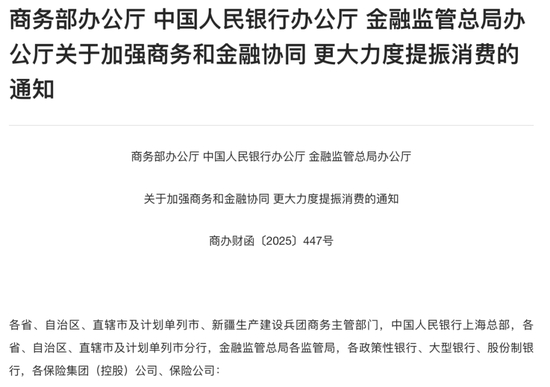
商务部网站12月14日消息,商务部办公厅、中国人民银行办公厅、金融监管总局办公厅发布《关于加强 商务和金融协同 更大力度提振消费的通知》,针对深化商务和金融系统协作、加大消费重点领域金融 支持、扩大政金企对接合作三个方面,提出11项具体举措。 要 点 速 览 鼓励有条件的地方运用数字人民币智能合约红包提升促消费政策实施质效 适当减免汽车以旧换新过程中提前结清贷款产生的违约金 培育新型消费。因地制宜推动新型消费发展,按照风险可控、商业可持续原则,积极探索金融支持首发 经济、绿色消费、健康消费、数字消费、"人工智能+消费"、"IP+消费"等消费新业态新模式的有效举 措,提供更具多样性、差异化的金融服务。引导金融机构与社交电商、直播电商等开展合作,开发适应 互联网特点的业务模式。支持金融机构加强与实体零售、电商平台合作,扩大"一站式"金融服务。在依 法合规、风险可控的前提下,合理适度扩大客户范围,下沉服务"长尾"客户,增强可获得性和便利度。 支持金融机构、大型企业在依法合规的前提下,探索扩大消费积分应用。 用好用足服务消费与养老再贷款 扩大知识产权、科技成果等无形资产质押融资服务 积极探索金融支持首发经济、绿色消费 ...
利好来了!三部门发文:更大力度提振消费
Zhong Guo Zheng Quan Bao· 2025-12-14 09:38
商务部网站12月14日消息,商务部办公厅、中国人民银行办公厅、金融监管总局办公厅发布《关于加强 商务和金融协同更大力度提振消费的通知》,针对深化商务和金融系统协作、加大消费重点领域金融支 持、扩大政金企对接合作三个方面,提出11项具体举措。 要 点速览 鼓励有条件的地方运用数字人民币智能合约红包提升促消费政策实施质效 加快推动个人消费贷款业务发展 培育新型消费。因地制宜推动新型消费发展,按照风险可控、商业可持续原则,积极探索金融支持首发 经济、绿色消费、健康消费、数字消费、"人工智能+消费"、"IP+消费"等消费新业态新模式的有效举 措,提供更具多样性、差异化的金融服务。引导金融机构与社交电商、直播电商等开展合作,开发适应 互联网特点的业务模式。支持金融机构加强与实体零售、电商平台合作,扩大"一站式"金融服务。在依 法合规、风险可控的前提下,合理适度扩大客户范围,下沉服务"长尾"客户,增强可获得性和便利度。 支持金融机构、大型企业在依法合规的前提下,探索扩大消费积分应用。 适当减免汽车以旧换新过程中提前结清贷款产生的违约金 用好用足服务消费与养老再贷款 扩大知识产权、科技成果等无形资产质押融资服务 鼓励商家、 ...
刚刚,利好来了!三部门发布
Xin Lang Cai Jing· 2025-12-14 08:37
Core Viewpoint - The document outlines a notification from three Chinese government departments aimed at enhancing collaboration between the business and financial sectors to boost and expand consumer spending [1][3][16]. Group 1: Strengthening Collaboration - The notification emphasizes the need for improved communication and collaboration between local business and financial departments, encouraging the establishment of cooperative mechanisms to address challenges in financial support for consumer expansion [3][5][19]. - It calls for the integration of fiscal funds, credit resources, and social capital to create a synergistic effect in policy implementation [3][16]. - Local authorities are encouraged to utilize digital RMB smart contract red envelopes to enhance the effectiveness of consumer promotion policies [4][17]. Group 2: Financial Support for Key Consumption Areas - Financial institutions are urged to focus on five key areas: upgrading product consumption, expanding service consumption, fostering new types of consumption, innovating diverse consumption scenarios, and supporting consumer assistance [3][16][20]. - The notification highlights the importance of optimizing financial products and services to better align with consumer needs and promote new consumption models [3][20]. - It suggests that financial institutions should enhance consumer finance services for durable goods and digital products, facilitating better access to credit for consumers [8][20]. Group 3: Expanding Government-Financial-Enterprise Cooperation - The document encourages the collaboration of government, financial institutions, and businesses to conduct various consumer promotion activities and share information effectively [3][12][24]. - It promotes the development of tailored financial products and services that meet the specific needs of different consumer scenarios [12][24]. - The notification also emphasizes the importance of sharing information about key consumer projects to facilitate precise financial services [12][25].

5年来全省累计办理“禁塑”类案件3.9万宗
Hai Nan Ri Bao· 2025-12-12 01:20
Core Insights - The province of Hainan has implemented a comprehensive "plastic ban" for five years, resulting in the handling of 39,000 cases related to plastic restrictions and the confiscation of nearly 200 million prohibited plastic products [1] - The total production and sales of biodegradable products in Hainan reached 27,600 tons with a value of 427 million yuan, marking year-on-year increases of 23.29% and 19.92% respectively [1] - The next phase will transition from "banning plastics" to "managing plastics," focusing on source reduction and establishing a comprehensive recycling and utilization system for plastic waste [2] Group 1 - Hainan has achieved significant milestones in its "plastic ban" initiative, including legislation, local standards, and a traceability management platform for biodegradable products [1] - The province plans to develop a "plastic management" work plan to enhance the governance of plastic pollution across its entire lifecycle, from production to disposal [2] - The initiative aims to promote green practices in various sectors, including encouraging the use of alternative products and implementing green packaging in the logistics industry [2] Group 2 - Hainan will foster a collaborative environment for plastic pollution management by enhancing public awareness and promoting green consumption [3] - The province encourages industries to sign commitment letters and establish monitoring systems to promote self-regulation [3] - Community involvement in public actions against plastic pollution will be encouraged to create a societal consensus on the importance of plastic waste management [3]
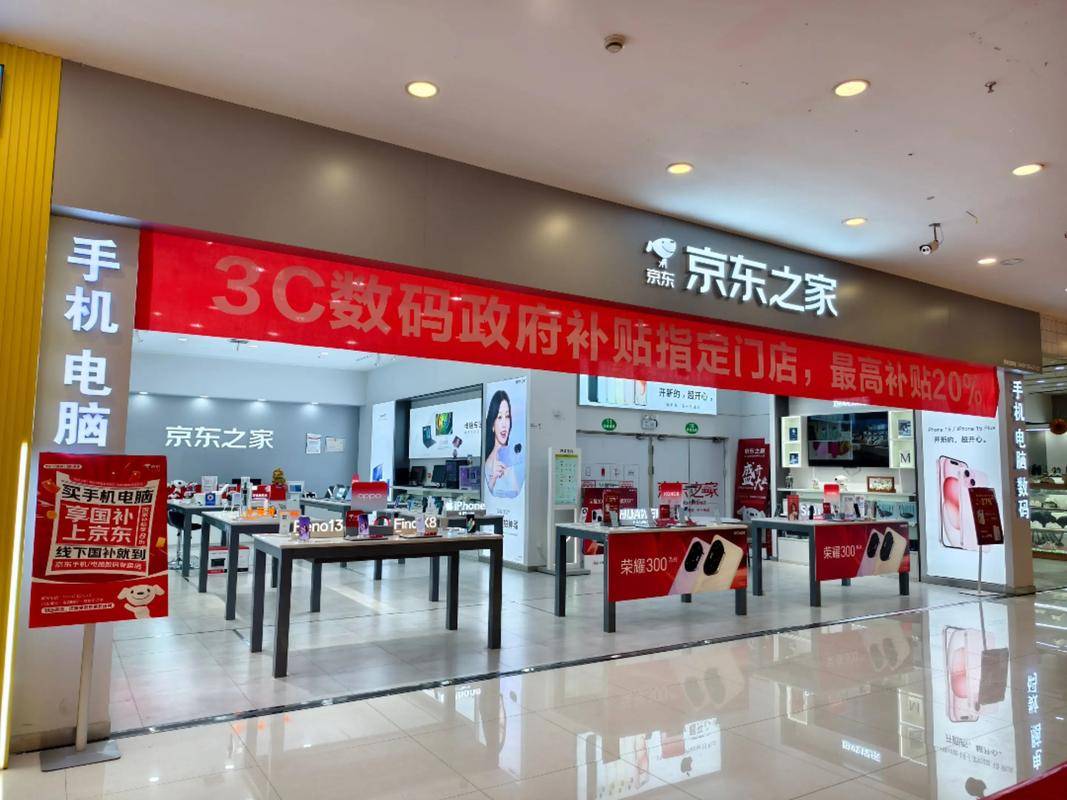
2026年国补政策再升级!5000亿红包来袭,这些领域将迎来爆发
Sou Hu Cai Jing· 2025-12-11 15:45
Core Insights - The 2026 "National Subsidy" policy will continue the "old-for-new" consumption initiative with an increased budget of 500 billion yuan, aimed at stimulating consumption and stabilizing economic growth [1][3][16] Group 1: Policy Overview - The "National Subsidy" policy has shown significant results since its launch in 2024, generating over 2.5 trillion yuan in sales and benefiting 360 million people [3] - The policy will focus on three main upgrades: increasing the subsidy amount, expanding coverage to new sectors, and optimizing the distribution process [4][10] Group 2: Sectoral Impacts - Traditional consumption sectors like home appliances and automobiles are expected to see a second wave of growth, with home appliance subsidies potentially increasing from 12.84 million units to 15 million units [6][8] - The service consumption sector, particularly in tourism and health, is anticipated to become a new focal point, with over 100 billion yuan in tourism vouchers expected to be issued [6][10] - Digital and green consumption will be enhanced, with subsidies for smartphones and energy-efficient appliances, benefiting companies like Apple and Huawei [8][10] Group 3: Economic Implications - The policy aims to boost domestic demand and counter economic pressures, with expectations for retail sales growth to rebound to 5%-6% in 2026 [10] - It promotes industrial upgrades by leading consumption upgrades, encouraging innovation in sectors like electric vehicles and smart home appliances [10][14] Group 4: Investment Opportunities - Key investment targets include essential consumer goods like dairy products and condiments, as well as discretionary items like home appliances and new energy vehicles [15] - The policy is seen as a long-term opportunity for investors, with potential for valuation recovery and growth in the consumer sector [16]





事关消费和外贸 商务部最新回应
Shang Hai Zheng Quan Bao· 2025-12-11 14:04
Group 1: Retail Industry Development - The Ministry of Commerce plans to issue opinions to accelerate innovation and development in the retail industry during the "14th Five-Year Plan" period, focusing on policy support and high-quality development [3] - Key initiatives include enhancing service quality, optimizing inventory, promoting fair competition between online and offline channels, and fostering interaction between new supply and demand [3] - The ministry aims to summarize successful practices from various regions, develop new business models, and stimulate consumption potential, particularly in lower-tier markets [3] Group 2: Second-Hand Goods Market - The second-hand goods market in China is projected to reach a transaction value of 1.69 trillion yuan in 2024, reflecting a 28% year-on-year growth and a 12% average annual growth rate over the past six years [4] - The Ministry of Commerce intends to establish high standards for the second-hand goods industry, ensuring integrity and quality while preventing fraudulent practices [4] - New business models such as rental, auction, and after-sales repurchase will be promoted, along with immersive offline experiences and innovative consumption scenarios [4] Group 3: Cross-Border E-Commerce and Trade - China's foreign trade has shown resilience, with a total import and export value of 41.21 trillion yuan in the first eleven months of the year, marking a 3.6% year-on-year increase [5] - The Ministry of Commerce will implement policies to stabilize foreign trade, support market diversification, and enhance services for enterprises [5] - There is a focus on promoting cross-border e-commerce and overseas warehouses as new business models to improve trade quality and efficiency [5] Group 4: Hainan Free Trade Port - The Hainan Free Trade Port is set to commence operations on December 18, with a goal to become a significant gateway for China's new era of opening up [6] - The Ministry of Commerce reports a 23.1% growth in service trade and a 42.2% increase in actual foreign investment in Hainan during the first three quarters [6] - Future efforts will focus on institutional openness and aligning trade management policies with zero tariffs and other favorable measures [7]
商务部:二手商品市场创新转型趋势明显
Ren Min Wang· 2025-12-11 09:09
Core Insights - The second-hand goods market in China is expanding, with a projected transaction volume of 1.69 trillion yuan in 2024, representing a 28% year-on-year growth and a compound annual growth rate of 12% over the past six years [1] Group 1: Market Development - The Ministry of Commerce has initiated pilot programs for second-hand goods circulation, focusing on cultivating entities, innovating methods, and standardizing order [1] - Policies have been introduced to enhance the recycling system for used household appliances and furniture [1] - The first batch of 10 pilot cities and 28 enterprises has been selected based on a principle of prioritizing quality [1] Group 2: Industry Standards and Innovations - Industry standards, including the revision of terminology related to second-hand goods, have been established [1] - The market is showing a clear trend of innovation and transformation, revitalizing some physical markets [1] Group 3: Future Directions - The industry aims to create a "clean and vibrant" sunrise industry by setting high standards and preventing fraudulent practices [2] - New business models such as rental, auction, and after-sales buyback will be developed to enhance the appeal of second-hand goods [2] - The integration of AI, big data, and cloud computing will be emphasized to drive innovation and deepen the online-offline integration of second-hand goods circulation [2]
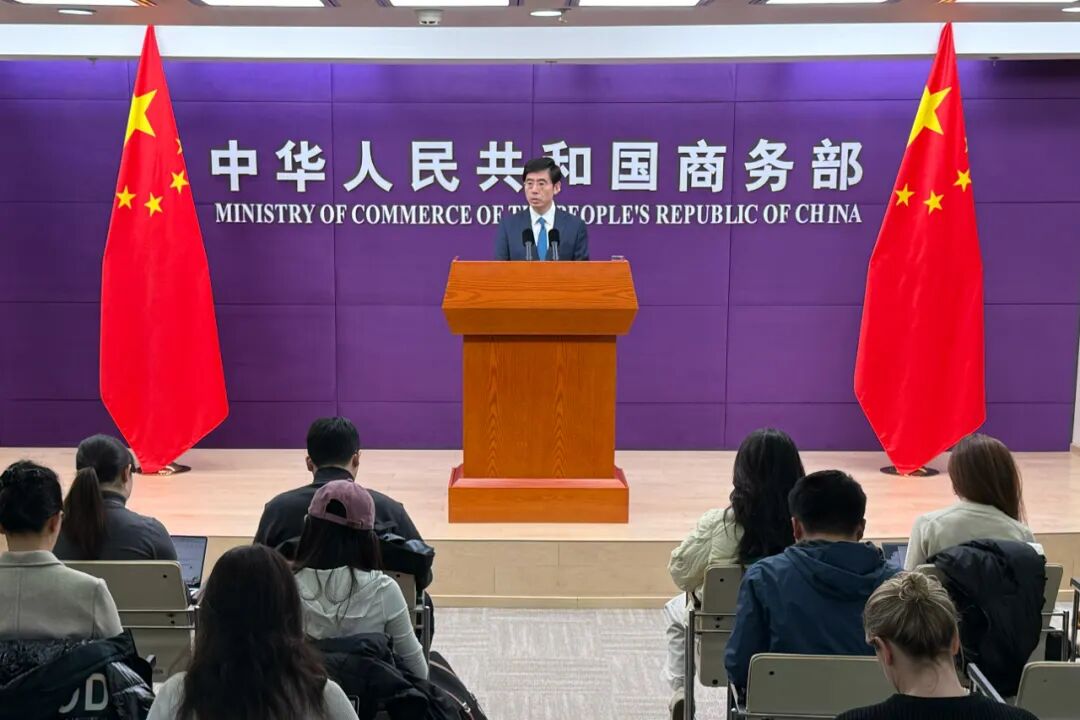
商务部召开例行新闻发布会(2025年12月11日)
Shang Wu Bu Wang Zhan· 2025-12-11 08:25
Group 1: Hainan Free Trade Port - The Hainan Free Trade Port will commence its closure operation on December 18, with the Ministry of Commerce preparing policies to enhance trade management transparency and openness, including the release of a list of prohibited and restricted import goods, and relaxing import management for 98 product codes [3][4] - The Ministry supports innovative development in Hainan by implementing pilot projects for temporary import of repaired and remanufactured products, establishing a cross-border e-commerce comprehensive pilot zone, and expanding service trade, contributing to a 23.1% growth in service trade and a 42.2% increase in actual foreign investment in the first three quarters [3][4] Group 2: Foreign Trade Development - In the first eleven months, China's total goods import and export value reached 41.21 trillion yuan, with a year-on-year growth of 3.6%, showcasing resilience in foreign trade despite global uncertainties [8] - The Ministry plans to implement various policies to stabilize foreign trade, promote market diversification, and support new business models such as cross-border e-commerce and overseas warehouses [8] Group 3: Second-Hand Goods Market - The second-hand goods market in China is expanding, with a projected transaction value of 1.69 trillion yuan in 2024, reflecting a 28% year-on-year growth and a 12% compound annual growth rate over the past six years [6][7] - The Ministry aims to enhance the second-hand goods circulation system by establishing high standards, promoting new business models, and integrating digital technologies to drive innovation in the sector [7]
商务部:有序发展二手商品租赁、竞拍、拆零出售、售后回购等新型业态
Xin Lang Cai Jing· 2025-12-11 08:13
Core Viewpoint - The Ministry of Commerce emphasizes the significant transformation and innovation trends in the second-hand goods market, aiming to develop it into a vibrant industry with high standards and integrity [1] Group 1: Industry Development Strategies - The Ministry of Commerce plans to establish a "clean and vibrant" second-hand goods circulation industry by guiding businesses to adhere to high standards and eliminate fraudulent practices such as selling old as new and inferior as superior [1] - Focus will be placed on new business models and scenarios, promoting the development of second-hand goods rental, auction, unbundled sales, and after-sales repurchase as innovative business formats [1] - The Ministry aims to enhance digitalization in the second-hand goods market by integrating AI, big data, and cloud computing technologies, fostering a deep integration of online and offline sales [1]
国泰君安期货:前瞻中央经济工作会议,期货投资的“几个看点”
Xin Lang Cai Jing· 2025-12-09 05:33
Core Viewpoint - The recent Central Political Bureau meeting serves as a precursor to the Central Economic Work Conference, indicating that a more proactive fiscal policy and moderately loose monetary policy will continue into 2026, suggesting a sustained loose funding environment for the commodity market [3][9]. Group 1: Economic Policy Insights - The combination of "expansive fiscal policy + loose monetary policy" is expected to create a macro backdrop that supports the commodity market [3][9]. - Attention should be paid to the language used in future statements, particularly phrases like "increase macro control" and "strengthen counter-cyclical and cross-cyclical adjustments," which may indicate a stronger policy commitment and boost market sentiment [3][9]. Group 2: Fiscal Policy Considerations - Key focus areas include the deficit rate and the scale of special bonds, which reflect the government's leverage efforts. If these exceed market expectations, it suggests a more aggressive push for economic growth, positively impacting demand for commodities like copper and stock index futures [10][11]. - The allocation of funds will be crucial, whether directed towards "new infrastructure, new urbanization, and major projects," or towards "large-scale equipment updates" and "consumer goods replacement," influencing demand trends in various commodity sectors [11][12]. Group 3: Monetary Policy and Real Estate - The extent of monetary policy adjustments will directly signal liquidity levels. Confirmation of a continued loose monetary stance could lower financing costs and enhance market risk appetite, potentially directing funds into the futures market [12][13]. - The real estate market's stabilization in 2026 is critical for the price trends of black commodities. The absence of specific mentions regarding the real estate market in this year's meeting raises questions about potential new policies to stabilize the sector [13]. Group 4: Market Expectations and New Opportunities - The market often reacts to new expectations, so the conference's potential establishment of quantifiable targets for consumption or investment growth, or emphasis on new investment areas like "AI+" or "green consumption," could inject new trading momentum into relevant sectors [5][12]. - The final outcomes will depend on the official communiqué released after the conference, with potential for increased price volatility during the meeting as market expectations evolve [5][12].