
智能网联汽车

Search documents
国新证券每日晨报-20251017
Guoxin Securities Co., Ltd· 2025-10-17 07:37
Domestic Market Overview - The domestic market experienced a contraction in trading volume with mixed performance on October 16, 2025. The Shanghai Composite Index closed at 3916.23 points, up 0.1%, while the Shenzhen Component Index closed at 13086.41 points, down 0.25%. The STAR Market 50 Index fell by 0.94%, and the ChiNext Index rose by 0.38%. The total trading volume of the A-share market was 1.9487 trillion yuan, continuing to decline from the previous day [1][8][4]. - Among the 30 first-level industries classified by CITIC, 8 industries saw an increase, with coal, banking, and food and beverage sectors leading the gains. Conversely, the steel, non-ferrous metals, and comprehensive sectors experienced significant declines [1][8]. Overseas Market Overview - On the same day, the three major U.S. stock indices all closed lower, with the Dow Jones falling by 0.65%, the S&P 500 down by 0.63%, and the Nasdaq decreasing by 0.47%. Major tech stocks also saw declines, with VISA dropping over 3% and Tesla falling more than 1% [2][4]. Key News Highlights - The 2025 World Intelligent Connected Vehicle Conference opened today, focusing on new trends and developments in the global intelligent connected vehicle industry [12]. - A report indicated that China's ice and snow industry is expected to exceed 1 trillion yuan, reaching 1005.3 billion yuan by 2025, driven by upcoming large-scale winter sports events [15]. - The "Linglong No. 1" global first modular small reactor successfully completed its cold test, laying a solid foundation for future operations [17].
事关智能网联新能源汽车,多部门发声
Di Yi Cai Jing· 2025-10-17 07:19
Core Viewpoint - The Ministry of Industry and Information Technology (MIIT) is set to develop the "14th Five-Year" plan for the intelligent connected new energy vehicle industry, indicating strong policy support for the sector's transformation and upgrade [1] Group 1: Policy and Development Plans - MIIT will organize the compilation of the "14th Five-Year" plan to promote high-quality development in the intelligent connected vehicle industry, focusing on technological innovation and integration with artificial intelligence [1] - The plan will include the establishment of a comprehensive policy framework, acceleration of standards for advanced driver assistance and autonomous driving, and optimization of production access management [1][4] - The "14th Five-Year" period has already seen significant progress, with nearly 100 technical standards published and over 60% of new passenger cars sold equipped with advanced driver assistance features [3] Group 2: Technological Advancements and Applications - The Ministry of Transport has issued implementation opinions on "Artificial Intelligence + Transportation," emphasizing the importance of AI in developing intelligent transportation systems and promoting the application of autonomous driving technologies [4] - The "vehicle-road-cloud integration" pilot program has identified ten functional scenarios aimed at enhancing traffic safety and efficiency through collaborative information sharing [5] - A national AI application pilot base focused on the automotive sector has been initiated, aiming to address common technological bottlenecks in the industry's smart transformation [5] Group 3: Safety and Regulatory Measures - Recent concerns regarding the safety of intelligent connected vehicles have led to 3,230 recalls affecting 120 million vehicles, with 23% of recalls in 2024 attributed to issues with driver assistance systems [4] - The State Administration for Market Regulation is collaborating with MIIT to draft regulations aimed at strengthening oversight of recalls and addressing issues related to misleading advertising and irrational competition [4]

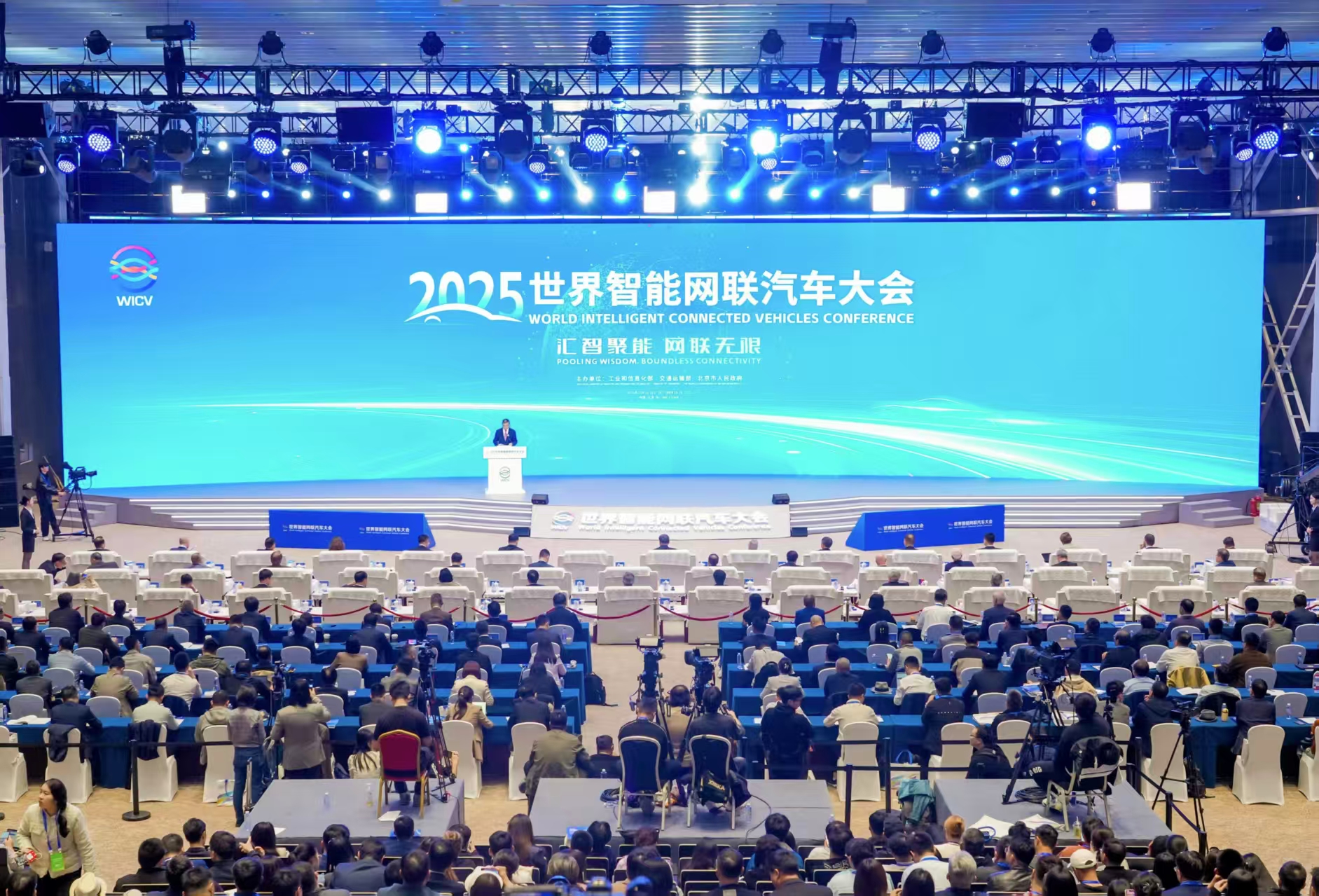
市场监管总局王乃铝:驾驶辅助系统相关召回数量呈上升趋势
Zhong Guo Zheng Quan Bao· 2025-10-17 04:42
Core Viewpoint - The intelligent connected vehicle industry is experiencing explosive technological growth and accelerated commercialization, with L2-level driver assistance systems being a representative technology that directly impacts consumer safety and sustainable industry development [1][2]. Group 1: Industry Trends - The number of recalls related to driver assistance systems has been on the rise, with 2.5561 million vehicles recalled in 2024 due to issues with these systems, accounting for 23% of the total recalls for the year [2]. - The market regulatory authority is innovating the recall supervision system and has established several reporting systems, including those for fire incidents and remote upgrades [2][3]. Group 2: Regulatory Measures - The market regulatory authority, in collaboration with the Ministry of Industry and Information Technology, has issued a notification to strengthen the management of product access, recalls, and software upgrades for intelligent connected vehicles [2]. - There are currently 19 national standards related to automotive product safety and recall management, covering key technologies such as automotive information defects and over-the-air (OTA) updates [3]. Group 3: Safety and Compliance - The complexity of safety issues in intelligent connected vehicles is increasing due to rapid industry development and irrational competition, necessitating higher demands for safety and upgrade supervision [3]. - Companies are encouraged to act as role models for compliance and to clearly communicate to consumers that driver assistance does not equate to autonomous driving, emphasizing the need for driver attention [4].
刘亦功:AI 重塑产业逻辑,一汽以生态共筑智能网联新未来
Huan Qiu Wang· 2025-10-17 04:13
Core Insights - The 2025 World Intelligent Connected Vehicles Conference opened in Beijing, highlighting the transformative impact of AI on the automotive industry and the challenges faced by the sector [1][3] Industry Transformation - AI is evolving from a technical tool to the soul of the industry, reshaping every value chain in the automotive sector, with a shift in competition from horsepower to computing power [3] - The core elements of competition are redefined as core software and hardware technology innovation, data-driven user insights, and agile organizational structures [3] Product Value Model - By 2030, the automotive product value is expected to follow a "442" model, with hardware accounting for 40%, software for 40%, and content services for 20% [3] - The business model is transitioning from one-time hardware sales to a lifecycle operation model that includes software and services, emphasizing electrification, intelligence, and ecosystem expansion [3][4] Technological Innovation - The traditional V-shaped development process is being replaced by an agile closed-loop model of "development - verification - learning," breaking linear supply chain relationships [4] - Tech giants are emerging as new Tier 0.5 platforms, reshaping product experiences and brand positioning [4] User Experience - In the AI era, users prioritize experience value over brand, with consumption scenarios expanding from mere transportation to multifunctional services [4] - Companies must enhance their ecosystem-building capabilities through AI to meet personalized and evolving user demands [4] Company Initiatives - The company is implementing an "AI + three-year action plan" to transition from a traditional manufacturing enterprise to a "mobility technology company" [4] - The development of the "Open Mind" enterprise intelligent life form and the "Qixing Cloud Workbench" supports over 20,000 employees in online collaboration, injecting vitality into the organization [4][5] Product Innovations - The Hongqi brand has launched "Sinan Intelligent Driving" and "Lingxi Cockpit," with advanced features such as a recognition precision 50 times greater than laser radar and a computing power of 1000 TOPS [5] - The company has established 25 intelligent factories across five production bases, upgrading production lines and utilizing over 160,000 industrial equipment data points [5] Industry Challenges - The automotive industry faces three core challenges: lack of self-controlled key technologies, issues with repeated construction and data barriers, and the need for breakthroughs in commercializing L3-level autonomous driving [6][7] - The company emphasizes focusing on seven core elements, including computing power, data, and algorithms, to build an open ecosystem through collaborative efforts [6][7]

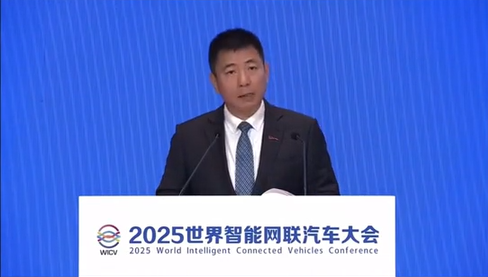
北汽集团张建勇:智能化技术的终极目标是“为人服务”
Bei Ke Cai Jing· 2025-10-17 03:37
Core Viewpoint - The ultimate goal of intelligent technology is to "serve people," shifting product development from being defined by automakers to being user-defined, focusing on practical needs and emotional value [1] Group 1: Company Developments - BAIC Group's Chairman Zhang Jianyong announced the launch of the new Alpha T5, which features an integrated cockpit and driving architecture, enabling full-scene automatic navigation assistance for mainstream market users priced between 100,000 to 150,000 yuan, set to be released at the end of October [1] - In the L3 level domain, BAIC received the first batch of L3 road test licenses in Beijing in 2023 and was included in the first national pilot program in 2024, with over 110,000 kilometers of testing completed by August this year [2] - BAIC is collaborating with Pony.ai to develop a Robotaxi based on the Alpha T5, which has already demonstrated operations in July this year, with plans for a thousand units to be operational by the end of the year [2] Group 2: Industry Challenges and Initiatives - Despite breakthroughs in the domestic intelligent connected vehicle industry, challenges such as insufficient policy coordination, technological silos, and supply chain risks remain, requiring collective efforts from the entire industry [3] - Zhang proposed two initiatives: first, to promote policy coordination to eliminate cross-regional implementation barriers and accelerate the definition of L3 responsibility boundaries; second, to deepen technology sharing by establishing an industry-level autonomous driving data pool and a testing resource platform [3] - The development of intelligent connected vehicles is described as a marathon requiring long-term technological planning, an open mindset for collaboration, and a commitment to safety [4]

雷军:小米汽车已交付约40万辆 呼吁行业共建生态抵制黑公关
Sou Hu Cai Jing· 2025-10-17 02:44
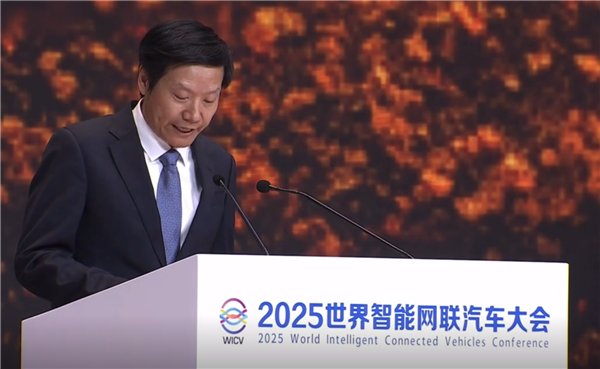
雷军呼吁企业把资源和精力聚焦于科技创新和技术研发上,共同抵制网络水军、黑公关等网络乱象,携手营造积极向上、文明有序的产业发展环境。 雷军同时分享了小米在智能驾驶领域的投入情况。他表示,小米在组合辅助驾驶方面的第一期总投入已达到 57.9 亿元人民币,并组建了一支规模超过 1800 人的智能驾驶专业团队。 谈及行业发展,雷军指出,当前正处于智能网联汽车发展的历史机遇期。他强调,这并非"零和博弈",需要全行业团结协作,通过共建共享来推动智能网联 汽车新生态的繁荣与发展。 【太平洋科技快讯】在 10 月 16 日举办的 2025 世界智能网联汽车大会上,小米集团创始人兼 CEO 雷军公布了小米汽车的交付进展。他透露,自产品上市一 年半以来,小米汽车截至目前已累计交付约 40 万辆。 ...

北汽张建勇:中国智驾从跟跑到领跑,破局挑战需政策协同与技术共享
Huan Qiu Wang· 2025-10-17 02:40
Core Insights - The global intelligent connected vehicle industry is rapidly advancing, with China transitioning from a follower to a leader due to a combination of policy guidance, market drive, and technological breakthroughs [3][4] Group 1: Industry Development - The Chinese intelligent connected vehicle industry has seen significant policy improvements, including the introduction of a comprehensive regulatory framework that covers access and safety responsibilities [3] - Key milestones include the release of pilot lists for intelligent connected vehicle access in 2024 and the implementation of mandatory national standards for information security and software upgrades [3] - The commercial application of intelligent connected vehicles is accelerating, with cities like Beijing, Hangzhou, and Wuhan leading in testing and operational demonstrations [3][4] Group 2: Technological Advancements - Intelligent driving technology is evolving from isolated breakthroughs to systemic upgrades, with a focus on data-driven advancements [3][4] - The transition to intelligent driving 3.0 emphasizes the importance of data, algorithms, and computing power, with a shift from distributed to centralized electronic architectures [3] - North Car Group is developing a proprietary high-end intelligent connected technology system called "Yuanjing," which aims to redefine the interaction between humans, vehicles, and infrastructure [4] Group 3: Company Strategy - North Car Group emphasizes user-centric development, focusing on cost, cycle, quality, and experience through a dual approach of self-research and collaboration [4] - The company has tailored its intelligent connected technology strategies for different vehicle models, achieving significant cost reductions while enhancing features [4] - North Car Group has established strategic partnerships with over 20 leading companies, including Huawei, to foster an open and collaborative ecosystem [4][5] Group 4: Industry Challenges and Proposals - Despite notable achievements, the industry faces challenges such as insufficient policy coordination, technological silos, and supply chain risks [5] - Two key proposals include promoting policy collaboration to clarify operational guidelines and enhancing technical sharing to avoid resource wastage [5] - The development of intelligent connected vehicles is viewed as a long-term collaborative effort, requiring a focus on safety and innovation [5]
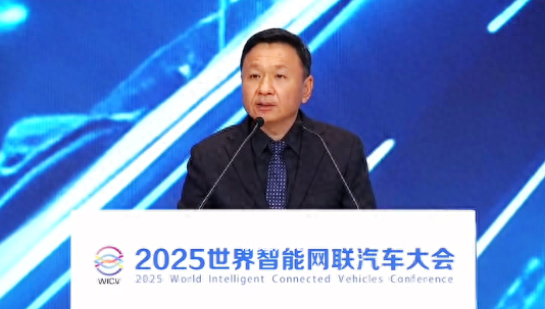
小米SU7事故后雷军首度发声!呼吁共同抵制网络水军、黑公关
Qi Lu Wan Bao· 2025-10-17 02:34
雷军表示,呼吁全行业在政府的指导下,以安全为基础、质量为根本、创新为方向,携手围绕重要的底 层技术和重要的研发领域,把精力集中到科技创新和技术研发上,共同抵制网络水军、黑公关等网络乱 象,一起营造积极向上、文明有序的产业发展环境。未来,小米愿意以更加开放的姿态与所有同行和合 作伙伴携手共同推进行业发展。 据智通财经消息,雷军在小米汽车成都事故后首次公开露面演讲。10月16日,世界智能网联汽车大会, 小米CEO雷军在演讲中表示,智能网联汽车不是零和博弈,需要全行业的团结一致,共建共享智能网联 汽车的新生态,共同推进行业发展。 但是,对于业界关注的"10·13小米SU7成都燃爆事故",雷军只字未提。10月13日凌晨,一辆小米SU7在 成都天府大道发生致死交通事故,救援时车门无法打开。13日下午,成都公安微博发布警情通报,事故 造成司机邓某某死亡,经检测涉嫌酒后驾驶机动车。 此外,据中新经纬消息,雷军还表示小米汽车产品上市一年半的时间,截止目前交付大约40万辆。小米 在组合辅助驾驶方面坚持投入,第一期总投入57.9亿元,智能驾驶团队规模超过1800人。"我们小米 YU7智能化配置非常高,而且我们下决心全系一个配置, ...
智能早报丨李飞飞团队发布世界模型新成果;吉利旗下具身智能公司成立5个月就解散
Guan Cha Zhe Wang· 2025-10-17 02:28
Group 1: RTFM Model Release - The RTFM (A Real-Time Frame Model) was launched by Li Feifei's team, capable of real-time operation, persistence, and 3D consistency, running on a single H100 GPU [1] - The model is designed based on three core principles: efficiency, scalability, and persistence, allowing real-time inference at interactive frame rates with just one H100 GPU [1] - RTFM can autonomously learn from massive video data without relying on explicit 3D representations, and users can interact with it indefinitely, with all scenes permanently retained [1] Group 2: OneStar Robotics Dissolution - OneStar Robotics, a company founded by Li Xingxing, son of Geely's founder, has announced its dissolution after being established in May 2025 [2][3] - The company was positioned in the "embodied intelligence" sector and had received investments from notable firms, including Baidu Ventures [2] - The dissolution may lead to a split where the original platform and business return to Geely, while the technology team may pursue independent ventures [2] Group 3: Smart Connected Vehicles Conference - The 2025 World Intelligent Connected Vehicle Conference has commenced, focusing on the establishment of a national AI automotive application pilot base [4] - The Ministry of Industry and Information Technology aims to advance "vehicle-road-cloud integration" applications and optimize industry standards and competition [4] - Xiaomi's founder, Lei Jun, emphasized the importance of industry unity in developing smart connected vehicles, advocating for collaboration and shared growth [4][6] Group 4: AI and Robotics Developments - Microsoft has launched a series of AI upgrades for Windows 11, enhancing the Copilot feature to support natural interactions through voice, vision, and actions [6] - The Ministry of Industry and Information Technology has initiated a "millisecond computing" action plan, targeting a 70% coverage rate for millisecond latency in urban areas by 2027 [7] - Zhiyuan Robotics has released the new industrial-grade interactive robot, G2, which has already secured several hundred million yuan in orders and is set for commercial delivery [8] Group 5: AI Innovations and Collaborations - Google has updated its Veo 3.1, enhancing narrative and audio control capabilities, and integrating with Gemini API and Vertex AI [9] - Oracle has introduced the OCI Zettascale10, a large-scale AI supercomputer capable of connecting tens of thousands of NVIDIA GPUs, achieving peak performance of 16 zettaFLOPS [10] - Yingmu Technology has launched the INMO GO3 AI smart glasses and plans to create a global AI+AR ecosystem in collaboration with Tencent and Ant Group [11]





2025世界智能网联汽车大会 || 宝马集团董事高乐:宝马携手中国合作伙伴以责任守护创新,以合作开创未来
Zhong Guo Qi Che Bao Wang· 2025-10-17 02:27
Core Insights - BMW emphasizes the importance of independent innovation and open collaboration in navigating the significant transformation of the global automotive industry [2][3] - The company views China as not only its largest single market but also a key driver of technological innovation and automotive industry transformation [2] - BMW is accelerating the development of a smart ecosystem in China, collaborating with technology partners like Huawei and Alibaba to enhance core technologies in smart cockpits and autonomous driving [3] Group 1 - BMW's strategy focuses on integrating local innovation with its core technological advantages to meet Chinese consumer expectations for smart mobility [2] - The new generation of vehicles showcases BMW's advancements in electric, digital, and sustainable development, featuring technologies like the sixth-generation eDrive and panoramic iDrive [2] - The company advocates for responsible use of artificial intelligence, ensuring that all smart technologies undergo rigorous safety testing before implementation [3] Group 2 - BMW aims to drive the automotive industry towards a smarter and more sustainable future by leveraging its R&D capabilities and local partnerships in China [3] - The emphasis on safety as a non-negotiable baseline reflects BMW's commitment to responsible innovation in the automotive sector [3]
