地缘政治

Search documents
美伊冲突未来如何演绎?对油价有何影响?
2026-02-24 14:16
Summary of Conference Call Industry or Company Involved - The conference call primarily discusses the geopolitical situation involving Iran and the United States, with a focus on the implications for energy prices and regional stability. Core Points and Arguments 1. **Iran Conflict and U.S. Military Presence** The conflict involving Iran has reached a critical stage, with the U.S. increasing its military presence in the region. The potential for a large-scale conflict remains high, although immediate military action is not anticipated due to U.S. preparedness issues [3][4][36]. 2. **Dialogue Mechanism Between U.S. and Iran** A new dialogue mechanism has been established between the U.S. and Iran after a period of no communication. This dialogue is crucial for addressing tensions and is seen as a positive development despite the underlying risks [5][6][19]. 3. **Negotiation Locations and Dynamics** Initial negotiations were proposed to take place in Istanbul, but Iran preferred Oman as a neutral ground. This shift indicates Iran's desire for a more favorable negotiation environment, reflecting its internal political dynamics and economic pressures [15][22]. 4. **Iran's Economic Challenges** Iran continues to face significant economic difficulties, which are exacerbated by external sanctions and internal political issues. The government is under pressure to stabilize the economy, which may drive it to seek dialogue with the U.S. [11][12][14]. 5. **Cultural and Religious Factors in Iran** The significance of cultural and religious practices, such as the 40-day mourning period, plays a role in the political landscape and public sentiment in Iran. This could influence the timing and nature of protests and governmental responses [9][10]. 6. **U.S. Demands in Negotiations** The U.S. is expected to demand comprehensive discussions on Iran's nuclear capabilities, missile technology, and regional policies. However, Iran is resistant to discussing issues beyond its nuclear program, indicating a significant divide in negotiation agendas [17][23][30]. 7. **Potential for a Transitional Agreement** There is a possibility of reaching a transitional or phased agreement rather than a comprehensive deal. This could involve Iran making some concessions on its nuclear program while maintaining its right to develop nuclear energy [27][30][33]. 8. **Military Readiness and Potential Conflict** The U.S. military is preparing for potential conflict, with increased naval presence in the region. This military readiness could escalate tensions if diplomatic efforts fail [36][37]. Other Important but Possibly Overlooked Content 1. **Impact of Domestic Politics on Negotiations** The internal political landscape in Iran, including the influence of hardliners and reformists, will significantly affect the negotiation process and the government's ability to make concessions [12][14][28]. 2. **International Atomic Energy Agency (IAEA) Involvement** Future negotiations will likely require the involvement of the IAEA to verify Iran's nuclear activities, which adds another layer of complexity to the discussions [24][31]. 3. **Israel's Influence on U.S. Policy** The relationship between Israel and the U.S. may not be as influential in shaping U.S. policy towards Iran as previously thought, indicating a potential shift in how the U.S. approaches negotiations [28][30]. 4. **Public Sentiment and Protests in Iran** The potential for renewed protests in Iran due to economic dissatisfaction and political repression remains a critical factor that could influence the government's negotiation stance [11][14].
策略周度思考20260224:春节假期,全球重点仍是地缘政治-20260224
Orient Securities· 2026-02-24 14:15
Group 1 - The report highlights three major global events during the Spring Festival that warrant attention: changes in the Iran situation, fluctuations in U.S. tariff issues, and weak U.S. economic data coupled with strong inflation, which increases uncertainty regarding future Federal Reserve interest rate cuts [4][10][11] - The market's reaction indicates that the current global focus remains on geopolitical issues, followed by the outlook for Federal Reserve rate cuts. The three potential impacts identified are: increased likelihood of geopolitical conflict due to U.S.-Iran tensions, downward revision of global demand expectations due to weak U.S. economic data, and downward revision of rate cut expectations due to rising U.S. inflation [4][11][12] - Asset price performance during the Spring Festival reflects these dynamics: the downward revision of rate cut expectations has led to a rise in the U.S. dollar index and U.S. Treasury yields, while oil prices have increased despite lower demand expectations, and both gold and oil prices have risen amid heightened geopolitical tensions [4][12] Group 2 - Domestic data during the Spring Festival showed mixed performance, with strong figures in dining and travel but weaker box office results. Notably, the average daily sales of key retail and dining enterprises increased by 8.6% compared to the same period in 2025, and cross-regional travel reached a historical high of 35.3 million trips, up 12.3% year-on-year [14] - The report notes that the Chinese yuan exchange rate remained stable, while Hong Kong stocks exhibited weaker performance during the same period [14]
杨华曌:现货黄金价格涨跌走势分析及日内多空操作建议
Xin Lang Cai Jing· 2026-02-24 12:30
Core Viewpoint - The gold market is experiencing a significant pullback after reaching a monthly high of $5230, indicating a shift from short-term buying to profit-taking, with U.S. monetary policy being a key variable influencing gold prices [1][4][5]. Group 1: Market Dynamics - Gold prices showed a clear upward trend before retreating, with market participants moving towards profit-taking [1][4]. - The U.S. Federal Reserve's recent meeting minutes indicate that several officials believe that a new round of easing should not be pursued until inflation trends stabilize [1][4]. - Changes in U.S. trade policy, including new global tariff proposals by President Trump, have raised concerns about global economic growth, impacting market sentiment [5]. Group 2: Geopolitical Factors - Ongoing geopolitical tensions, particularly in the Middle East, continue to pose potential conflict risks, with the market closely monitoring U.S.-Iran nuclear negotiations [5]. - Such military conflict risks typically increase demand for safe-haven assets like gold, providing medium to long-term support for prices [5]. Group 3: Technical Analysis - The overall trend for gold remains bullish, but it has entered a structural adjustment phase after reaching a peak around $5238 [7]. - The price is currently above long-term moving averages, but there is a notable distance between the price and these averages, indicating a potential need for a return to the mean [7]. - Key support levels are identified around the 50-day moving average, while the 200-day moving average remains significantly below current prices, suggesting that the long-term bullish structure is intact as long as mid-term support is not breached [7].

能源日报-20260224
Guo Tou Qi Huo· 2026-02-24 12:25
| | | 010-58747784 gtaxinstitute@essence.com.cn 【原油】 春节期间,国际油价持续走高,布伦特原油主力合约逼近72美元/桶,WTI原油最高触及67美元/桶,均创下2025 年8月以来新高。本轮上涨始于美伊第二轮谈判后局势未缓反趋紧张,地缘风险升温:随后2月20日EIA数据显示 美国原油及汽油库存超预期去库,进一步强化了涨势。当前美伊对峙持续升级,油价在阶段性高位维持强势, 节后内盘SC期货有所补涨。美国保持军事威慑但目前冲突整体仍在可控范围。若后续局势演变为有限打击或全 面失控,原油有望获得更高地缘溢价。未来两周将是美伊走向关键窗口,地缘政治脉冲仍将主导油价波动。 【燃料油&低硫燃料油】 | | | | 原油 | ★☆★ | | --- | --- | | 燃料油 | ★☆★ | | 低硫燃料油 ★☆☆ | | | 沥青 | ★☆☆ | 能源日报 2026年02月24日 王盈敏 中级分析师 F3066912 Z0016785 李海群 中级分析师 F03107558 Z0021515 【星级说明】红色星级代表预判趋势性上涨,绿色星级代表预判趋势性下跌 ★☆☆ 一颗星 ...
怎么看当前我国发展面临的国际国内形势
Xin Lang Cai Jing· 2026-02-24 12:09
Group 1 - The core viewpoint emphasizes that 2025 marks the end of the "14th Five-Year Plan," showcasing significant achievements despite challenges, with a focus on high-quality development and resilience in the economy [1] - The current geopolitical landscape is characterized by increased instability, with regional conflicts and a shift in international power dynamics impacting global trade and commodity prices [3] - The World Trade Organization predicts a decline in global goods trade growth from 2.4% in 2025 to 0.5% in 2026, indicating a fragmented international economic order [3] Group 2 - Domestic economic challenges include a mismatch between strong supply and weak demand, with insufficient growth in consumption and investment, leading to negative investment growth in some major provinces [4] - Many enterprises face operational difficulties due to market imbalances and competition, with small and micro enterprises particularly affected by cash flow pressures [4] - Key risk areas include financial strain on local governments and ongoing adjustments in the real estate market, highlighting the need for continued efforts to address these issues [4]
国投期货能源日报-20260224
Guo Tou Qi Huo· 2026-02-24 11:10
| | | | 原油 | ★☆★ | | --- | --- | | 燃料油 | ★☆★ | | 低硫燃料油 ★☆☆ | | | 沥青 | ★☆☆ | 能源日报 2026年02月24日 王盈敏 中级分析师 F3066912 Z0016785 李海群 中级分析师 F03107558 Z0021515 010-58747784 gtaxinstitute@essence.com.cn 【原油】 春节期间,国际油价持续走高,布伦特原油主力合约逼近72美元/桶,WTI原油最高触及67美元/桶,均创下2025 年8月以来新高。本轮上涨始于美伊第二轮谈判后局势未缓反趋紧张,地缘风险升温:随后2月20日EIA数据显示 美国原油及汽油库存超预期去库,进一步强化了涨势。当前美伊对峙持续升级,油价在阶段性高位维持强势, 节后内盘SC期货有所补涨。美国保持军事威慑但目前冲突整体仍在可控范围。若后续局势演变为有限打击或全 面失控,原油有望获得更高地缘溢价。未来两周将是美伊走向关键窗口,地缘政治脉冲仍将主导油价波动。 【燃料油&低硫燃料油】 | | | 春节假期期间,受美伊冲突持续发酵推动,外盘原油期货大幅上涨。今日开盘后,燃料油与低 ...
PTA期货:原油带动PTA高开走高
Ning Zheng Qi Huo· 2026-02-24 10:32
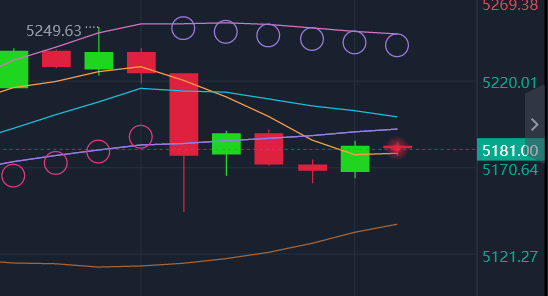
Report Summary 1. Report Industry Investment Rating No information provided in the report. 2. Core Viewpoints - The market is still concerned about the uncertainty of US - Iran relations, and the Russia - Ukraine peace talks have no substantial progress. International oil prices rose during the Spring Festival. The "talk - and - fight" situation between the US and Iran creates uncertainty as Trump's "10 - 15 day ultimatum" to Iran approaches. Driven by crude oil, PTA futures opened higher and trended up after the holiday [3]. - The demand side is weak, the balance sheet continues to accumulate inventory, and PTA still faces significant de - stocking pressure. The strengthening of oil prices due to geopolitical reasons provides some support to the market. In the short term, it is mainly driven by the strengthening of crude oil [3]. 3. Summary by Relevant Catalogs Market Review and Outlook - The market is worried about the uncertainty of US - Iran relations and the lack of progress in Russia - Ukraine peace talks. International oil prices rose during the Spring Festival. The "talk - and - fight" between the US and Iran and the approaching ultimatum bring uncertainty. PTA futures opened higher and rose after the holiday due to the influence of crude oil [3]. - The demand - side balance sheet accumulates inventory, and PTA has large de - stocking pressure. Geopolitical factors support the market, and in the short term, it is driven by the strengthening of crude oil [3]. Attention Factors - Polyester operating rate, PTA maintenance, loom operating rate, PX adjustment demand, and crude oil trend should be focused on [4]. Weekly Changes in Fundamental Data | Indicator | Unit | Latest Week | Previous Period | Weekly Change | Weekly Change Rate | Frequency | | --- | --- | --- | --- | --- | --- | --- | | PTA futures (continuous) | Yuan/ton | 5130.00 | 5122.00 | 8.00 | 0.16% | Daily | | PTA production | 10,000 tons | 145.54 | 146.42 | - 0.88 | - 0.60% | Weekly | | Polyester chip operating rate | % | 73.95 | 78.93 | - 4.98 | - 6.31% | Weekly | | Jiangsu and Zhejiang loom operating rate | % | 11.76 | 22.41 | - 10.65 | - 47.52% | Weekly | | PXN | Yuan/ton | 310 | 288 | 22.00 | 7.64% | Daily | | PTA cash - flow cost | Yuan/ton | 4958 | 4952 | 6.00 | 0.12% | Daily | [5] PX - Related Analysis - **PX Spot and Futures Market Review**: Multiple charts show PX futures closing prices, factory prices in East China, prices in Taiwan, and relevant price differences [7][8][10]. - **PX Supply Situation Analysis**: Charts display PX production in Asia and China, monthly import volume and its year - on - year change, operating rates in China and Asia, and PX inventory [13][17][19]. PTA - Related Analysis - **PTA Spot and Futures Market Review**: A chart shows the continuous closing price of PTA futures in China and the mainstream price in East China [21]. - **PTA Supply Situation Analysis**: Charts present PTA monthly production, operating rate, and social inventory [23][26]. - **PTA Consumption Situation Analysis**: Charts show PTA export, monthly production of polyester filaments and staple fibers, operating rates of polyester chips, filaments, and staple fibers, and the operating rate of looms in Jiangsu and Zhejiang [28][30][32]. - **Cost - Profit Analysis**: A chart shows PTA spot price in East China, cash - flow cost, and profit [39].
原油期货:原油获得地缘溢价
Ning Zheng Qi Huo· 2026-02-24 10:32
Report Summary 1. Report Industry Investment Rating - Not provided in the given content 2. Core Viewpoints - Due to the unclear situation between the US and Iran during the holiday, crude oil has obtained a geopolitical premium. The US and Iran are in a tense stand - off of "talking while fighting", and there is still uncertainty as Trump's "10 - 15 day ultimatum" to Iran approaches. Brent crude oil rose 3.51% or 5.81% this week [2]. - OPEC+ has suspended production increases in the first quarter, and eight core member countries will hold an online meeting on March 1st to make a final decision. Russian crude oil exports are at a low level, and there is room for an increase if the "Russia - Ukraine peace agreement" is reached. US production remains high with a low growth rate, and the number of rigs and new wells has been stable recently. In the medium term, the US may increase investment in Venezuela's oil and gas industry, and Venezuela's production capacity is expected to gradually recover. Overall, there is still pressure on the supply growth rate, with short - term focus on Iran (geopolitical fermentation) and long - term focus on OPEC+ policies, US, and Russian production changes [2]. 3. Summary by Relevant Catalogs Market Review and Outlook - The situation between the US and Iran is unclear, and crude oil has obtained a geopolitical premium. The US and Iran are in a "talking while fighting" stand - off, and uncertainty remains as the ultimatum approaches. Brent crude oil had a weekly increase [2]. - The latest monthly report of the International Energy Agency shows that the global crude oil inventory accumulation rate in 2025 was the fastest since 2020, with an increase of 477 million barrels. OECD countries' inventory exceeded the 5 - year average for the first time in 4 years [2]. Future Market Outlook - OPEC+ has suspended production increases in Q1, and an online meeting will be held on March 1st. Russian exports are low, with potential for recovery. US production is high with low growth, and Venezuela's capacity may recover. Supply growth pressure exists, with short - term focus on Iran and long - term on OPEC+ policies, US, and Russian production [2]. Factors to Watch - Geopolitical factors and weekly crude oil data [3] Weekly Changes in Fundamental Data - **Price Changes**: SC crude oil futures rose 7.80% to 506.46 yuan/barrel; Oman crude oil spot fell 1.23% to 67.25 dollars/barrel; Brent crude oil futures rose 4.99% to 71.50 dollars/barrel; WTI crude oil futures rose 4.44% to 66.33 dollars/barrel [4]. - **Supply Changes**: US crude oil production increased 3.93% to 13,735 thousand barrels per day [4]. - **Inventory Changes**: US crude oil inventory decreased 0.12% to 419,815 thousand barrels [4]. - **Profit Changes**: The comprehensive refinery profit increased 35.81% to 895 yuan/ton [4]
原油现货市场日报-20260224
Yin He Qi Huo· 2026-02-24 10:14
研究所 原油研发报告 原油日报 2026 年 2 月 24 日 原油现货市场日报 | | 因韩国船东大规模押注及地缘政治紧张升级推高费率, 长期锁定超级 油轮的成本已飙升至创纪录水平。 | | --- | --- | | 贸易物流 | 一艘载有印度柴油的油轮已停靠欧洲最大港口。 此前部分贸易商曾对 | | | 可能违反针对俄罗斯原油制燃料的新制裁表示谨慎, 此次到港因此备 | | | 受关注。 | | | 雪佛龙公司与俄罗斯卢克石油公司签署巨型油田独家谈判协议后, 已 | | | 成为接管伊拉克第二大油田综合体的最有力竞争者。 | | 油田管道 | 数据显示, 今年1月美国对欧洲柴油出口量创历史新高, 这主要源于欧 | | | 洲加强针对俄罗斯原油制燃料的进口禁令, 同时俄罗斯折扣柴油在巴 | | | 西市场挤占了美国燃料份额。 | | | 英国宣布对俄实施 297 项新制裁, 剑指能源收入与军事装备供应商。 | | | 随着匈牙利与斯洛伐克叫停相关措施, 欧盟未能批准新一轮对俄制裁 | | 地缘政治 。 | 在乌克兰战争进入第五年之际, 此举暴露出欧盟内部的分歧。 | | | 周二发布的数据显示, 过去12 ...
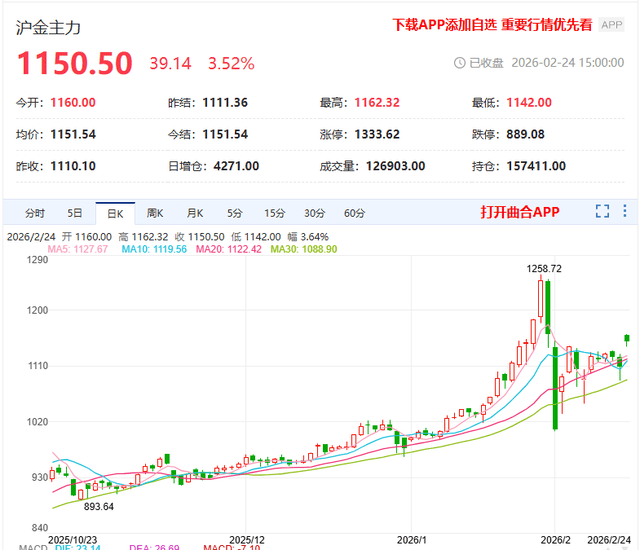
瑞银放猛料:黄金年中涨至6200美元
Sou Hu Cai Jing· 2026-02-24 09:30
Group 1 - UBS predicts that gold prices could rise to $6,200 per ounce by mid-2026, an increase of over $1,000 from current levels [1] - The primary reasons for this expected increase include heightened geopolitical tensions, particularly in Iran, where the U.S. has deployed two aircraft carriers and multiple fighter jets, indicating a potential for conflict [1][2] - The second key factor is the anticipated monetary policy of the Federal Reserve, which is expected to lower interest rates twice by 0.25 percentage points each by the end of September 2026, leading to a weaker dollar and lower real interest rates, further supporting gold prices [2] Group 2 - Current data shows that while U.S. employment and inflation are slowing, some sectors are improving under the influence of potential Fed rate cuts, leading to a cautious but optimistic outlook for gold prices [4] - Concerns over trade tensions and geopolitical risks are driving early investments in precious metals, providing price support amid rising forecasts from major institutions [4][5] - The market is likely to be influenced more by U.S. economic data affecting Fed policy expectations and geopolitical disturbances, with a strong but fluctuating gold price outlook [5]