货币政策

Search documents
新华鲜报|平稳开局!开年首月社会融资规模增量达7.22万亿元
Xin Hua She· 2026-02-14 01:38
Core Viewpoint - The financial data for January 2026 indicates a strong start to the year for China's economy, supported by a significant increase in social financing and a favorable monetary policy environment [1][3][4]. Group 1: Financial Performance - In January 2026, the social financing scale increased by 7.22 trillion yuan, setting a historical record for the same period [1]. - The balance of RMB loans grew by 6.1% year-on-year, while the stock of social financing increased by 8.2% [3]. - The broad money supply (M2) reached 347.19 trillion yuan, with a year-on-year growth rate of 9%, reflecting a moderately loose monetary policy [4]. Group 2: Loan Dynamics - In January, RMB loans increased by 4.71 trillion yuan, with corporate loans accounting for 4.45 trillion yuan, indicating strong demand from enterprises [4]. - The balance of inclusive small and micro loans reached 37.16 trillion yuan, growing by 11.6% year-on-year, while medium to long-term loans in the service sector (excluding real estate) reached 60.03 trillion yuan, up by 9.2% [4]. Group 3: Consumer Activity - The consumer market showed robust activity, with personal consumption loans supported by government policies and increased demand for goods and services [4]. - In January, household loans increased by 456.5 billion yuan, with short-term loans rising by 109.7 billion yuan [4]. Group 4: Financing Costs - The average interest rate for newly issued corporate loans was approximately 3.2%, down by about 20 basis points year-on-year, while the rate for personal housing loans remained stable at 3.1% [7]. - The low financing costs reflect a relatively abundant credit supply and the effectiveness of financial support to the real economy [7]. Group 5: Policy Support - The People's Bank of China has implemented various monetary policies to support the real economy, including structural interest rate cuts and the development of technology, green, and inclusive finance [3][7]. - The ongoing support from a moderately loose monetary policy is expected to enhance financial services and stimulate economic growth [7].


1月社会融资规模增量7.22万亿元,其中政府债券融资占比为何创近年新高?
Sou Hu Cai Jing· 2026-02-14 01:08
Group 1 - The core viewpoint of the article highlights that the social financing scale in January 2026 reached 7.22 trillion yuan, with government bond financing at 976.4 billion yuan, marking the highest proportion in nearly five years at 13.5% [1][3] - Government bond financing saw a year-on-year increase of 283.1 billion yuan, contributing significantly to the total social financing, while the increase in RMB loans was 4.71 trillion yuan, which was a decrease of 420 billion yuan year-on-year [3][4] - The article emphasizes the collaborative efforts of fiscal and monetary policies, with the National Development and Reform Commission advancing 295 billion yuan for construction projects, and the central bank lowering the structural tool interest rate by 0.25 percentage points, releasing approximately 770 billion yuan in low-cost funds [4][5] Group 2 - The financing structure is undergoing adjustments during the economic transformation period, with traditional manufacturing credit demand slowing and emerging industries relying on long-term capital [5][6] - The article notes that some new bonds are used to replace high-interest hidden debts, with Liaoning reducing its weighted interest rate to 2.21%, saving over 300 million yuan in interest [5][6] - The government bond high proportion is expected to continue in the short term, with infrastructure investment growth likely to rebound, although there are potential challenges regarding rising debt rates in some provinces [6][7] Group 3 - There is a need to optimize the financing structure in the long term, with a focus on enhancing direct financing, as corporate bond financing in January was only 503.3 billion yuan, and equity financing was 29.1 billion yuan [7] - The article suggests deepening policy collaboration, emphasizing the need for financial support to align with fiscal subsidies and risk compensation [7] - The conclusion indicates that the high proportion of government bonds is not merely a result of excessive liquidity but rather a proactive approach underpinned by active fiscal policies in a supportive monetary environment [7]

中国1月信贷数据重磅发布,政府债成新增社融主要支撑
Huan Qiu Wang· 2026-02-14 01:03
Group 1 - The core point of the article highlights that in January, the social financing scale increased by 7.22 trillion yuan, which is 166.2 billion yuan more than the same period last year, indicating a positive trend in financing [1] - The increase in RMB loans was 4.71 trillion yuan, with a year-end balance of 276.62 trillion yuan, reflecting a year-on-year growth of 6.1% [1] - M2 and M1 growth rates were reported at 9% and 4.9% year-on-year, respectively, indicating a healthy liquidity environment [1] Group 2 - The analysis from Huatai Securities points out that the net issuance of government bonds, short-term loans to enterprises, and short-term loans to residents contributed significantly to the new social financing, with respective increases of 283.1 billion, 310 billion, and 159.4 billion yuan [1] - Conversely, there were declines in bill financing, medium to long-term loans to enterprises, and medium to long-term loans to residents, which detracted from the new social financing by 359 billion, 280 billion, and 146.6 billion yuan respectively [1] - The report suggests that the combination of strong credit growth and significant foreign exchange inflows will help improve the real economy and market liquidity [1] Group 3 - In January, the average weighted interest rate for new corporate loans was approximately 3.2%, down about 20 basis points from the same period last year, while the average weighted interest rate for new personal housing loans remained stable at 3.1% [3] - The central bank has introduced a series of monetary and financial policies to support the real economy since the beginning of 2026, which are expected to aid in the structural transformation and optimization of the economy [3] - Experts indicate that while the monetary policy adjustments are one-time measures, their impact on the real economy will be ongoing, emphasizing the importance of observing cumulative effects [3]
1月末M2余额增长9% 金融有力支持经济平稳开局
Zhong Guo Xin Wen Wang· 2026-02-14 00:36
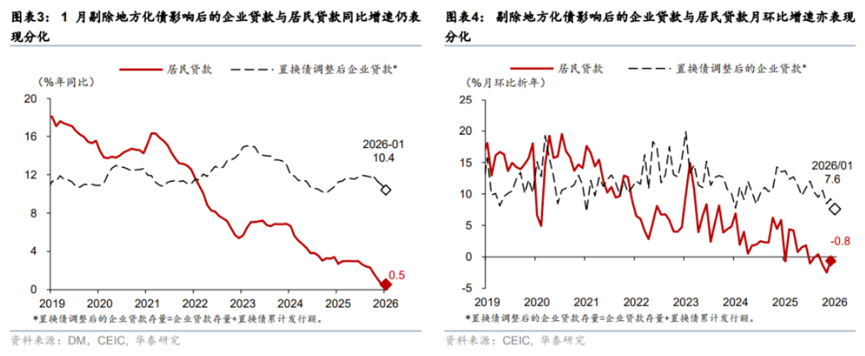
Group 1 - The People's Bank of China reported that the broad money supply (M2) reached 347.19 trillion yuan at the end of January, reflecting a year-on-year growth of 9%, which is 0.5 percentage points higher than the previous month and 2 percentage points higher than the same period last year, indicating a moderately loose monetary policy [1] - The increase in M2 growth rate is attributed to a base effect, as January 2025 saw an addition of approximately 5 trillion yuan, which is considered low compared to recent years, and is also linked to positive trends in the capital market at the beginning of the year [1] - Narrow money supply (M1) stood at 117.97 trillion yuan at the end of January, with a year-on-year increase of 4.9%, while the currency in circulation (M0) amounted to 14.61 trillion yuan, growing by 2.7%, with a net cash injection of 519.1 billion yuan in January [1] Group 2 - Several banks reported that the approval pace for loans in the infrastructure sector has significantly accelerated in the first quarter of this year, with a substantial year-on-year increase in loan disbursement [2] - In January, new renminbi loans increased by 4.71 trillion yuan, with household loans rising by 456.5 billion yuan, including a short-term loan increase of 109.7 billion yuan and a medium-to-long-term loan increase of 346.9 billion yuan [2] - Corporate loans increased by 4.45 trillion yuan, with short-term loans rising by 2.05 trillion yuan and medium-to-long-term loans increasing by 3.18 trillion yuan, while bill financing decreased by 873.9 billion yuan [2]
1月末中国广义货币余额同比增9% 新增人民币贷款4.71万亿元
Sou Hu Cai Jing· 2026-02-14 00:09
Group 1 - The People's Bank of China reported that the broad money supply (M2) reached 347.19 trillion yuan at the end of January, reflecting a year-on-year growth of 9%, which is 0.5 percentage points higher than the previous month and 2 percentage points higher than the same period last year, indicating a moderately loose monetary policy [1] - The increase in M2 growth rate is attributed to a base effect, as January 2025 saw an addition of approximately 5 trillion yuan, which is considered low compared to recent years. Additionally, the positive performance of the capital market at the beginning of the year is also a contributing factor [1] - Narrow money supply (M1) stood at 117.97 trillion yuan at the end of January, with a year-on-year increase of 4.9%, while the currency in circulation (M0) amounted to 14.61 trillion yuan, reflecting a year-on-year growth of 2.7%. A net cash injection of 519.1 billion yuan was recorded in January [1] Group 2 - Several banks reported an accelerated approval pace for infrastructure loans in the first quarter of this year, with a significant year-on-year increase in loan disbursement. In January, new renminbi loans increased by 4.71 trillion yuan [2] - Household loans increased by 456.5 billion yuan in January, with short-term loans rising by 109.7 billion yuan and medium to long-term loans increasing by 346.9 billion yuan. Meanwhile, corporate loans rose by 4.45 trillion yuan, with short-term loans up by 2.05 trillion yuan and medium to long-term loans increasing by 3.18 trillion yuan, while bill financing decreased by 873.9 billion yuan [2] - Non-bank financial institution loans decreased by 188.2 billion yuan [2]
贝森特力推沃什听证会,关键议员回话“不放行”!
Xin Lang Cai Jing· 2026-02-13 23:20
美国财长贝森特周五表示,尽管有位关键参议员对提名持保留态度,参议院金融委员会已同意推进对总 统特朗普提名沃什接任美联储主席的确认听证会。 贝森特于周五在CNBC上提到,他周二会见了一群共和党参议员,并已就启动前美联储理事沃什 (Kevin Warsh)的听证会达成协议。 负责审查美联储提名人选的参议院银行业委员会成员蒂利斯(Thom Tillis)此前誓言,在司法部对美联 储总部25亿美元翻修工程的调查结束前,他将阻挠美联储的任何任命。 贝森特指出:"蒂利斯希望推迟银行业委员会的任何表决,从而阻止提名进入参议院全体投票阶段。"但 他同时强调:"我认为启动听证会至关重要,且我们已达成了相关协议。鲍威尔主席的任期将于5月中旬 届满,任何关心美联储诚信与独立性的人士都希望看到凯文·沃什能确保连续性。" 关于指控的疑问 本周早些时候,蒂利斯拒绝了一项建议,即由参议院银行业委员会对鲍威尔关于翻修项目的证词进行独 立调查,以取代司法部的调查。 贝森特本人拒绝就司法部的案件发表评论,但他提醒道,尽管美联储已收到传票,但"这并不意味着一 定会提起诉讼"。他还提到,参议院银行业委员会主席、共和党人斯科特(Tim Scott)曾 ...
平稳开局!开年首月社会融资规模增量达7.22万亿元
Sou Hu Cai Jing· 2026-02-13 22:46
Core Viewpoint - In January, China's social financing scale increased by 7.22 trillion yuan, marking a historical high for the same period, which supports a stable economic start for the year [1]. Group 1: Financial Performance - By the end of January, the balance of RMB loans grew by 6.1% year-on-year, while the social financing scale stock increased by 8.2%, and the broad money (M2) balance rose by 9% year-on-year, indicating a sufficient financial supply [3]. - The broad money (M2) balance reached 347.19 trillion yuan at the end of January, with a growth rate 0.5 percentage points higher than the previous month and 2 percentage points higher than the same period last year, reflecting a moderately loose monetary policy [4]. - In January, RMB loans increased by 4.71 trillion yuan, with corporate loans accounting for 4.45 trillion yuan, demonstrating strong growth in loan issuance [4]. Group 2: Consumer Market Dynamics - The consumer market showed robust activity at the beginning of the year, with personal consumption loans supported by government policies and a surge in demand for goods and services [5]. - In January, household loans increased by 456.5 billion yuan, with short-term loans rising by 109.7 billion yuan, indicating a stable growth in personal loans [5]. - Transaction data from UnionPay and NetUnion showed that in January, the number of commodity consumption transactions increased by 16.8% year-on-year, while service consumption transactions rose by 8.6% [5]. Group 3: Financing Costs and Policy Support - The average weighted interest rate for new corporate loans was approximately 3.2%, down about 20 basis points from the same period last year, while the rate for new personal housing loans remained stable at 3.1% [7]. - Experts noted that low financing costs reflect a relatively ample credit supply and the effectiveness of financial support to the real economy, which helps reduce burdens on enterprises and stimulate their vitality [8]. - The People's Bank of China emphasized the implementation of structural monetary policy tools to enhance support for technology finance, green finance, inclusive finance, and digital finance, aiming to invigorate the economy [8].

1月末社会融资规模存量同比增长8.2% 货币政策持续发力 支持经济平稳开局
Zhong Guo Zheng Quan Bao· 2026-02-13 22:27
Core Viewpoint - The People's Bank of China reported a significant increase in social financing and broad money supply (M2) in January 2026, indicating a supportive monetary environment for economic recovery [1][2]. Group 1: Social Financing Growth - As of the end of January, the total social financing stock reached 449.11 trillion yuan, a year-on-year increase of 8.2%, with a net increase of 7.22 trillion yuan in January, which is 1.662 trillion yuan more than the same period last year [2]. - Government bonds were the primary driver of social financing growth, with net financing of 976.4 billion yuan in January, an increase of 283.1 billion yuan year-on-year, accounting for 13.5% of the total social financing increment, the highest level since 2021 [2]. Group 2: M2 Growth - The broad money supply (M2) stood at 347.19 trillion yuan at the end of January, reflecting a year-on-year growth of 9%, which is an increase from the previous month [2]. - The rise in M2 is attributed to a base effect from the previous year and positive trends in the capital market at the beginning of the year [2]. Group 3: Credit Growth - In January, RMB loans increased by 4.71 trillion yuan, with the total loan balance reaching 276.62 trillion yuan, a year-on-year growth of 6.1%, which is above the nominal economic growth rate [3]. - Significant project launches have driven an increase in project loans, with the National Development and Reform Commission announcing a budget of approximately 295 billion yuan for early construction projects [3]. - Corporate loans also showed strong performance, with an increase of 4.45 trillion yuan in January, where over 70% were medium to long-term loans supporting key sectors like manufacturing and emerging industries [3]. Group 4: Quality of Credit - The trend of "upgrading and improving quality" in credit growth is becoming more pronounced, with technology loans, inclusive small and micro loans, and medium to long-term loans for manufacturing growing faster than overall loan growth [4]. Group 5: Financing Costs - The overall financing costs in society remain low, reflecting the effectiveness of the moderately accommodative monetary policy, with the average interest rate on corporate loans at approximately 3.2%, down 2.4 percentage points from the peak in late 2018 [5]. - The low financing costs indicate a relatively abundant credit supply and the effectiveness of financial institutions in benefiting the real economy [5].
货币政策持续发力 支持经济平稳开局
Zhong Guo Zheng Quan Bao· 2026-02-13 20:23
Group 1 - The core viewpoint of the articles indicates that the monetary policy in China remains moderately loose, supporting economic recovery and creating a favorable financial environment for growth [1][2][3] - As of the end of January, the total social financing scale reached 449.11 trillion yuan, with a year-on-year growth of 8.2%, and the increment for January was 7.22 trillion yuan, which is 1.662 billion yuan more than the same period last year [1] - Government bonds are the main driving force behind the growth of social financing, with net financing of 976.4 billion yuan in January, an increase of 283.1 billion yuan compared to the previous year, accounting for 13.5% of the total social financing increment, the highest level since 2021 [1] Group 2 - The broad money supply (M2) reached 347.19 trillion yuan at the end of January, with a year-on-year growth of 9%, indicating a rise compared to the previous month [1][2] - The increase in M2 is attributed to a base effect and positive trends in the capital market at the beginning of the year, although future growth is expected to stabilize as the base effect diminishes [2] - In January, RMB loans increased by 4.71 trillion yuan, with a year-on-year growth of 6.1%, remaining above the nominal economic growth rate [2][3] Group 3 - Personal loans saw stable growth, with household loans increasing by 456.5 billion yuan, driven by pre-festival consumption activities [3] - The trend of "quality improvement" in credit growth is evident, with technology loans and loans for small and micro enterprises growing faster than the overall loan growth [3] - The average interest rate for corporate loans was approximately 3.2% in January, down 2.4 percentage points from the peak in the second half of 2018, reflecting a relatively abundant credit supply [3][4]
利率降到15.5%!6连降:俄罗斯央行又降息50个基点!背后藏着三个现实压力?
Sou Hu Cai Jing· 2026-02-13 15:35
Group 1 - The core point of the article is that the Russian Central Bank has lowered interest rates for the sixth consecutive time, bringing the benchmark rate down to 15.5%, reflecting the difficult economic situation in Russia [1][3][14] - The continuous rate cuts are a response to the economic slowdown, high inflation, and fiscal pressures faced by Russia, indicating a struggle to stimulate growth [3][14] - The Russian economy has been underperforming, with a projected growth rate of only 1.3% for 2026, highlighting the need for monetary easing to encourage investment and consumption [6][12] Group 2 - The first pressure leading to the rate cuts is the weak economic growth, which necessitates stimulus measures to avoid stagnation [6][8] - The second pressure is the burden of high interest rates on businesses and consumers, which has led to reduced investment and spending [7][8] - The third pressure is that inflation is currently manageable, allowing for the possibility of rate cuts without immediately triggering further inflation [9][12] Group 3 - The impact of the rate cuts on the economy is mixed; while lower financing costs may alleviate debt pressures and stimulate investment, there are risks of currency depreciation and rising living costs [12][14] - The global context is important, as many economies are also entering a rate-cutting phase in response to slowing growth, indicating a broader trend [12][14] - Future expectations suggest that the Russian Central Bank may continue to lower rates, but the room for further cuts is limited due to ongoing inflation and currency risks [13][14]