
关税

Search documents
大摩:美联储言论“一叶障目”,只见美国通胀,不见全球通缩
Hua Er Jie Jian Wen· 2025-10-14 06:34
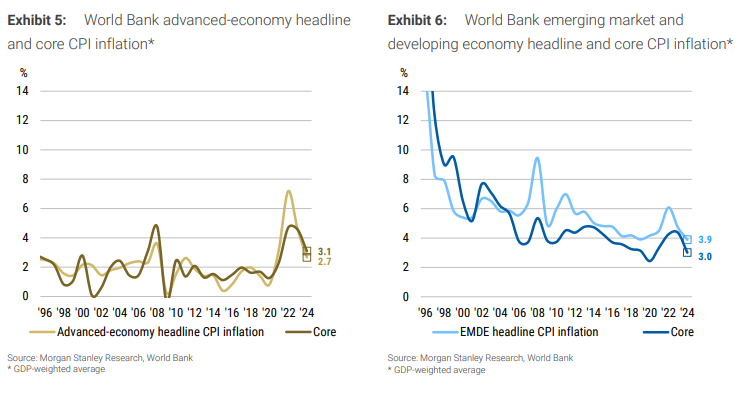
Group 1 - The core message of the report emphasizes a significant downward trend in global inflation, suggesting that investors may be overly concerned about U.S. inflation [1][2] - The report highlights that as of September, the global CPI annual inflation rate stands at 3.3%, down from 4.5% a year ago, indicating a strong downward momentum over the past 35 months [3] - The primary drivers of this global deflation are emerging markets and developing economies, where core inflation has reached multi-decade lows [5] Group 2 - The report argues that tariffs, while a visible risk, may not necessarily lead to higher inflation, as companies might absorb costs rather than pass them on to consumers [6] - It recommends that investors adopt a global perspective and hedge against U.S. inflation risks by buying U.S. Treasuries, particularly 5-year bonds, and shorting the dollar [6]

关税风波再起,金银价格继续刷新高
Da Yue Qi Huo· 2025-10-14 03:05
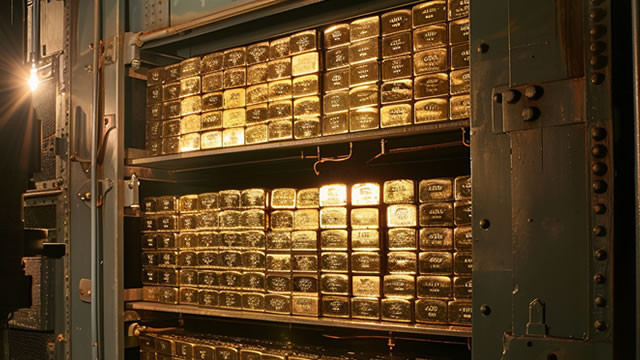
Report Industry Investment Rating No information provided. Core View of the Report - Tariff disputes have resurfaced, the Fed's continuous interest rate cut expectations are high, and the US government shutdown has led to a significant increase in gold and silver prices. The global stock market remains strong, and silver prices are still supported overall. International silver has broken through the historical high, and there may be short - term pressure. The market is concerned about the APEC summit at the end of the month and the possibility of China - US trade negotiations. The market's expectation of two interest rate cuts within the year is firm, and gold and silver prices continue to rise. The geopolitical friction continues, and there is internal political turmoil in many countries, but gold and silver prices rise together with the US dollar. The upward trend of gold and silver remains unchanged, and the operation of buying on dips is maintained [27][62]. Summary by Directory 1. Market Review - Tariff disputes have caused market concerns to rise and then fall, domestic risk appetite remains low, and gold and silver prices have risen significantly. The Fed restarted interest rate cuts as expected, and the market's expectation of continuous interest rate cuts is high, driving up gold and silver prices. The US government shutdown has led to the delay of economic data release, and the market continues to expect economic slowdown. The stock market and bonds show different reactions, both of which push up gold and silver prices. Geopolitical frictions continue, and there is internal political turmoil in many countries, but gold and silver prices rise together with the US dollar [27]. 2. Logic Analysis - **Tariff Factor**: On the early morning of October 11th, Trump posted that he would impose a 100% tariff on Chinese products exported to the US starting from November 1st (or earlier), and implement export controls on all key software. Later, he said that he might abandon the tariff threat if China withdraws the new export control plan for rare earths. The APEC summit will be held in South Korea before November 1st, and Trump hopes for a key China - US meeting during the summit [28]. - **Interest Rate Factor**: The Fed restarted interest rate cuts, but the Fed's statement and Powell's speech were not as dovish as the market expected. However, the market's optimistic expectation of continuous interest rate cuts is high. The market's expectation of two interest rate cuts within the year is firm. The latest "dot - plot" shows that 12 out of 19 FOMC members expect at least one more interest rate cut this year, releasing a stronger dovish signal than expected [27][41]. - **Economic Data Factor**: The US government shutdown has led to the delay of economic data release. The US Bureau of Labor Statistics significantly revised down last year's employment data, increasing economic concerns. The market shows a split, with bonds reflecting economic concerns and the stock market reflecting optimistic expectations of interest rate cuts, both of which are factors pushing up gold and silver prices [27]. 3. Fundamental Data - **Macroeconomic Data**: The report provides a large amount of US macroeconomic data from 2025 - 01 to 2025 - 09, including GDP, exports, imports, trade balance, ISM manufacturing and non - manufacturing indices, consumer confidence, real estate data, employment data, inflation data, etc. For example, the GDP growth rate in 2025 - 03 was 2.02%, and the export growth rate in 2025 - 04 was 9.53% [30]. - **Interest Rate Expectation Data**: The expectation of a 10 - month interest rate cut is 96.7%. The expectation of three interest rate cuts this year reaches 88.3%. Different time points have different probabilities of interest rate cuts in different target rate ranges [31][34]. 4. Position Data - **Shanghai Gold Position**: As of October 10, 2025, the long position of Shanghai Gold's top 20 was 216,933, a decrease of 5.36% from the previous day; the short position was 77,992, a decrease of 2.12%; the net position was 138,941, a decrease of 7.09% [45]. - **Shanghai Silver Position**: As of October 10, 2025, the long position of Shanghai Silver's top 20 was 343,384, a decrease of 0.16% from the previous day; the short position was 249,445, a decrease of 3.73%; the net position was 93,939, an increase of 10.73% [48]. - **ETF and Inventory Data**: Gold ETF holdings have increased oscillatingly, and silver ETF holdings have oscillated and then risen with prices. COMEX gold inventory is oscillating and remains at the highest level in the past five years. Shanghai gold inventory continues to increase. Shanghai silver inventory has decreased but is higher than the same period last year. COMEX silver inventory has decreased slightly. The London silver spot market is hot, with a short squeeze occurring. The rental rate of the world's largest silver ETF share (SLV) has soared, and the rentable volume has dropped to 0 [51][53][59]. 5. Summary - The upward trend of gold and silver remains unchanged, and the operation of buying on dips is maintained. Attention should be paid to the US spending bill and China - US trade this week. The increase in gold and silver prices has accelerated significantly, and the possibility of a callback continues to accumulate. The short - squeeze in the London silver market is expected to improve within 1 - 2 weeks, and there is still short - term price support, but the premium of London silver over New York is starting to converge, and the pressure in the London market may be alleviated [61].
关税风云再起,看好有色金属增配机会 | 投研报告
Zhong Guo Neng Yuan Wang· 2025-10-14 02:45
Group 1 - The report highlights the resurgence of tariffs between China and the U.S., suggesting an increased allocation towards gold as a safe-haven asset [1][2] - Precious metals continue to show strength, with silver spot prices reflecting insufficient upward momentum, indicating potential risks of a pullback amid trade disputes [1][2] - The long-term trend of de-dollarization is expected to persist, coupled with inflows into ETFs due to short-term interest rate cuts, supporting a positive outlook for the precious metals sector [1][2] Group 2 - Copper prices are anticipated to rise due to supply disruptions, with recent production guidance cuts from Freeport and Teck Resources enhancing the likelihood of a reversal in the global electrolytic copper balance by 2026 [2] - The aluminum market is also waiting for a buying opportunity following recent price increases, with inventory levels showing expected increases without exceeding forecasts [2] - Cobalt prices have surged significantly, with expectations for continued price increases in 2026-2027 due to a projected supply-demand gap of 20,000 to 30,000 tons next year [3][4] Group 3 - Recent export controls on rare earth materials by Chinese authorities are expected to exacerbate supply-demand imbalances, potentially leading to a new upward trend in rare earth prices [4] - The report suggests monitoring specific companies such as Northern Rare Earth, Baotou Steel, and Huayou Cobalt, among others, for investment opportunities in the precious metals and rare earth sectors [5]


全美商业经济协会调查显示,美国就业增长将依旧疲弱
Huan Qiu Wang· 2025-10-14 01:09
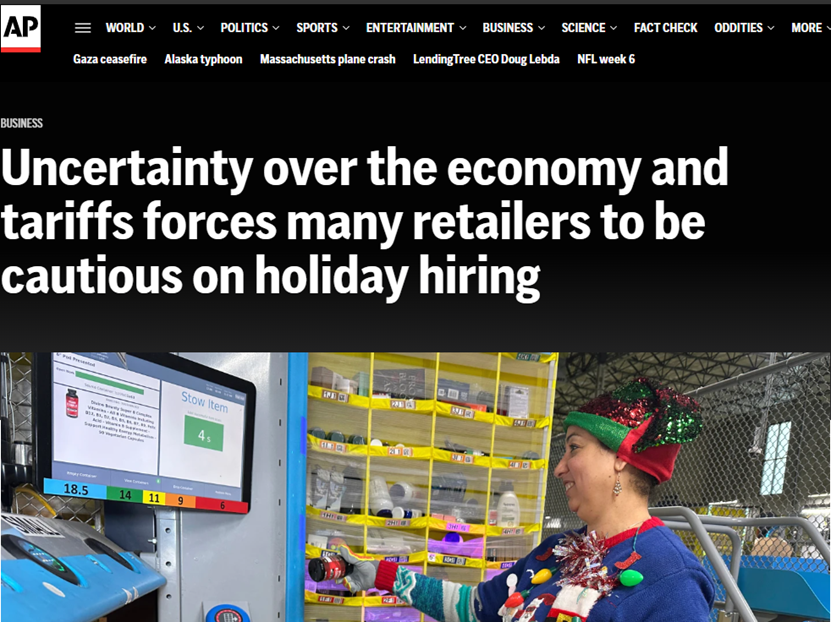
Group 1 - Economists have raised their growth forecasts for the US economy for the next two years, with a projected GDP growth of 1.8% for this year, up from the previous estimate of 1.3% [1] - Retailers are cutting or delaying hiring seasonal workers due to uncertainties related to the economy and tariffs, impacting their ability to prepare for the holiday shopping season [1][4] - The hiring plans of retailers indicate the first signs of the holiday shopping season, but the US job market is losing momentum, partly due to uncertainties from the trade war [4] Group 2 - A specific retailer plans to hire 220 temporary workers for the holiday season, which is a decrease from the 300 hired last year, and they have started recruitment nearly two months earlier than usual [1] - Analysts will closely monitor consumer reactions to price increases from retailers due to high tariff costs in the coming months [4]
X @Bloomberg
Bloomberg· 2025-10-13 23:27
今日必读⚔️美财长称特朗普与习近平将会晤🍟荷兰政府接管中资芯片制造商🏗️高盛料美国人承担逾半关税成本获取免费中文电子报《彭博财经早茶》,洞悉全球市场动态。Catch up on what's moving China's markets in our free Chinese language newsletter. https://t.co/iMr0m6i1hd ...
Gold's climbs above $4,100, but is there more room to run?
Youtube· 2025-10-13 22:32
Gold still shining, hitting fresh record highs and pushing above 4,100 an ounce. This comes as President Trump floats more potential tariffs and investors flock to safe havens. But our next guest says the rally it's more about fundamentals than fear.Joining me now, we have David Miller, CIO and senior portfolio manager at Catalyst Funds. David, great to see you as always. So, first big picture, let's let's talk about what's kind of just driving this run in gold.You say, you put it like this, David. You say ...
美联储鲍尔森表示,预计关税将推高通胀,但不会导致持续性上涨
Xin Hua Cai Jing· 2025-10-13 21:00
Core Insights - The Federal Reserve's Powell indicates that tariffs are expected to raise inflation but will not lead to sustained increases [1] - The rate cut in September by the Federal Reserve is deemed "reasonable" [1] - There is uncertainty regarding the neutral interest rate, suggesting a cautious approach is necessary [1] Summary by Categories Inflation and Tariffs - Tariffs are anticipated to contribute to inflationary pressures, although they are not expected to cause persistent inflation increases [1] Interest Rates - The recent interest rate cut in September is considered appropriate within the current economic context [1] - The lack of clarity on the neutral interest rate calls for a careful strategy moving forward [1]
The Stock Market And The China Tariffs
Seeking Alpha· 2025-10-13 13:50
Core Viewpoint - The stock market experienced a decline due to President Trump's announcement of reconsidering a "deal" with China and the potential for a "massive increase in tariffs" on Chinese products [1] Group 1 - The stock market dropped back on Friday as a direct consequence of President Trump's statement regarding trade negotiations with China [1] - The announcement indicated a shift in the U.S. administration's approach to tariffs, which could have significant implications for trade relations and market stability [1]
What Makes Brady Corp. (BRC) a Fundamentally Strong Company?
Yahoo Finance· 2025-10-13 12:26
Core Insights - Heartland Advisors reported a strong performance for small-cap stocks in Q3 2025, with the Russell 2000® Index increasing by 12.39%, outperforming the S&P 500 Index's 8.12% rise [1] - The Heartland Value Plus Fund returned 8.51% in Q3 2025, lagging behind the Russell 2000® Value Index's 12.60% gain [1] Company Analysis: Brady Corporation (NYSE:BRC) - Brady Corporation specializes in manufacturing identification solutions and workplace safety products, with a one-month return of -10.15% and a 52-week decline of 3.35% [2] - As of October 10, 2025, Brady's stock closed at $72.51, with a market capitalization of $3.415 billion [2] - The company is actively engaging in stock buybacks, increasing dividends, and pursuing acquisitions while maintaining low leverage, indicating prudent capital allocation [3] - Brady's core business focuses on identification solutions for commercial products, particularly in rugged industrial markets, with recent growth noted in Aerospace and Data Center sectors [3] - The company has undergone restructuring and cost-cutting measures, with management projecting strong growth and guidance for 2026 that exceeds expectations [3] - Brady's stock is considered to have a reasonable valuation, with a price target reflecting 18 times the estimated EPS for 2026 [3] Hedge Fund Interest - Brady Corporation is not among the top 30 most popular stocks among hedge funds, with 18 hedge fund portfolios holding its shares at the end of Q2 2025, down from 21 in the previous quarter [4] - While Brady is recognized for its potential, certain AI stocks are viewed as having greater upside potential and lower downside risk [4]

货币政策或将转向宽松?印度9月CPI同比增速创年内新低至1.54%
Hua Er Jie Jian Wen· 2025-10-13 12:20
Core Insights - India's inflation rate has dropped below the central bank's target range, increasing market expectations for a potential interest rate cut by the Reserve Bank of India (RBI) to support the economy [1] - The Consumer Price Index (CPI) for September rose by 1.54% year-on-year, slightly above economists' predictions of 1.50%, but significantly lower than the 2.07% increase in August [1] - This marks the slowest growth in eight years and the second instance this year where inflation has fallen below the RBI's target range of 2%-6% [1] Inflation Drivers - The slowdown in inflation is primarily driven by two factors: 1. Above-normal monsoon rains this year have boosted agricultural output, helping to lower food prices [1] 2. A consumption tax reform implemented by the Modi government on September 22 has reduced the prices of daily necessities [1] Economic Growth Context - Despite the weak inflation data providing more justification for a rate cut at the RBI's December meeting, analysts expect that U.S. tariffs on Indian goods will exert pressure on the country's annual economic growth [1] - India's economy expanded by 7.8% in the three months ending in June, marking the fastest growth in over a year [1] Tariff Impact - The increase in tariffs on Indian goods to 50% by the Trump administration, aimed at penalizing India for purchasing Russian oil, is the highest in Asia and diminishes India's price competitiveness against manufacturing rivals like Vietnam and Bangladesh [1]