供需缺口

Search documents
铂钯主力合约连续涨停之际 分析师警告价格大幅波动风险
Xin Hua Cai Jing· 2025-12-23 12:09
新华财经上海12月23日电(葛佳明) 12月23日,广州期货交易所(以下简称"广期所")铂、钯期货纷 纷涨停,铂期货主力合约封于涨停价,报619.95元/克,上市迄今累计涨幅达到40.58%;钯期货主力合 约最高至555.15元/克,亦创下今年11月27日该合约上市以来新高,上市迄今累计涨幅超过46%。 外盘铂期货、钯期货表现同样亮眼。截至发稿,现货铂金最高触及2149.47美元/盎司,相较12月16日 的开盘价1783.70美元/盎司,短短一周上涨20%,今年迄今累计涨幅达到141%;现货钯金最高触及 1849美元/盎司,今年迄今累计涨幅达到99%。 方正中期期货分析师高光奇表示,推动铂金上涨主因有三点: 一是供需缺口扩大,全球铂金连续三年 短缺,政治动荡、基础设施老化等问题,导致新项目执行不达预期、开采效率下降,产量增长乏力。 二是需求多元增长,氢能产业推动燃料电池车铂金需求,中国投资需求激增,首饰需求因金铂价差扩大 有替代潜力。 三是宏观环境利好,美联储降息推动美元走弱,市场流动性宽松,金铂比高位回落推动 估值修复。 前国际金融协会首席经济学家、现任布鲁金斯学会高级研究员罗宾·布鲁克斯(Robin Br ...
沪金再破千元大关创历史新高!后市怎么走?
Sou Hu Cai Jing· 2025-12-23 11:32
Core Viewpoint - International gold prices continue to rise, with the Shanghai gold futures contract breaking the 1000 yuan/gram mark, reaching a historical high of 1018.68 yuan/gram, and recording a year-to-date increase of over 65% [1] Group 1: Gold and Precious Metals Prices - Domestic brand gold jewelry prices have also increased, with several brands' gold jewelry prices exceeding 1400 yuan/gram [1] - Other precious metals such as silver, platinum, and palladium have shown significant price increases, with platinum reaching a closing price of 619.95 yuan/gram and daily increases of 5.52% for palladium and 4.3% for silver [1] Group 2: Market Dynamics and Influences - The recent surge in precious metals is attributed to multiple factors, including a significant increase in investment demand due to the depreciation of the US dollar and concerns over US debt expansion [2] - Geopolitical crises have triggered market risk aversion, contributing to increased buying of precious metals [3] - Structural growth in demand for silver, particularly in electric vehicles and solar panels, is noted, with current silver inventories at a ten-year low [3] Group 3: Future Outlook - The trend of de-dollarization and high market volatility are expected to support continued price increases in precious metals [4] - However, there are warnings about potential price adjustments due to high levels and the impact of rising prices on consumption of silver and platinum group metals [4] - Analysts suggest that the current macro environment and delivery pressures are favorable for precious metals in the short term, with a bullish outlook for the long term due to concerns over the independence of the Federal Reserve and US debt [4]


弘业期货铂金大涨
Hong Ye Qi Huo· 2025-12-23 07:06
Group 1: Report Industry Investment Rating - Not provided Group 2: Core Viewpoints - Platinum futures prices have risen continuously, with investment funds flowing in as one of the core driving forces. The rotation logic of funds seeking "value depressions" after the sharp rise of gold and silver, combined with the supply - demand gap, has led to the simultaneous strengthening of investment and jewelry demand, ultimately amplifying price elasticity [2] - The price of platinum is significantly undervalued relative to gold. After the continuous sharp rise of gold and silver, funds have turned to low - valued varieties, promoting the valuation repair of platinum. High gold prices have also prompted consumers to turn to more cost - effective platinum, driving the recovery of retail demand [2] - The supply - end gap of platinum persists. In 2025, affected by power shortages in South Africa, the mining operation rate decreased by 5 percentage points compared to last year. With factors such as rising mining costs due to ore body aging and extreme rainfall affecting transportation, the mineral supply decreased by 3% year - on - year. Although the recycled platinum supply increased by 2%, the market is still in shortage for the third consecutive year, with an expected gap of 22 - 26 tons [2] - Investment and jewelry demand have further exacerbated the tight spot market situation. With strong short - term capital inflows and the unchanged tight spot market pattern, platinum prices may remain strong [2] Group 3: Summary by Related Contents Investment and Price Driving Factors - Investment funds flowing in are one of the core driving forces for the continuous rise of platinum futures prices, following the logic of funds seeking "value depressions" after the sharp rise of gold and silver [2] Valuation and Demand - Platinum is significantly undervalued relative to gold. After the rise of gold and silver, funds' shift to low - valued platinum promotes its valuation repair [2] - High gold prices (Shanghai gold main contract breaking through 1000 yuan/gram) have made consumers turn to more cost - effective platinum. In November, the sales volume of platinum jewelry in domestic mainstream jewelry brands increased by 12% year - on - year, and brands have increased the layout of new platinum styles, driving the recovery of retail demand [2] Supply - Side Situation - 70% of the world's platinum is produced in South Africa. In 2025, due to power shortages, the mining operation rate in South Africa decreased by 5 percentage points compared to last year. Ore body aging and extreme rainfall have led to a 3% year - on - year decline in mineral supply [2] - The recycled platinum supply increased by 2% year - on - year, but it is difficult to make up for the mineral supply gap. The market is in shortage for the third consecutive year, with an expected gap of 22 - 26 tons [2] Market Outlook - Investment and jewelry demand have further tightened the spot market. With strong short - term capital inflows and the unchanged tight spot market pattern, platinum prices may remain strong [2]
固收-30y国债定价怎么看?
2025-12-22 15:47
Summary of Key Points from Conference Call Records Industry Overview - The records primarily discuss the fixed income market, particularly focusing on the bond market dynamics and the implications for various financial institutions, including banks and insurance companies [1][2][5]. Core Insights and Arguments 1. **Supply and Demand Pressure**: The supply-demand structure for bonds is under pressure, with local government bond issuance at historical highs and major banks nearing their issuance limits. This situation raises concerns about potential supply-demand gaps [1][2][5]. 2. **Long-term Bond Selling**: Funds have been continuously selling long-term bonds, with a net sell-off of approximately 60 billion, bringing the duration of medium to long-term interest rate bonds back to levels seen in early April [1][3][4]. 3. **Projected Financing Needs**: For the upcoming year, the net financing volume is expected to increase to between 6.76 trillion and 6.8 trillion, indicating a significant rise in overall financing needs [1][5]. 4. **Insurance Sector Adjustments**: The insurance sector is expected to see a decrease in demand for ultra-long-term bonds by about 200 billion due to a shift towards higher dividend insurance products in a low-interest-rate environment [1][6][7]. 5. **Banking Sector Trends**: If banks maintain their current bond purchase ratios, their share in the market may decrease by approximately 100 billion [1][7]. Additional Important Insights 1. **Market Volatility**: The bond market is anticipated to experience volatility, particularly in the long-term segment, as the demand from funds and insurance companies is expected to weaken [1][3][6]. 2. **Credit Bond Market Performance**: The credit bond market has shown a lackluster performance, with credit spreads widening as funds continue to favor short-term credit bonds [3][12][13]. 3. **Investment Strategies**: Recommendations for investment strategies include waiting for favorable conditions before making significant investments in long-term bonds and focusing on short to medium-term bonds for better liquidity and stability [11][16]. 4. **Impact of Regulatory Changes**: Regulatory adjustments, such as changes in fund sales fees and customized fund regulations, are expected to influence demand for bonds with maturities of 4-5 years, potentially increasing volatility [15][16]. 5. **Market Sentiment and Future Outlook**: The sentiment in the market is cautious, with expectations that the supply-demand gap could reach approximately 700 billion, necessitating measures such as relaxing central bank liquidity indicators to alleviate pressure [8][10]. This summary encapsulates the critical points discussed in the conference call records, providing a comprehensive overview of the current state and future outlook of the fixed income market and its participants.
比黄金还猛!它,身价为何能一年翻倍?
Xin Lang Cai Jing· 2025-12-22 10:57
Core Insights - The spot platinum price has surpassed $2000 per ounce for the first time since 2008, with a cumulative increase of over 120% in 2025, significantly outpacing gold [1][7]. Group 1: Factors Driving Platinum Price Surge - The surge in platinum prices is attributed to a "triple resonance" of industrial demand expectations, supply-demand gaps, and financial attributes [2][8]. - Industrial demand is the cornerstone of the price increase, driven by the hydrogen energy sector, where platinum is essential for hydrogen production, storage, and utilization [2][8]. - The automotive industry's recovery, particularly in fuel vehicles, has also contributed to stable platinum demand, with increased platinum load in catalysts and a rise in light vehicle production [2][8]. Group 2: Supply-Demand Dynamics - A significant supply-demand gap supports the price increase, with approximately 70% of global platinum production coming from South Africa, where production is constrained by underinvestment, power shortages, aging infrastructure, and extreme weather [2][8]. - The World Platinum Investment Council (WPIC) reports a projected global platinum supply of 45.3 tons in Q1 2025, a 10% year-on-year decline, with an expected annual shortfall of about 20 tons [2][8]. Group 3: Financial Market Influences - Financial attributes have amplified the price increase, with expectations of Federal Reserve interest rate cuts and global liquidity easing driving funds into precious metals [3][9]. - Platinum's long-standing valuation gap compared to gold has attracted significant capital inflows, further supported by the launch of domestic platinum and palladium futures [3][9]. Group 4: Future Outlook and Key Indicators - Key indicators to monitor for platinum price trends include South African monthly production and power supply data, global hydrogen electrolyzer and fuel cell vehicle installations, Federal Reserve interest rate movements, and London platinum leasing rates [4][11]. - The core logic supporting platinum price increases remains unchanged, with persistent supply pressures and strong demand growth expected in the hydrogen sector and traditional automotive catalyst markets [4][11]. Group 5: Impact on Downstream Industries - The sharp rise in platinum prices has led to differentiated impacts on downstream industries, particularly in automotive manufacturing, jewelry, and hydrogen chemical sectors [6][12]. - In the automotive sector, rising platinum costs will increase production costs for fuel vehicles, potentially adding hundreds of dollars per vehicle for companies without hedging measures [6][12]. - Jewelry manufacturers face raw material cost pressures, with larger brands better positioned to manage costs compared to smaller ones, which may lead to market consolidation [6][12]. - In the hydrogen and chemical industries, rising platinum costs will increase marginal production costs, potentially delaying the launch of smaller projects, although major companies may manage these costs effectively due to the irreplaceable nature of platinum catalysts [6][12].
有色早报-20251218
Yong An Qi Huo· 2025-12-18 02:12
1. Report's Industry Investment Rating - No information provided in the given content. 2. Core Views of the Report - Copper prices are expected to maintain a long - term upward trend with a structural supply - demand gap in 2026, and the idea is to buy on dips, with a price range of 10,800 - 12,000 US dollars in December [1]. - Aluminum prices are expected to be volatile and slightly strong in the short term, but demand may be weak in early 2026 and then tighten with demand growth [2]. - Zinc prices may not fall deeply due to a temporary reduction in supply at the end of the year. It is advisable to wait and see on a single - sided basis in the short term, pay attention to reverse arbitrage opportunities between domestic and foreign markets, and positive arbitrage opportunities for the 01 - 03 spread [5]. - Nickel's short - term fundamentals are weak, and attention should be paid to short - selling opportunities on rallies due to continuous inventory accumulation and weak demand [8]. - Stainless steel's fundamentals are generally weak, and attention should be paid to short - selling opportunities on rallies considering the Indonesian policy's price - supporting motivation [12]. - Lead prices are expected to fluctuate between 17,100 - 17,600, and attention should be paid to the risk of low warehouse receipts [16]. - Tin prices have shown marginal weakening signs in the short term, with potential large fluctuations in case of a macro - level systemic correction. It can be a long - term long - allocation in the first half of 2026, but attention should be paid to correction risks [19]. - Industrial silicon prices are expected to fluctuate with costs in the short term and oscillate at the cycle bottom in the medium - to - long term [22]. - Lithium carbonate prices are in a short - term pattern of strong supply and demand. The upward potential in the future depends on inventory reduction, speculative demand, and stronger willingness to hold goods [24]. 3. Summary by Metal Copper - **Price and Inventory**: Copper prices hit a new high this week and then fell on Friday night. Global inventory distribution is uneven, and low - inventory areas in the US may face more pressure. In China, there is a slight inventory build - up expected until the Spring Festival [1]. - **Outlook**: With the continuous loose overseas liquidity, the idea is to buy on dips, and the price in December is expected to be in the range of 10,800 - 12,000 US dollars [1]. Aluminum - **Price and Inventory**: The Shanghai, Yangtze River, and Guangdong aluminum ingot prices increased by 120 yuan. The domestic alumina price decreased by 2 yuan, and the import price remained unchanged. The LME aluminum inventory was stable, and the cancelled warrants increased by 6,675 [2]. - **Market Situation**: The expectation of interest rate cuts affected the market, and terminal demand was lower than expected. Aluminum prices showed two significant corrections this week. Short - term apparent demand is good, but demand may be weak in early 2026 [2]. Zinc - **Price and Inventory**: Zinc prices rose this week. The LME zinc 0 - 3M premium decreased from 163 US dollars to 90.6 US dollars. The domestic zinc social inventory remained unchanged, and the LME zinc inventory increased by 2,150 [5]. - **Supply and Demand**: The domestic and imported TC is declining rapidly. The domestic zinc ore supply will be tight from the fourth quarter to the first quarter of next year. In November, the Huoshaoyun zinc ingot was put into production, and multiple smelters will have maintenance in December. Domestic demand is seasonally weak, and overseas demand is average, but US zinc imports have increased recently [5]. - **Strategy**: It is advisable to wait and see on a single - sided basis in the short term. Pay attention to reverse arbitrage opportunities between domestic and foreign markets and positive arbitrage opportunities for the 01 - 03 spread [5]. Nickel - **Price and Inventory**: The price of 1.5 - grade Philippine nickel ore remained unchanged. The Shanghai nickel spot price decreased by 250 yuan, and the Jinchuan premium increased by 650 yuan. The domestic and overseas inventories continued to accumulate [8]. - **Supply and Demand**: The supply of pure nickel decreased slightly, and the demand was weak. The Indonesian nickel ore policy has a price - supporting motivation [8]. - **Strategy**: Pay attention to short - selling opportunities on rallies [8]. Stainless Steel - **Price**: The price of 304 cold - rolled, 304 hot - rolled, 201 cold - rolled, and 430 cold - rolled stainless steel remained stable, and the price of scrap stainless steel remained unchanged [29]. - **Supply and Demand**: The steel mill's production is at a high level, demand is mainly for rigid needs, and the inventory is at a high level. The Indonesian policy has a price - supporting motivation [12]. - **Strategy**: Pay attention to short - selling opportunities on rallies [12]. Lead - **Price and Inventory**: Lead prices fell slightly this week. The domestic social inventory and SHFE inventory remained unchanged. The LME lead inventory decreased by 2,875, and the cancelled warrants decreased by 1,375 [15]. - **Supply and Demand**: The primary lead production is at a high level, and the secondary lead production has recovered. The battery demand is expected to weaken, but downstream restocking provides support [16]. - **Outlook**: Lead prices are expected to fluctuate between 17,100 - 17,600, and attention should be paid to the risk of low warehouse receipts [16]. Tin - **Price and Inventory**: Tin prices rose rapidly this week. The domestic inventory increased by about 600 tons, and the LME inventory increased by 375 tons [19]. - **Supply and Demand**: The tin ore processing fee is at a low level. Overseas production recovery is slow, but high prices stimulate inventory exports. Demand is mainly rigid, and downstream order - taking willingness has weakened [19]. - **Outlook**: In the short term, there is a risk of excessive supply growth, and the fundamentals are showing signs of weakening. In the medium - to - long term, demand determines the upside space, but attention should be paid to correction risks in 2026 [19]. Industrial Silicon - **Price and Inventory**: The basis of 421 - grade Yunnan, Sichuan, 553 - grade East China, and Tianjin decreased by 105 yuan, and the warehouse receipt quantity remained unchanged [20]. - **Supply and Demand**: The operation of leading enterprises in Xinjiang is stable, and some silicon plants in Inner Mongolia and Xinjiang will have periodic maintenance. The supply and demand in December are expected to be balanced [22]. - **Outlook**: Prices are expected to fluctuate with costs in the short term and oscillate at the cycle bottom in the medium - to - long term [22]. Lithium Carbonate - **Price and Inventory**: The SMM electric and industrial lithium carbonate prices increased by 1,200 yuan and 1,100 yuan respectively. The basis of the main and near - month contracts decreased by 6,820 yuan and increased by 1,200 yuan respectively. The warehouse receipt quantity increased by 350 [24]. - **Supply and Demand**: Ningde's resumption of production is less than expected. The supply of raw materials is tight, and the upstream inventory is being depleted. Downstream demand is strong at low prices but weakens at high prices [24]. - **Outlook**: The short - term pattern is one of strong supply and demand. The upward potential in the future depends on inventory reduction, speculative demand, and stronger willingness to hold goods [24].
白银涨疯了,后市如何?
Guo Ji Jin Rong Bao· 2025-12-17 16:04
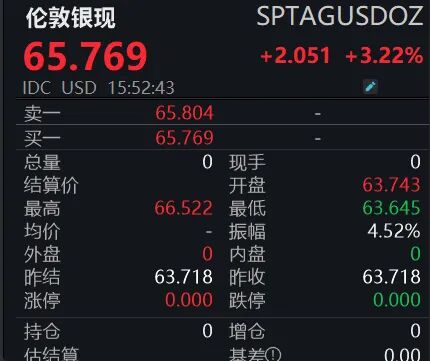
Core Viewpoint - Silver prices have surged dramatically, with both spot and futures prices reaching historical highs, driven by macroeconomic factors, industrial demand, and trading dynamics [1][3][4]. Group 1: Price Movements - As of December 17, silver prices in the international market reached $65.769 per ounce, marking a daily increase of 3.22%, with a year-to-date increase of nearly 130% [1]. - COMEX silver futures also showed strong performance, trading at $66.045 per ounce, with a year-to-date increase exceeding 120% [1][2]. - In the domestic market, the main contract for silver futures on the Shanghai Futures Exchange closed at 15,512 yuan per kilogram, up 5.05%, with an intraday high of 15,555 yuan per kilogram [2]. Group 2: Driving Factors - The macroeconomic environment, particularly expectations of a Federal Reserve interest rate cut by 2025, has significantly increased the attractiveness of silver as a non-yielding asset [3]. - Industrial demand for silver has transformed it from a traditional safe-haven asset to a critical industrial metal, driven by sectors such as photovoltaics, electric vehicles, and AI data centers [3]. - A low inventory level has created a fragile trading structure, leading to significant delivery pressure in the futures market and a risk of short squeezes [3]. Group 3: Investment Dynamics - There has been a notable increase in investment demand for silver, particularly through ETFs, as institutions and high-net-worth individuals accumulate physical silver, further tightening available inventory [4]. - The silver market has shown signs of a futures backwardation structure, indicating extreme tightness in the spot market and high premiums for immediate delivery [4]. - Silver has outperformed gold recently, attributed to a combination of price correction potential in gold and tight silver inventories, alongside geopolitical uncertainties supporting higher silver prices [4]. Group 4: Future Outlook - Analysts suggest that while short-term volatility risks exist, the long-term upward trend for silver remains intact due to ongoing macroeconomic support and robust industrial demand [5][6]. - The anticipated continuation of the Federal Reserve's easing monetary policy and uncertainties surrounding U.S. midterm elections are expected to sustain demand for precious metals [6]. - The ongoing supply-demand gap in silver is projected to widen by 2026, limiting the potential for significant price declines [5][6].

永安期货有色早报-20251217
Yong An Qi Huo· 2025-12-17 01:33
Group 1: Report Industry Investment Rating - Not provided in the given content Group 2: Core Viewpoints of the Report - Copper prices are expected to maintain a long - position strategy on dips, with a price range of $10,800 - $12,000 in December 2025, due to a structural supply - demand gap in 2026 and uneven global inventory distribution [1] - Aluminum prices are expected to be volatile and strong in the short term, but demand may be weak in early 2026 and then tighten with demand growth, as the easing of interest - rate cut expectations and weak terminal demand have affected the market [2] - Zinc prices are difficult to fall deeply at the end of the year due to a potential supply reduction, but the domestic fundamentals are poor. It is recommended to wait and see on the long - short side, focus on reverse arbitrage opportunities between domestic and foreign markets, and pay attention to the positive arbitrage opportunity between contracts 01 - 03 [6] - Nickel's short - term fundamentals are weak with supply decline, weak demand, and continuous inventory accumulation. Pay attention to short - selling opportunities due to potential price - supporting policies in Indonesia [9] - Stainless steel's fundamentals are weak with high production, weak demand, and high inventory. Pay attention to short - selling opportunities due to potential price - supporting policies in Indonesia [12] - Lead prices are expected to oscillate between 17,000 - 17,600, with the supply - demand contradiction relieved by the resumption of secondary lead production, but there is still a risk of low - warehouse receipts [13] - Tin prices may fluctuate greatly in the short term if there is a macro - systematic correction, and there is a risk of supply over - release and downstream negative feedback. It can be a long - position allocation in the first half of 2026, but beware of correction risks [15] - Industrial silicon prices are expected to oscillate with costs in the short term and move in a cycle at the bottom in the long term, as the supply and demand are balanced in December 2025 and there is still high over - capacity [18] - Lithium carbonate prices are in a short - term pattern of strong supply and demand. The upper - price limit needs inventory reduction, speculative demand improvement, or stronger holding willingness [20] Group 3: Summary by Metals Copper - **Price and Inventory**: Copper prices hit a new high this week and then fell. The inventory is unevenly distributed globally, and there is a supply - demand gap in 2026. Domestic inventory may accumulate slightly until the Spring Festival [1] - **Strategy**: Maintain a long - position strategy on dips, with a price range of $10,800 - $12,000 in December [1] Aluminum - **Price and Inventory**: Aluminum prices fluctuated this week, affected by interest - rate cut expectations and weak terminal demand. The inventory remained unchanged [2] - **Strategy**: Volatile and strong in the short term, but demand may be weak in early 2026 [2] Zinc - **Price and Inventory**: Zinc prices rose this week, and the LME 0 - 3M premium declined. The domestic social inventory decreased, and the overseas LME inventory increased [6] - **Supply and Demand**: The supply of domestic and imported zinc concentrates is tightening, and some smelters are under maintenance. The domestic demand is seasonally weak, and the overseas demand is average [6] - **Strategy**: Wait and see on the long - short side, focus on reverse arbitrage opportunities between domestic and foreign markets, and pay attention to the positive arbitrage opportunity between contracts 01 - 03 [6] Nickel - **Price and Inventory**: Nickel prices fell this week. The supply decreased slightly, the demand was weak, and the inventory increased continuously at home and abroad [9] - **Strategy**: Pay attention to short - selling opportunities due to potential price - supporting policies in Indonesia [9] Stainless Steel - **Price and Inventory**: Stainless steel prices decreased slightly this week. The production remained high, the demand was mainly for rigid needs, and the inventory remained high [12] - **Strategy**: Pay attention to short - selling opportunities due to potential price - supporting policies in Indonesia [12] Lead - **Price and Inventory**: Lead prices fell slightly this week. The supply - demand contradiction was relieved by the resumption of secondary lead production, and the downstream replenishment provided support [13] - **Strategy**: The price is expected to oscillate between 17,000 - 17,600, and beware of the risk of low - warehouse receipts [13] Tin - **Price and Inventory**: Tin prices rose rapidly this week. The supply may increase marginally under high prices, and the demand was mainly for rigid needs with weak downstream orders [15] - **Strategy**: May fluctuate greatly in the short term if there is a macro - systematic correction. It can be a long - position allocation in the first half of 2026, but beware of correction risks [15] Industrial Silicon - **Price and Inventory**: The basis of industrial silicon decreased slightly this week, and the warehouse receipts increased [16] - **Supply and Demand**: The supply and demand are balanced in December 2025, and there is still high over - capacity [18] - **Strategy**: Oscillate with costs in the short term and move in a cycle at the bottom in the long term [18] Lithium Carbonate - **Price and Inventory**: Lithium carbonate prices rose slightly this week. The supply and demand are both strong in the short term, but the actual trading volume is light [20] - **Strategy**: The upper - price limit needs inventory reduction, speculative demand improvement, or stronger holding willingness [20]
超过黄金年内涨幅,铂金火了!记者实探
Sou Hu Cai Jing· 2025-12-16 23:56
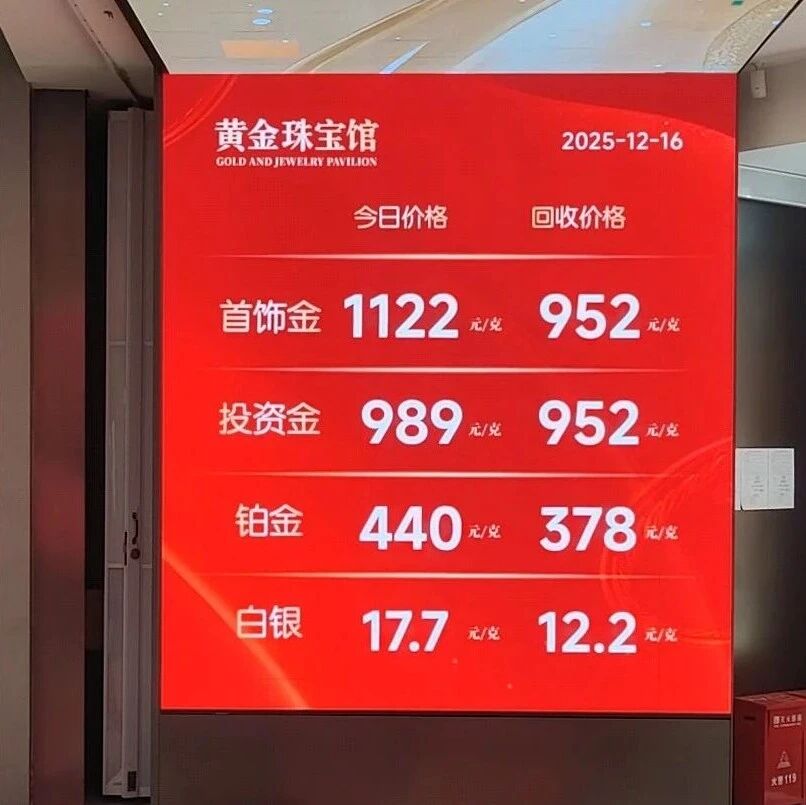
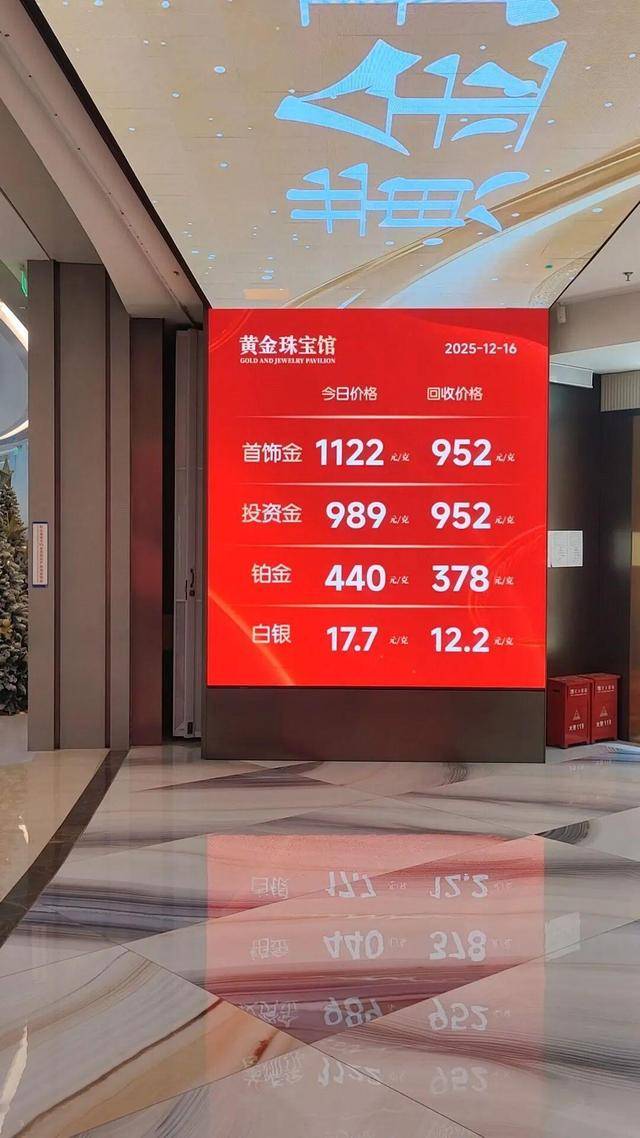
Core Viewpoint - Platinum prices have surged significantly this year, with a nearly 90% increase, surpassing gold's price rise, making it a focal point in the precious metals market [1][7] Group 1: Market Trends - The current spot price of platinum has exceeded $1800 per ounce, reflecting strong market interest [1] - In the Shenzhen Shui Bei market, the price of platinum jewelry is around 440 yuan per gram, up from 310 yuan per gram in June [4] - Some jewelry stores are reducing their gold inventory in favor of platinum, indicating a shift in consumer preference due to rising gold prices and associated taxes [1][4] Group 2: Consumer Behavior - Consumers are increasingly inquiring about platinum jewelry as it is perceived as a more affordable and attractive option compared to gold [1] - The resale mechanism for platinum jewelry is similar to that of gold, but the price difference between selling and buying has widened, increasing from around 30 yuan to 60 yuan [4] Group 3: Supply and Demand Dynamics - The supply side of platinum is facing challenges due to structural issues in South African mines, including power shortages and aging infrastructure [7] - Demand for platinum is bolstered by its use in traditional automotive catalysts and emerging hydrogen energy applications, leading to an expected widening supply-demand gap [7] Group 4: Future Price Predictions - Analysts predict that platinum could rise to between $2170 and $2300 per ounce by 2026, significantly higher than other forecasts which estimate a range of $1550 to $1670 for next year [8] - The ongoing expectations of Federal Reserve interest rate cuts and a weaker dollar are seen as macroeconomic support for platinum prices [7]
超过黄金年内涨幅,铂金火了!记者实探
证券时报· 2025-12-16 13:13
今年是贵金属价格集体冲高的一年,继黄金和白银之后,铂金再次成为市场上最受关注的资产之一。 近日,铂金价格走势强劲,现货铂金价格一度超过每盎司1800美元。截至目前,铂金价格年内累计涨幅已近90%,超过黄金年内涨幅,上演了一场"翻身仗"。那 么,铂金饰品线下消费市场的表现如何?为此,证券时报记者走访了深圳水贝市场以及多家珠宝品牌店。 部分商家转换赛道 记者在深圳水贝市场看到不少新开的铂金饰品店铺,一些饰品铺位也减少了黄金饰品的摆放数量,转而销售铂金饰品。 "近段时间铂金价格又快速上涨,加之黄金饰品加上了相关税费,越来越多的消费者开始咨询铂金饰品。"在水贝经营饰品生意多年的陈经理,最近也开始转行做铂 金饰品生意,"黄金价格高而且市场竞争激烈,周围越来越多的商家开始转换赛道。现在普通消费者的价格承受能力有限,相对低价且精美的铂金和足银饰品还是会 有市场。" 12月16日,记者看到水贝市场的铂金饰品克价在440元左右。有现场店铺的工作人员表示,今年以来铂金饰品价格有过几波"行情",今年6月的时候克价还在310元左 右。 记者采访发现,黄金饰品之所以受到追捧,除了价格,便利透明的回收机制也是消费者关注的焦点。对于铂金饰 ...