
债市调整

Search documents
债市仍面临较大调整压力
Qi Huo Ri Bao· 2025-09-19 22:22
Group 1 - The market's pricing expectations for "anti-involution" have strengthened since mid-September, leading to some recovery in the bond market, but significant adjustment pressure remains due to macro factors and limited buying power [1] - The current bond market adjustment since July differs from the one in the first quarter, as the central bank's liquidity tightening in Q1 forced financial institutions to reduce leverage, causing significant pressure on large banks' liabilities [3] - The yield curve of government bonds has shown a pronounced bear steepening characteristic in the current adjustment, with long bonds, especially ultra-long bonds, experiencing larger adjustments compared to the relatively stable performance of medium and short-term bonds [3] Group 2 - Since the third quarter, there has been a marginal improvement in the domestic economy, with easing U.S.-China trade tensions and a reduction in market risk aversion, but the "anti-involution" policy has created three negative effects on the bond market: supply contraction, rising prices, and increased risk appetite [5] - Recent trading pressures from funds have been significant, with a focus on selling ultra-long government bonds while buying short-term bonds, leading to a rapid decline in the duration of bond funds [5] - The performance of major institutions indicates a potential return of institutional buying power around the 10-year and 30-year government bond yields, but the sustainability of this trend remains to be observed [8]

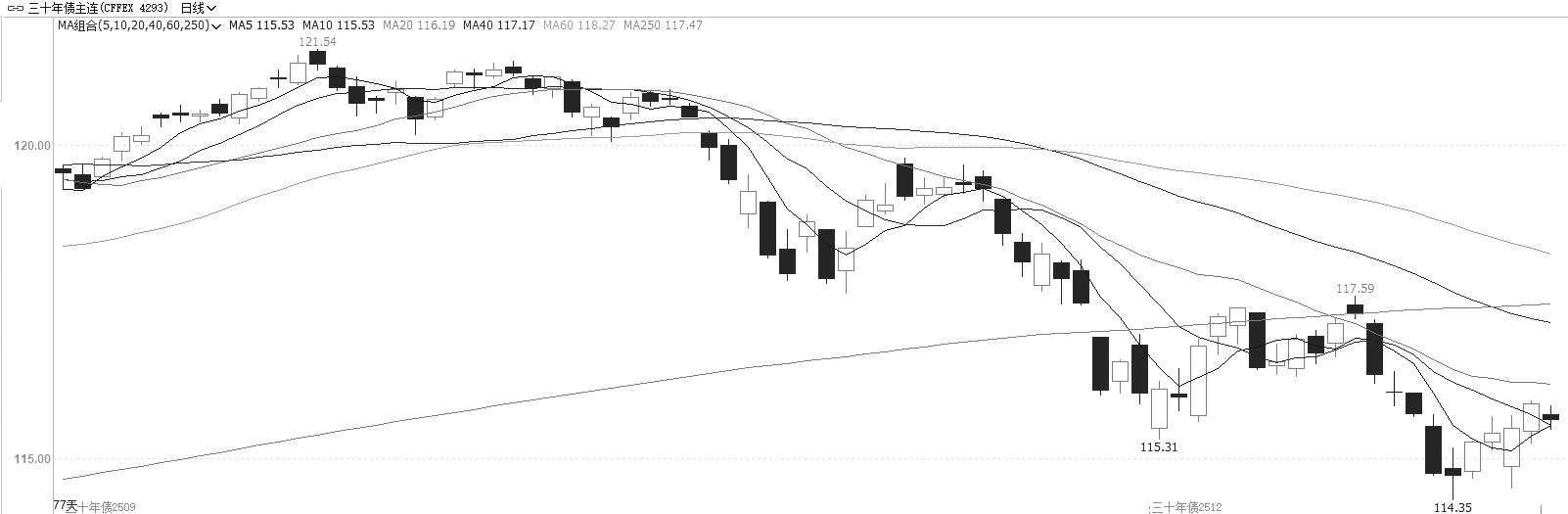
债市迎来小幅调整,券商预判资金面有望回归均衡
Huan Qiu Wang· 2025-09-19 01:16
Group 1 - The second batch of 14 sci-tech bond ETFs raised a total of 40.786 billion yuan, with the total scale expected to exceed 600 billion yuan after listing in late September [1] - The bond market is experiencing a slight adjustment, with major interbank interest rate bond yields rising by 1-2 basis points, and the 30-year main contract for government bonds falling by 0.17% [1] - The yield curve is widening, reflecting market dynamics between long-term inflation expectations and short-term liquidity easing, as the 10-year government bond yield surpassed 1.8% and the 30-year yield exceeded 2.1% [1] Group 2 - Investment strategies suggested include a barbell strategy to balance short-term liquidity and long-term interest rate expectations, focusing on high-rated urban investment bonds for liquidity premiums [3] - Short-term bonds are recommended for opportunistic buying, while caution is advised for long-term varieties [3] - Industry bonds should focus on sectors related to "anti-involution," with mid-to-high grade varieties of "two eternal bonds" offering good value [3]
平安公司债ETF(511030)回撤稳定贴水少,可赎回做市基准和科创债ETF后直接申购
Sou Hu Cai Jing· 2025-09-17 14:03
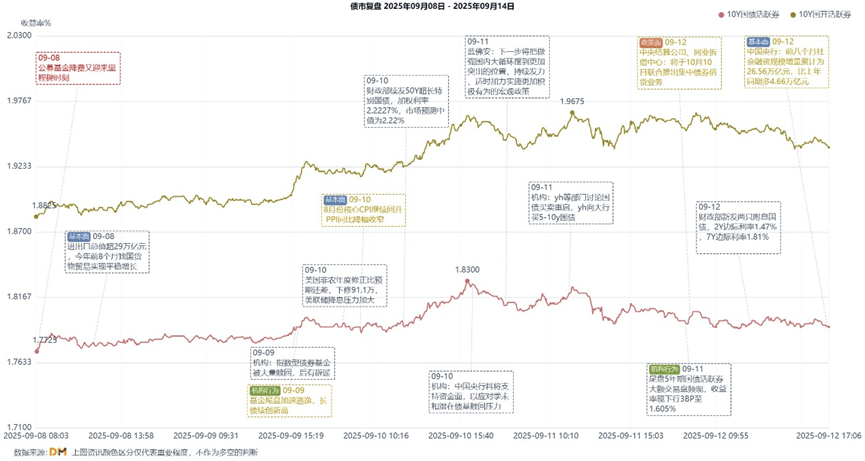
Group 1 - The core viewpoint of the article highlights that Ping An's bond ETF (511030) has maintained the best performance in terms of drawdown control during the recent bond market adjustment, which began on August 10, 2025 [1] - The bond market experienced significant declines at the beginning of the week, with the 10-year government bond yield surpassing 1.83% and the 30-year government bond yield exceeding 2.11%, indicating a strengthening of pessimistic expectations [1] - The market sentiment improved on Friday after the central bank's expectations of resuming government bond trading emerged, leading to a recovery in bond prices [1] Group 2 - The bond market saw a rapid increase in long-term bond yields, with the yields reaching new highs during the week, particularly on Tuesday and Wednesday [1] - The overall bond market experienced a turnaround on Thursday, with sentiment beginning to recover after three consecutive days of decline [1] - By Friday, the sentiment further improved, resulting in a general decline in long-term bond yields across the market [1]
债市日报:9月15日
Xin Hua Cai Jing· 2025-09-15 08:48
Core Viewpoint - The bond market is experiencing slight differentiation in trends, with government bond futures rising while interbank bond yields are showing a slight upward trend in the afternoon. The market is expected to stabilize after a significant adjustment last week, but the potential for bullish moves may not be present in the short term. Attention will be on the adjustment of bond market pressures and clearer positive signals in the future [1][6]. Market Performance - Government bond futures closed higher across the board, with the 30-year main contract up 0.21% to 115.400, the 10-year main contract up 0.12% to 107.805, the 5-year main contract up 0.07% to 105.655, and the 2-year main contract up 0.01% to 102.376 [2]. - Interbank major rate bond yields initially decreased before rising, with the 10-year policy bank bond yield increasing by 0.25 basis points to 1.937%, and the 10-year government bond yield rising by 0.35 basis points to 1.793% [2]. International Bond Market - In North America, U.S. Treasury yields rose collectively, with the 2-year yield up 0.99 basis points to 3.549% and the 10-year yield up 4.57 basis points to 4.070% [3]. - In Asia, Japanese bond yields for mid-term maturities weakened, with the 3-year and 5-year yields rising by 0.9 basis points and 2 basis points, respectively [3]. - In the Eurozone, 10-year bond yields increased, with French yields up 6.6 basis points to 3.505% and German yields up 6 basis points to 2.713% [3]. Funding Conditions - The central bank conducted a 2800 billion yuan reverse repurchase operation at a fixed rate of 1.40%, resulting in a net injection of 885 billion yuan for the day [5]. - The Shibor short-term rates mostly increased, with the overnight rate rising by 4.1 basis points to 1.408% [5]. Institutional Perspectives - Huatai Fixed Income suggests that new regulations on public fund sales and uncertainties regarding fund tax exemptions may reshape the bond market's institutional ecology, leading to a slight increase in interest rates [7]. - CITIC Construction Investment indicates that the current adjustment is primarily due to changing market expectations, but there is no basis for a rapid bear market in the current fundamental and funding environment [7]. - Shenwan Fixed Income notes that the risks facing the bond market are not solely due to the stock-bond relationship but also stem from redemption pressures on fixed-income products due to limited asset space [7].
利率债周报:债市有所调整,收益率曲线陡峭化上移-20250915
Dong Fang Jin Cheng· 2025-09-15 07:11
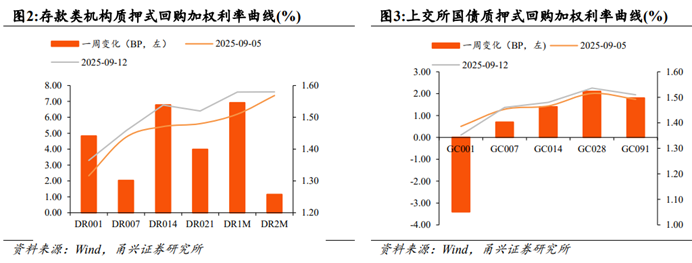
Report Industry Investment Rating No information provided in the content. Core Viewpoints - Last week, the bond market adjusted, with the yield curve steepening and shifting upward. The long - term bond yields first rose and then fell, showing an overall increase. The short - term interest rates had a smaller increase than the long - term ones. This week, the bond market may stabilize, but a trend - based recovery is unlikely. The 10 - year Treasury yield is expected to fluctuate between 1.75% - 1.80% [3]. Summary by Directory 1. Last Week's Market Review 1.1 Secondary Market - The bond market adjusted last week. The 10 - year Treasury futures main contract fell 0.19% cumulatively. The 10 - year Treasury yield rose 4.10bp, and the 1 - year Treasury yield rose 0.41bp compared to the previous Friday, with the term spread widening [4]. - On September 8th, the bond market was weak due to a strong stock market and concerns about bond fund scale reduction. The 10 - year Treasury yield rose 2.54bp, and the 10 - year futures main contract fell 0.21% [4]. - On September 9th, the bond market remained weak due to concerns about redemption fees and tightened liquidity. The 10 - year Treasury yield rose 1.27bp, and the 10 - year futures main contract fell 0.06% [4]. - On September 10th, although the morning sentiment improved due to lower - than - expected inflation data, the bond market weakened significantly in the afternoon. The 10 - year Treasury yield rose 3.51bp, and the 10 - year futures main contract fell 0.27% [4]. - On September 11th, the bond market recovered due to improved liquidity and rumors of the central bank restarting bond purchases. The 10 - year Treasury yield fell 2.49bp, and the 10 - year futures main contract rose 0.07% [4]. - On September 12th, the bond market was slightly bullish due to loose liquidity, a falling stock market, and the central bank's over - renewal of repurchase agreements. The 10 - year Treasury yield fell 0.73bp, and the 10 - year futures main contract rose 0.06% [4]. 1.2 Primary Market - Last week, 83 interest - rate bonds were issued, with a total issuance of 1034.5 billion yuan, a net financing of 435 billion yuan. The issuance and net financing of Treasury bonds and local bonds increased, while the net financing of policy - financial bonds decreased [10]. - The subscription demand for interest - rate bonds was generally good. The average subscription multiples for Treasury bonds, policy - financial bonds, and local bonds were 3.37, 2.92, and 20.81 times respectively [11]. 2. Last Week's Important Events - In August, the export growth rate declined. The export value increased 4.4% year - on - year, 2.8 percentage points lower than in July. The import value increased 1.3% year - on - year, also 2.8 percentage points lower than in July. The export slowdown was mainly due to a higher base and a significant decline in exports to the US [12]. - In August, the CPI turned negative year - on - year, falling 0.4%. The PPI fell 2.9% year - on - year, with a flat month - on - month rate. The CPI decline was mainly due to a high food price base last year, and the PPI's flat month - on - month rate was affected by policies and international commodity prices [12]. - In August, new RMB loans returned to positive growth, with 590 billion yuan in new loans. New social financing was 2569.3 billion yuan. M2 grew 8.8% year - on - year, and M1 grew 6.0% year - on - year. The growth in new loans was due to improved economic sentiment and increased credit demand [12][13]. 3. Real - Economy Observation - Last week, most high - frequency production data increased, including the semi - steel tire, blast furnace, and asphalt plant operating rates, as well as daily hot - metal production. On the demand side, the BDI index rose, while the CCFI continued to decline. The 30 - city property sales area decreased. Pork and most commodity prices rose, except for the fluctuating decline in rebar prices [14]. 4. Last Week's Liquidity Observation - Last week, the central bank's open - market operations had a net capital injection of 196.1 billion yuan. The R007 and DR007, inter - bank certificate of deposit rates, and national and stock direct - discount rates all rose. The inter - bank market leverage ratio fluctuated downward [24][26][30].
逾10只纯债基金下跌逾3%
Sou Hu Cai Jing· 2025-09-14 23:14
Group 1 - The bond market has been experiencing a continuous decline, leading to significant redemption pressure on certain pure bond funds, with over 20 funds facing large redemptions in the past month [2] - As of September 12, more than 10 pure bond funds have seen their net value drop by over 3% since the beginning of the second half of the year, with some funds experiencing declines exceeding 5% [1][2] - The main reasons for the bond market adjustment include the strong performance of the stock market attracting funds away from bonds, and rising inflation expectations due to the implementation of "anti-involution" policies [2] Group 2 - The 30-year and 10-year government bond futures have seen consecutive declines over the past two and a half months, with the 30-year futures down by 0.89% and the 10-year futures down by 0.19% in the last week [1] - Specific funds such as Huatai Baoxing Zunyi Rate Bond and Minsheng Jianyin Ruixia One-Year Open Bond have reported significant net value declines, indicating a broader trend among long-term rate bonds [1] - Fund companies have adjusted the net asset value precision for certain funds to protect the interests of fund holders amid the ongoing market adjustments [2]
超长债周报:6月社融同比转为回落,超长债量升价跌-20250914
Guoxin Securities· 2025-09-14 07:53
Report Industry Investment Rating - No relevant information provided Core View - The adjustment of the bond market is mainly due to the disappointment in 2024 and the change in the macro - narrative. Considering the desensitization of stocks and bonds since late August and the entry into the window period of August economic data, it is expected that the trading mainline of the bond market will shift to the fundamentals, and the bond market is expected to rebound in the short term after an over - decline [2][3][12] Summary by Directory Weekly Review Ultra - long Bond Review - Last week, the draft for soliciting opinions on the new regulations for fund sales fees was released, leading to an increase in the redemption volume of some bond funds and a certain negative feedback in the bond market. In addition, inflation in August was still low, financial data was weak, and the capital side tightened marginally. The central bank announced a 600 - billion - yuan 6 - month outright reverse repurchase. The ultra - long bonds tumbled throughout the week and rebounded slightly on Friday. In terms of trading volume, the trading activity of ultra - long bonds rebounded slightly last week and was very active. In terms of spreads, the term spread of ultra - long bonds widened, and the variety spread narrowed [1][11] Ultra - long Bond Investment Outlook - 30 - year Treasury Bonds: As of September 12, the spread between 30 - year and 10 - year Treasury bonds was 32BP, at a historically low level. The domestic economy in July still faced downward pressure, with the estimated year - on - year GDP growth rate in July at about 4.3%, a significant decline from the growth rate in the first half of this year. In terms of inflation, the CPI in August was - 0.4%, and the PPI was - 2.9%, indicating the existence of deflation risks. The current bond market decline features stable short - term bonds and an enlarged term spread. The bond market is expected to rebound in the short term [2][12] - 20 - year CDB Bonds: As of September 12, the spread between 20 - year CDB bonds and 20 - year Treasury bonds was 4BP, at a historically extremely low position. Similar to the situation of 30 - year Treasury bonds, the domestic economy faced downward pressure in July, and deflation risks existed. The bond market is expected to rebound in the short term [3][13] Ultra - long Bond Basic Overview - The balance of outstanding ultra - long bonds exceeds 23.3 trillion yuan. As of August 31, the total amount of ultra - long bonds with a remaining maturity of more than 14 years was 23.3878 trillion yuan (excluding asset - backed securities and project revenue notes), accounting for 14.9% of the total bond balance. Local government bonds and Treasury bonds are the main varieties of ultra - long bonds. By variety, Treasury bonds account for 26.9%, local government bonds 67.3%, etc. By remaining maturity, the 30 - year variety has the highest proportion [14] Primary Market Weekly Issuance - The issuance volume of ultra - long bonds increased significantly last week. From September 8 to 12, 2025, a total of 200.6 billion yuan of ultra - long bonds were issued. Compared with the previous week, the total issuance volume of ultra - long bonds increased significantly. By variety, Treasury bonds were 35 billion yuan, local government bonds 145.6 billion yuan, etc. By term, 14 billion yuan was issued with a 15 - year term, 44.6 billion yuan with a 20 - year term, etc. [19] This Week's Pending Issuance - The announced issuance plan for ultra - long bonds this week totals 224.2 billion yuan. By variety, ultra - long Treasury bonds are 117 billion yuan, ultra - long local government bonds 97.2 billion yuan, and ultra - long financial bonds 10 billion yuan [21] Secondary Market Trading Volume - The trading of ultra - long bonds was very active last week. The trading volume of ultra - long bonds was 1.2793 trillion yuan, accounting for 14.6% of the total bond trading volume. By variety, the trading volume of ultra - long - term Treasury bonds was 1.0486 trillion yuan, accounting for 41.9% of the total Treasury bond trading volume; the trading volume of ultra - long - term local bonds was 213.3 billion yuan, accounting for 49.0% of the total local bond trading volume; the trading volume of ultra - long - term policy - financial bonds was 10.6 billion yuan, accounting for 0.4% of the total policy - financial bond trading volume; the trading volume of ultra - long - term government agency bonds was 700 million yuan, accounting for 32.6% of the total government agency bond trading volume. The trading activity of ultra - long bonds increased slightly last week [24][25] Yield - Due to the release of the draft for soliciting opinions on the new regulations for fund sales fees and other factors, the ultra - long bonds tumbled throughout the week and rebounded slightly on Friday. For Treasury bonds, the yields of 15 - year, 20 - year, 30 - year, and 50 - year bonds changed by 9BP, 8BP, 7BP, and 8BP respectively to 2.07%, 2.18%, 2.18%, and 2.22%. For CDB bonds, the yields of 15 - year, 20 - year, 30 - year, and 50 - year bonds changed by 11BP, 9BP, 7BP, and 5BP respectively to 2.16%, 2.22%, 2.26%, and 2.40%. For local bonds, the yields of 15 - year, 20 - year, and 30 - year bonds changed by 8BP, 10BP, and 10BP respectively to 2.30%, 2.36%, and 2.36%. For railway bonds, the yields of 15 - year, 20 - year, and 30 - year bonds changed by 7BP, 7BP, and 5BP respectively to 2.24%, 2.26%, and 2.38% [33] Spread Analysis - Term Spread: The term spread of ultra - long bonds widened last week, with an absolute low level. The spread between 30 - year and 10 - year Treasury bonds was 32BP, a change of 4BP compared with the previous week, at the 14% quantile since 2010 [40] - Variety Spread: The variety spread of ultra - long bonds narrowed last week, with an absolute low level. The spread between 20 - year CDB bonds and Treasury bonds was 4BP, and the spread between 20 - year railway bonds and Treasury bonds was 8BP, changing by 0BP and - 3BP respectively compared with the previous week, at the 6% and 5% quantiles since 2010 [46] 30 - year Treasury Bond Futures - Last week, the main contract of 30 - year Treasury bond futures, TL2512, closed at 115.27 yuan, with a decline of 0.93%. The total trading volume of 30 - year Treasury bond futures was 417,000 lots (- 355,481 lots), and the open interest was 160,600 lots (17,947 lots). The trading volume decreased significantly compared with the previous week, while the open interest increased slightly [51]
债市策略思考:如何看待本轮债市调整?
ZHESHANG SECURITIES· 2025-09-12 04:49
Core Insights - The current bond market is in a bottoming phase characterized by a converging triangle pattern and insufficient long positions, suggesting investors should wait patiently for opportunities to gradually accumulate positions when the 10-year government bond yield is in the range of 1.80-1.85% [1][2][27] Historical Context of Bond Market Bottoming - Historically, the bond market has experienced a smooth downward trend followed by prolonged bottoming phases, as seen in early 2015 and before 2019, which eventually led to new downward trends in yields. The current situation in 2025 shows similarities but lacks the stability in high and low points seen in previous bottoming phases, indicating a converging range and insufficient long positions [1][9][11] Current Stage of the Bond Market - The bond market is currently at a stage where the converging triangle pattern indicates a lack of momentum for further price movement in either direction, suggesting a potential re-evaluation of direction. Positive signals include the duration of the current bottoming phase, which has lasted about 7 months, and a recovery in long sentiment in government bond futures as of September 11 [2][28][27] Technical Analysis and Market Signals - The technical analysis indicates that the converging triangle pattern typically signifies a lack of strong momentum, leading to a potential directional choice ahead. The bond market has shown signs of recovery in trading volume and sentiment, with a notable increase in positions across various futures contracts [2][28][30] Economic and Monetary Policy Context - The economic environment in 2025 is comparable to that of early 2015 and 2019, with a slow recovery in the economy and weak financing demand from both households and enterprises. The GDP growth is expected to remain around 5%, supporting a downward trend in bond yields. Additionally, the monetary policy remains accommodative, with recent rate cuts and liquidity injections providing a supportive backdrop for the bond market [13][19][27] Equity Market Performance - The equity market has shown structural differentiation, with growth stocks outperforming value stocks across different periods. In 2025, the market has seen significant gains in mid and small-cap sectors, indicating a trend where growth outperforms traditional sectors, which aligns with historical patterns observed in previous years [23][27]
债市又现大调整 赎回费新规波及债基 但利好债券ETF
2 1 Shi Ji Jing Ji Bao Dao· 2025-09-11 23:18
Core Viewpoint - The recent changes in public fund fee regulations have significantly impacted the bond market, leading to a sharp rise in bond yields and a decline in bond fund returns, particularly affecting short-term bond funds [1][2][3]. Group 1: Bond Market Reaction - The yield on 10-year government bonds rose sharply from 1.74% on September 4 to a peak of 1.83% on September 10, while the 30-year government bond yield increased to around 2.10% [1]. - As of September 11, there were signs of stabilization in the bond market, with a divergence in performance between long and short-term bonds [1]. - In the past week, 751 out of 930 short-term pure bond funds reported negative returns, and 2926 out of 3571 medium to long-term pure bond funds also had negative returns [1]. Group 2: Impact of New Fund Fee Regulations - The new fund fee regulations, which adjust redemption fees for bond funds, have led to a significant decline in the attractiveness of bond investments, particularly for short-term bond funds [2][3]. - The regulations encourage long-term holding of bond funds, which may alter the investment strategies of institutions that previously used bond funds for liquidity management [7][8]. - The new redemption fee structure requires investors to pay fees based on the duration of their holdings, which could deter short-term trading and negatively impact fund returns [4][5]. Group 3: Shifts in Investment Preferences - The changes in the bond market dynamics may lead to a shift in investor preferences, with banks and wealth management products potentially becoming more attractive as alternatives to bond funds [6][9]. - The demand for different types of bonds may change, with banks favoring short to medium-term bonds and wealth management products leaning towards short-term credit bonds [7][8]. - The absence of liquidity management functions in bond funds may result in increased interest in bond ETFs as a substitute for managing liquidity [9].
8月经济数据窗口期,债市博弈期
Guoxin Securities· 2025-09-11 14:28
Report Industry Investment Rating - No relevant content provided Core Viewpoints - The current bond market decline features stable short - term bonds and widening term spreads. The adjustment is due to the disappointment in 2024 expectations and the change in the macro - narrative. As the bond and stock markets have gradually become desensitized since late August and entered the August economic data window period, the trading focus of the bond market is expected to shift to fundamentals, and the bond market is expected to rebound from the oversold level in the short term. Attention should be paid to the August economic growth data released on September 15 [2] Summary by Related Catalogs Review of the Bond Market Decline - The upward adjustment of bond yields started at the end of June. From June 30 to September 10, almost all bond yields rebounded significantly, with an average increase of 12BP (only the 3 - year AA - variety yield decreased by 5BP). Long - term bonds had a more significant increase, with the average increase of treasury bonds, government - sponsored bonds, and local government bonds being 15BP, 17BP, and 11BP respectively. The 30 - year treasury bond yield increased by 34BP. Most credit spreads narrowed, with an average narrowing of 5BP, and the narrowing of low - grade credit spreads was more significant [3] Reasons for the Bond Market Adjustment - The adjustment is mainly due to two reasons: the disappointment in 2024 expectations, as the 7 - day reverse repurchase rate in 2025 was only cut by 10BP, less than the average cut of over 20BP in the past three years, and the GDP growth rate in the first half of 2025 was better than the pessimistic expectations at the end of 2024; and the change in the macro - narrative, including the anti - involution movement dispelling deflation expectations and the strong performance of the stock market leading to the redemption of bonds [2][6] Desensitization of Bond and Stock Markets - From August 18 to September 8, the bond market was mainly sideways, while the stock market rose (CSI 300 rose 5.4% and CSI 500 rose 4.9%). The correlation between bonds and stocks weakened compared with July. The trading rhythm of the bond market began to lead the stock market to some extent. The bond market is gradually desensitizing to the stock market, which is related to the structural differentiation of the stock market's rise. The performance of A - share industries has been significantly different this year, and the stock market's sharp rise does not mean a comprehensive improvement in the Chinese economy [9][10] Bond Market Outlook - The trading focus of the bond market is expected to return to fundamentals. Historically, important turning points in the bond market often occur during the release of economic data. The current economic fundamentals are still weak, and the GDP growth rate in the third quarter is expected to decline. The bond market is expected to rebound from the oversold level in the short term. Attention should be paid to the August economic growth data released on September 15 [2][16][20]